Security and AI Essentials
Protect your organization with AI-powered, end-to-end security.
Defend Against Threats
Get ahead of threat actors with integrated solutions.
Secure All Your Clouds
Protection from code to runtime.
Secure All Access
Secure access for any identity, anywhere, to any resource.
Protect Your Data
Comprehensive data security across your entire estate.
Recent Blogs
For many organizations using Microsoft Intune to manage devices, integrating Intune logs into Microsoft Sentinel is an essential for security operations (Incorporate the device into the SEIM). By rou...
Apr 10, 2026492Views
1like
0Comments
5 MIN READ
Many organizations run workloads across multiple cloud providers and need to maintain a strong security posture while ensuring interoperability. Microsoft Defender for Cloud is a cloud-native applica...
Apr 10, 2026179Views
1like
0Comments
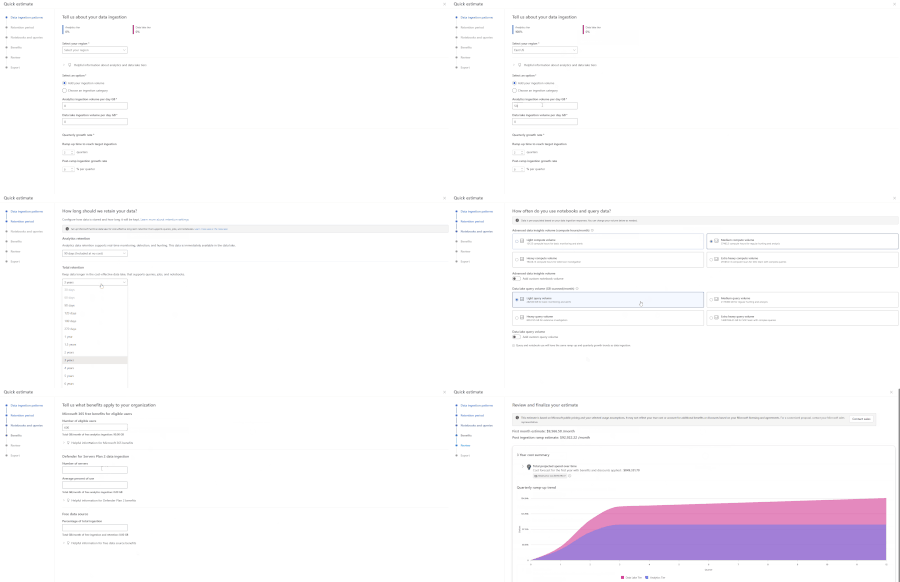
One of the first questions teams ask when evaluating Microsoft Sentinel is simple: what will this actually cost? Today, many customers and partners estimate Sentinel costs using the Azure Pricing Cal...
Apr 09, 2026959Views
0likes
0Comments
We have reviewed the new settings in Microsoft Edge version 147 and determined that there are no additional security settings that require enforcement. The Microsoft Edge version 139 security baselin...
Apr 09, 2026324Views
0likes
0Comments
Recent Discussions

Unable to use MS Graph DLP Api's to use with my Entra Registered App
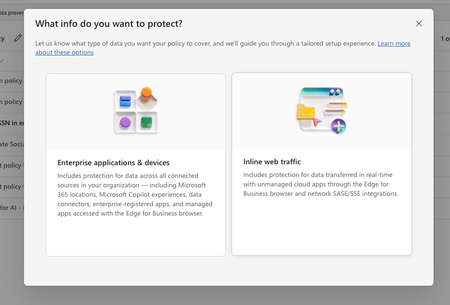
In purview, I have set of policies in DLP, where I have registered to block the US SSN in the text contents and I have created different policies in all of them I have selected the available locations: Exchange email - All accounts SharePoint sites OneDrive accounts - All accounts Teams chat and channel messages - All accounts Devices - All accounts Microsoft Defender for Cloud Apps On-premises repositories And selected action as block all, in all of them for the rule and enabled the rule (not in simulation mode) Now, I have the app registered in Entra and I try to use the following API's https://learn.microsoft.com/en-us/graph/api/userprotectionscopecontainer-compute?view=graph-rest-1.0 https://learn.microsoft.com/en-us/graph/api/userdatasecurityandgovernance-processcontent?view=graph-rest-1.0&tabs=http But whenever I use the compute api I can see i'm only getting curl -X POST https://graph.microsoft.com/v1.0/users/5fd51e08-c5f1-4298-b79b-a357eaa414ff/dataSecurityAndGovernance/protectionScopes/compute\ -H 'Authorization: Bearer <ACCESS_TOKEN>'\ -H 'Content-Type: application/json' -d '{ "activities": "uploadText,downloadText" }' { "@odata.context": "https://graph.microsoft.com/v1.0/$metadata#Collection(microsoft.graph.policyUserScope)", "value": [ { "activities": "uploadText,downloadText", "executionMode": "evaluateOffline", "locations": [ { "@odata.type": "#microsoft.graph.policyLocationApplication", "value": "b48106d9-1cdb-4d90-9485-fe2b6ee78acf" } ], "policyActions": [] } ] } My sample App's Id is showing up but always with `evaluateOffline` I don't know why it always gives 'evaluteOffline' and policyActions is always empty array Also, I can see my Entra registered app is showing up here in the value of the locations And when I use the processContent api , I always get modified in the response and nothing else like below: curl -XPOST https://graph.microsoft.com/v1.0/users/5fd51e08-c5f1-4298-b79b-a357eaa414ff/dataSecurityAndGovernance/processContent \ -H 'Authorization: <ACCESS TOKEN>'\ -H 'Content-Type: application/json' -d '{ "contentToProcess": { "contentEntries": [ { "@odata.type": "microsoft.graph.processConversationMetadata", "identifier": "07785517-9081-4fe7-a9dc-85bcdf5e9075", "content": { "@odata.type": "microsoft.graph.textContent", "data": "Please process this application for John VSmith, his SSN is 121-98-1437 and credit card number is 4532667785213500" }, "name": "Postman message", "correlationId": "d63eafd2-e3a9-4c1a-b726-a2e9b9d9580d", "sequenceNumber": 0, "isTruncated": false, "createdDateTime": "2026-04-06T00:23:20", "modifiedDateTime": "2026-04-06T00:23:20" } ], "activityMetadata": { "activity": "uploadText" }, "deviceMetadata": { "operatingSystemSpecifications": { "operatingSystemPlatform": "Windows 11", "operatingSystemVersion": "10.0.26100.0" }, "ipAddress": "127.0.0.1" }, "protectedAppMetadata": { "name": "Postman", "version": "1.0", "applicationLocation": { "@odata.type": "microsoft.graph.policyLocationApplication", "value": "b48106d9-1cdb-4d90-9485-fe2b6ee78acf" } }, "integratedAppMetadata": { "name": "Postman", "version": "1.0" } } }' In the above request I have mentioned some sample US Security SSN, but the response I get is { "@odata.context": "https://graph.microsoft.com/v1.0/$metadata#microsoft.graph.processContentResponse", "protectionScopeState": "notModified", "policyActions": [], "processingErrors": [] } But Ideally I want to see whether I can get the content is valid or not, for example in the above request, it has SSN, so ideally I should get restrictAction or something right? Or is that evaluateInline is not available or something? Note that I have purchased E5 and assigned to the user who is trying this Also, whenever I choose to create a Policy in DLP , I got two options And Lets say I choose "Enterprise applications & devices", what happens is in the Locations, I'm seeing only these as the options: And If I choose the "Inline Traffic", i'm seeing only these options In Unmanaged, I'm seeing the following And in the Enforcement Options, I have the following : And in the "Advanced DLP rules" I'm seeing only these So, can you tell me the exact steps in the Purview suite, I couldn't where to mention the Entra registered App, I searched and I couldn't find one But in the compute endpoint, https://learn.microsoft.com/en-us/graph/api/userprotectionscopecontainer-compute?view=graph-rest-1.0 I'm getting my app but only with "evaluateOffline" and with that ETag, If I use the processContent Api, its not giving anything except as I mentioned above in the postSolved
Stuck looking up a watchlist value
Hiya, I get stuck working with watchlists sometimes. In this example, I'm wanting to focus on account activity from a list of UPNs. If I split the elements up, I get the individual results, but can't seem to pull it all together. ===================================================== In its entirety, the query returns zero results: let ServiceAccounts=(_GetWatchlist('ServiceAccounts_Monitoring'))| project SearchKey; let OpName = dynamic(['Reset password (self-service)','Reset User Password','Change user password','User reset password','User started password reset','Enable Account','Change password (self-service)','Update PasswordProfile','Self-service password reset flow activity progress']); AuditLogs | where OperationName has_any (OpName) | extend upn = TargetResources.[0].userPrincipalName | where upn in (ServiceAccounts) //<=This is where I think I'm wrong | project upn ===================================================== This line on its own, returns the user on the list: let ServiceAccounts=(_GetWatchlist('ServiceAccounts_Monitoring'))| project SearchKey; ===================================================== This section on its own, returns all the activity let OpName = dynamic(['Reset password (self-service)','Reset User Password','Change user password','User reset password','User started password reset','Enable Account','Change password (self-service)','Update PasswordProfile','Self-service password reset flow activity progress']); AuditLogs | where OperationName has_any (OpName) | extend upn = TargetResources.[0].userPrincipalName | where upn contains "username" //This is the name on the watchlistlist - so I know the activity exists) ==================================================== I'm doing something wrong when I'm trying to use the watchlist cache (I think) Any help\guidance or wisdom would be greatly appreciated! Many thanksSolved34Views0likes2Comments
AIP scanner not discovering sensitivity content
I am deploying the Purview Information Protection AIP scanner to scan an some of the on‑premises Windows file share and some network file shares that is in scope for compliance and data protection. However, the scanner is not discovering sensitive content within files stored on the share for a custom configured SIT. The custom SIT is tested and it properly works, but the data are being reported as no matches / no sensitive content found to discover the files that may be applied with sensitivity label. This issue is observed across one or more mapped repository paths and may be inconsistent by folder, file type or file size. I noticed the scanner appears “healthy” service is running, repository configured and schedules enabled.Solved68Views0likes2Comments
What caught you off guard when onboarding Sentinel to the Defender portal?
Following on from a previous discussion around what actually changes versus what doesn't in the Sentinel to Defender portal migration, I wanted to open a more specific conversation around the onboarding moment itself. One thing I have been writing about is how much happens automatically the moment you connect your workspace. The Defender XDR connector enables on its own, a bi-directional sync starts immediately, and if your Microsoft incident creation rules are still active across Defender for Endpoint, Identity, Office 365, Cloud Apps, and Entra ID Protection, you are going to see duplicate incidents before you have had a chance to do anything about it. That is one of the reasons I keep coming back to the inventory phase as the most underestimated part of this migration. Most of the painful post-migration experiences I hear about trace back to things that could have been caught in a pre-migration audit: analytics rules with incident title dependencies, automation conditions that assumed stable incident naming, RBAC gaps that only become visible when someone tries to access the data lake for the first time. A few things I would genuinely love to hear from practitioners who have been through this: - When you onboarded, what was the first thing that behaved unexpectedly that you had not anticipated from the documentation? - For those who have reviewed automation rules post-onboarding: did you find conditions relying on incident title matching that broke, and how did you remediate them? - For anyone managing access across multiple tenants: how are you currently handling the GDAP gap while Microsoft completes that capability? I am writing up a detailed pre-migration inventory framework covering all four areas and the community experience here is genuinely useful for making sure the practitioner angle covers the right ground. Happy to discuss anything above in more detail.SolvedRSAC 2026: What the Sentinel Playbook Generator actually means for SOC automation
RSAC 2026 brought a wave of Sentinel announcements, but the one I keep coming back to is the playbook generator. Not because it's the flashiest, but because it touches something that's been a real operational pain point for years: the gap between what SOC teams need to automate and what they can realistically build and maintain. I want to unpack what this actually changes from an operational perspective, because I think the implications go further than "you can now vibe-code a playbook." The problem it solves If you've built and maintained Logic Apps playbooks in Sentinel at any scale, you know the friction. You need a connector for every integration. If there isn't one, you're writing custom HTTP actions with authentication handling, pagination, error handling - all inside a visual designer that wasn't built for complex branching logic. Debugging is painful. Version control is an afterthought. And when something breaks at 2am, the person on call needs to understand both the Logic Apps runtime AND the security workflow to fix it. The result in most environments I've seen: teams build a handful of playbooks for the obvious use cases (isolate host, disable account, post to Teams) and then stop. The long tail of automation - the enrichment workflows, the cross-tool correlation, the conditional response chains - stays manual because building it is too expensive relative to the time saved. What's actually different now The playbook generator produces Python. Not Logic Apps JSON, not ARM templates - actual Python code with documentation and a visual flowchart. You describe the workflow in natural language, the system proposes a plan, asks clarifying questions, and then generates the code once you approve. The Integration Profile concept is where this gets interesting. Instead of relying on predefined connectors, you define a base URL, auth method, and credentials for any service - and the generator creates dynamic API calls against it. This means you can automate against ServiceNow, Jira, Slack, your internal CMDB, or any REST API without waiting for Microsoft or a partner to ship a connector. The embedded VS Code experience with plan mode and act mode is a deliberate design choice. Plan mode lets you iterate on the workflow before any code is generated. Act mode produces the implementation. You can then validate against real alerts and refine through conversation or direct code edits. This is a meaningful improvement over the "deploy and pray" cycle most of us have with Logic Apps. Where I see the real impact For environments running Sentinel at scale, the playbook generator could unlock the automation long tail I mentioned above. The workflows that were never worth the Logic Apps development effort might now be worth a 15-minute conversation with the generator. Think: enrichment chains that pull context from three different tools before deciding on a response path, or conditional escalation workflows that factor in asset criticality, time of day, and analyst availability. There's also an interesting angle for teams that operate across Microsoft and non-Microsoft tooling. If your SOC uses Sentinel for SIEM but has Palo Alto, CrowdStrike, or other vendors in the stack, the Integration Profile approach means you can build cross-vendor response playbooks without middleware. The questions I'd genuinely like to hear about A few things that aren't clear from the documentation and that I think matter for production use: Security Copilot dependency: The prerequisites require a Security Copilot workspace with EU or US capacity. Someone in the blog comments already flagged this as a potential blocker for organizations that have Sentinel but not Security Copilot. Is this a hard requirement going forward, or will there be a path for Sentinel-only customers? Code lifecycle management: The generated Python runs... where exactly? What's the execution runtime? How do you version control, test, and promote these playbooks across dev/staging/prod? Logic Apps had ARM templates and CI/CD patterns. What's the equivalent here? Integration Profile security: You're storing credentials for potentially every tool in your security stack inside these profiles. What's the credential storage model? Is this backed by Key Vault? How do you rotate credentials without breaking running playbooks? Debugging in production: When a generated playbook fails at 2am, what does the troubleshooting experience look like? Do you get structured logs, execution traces, retry telemetry? Or are you reading Python stack traces? Coexistence with Logic Apps: Most environments won't rip and replace overnight. What's the intended coexistence model between generated Python playbooks and existing Logic Apps automation rules? I'm genuinely optimistic about this direction. Moving from a low-code visual designer to an AI-assisted coding model with transparent, editable output feels like the right architectural bet for where SOC automation needs to go. But the operational details around lifecycle, security, and debugging will determine whether this becomes a production staple or stays a demo-only feature. Would be interested to hear from anyone who's been in the preview - what's the reality like compared to the pitch?Solved
Integrate MS Purview with ServiceNow for Data Governance
Hi team, We are planning to leverage Microsoft Purview for core Data Governance (DG) capabilities and build the remaining DG functions on ServiceNow. We have two key questions as we design the target‑state architecture: 1. What is the recommended split of DG capabilities between Microsoft Purview and ServiceNow? 2. How should data be shared and synchronized between Purview and ServiceNow to keep governance processes aligned and up to date? Thanks!Solved211Views0likes3CommentsThe Sentinel migration mental model question: what's actually retiring vs what isn't?
Something I keep seeing come up in conversations with other Sentinel operators lately, and I think it's worth surfacing here as a proper discussion. There's a consistent gap in how the migration to the Defender portal is being understood, and I think it's causing some teams to either over-scope their effort or under-prepare. The gap is this: the Microsoft comms have consistently told us *what* is happening (Azure portal experience retires March 31, 2027), but the question that actually drives migration planning, what is architecturally changing versus what is just moving to a different screen, doesn't have a clean answer anywhere in the community right now. The framing I've been working with, which I'd genuinely like to get other practitioners to poke holes in: What's retiring: The Azure portal UI experience for Sentinel operations. Incident management, analytics rule configuration, hunting, automation management: all of that moves to the Defender portal. What isn't changing: The Log Analytics workspace, all ingested data, your KQL rules, connectors, retention config, billing. None of that moves. The Defender XDR data lake is a separate Microsoft-managed layer, not a replacement for your workspace. Where it gets genuinely complex: MSSP/multi-tenant setups, teams with meaningful SOAR investments, and anyone who's built tooling against the SecurityInsights API for incident management (which now needs to shift to Microsoft Graph for unified incidents). The deadline extension from July 2026 to March 2027 tells its own story. Microsoft acknowledged that scale operators needed more time and capabilities. If you're in that camp, that extra runway is for proper planning, not deferral. A few questions I'd genuinely love to hear about from people who've started the migration or are actively scoping it: For those who've done the onboarding already: what was the thing that caught you most off guard that isn't well-documented? For anyone running Sentinel across multiple tenants: how are you approaching the GDAP gap while Microsoft completes that capability? Are you using B2B authentication as the interim path, or Azure Lighthouse for cross-workspace querying? I've been writing up a more detailed breakdown of this, covering the RBAC transition, automation review, and the MSSP-specific path, and the community discussion here is genuinely useful for making sure the practitioner perspective covers the right edge cases. Happy to share more context on anything above if useful.Solved
Cloud Kerberos Trust with 1 AD and 6 M365 Tenants?
Hi, we would like to enable Cloud Kerberos Trust on hybrid joined devices ( via Entra connect sync) In our local AD wie have 6 OUs and users and devices from each OU have a seperate SCP to differnt M365 Tenants. I found this Article to configure the Cloud Kerberos Trust . Set-AzureADKerberosServer 1 2 The Set-AzureADKerberosServer PowerShell cmdlet is used to configure a Microsoft Entra (formerly Azure AD) Kerberos server object. This enables seamless Single Sign-On (SSO) for on-premises resources using modern authentication methods like FIDO2 security keys or Windows Hello for Business. Steps to Configure the Kerberos Server 1. Prerequisites Ensure your environment meets the following: Devices must run Windows 10 version 2004 or later. Domain Controllers must run Windows Server 2016 or later. Install the AzureADHybridAuthenticationManagement module: [Net.ServicePointManager]::SecurityProtocol = [Net.ServicePointManager]::SecurityProtocol -bor [Net.SecurityProtocolType]::Tls12 Install-Module -Name AzureADHybridAuthenticationManagement -AllowClobber 2. Create the Kerberos Server Object Run the following PowerShell commands to create and publish the Kerberos server object: Prompt for All Credentials: $domain = $env:USERDNSDOMAIN $cloudCred = Get-Credential -Message 'Enter Azure AD Hybrid Identity Administrator credentials' $domainCred = Get-Credential -Message 'Enter Domain Admin credentials' Set-AzureADKerberosServer -Domain $domain -CloudCredential $cloudCred -DomainCredential $domainCred As I understand the process, a object is created in local AD when running Set-AzureADKerberosServer What happens, if I run the command multiple times, for each OU/Tenant. Does this ovveride the object, or does it create a new objects?SolvedMicrosoft purview endpoint DLP Printing
Hello All, We can monitor print activities in Microsoft purview endpoint DLP, If someone print sensitive data based on the conditions defined in DLP it will take action on printing. I want to know how the Purview endpoint DLP intercepts the printing and avoid data exfiltration. Does it stop before it reaches the spooler? Please provide technical insights on this doubt. Thank you.Solved246Views0likes4Comments
Auto-labelling does not support content marking
We’ve hit a limitation with service-side auto-labeling in Purview: when a sensitivity label is applied by an auto-labeling policy, any configured visual markings (headers, footers, watermarks) are not written into the document. A further complication is that there is a requirement which includes a custom script that applies sensitivity labels at the folder level and relies on the service-side engine to cascade those labels down to the folder's contents. This means automation isn't just a 'nice to have' for scale — it is a core dependency of our labeling architecture. The inability to also apply visual markings through this same automated path creates a direct gap in our compliance posture and the MS solution. For environments where visible classification is mandated by regulation, this effectively means we can’t rely on service-side auto-labeling alone, which is a big constraint. I’d really appreciate: Any confirmed best practices/workarounds others are using, and Input from the product team on whether server-side visual markings tied to auto-labeling are being considered / and what to consider meeting this requirement as an alternativeSolved
Priority between CIDR and FQDN rules in Microsoft Entra Private Access (GSA)
Hello Question about prioritization between CIDR and FQDN rules in Microsoft Entra Private Access (GSA) Question: Hello everyone, I have a question about how rules are prioritized in Microsoft Entra Private Access (Global Secure Access). In my environment, I configured the following: I created an Enterprise Application using a broad CIDR range (10.10.0.0/16) to represent the entire data center. Within the same environment, I created other Enterprise Applications using specific FQDNs ( app01.company.local, app02.company.local) with specific ports. All rules are in the same Forwarding Profile. I noticed that in the GSA client rules tab there is a “Priority” field, and apparently the rules are evaluated from top to bottom. My question is: When there is an overlap between a broad CIDR rule and a more specific FQDN-based rule, which one takes precedence? Is there some internal technical criterion (DNS resolution first, longest prefix match,), or is the evaluation purely based on the order displayed? Is there a risk that the CIDR rule will capture traffic before the FQDN rule and impact granular access control? I want to make sure my architecture is correct before expanding its use to production. Could someone clarify the actual technical behavior of this prioritization?Solved148Views0likes3CommentsClarification on UEBA Behaviors Layer Support for Zscaler and Fortinet Logs
I would like to confirm whether the new UEBA Behaviors Layer in Microsoft Sentinel currently supports generating behavior insights for Zscaler and Fortinet log sources. Based on the documentation, the preview version of the Behaviors Layer only supports specific vendors under CommonSecurityLog (CyberArk Vault and Palo Alto Threats), AWS CloudTrail services, and GCP Audit Logs. Since Zscaler and Fortinet are not listed among the supported vendors, I want to verify: Does the UEBA Behaviors Layer generate behavior records for Zscaler and Fortinet logs, or are these vendors currently unsupported for behavior generation? As logs from Zscaler and Fortinet will also be get ingested in CommonSecurityLog table only.Solved114Views0likes1CommentClassification on DataBricks
Hello everyone, I would like to request an updated confirmation regarding the correct functioning of custom classification for Databricks Unity Catalog data sources. Here is my current setup: The data source is active. Source scanning is working correctly. I created the custom classification in “Annotation management / Classifications”. I created and successfully tested the regular expression under “Annotation management / Classification Rules”. I generated the Custom Scan Rule Set in “Source management / Scan Rule Sets”, associated to Databricks and selecting the custom rule. However, when running the scan on Databricks: I do not find any option to select my Scan Rule Set (for another source like Teradata, this option is visible). No classification findings are generated based on my custom rule. Other tests do produce findings (system-generated). Does anyone have insights on what I should verify? Or is this custom classification functionality not supported for Databricks?SolvedURL Hyperlinking phishing training
Mi using the Defender phishing simulations to perform testing. When creating a positive reinforcement email that goes to the person you have the option to use default text or put in your own text. When I put in my own text I have lines in the text, but when it renders the lines are not displayed so it looks like a bunch of text crammed together. Any idea how to get these lines to display?Solved
Dedicated cluster for Sentinels in different tenants
Hello I see that there is a possibility to use a dedicated cluster for a workspace in the same Azure region. What about workspaces that reside in different tenants but are in the same Azure region? Is that possible? We are utilizing multiple tenants, and we want to keep this operational model. However, there is a central SOC, and we wonder if there is a possibility to utilize a dedicated cluster for cost optimization.Solved51Views0likes1CommentIssue wiht the downgraing label
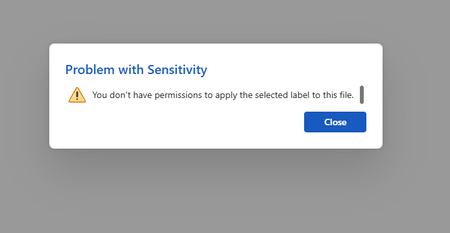
Hello, We are experiencing an issue with sensitivity labels configured for SharePoint using Confidential – Encrypted. When User A uploads a file with this label applied automatically rom the SharePoint library , User B is unable to downgrade the label to a different one and receives an error message. We have confirmed that both User A and User B have the same permissions (Co-author access) to the file and location. Could you please advise what might be causing this or what additional permissions or configuration may be required? Any help would be much appreciated.Solved99Views0likes2CommentsURL rewriting does not apply during Attack Simulation (Credential Harvesting)
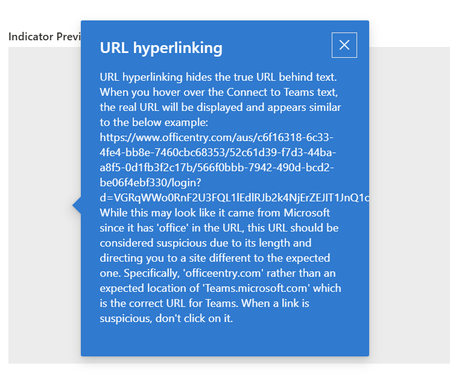
I’m running a credential-harvesting attack simulation in Microsoft Defender for Office 365, but the URL rewriting does not work as expected. In the final confirmation screen, the phishing link is shown as rewritten to something like: https://security.microsoft.com/attacksimulator/redirect?... However, during the actual simulation, the link is NOT rewritten. It stays as the original domain (e.g., www.officentry.com), which causes the simulation to fail with an error. I’m not sure whether this behavior is related to Safe Links or something else within Defender. Why is the URL not rewritten at runtime, and how can I ensure that the redirect link is applied correctly in the actual simulation?Solved219Views0likes1CommentVery High Increase in CPU activity after Update Microsoft Defender for Identity sensor
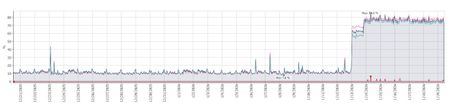
All our servers that are running this sensor (DCs, Certificate servers, AD Connect servers) showed a massive increase in average CPU utilization from virtually straight after the sensor was automatically updated to version 2.254.19112.470 (late night UK time). Two of our DCs are sitting on 100% CPU today and we can't find anything to resolve it. Has anyone else seen this since running this version and if so what actions did you take ? How would we go back to rolling back to the previous version when it appears it will just be automatically updated soon after ? This is our monitoring of CPU utilization from one of the majorly affected DCs but every server with the sensor had the exact same graph showing a major increase in CPU at the same date and time i.e. just after the sensor was updated.SolvedExtract telephoneNumber/businessPhones in Graph via PowerShell
Hi all, I am trying to extract the telephoneNumber from the businessPhones attribute in Entra via a PowerShell script. I call Get-MgUser, list the properties including businessPhones. No matter what I try I either get a System.String[] or a blank. I can extract all the extensionAttribute values using the dot operator, but no luck with telephoneNumber. After much searching and reading of the Learn documentation, I am rather stumped. Any guidance will be appreciated. BruceSolved179Views0likes2CommentsForce user to reset password in hybrid
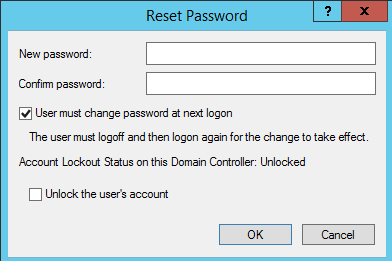
Hi, we work in a hybrid environment at the moment, and it has been discovered that if you are using classic AD and reset a user's password and leave the tick-box saying user must change password at next logon, the password reset works! But, if you were to select the tick-box with the intention to make the user change their password, the password does not get reset and the user never gets asked to reset their password? Also, if you try and reset the user's password on AAD, you get the following error message: Because we cannot force the user to reset their password by AD or AAD, we have to tell the user to do it themselves by the classic Ctrl-Alt-Del method or set their personal password for them over the phone. So, what my question is, is why can I not force the user to change their password from either AD or AAD?Solved

Events
Accidental changes and security compromises can quickly cascade across your tenant. Learn how to recover with confidence using Microsoft Entra Backup and Recovery.
Tune in to see how this Microsof...
Wednesday, Apr 22, 2026, 09:00 AM PDTOnline
0likes
43Attendees
0Comments

Purview Lightning Talks Join the Microsoft Security Community for Purview Lightning Talks; quick technical sessions delivered by the community, for the community.
You’ll pick up practical Pu...
Thursday, Apr 30, 2026, 08:00 AM PDTOnline
0likes
12Attendees
0Comments