Recent Discussions

What are people using to measure manager effectiveness across the org?
Our CHRO wants to start tracking how effective managers are, things like do they hold regular 1:1s, do they give timely feedback, are their team's goals on track. Right now we have zero visibility into any of this. We can pull some data from Teams usage reports but that just tells us who's chatting a lot, not who's actually managing well. Anyone found a tool or approach within the M365 ecosystem that gives you a real picture of manager effectiveness?10Views0likes0CommentsAdd-in Error of complements in Word Online with my Personal Account
Hi, I am getting an error when trying to insert any add-in (such as Mendeley Cite) in Word Online using my personal account. Error message: "Add-in Error: We couldn't connect to the catalog server for this document" (Original Spanish error: "Error de complemento: no pudimos conectarnos con el servidor del catálogo {0} para este documento") Here are the details and the troubleshooting I've already done: - Account-specific: It works perfectly with my old University account, but fails with my new Personal account. - Platform-specific: The add-in works fine on the Word Desktop App, but fails on Word Online (web browser). - Browsers: I have tried different browsers (Chrome, Firefox) and the issue persists. It seems to be a configuration or permission restriction specific to my personal account on the web version. How can I fix this? Thank you!2Views0likes0Comments
Edit/Mass Edit Powerpoint linked file addresses
As the title suggests I'm looking for a way to manually edit or ideally mass edit the address to linked files in powerpoint. For context I play several games where I need to keep track of what builds I have on which character, and sometimes their in-game inventory. Unfortunately the games don't really have the greatest inventory management for the in-game item side of things. In addition the only way sometimes to remember a character's build is to log onto that character and pull up their build page. With enough characters it can be pain remember what I have where even though I enjoy the games themselves. To get around some of the flaws I have powerpoints I use to keep track of certain things like inventory and build. One ppt may have photos of all the current builds for each character, another may have photos of their inventory and so forth. Certainly not ideal but once the initial setup was done, it's been fairly easy to maintain and I only have to update an odd photo here or there if something changes. Which brings me to my potential issue here. I've been keeping the ppts on a thumb drive along with the photos so I can have everything in one place. Recently the drive decided it was done and checked into that silicone repository in the sky and no longer works. Fortunately however I was able to move everything over to a newer drive before the old one finally checked out. While I was able to save my data, I also introduced 2 side effects I wasn't thinking of at the time in my haste to avoid losing everything. When moving everything over I moved things over in batches to avoid taxing the failing drive too hard and placed each batch in its own folder to avoid copying the same thing more than once. So think something like Folder 1, Folder 2, Folder 3, and so on. To conserve on file size of the ppt itself I always chose the option of "Link to File" when inserting the photos to the slides instead of the basic "Insert" or "Insert and Link" options. This means 2 things, the drive location is no longer correct, and the folder location is no longer correct in the links. While I could in theory just change the drive letter and make the folder structure the same again, moving it in batches actually let me organize the raw photos better, but means I now need to correct the addresses for the ppts themselves since the old links no longer work. In the program I know we can go to Info, then press the Edit Links To Files button, and try to change stuff there. The problem is that I can only change one thing at the time there. On top of that if I press the Change Source button, it wants me to find the photo individually vs just chanting the text address of the photo. These wouldn't be issues if it was just a few photos we're talking about as I could just go in, relink by hunting each one and roll. However there are around 250 photos that I would have to do this for, and it would be very tedious. Plus the fact the previews don't work anymore either. (yes i'm one of those kinds of gamers) So what I'm hoping you folks can help me with is a way to edit the text addresses manually for the links. Ideally in mass groups, but I can do it one at the time if I have to. For example let's say I have photo one and it's address looks like "D:\Game1\Character Group1\CharacterA\Build1\Photo1" on the old drive. What I want is a way to change it to say "E:\Game1\Batch1\Character Group1\CharacterA\Build1\Photo1" type of thing. Ideally I'm hoping for a way to change those addresses in mass. If I have to text edit them all one by one, that's still alot faster than having to hunt and relink each photo individually. Thanks in advance for any advice.16Views0likes0Comments
Heading Style Misapplied to Body Text
Hi, I'm editing a novel manuscript. Somehow. the author applied the same heading used for the chapter numbering to the last line of text of Chapter 28, so that that short line and the Chapter 29 heading are ... linked? If I try to set the heading for the line of text to normal in the Style pane, the chapter 29 heading goes to "normal," too. If I try to apply the heading style to the chapter heading, the line of text gets that style, too. Chapter 29 has of course disappeared from the Navigation Pane in all this. Any advice is very welcome.4Views0likes0Comments
Spacing on stacked bar charts
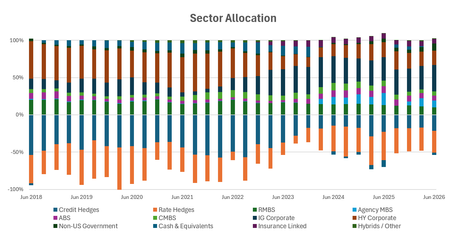
Hi all, I searched for a solution, but changing to 'text' axis doesn't work and that's the only solution I have seen offered. Issue: When using a date axis, there is too much white space / bars are too skinny to be legible despite gap width set all the way at 0. When switching to a text axis, the bar spacing is perfect, but the spacing between dates are at times nonsensical or for some reason it thinks the range is way different than what is highlighted. Here is how the data is highlighted, I only hid columns to make the picture a reasonably proportion the screenshots from above are when no columns are hidden. Is there a way to re-scale the gap-width when using a data axis to effectively to go something like -50%? Or to somehow manipulate the range and the months between labels when using a text axis? Thank you for the help. Matt36Views1like4Comments
Office Home & Business 2019 license no longer recognized after reinstall ("No license found")
Hello everyone, I'm looking for some help because Microsoft Support has not been able to solve this issue. I own a genuine perpetual license of Office Home & Business 2019 for Mac, linked to my Microsoft account since August 2019. The license is still listed under Services & Subscriptions, but Office no longer activates. My hardware MacBook Pro (Retina, 13-inch, Late 2012) Model: MacBookPro10,2 Intel Core i5 8 GB RAM macOS Ventura 13.7.8 Installed using OpenCore Legacy Patcher Office version originally working: 16.78 Later tested with 16.101 and 16.93 Same result on every version What happened Office had already been successfully activated and worked normally. I was able to: create documents edit documents save documents After restarting the Mac, Office suddenly requested activation again. Since then it has never activated successfully. Initially Office failed to activate with an unknown error. After completely uninstalling and reinstalling Office using Microsoft's installer, the activation process changed. I can now successfully sign in with my Microsoft account, but after authentication Office displays: "No license found for this account." My Office Home & Business 2019 license is still present in my Microsoft account under Services & Subscriptions. Even though my Microsoft account clearly owns Office Home & Business 2019 for Mac. Microsoft account The license appears correctly under: Services & Subscriptions Office Home & Business 2019 for Mac Added to my account on August 7, 2019. The website instructs me to open an Office application and sign in to activate. Everything I've already tried Uninstalled Office completely Installed Office again using Microsoft's installer Installed Office 16.78 Installed Office 16.93 Updated to Office 16.101 Removed Office containers Removed Group Containers Deleted OneAuth cache Deleted Entrabroker cache Removed activation tokens Cleared Office preferences Signed out and signed back into Microsoft account Deleted Office credentials from Keychain Reinstalled Microsoft AutoUpdate Verified no MDM profile exists Verified Internet Accounts Verified Microsoft account Microsoft Support remotely accessed my Mac and repeated all troubleshooting steps Nothing solved the issue. Additional information Running: defaults read com.microsoft.office returns: OfficeActivationLicense = NoLicense although: OfficeActivationEmailAddress = email address removed for privacy reasons is correctly detected. The activation window successfully reaches Microsoft's login page. Office now asks for my Microsoft account credentials. Authentication completes successfully. After a few seconds Office reports: "No license found for this account." It then offers only two options: Buy Microsoft 365 Use another account Microsoft Support remotely connected to my Mac, completely removed Office, installed a newer official installer, and the problem remained exactly the same. My question Has anyone experienced this after reinstalling Office 2019? Could this be: a licensing server issue? an incompatibility introduced after Office 2019 reached end of support? an activation problem related to OpenCore Legacy Patcher? something else? I would really appreciate any suggestions. Thank you very much. Additional notes: The Office license has been associated with the same Microsoft account since 2019. The same installation was successfully activated and worked normally before the problem started. The issue only appeared after restarting the Mac. Microsoft Support has already remotely accessed my computer and could not resolve the problem.How to Create an Approval Workflow in SharePoint Online (Microsoft 365)
Managing approvals efficiently is one of the biggest challenges for organizations. Whether you’re approving invoices, purchase requests, leave applications, contracts, or company policies, relying on emails and manual follow-ups often leads to delays, confusion, and missed deadlines. https://dellenny.com/how-to-create-an-approval-workflow-in-sharepoint-online-microsoft-365/12Views0likes0Comments
One time purchase 2022 Office Home Edition failed to activate
I bought a 2022 Office Home Edition on a one time basis in 2022 and installed on my Mac which has worked well over the year. Then, suddenly on 13 July this year, its Excel disallowed me to save and edit, saying I need to subscribe Office 365, etc in order to activate. I don't know what is going on. Can this be fixed?13Views0likes1CommentOne time purchase 2022 Office Home Edition failed to activate
I bought a 2022 Office Home Edition on a one time basis in 2022 and installed on my Mac which has worked well over the year. Then, suddenly on 13 July this year, its Excel disallowed me to save and edit, saying I need to subscribe Office 365, etc in order to activate. I don't know what is going on. Can this be fixed?13Views0likes1Comment
Word Document Using Columns Not Modified, But Suddenly Displays Differently
I am using MS Word on my Windows 11 desktop. I have been using a Word document that I created a couple of years ago. The document uses Columns. The last time I modified it was a year ago. I tend to print it out every two days. Suddenly, the document displays differently and prints those differences. It now displays vertical lines below four of the five squares. I moved the document to my Windows 11 laptop. Same problem there. I sent the Word document to my son who opened it on his Mac computer. On his computer, it displays exactly as it should -- No erroneous vertical lines. Again, I have not modified the document. I thought maybe a Windows update may have caused the problem, but I don't see any Windows update in about one month. I am displaying two images below, a "before" and "after" image. The "before" (i.e., correct) image shows five squares and the alphabet displaying vertically. The "after" image shows vertical lines below the first four squares. Can anyone suggest a fix for this? Repeating myself again -- I have not modified this file in a year. Thank you. Len Jacobson First Image -- Correct display of the five squares and the alphabet displayed vertically Second Image -- Incorrect display. Vertical lines appearing below the first four squares.45Views0likes6CommentsVlookup with If And statement
This one has me stumped but excel is awesome and I feel like this should be possible. Thank you in advance for any help! I'm not sure the best way to go about this, I'm thinking a vlookup with with nested if and statements between 2 excel spreadsheets. I have a slightly large spreadsheet with names that are repeating and events repeating thus the file first needs to determine the class so it pulls the right time. The data contains Classes (class A, B and C), Name, Event and Time. Spreadsheet A is the times. Everyone's times are recorded on Spreadsheet A. Spreadsheet B is to track the times per participant on a different tab per participant. In Spreadsheet A, column A is the participant number, column C is event name, column G is the time and column H is the class. In spreadsheet B, (the formula will be in Spreadsheet B). First, I need the formula to look at the class listed in spreadsheet B Column C Row 4 (Class A), then the formula needs to look at column H in spreadsheet A for Class A. Then it needs to look for the rider number on spreadsheet B, Column C row 2 (1234), needs to search spreadsheet A column A for rider 1234, and last it needs to look for the event (Runs) in spreadsheet B, and searches spreadsheet A column C for runs. After it matches all 3 then it needs to return the time in column G. If it does not find all 3 matches, then it needs to leave it blank. IE: Spreadsheet B, Class "A", Rider "1234", Event "Runs", if it meets all three criteria's then return the time in Column G.65Views0likes7Comments
Activation failed
I have been running MS 365 on my Mac laptop for years with no issue. Suddenly I cannot save an Excel file. I saw the activation button, but activation failed with the code OxO....unknown cause. I cannot find any way to contact MS for support or chat. I checked on my desktop and I do have an active subscription. I am running Tahoe 26.5.2. Excel is 16.7.1. Any suggesstions.379Views0likes4CommentsCompute elapsed time
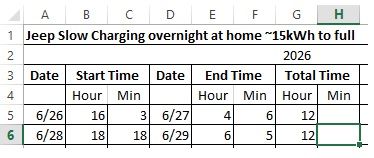
I have a spreadsheet of charging time for my Jeep. I would like to calculate the duration of the charging period but am having problems coming up with a formula that would work. It would have to account for the minutes where the start time minute is greater than the end time minute. Unless someone has another way of computing this.43Views0likes4CommentsGrouping data sourced from another sheet in that workbook.
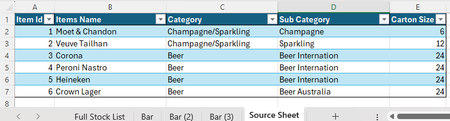
I am trying to make a monthly inventory count workbook through excel nut am having trouble consolidating the counts. I have a made a simple version of what I need but am getting stuck on the final sheet trying to group the data together. In my workbook I have a sheet with all my input data which I have attached below. I have fed this through PowerQuery so that the information from this Sheet can go into all other sheets on that workbook, and I only need to update one Sheet if new stock comes in, or leaves. From there I have the "Bar" Sheets where the counts get entered. As I will be dealing with a lot of stock, felt better to make a "Loose" & "Cartons" column and then just sure make an extra column where the calculations can be made giving a full total amount. Last Sheet is where I would like to consolidate all the totals from the "Bar" sheets into one area. which I have used the formula ="SheetName"[@Cell] as I do not know any other ways of bringing across this data. And here lies the problem. As on the "Full Stock List" sheet i have cells that are not actual values, the rows are not grouped, and if I try to sort by Item Name alphabetically, only the original 5 columns will sort, leaving the new columns untouched. If anyone can help explain how I can get around this, that would be most helpful, as I need to make this Workbook much much bigger.65Views0likes3CommentsContest Scoring
I created a spreadsheet to calculate points for a Skillathon test we give to kids at our fair. On the main sheet, we input the points earned for each question. I created a second sheet to calculate the points for question 20. I have a table set up to auto-sort the teams by Amount. I want to be able to take the points from this table and have that input into the main score sheet. Need help with the function for this.19Views0likes2CommentsRuler Feature Disappeared from Microsoft Word on Android Tablet
Hello everyone, My father recently bought a new Android tablet specifically to use Microsoft Word for his work because he relies heavily on the Ruler feature. When I first installed Word, the Ruler was available and worked perfectly. However, after restarting the tablet, it disappeared. Since then, I have uninstalled and reinstalled the app several times, tried different versions of Word, checked all the settings, and confirmed that we had an active Microsoft 365 subscription, but the Ruler is still missing. My father has also tried adjusting to different document layouts and workarounds, but unfortunately none of them are practical for his workflow. He simply cannot work efficiently without the Ruler feature. Has anyone experienced this issue? Is the Ruler still supported in Microsoft Word for Android, or has it been removed? If it's still available, is there any way to restore it or install a version that includes it? My father bought this tablet mainly for Microsoft Word, so this feature is essential for his work. Thank you for any help or clarification.23Views0likes1Comment
Copy a formual, locking 1 data cell
Hello I have this formual to calculate the value in cell F11. I woul like to copy the formula down to F12, 13, 14, 15 and 16. Needing to lock the cell F5 value in the formula. Copy and paste only changes for F% to F6 to F& and so on. Thank you =(D11-(B11+F5)-(G11)+C11)/D1119Views0likes2CommentsMicrosoft Word - Footnote remains on the original page after moving the original reference up
Issue I encountered an issue in Microsoft Word where moving the original footnote reference to an earlier location in the document did not move the footnote itself. The footnote remained on its original page even though the reference had been moved. This was particularly problematic because the same footnote was referenced multiple times throughout the document using cross-references. Cause The footnote is anchored to the original footnote reference in the main text. In my case, Word had somehow lost track of that original anchor, so the footnote stayed on its original page while all cross-references continued to point to it. Solution Hold Ctrl and click the misplaced footnote reference. Word jumps to the original footnote reference in the main text. Cut the original footnote reference (Ctrl+X). Paste it in the correct location using Keep Source Formatting. Press Ctrl+A, then F9 to update all fields. Verify that: the footnote has moved to the correct page, the numbering has updated correctly, all cross-references still work. In my document, one footnote had previously lost its connection to the original reference, so its numbering did not update automatically. That one had to be repaired manually. Important Do not create a new footnote or copy the footnote text itself. Move the original footnote reference in the main text. This preserves the existing footnote, its numbering, and every cross-reference that points to it. I hope this helps someone else. It took me quite a while to figure out what was happening.22Views0likes1Comment





Events
Recent Blogs
- SharePoint Online is introducing a new tenant-level setting that allows organizations to choose whether heading permalinks should appear on SharePoint pages.Jul 14, 2026551Views1like0Comments
- 2 MIN READPowerPoint is getting easier to use with new SmartArt, fresh themes, a cleaner Design ribbon, and a more modern file open experience.Jul 13, 2026746Views2likes0Comments