microsoft 365 apps
1587 TopicsOffice Home & Business 2019 license no longer recognized after reinstall ("No license found")
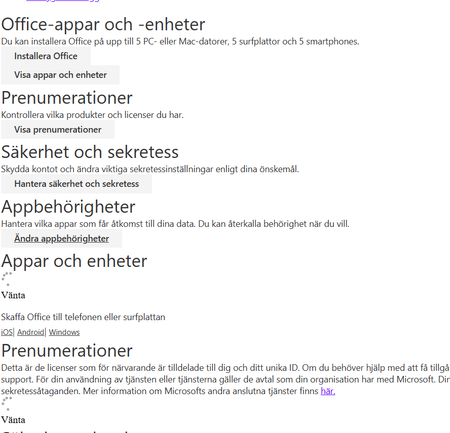
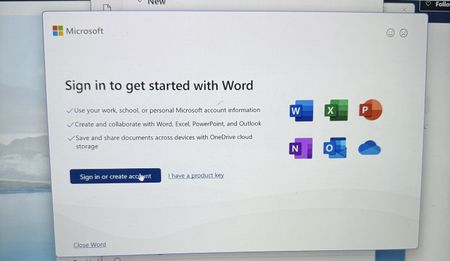
Hello everyone, I'm looking for some help because Microsoft Support has not been able to solve this issue. I own a genuine perpetual license of Office Home & Business 2019 for Mac, linked to my Microsoft account since August 2019. The license is still listed under Services & Subscriptions, but Office no longer activates. My hardware MacBook Pro (Retina, 13-inch, Late 2012) Model: MacBookPro10,2 Intel Core i5 8 GB RAM macOS Ventura 13.7.8 Installed using OpenCore Legacy Patcher Office version originally working: 16.78 Later tested with 16.101 and 16.93 Same result on every version What happened Office had already been successfully activated and worked normally. I was able to: create documents edit documents save documents After restarting the Mac, Office suddenly requested activation again. Since then it has never activated successfully. Initially Office failed to activate with an unknown error. After completely uninstalling and reinstalling Office using Microsoft's installer, the activation process changed. I can now successfully sign in with my Microsoft account, but after authentication Office displays: "No license found for this account." My Office Home & Business 2019 license is still present in my Microsoft account under Services & Subscriptions. Even though my Microsoft account clearly owns Office Home & Business 2019 for Mac. Microsoft account The license appears correctly under: Services & Subscriptions Office Home & Business 2019 for Mac Added to my account on August 7, 2019. The website instructs me to open an Office application and sign in to activate. Everything I've already tried Uninstalled Office completely Installed Office again using Microsoft's installer Installed Office 16.78 Installed Office 16.93 Updated to Office 16.101 Removed Office containers Removed Group Containers Deleted OneAuth cache Deleted Entrabroker cache Removed activation tokens Cleared Office preferences Signed out and signed back into Microsoft account Deleted Office credentials from Keychain Reinstalled Microsoft AutoUpdate Verified no MDM profile exists Verified Internet Accounts Verified Microsoft account Microsoft Support remotely accessed my Mac and repeated all troubleshooting steps Nothing solved the issue. Additional information Running: defaults read com.microsoft.office returns: OfficeActivationLicense = NoLicense although: OfficeActivationEmailAddress = email address removed for privacy reasons is correctly detected. The activation window successfully reaches Microsoft's login page. Office now asks for my Microsoft account credentials. Authentication completes successfully. After a few seconds Office reports: "No license found for this account." It then offers only two options: Buy Microsoft 365 Use another account Microsoft Support remotely connected to my Mac, completely removed Office, installed a newer official installer, and the problem remained exactly the same. My question Has anyone experienced this after reinstalling Office 2019? Could this be: a licensing server issue? an incompatibility introduced after Office 2019 reached end of support? an activation problem related to OpenCore Legacy Patcher? something else? I would really appreciate any suggestions. Thank you very much. Additional notes: The Office license has been associated with the same Microsoft account since 2019. The same installation was successfully activated and worked normally before the problem started. The issue only appeared after restarting the Mac. Microsoft Support has already remotely accessed my computer and could not resolve the problem.128Views0likes4CommentsBookings - No more notes or extra fields available
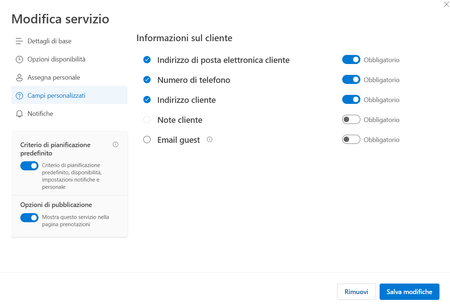
Hi there and happy new year to all. Starting from mid-december, we are facing an issue with our company Microsoft Bookings: basically the custom fields (like address, notes and so on). The book page will just ask for Name & Surname, E-mail Address and Phone Number. On our Administration back-end, the Customer Notes fileds is greyed out (you cannot enable it), and all the custom fields disappeared, you have just the standard ones. We have this issue in all our different booking pages, and all the services are affected. Any hint about this? Thanks!1.4KViews0likes5CommentsVaihdoit uuteen puhelimeen. Authenticator ongelma
Vaihdoit uuteen puhelimeen. Microsoft Authenticator ei ole enää saatavilla vanhalla laitteellasi. Et voi kirjautua Microsoft 365 -työtilillesi, koska MFA-vahvistus vaaditaan. Sinulla ei ole pääsyä mihinkään vaihtoehtoiseen todennusmenetelmään. Tarvitset apua suomeksi, jos mahdollista.28Views0likes1CommentHow do you roll up individual goals into department or company goals in M365?
We’re trying to manage goals across teams using Microsoft 365, but the structure gets messy fast. Individual goals live in different places, and it’s hard to see how they connect to department or company-level objectives. With Viva Goals out of the picture, has anyone built a clean way to roll up goals in M365, or is this something better handled with a dedicated OKR/performance tool? (I honestly wouldnt want to use something third party and much rather keep things in MS 365)40Views0likes2CommentsMicrosoft 365 Apps SHOULD NOT overwrite Office 2019/2021 one-time retail installs
I want to raise a serious concern about Microsoft 365 Apps being imposed over existing Office 2019/2021 installations that were activated with legitimate one-time installation retail keys. In our case, these are not Microsoft 365 subscriptions and they are not licenses we can simply deactivate and reactivate freely. They are one-time installation retail keys. Once the product has been installed and activated, removing Office and reinstalling it later can make the original key unusable or trigger “already used” activation problems. That is precisely why the current behavior is so damaging. We have PCs with legitimate Office 2019/2021 installations. These machines did not request a migration to Microsoft 365 Apps. However, after internet connection, Office update activity, or Microsoft account interaction, Office appears to silently update, convert, or replace the existing retail installation with the Microsoft 365 Apps version. This is not a minor inconvenience. It creates a serious licensing and operational problem: -A valid one-time Office 2019/2021 installation is replaced by Microsoft 365 Apps without clear, explicit consent. -The original retail installation is no longer cleanly usable. -Fixing the issue requires uninstalling Office, removing Click-to-Run/licensing/account leftovers, and reinstalling the previous Office 2019/2021 version. -But because these keys are one-time installation keys, that reinstall process can render the original key unusable or create activation failures. -In practice, a forced Microsoft 365 conversion can destroy the value of a legitimate one-time Office license. From a user’s perspective, this looks less like a normal software update and more like an exploitative commercial strategy: using Microsoft’s control over Office updates, account sign-ins, Click-to-Run, and activation systems to push already-paid retail users toward Microsoft 365 subscriptions. Even if Microsoft does not intend that result, the practical effect is that users who already paid for Office 2019/2021 can lose practical access to their licensed product and are then nudged toward paying again through a subscription. This should not happen. A perpetual or one-time installation Office license and Microsoft 365 Apps are different products with different licensing models. Microsoft should not silently replace or convert one into the other because a Microsoft 365 account exists on the PC, because the user signs into Office, because OneDrive is present, or because Office updates are enabled. At minimum, Microsoft should provide: -A clear opt-in confirmation before replacing, converting, upgrading, or rebranding Office 2019/2021 retail installations as Microsoft 365 Apps. -A supported way to block Microsoft 365 Apps from taking over one-time installation Office versions. -A clean removal tool that fully removes Microsoft 365 Apps, Click-to-Run leftovers, licensing remnants, and account-based activation conflicts. -A reliable way to restore the original Office 2019/2021 retail installation without invalidating or losing the original one-time key. -Clear separation between Windows account sign-in, OneDrive sign-in, Microsoft 365 entitlement, and local Office retail activation. Users who purchased legitimate one-time installation Office licenses should not be forced into Microsoft 365 Apps by unclear update behavior. If Microsoft wants users to move to Microsoft 365, that should be a deliberate, informed choice — not a silent process that leaves the user cleaning up the installation and losing access to a paid retail license. I am not asking how to install Microsoft 365. I am asking Microsoft to stop Microsoft 365 Apps from taking over valid one-time Office 2019/2021 installations without explicit consent.Word/PowerPoint are not suitable replacements for Publisher
I’m writing following the guidance that Word and PowerPoint can be used as replacements for Publisher. This feedback is based on completing a real production document, not theoretical use Having just completed a fairly complex, layout-heavy technical document, I thought it only fair to share how that works in practice. In theory, I can see the logic: Word handles documents PowerPoint handles layouts Therefore, between the two, everything should be covered Unfortunately, in reality, this appears to be more of a theoretical exercise than a practical solution. Publisher was clearly designed for: Fixed, page-based layouts Precise positioning of objects Efficient alignment of mixed content (text, images, tables) Producing consistent, professional multi-page documents By comparison: Word is admirably committed to reminding you that it would prefer everything to flow freely, regardless of whether you want it to or not PowerPoint, while better behaved, does seem to assume every page is a standalone slide rather than part of a structured document Both tools can, with enough persistence, be persuaded into doing the job. However, this involves a level of manual intervention, workaround, and general negotiation with the software that feels somewhat at odds with modern productivity software. To put it simply: They are not replacements in any meaningful, real-world sense. The end result can be achieved, but the process is unnecessarily time-consuming, fragile, and prone to unexpected layout changes—particularly when precision actually matters. Replacing a purpose-built publishing tool with two applications that were never designed for that role gives the impression that this use case has been… optimistically simplified. I would strongly encourage Microsoft to either: Provide a genuine page-layout solution within the Office suite, or Enhance existing applications so they can support fixed-layout publishing without constant workarounds At present, the gap left by Publisher is very noticeable for anyone producing structured documents beyond basic text. I appreciate the direction of Microsoft 365 overall, but in this particular area, the experience feels less like an evolution and more like working around a missing tool. Regards Andy99Views1like2CommentsOptimizing Microsoft 365 Licenses Using Behavior Data (E3/E1/F3)
Hi everyone, We are currently working on a Microsoft 365 license optimization initiative and would appreciate insights from the community and Microsoft experts. Our approach focuses on two main areas: (1) Revoking licenses for inactive users, and (2) Reviewing active users to ensure their assigned license (E3, E1, or F3) aligns with actual usage and collaboration needs. From a data perspective, we are leveraging Microsoft 365 usage signals such as Teams activity, Outlook email interactions, meetings, and SharePoint/OneDrive collaboration. While usage reports provide raw metrics, we are looking for guidance on how these signals should be interpreted and combined in a meaningful and fair way. Specifically, we would like to understand: (1) Which usage metrics best represent user collaboration behavior? (2) Are there any recommended thresholds or patterns that help distinguish light, standard, and heavy collaboration users to map E3, E1, or F3? Any best practices, references, or real-world experiences would be greatly appreciated. I'm sorry if this is the wrong forums to ask for. Thanks in advance for sharing your insights.341Views0likes2CommentsSearching in a Microsoft List
How could a user restrict their search to a particular value in a particular field? Let's say I need to search for the value 'Williams' in the 'Company' field. I could enter "Williams" into the search bar, but the hits would include all items that contain the word "Williams" in any field. I want to restrict the search. How can one do that?Power Apps + Excel Online: RFC 3339 Date/DateTime Format Error When Patching to Excel Date Columns
Hi everyone, I need help with a Power Apps canvas app connected to an Excel workbook stored in SharePoint/OneDrive. The app is a warehouse inventory system using Excel tables as the data source. The app has these Excel tables: tblSKU tblLocation tblInventory tblTransactions The main issue is with date fields when using Patch() from Power Apps to Excel. Error Message I keep encountering this error: Expected value "" to be valid RFC 3339 'date-time' format. Allowed ISO 8601 format(s): 'YYYY-MM-DDThh:mm:ssZ', 'YYYY-MM-DDThh:mm:ss+hh:mm', 'YYYY-MM-DDThh:mm:ss'. This happens during receiving / issuing / stock count transactions when patching to Excel. Date Columns Involved In tblTransactions, I have: DateTime TransDate ProductionDate ExpiryDate In tblInventory, I have: ProductionDate ExpiryDate LastUpdated These columns are formatted in Excel as Date or Date/Time. Current Patch Logic I already changed my formulas to stop saving formatted text like this: DateTime: Text(Now(), "dd mmm yyyy") TransDate: Text(Today(), "dd mmm yyyy") ProductionDate: Text(dpProductionDate.SelectedDate, "yyyy-mm-dd") ExpiryDate: "" Now I am trying to patch real date values instead: DateTime: Now(), TransDate: Today(), ProductionDate: If( IsBlank(dpProductionDate.SelectedDate), Blank(), dpProductionDate.SelectedDate ), ExpiryDate: If( IsBlank(varExpiryDate), Blank(), varExpiryDate ), LastUpdated: Now() However, I still sometimes get the RFC 3339 error. Sample Receiving Patch Here is the relevant part of my receiving button: Patch( tblTransactions, Defaults(tblTransactions), { TransID: Text(GUID()), DateTime: Now(), TransDate: Today(), Type: "RECEIVE", SKU: varSKU.SKU, Barcode: varBarcode, Description: varSKU.Description, Category: varSKU.Category, UOM: varSKU.UOM, LotNo: Upper(txtLot.Text), ProductionDate: If( IsBlank(dpProductionDate.SelectedDate), Blank(), dpProductionDate.SelectedDate ), ExpiryDate: If( IsBlank(varExpiryDate), Blank(), varExpiryDate ), Location: drpLocation.Selected.LocationCode, Qty: Text(Value(txtQty.Text)), User: User().FullName, Status: "POSTED", Remarks: "" } ) Expiry Date Calculation The expiry date is calculated based on SKU shelf life: Set( varShelfLifeDays, IfError( Value(varSKU.ShelfLifeDays), 0 ) ); Set( varExpiryDate, If( varShelfLifeDays > 0, DateAdd( dpProductionDate.SelectedDate, varShelfLifeDays, TimeUnit.Days ), Blank() ) ); Related Issue In galleries and labels, Excel sometimes returns date values as serial numbers, for example: 46192 So I had to use formulas like: Text( DateAdd( Date(1899,12,30), Value(Text(ThisItem.ExpiryDate)), TimeUnit.Days ), "dd mmm yy" ) This works for display, but I am still unsure about the correct way to patch date/date-time values back to Excel. Any guidance would be very much appreciated. Thank you.54Views0likes1Comment