Recent Discussions

Windows Server Datacenter: Azure Edition preview build 29558 now available in Azure
Hello Windows Server Insiders! We welcome you to try Windows Server vNext Datacenter: Azure Edition preview build 29558 in both Desktop experience and Core version on the Microsoft Server Operating Systems Preview offer in Azure. Azure Edition is optimized for operation in the Azure environment. For additional information, see Preview: Windows Server VNext Datacenter (Azure Edition) for Azure Automanage on Microsoft Docs. For more information about this build, see Announcing Windows Server vNext Preview Build 29558 | Microsoft Community Hub.RDP logs in locally
Hi all, Have a Windows 2022 21H2 server, VM on vSphere. When attempting to RDP to it, I briefly see the desktop before getitng the error - you have been disconnected because another connection was made to the remote computer. I note that when viewing the server in vCentre, the 'local' desktop logs in when an RDP connection is attempted. This must then be kicking the RDP session. At the moment the only way to manage it is via vCentre which isn't ideal. Is there a setting somewhere to prevent this from happening? cheers j45Views0likes1CommentNo way to import shared connections WAC 2.6.4
hello, reaching out to to see if I am missing anything with the import-wacconnections change in the powershell module. Previous versions i had everything scripted and running smoothly where I could scrape AD for servers and tags and then import as shared connections for other engineers to use. Now, despite being a gateway admin, if I try and import a CSV via the windows admin center gui, I get an error that only personal connections can be imported. if I use powershell, despite providing the generated access token, I get a 403 error. my issued PKI certificate is good, I am a gateway and server admin, I even corrected the errors in the powershell module regarding $credential vs $credentials that copilot spotted Any advice or pointers to push forward?20Views1like0Comments
ntoskrnl.exe and build version not getting updated after applying KB5078740 on server 2025
I have installed the latest March patch kb5078740 on server 2025 which was upgraded from server 2022. the patch is showing installed but the ntoskrnl.exe and build version is still showing 10.0.26100.4652. Qualys is detecting it as patch not installed based on file version which should be 10.0.21600.32522. Please let me know how to fix this issue.213Views0likes0CommentsAnnouncing Windows Server vNext Preview Build 29558
Hello Windows Server Insiders! Today we are pleased to release a new build of the next Windows Server Long-Term Servicing Channel (LTSC) Preview that contains both the Desktop Experience and Server Core installation options for Datacenter and Standard editions and Azure Edition (for VM evaluation only). Branding remains Windows Server 2025 in this preview - when reporting issues please refer to Windows Server vNext preview. Build 29531 established a new Server preview baseline build. Please perform a clean install of Build 29531 (or later) using the installation media linked below. Please note: Upgrades from earlier Windows Server vNext preview builds older than 29531 are not supported. We encourage all Windows Server vNext preview users to perform a clean install using 29531 or later to successfully upgrade to future Windows Server vNext preview builds. While upgrades from earlier Windows Server previews (Build 26525 and older) are not technically blocked by setup.exe, a number of known issues have been identified related to upgrades necessitating the establishment of a new baseline build for our Server vNext Preview Program. The new baseline build (29531) will not be Flighted due to upgrade issues. Flighting support resumed with preview build 29550 or later. What's New NVMe-over-Fabrics (NVMe-oF) extends the NVMe protocol—originally designed for local PCIe-attached SSDs—across a network fabric. Instead of using legacy SCSI-based protocols such as iSCSI or Fibre Channel, NVMe-oF allows a host to communicate directly with remote NVMe controllers using the same NVMe command set used for local devices. In this Insider build, Windows Server supports: NVMe-oF over TCP (NVMe/TCP), allowing NVMe-oF to run over standard Ethernet networks without specialized hardware. NVMe-oF over RDMA (NVMe/RDMA), enabling low-latency, high-throughput NVMe access over RDMA-capable networks (for example, RoCE or iWARP) using supported RDMA NICs. For more information, please visit: Introducing the Windows NVMe-oF Initiator Preview in Windows Server Insiders Builds | Microsoft Community Hub ReFS Boot is enabled for Windows Server vNext preview builds. Known Limitations ReFS Boot systems create a minimum 2GB WinRE partition. When WinRE cannot be updated due to space constraints, the system may disable WinRE. Disabling WinRE does not remove the partition. If the WinRE partition is deleted and the boot volume is extended over it, this operation is unrecoverable without a clean install. For more information, please visit: Resilient File System (ReFS) overview | Microsoft Learn Feedback Hub app is available for Server Desktop users! The app should automatically update with the latest version, but if it does not, simply Check for updates in the app’s settings tab. Known Issues [NEW] Thin Provisioning fails on clean installs in this build (29558). Users selecting Thin Provisioning when attempting clean installs of this build may experience failures. This issue is understood and will be fixed in a future release. Upgrading from earlier builds of Windows Server vNext previews (26525 or older) are not supported. Please perform a clean install of build 29531 or later. Users may experience failures when attempting to upgrade from earlier previews (build 26525 and older). VMs may fail to upgrade or start after upgrade from older preview builds impacting live migration and failover cluster scenarios. Download Windows Server Insider Preview (microsoft.com) Flighting: The label for this flight may incorrectly reference Windows 11. However, when selected, the package installed is the Windows Server vNext update. Please ignore the label and proceed with installing your flight. This issue will be addressed in a future release. Available Downloads Downloads to certain countries may not be available. See Microsoft suspends new sales in Russia - Microsoft On the Issues. Windows Server Long-Term Servicing Channel Preview in ISO format in 18 languages, and in VHDX format in English only. Windows Server Datacenter Azure Edition Preview in ISO and VHDX format, English only. Microsoft Server Languages and Optional Features Preview Keys: Keys are valid for preview builds only Server Standard: MFY9F-XBN2F-TYFMP-CCV49-RMYVH Datacenter: 2KNJJ-33Y9H-2GXGX-KMQWH-G6H67 Azure Edition does not accept a key. Symbols: Available on the public symbol server – see Using the Microsoft Symbol Server. Expiration: This Windows Server Preview will expire September 15, 2026. How to Download Registered Insiders may navigate directly to the Windows Server Insider Preview download page. If you have not yet registered as an Insider, see GETTING STARTED WITH SERVER on the Windows Insiders for Business portal. We value your feedback! The most important part of the release cycle is to hear what's working and what needs to be improved, so your feedback is extremely valued. Please use the new Feedback Hub app for Windows Server if you are running a Desktop version of Server. If you are using a Core edition, or if you are unable to use the Feedback Hub app, you can use your registered Windows 10 or Windows 11 Insider device and use the Feedback Hub application. In the app, choose the Windows Server category and then the appropriate subcategory for your feedback. In the title of the Feedback, please indicate the build number you are providing feedback on as shown below to ensure that your issue is attributed to the right version: [Server #####] Title of my feedback See Give Feedback on Windows Server via Feedback Hub for specifics. The Windows Server Insiders space on the Microsoft Tech Communities supports preview builds of the next version of Windows Server. Use the forum to collaborate, share and learn from experts. For versions that have been released to general availability in market, try the Windows Server for IT Pro forum or contact Support for Business. Diagnostic and Usage Information Microsoft collects this information over the internet to help keep Windows secure and up to date, troubleshoot problems, and make product improvements. Microsoft server operating systems can be configured to turn diagnostic data off, send Required diagnostic data, or send Optional diagnostic data. During previews, Microsoft asks that you change the default setting to Optional to provide the best automatic feedback and help us improve the final product. Administrators can change the level of information collection through Settings. For details, see http://aka.ms/winserverdata. Also see the Microsoft Privacy Statement. Terms of Use This is pre-release software - it is provided for use "as-is" and is not supported in production environments. Users are responsible for installing any updates that may be made available from Windows Update. All pre-release software made available to you via the Windows Server Insider program is governed by the Insider Terms of Use.
RDS Licensing for administrators
Hello, We are planning to acquire 10 RDS User licenses, and I would like to clarify the following points: Will access be limited to 10 simultaneous rdp session, or can administrators still access the server normally via RDP? Do administrators connecting using mstsc /admin require an RDS license, or is this access exempt? In the past (Windows Server 2016), I recall that exceeding the number of licenses allowed temporary RDP sessions. Could you confirm if this behavior is still the same? Thank you in advance for your clarification.85Views1like3CommentsVMWARE ESXi and Winddows VM Licenses
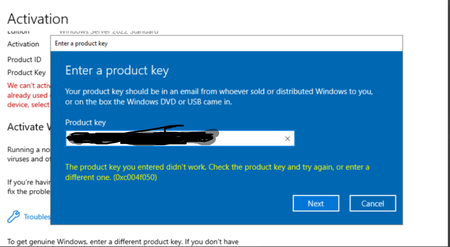
We have one VMware environment with 3 servers each with 2 CPUs, to be properly legal he acquired 6 Windows Server Datacenter Edition licenses, what happens is that when he is trying to activate the VMs that are in Windows Server Standard he gets the error that you see in the image. Licensing was carried out correctly as described in the Windows Server 2025 License Guide, in summary: all CPUs and Cores) in the virtualization cluster were licensed. can anyone advise the right way to use the Datacentre License in ESXi environment? thanks in advanced42Views0likes0Comments
Experiences Creating a CA with ML‑DSA Using Microsoft Smart Card Key Storage Provider (ADCS / PQC)
Hi all, I’m exploring the possibility of using post‑quantum cryptography within an Active Directory Certificate Services (ADCS) environment in the Insider release 29550. Specifically, I’m interested in creating a Certificate Authority (CA) where the CA’s key material is generated and stored using a Microsoft Smart Card Key Storage Provider (KSP) with support for ML‑DSA. This is an option selectable in the "Specify the cryptographic options". Has anyone in the community successfully done the following: Created a CA using ML‑DSA: Micosoft Smart Card KSP as the cryptographic provider? If so, what smart card or hardware token did you use that supports ML‑DSA via the Microsoft Smart Card KSP? (e.g., specific vendor and/or model that exposes ML‑DSA support correctly to Windows) Is it actually possible to create a CA using ML‑DSA as the cryptographic provider? If yes, what are the key steps or gotchas? What changes when ML‑DSA is used as the CA key provider compared to traditional providers like RSA/ECC? Any differences in certificate creation, enrollment, templates, compatibility with clients, etc.? Is there any official documentation for using ML‑DSA or PQC with ADCS? Are there other post‑quantum cryptographic (PQC) options already supported or coming soon in ADCS?116Views0likes0CommentsProblem in Windows Server 2022
Hello, I need help with the following: I had the video application installed and working on a VPS with Windows Server 2022, and suddenly it stopped working. It won't start, and it doesn't show any errors or events that I can analyze in the viewer. Does anyone have any idea what might be happening? I've already tried many AI recommendations, from uninstalling and reinstalling an older version of the application to uninstalling the latest server update, among other things. I also tried installing it on another VPS, and it shows the same problem.21Views0likes0CommentsAnnouncing Windows Server vNext Preview Build 29550
Hello Windows Server Insiders! Today we are pleased to release a new build of the next Windows Server Long-Term Servicing Channel (LTSC) Preview that contains both the Desktop Experience and Server Core installation options for Datacenter and Standard editions and Azure Edition (for VM evaluation only). Branding remains Windows Server 2025 in this preview - when reporting issues please refer to Windows Server vNext preview. Build 29531 established a new Server preview baseline build. Please perform a clean install of Build 29531 (or later) using the installation media linked below. Please note: Upgrades from earlier Windows Server vNext preview builds older than 29531 are not supported. We encourage all Windows Server vNext preview users to perform a clean install using 29531 or later to successfully upgrade to future Windows Server vNext preview builds. While upgrades from earlier Windows Server previews (Build 26525 and older) are not technically blocked by setup.exe, a number of known issues have been identified related to upgrades necessitating a release of a new baseline build for our Server vNext Preview Program. The new baseline build (29531) will not be Flighted due to upgrade issues. Flighting support resumes with preview build 29550 or later. What's New [NEW] ReFS Boot is enabled for Windows Server vNext preview builds. NVMe-over-Fabrics (NVMe-oF) extends the NVMe protocol—originally designed for local PCIe-attached SSDs—across a network fabric. Instead of using legacy SCSI-based protocols such as iSCSI or Fibre Channel, NVMe-oF allows a host to communicate directly with remote NVMe controllers using the same NVMe command set used for local devices. In this Insider build, Windows Server supports: NVMe-oF over TCP (NVMe/TCP), allowing NVMe-oF to run over standard Ethernet networks without specialized hardware. NVMe-oF over RDMA (NVMe/RDMA), enabling low-latency, high-throughput NVMe access over RDMA-capable networks (for example, RoCE or iWARP) using supported RDMA NICs. For more information, please visit: Introducing the Windows NVMe-oF Initiator Preview in Windows Server Insiders Builds | Microsoft Community Hub ReFS Boot is enabled for Windows Server vNext preview builds. Known Limitations ReFS Boot systems create a minimum 2GB WinRE partition. When WinRE cannot be updated due to space constraints, the system may disable WinRE. Disabling WinRE does not remove the partition. If the WinRE partition is deleted and the boot volume is extended over it, this operation is unrecoverable without a clean install. For more information, please visit: Resilient File System (ReFS) overview | Microsoft Learn Feedback Hub app is available for Server Desktop users! The app should automatically update with the latest version, but if it does not, simply Check for updates in the app’s settings tab. Known Issues Upgrading from earlier builds of Windows Server vNext previews (26525 or older) are not supported. Please perform a clean install of build 29531 or later. Users may experience failures when attempting to upgrade from earlier previews (build 26525 and older). VMs may fail to upgrade or start after upgrade from older preview builds impacting live migration and failover cluster scenarios. Download Windows Server Insider Preview (microsoft.com) Flighting: The label for this flight may incorrectly reference Windows 11. However, when selected, the package installed is the Windows Server update. Please ignore the label and proceed with installing your flight. This issue will be addressed in a future release. Available Downloads Downloads to certain countries may not be available. See Microsoft suspends new sales in Russia - Microsoft On the Issues. Windows Server Long-Term Servicing Channel Preview in ISO format in 18 languages, and in VHDX format in English only. Windows Server Datacenter Azure Edition Preview in ISO and VHDX format, English only. Microsoft Server Languages and Optional Features Preview Keys: Keys are valid for preview builds only Server Standard: MFY9F-XBN2F-TYFMP-CCV49-RMYVH Datacenter: 2KNJJ-33Y9H-2GXGX-KMQWH-G6H67 Azure Edition does not accept a key. Symbols: Available on the public symbol server – see Using the Microsoft Symbol Server. Expiration: This Windows Server Preview will expire September 15, 2026. How to Download Registered Insiders may navigate directly to the Windows Server Insider Preview download page. If you have not yet registered as an Insider, see GETTING STARTED WITH SERVER on the Windows Insiders for Business portal. We value your feedback! The most important part of the release cycle is to hear what's working and what needs to be improved, so your feedback is extremely valued. Please use the new Feedback Hub app for Windows Server if you are running a Desktop version of Server. If you are using a Core edition, or if you are unable to use the Feedback Hub app, you can use your registered Windows 10 or Windows 11 Insider device and use the Feedback Hub application. In the app, choose the Windows Server category and then the appropriate subcategory for your feedback. In the title of the Feedback, please indicate the build number you are providing feedback on as shown below to ensure that your issue is attributed to the right version: [Server #####] Title of my feedback See Give Feedback on Windows Server via Feedback Hub for specifics. The Windows Server Insiders space on the Microsoft Tech Communities supports preview builds of the next version of Windows Server. Use the forum to collaborate, share and learn from experts. For versions that have been released to general availability in market, try the Windows Server for IT Pro forum or contact Support for Business. Diagnostic and Usage Information Microsoft collects this information over the internet to help keep Windows secure and up to date, troubleshoot problems, and make product improvements. Microsoft server operating systems can be configured to turn diagnostic data off, send Required diagnostic data, or send Optional diagnostic data. During previews, Microsoft asks that you change the default setting to Optional to provide the best automatic feedback and help us improve the final product. Administrators can change the level of information collection through Settings. For details, see http://aka.ms/winserverdata. Also see the Microsoft Privacy Statement. Terms of Use This is pre-release software - it is provided for use "as-is" and is not supported in production environments. Users are responsible for installing any updates that may be made available from Windows Update. All pre-release software made available to you via the Windows Server Insider program is governed by the Insider Terms of Use.Announcing Windows Server vNext Preview Build 29531
Hello Windows Server Insiders! Today we are pleased to release a new build of the next Windows Server Long-Term Servicing Channel (LTSC) Preview that contains both the Desktop Experience and Server Core installation options for Datacenter and Standard editions and Azure Edition (for VM evaluation only). Branding remains Windows Server 2025 in this preview - when reporting issues please refer to Windows Server vNext preview. Build 29531 establishes a new Server preview baseline build. Please perform a clean install of Build 29531 (or later) using the installation media linked below. Please note: Upgrades from earlier Windows Server vNext preview builds are not supported. We encourage all Windows Server vNext preview users to perform a clean install to reliably continue in the Windows Server vNext preview program. While upgrades from earlier Windows Server previews (Build 26525 and older) are not technically blocked by setup.exe, a number of known issues have been identified related to upgrades necessitating a release of a new baseline build for our Server vNext Preview Program. The new baseline build (29531) will not be Flighted due to upgrade issues. Flighting support will resume with future vNext preview releases. What's New [NEW] ReFS Boot is enabled for Windows Server vNext preview builds. Known Limitations ReFS Boot systems create a minimum 2GB WinRE partition. When WinRE cannot be updated due to space constraints, the system may disable WinRE. Disabling WinRE does not remove the partition. If the WinRE partition is deleted and the boot volume is extended over it, this operation is unrecoverable without a clean install. For more information, please visit: Resilient File System (ReFS) overview | Microsoft Learn [NEW] ReFS Boot is enabled for Windows Server vNext preview builds. NVMe-over-Fabrics (NVMe-oF) extends the NVMe protocol—originally designed for local PCIe-attached SSDs—across a network fabric. Instead of using legacy SCSI-based protocols such as iSCSI or Fibre Channel, NVMe-oF allows a host to communicate directly with remote NVMe controllers using the same NVMe command set used for local devices. In this Insider build, Windows Server supports: NVMe-oF over TCP (NVMe/TCP), allowing NVMe-oF to run over standard Ethernet networks without specialized hardware. NVMe-oF over RDMA (NVMe/RDMA), enabling low-latency, high-throughput NVMe access over RDMA-capable networks (for example, RoCE or iWARP) using supported RDMA NICs. For more information, please visit: Introducing the Windows NVMe-oF Initiator Preview in Windows Server Insiders Builds | Microsoft Community Hub Feedback Hub app is available for Server Desktop users! The app should automatically update with the latest version, but if it does not, simply Check for updates in the app’s settings tab. Known Issues Upgrading from earlier builds of Windows Server vNext previews (26525 or older) are not supported. Please perform a clean install of build 29531 or later. Users may experience failures when attempting to upgrade from earlier previews (build 26525 and older). VMs may fail to upgrade or start after upgrade from older preview builds impacting live migration and failover cluster scenarios. Download Windows Server Insider Preview (microsoft.com) Flighting: The label for this flight may incorrectly reference Windows 11. However, when selected, the package installed is the Windows Server update. Please ignore the label and proceed with installing your flight. This issue will be addressed in a future release. Available Downloads Downloads to certain countries may not be available. See Microsoft suspends new sales in Russia - Microsoft On the Issues. Windows Server Long-Term Servicing Channel Preview in ISO format in 18 languages, and in VHDX format in English only. Windows Server Datacenter Azure Edition Preview in ISO and VHDX format, English only. Microsoft Server Languages and Optional Features Preview Keys: Keys are valid for preview builds only Server Standard: MFY9F-XBN2F-TYFMP-CCV49-RMYVH Datacenter: 2KNJJ-33Y9H-2GXGX-KMQWH-G6H67 Azure Edition does not accept a key. Symbols: Available on the public symbol server – see Using the Microsoft Symbol Server. Expiration: This Windows Server Preview will expire September 15, 2026. How to Download Registered Insiders may navigate directly to the Windows Server Insider Preview download page. If you have not yet registered as an Insider, see GETTING STARTED WITH SERVER on the Windows Insiders for Business portal. We value your feedback! The most important part of the release cycle is to hear what's working and what needs to be improved, so your feedback is extremely valued. Please use the new Feedback Hub app for Windows Server if you are running a Desktop version of Server. If you are using a Core edition, or if you are unable to use the Feedback Hub app, you can use your registered Windows 10 or Windows 11 Insider device and use the Feedback Hub application. In the app, choose the Windows Server category and then the appropriate subcategory for your feedback. In the title of the Feedback, please indicate the build number you are providing feedback on as shown below to ensure that your issue is attributed to the right version: [Server #####] Title of my feedback See Give Feedback on Windows Server via Feedback Hub for specifics. The Windows Server Insiders space on the Microsoft Tech Communities supports preview builds of the next version of Windows Server. Use the forum to collaborate, share and learn from experts. For versions that have been released to general availability in market, try the Windows Server for IT Pro forum or contact Support for Business. Diagnostic and Usage Information Microsoft collects this information over the internet to help keep Windows secure and up to date, troubleshoot problems, and make product improvements. Microsoft server operating systems can be configured to turn diagnostic data off, send Required diagnostic data, or send Optional diagnostic data. During previews, Microsoft asks that you change the default setting to Optional to provide the best automatic feedback and help us improve the final product. Administrators can change the level of information collection through Settings. For details, see http://aka.ms/winserverdata. Also see the Microsoft Privacy Statement. Terms of Use This is pre-release software - it is provided for use "as-is" and is not supported in production environments. Users are responsible for installing any updates that may be made available from Windows Update. All pre-release software made available to you via the Windows Server Insider program is governed by the Insider Terms of Use. @Windows Server Developer Platform New Build3KViews5likes0CommentsBuild 29550 Bare Metal ReFS Boot: Server Roles installation fails with 0xc004000d and/or 0x800f0922
When installing Windows Server Build 29550 on Bare Metal with the OS drive (C:) formatted as ReFS, the installation of core Server Roles (DHCP, Hyper-V, DNS, Windows Server Backup) fails consistently. Error returned by PowerShell (Install-WindowsFeature) and/or Server Manager: 0xc004000d (One or several parent features are disabled). CBS.log shows TiWorker failing with [HRESULT = 0x800f0922 - CBS_E_INSTALLERS_FAILED]. Troubleshooting done: Same ISO on KVM (formatted as NTFS) works perfectly. Same hardware, formatted as ReFS on older Build 29531, worked perfectly. "Leaf" features like Media Foundation install fine, but complex roles fail. sfc /scannow did not find any integrity violation DISM RestoreHealth fails with 0x80004005 Conclusion: There is a CBS / Hard Link regression when reading the Component Store (WinSxS) on a ReFS boot drive in build 29550.39Views0likes0CommentsUpdated Failover Clustering API Documentation
Does anyone know when the Failover Cluster API documentation will be updated? Currently, in learn it only shows Server 2008 and 2012. https://learn.microsoft.com/en-us/previous-versions/windows/desktop/mscs/failover-cluster-apis-portal The same goes for storage spaces. Is there any updated documentation?28Views1like0CommentsCapabilities of NVMe-oF so far?
Started playing around with NVMe-oF last night and got a successful connection to TrueNAS. I'm wondering what the current capabilities/limitations are. As far as I can tell you can't cluster the disk which is what I was primarily interested in. I was able to connect the same NQN endpoint to two servers but the WSFC cluster wouldn't detect it as a cluster available disk. Also the disks seems to disappear on every reboot and has to be set up again, so is there no auto-mount yet? I understand this is early preview so I don't have many expectations, just would like some clarity. Thank you.77Views0likes1CommentWindows Server Datacenter: Azure Edition preview build 29550 now available in Azure
Hello Windows Server Insiders! We welcome you to try Windows Server vNext Datacenter: Azure Edition preview build 29550 in both Desktop experience and Core version on the Microsoft Server Operating Systems Preview offer in Azure. Azure Edition is optimized for operation in the Azure environment. For additional information, see Preview: Windows Server VNext Datacenter (Azure Edition) for Azure Automanage on Microsoft Docs. For more information about this build, see Announcing Windows Server vNext Preview Build 29550 | Microsoft Community Hub.89Views1like0Comments
Windows NVMe-oF Initiator connect error
Hi everyone, I am trying to test the new Windows NVMe-oF Initiator within build 29550.1000 but I am not able to connect to a remote storage array - getting the error "IOCTL_NVMEOF_CONNECT_CONTROLLER failed with error code 0x1f" (see screenshot). Any idea what does this error mean or what can be wrong?103Views0likes1CommentHow to add a new domain controller to an existing Active Directory domain?
The specific situation is as follows: The company has one forest and domain, and two Active Directory (AD) servers. These two servers communicate and synchronize data. One server is deployed in the local data center, and the other is deployed on Azure Cloud. The forest and domain functional levels are both Windows Server 2008 R2. Both servers are running Windows Server 2016 Standard. Because there are computers running Windows XP and Windows 7 in the domain, upgrading the forest and domain functional levels is not possible. Windows Server 2008 R2 must be retained. The company now needs to add a new AD server on Huawei Cloud and join it to the company's forest and domain. The main questions are: How do I determine which operating system the new server should run? Excluding Windows Server 2016. How should I choose between Windows Server 2019, 2022, and 2025? How do I determine how to allocate CPU, memory, disk, and network resources during system deployment? How to determine which operating system is best suited for running a domain controller without conflicts or incompatibility? What preparations should be made before deploying a new server?64Views0likes1Comment





Events
Kick off Windows Server Summit 2026 with a forward-looking conversation led by the people shaping its future. Gain valuable insights as Windows Server product leaders come together to discuss the mom...
Monday, May 11, 2026, 07:00 AM PDTOnline
0likes
22Attendees
0Comments
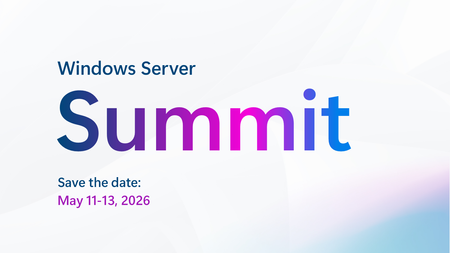
The Windows Server Summit is back with real‑world architecture guidance, scenario-based deep dives, and actionable insights to help you take advantage of the latest and upcoming Windows Server capabi...
Monday, May 11, 2026, 07:00 AM PDTOnline
3likes
214Attendees
3Comments
Recent Blogs
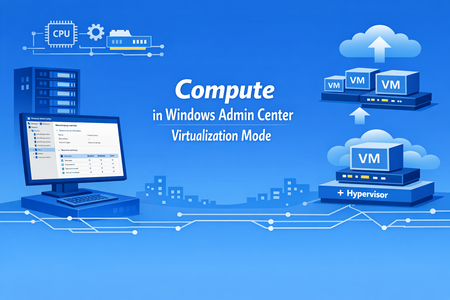
- We’ve been walking you through Virtualization Mode’s “Add resource” wizard step-by-step, first with a adventurous overview, then a no-nonsense networking walkthrough, followed by a shagadelic storage...Apr 06, 2026323Views3likes2Comments
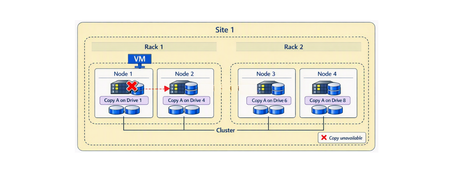
- Author: Parsan Saffaie Locality‑Aware Read Optimization for Modern Multi‑Rack and Campus Deployments With Windows Server 2025, Storage Spaces Direct (S2D) expanded its resiliency capabilities wit...Mar 24, 2026368Views2likes3Comments