collaboration
120 Topics
Cancelling Microsoft Customer Agreement (MCA)
I'm a Microsoft CSP provider. My customer wants to cancel their subscriptions because they want to leave the Microsoft. Do I need to cancel their MCA or will it be cancelled automatically? If it is necessary to cancel the MCA, where should this be done? Thank you very much!28Views0likes1Comment
Optimizing Microsoft 365 Licenses Using Behavior Data (E3/E1/F3)
Hi everyone, We are currently working on a Microsoft 365 license optimization initiative and would appreciate insights from the community and Microsoft experts. Our approach focuses on two main areas: (1) Revoking licenses for inactive users, and (2) Reviewing active users to ensure their assigned license (E3, E1, or F3) aligns with actual usage and collaboration needs. From a data perspective, we are leveraging Microsoft 365 usage signals such as Teams activity, Outlook email interactions, meetings, and SharePoint/OneDrive collaboration. While usage reports provide raw metrics, we are looking for guidance on how these signals should be interpreted and combined in a meaningful and fair way. Specifically, we would like to understand: (1) Which usage metrics best represent user collaboration behavior? (2) Are there any recommended thresholds or patterns that help distinguish light, standard, and heavy collaboration users to map E3, E1, or F3? Any best practices, references, or real-world experiences would be greatly appreciated. I'm sorry if this is the wrong forums to ask for. Thanks in advance for sharing your insights.139Views0likes1CommentCentral Forms repository
Hi, I want to create forms to be used company wide. We have locked Forms licensing down so that all staff cannot create forms, we want all data to be stored centrally and this way we know where all data is. If I create a Form, it creates it under my account. I if leave the organisation, this may be lost. What is the best way to create corporately used forms centrally?, i.e. not under an individual user account Thank you for your time, OllieSolved79Views0likes1CommentMicrosft Forms Permissions
Hello, We created a form for people to RSVP for an event. We shared the link with our invitees. Some individuals when they follow the link will see other peoples answers displayed in the question fields instead of the prompts we created. Furthermore, one individual opened Forms on their computer and saw that they had editing permissions to our form. How could this have happened and is there a way to remove people from what appears to be an editing permission? Thanks!1.3KViews0likes6Comments
Has Your Organization Set Up a Viva Engage Community for Microsoft 365 Collaboration?
Hi everyone! As a trainer, I often get great questions during my Microsoft 365 sessions. While I share answers live, only the attendees benefit—leaving many others without that valuable info. I’ve already set up a Microsoft Learning Pathways SharePoint site as a resource, but I’m exploring ways to extend knowledge-sharing beyond the classroom.Has anyone created or participated in a Viva Engage community to share tips, answer questions, and collaborate around daily Microsoft 365 tools? I’d love to hear about your experiences, best practices, or ideas on how to maximize impact and reach across your organizations. Thanks in advance for sharing! Let’s empower everyone to get more from Microsoft 365.😃163Views1like3CommentsDoes MC1189663 Impact Standard Power Automate Approvals?
Hi everyone After reviewing the change described in MC1189663 (retirement of external access tokens for actionable messages), I'm unsure wheter this also affect the out-of-the-box Standard Approval action in Power Automate. My question is specifically about the default "Start and wait for an approval" / "Standard Approval" action with no special configuration. Does this change impact approval emails or actionable messages generated by the Standard Approval action for internal usage (mails to internal accounts), or will those continue to work without modification? Thanks in advance for any clarification.105Views0likes0CommentsThe City Leader's Dilemma: How AI Is turning urban strain into strategic advantage
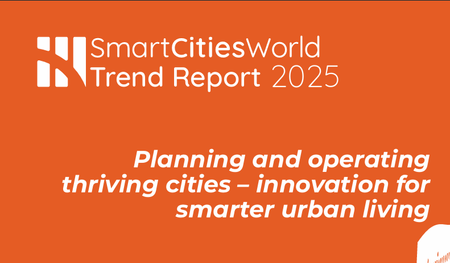
Ready to transform how your city plans and operates? Download the Trend Report 2025: Planning and operating thriving cities – innovation for smarter urban living to access the complete playbook on AI-powered urban innovation, complete with case studies from Bangkok, Singapore, Barcelona, and Manchester. Urban challenges aren’t slowing down. Populations are growing, climate pressures are intensifying, and residents expect seamless services, while budgets remain flat and workforces stretch thin. Traditional approaches can’t keep pace. The good news? Cities worldwide are showing that AI and digital innovation can drive meaningful improvements. Recent studies indicate that more than half of surveyed cities are already using AI to upgrade operations, and most plan to expand adoption in the next three years. For many leaders, the question is less about whether to act and more about how to act responsibly and effectively. After studying the latest research and real-world deployments, three strategic shifts stand out, each offering a different lens on how forward-thinking city leaders are turning pressure into progress. Shift One: From Fragmented services to unified citizen experiences Residents expect seamless problem-solving, not organizational complexity. Yet many cities operate in silos, transit systems, permitting offices, 311 reporting, and community engagement often run on separate platforms. The result? Multiple apps for residents, duplicated effort for staff, and missed insights locked in departmental databases. Leading cities are breaking this pattern through unified digital platforms powered by AI. Bangkok’s Traffy Fondue: Citizens report issues like broken streetlights or flooding via a mobile interface. AI categorizes each report and routes it to the right department. By mid-2025, the platform handled nearly one million citizen reports, improving engagement and reducing administrative overhead. The outcome? Reduced administrative overhead, and something harder to measure but equally important: residents who believe their government actually listens. Buenos Aires took a similar path with "Boti," a WhatsApp chatbot that evolved from a COVID-era tool into a citywide digital assistant. Citizens report issues, ask questions, and access services through the messaging app they already use daily. Technology that meets residents where they are improves efficiency and strengthens trust, when guided by principles of transparency and fairness. Shift Two: From reactive planning to predictive foresight Traditional urban planning relies on static models: masterplans, zoning maps, historical growth trends. These tools served their purpose. But they cannot capture the complexity of future risks, extreme weather, evolving mobility patterns, or the cascading effects of a single development decision. Digital twins complement human expertise by integrating geospatial data, climate models, and policy scenarios, helping cities make smarter decisions with limited budgets. Singapore's Digital Urban Climate Twin integrates geospatial data with climate models to simulate how different policies would affect temperature and thermal comfort across neighborhoods. These tools support informed decision-making while maintaining human oversight and accountability. The result? Strategic adaptation rather than reactive firefighting. Sydney built an urban digital twin that correlates environmental conditions with traffic accidents, using machine learning to predict crash risk on specific road segments. City planners can now test interventions virtually, what happens if we lower speed limits here? Add a bike lane there? Before committing resources. Even smaller cities are finding value. Imola, Italy uses a microclimate digital twin to model heat distribution street by street, guiding decisions about where to plant trees or specify cool pavement materials. The paradigm shift is profound: instead of planning based on what happened, cities can now plan based on what's likely to happen. This is how you make smart bets with limited budgets. Shift Three: From tech adoption to governance architecture Here's where many cities stumble. They invest in flashy pilots without building the institutional structures to sustain them. The cities getting this right treat governance as a strategic asset, not a compliance burden. Singapore's Model AI Governance Framework provides practical guidelines for transparency, fairness, and human-centric design. Its AI Verify toolkit lets organizations test their systems for resilience, accountability, and bias before deployment. Barcelona takes a different but equally rigorous approach, treating municipal data as a public asset under its Data Commons program. The city's procurement strategy favors open-source solutions, preventing vendor lock-in while supporting local innovation ecosystems. Both models share a common insight: rapid innovation doesn't automatically produce equitable outcomes. Governance creates the guardrails that allow experimentation without derailment. For city leaders, this means building cross-sector governance councils, adopting clear data strategies, creating ethical AI frameworks, and investing in workforce capability. These aren't obstacles to innovation; they're the foundation that makes sustained innovation possible. The Path Forward Cities that thrive in combine strategic vision with disciplined, responsible technology use. They embed digital capabilities into decision-making, supported by robust policies and cross-department collaboration. Learn how Microsoft helps governments build tech-empowered cities and resilient infrastructure at Microsoft for government. The Smart Cities World 2025 Trend Report provides the detailed case studies, governance frameworks, and implementation roadmaps to make this real. Download your copy now and start building the city your residents deserve.145Views0likes0CommentsAI for Personalized Government Services: Building Trust and Inclusivity in Cities
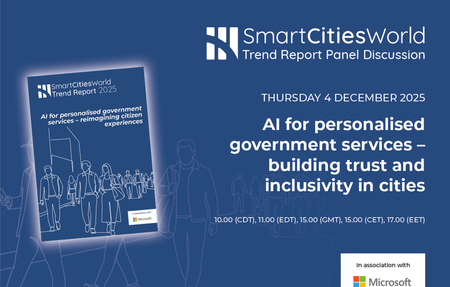
Cities today are under unprecedented pressure. Residents expect services that are fast, accessible, and tailored to their needs, yet many local governments still rely on fragmented systems and manual processes that create long queues and frustration. In a digital-first society, these gaps are no longer acceptable. Artificial intelligence (AI) offers a transformative opportunity to close them, enabling governments to deliver personalized, proactive, and inclusive citizen experiences. On December 4, Smart Cities World Connect will host a Trend Report Panel Discussion bringing together city leaders, technology experts, and public sector innovators to explore how AI can reshape the citizen experience. This virtual event will highlight practical strategies for responsible AI adoption and showcase lessons from pioneering cities worldwide. Register today: Trend Report Panel Discussion (4 Dec) Why AI Matters for Cities Urban populations are growing, budgets remain tight, and climate and social pressures are mounting. Against this backdrop, AI is emerging as a critical enabler for smarter governance. By integrating AI into service delivery, cities can: Support improved wait times through AI-powered assistants and multilingual agents. Deliver proactive services using unified data and predictive analytics. Ensure equity by extending digital access to underserved communities. Build trust through transparent governance and responsible AI deployment. These capabilities are no longer theoretical. Cities from Abu Dhabi to Singapore are already embedding AI into core operations—modernizing citizen portals, automating case management, and using digital twins to plan with foresight. The panel will explore five essential areas for AI-driven transformation: 1. Smarter Citizen Engagement AI-powered virtual assistants and chatbots can handle routine inquiries, guide residents through complex processes, and provide real-time updates—across multiple languages and platforms. This not only reduces queues but also makes services more inclusive for diverse communities. 2. Proactive, Personalized Services Unified data platforms and predictive analytics allow governments to anticipate citizen needs, whether it’s notifying residents about benefit eligibility or streamlining license renewals. By moving from reactive to proactive service delivery, cities can improve satisfaction and reduce backlogs. 3. Equity at the Core Efficiency must never come at the expense of fairness. AI-enabled systems should be designed to reach underserved populations, bridging the digital divide and ensuring that innovation benefits all residents, not just the most connected. 4. Governance and Trust Responsible AI adoption requires robust frameworks for transparency, data protection, and ethical oversight. Cities must implement clear governance models, conduct algorithmic audits, and engage communities in co-design to maintain public trust. 5. Practical Steps for Integration From piloting high-impact use cases to building cross-department governance and investing in workforce training, the discussion will outline actionable steps for scaling AI responsibly. Partnerships with industry and academia will also play a vital role in accelerating adoption. Lessons from Frontier Cities Several global examples illustrate what’s possible: Manchester City Council is advancing smart urban living through AI-driven planning and operations, using integrated data platforms and predictive analytics to optimize city services, improve sustainability, and enhance citizen engagement across transport, housing, and community programs Abu Dhabi’s TAMM platform, powered by Microsoft Azure OpenAI, delivers nearly 950 government services through a single digital hub, simplifying processes and enabling personalized interactions. Singapore’s Virtual Singapore project uses AI and digital twins to simulate urban scenarios, helping planners make evidence-based decisions on mobility, safety, and climate resilience. Bangkok’s Traffy Fondue civic platform leverages AI to categorize citizen reports and route them to the right department, reducing administrative overhead and improving response times. These cases demonstrate that AI is not just a tool for efficiency, it’s a catalyst for inclusion, resilience, and trust. What Attendees Will Gain By joining the December 4 session, city leaders will leave with: A clear understanding of AI’s transformative potential for improving citizen satisfaction and reducing service backlogs. Real-world examples of successful deployments in citizen portals, case management, and service automation. Insights into ethical and regulatory considerations critical to building trust in personalized government services. Guidance on preparing organizations to adopt and scale AI effectively. Looking Ahead Cities that thrive in the coming decade will be those that combine strategic vision with disciplined, trustworthy use of technology. AI can help governments deliver services that are smarter, more inclusive, and more responsive to the needs of every resident, but success depends on strong governance, cross-sector collaboration, and a commitment to equity. To learn more and register for the Trend Report Panel Discussion on December 4.252Views0likes0Comments