Recent Discussions
An Entra app credential is expiring. Which workload still uses it?
A credential rotation ticket often starts with three things: an application name, an expiry date and a deadline. That is enough to know something must happen, but not enough to rotate safely. Before touching the credential, I want to know whether that exact key is still requesting tokens, which resources it accesses and where those requests appear to come from. If Microsoft Entra sign-in logs are already connected to Log Analytics or Microsoft Sentinel, KQL can answer most of that without changing anything in the tenant. This is the workflow I use. What needs to be in the workspace The important diagnostic category is ServicePrincipalSignInLogs. In Log Analytics it becomes the AADServicePrincipalSignInLogs table. Normal SigninLogs are for interactive user sign-ins and are not the right data source for an app authenticating with its own secret or certificate. The diagnostic setting is configured under: Microsoft Entra ID > Monitoring & health > Diagnostic settings Make sure ServicePrincipalSignInLogs is being sent to the workspace you are querying. Microsoft documents the available log categories and their purpose here: https://learn.microsoft.com/en-us/entra/identity/monitoring-health/concept-diagnostic-settings-logs-options From the Entra recommendation or the affected application, copy the Application (client) ID. Do not confuse it with the application object ID or the service principal object ID. In the Kusto table: AppId is the Application (client) ID. ServicePrincipalId is the object ID of the service principal in the tenant. ServicePrincipalCredentialKeyId identifies the secret or certificate key used for the token request. ServicePrincipalCredentialThumbprint can help identify a certificate. ResourceDisplayName and ResourceServicePrincipalId identify the target resource. Those fields are part of the documented AADServicePrincipalSignInLogs schema: https://learn.microsoft.com/en-us/azure/azure-monitor/reference/tables/aadserviceprincipalsigninlogs Step 1: See every credential recently used by the application Replace TargetAppId with the Application (client) ID from Entra: let Lookback = 30d; let TargetAppId = "00000000-0000-0000-0000-000000000000"; AADServicePrincipalSignInLogs | where TimeGenerated >= ago(Lookback) | extend SignInTime = coalesce(CreatedDateTime, TimeGenerated) | where SignInTime >= ago(Lookback) | where AppId =~ TargetAppId | extend SignInSucceeded = tostring(ResultType) == "0" | summarize FirstSeen = min(SignInTime), LastSeen = max(SignInTime), Attempts = count(), SuccessfulSignIns = countif(SignInSucceeded), FailedSignIns = countif(SignInSucceeded == false), CredentialTypes = make_set(ClientCredentialType, 10), SourceIPs = make_set(IPAddress, 20), UserAgents = make_set(UserAgent, 10), TargetResources = make_set( strcat(ResourceDisplayName, " [", ResourceServicePrincipalId, "]"), 20 ) by AppId, ServicePrincipalId, ServicePrincipalName, ServicePrincipalCredentialKeyId, ServicePrincipalCredentialThumbprint, FederatedCredentialId | order by LastSeen desc This gives me a short usage map for the application. If the expiring credential's key ID appears in the result, that exact credential was used for at least one recorded token request during the selected lookback period. The target resources show what it requested a token for. Source IPs and user agents usually help narrow down the workload. They are clues, not host identification. A source IP might be a NAT gateway, proxy or shared outbound address, and user-agent strings are neither guaranteed nor trustworthy. I use them to narrow the search in deployment settings, automation jobs, Key Vault references and CI/CD configuration, not as final proof of where the workload runs. Rows with a populated FederatedCredentialId represent workload identity federation. They should not be mistaken for use of the expiring secret or certificate. Step 2: Inspect the exact credential Once the expiring key ID is known, this query shows the individual sign-in records for that key: let Lookback = 30d; let TargetAppId = "00000000-0000-0000-0000-000000000000"; let ExpiringCredentialKeyId = "11111111-1111-1111-1111-111111111111"; AADServicePrincipalSignInLogs | where TimeGenerated >= ago(Lookback) | extend SignInTime = coalesce(CreatedDateTime, TimeGenerated) | where SignInTime >= ago(Lookback) | where AppId =~ TargetAppId | where ServicePrincipalCredentialKeyId =~ ExpiringCredentialKeyId | extend Result = iff(tostring(ResultType) == "0", "Success", "Failure") | project SignInTime, Result, ResultType, ResultDescription, ServicePrincipalName, ServicePrincipalId, ClientCredentialType, ServicePrincipalCredentialKeyId, ServicePrincipalCredentialThumbprint, IPAddress, UserAgent, ResourceDisplayName, ResourceServicePrincipalId, CorrelationId | order by SignInTime desc A successful row is direct evidence that Entra accepted that credential for a token request at that time. Repeated failures can also be useful: they might show an incomplete rotation, an expired credential that is still configured somewhere, or a forgotten workload that keeps retrying. No rows do not mean "safe to delete." They only mean that no matching event exists in the data currently available to this workspace for the selected period. The workload might run monthly, the event might be outside retention, the diagnostic category might have been enabled recently, or the relevant logs might be routed elsewhere. The table also does not contain the application's business owner. I confirm ownership on the application or enterprise application in Entra, or enrich the result from an existing CMDB or Sentinel watchlist. I would not invent an owner from the last source IP or from whoever originally created the app. Step 3: Prove the replacement is actually in use After adding the replacement credential and updating the workload, I use the cutover time plus the old and new key IDs to verify the change: let CutoverTime = datetime(2026-08-26T12:00:00Z); let TargetAppId = "00000000-0000-0000-0000-000000000000"; let OldCredentialKeyId = "11111111-1111-1111-1111-111111111111"; let NewCredentialKeyId = "22222222-2222-2222-2222-222222222222"; AADServicePrincipalSignInLogs | where TimeGenerated >= CutoverTime | extend SignInTime = coalesce(CreatedDateTime, TimeGenerated) | where SignInTime >= CutoverTime | where AppId =~ TargetAppId | where ServicePrincipalCredentialKeyId in~ (OldCredentialKeyId, NewCredentialKeyId) | extend Credential = case( ServicePrincipalCredentialKeyId =~ OldCredentialKeyId, "old", ServicePrincipalCredentialKeyId =~ NewCredentialKeyId, "new", "other" ) | where Credential != "other" | summarize FirstSeen = min(SignInTime), LastSeen = max(SignInTime), Attempts = count(), SuccessfulSignIns = countif(tostring(ResultType) == "0"), FailedSignIns = countif(tostring(ResultType) != "0"), SourceIPs = make_set(IPAddress, 20), TargetResources = make_set(ResourceDisplayName, 20) by Credential, ServicePrincipalCredentialKeyId | order by LastSeen desc Before I remove the old credential, I want to see a successful token request with the new key ID after the cutover. I also run a real operation against the intended resource. A generic process health check is not enough if it never exercises the dependency that uses Entra authentication. Continued sign-ins with the old key after the cutover are a clear sign that another instance, deployment slot or workload still has the old value. An absence of old-key sign-ins becomes meaningful only after the expected workload schedule has been covered and the logs have arrived in the workspace. One final trap is token caching. Service principal sign-in logs show token requests, not every API call made with a token. Removing the old client credential prevents it from obtaining new tokens, but an access token already issued by Microsoft Entra normally remains valid until it expires. The rotation test must therefore force the workload to acquire a fresh token. Access token documentation: https://learn.microsoft.com/en-us/entra/identity-platform/access-tokens My rotation order is simple: Identify the exact old credential and the workload using it. Add the replacement while the old credential is still valid. Deploy the new credential to the workload's secret store. Force a fresh token request and execute a real operation. Confirm the new key ID in AADServicePrincipalSignInLogs. Watch for unexpected use of the old key for an appropriate period. Remove the old credential after the evidence and rollback window are sufficient for that workload. Microsoft Entra's preview recommendations for expiring application credentials and expiring service principal credentials are useful starting points. For me, the KQL correlation is the part that turns the warning into a controlled change instead of a blind rotation. Recommendation documentation: https://learn.microsoft.com/en-us/entra/identity/monitoring-health/recommendation-renew-expiring-application-credential https://learn.microsoft.com/en-us/entra/identity/monitoring-health/recommendation-renew-expiring-service-principal-credential How are you carrying application ownership into Sentinel? A maintained watchlist works, but it can easily become just another stale inventory.57Views0likes0Comments
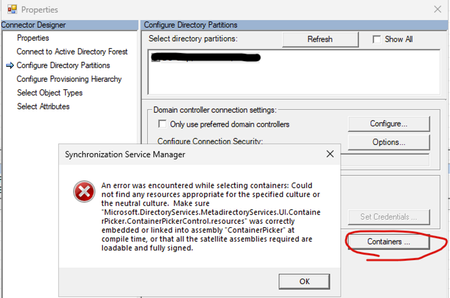
Entra Connect 2.6.84.0 displays error when trying to configure containers
I installed Entra Connect 2.6.84.0 on a fresh install of Windows Server 2025 and get an error message when trying to configure the containers of the local AD: (after pressing the button Containers... you need to enter a AD user and password, afterwards the below error message is displayed) Microsoft support could not help and recommended to use the configuration wizard to filter OUs. This works for me, but I still wonder if anyone else had this error?212Views1like2CommentsWarning: PIM disconnects users from Teams Mobile
I have been working with Microsoft Support on this issue for three months. Hopefully I can save others the trouble. Sometime around April 2024, I and my colleagues started seeing regular alerts on our mobile devices saying "Open Teams to continue receiving notifications for <email address>", or "<email address> needs to sign in to see notifications". Just as promised, after this message appears, we do not get notified about messages and Teams calls do not ring on our mobile devices until we open Teams. We eventually determined that these alerts coincided with activating or deactivating PIM roles. Apparently, a change was made to Privileged Identity Management in Microsoft Entra ID around that time whereby users' tokens are invalidated when a role is activated or deactivated. Quoting the Microsoft Support rep: "When a user's role changes (either due to activation or expiration), Skype AAD[?] will revoke existing tokens of that users. Skype AAD will also notify PNH about that token revocation. This is expected behavior and is working as designed. These changes were rolled out in Skype AAD in April/May 2024 which is since when you are facing the issue as well." Anyway, as far as I can tell, this change was not announced or documented anywhere, so hopefully this message will show up in the search results of my fellow admins who are dealing with this.2.6KViews1like5Comments
Passkey Sign‑In Fails in Entra Free Tenants (AADSTS135016 – FIDO Sign‑In Disabled via Policy)
Hello everyone, I’m documenting an issue which seems to be appearing across multiple tenants and multiple threads, but the root cause has never been clearly stated. If I’m mistaken in any part of this analysis, my apologies and I welcome correction. This post is intended to consolidate the symptoms, the misleading error message, and the actual underlying cause so other admins don’t waste time troubleshooting a problem that cannot be fixed through configuration. Summary of the Issue In Microsoft Entra ID Free tenants: Passkeys can be enabled Passkeys can be registered Passkeys appear correctly in Security Info Passkeys work for MFA Passkeys work for self‑service setup But passkey sign‑in fails, consistently, with: AADSTS135016: FIDO sign‑in is disabled via policy This occurs even when: FIDO2 is fully enabled AAGUIDs are correct “Allow self‑service setup” is enabled No Conditional Access policies exist Security defaults are disabled User‑level MFA settings are off Passkey profiles are correctly targeted Browser/device combinations are clean Multiple admins have reported this exact behavior. Why This Error Is Misleading The error suggests that a policy is blocking FIDO sign‑in. However, in Entra Free tenants, the real issue is that the required policy objects do not exist at all. Specifically, Entra Free tenants do not include: Authentication Strengths Passwordless Strength Phishing‑Resistant MFA Strength FIDO2 Strength Conditional Access enforcement Strength‑based sign‑in policies Passkey sign‑in requires these backend objects to bind the FIDO2 credential to the primary authentication flow. Without them, the sign‑in pipeline rejects the passkey and throws error 135016, even though registration succeeds. This is why: Some tenants work (licensed) Some tenants fail (Entra Free) “Fixes” like waiting, renaming profiles, or toggling settings only work in licensed tenants where the backend policy objects exist No amount of configuration resolves the issue in Entra Free This is a licensing limitation, not a configuration problem. Why This Needs Attention Microsoft is actively promoting: Passkeys Passwordless authentication Phishing‑resistant MFA Modern identity security But Entra Free tenants — including personal tenants, small labs, students, developers, and home environments — cannot use passkey sign‑in at all, despite documentation implying otherwise. This creates: Confusion Wasted time Misleading error messages Failed deployments Frustration for users who purchased physical passkeys A contradiction between Microsoft’s marketing and actual product behavior Passkeys are a security feature, not an enterprise feature. Basic passkey sign‑in should not be locked behind Entra ID P1. Request to Microsoft Please consider enabling basic passkey sign‑in for Entra Free tenants. At minimum: Update documentation to clearly state that passkey sign‑in requires Authentication Strengths (P1+) Update the error message to reflect the real cause Provide guidance for admins deploying passkeys in small or personal tenants This would reduce confusion and align the product with Microsoft’s own passwordless security goals. Closing If anyone has additional data points, please add them here. This issue is affecting multiple tenants and deserves a clear, authoritative answer from Microsoft. Thanks.166Views0likes0Comments
Need Microsoft support to resolve a historical tenant association with a domain I recently acquired
Hello, I recently became the legitimate and independent registrant of a domain that had previously been owned or used by an unrelated organization. I have no affiliation whatsoever with the previous domain holder or that organization. I have now received a Microsoft Power Platform notification at an email address under my domain concerning a Default environment belonging to the previous organization. The notification includes a Tenant ID and Environment ID, and the environment name corresponds to that organization. I do not own, administer, or have access to this tenant or Power Platform environment, and I am not seeking access to or control over it. My main concern is that there may still be a historical association between my domain or its email addresses and the previous organization's Microsoft tenant or related services. I would like Microsoft to investigate this and, where necessary, properly separate my domain and its email addresses from any unrelated historical Microsoft accounts, tenants, directories, or services. Most importantly, I want to ensure that this historical association will not adversely affect my ability in the future to use my domain and its business email addresses to create, verify, and use my own Microsoft 365, Microsoft Entra, Power Platform, or other Microsoft business services. At present, I do not have a Microsoft business account, Microsoft 365 tenant, or Power Platform tenant of my own. As a result, I appear to be unable to use some of the normal business support channels that require an existing tenant or administrator account. Could someone please advise me on the appropriate way to get this matter reviewed by Microsoft Support? If a Microsoft employee or official support representative can assist or direct me to the appropriate private support channel, I would greatly appreciate it. For privacy and security reasons, I have intentionally not posted the actual domain name, email address, Tenant ID, or Environment ID publicly. I am happy to provide all of the relevant details privately to an authorized Microsoft support representative if required. Thank you for any guidance.148Views0likes1CommentDisabled account OU
Hello We have a scenario for which I need help User account was disabled and was in Disabled account OU when she joined back it was enabled and moved to proper user account OU.This is synched from onpremise in O365 The earlier mailbox is converted from user mailbox to a cloud mailbox.This is a incloud object How do we proceed here We want the shared mailbox to be linked to the user account which was disabled earlier. Regards,129Views0likes2Comments
Expected exactly one role management policy assignment but 0 were found
I am getting the following error in Entra when I try to assign a custom role to a user: Expected exactly one role management policy assignment but 0 were found What I have done: entra.microsoft.com → Entra ID: Roles & admins → New custom role Basics * Role name: User Directory Reader * Description: Provides read-only access to user directory information. Intended for security analysts and auditors who require visibility into user identities without modification permissions. Permissions * microsoft.directory/users/standard/read *microsoft.directory/users/memberOf/read *microsoft.directory/users/manager/read When I click + Add assignment I get the error "Expected exactly one role management policy assignment but 0 were found". I have trial license for Privileged Identity Management (Entra ID P2).210Views0likes2CommentsGroup-Based Licensing (E3 → Business Premium): MutuallyExclusiveViolation – Months Unresolved
We operate a Microsoft 365 environment with Entra ID, Intune, and Exchange Online. For months, we have been dealing with a critical issue that remains unresolved to this day — despite an active Microsoft Support ticket. The Technical Problem: During the migration of approximately 87 user accounts from Microsoft 365 E3 to Business Premium (SPB) via group-based licensing in Entra ID, all affected accounts receive a MutuallyExclusiveViolation error. Microsoft's backend treats E3 and Business Premium as mutually exclusive, blocking the SPB assignment — despite sufficient licenses being available. A sequential approach (removing E3 first, then assigning Business Premium) is not an acceptable solution: a test run proved that this causes a complete loss of Exchange Online access. For a rollout across 87 productive user accounts, this is not viable. What is required is a seamless, atomic license swap at the backend level — exclusively via group-based licensing. The Support Problem: Two support engineers assigned — zero technical progress. Instead of a substantive solution, we received standard documentation steps that do not address the actual problem. A false resolution notice was issued — the issue had demonstrably not been resolved. Our own PowerShell tests (Get-MgUser, Get-MgSubscribedSku) and CSV exports from the Entra ID portal disproved this conclusively. Committed updates from the Engineering Team were not delivered. Instead, automatically generated follow-up emails were sent with no substantive relation to the ongoing case. An additional unexplained behavior: a test user appears in the error report of a license group they were never added to — a further backend inconsistency that has not been investigated. Current Status: The ticket has been open for months. 87 user accounts cannot be migrated to Business Premium. An escalation to the Team Manager has been initiated. No resolution is in sight. My Question to the Community: Has anyone experienced a similar issue with MutuallyExclusiveViolation in group-based licensing (E3 → Business Premium)? Is there a known workaround or an official Microsoft statement on this? Ticket Reference: #2604241410000669221Views0likes3CommentsUnexpected button behaviour when using the prompt=create parameter in Entra External ID user flows
Hi, In a recent workload, I'm assisting a client to implement Entra External ID for streamlined authorization as well as single sign-on for associated registered external facing third-party applications for external customer users through their Entra External ID identity, as well as assisting the client with auth branding and other UI customizations, and preparing Entra ID federation custom OIDC providers and configuration for enabling SSO with organizational internal and remote work- and school accounts etc. The sign-up / create account experience is of importance to the client, as a rather substantial amount of users are expected to sign-up via self-service sign-up following having received an invite via another app. To ensure that the user lands on the create account view, in order to minimize the number of steps and actions the users need to take to get there, the prompt=create parameter is used to pre-select the sign-up/register experience in the user flows UI. Having stress-tested the user flows and experience recently, we noticed that in a specific scenario, some UI elements behave in a manner that could be described as unexpected, and even though a workaround has mitigated it to some extent, the behaviour of some elements could probably be improved a bit to ensure an even more consistent user experience in the built-in user flows. Specifically, if the user flow is invoked with the prompt parameter set, the user lands on the create account screen as expected, however, unless custom CSS modification is applied, the Back button that would typically be there, as if having arrived there from the initial sign-in screen where it’s also displayed. If pressing the Back button displayed on the Create account view when having navigated there with the prompt=create set in the /authorize request, pressing the button seemingly doesn’t have any impact or result in any action, one can click it, but nothing happens. I'd suspect it's perhaps a "remnant" from if the flow is invoked without any prompt parameter set, or with prompt=login set, but when prompt=create is set, there is no state/page history in the UI to navigate back to, as no previous page has been displayed or rendered yet and added to the history, and the Back button click thus doesn’t have any effect. In general, I think buttons that don't have any tangible action should not be displayed, also, if prompt=login is set, the Back button isn't shown then either on the very initial user flow view shown then, so it would seem the built-in user flows actually already follow such approach in fact, but not when the prompt=create has been set, thus causing some inconsistency in the UI that users could notice unless custom CSS styling is applied. The expected behaviour for our business case would be that if prompt=create is set, then, similar to the prompt=login, no Back button should be displayed, or, if shown, it should result in some navigation (perhaps something like javascript.go(-1), but that could/would be dependent on from where the user arrived, e.g., going back a step in the browser history won't work if the user clicked a link from an invite email ) and preferably not be non-actionable. Furthermore, on the topic of the Back button and its behaviour when the prompt=create parameter is set, there is another case at which we observed some unexpected button behaviour as well, that could probably benefit from some attention. At a specific second scenario, it seems that the Continue button is displayed without providing any action, and when clicking the Back button then, clicking it seemingly resets the "create account", state likely set by the prompt=create initially, and instead switches the flow back to the sign-in state, which can at least affect the display text of some subsequent buttons shown in later steps in the UI. The user arrives at a built-in Entra External ID user flow /authorize endpoint, with the prompt=create query parameter set The user triggers the OTP challenge by entering an email address to verify the email address The user receives the OTP code but enters it incorrectly, i.e., doesn't copy the full code length of eight digits, and instead enters/pastes six of the eight code digits. The UI then shows an error message that the code could not be used/validated, and the email address field is displayed again with the email address that was used for the verification attempt prefilled. If the user clicks the Continue button at this stage, nothing happens. If the user clicks the Back button instead (given that it’s not hidden), it shows the same view one more time, with the Back and Continue buttons at the bottom. However, if the user clicks the Continue button this time, it works and a new code is sent. On the next screen, where the newly sent code can be entered, instead of a button named "Continue", it will now instead show a button with the text "Sign-in" (it would seem like the create account state has gotten lost somewhere along the way at this point, perhaps when the back button in the step 5 above was pressed). If one omits the prompt=create parameter, or when using prompt=login, things seem to work fine, the above occurs when the prompt=create is set. The reason why is the prompt=create is used is due to a business requirement to try to minimize the steps, especially in conjunction with the registration/sign-up, as far a possible when signing up. We have opted for the built-in user flows, not the self-hosted native authentication UI pages, for this project, and then as I understand it, it is the prompt=create parameter that can/should be used to enable the user to land directly on the registration page without having to navigate there manually via the sign-up link, that is otherwise shown on the initial sign-in page. It would thus be great if the prompt=create parameter could have some attention (or perhaps if a dedicated sign-up user flow type could be added potentially, even though that would perhaps warrant some update to the user flow app linking as well, as my understanding is that one user flow can be linked to one app registration at a time currently) to avoid that some buttons become unresponsive when the parameter is used, or falls back to sign-in, to improve the built-in user flows further, as the prompt=create fulfils the business requirement well otherwise. If there would be any further/follow-up questions on the above, e.g., to clarify the requirement, or further explain the reproduction steps and behaviour observed, or anything else, please tell, and I'll ensure to get back as soon as possible. Also, would someone have some input on potential other/additional ways to pre-select the create account/sign-up experience, that would naturally be much appreciated as well, thanks! Regards Kristoffer111Views0likes0Comments
Adding PIM enabled security group to an Access Package
Hi, Recently a new feature has gone in preview, it's now possible to add PIM enabled security group to an access package. explained here: https://learn.microsoft.com/en-us/entra/id-governance/entitlement-management-access-package-eligible I followed the instruction exactly on 2 different tenants, one tenant has Entra ID Governance licence, another has the Entra Suite licence. The result on both tenants was the same. When adding a PIM enabled group to an access package. I am presented only with 2 roles (member or owner) and not with the expected 4 roles. (member, owner, eligible member, eligible owner). The group I add is created for test purpose couple of weeks ago, and really is PIM enabled (discovered ). Is this a preview that has to be activated on a tenant? (its not in the "Entra -> Identity -> settings -> Preview features" list). Am i missing something? Cheers!250Views0likes3Comments
Verifying domain name issue
We're trying to verify our custom domain in Entra ID, but it turns out the domain is already claimed on another tenant that we have no access to (unknown account, no admin credentials). Because of that, verification on our own tenant fails. Normally the fix for a claimed-domain conflict is to open a support request so Microsoft can help release it. The problem: doing that requires a support plan, and purchasing one doesn't work for us. "payment" always succeeds and we dont get an error, but we don't get charged and the account status doesn't change, we have nothing more to go on. So we're stuck in a loop: we need support to release the domain, but we can't buy the support plan needed to reach support. Has anyone dealt with a domain claimed on an inaccessible tenant? And is there another route to Microsoft support when the support plan purchase itself fails?145Views0likes1CommentBest practices: Open OneDrive/SharePoint sharing but restrict Teams guest access by domain
Hi all, Since SharePoint Online and OneDrive moved fully to Microsoft Entra B2B for external sharing, we've run into a policy conflict and would like to hear how others are handling it. Our requirements Enable OneDrive and SharePoint file sharing with external users, regardless of their email domain. Restrict Microsoft Teams guest access to a predefined list of approved partner domains. Continue allowing Teams external access (federated chat and meetings) for all domains. The problem: Teams guests, SharePoint guests, and OneDrive guests are now governed by the same Microsoft Entra B2B invitation framework and the single Collaboration restrictions allow/deny list under: External Identities → External collaboration settings As a result, restricting guest invitations by domain also restricts OneDrive and SharePoint sharing for domains not on the allowlist. According to Microsoft's response in the following Q&A, this behavior is currently by design: https://learn.microsoft.com/en-us/answers/questions/5954975/onedrive-external-sharing-no-longer-working-with-a Questions to the community Has anyone implemented a solution where OneDrive/SharePoint sharing remains open to all domains while Teams guest access is restricted to approved domains only? Are there recommended approaches using Entitlement Management, Access Packages, Connected Organizations, or other Entra capabilities? Is there any roadmap item for workload-specific collaboration restrictions (e.g., separate policies for Teams guest invitations and SharePoint/OneDrive sharing)? Any real-world experience or best practices would be greatly appreciated. Thanks, Bejhan283Views0likes6CommentsPHS staged rollout works for existing users but not new synced users
We are troubleshooting an Entra ID PHS staged rollout issue with a federated domain using a third-party WS-Fed IdP. The intended behavior is that normal federated users redirect to the IdP, while users in the PHS staged rollout group receive the Microsoft/Entra password prompt instead. Existing users in the staged rollout group continue to work correctly. They enter their UPN and receive the Microsoft password prompt. One known-good test user is not provisioned in the third-party IdP and still signs in successfully through the Entra password prompt, so the working path does not require the user to exist in the IdP. The issue is only with newly created AD-synced users. Newly synced users in the same staged rollout group are still being routed to the federated IdP at HRD instead of receiving the Entra password prompt. We’ve verified the staged rollout policy and group membership from Graph, confirmed the affected users are properly AD-synced with clean immutableID/sourceAnchor, and confirmed PHS is working. Federation metadata and HRD policies also look clean. Seamless SSO/AZUREADSSOACC was checked and remediated, but the behavior did not change. For failed attempts, there is no Entra sign-in log entry, including tenant-wide interactive and non-interactive logs. However, the federated IdP logs show a WS-Fed inbound request from login.microsoftonline.com for the affected user. That makes it look like Entra HRD is routing the user to federation before sign-in logging or token issuance. The issue started around an Entra Connect AD connector/DC-path change. We have since reverted the connector to the previous known-good configuration. After reverting, we created a clean-room test user with the correct UPN set before first sync, confirmed sync/PHS/sourceAnchor, added the user directly to the staged rollout group, and waited 60+ minutes. The clean-room user still redirected to the federated IdP instead of getting the Entra password prompt. So the current behavior is that established staged-rollout users still get the Entra password prompt, but newly created synced staged-rollout users are sent to the federated IdP by HRD. Has anyone seen staged rollout get into this state, where existing users work but new synced users remain on the federated HRD path despite valid rollout policy, group membership, synced password hash, and clean immutableID/sourceAnchor? Is there any known backend cache/state reset or escalation path for HRD/staged rollout routing?557Views1like5Comments
Entra ID External - Custom Claims Provider help
Hi, I'm working with Entra ID External identities, trying to get a 'Token Issuance Start' event in a Custom Claims Provider working correctly. I've got all the pieces in place (SPA, web api with endpoint set and configured, app registrations, basic login working successfully, etc). I just can't get the claims provider to call my claims endpoint. Tried so many different ways, get all different errors, all kinds of hours with and without ChatGPT, and still not working. I'm to the point where I'm ready to pay a consultant to help me get past this. But I'm just a solo dev working on a personal side project, I can't call an enterprise consulting company asking for an hour or two on a Zoom call, they don't deal with such miniscule jobs, at least none that I've called. I'm well past the point of making a stack overflow post or something like that, I need a one-on-one with someone familiar with Entra ID custom claims providers for External identities. But I'm guessing most folks with that knowledge are working for some big consulting firm that won't give me the time of day. Can anyone suggest a small company that could help me, or maybe a place to post online for someone that might want to make a few bucks moonlighting on the side? I'm not looking for a handout, I'll pay a reasonable rate, I just can't afford (and pretty sure I won't need) more than a couple hours. If anyone knows of some site (or anyone interested yourself) please let me know, I'd be forever grateful, I'm at my wits end :) Thanks, Andy169Views0likes2CommentsIs system-preferred first factor overriding Single Sign-On?
My colleagues and I have noticed that we've started being prompted to perform a Windows Hello for Business authentication when we use Edge to access web resources that are authenticated with Entra. Previously, this authentication occurred silently through Single Sign-On with the PRT, per Understanding Primary Refresh Token (PRT) in Microsoft Entra ID - Microsoft Entra ID | Microsoft Learn. While investigating what might have caused this change in behavior, I found MC1411574 in the M365 Message Center, which talks about a change to system-preferred authentication that started rolling out in late June 2026, whereby it now applies to the first factor as well as multi-factor authentication. I excluded myself from system-preferred authentication and sure enough, that seems to have restored the previous behavior. Is it intended that this change to system-preferred authentication will disable SSO, or do we have something misconfigured?Solved142Views0likes3CommentsAm trying to create group with dynamic user membership using attribute "Employee Type"
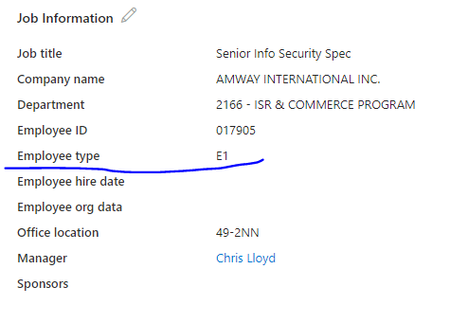
Am trying to create group with dynamic user membership using attribute "Employee Type", tried to get details from Extension attribute but didn't find any option, Did anyone tried this and able to do ? I found a posting where it said to create a custom attribute that would be populated by the 'employee Type' field. That just seems a little strange to me to to create an attribute to be exactly like the one that is already there.1.5KViews2likes6Comments
Can External ID (CIAM) federate to an Azure AD/Entra ID tenant using SAML?
What I'm trying to achieve I'm setting up SAML federation FROM my External ID tenant (CIAM) TO a partner's Entra ID tenant (regular organizational tenant) for a hybrid CIAM/B2B setup where: Business users authenticate via their corporate accounts (OIDC or SAML) Individual customers use username/password or social providers (OIDC) Tenant details / Terminology: CIAM tenant: External ID tenant for customer-facing applications IdP tenant: Example Partner's organizational Entra ID tenant with business accounts Custom domain: mycustomdomain.com (example domain for the IdP tenant) Configuration steps taken Step 1: IdP Tenant (Entra ID) - Created SAML App Set up Enterprise App with SAML SSO Entity ID: https://login.microsoftonline.com/<CIAM_TENANT_ID>/ Reply URL: https://<CIAM_TENANT_ID>.ciamlogin.com/login.srf NameID: Persistent format Claim mapping: emailaddress → user.mail Step 2: CIAM Tenant (External ID) - Added SAML IdP (Initially imported from the SAML metadata URL from the above setup) Federating domain: mycustomdomain.com Issuer URI: https://sts.windows.net/<IDP_TENANT_ID>/ Passive endpoint: https://login.microsoftonline.com/mycustomdomain.com/saml2 DNS TXT record added: DirectFedAuthUrl=https://login.microsoftonline.com/mycustomdomain.com/saml2 Step 3: Attached to User Flow Added SAML IdP to user flow under "Other identity providers" Saved configuration and waited for propagation The problem It doesn't work. When testing via "Run user flow": No SAML button appears (should display "Sign in with mycustomdomain") Entering email address removed for privacy reasons doesn't trigger federation The SAML provider appears configured but never shows up in the actual flow Also tried using the tenant GUID in the passive endpoint instead of the domain - same result My question Is SAML federation from External ID to regular Entra ID tenants actually possible? I know OIDC federation to Microsoft tenants is (currently, august 2025) explicitly blocked (microsoftonline.com domains are rejected). Is SAML similarly restricted? The portal lets me configure everything without throwing any errors, but it never actually works. Am I missing something in my configuration? The documentation for this use case is limited and I've had to piece together the setup from various sources. Or is this a fundamental limitation where External ID simply can't federate to ANY Microsoft tenant regardless of the protocol used?586Views1like4Comments
Global Secure Access - Deleted Appliction still applies (and cannot be recreated)
Hello everyone, we currently face an issue with Global Secure Access - Private Access - Enterprise applications. An admin has delete and tried to recreate an enterprise application. When he tried added the ip address and the port he got an error, that this rule is already within another app. The link led to an "empty" app. It was found that under "app registrations" the previously deleted applicaiton is still there and it was permanently deleted. However the problem stays. If we try a connection to the ip address and port which was specified in the deleted policy, we can see an error in the GSA Event Log on the Client: Could not authenticate using a cached token... Error: 9, Message: IncorrectConfiguration {"Description":"V2Error: invalid_resource AADSTS500011: The resource principal named <id of the deleted application> was not found in the tenant named <ourTenant>. This can happen if the application has not been installed by the administrator of the tenant or consented to by any user in the tenant. You might have sent your authentication request to the wrong tenant. Unfortunatly, since the application is not permanently deleted, it cannot be restored. We tried to completly disable and reenable private access (in Entra!) but this did not fix the problem. For some reason the deleted policy is stuck in GSA and we have no idea how to get it out.132Views0likes1CommentDoes Rights Management Service currently support MFA claims from EAM?
We've been testing EAM (external authentication methods) for a few months now as we try to move our Duo configuration away from CA custom controls. I noticed today that when my Outlook (classic) client would not correctly authenticate to Rights Management Service to decrypt OME-protected emails from another org. It tries to open the message, fails to connect to RMS, and opens a copy of the email with the "click here to read the message" spiel. It then throws a "something is wrong with your account" warning in the Outlook client's top right corner. If I try to manually authenticate & let it redirect to Duo's EAM endpoint, it simply fails with an HTTP 400 error. When you close that error, it then presents another error of "No Network Connection. Please check your network settings and try again. [2603]". I can close/reopen Outlook and that warning message in the top right stays suppresses unless I attempt signing into RMS all over again. However.. If I do the same thing and instead use an alternate MFA method (MS Authenticator, for example), it signs in perfectly fine and will decrypt those OME-protected emails on the fly in the Outlook client, as expected. I verified that we excluded "aadrm.com" from SSL inspection and that we're not breaking certificate pinning. So all I can assume at the moment is that Rights Management Service isn't honoring MFA claims from EAM. Any experience/thoughts on this? Thanks in advance!197Views0likes1CommentLooking for an on-prem MFA solution for Active Directory and RDP
Hi everyone, We're reviewing options for adding MFA to our on-premises Active Directory environment. Most of our users authenticate with Active Directory, while administrators also use RDP for managing Windows servers. Because part of our infrastructure is isolated from the Internet, we'd prefer an on-premises MFA solution instead of relying on a cloud-only service. Has anyone implemented something similar recently? I'm interested in hearing: Which solution did you choose? How difficult was the deployment? Did you run into any compatibility or performance issues? Is there anything you'd do differently if you were deploying it again? Any real-world experience or recommendations would be greatly appreciated. Thanks!279Views1like6Comments





Events
Recent Blogs
- This blog post describes how to instantly revoke Entra service principal bearer tokens with continuous access evaluation, even before their lifetime has expired.Aug 25, 20261.5KViews0likes2Comments
- Five signs your organization has outgrown Active Directory, and four practical steps to reduce dependency and modernize identity.Aug 13, 202612KViews2likes1Comment