windows 11
644 Topics
Windows 11 Insider Build 26220.9223 fails with 0xC1900101
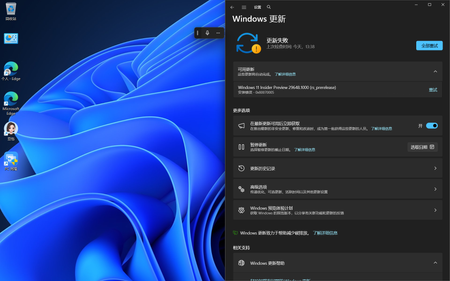
Hi, I am using Windows 11 Insider Preview and I cannot install Feature Update 26220.9223. The update downloads and starts installing. After the PC restarts, the installation fails and Windows rolls back to the previous build. Windows Update then shows the same update with a Retry option. Error code: 0xC1900101 Failed date: 23-08-2026 I have already restarted the PC and reset Windows Update components. The Windows Update and BITS services are running normally. Could anyone help me identify what is causing this error? Is there a known issue with build 26220.9223, or could a driver be causing the installation to roll back? Thank you.74Views0likes2Comments
my pc wont let me use insider program while being in a preview from another pc
so installed all of this on my desktop this device from my laptop my laptop uses this preview version so when i took the backup from my laptop i didnt need to type in a product key or anything it automatically but up in this state theres multiple windows 11 installed one here its personal pc it should be but it says its being run by an organization even through its not connect to a work nor school nor it ever had bin i looked at that on settings and im using windows 11 pro for workstation47Views0likes1Comment
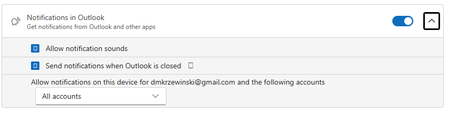
Custom notification sounds on multiple accounts in New Outlook
So, with this configuration/setting, am I correct in assuming that whatever sound I choose for a New Mail notification should apply to all accounts (I have four)? No matter what I do, I can configure only the Primary account sound, while all others insist on using the default sound. Very frustrating...153Views0likes3Comments
win 11 25H2 KB5101684 Preview and win 10 22H2 KB5120249 issue
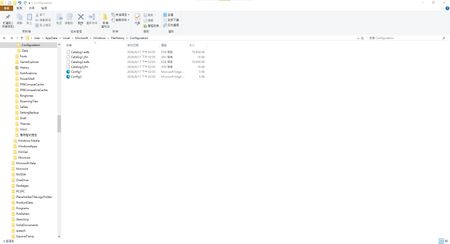
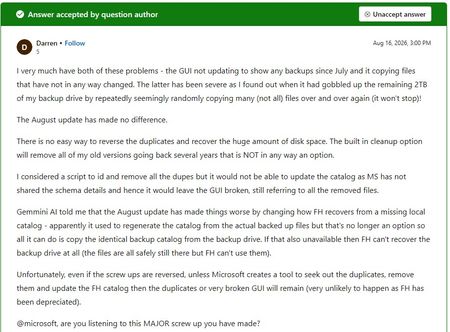
Hi everyone, I’m wondering if anyone else is experiencing the same File History problems on Windows 10 or Windows 11. My laptop is running Windows 11 25H2. Before installing KB5101684, File History worked normally. After installing the update, I started noticing several strange problems: The Last backup time does not update correctly. Previous Versions still shows no new versions. Files are still being written to D:\FileHistory\..., but File History does not properly update its backup information. Folders such as Desktop and Favorites can have their modification dates changed even when I did not actually change their contents. I did not manually change File History settings, registry settings, or delete Event Viewer entries. I also experienced a similar problem on my Windows 10 22H2 desktop after installing KB5120249. So my situation is: Windows 11 25H2 → KB5101684 → File History problem Windows 10 22H2 → KB5120249 → File History problem At this point, I have to ask: Could these Windows updates have introduced a File History regression? I have already reported this to Microsoft This is the part that is really frustrating. I have already reported the problem through the Feedback Hub, and I also contacted Microsoft Support and chatted online with a support professional. I was told that the issue would be handled and looked into. But now several days have passed, and I still have not received any meaningful follow-up or explanation. So honestly, I have to ask: What exactly is Microsoft doing with this report? If Microsoft tells users that the issue will be handled, then users should at least receive some kind of follow-up. Instead, it feels like the report disappears into a black hole. I have already spent a lot of time checking File History settings, services, the backup drive, and the actual files being written to the FileHistory folder. I have also provided detailed information about when the problem started and which Windows updates were installed. At this point, simply telling users to reset File History or reselect the backup drive is not good enough. Those may be temporary workarounds, but they do not answer the fundamental question: Why did File History start behaving incorrectly after the Windows update? If File History worked correctly before the update and then started showing incorrect backup timestamps, missing Previous Versions, and other abnormal behavior afterward, Microsoft should investigate the update itself. Microsoft needs to take this seriously A backup system is not something users can afford to treat casually. If File History is still copying files into the backup folder while the File History interface and Previous Versions do not correctly reflect the actual backup state, users can easily be misled into thinking their backups are working properly when they are not. That is a serious reliability issue. Microsoft should investigate whether KB5101684 and KB5120249 introduced a regression affecting File History, including: Incorrect backup timestamps Missing Previous Versions Incorrect modification dates File History database/catalog problems Unexpected or repeated backup behavior I am not asking Microsoft to magically fix my computer without investigation. I am asking Microsoft to actually investigate the Windows update and determine whether it caused the regression. I have already used the Feedback Hub. I have already contacted Microsoft Support. I have already spoken with a support professional online. I was told that the issue would be handled. win 10/11 C:\Users\User\AppData\Local\Microsoft\Windows\FileHistory\Configuration、D:\FileHistory\User\D:\FileHistory\User\202108ACERPC\Configuration\Configuration Not destroyed But several days later, there is still no meaningful response. This is extremely frustrating. Microsoft cannot keep telling users to troubleshoot the same thing over and over again while providing no explanation of what is actually happening. If this is a Windows bug, Microsoft should acknowledge it. If it is not a Windows bug, Microsoft should explain what is causing it. What users should NOT get is silence. If other Windows 10/11 users are experiencing the same issue, please share your Windows version, KB number, when the problem started, and whether files are still being written to the FileHistory folder. The more users report the same behavior, the harder it will be to dismiss this as an isolated configuration problem. Microsoft, please stop leaving users to figure this out on their own. Investigate the problem, explain what is happening, and provide an actual fix. We need answers, not silence. The following are the problems that users and I encountered.307Views0likes2CommentsThis issue occurred after I and other users installed KB5101684, disrupting File History.
My question Hello,I would like to ask whether other Windows 10/11 users have experienced the same File History problem, and I hope Microsoft will seriously investigate it. My laptop runs Windows 11 25H2. Before installing KB5101684, File History worked normally. After installing KB5101684, I noticed: Last backup does not update correctly. Previous Versions still shows no previous versions. Files are still written to D:\FileHistory\..., but File History does not properly update its backup information. Folders such as Desktop and Favorites have their modification dates changed even when their contents were not changed. I did not manually change File History settings, registry settings, or delete Event Viewer entries. I also experienced a similar problem on my Windows 10 22H2 desktop after installing KB5120249. In short: Windows 11 25H2 → KB5101684 → File History problem Windows 10 22H2 → KB5120249 → File History problem Could these updates have introduced a File History regression? Microsoft, please investigate whether these KB updates are related to the incorrect backup timestamps, missing previous versions, and unexpected File History behavior. Please do not simply ask users to reset File History or reselect the backup drive. Users need to know what is actually causing the problem and whether Microsoft will provide a fix. If other Windows 10/11 users have experienced the same issue, please share your Windows version, KB number, when the problem started, and whether files are still being written to the FileHistory folder. Please also consider sharing this post with other Windows users or Microsoft technical staff so this issue can receive proper attention. Microsoft, please investigate this issue seriously and provide a clear explanation and solution. Thank you. The following are the problems that users and I encountered.182Views0likes3CommentsImprove Voice Access Accuracy for Atypical Speech
Improve Voice Access Accuracy For Users With Atypical Speech Greetings, First, I would like to say that I appreciate Microsoft's continued investment in accessibility and speech-based computer control. Voice Access has the potential to be an extremely important accessibility tool for people who cannot reliably use a mouse, keyboard, or touchscreen. However, when i have test it on Windows 11 Pro 25h2 last public version update, Voice Access misunderstands a large portion of what I say even when using a good microphone in a silent room. So I recently joined the Windows Insider Program specifically to test the latest improvements to Windows Voice Access, especially the new Voice Isolation feature. I tested the new Voice Isolation feature and successfully completed the voice enrollment process. Voice Access was able to record my voice and create the voice profile without problems. However, after testing Voice Isolation, speech recognition accuracy remained very low, making me be sure to believe there is still an important accessibility gap for users with atypical speech. I have atypical speech due to a health condition and I use a breathing machine. The machine itself is very quiet, but it produces a small amount of airflow while I speak. My voice is also relatively low in volume and does not always follow the speech characteristics that modern speech recognition systems appear to expect. Even when I am in a quiet room with very little background noise, Voice Access misunderstands a large portion of what I say. This suggests that the primary problem in my situation is not simply environmental noise or interference from other speakers. The difficulty appears to be that the speech recognition model itself does not interpret my speech characteristics accurately. I have also noticed an interesting difference between languages. The English version of Voice Access generally understands me better than the Brazilian Portuguese version, despite Brazilian Portuguese being my native language. This suggests that recognition quality may also vary significantly between language models for users whose speech differs from the typical speech patterns represented in the training data. Voice Isolation is useful, but it is not speech training. I believe this distinction is extremely important. Voice Isolation appears to identify the user's voice and separate it from background noise, environmental sounds, or other people speaking nearby. That is valuable. However, identifying which voice belongs to the user is different from teaching the speech recognition system how that user speaks. Generally for someone with typical speech, improving the signal quality may significantly improve recognition. In the other hand for someone with atypical speech, however, the audio can be perfectly clean and still be interpreted incorrectly by the speech recognition model. This means that Voice Isolation can help the system hear my voice instead of the environment, but it does not necessarily help the speech recognizer understand my individual pronunciation and speech patterns. This is why I believe Voice Access would benefit enormously from an optional personalized speech recognition training system. Older Speech Recognition Systems Already Solved Part Of This Problem The application that has worked best for me so far is an accessibility program called Motrix, developed by UFRJ (Federal University of Rio de Janeiro): https://intervox.nce.ufrj.br/motrix/ Motrix is a very old application that uses Microsoft's SAPI 4 speech recognition technology. Despite being based on technology from the Windows XP/Vista era, it provides significantly better results for my speech than many modern recognition systems. One major reason is that it includes a built-in voice training process. The user reads predefined text, and the speech recognition system uses this material to adapt itself to the way that individual user speaks. After training, the system becomes better at interpreting that person's speech. This type of personalization was also available in older speech recognition products such as: * IBM ViaVoice * Dragon NaturallySpeaking * older speech recognition systems based on Microsoft SAPI These systems recognized that one universal speech model would not work equally well for every person. Modern speech recognition models are much more powerful overall, but many modern systems seem to have moved away from explicit per-user acoustic training. For most users, that may be acceptable. For accessibility users with atypical speech, however, personalized training can be essential. Why This Matters For Accessibility For someone using speech recognition primarily for convenience, a recognition error may only be an annoyance. For someone who depends on Voice Access to operate the computer, recognition accuracy can determine whether the computer is independently usable at all. Commands such as: "click" "scroll" "move" "open" "close" or application names must be recognized reliably. If a user has to repeat a command five or ten times, or if Voice Access consistently interprets the same pronunciation incorrectly, speech control becomes exhausting and unreliable. This problem becomes even more significant for users who use Voice Access precisely because conventional input devices are difficult or impossible for them to use. Accessibility software therefore needs to consider not only users with typical speech, but also users with: * atypical speech patterns * dysarthric speech * reduced speech volume * altered articulation * respiratory support * speech affected by physical disabilities *other speech characteristics that differ from the speech patterns commonly represented in large speech recognition datasets Not every user in these groups will have the same needs, and that is exactly why optional personalization would be so valuable. Suggested Feature: Personalized Speech Training I would strongly suggest adding an optional feature such as a personalized speech training and voice adaptation that could work similarly to older speech recognition training systems. For example, a Voice Access personalized speech training would ask the user to read a medium size text (5.000~7.500 character lenght) from a example text list so the system could then build a personalized speech profile that adapts recognition to the user's pronunciation and acoustic characteristics. Training could happen gradually. A basic training session might take only a few minutes, while users who need additional adaptation could optionally provide more speech samples over time. Personalized speech training seems to be the first priority to be implement in a future update. Ideally, this personalization would be stored locally on the device so it can work without internet connection and it could be reset, retrained, exported, or backed up by the user. Voice Isolation And Personalized Training Could Complement Each Other I do not believe Voice Isolation should be replaced. I believe it could become the first stage of a much more powerful accessibility system. For example: Microphone → Voice Isolation → Personalized Speech Model → Voice Access Recognition * Voice Isolation could remove unwanted audio and identify the correct speakers; * Personalized speech training could then adapt the recognition system to the way that specific person speaks. These are two different problems, and solving both would potentially make Voice Access dramatically more accessible. Command-specific Training Could Also Help Even if full personalized speech recognition is technically difficult to implement, a smaller first step could be personalized training for Voice Access commands. A user could record commands several times, such as: "click" "scroll down" "move left" "open Start" "show numbers" and so on. Voice Access could learn how that particular user pronounces those commands. For users who mainly depend on Voice Access for computer control rather than long-form dictation, even this limited form of personalization could make a major difference. Microsoft and Nuance Microsoft now owns Nuance, a company with decades of experience in speech recognition and voice accessibility technologies. Dragon NaturallySpeaking and related technologies demonstrated many years ago that speaker adaptation and personalized voice profiles can significantly improve recognition for individual users. Modern machine learning technologies should make it possible to revisit this concept in a much more advanced way. I hope Microsoft can combine the strengths of modern speech recognition with the personalization capabilities that older systems provided. Why I Am Submitting This Through The Insider Program I joined the Windows Insider Program specifically because I wanted to test these new Voice Access improvements and provide meaningful accessibility feedback before features become widely deployed. Voice Isolation is an interesting and potentially useful improvement, but my testing suggests that voice isolation alone does not address the main recognition problem experienced by some users with atypical speech. The speech recognizer needs a way to adapt to the user, rather than requiring every user to adapt their speech to the recognizer. That distinction is extremely important. Conclusion Please consider adding optional personalized speech recognition training to Voice Access. It could make Voice Access usable for people who are currently poorly understood by generic speech recognition systems. For users with atypical speech, this is not merely a request for slightly better recognition accuracy. It can determine whether voice control is a practical accessibility solution at all. Voice Access already provides an excellent foundation for hands-free Windows control. Adding genuine per-user speech adaptation could make it accessible to a much broader group of people. If other users have similar experiences, please consider supporting or upvoting this feedback so Microsoft can better understand the demand for personalized speech recognition. Please also keep the discussion respectful and constructive. Accessibility needs vary greatly between individuals. A feature that may appear unnecessary to one user can be essential for another. Thank you for considering this feedback and for continuing to improve accessibility in Windows.54Views0likes1CommentWin 10/11 file history is malfunctioning after an update why hasn't Microsoft fixed this issue yet?
Hello, I would like to ask whether other Windows 10/11 users have experienced the same File History problem. I also hope the Microsoft technical team can seriously investigate this issue. My laptop is running Windows 11 25H2. Before installing KB5101684, File History had always worked normally. In Control Panel → All Control Panel Items → File History, the backup time would update normally whenever files were backed up to my D: drive. Around July 28–29, 2026, at approximately 10:00 AM, before KB5101684 was installed, File History was still working normally. I want to make this very clear: I did not manually change my File History settings, delete Event Viewer entries, or modify or delete relevant registry settings. The problem started after KB5101684 was installed. I have already confirmed the following: File History is still enabled. The D: drive is working normally and can be accessed without any problems. After selecting Control Panel → All Control Panel Items → File History → Run now, files are indeed written to: D:\FileHistory\user\LAPTOP-GJTRIQFJ\Data\C\Users\user However, the "Last backup" time displayed by File History does not update correctly. Even after modifying a document, confirming that it was successfully saved, and then clicking Run now, the latest backup time and file versions do not update as expected. Under File Properties → Previous Versions, it still says: "There are no previous versions available." I also noticed that every time a backup runs, folders such as Desktop and Favorites under the FileHistory folder on the D: drive continue to have their modification dates changed, even when their contents have not actually been modified. What makes this even more concerning is that my Windows 10 22H2 desktop computer also started experiencing File History synchronization problems after installing KB5120249. In other words: Windows 11 25H2 → KB5101684 → File History problem Windows 10 22H2 → KB5120249 → File History problem This makes me seriously concerned that these problems may be related to a recent Windows Update change or regression affecting File History. To be honest, I am extremely frustrated with Microsoft. The problem is not simply that Windows has a bug. Any large operating system can have bugs. The real problem is that users have reported the issue, provided detailed testing results, identified the Windows versions and specific KB updates involved, provided the actual File History paths, and spent considerable time troubleshooting, yet it is already August and there still does not appear to be a clear official confirmation from Microsoft regarding whether these issues are related to KB5101684 or KB5120249. Users should not have to repeatedly troubleshoot the same problem without receiving a clear explanation or effective solution. I would like the Microsoft technical team to seriously investigate the following: Could KB5101684 be causing File History backup timestamps or version information to behave incorrectly on Windows 11 25H2? Could KB5120249 be causing similar File History problems on Windows 10 22H2? Why are files actually being written to the FileHistory directory while the "Last backup" time does not update correctly? Why does "Previous Versions" continue to report that no previous versions are available? Why do folders such as Desktop and Favorites have their modification dates changed during backup even when their contents have not been modified? Could this be a File History regression introduced by a recent Windows Update? Please do not simply ask users to repeatedly reset File History, reselect the backup drive, or recreate the File History configuration without investigating the underlying cause. Microsoft needs to determine what is actually happening. I would also like to ask other Windows 10/11 users who have experienced similar File History problems to leave a comment with the following information: Windows version KB update number Date when the problem started Whether the backup location is a local drive or network drive Whether the "Last backup" time is incorrect Whether "Previous Versions" is unavailable Whether files are still being written to the FileHistory folder Please also consider sharing this post or bringing it to the attention of other Windows users and the Microsoft technical team. The more independent cases Microsoft can compare, the easier it should be to determine whether this is a common problem. I am not asking Microsoft to guarantee that Windows will never have bugs. I am asking Microsoft to properly investigate problems that users have clearly reported, provide an explanation, and deliver an actual fix when appropriate. This issue has now continued into August, and I am extremely disappointed with the way the File History problem has been handled so far. Microsoft, please do not ignore this issue. Please investigate it seriously and provide users with a clear response and an actual solution. Thank you.377Views2likes7Comments