grow
192 TopicsAccelerate massive growth by co-selling through Microsoft Marketplace with App Advisor guidance
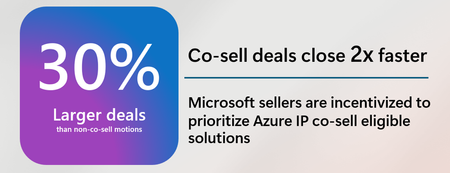
Co-selling with Microsoft is one of the most powerful growth levers available to software companies to sell to enterprises. But on its own, co-sell is not a strategy. The real acceleration happens when you combine them. When you publish a transactable offer in Microsoft Marketplace and make it Azure IP co-sell eligible, you unlock joint selling with Microsoft’s global field organization— and that changes the trajectory of your business. Here’s how to turn Marketplace plus co-sell into a growth engine. Why Marketplace & co-sell drive larger, faster deals Data consistently shows that co-sell deals outperform non-co-sell deals: Co-sell deals are ~ 30% larger, Co-sell deals close up to 2x faster, Microsoft sellers are incentivized to prioritize Azure IP co-sell eligible solutions. When your offer is transactable in Marketplace and co-sell eligible, three important things happen: Microsoft sellers can confidently introduce your solution to their enterprise accounts, Customers can apply purchases toward their Azure consumption commitments, Your offer becomes visible inside Microsoft’s internal sales systems. This reduces friction in procurement, increases executive visibility, and accelerates deal velocity. You’re no longer selling alone. You’re selling with leverage. The following is high-level guidance of the steps to start co-selling Want to skip right to the curated guidance? Go to App Advisor Step 1: Publish a transactable offer in Marketplace Co-sell begins with Marketplace readiness. To unlock Azure IP co-sell benefits, you must publish a transactable offer through one of these marketplace offer types: Software as a service (SaaS), Azure Application, Azure Container, Azure VM. If you sell apps or agents built on Microsoft 365 or Copilot, link your solution to a transactable SaaS offer to qualify. To see how Abnormal Security made the most of co-selling, see the blog and corresponding Co-Sell Coaching call. Step 2: Create a co-sell ready solution in Partner Center When publishing your offer, you can create a co-sell solution to activate visibility with Microsoft sellers. Inside the Referrals workspace in Partner Center: Create a co-sell solution, Classify your solution using Microsoft taxonomy, Upload required marketing collateral: Solution one-pager, pitch deck, reference architecture diagram (required for SaaS), Enter the link to your product's website to help Microsoft sales teams and channel resellers learn more about your solution, Add geographic sales contacts. This listing tells Microsoft sellers: Who to contact, What your solution does, Which Azure services it uses, Why they should bring you into a deal. Clear positioning drives seller confidence. Seller confidence drives joint opportunity. Step 3: Achieve Azure IP co-sell eligible status To become Azure IP co-sell eligible, you must meet performance or technical validation requirements. You can qualify by: Reaching $100K USD in trailing 12-month Marketplace billed sales or Azure Consumed Revenue (this is the fastest path to meeting that requirement) or Passing Microsoft technical validation confirming your solution is primarily built on Azure This status matters because: Customers can count the purchase toward Azure consumption commitments, Microsoft sellers are financially incentivized to include your solution, Your offer is labeled Azure benefit eligible. Customers being able to decrement their Azure consumption commitments can help draw engagement and interest to your app or agent. Step 4: Use referrals to build momentum High-performing software companies don’t just wait for Microsoft to bring opportunities. They submit referrals to help sell co-sell their app. Submitting referrals: Increases your visibility to Microsoft sellers, Signals strategic partnership depth, Opens doors to new seller collaboration, Provides insight into customer Azure commitments. Small actions compound. Referral discipline builds pipeline resilience. For more information about referrals, visit Generate, manage, and nurture leads step in App Advisor. Step 5: Use Marketplace Rewards to amplify co-sell Marketplace Rewards benefits strengthen your co-sell motion: Customer propensity scoring to prioritize Marketplace-ready buyers, Azure sponsorship credits to help close competitive deals, Microsoft seller webinars and solution spotlights. This is how you differentiate inside the ecosystem — not just with customers, but with Microsoft sellers. The growth shift: from independent seller to ecosystem player Software companies that treat Marketplace merely as a checkout page miss some amazing opportunities. Those that combine: Transactable offers, Azure IP co-sell eligibility, Strong co-sell collateral, Referral discipline, and Marketplace Rewards. Move from transactional selling to ecosystem selling. The result: Larger average deal sizes Shorter sales cycles Stronger executive alignment Increased visibility inside Microsoft accounts You’re no longer trying to break into enterprise deals. You’re already in the room. Ready to put your co-sell strategy into motion? Visit App Advisor to learn more about how to accelerate your growth with co-sell.36Views2likes0CommentsBuilding an AI solution is just the first step - turning it into revenue is where real growth begins
As partners bring AI-powered apps and agents to market at record speed, many struggle with how to price, license, and operationalize their offers for long-term success. This article breaks down how to design monetization early and avoid common pitfalls when publishing on Microsoft Marketplace. Learn how the Marketplace Monetization Checklist helps SaaS and container offers establish secure licensing, effective pricing models, and scalable fulfillment. See how App Advisor translates guidance into action, and how AI Envisioning sessions help align teams on strategy before you build and publish. If you want Marketplace to become a predictable revenue engine—not just a distribution channel read the full article to learn how to monetize your AI apps and agents and drive sustainable growth. Read more: Monetize your AI apps and agents on Marketplace to realize growthMonetize your AI apps and agents on Marketplace to realize growth
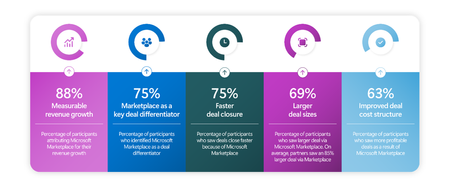
Ready to stop guessing how to monetize your offer? Skip right to App Advisor Software development companies are building faster than ever. But when it comes to sales, the key to monetization happens early. Monetization, packaging, and operational execution helps determine whether your AI solution becomes a growth engine on Microsoft Marketplace. New data reinforces the opportunity. According to Omdia research highlighted in Microsoft’s blog on the partner revenue opportunity: 88% of partners selling through Marketplace report revenue growth, 75% close deals faster, 69% secure larger deals, 60% agree Marketplace improved their deal structure. The Omdia study found that among partners that sell through Marketplace (compared to direct go-to-market and sales motions), they saw incredible gains with Marketplace. The opportunity is clear. The question is how to capture it consistently. How the AI app and agent monetization checklist helps The time to think about sales is when you’re building, not just when you hit “publish” on an offer. That’s why the Microsoft Marketplace Monetization Checklist for SaaS and Container Offers was created as part of the AI envisioning sessions. It gives your team a structured, practical framework to move from idea to revenue with confidence. A solution can offer immense value, but because monetization decisions are made too late, it can perform worse than expected. Pricing models, packaging tiers, metering accuracy, and subscription flows are often bolted on after architecture is finalized. The checklist changes that. It organizes monetization strategy around the five pillars of the Well-Architected Framework so that revenue design and technical design stay aligned. This checklist is also featured in App Advisor Build and Publish stage, so that you don’t miss a single step along the way. This ensures your offer is: Secure and enterprise-ready, Reliable across subscription lifecycle events, Cost-optimized for margin protection, Performance-aligned to your pricing model, Operationally structured for scale. Instead of guessing, you follow a clear path. Monetizing your offer the right way While designed for Saas and Azure Container offers, this checklist can be helpful for any offer. It guides you through key decisions that directly impact growth: Define your revenue model early during design, not after deployment, Model cost of goods sold against pricing tiers to protect margin, Package plans intentionally (Starter, Pro, Enterprise) to drive upsell, Implement secure licensing and Marketplace API validation to prevent revenue leakage, Optimize trial-to-paid conversion with structured upgrade paths. The checklist also reinforces operational execution with best practices for both SaaS and Azure Container offers. The result: an offer built for revenue, not just deployment. From build to publish to monetization on Microsoft Marketplace Building a great app or agent for your customers is the goal, but scaling your sales helps you grow. You’re not just publishing an offer, you’re building: A pricing strategy aligned to architecture, A subscription model aligned to customer value, An operational model aligned to Marketplace growth. This is how your company can turn Marketplace from a just listing platform into a revenue multiplier. Ready to monetize apps and agents on Microsoft Marketplace? You don’t have to guess how to grow. Use these resources to monetize your app or agent and get world-class Microsoft best practices, curated for you: Download the Marketplace Monetization Checklist, See the opportunity for your revenue growth in App Advisor, Watch sessions with experts by signing up for the AI Envisioning sessions.153Views7likes0CommentsGet alignment early to build AI apps and agents and sell on Marketplace
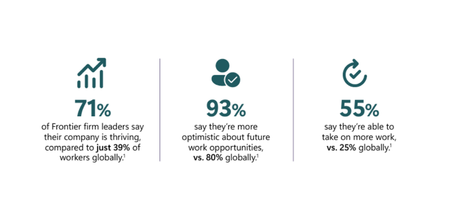
Frontier firms are pulling ahead. The data is clear why. According to Microsoft research of Frontier firms: 71% of leaders say their company is thriving, compared to just 39% of workers globally, 93% are optimistic about future work opportunities, 55% say they’re able to take on more work, versus 25% globally. But the difference isn’t experimentation with AI. It’s execution. Work Trend Index Annual Report, 2025 How getting business and technical alignment with AI development helps Frontier firms are succeeding because they align business intent, technical design, and security expectations before building AI apps and agents. They don’t treat alignment as a workshop or a slide deck. They treat it as a prerequisite to building agents that actually work, scale, and earn trust. Microsoft helps you adopt this same approach through structured guidance in App Advisor, AI envisioning resources, and practical checklists designed to keep teams aligned from design through deployment. Why alignment separates Frontier firms from the rest AI apps and agents increasingly operate inside critical business workflows. That raises the bar. When alignment is missing, teams often ship agents that technically function but fail in production due to security gaps, unclear ownership, or mismatched expectations around outcomes. Teams that align early are better positioned to: Move faster through build by eliminating ambiguity, Build agents that reliably perform the job they’re designed to do, Embed security, governance, and trust by design, not as an afterthought, Reduce redesign cycles caused by unclear requirements or late-stage constraints. This is where guidance-first approach from Microsoft plays a critical role. How App Advisor helps teams align before they build App Advisor is intentionally designed to help teams put an alignment framework together at the start. To move faster later. App Advisor gives you: Tools to help your business get an AI Center of Excellence, Systems, like Azure Essentials and Cloud Adoption Framework, Checklists for every step of the way, so that teams stay informed, Toolkits and services that build in answers to friction that your team can leverage. These shared starting points helps ensure what teams build reflects real business needs and can be deployed responsibly. Using AI envisioning sessions to align outcomes The Microsoft AI envisioning sessions complement App Advisor by helping teams translate strategy into execution. The Business–Technical Alignment Checklist for Microsoft Foundry helps teams stay synchronized as they build. It ensures architecture, cost, security, and delivery choices support a clear business outcome—not just technical success. This checklist reinforces practices like: Defining shared success metrics and KPIs, Setting joint budget guardrails and cost visibility, Establishing cross-functional cadence and governance, Planning for integration testing and real-world workflows, Using a shared project workspace as a single source of truth. This alignment reduces late-stage friction when you’re preparing to publish, co-sell, or scale. This translates into offers that are easier to describe on Marketplace, more likely to attract customers, and better for those customers to deploy. Moving from aligned design to confident build to sales growth After alignment is established, teams can move into build with momentum. App Advisor showcases development toolkits, SDKs, templates, and reference architectures that reflect the decisions already made during design. That continuity matters. It keeps teams focused on execution instead of re-litigating fundamentals mid-build. Alignment isn’t a meeting. It’s a system. Microsoft provides the structure to support it. Start aligning today to sell more tomorrow Get resources to help your teams align and keep in step in App Advisor.132Views7likes0Comments
Looking for advice on collaborating with complementary Microsoft partners
a { text-decoration: none; color: #464feb; } tr th, tr td { border: 1px solid #e6e6e6; } tr th { background-color: #f5f5f5; } Hi everyone 👋 My name is Martin Rojze. I’m focused on the Microsoft data platform, with a specialization in Microsoft Fabric and Power BI. My work is centered on helping organizations design, implement, and scale modern analytics and reporting solutions on Azure, with a strong emphasis on real world business outcomes rather than just dashboards. As demand for end to end solutions continues to grow, I’m looking to deepen collaboration with complementary Microsoft partners, for example partners who focus on Dynamics 365 or Business Central Data engineering, data science, or AI App development including Power Apps, custom apps, or ISVs Security, governance, or change management I’d really appreciate advice from partners who have successfully built co sell or referral relationships, specifically What has worked and what has not when partnering with other Microsoft partners How you structure collaboration so it’s mutually beneficial and scalable Tips on aligning around go to market, co selling, or delivery without stepping on each other’s toes If you’re a partner interested in collaborating around Fabric and Power BI led analytics engagements, or if you’re willing to share lessons learned, I’d love to connect and learn from your experience. Thanks in advance and looking forward to the discussion. MartinWhy build your AI apps and agents with Microsoft
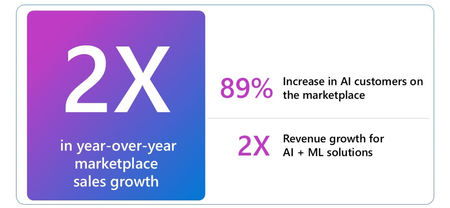
Customer demand for AI solutions is accelerating rapidly, Microsoft has seen 2x growth in customers purchasing AI products. Organizations are looking for trusted, enterprise-ready platforms to support their innovation. Microsoft's AI-native ecosystem, backed by industry leading security, Responsible AI principles, and rapidly growing catalog of AI apps and agents, provides a strong foundation for building scalable, compliant, and high-impact AI solutions. Explore how developers and software companies can take advantage of Microsoft's integrated tools, streamlined publishing experience, and expansive Marketplace reach to deliver AI solution that meet customers where they are. Learn more and read the full article: Discover why to build AI apps and agents with Microsoft and sell through Marketplace | Microsoft Community HubHow do you actually unlock growth from Microsoft Teams Marketplace?
Hey folks 👋 Looking for some real-world advice from people who’ve been through this. Context: We’ve been listed as a Microsoft Teams app for several years now. The app is stable, actively used, and well-maintained - but for a long time, Teams Marketplace wasn’t a meaningful acquisition channel for us. Things changed a bit last year. We started seeing organic growth without running any dedicated campaigns, plus more mid-market and enterprise teams installing the app, running trials, and even using it in production. That was encouraging - but it also raised a bigger question. How do you actually systematize this and get real, repeatable benefits from the Teams Marketplace? I know there are Microsoft Partner programs, co-sell motions, marketplace benefits, etc. - but honestly, it’s been very hard to figure out: - where exactly to start - what applies to ISVs building Teams apps - how to apply correctly - and what actually moves the needle vs. what’s just “nice to have” On top of that, it’s unclear how (or if) you can interact directly with the Teams/Marketplace team. From our perspective, this should be a win-win: we invest heavily into the platform, build for Teams users, and want to make that experience better. Questions to the community: If you’re a Teams app developer: what actually worked for you in terms of marketplace growth? Which Partner programs or motions are worth the effort, and which can be safely ignored early on? Is there a realistic way to engage with the Teams Marketplace team (feedback loops, programs, office hours, etc.)? How do you go from “organic installs happen” to a structured channel? Would really appreciate any practical advice, lessons learned, or even “what not to do” stories 🙏 Thanks in advance!137Views0likes0CommentsDiscover why to build AI apps and agents with Microsoft and sell through Marketplace
Customer demand for AI is accelerating fast. And your company's AI app or agent should be there to meet it. In this fiscal year, Microsoft has already seen 2x growth in customers purchasing AI products through Microsoft Marketplace, while also being the largest catalog of AI apps and agents in the industry. Building AI apps and agents isn’t just about model performance or speed to market. It’s about meeting your customers’ needs when they have them. For software companies, success depends on whether your AI solution is secure, compliant, responsibly designed, and ready to scale in real-world work environments. That’s why App Advisor starts by showing the many reasons why building with Microsoft is the right foundation for AI apps and agents. Why building AI apps and agents with Microsoft is different Microsoft, named an AI Leader by Gartner, brings together AI innovation, Responsible AI, and enterprise-grade security into a single, integrated platform. This matters when you’re quickly building AI-powered experiences and agents that your customers can trust. When you build with Microsoft, you’re building on an AI-native platform designed for production use: Industry-leading AI and agentic capabilities supporting Gen AI, RAG, ML, predictive analytics, and multi-modal agent workflows, Integrated developer tools to help teams ship faster that you already use and trust (like GitHub Copilot, Visual Studio, and Microsoft Foundry), Seamless integration across the Microsoft stack to make it easier to connect data, services, and user experiences without stitching different systems together. This foundation helps you focus on what you’re building. Microsoft handles the complexity behind the scenes. Build confidently from day one, stay up to date with AI best practices Building with AI doesn't have to be risky. Data access, model behavior, governance, and compliance all matter more when AI and agents are embedded directly into customer workflows. Microsoft approaches this with end-to-end security and Responsible AI practices that are integrated throughout the development lifecycle. That's why App Advisor and Microsoft keep you up with the speed of designing with AI: Principles to design your own AI Center of Excellence, Sessions focused on the future of AI and agents in the AI Tour, Resources and webinars, like the AI envisioning sessions, to keep you current. This is especially critical for software companies selling into regulated or security-conscious industries. Security isn't an afterthought. You’re building on a platform where they’re already part of the system. How App Advisor can help answer questions about building AI apps and agents The first step in App Advisor is intentionally focused on clarity. Instead of jumping straight into tooling or publishing requirements, it helps you evaluate: Why Microsoft is the right platform for AI apps and agents, How building with Microsoft assists in development, scaling, and customer trust, What kinds of opportunities exist in the Microsoft Marketplace and how to maximize on them. However, App Advisor doesn’t stop at discovery or development. The same experience that helps you build AI apps and agents also supports growth through the Microsoft Marketplace—giving you access to global customers, streamlined procurement, and enterprise-ready distribution. From first line of code to go-to-market readiness, the platform is designed to support sustainable, scalable growth with confidence. Ready to build your AI app or agent? When you start with the right foundation, everything that follows moves faster—and with less risk. Start with the fundamentals: realize the potential of building with Microsoft with curated guidance in App Advisor We look forward to seeing your AI app or agent on Microsoft Marketplace!422Views7likes0CommentsScale sales growth through Microsoft Marketplace
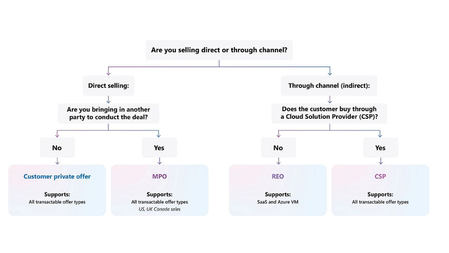
Negotiated deals are one of the most effective growth levers - especially when partners are part of your strategy. Explore how customer private offers, multiparty private offers, and partner led reselling can help you deliver flexible pricing, simplify procurement, and empower your sales ecosystem - all without rebuilding your app or agent. Learn how to choose the right deal structure and scale with negotiated deals. Read more and scale smarter: Scale your sales growth with negotiated deals and reselling with ease | Microsoft Community HubScale your sales growth with negotiated deals and reselling with ease
Negotiated deals are one of the most effective ways to grow larger, more flexible sales through Microsoft Marketplace. They let you align pricing, billing, and terms to how customers prefer to buy, without changing how your app or agent is built. That last point matters. Negotiated deals don’t require you to create a new app or agent. Instead, they let you repackage existing, publicly transactable offers with customized terms for specific customers or partners. The result is faster deal execution without added development overhead.252Views6likes0Comments