update management
1287 Topics
KB5127648 update
Hello,after the latest updates my sapphire pulse rx 7900 xtx with 9850x3D have micro stutters,stutters.lags and fps drops from 144 fps to 88~78 fps i was using Windows 11 25H2 and i dont remember which build but after the latest updates i have those issues and before thoses updates my gaming was smooth without fps drops,i have done clean install Windows 11 26H2, build 26300.9711 but the issues remains the same and the update KB5127648 have resolve NOTHING. Please fix that mess Thank you.45Views0likes1Comment
October 2026 Windows Update causing major issues
We have had about 50 computers in our organization giving boot failures after Windows restarts to apply the October update, KB5127648. Affected machines are Dell devices, both laptops and desktops. The most common error message is "file missing or containing errors \windows\system32\winload.efi" The only fix for now is to try booting into Safe Mode and uninstall the October update. We use a 3rd party tool to patch our devices, Automox, but manually triggering updates from Windows Settings yields similar results. But what I have noticed is that when running Windows Update from Settings, multiple drivers and firmware udpates are also being installed, so I'm wondering if there is incompatibility with outdated stuff in our machines. So we're pushing Dell updates for drivers, firmware, and BIOS, along with Windows Updates hoping that this will take care of the issue. Has anyone else experienced anything similar with this update? Or have any ideas on what may be the root cause in our case? Any feedback will be much appreciated.3.4KViews1like8CommentsIs there a good Stage Manager alternative for Windows 11 in 2026?
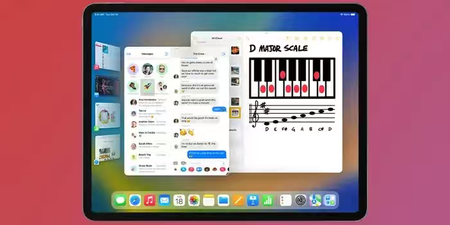
I use a large monitor and often keep several apps open across the screen, but constantly looking toward the corners gets uncomfortable. Im looking for a better way to manage windows. I like Stage Manager on iPad because the active app stays large and centered while others appear as thumbnails on the side — switching feels clean and easy. I ve tried FancyZones and virtual desktops, but they don t quite match that experience. Is there a Windows 11 tool in 2026 that keeps the current app focused while showing other open apps on the side?182Views0likes2CommentsWin11 Forget this network option missing for saved Wi-Fi networks in Settings
In Settings → Network & Internet → Wi-Fi → Manage known networks, the Forget button does not appear when selecting certain saved networks. This option is visible for some networks but is missing for others, particularly those added via a QR code or imported from another device. The button still does not appear after reconnecting or restarting the computer.27Views0likes2Comments
Quel convertisseur youtube mp3 est fiable et sécurisé en 2026 ?
Bonjour à tous, Je cherche un moyen simple et sécurisé pour convertir youtube en mp3 sur mon PC. J'ai essayé plusieurs sites gratuits, mais la plupart affichent trop de publicités, des pop-ups ou de faux boutons de téléchargement. Est-ce que vous connaissez un bon convertisseur youtube mp3 qui fonctionne encore en 2026, sans virus ni logiciels indésirables ? Je préfère un outil gratuit, facile à utiliser et capable de télécharger des fichiers MP3 en bonne qualité (320 kbps si possible). Un logiciel à installer me conviendrait aussi.590Views0likes7Comments
File History timestamp sync bug still broken in KB5124010 - Anyone else?
To the Microsoft technical team Hi everyone,Quick post to see if anyone else is still running into File History timestamp sync issues on the latest builds. Test Environments: Laptop: Windows 11 25H2 (OS Build 26200.8973) Desktop: Windows 10 22H2 (OS Build 19045.7725) Home version The Issue:This problem started back in July (KB5101684 / KB5120249). While KB5124010 fixed the scheduled backup failure and Reconnect drive prompt from KB5124008, the timestamp and version sync bugs remain unfixed: Triggering Run now manually in Control Panel does not update the Last backed up timestamp to the current time. For newly created files (such as Word files), File Properties > Previous Versions displays: No previous versions are available. Changes to the contents of older files will not display the latest timestamp version; only the date and time of the previous version will be shown. A new entity version of the file has been created without any modifications. Other users (including community members in Japan and previous discussion threads) have confirmed identical behavior. File History is essential for daily backups, so getting this sorted out is critical.I'm really on the verge of a breakdown... Hopefully, the security patch will be completed in October. If you are experiencing this issue, please upvote and comment on my Feedback Hub report so the Windows engineering team prioritizes a fix: Feedback Hub Link: https://aka.ms/AA13n22w467Views0likes8CommentsWhat is an enablement package?
An enablement package is a small update that activates features or functionality that are already present on a device but currently dormant. Think of it as a switch rather than a full operating system replacement. In a traditional feature update, Windows downloads several gigabytes of installation files, replaces major operating system components, and migrates the device to a new OS build. With an enablement package, most of that work has already happened through monthly cumulative updates delivered over time. An enablement package simply turns on the appropriate functionality and updates the Windows version designation. Because the underlying operating system files are already present on the device, Windows does not need to perform a full operating system replacement. Windows 11, version 26H2 will be delivered through an enablement package Windows 11, versions 26H2, 25H2, and 24H2 share the same underlying source code and servicing branch. That means much of the code required for version 26H2 has already been delivered to supported devices through monthly cumulative updates, remaining inactive until the feature update is installed. Once Windows 11, version 26H2 is generally available later this year, organizations can use the enablement package to move devices running Windows 11, version 25H2 or 24H2 to version 26H2 with minimal downtime. For more details on preparing for Windows 11, version 26H2, see Get ready for Windows 11, version 26H2. Note: Because Windows 11, versions 26H2, 25H2, and 24H2 share a common servicing branch, they will share the same release note KB identifiers for both monthly security updates and monthly optional non-security preview updates. You can see this with versions 25H2 or 24H2 today. What are the benefits of an enablement package? For IT organizations, enablement packages provide several practical advantages: Smaller downloads that consume significantly less network bandwidth. Faster installation times compared to traditional feature updates. Shorter maintenance windows and reduced user disruption. Simplified testing because the underlying operating system code is already present and serviced through monthly updates. A familiar update experience that resembles a monthly quality update more than a traditional OS upgrade. Is testing still necessary? Organizations should continue validating new Windows releases according to their internal processes. However, devices moving from Windows 11, version 24H2 or 25H2 to version 26H2 are not moving to a completely different operating system build. Because these releases share the same servicing branch, organizations can generally focus validation efforts on newly enabled default functionality, business-critical applications, and organization-specific configurations instead of revalidating the entire operating system stack.67KViews19likes29CommentsWeird font and personalization issues after september update
Since the Windows September update, our company laptops have been experiencing numerous issues. It starts with all desktop customizations being reset, and changes are lost with every restart. The desktop background keeps reverting to a solid black color, the keyboard switches to an English layout, and taskbar settings are lost. The issue with the black background is reportedly a known problem following the August update (KB5120998). However, this issue was supposed to have been fixed with the September update. The affected PCs have build version 26200.9550 or 26200.9457 installed. The KB5124010 update is also reported to cause a black background in some cases, though this is said to be due to a crashed explorer.exe process. The explorer.exe process runs flawlessly on our PCs. We also installed the KB5124010 rollback for this known issue as a test, but it did not make any difference. The worst part, however, is the font, which in most applications looks as if the resolution is incorrect. Strangely enough, the font appears completely normal in some applications, such as Windows Settings. The screenshots show both the incorrect and the correct fonts. The incorrect one looks as if the text were poorly printed and then scanned back in. It’s terrible. I've read about the issues with the background image and personalization, but it seems like no one else is having this font problem? Unfortunately, uninstalling the update didn't solve the problem. Enabling ClearType doesn't fix the problem either, and the setting resets after a restart. Otherwise, I’ve tried: sfc /scannow, dism /online /cleanup-image /checkhealth, installing KIR, clearing the font cache, and restarting the font service. At this point, I don’t know what else to do, and I’m worried that the problem won’t be fixed by an upcoming Windows update, since it doesn’t seem to be a known issue.684Views0likes6Comments
win 11 pro update de 23h2 à 25h2, échecs successifs
Objet : Échecs répétés de mise à niveau Windows 11 – 0xC1900101 - 0x40017 Bonjour, Mon PC MSI MS-7C91, sous Windows 11 Professionnel 23H2 (build 22631), échoue systématiquement lors d'une mise à niveau vers une version récente de Windows 11. Les tentatives effectuées par Windows Update vers 25H2 et manuellement depuis un ISO 26H2 échouent, avec retour automatique à Windows 11 23H2. Erreur relevée par SetupDiag : 0xC1900101 - 0x40017 Phase : Post First Boot Dernière opération : Ensure suspended services are stopped Anomalie également présente dans les journaux : échec de copie de WinSetupMon.sys, erreur 0x80070005. Les contrôles DISM et SFC n'ont révélé aucune anomalie. L'antivirus tiers et les pilotes VPN ont été désinstallés. Un démarrage minimal (Clean Boot) n'a pas permis de résoudre le problème. Aucun fichier Minidump n'a été retrouvé. Les indicateurs de compatibilité Windows (UpgEx) sont au vert. Lles journaux d'installation et de retour arrière sont disponibles pour identifier précisément la cause de l'échec et obtenir une solution permettant de conserver mes applications et mes fichiers. Merci pour votre aide. Subject: Repeated Windows 11 upgrade failures – 0xC1900101 - 0x40017 Hello, My MSI MS-7C91 PC, running Windows 11 Pro 23H2 (build 22631), consistently fails when attempting to upgrade to a more recent version of Windows 11. Attempts made via Windows Update (to 25H2) and manually using an ISO (for 26H2) both fail, resulting in an automatic rollback to Windows 11 23H2. Error reported by SetupDiag: 0xC1900101 - 0x40017 Phase: Post First Boot Last operation: Ensure suspended services are stopped An issue also noted in the logs: failure to copy WinSetupMon.sys, error 0x80070005. DISM and SFC checks revealed no issues. Third-party antivirus software and VPN drivers have been uninstalled. A "clean boot" did not resolve the problem. No Minidump files were found. Windows compatibility indicators (UpgEx) are all green. Installation and rollback logs are available to help pinpoint the exact cause of the failure and find a solution that allows me to keep my applications and files. Thank you for your help.42Views0likes0Comments
USB Audio Class 1.0 Code 10/no-audio issue fully resolved in KB5127648 and Windows 11 26H2?
a { text-decoration: none; color: #464feb; } tr th, tr td { border: 1px solid #e6e6e6; } tr th { background-color: #f5f5f5; } Microsoft acknowledged the USB Audio Class 1.0 issue associated with the September 2026 Windows update line. KB5129195 fixed the multichannel (8-channel / 3D audio) symptom, but Microsoft documentation indicated that other USB Audio Class 1.0 symptoms remained unresolved. Specifically: Device Manager Code 10 errors No audio output USB audio device initialization failures Unresponsive volume controls or sound settings KB5127648 has since been released and Windows 11 26H2 is now available. Can Microsoft clarify: Is the USB Audio Class 1.0 issue now fully resolved? If resolved, which KB is considered the final fix? Does Windows 11 26H2 include the complete fix? When will the Windows Release Health entry move from Mitigated to Resolved? We are currently delaying approval of Windows 11 cumulative updates because the available documentation remains unclear regarding the remaining Code 10 / no-audio symptoms. We have already had to disable automatic approval of Windows 11 updates in our enterprise patch-management workflow pending clarification. Ridiculous that Microsoft continues to fail at QA85Views0likes0Comments