bug
338 TopicsAugust 2026 RDP font display glitch
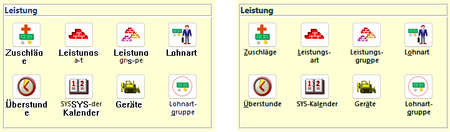
In the last days, we have received two independent reports of font display problems in our MS Access based application. The symptoms are as follows: Some labels or text boxes are shown in a legacy system font instead of the font specified in the control (Segoe UI). Also, the label/text box is shown with a white background instead of transparent. Moving the Access window "fixes" the glitch. It happens at seemingly random places in our application at seemingly random times. Both reports have in common that the Access application is running inside an RDP session. In report 1, a work-from-home user used Remote Desktop to connect to their office Windows 11 PC, and, in report 2, a user executed the application on a Windows Terminal Server. Here are a few screenshots to illustrate the problem. The left side is the glitch, the right side is how it is supposed to look. The first row shows labels, the second row text boxes in a continuous subform. Report 1 is 16.0.20228.20186, 32 bit, M365 SAEC. Report 2 is 16.0.14334.20848, 32 bit, Office 2021 LTSC. Is this a known issue, or shall we continue to collect data about this glitch? Unfortunately, we haven't found a reliable way to reproduce it, so our ability to test it with different versions is limited.461Views0likes3CommentsGraph /users query with mailboxSettings filters/expands excludes unlicensed users
Hello Microsoft Graph team, I would like to report what appears to be a bug in Microsoft Graph user queries involving mailboxSettings. Issue summary: When mailboxSettings is used in a filter or expand clause on /users, unlicensed users are not returned, even when they should match the filter. Example scenario: Filter used: mailboxSettings/userPurpose ne 'room' Observed behavior: Users without Exchange license/mailbox are excluded from results (or result set appears truncated to mailbox-enabled users). Expected behavior: All users should be considered in /users query evaluation. If a user has no mailbox settings, behavior should be consistent and documented (for example null handling), but those users should not be silently dropped from /users results unless explicitly filtered out by query semantics. Reproduction steps: In a tenant with mixed users: Licensed mailbox users Unlicensed users without mailbox Run a /users query that includes mailboxSettings in filter and/or expand. Compare returned users with a baseline /users query without mailboxSettings conditions. Notice unlicensed users disappear when mailboxSettings is involved. Sample request patterns: GET https://graph.microsoft.com/v1.0/users?$filter=mailboxSettings/userPurpose ne 'room' GET https://graph.microsoft.com/v1.0/users?$expand=mailboxSettings&$filter=mailboxSettings/userPurpose ne 'room'61Views0likes1CommentSearch Bar not using colour theme on rest of device.
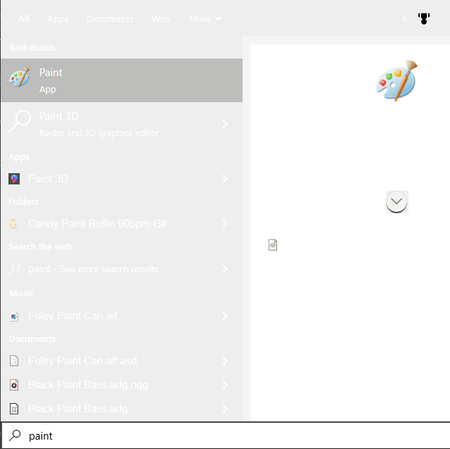
I restarted my computer today and this issue has suddenly occured, It doesnt matter what I change the colour theme too, when searching in the search menu I am presented with this light grey colour with white text which is incredibly hard to read, Online searches indicated stuff to do with Bing, Cortana and the Search registry keys, but I am not finding these keys anywhere in my registry to edit them. I have tried a few other solutions such as restarting the search services from task manager, but it is not applying the theme correctly. Had this computer for several years and never ran into this problem before, Any advice would be greatly appreciated.56Views0likes1CommentHosted Agent ZIP deployment fails because adduser is missing for fuse-zip
Hi, I am encountering a reproducible issue with a Microsoft Foundry Hosted Agent deployed through the Source Code ZIP deployment path. Environment: - Region: West Europe - Runtime: dotnet_10 - Target framework: net10.0 - Publish runtime: linux-x64 - Dependency resolution: bundled - Protocol: Responses 2.0.0 - API version: 2025-11-15-preview The agent version reaches the "active" status. However, the first invocation fails with: session_not_ready The relevant session logs are: Selecting previously unselected package fuse. Unpacking fuse (2.9.9-5ubuntu3) ... Selecting previously unselected package fuse-zip. Unpacking fuse-zip (0.6.0-0ubuntu3) ... dpkg: dependency problems prevent configuration of fuse: fuse depends on adduser; however: Package adduser is not installed. dpkg: error processing package fuse (--install): dependency problems - leaving unconfigured dpkg: dependency problems prevent configuration of fuse-zip: fuse-zip depends on fuse; however: Package fuse is not configured yet. dpkg: error processing package fuse-zip (--install): dependency problems - leaving unconfigured Errors were encountered while processing: fuse fuse-zip Successfully connected to container No .NET application startup logs appear after this. The application entry point does not appear to be executed, and /readiness never becomes healthy. I have already verified: A clean linux-x64 publish is used. The entry DLL is located directly at the ZIP root. The ZIP contains no nested bin, obj, or artifacts directories. All dependencies are bundled. appsettings.json, .deps.json, and .runtimeconfig.json are present. The exact published application starts successfully locally. The local /readiness endpoint returns HTTP 200. The issue is reproducible with newly deployed agent versions and new sessions. The current Foundry hosting packages and Responses Protocol 2.0 are used. The same Source Code ZIP deployment path worked successfully approximately two weeks ago. Is this a known regression in the managed source-code runtime in West Europe? Is there a workaround other than switching to the container-based deployment path? Session and request IDs can be provided privately to the Microsoft product team if required.101Views0likes1CommentHow to Stop the Win 11 KB5094126 Installation Loop and Safely Upgrade From March Baseline Risk-Free
Hello, I need some advice regarding a persistent Windows Update installation loop affecting my machine. My system is currently on a March baseline and is out of date. My primary goal is to completely stop this endless installation loop so I can successfully upgrade Windows to the latest version in a risk-free manner that doesn’t mess around with system files . 1. What is the most effective, safe and risk-free way to temporarily stop this automatic background update installation loop without it coming back in a few days or causing a lot of background strain, as I feel like when it’s in the background and disabled it is still hammering my hardware and causing high thermal strain, because it flucationing between abled/disabled a lot, this can’t go on, it’s already been a month. 2. Is it 100% safe to use the Microsoft WUShowHide utility (wushowhide.diagcab) as a block to stop the hardware strain, and will it prevent future brightness fluctuations? Will be permanently disable or come back? 3. How can I fix this loop, with absolutely zero risk to my custom graphics profiles, legacy driver stability, or screen brightness thresholds? 4. Does the newly released July Cumulative Update (KB5101650) wrapper contain the renewed firmware validation keys necessary to clear out this March-to-June servicing stack blockage cleanly? Or could it cause system crash or corruption if installed. 5. Are there known risks or side effects with attempting a repair upgrade or an in-place reinstall for this specific loop? I want to completely avoid anything that resets custom device properties, alters display configurations, or reverts stable graphics card driver profiles or potentially gets stuck, as both take up 20-30 on every attempt and harsh to the system. 6.Since my system is currently out of date on a March baseline, what is the safest path to install a newer, stable update without risking my custom display configurations? 7.Has anyone successfully applied a manual UEFI certificate renewal or a Secure Boot key variable override to bypass the expired Microsoft June 2026 validation timeline on general retail hardware? Any risks? My System Specs: -OS Edition: Windows 11 Home Single Language (Retail Channel) -Version / Build: 25H2 (OS Build 26200.8117 - March 2026 Baseline) -Hardware: ASUS Laptop (Model M413A) -Processor: AMD Ryzen 7 4700U with Radeon Graphics (2.00 GHz, 8 Cores) -Memory: 8.00 GB RAM (7.42 GB usable) -Storage: Local C: Drive has 226 GB used out of 477 GB total capacity (251 GB free) Symptoms I Am Experiencing: The 2026-06 Security Update (KB5094126) and the June Preview Update (KB5095093) download completely to 100%. During initialization, the engine throws error 0x80074101 and restarts the download pipeline. This creates a heavy background loop that pins the CPU to high utilization, causing noticeable thermal strain. When my AC power charger is connected, the cooling fans run at a very high audible RPM. I also experience temporary screen brightness flaring strictly when the charger is active, likely due to voltage shifts on the shared motherboard power tracks between the integrated AMD graphics and the system RAM channels when the update engine collides with my stop scripts. Other non- quality updates and daily Windows Defender definitions continue to download and install flawlessly when updates are enable. The issue is strictly isolated to this specific update package and sometimes previews. Tried So Far: Over the past few days, I have tried several methods to safely pause or stop this loop to protect my hardware from constant heat stress: Cache Resets: Cleared the contents of C:\Windows\SoftwareDistribution multiple times. The loop returns as soon as the folder is regenerated. System Scans: Executed SFC /scannow and DISM /Online /Cleanup-Image /RestoreHealth. Both reports show a completely clean component store with no local system file corruption. Service Management: Used temporary command-line scripts to stop 'wuauserv', 'usosvc', and 'bits', and adjusted service recovery actions to prevent them from instantly restarting in the background. These tend to come and go, but most are usually settled at stopped for 2-3 days, and then installation of this lopping security update will force a reattempt on the 2 or 3 day and I have reenter the commands. Built-in Safeguards: Used the "Pause updates for 5 weeks" toggle in Settings just yesterday, where it greyed out for weeks prior, not sure if it will force the reinstall at random again. However, the Windows 11 Home kernel continues to still run background queries every few hours, triggering the hardware strain and it produces loud sounds when charging or resisting disabled setting even if disabling quiets the fan a lot of the time. Cleaned the software distribution folder. Cross-Forum Context & Certificate Discovery: While researching this, I noticed some initial confusion regarding whether the 26200 build numbering indicated an Insider build, but it appears to be a general retail baseline constraint. Some common suggestions include performing a full clean reinstall or a repair upgrade via USB, but I am hesitant due to the risk of overwriting fine-tuned hardware configurations and custom driver properties. Through cross-referencing documentation uploaded by other users facing identical loops on Build 26200, we uncovered a likely root cause. Logs from 'Get-SecureBootUEFI' show that the motherboard's underlying security certificates (Microsoft KEK CA 2011 and Microsoft Corporation UEFI CA 2011) officially expired in late June 2026. Because the current date has passed the certificate validity timeline, the Secure Boot subsystem appears to reject the cryptographic handshake of the June update files, causing the 0x80074101 database error and the subsequent retry loop. As a temporary fix, I am looking into using the official Microsoft WUShowHide diagnostic utility ('wushowhide.diagcab') from my desktop to hide KB5094126 and stabilize my processor and fan noise while waiting for a working patch wrapper that lets me upgrade safely. I would deeply appreciate any verified engineering insight or workarounds the community has found to help me safely bring this system up to date without side effects. Thank you so much for your time!72Views0likes1CommentUrgent: Stuck KB5094126 (2026-06 Security Update) Loop on ASUS M413A
Hello, I have a very urgent issue. I am running an ASUS M413A Model M413IA-EB211T laptop running in the Windows 11 Insider Preview program. Right now, my machine is caught in a persistent and highly aggressive background update loop regarding the June 2026 Security Update KB5094126 for OS Build 26200.8655. The core background engines wuauserv and usosvc continually flip themselves back to Running and Manual/Automatic via background kernel self-healing routines. They are completely ignoring manual user flags to stay disabled via standard sc config commands. Because my system utilizes 8 GB of total RAM with shared integrated graphics, this ongoing background processing loop completely bottlenecks my remaining usable memory. This is throwing my processor usage to 100 percent and causing extreme, loud cooling fan strain whenever the AC charger is plugged in. Furthermore, the loop is continually eating 5 to 12 GBs of data at every single automatic download attempt, creating massive network usage and consuming massive storage bandwidth. My Exact System Specs: Device Name: LAPTOP-S4R984K2 Processor: AMD Ryzen 7 4700U with Radeon Graphics 2.00 GHz, 8 Cores Installed RAM: 8.00 GB 7.42 GB usable due to integrated hardware reservation Graphics Card: Integrated AMD Radeon Graphics 496 MB dedicated video cache System Type: 64-bit operating system, x64-based processor Storage Environment: 226 GB used out of 477 GB available total capacity What Actionable Steps I Am Seeking from the Community: Question 1. July Update Availability Check: Is there a way to safely skip this broken June patch and download the July updated version directly for my specific environment: Windows 11 Insider Preview Build 26200.8655? Question 2. Safe Standalone Roadmap: If I must install this, what is the exact method to download the correct standalone package for KB5094126 and initialize it manually without using the broken Windows Update pipeline? Question 3. Enforcement Command: What exact script can I deploy inside an elevated Administrator Command Prompt cmd or anywhere else to forcefully inject a registry block or anything else that stays active for as long as I put it? It must survive the aggressive Insider kernel health loops and hold the block long-term without risking database corruption or triggering automatic system overrides? Question 4. Cache and Datastore Maintenance Question: Is there any safe method to clear out the active transaction log database handles inside C:\Windows\SoftwareDistribution\DataStore\Logs? Could these lingering handles be the underlying reason why this build is failing to process the install, and how can they be purged without risking database corruption or a forced recovery loop? CRITICAL CONSTRAINT — Strict Risks I Must Avoid: I am completely refusing to do an In-Place Upgrade, a total system reset, or utilize the built-in Fix problems using Windows Update recovery utility. I need the forum experts to provide a path that completely guards against the following risks: Risk 1. System Freeze and Repair Loops: Falling into a mid-way installation freeze or an endless Automatic Repair boot loop where the machine fails to load back to the desktop. Risk 2. Display and Brightness Driver Corruption: Resetting, updating, or modifying my legacy display driver configuration. Any driver modification will immediately re-trigger unreadable thin system fonts, highly oversaturated display graphics, or high brightness spikes. Risk 3. Loss of Custom Profiles: Overriding my fine-tuned power slider behaviors, custom screen brightness thresholds, or my explicitly disabled auto-brightness/adaptive content feature tags. I must avoid resetting any of these features, as simply changing the brightness level itself causes a severe brightness spike. Complete Ledger of Troubleshooting Steps Taken So Far All Failed or Reversed: Step 1. Cache Purges: Cleared out the SoftwareDistribution Download folder, but the text entry remains stuck on the Settings app screen. Step 2. File-Level Permission Locks: Used icacls to deny the local SYSTEM account permission to execute wuaueng.dll. This successfully froze the loop for exactly 3 days until the automated 3-day Insider system health check forcefully restored factory permissions and restarted the services. Step 3. Firewall Barriers: Set up outbound Windows Defender Firewall block rules targeting the specific update services, which were actively bypassed by alternative network pipelines inside svchost.exe. Step 4. Service Configurations: Regularly deployed combination scripts to stop and disable wuauserv, usosvc, and bits via command line, which are immediately overwritten by the Insider kernel health loops. Step 5. System Health Restore and Scan Results: Ran standard administrative system repairs sfc /scannow and DISM /RestoreHealth. The tools reported that they successfully repaired something in the background, but the scan logs were completely unclear as to what was fixed, and it did not resolve the update loop. How can I safely acquire the standalone update package and force-install it without risking my current display profiles, causing a system freeze, or forcing an in-place operating system upgrade? Please let me know as soon as possible, I have been dealing with this for at least a month or longer.198Views1like2CommentsCrash when submitting web page input fields with soft keyboard Enter
### Summary Microsoft Edge Canary for Android crashes when submitting web page input fields using the Android soft keyboard Enter key. GitHub search is one stable reproduction case, but this is not GitHub-specific. I have also reproduced similar crashes on other websites with text input/search fields. ### Environment - App: Microsoft Edge Canary for Android - Package: `com.microsoft.emmx.canary` - Version: `152.0.4142.0` - Version code: `414200023` - Device: vivo V2417A - Android SDK: 36 - ABI: arm64-v8a ### Reproduction case 1. Open Microsoft Edge Canary on Android. 2. Navigate to `https://github.com/`. 3. Tap the GitHub search box. 4. Type any text. 5. Press Enter on the Android soft keyboard. ### Expected behavior The input/search action should be submitted normally. ### Actual behavior Edge Canary crashes immediately after pressing Enter. ### Scope This does not appear to be specific to GitHub. The same type of crash can also be triggered on other websites when submitting text input/search fields using the Android soft keyboard Enter key. GitHub is used here as a minimal stable repro because it is easy to test. ### Crash information Exception: ```text java.lang.IndexOutOfBoundsException: Index 24 out of bounds for length 0 ``` Relevant stack trace: ```text java.util.ArrayList.get(ArrayList.java:434) android.view.ViewGroup.getAndVerifyPreorderedView(ViewGroup.java:3873) android.view.ViewGroup.gatherTransparentRegion(ViewGroup.java:7438) android.view.ViewRootImpl.performTraversals(ViewRootImpl.java:5207) android.view.Choreographer.doFrame(...) ``` ### Notes - Reproduced directly on the Android phone. - Trigger appears related to submitting web page input/search fields via the Android soft keyboard Enter key.83Views0likes3CommentsEdge not functioning properly after playing games?
After I have played a video game, I noticed Edge has forgotten all my website and cache data? No website icons and logged out of websites. This only happens after I've played a video game, never has it happened from just opening it up.55Views0likes1Comment