adoption
819 TopicsTurn conversations into code with GitHub Copilot in Microsoft Teams
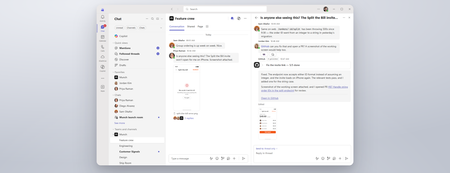
Coding where context lives and collaboration happens The best prompt may be the conversation your team has already had or is currently having. Until now, using a coding agent often meant paying context and coordination taxes. Developers had to leave the discussion, open another tool, and reconstruct the problem in a lengthy prompt: what happened, what the team decided, which constraints matter, and what needs to be built. With GitHub Copilot in Teams, teams can move directly from conversation to action. @mention GitHub Copilot when the team is ready to act, and it can use the conversation alongside repository context to understand the request, implement the change, and create a pull request for review. This makes working with a coding agent more collaborative and visible. Instead of one developer privately reconstructing the request, teammates can contribute context, correct assumptions, refine the approach in real time, and review the resulting work together. Let’s explore the new GitHub Copilot in Teams experience to see how it can streamline development tasks: If the player doesn’t load, open the video in a new window: Open video GitHub Copilot in Teams is available in Teams channels, group chats, meeting chats, and 1:1 chats. Once the GitHub app is installed and added to the conversation, @-mention GitHub Copilot to bring it into the discussion and start a task. During public preview, users can complete the following scenarios with GitHub Copilot in Teams: Build a feature based on requirements discussed in Teams Implement a fix for a bug Expand test coverage or improve documentation Create and update a pull request No copying the discussion into a CLI. No rewriting it in a desktop app. No asking one developer to translate a team decision into the perfect prompt. GitHub Copilot works where the context already lives, and because that context is shared, working with GitHub Copilot becomes a team activity. Built around the controls teams already use GitHub Copilot in Teams works within existing GitHub permissions and repository policies. Branch protections and required reviews continue to apply, and people remain responsible for deciding what gets merged, ensuring that humans stay in the loop at every step. Availability GitHub Copilot in Teams is now available in Public Preview. To try it, install the GitHub app for Microsoft Teams and check out our documentation to get started! Less context reconstruction. More progress from the conversations already happening.2.5KViews0likes1CommentCopilot Chat Adoption Feedback : Model Selection Governance and Prompt Library Reusability ?
Hello, As part of several Microsoft Copilot adoption projects that I am currently leading across different organizations, two questions frequently come up from both users and administrators. The first concerns the ability to lock or enforce a specific model in Copilot Chat for certain use cases. Several customers would like to guide users toward a particular model when working on specific scenarios (Opus for example) that require a certain level of reasoning, behavior, or response quality. To date, I have not found any official documentation or roadmap information indicating whether this capability is planned. The second concerns the Prompt Gallery / Prompt Library. Saved prompts are very useful for starting a conversation, but they do not appear to be reusable directly within an ongoing conversation. In several business scenarios, users would like to chain multiple approved prompts within the same conversation in order to preserve context while applying different working methods, analysis steps, or processes. Are there any planned developments regarding these two topics? The ability to lock or enforce a specific model in Copilot Chat. The ability to use prompts from the Prompt Gallery / Prompt Library during an already active conversation. I have not found any official information on these topics in Microsoft Learn documentation or in the Microsoft 365 roadmap. However, these capabilities seem likely to facilitate user adoption and help standardize usage patterns across organizations.117Views1like1CommentTurn meetings into momentum with Microsoft 365 Copilot
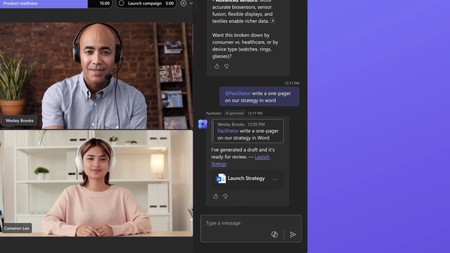
Most people don't need more meetings—they need meetings that lead to action. At their best, meetings drive decisions and keep work moving forward. But poorly managed meetings can actually slow progress. In fact, our Work Trend Index report found that inefficient meetings are the biggest productivity disruptor at work. Common challenges include staying on track, catching up after joining late, and leaving without clear next steps. Microsoft 365 Copilot helps teams get more out of every meeting—from spending less time preparing to having more productive discussions and staying aligned on follow-up. The impact can be significant. Microsoft commissioned Forrester Consulting to conduct a Total Economic Impact (TEI) study on Microsoft 365 Copilot in Teams. The study, New Technology: The Projected Total Economic Impact™ Of Microsoft Teams With Microsoft 365 Copilot, projects that companies could realize a potential ROI of 400% over three years. Here are some of the latest Microsoft 365 Copilot innovations designed to make meetings and collaboration more effective. Before the meeting: Plan and prepare faster Planning a meeting often means juggling calendars, drafting agendas, and gathering context before the conversation even begins. Copilot helps simplify every step. Scheduling is often the first hurdle. In Copilot Chat, you can simply ask Copilot to set up a meeting, and it handles the coordination—checking availability, suggesting times, and preparing the invite details. It also shows how each option fits into your Outlook calendar, making it easy to choose the best one. Copilot can also help manage scheduling conflicts proactively. Users can define which 1:1 meetings and personal events are flexible, and when conflicts arise, Copilot can automatically reschedule them and notify attendees of any changes. Every productive meeting starts with a clear objective. Copilot can create a personalized agenda based on meeting details, attendees, and relevant work. It can also recommend topics from your emails, chats, and recent meetings, giving you a strong starting point that you can easily review and refine before sending the invite. To help you arrive prepared, Copilot can proactively generate meeting insights directly in the invite. It surfaces relevant context, highlights important information, and suggests useful materials so you can contribute from the start. During the meeting: Turn discussions into action Great meetings stay focused, encourage participation, and lead to clear outcomes. Facilitator works alongside your team in real time to answer questions, track agenda progress, capture notes, and turn conversations into shared tasks and documents. For a more personal experience, Copilot gives you a private space to ask questions and get answers grounded in the meeting, your work, and the web. The best conversations happen when everyone can participate naturally. Interpreter provides real time speech-to-speech translation, helping teams communicate across languages without breaking the flow of conversation. Live translated captions make it easy for everyone to follow along. After the meeting: Keep work moving forward The real value of a meeting often comes from what happens next. Copilot helps ensure important decisions and action items don't get lost once the meeting ends. Meeting recap provides AI-generated notes, suggested action items, and personalized highlights, making it easy to catch up on what matters most. It also gives you new ways to revisit the conversation, including audio and video recaps and custom AI summary templates, so you can stay informed in the format that works best for you. After the meeting, Copilot remains available to help you follow up, explore ideas, and keep work moving forward. The Meeting Recaps app brings your intelligent recaps together in one convenient, pinned app in the Teams sidebar, making it easier to find and catch up across your meetings. Get more out of every meeting Microsoft 365 Copilot customers can start using Copilot in Outlook and Teams today to manage the mechanics of meetings before, during, and after—so they can spend more time moving work forward. Learn more about Microsoft 365 Copilot and explore the resources to dive deeper into each of the features highlighted above.1.4KViews0likes1Comment
"View all communities" button does not show all communities
If you're in Viva Engage, and you go to "Communities," and you click "View all communities" to see all the communities, it doesn't show you all of the communities - it shows you the recommended communities. If you want to see all of them all at once, you have to click the arrow next to "Recommended" and select "Alphabetical" or "Community size." Is there any way to make the default view "Alphabetical"? Most users will a) expect a view all communities option to show all communities, b) not think to use a drop-down filter and choose 'alphabetical' or 'size' as options to show 'missing' communities. This is a direct consequence of the behaviour of the button not matching the button labelling and as a result this is impacting the visibility and discovery of communities in our network.50Views0likes0CommentsWho actually blocks AI in healthcare (and why)
AI pilots usually fail not because the technology is flawed, but because organizations underestimate the stakeholder, governance, liability, and clinical-workflow readiness work required to move from proof of concept to scaled deployment.254Views2likes0CommentsLimiting Microsoft 365 Copilot data exposure risk with Zero Trust apps and data controls
Learn how to reduce Microsoft 365 Copilot data exposure risks by governing what Copilot can reach after a user is authenticated. This post maps key Layer 2 risks to Zero Trust apps and data controls, including oversharing reduction, sensitivity labeling, DLP, connector governance, audit visibility, and privileged access management.624Views2likes0Comments