wordpress
45 TopicsAnnouncing the General Availability of WordPress on Azure App Service
We are thrilled to announce that WordPress on Azure App Service, which was running on Public Preview since 15 February 2022, has been made Generally Available on 8 August 2022. To read the Public Preview Announcement read the blog post on The new and better ‘WordPress on App Service’ - Microsoft Tech Community.28KViews9likes6CommentsAdd-ins and more – WordPress on App Service
The WordPress on App Service create flow offers a streamlined process to set up your site along with all the necessary Azure resources. Let's learn more about add-ins that can enhance your WordPress experience and help you decide which ones to opt for. Deploying WordPress on App Service is a breeze thanks to the ARM template approach, which ties together Azure applications to ensure a seamless experience for developers. Whether you're a seasoned pro or new to the create flow, this guide will demystify these additional settings and help you make informed choices. Add-ins tab Managed Identity: Say goodbye to managing credentials! Managed Identities provide secure access to Azure resources without storing sensitive credentials. Enabling this option creates a user-assigned managed identity, configured with App Service to access Azure DB for MySQL and storage accounts. You can also configure this manually if you prefer. Learn more Email with Azure Communication Services: Emails are crucial for WordPress functionality, from password resets to admin notifications. Since SMTP is blocked in Azure App Service, Azure Communication Services handle email management seamlessly. You can configure this manually if needed. Learn more Azure CDN: Improve performance and security with Azure Content Delivery Network (CDN). It uses a distributed network of servers to store cached content close to end users, enhancing speed and reliability. Manual configuration is also an option. Learn more Azure Front Door: Like Azure CDN, Azure Front Door accelerates your web application by reducing response times and caching content at edge servers. While CDN is simpler to use, Azure Front Door offers advanced features like WAF and will replace Azure CDN by 2027. You can choose an existing profile or configure it manually. Learn more Azure Blob Storage: Store and access images, videos, and other files with Azure Blob Storage, reducing the load on your web server and improving performance. Learn more Networking tab Virtual Network: Configure IP address ranges, subnets, route tables, gateways, and security settings with Virtual Networks. You can select an existing VNET or create a new one, ensuring enough space for subnets. Deployment tab Staging Slot: Test your changes safely before deploying them to production with a staging site. This reduces the risk of disruptions and is easy to set up during deployment. Learn more High Availability: Available with Premium Hosting plans, High Availability ensures redundancy across availability zones, protecting your service against zone-level failures and ensuring business continuity. This cannot be enabled post-deployment. Learn more Ready to Deploy? The WordPress on App Service create experience simplifies the deployment of Azure resources required for WordPress. For advanced options, consider using the ARM template. Create your WordPress site today! Support and Feedback We’re here to help! If you need any assistance, feel free to open a support request through the Microsoft Azure portal. New support request - Microsoft Azure For more details about our offering, check out the announcement on the General Availability of WordPress on Azure App Service in the Microsoft Tech Community. Announcing the General Availability of WordPress on Azure App Service - Microsoft Tech Community. We value your feedback and ideas on how we can improve WordPress on Azure App Service. Share your thoughts and suggestions on our Community page Post idea · Community (azure.com) or report any issues on our GitHub repository Issues · Azure/wordpress-linux-appservice (github.com). Alternatively, you can start a conversation with us by emailing at wordpressonazure@microsoft.com.853Views2likes0Comments
Understanding 'Always On' vs. Health Check in Azure App Service
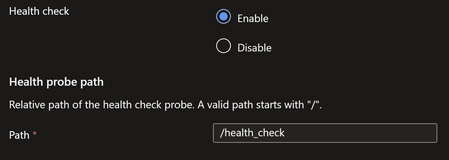
The 'Always On' feature in Azure App Service helps keep your app warm by ensuring it remains running and responsive, even during periods of inactivity with no incoming traffic. As this feature pings to root URI after every 5 minutes. On Other hand Health-check feature helps pinging configured path every minute to monitor the application availability on each instance. What is 'Always On' in Azure App Service? The Always On feature ensures that the host process of your web app stays running continuously. This results in better responsiveness after idle periods since the app doesn’t need to cold boot when a request arrives. How to enable Always On: Navigate to the Azure Portal and open your Web App. Go to Configuration > General Settings. Toggle Always On to On. What is Health Check in Azure App Service? Health check increases your application's availability by rerouting requests away from instance where application is marked unhealthy and replacing instances if they remain unhealthy. How to enable Health-Check: Navigate to the Azure Portal and open your Web App. Under Monitoring, select Health check. Select Enable and provide a valid URL path for your application, such as /health or /api/health. Select Save. So, is it still necessary to enable the 'Always On' feature when Health Check is already pinging your application every minute? -> Yes, please find below explanation for the same. Test App scenario: Health Check enabled (pointing to /health_check path) and Always On disabled. Started the app and sent some user requests. Observations from the Test: After the application starts up, health check pings begin following the end user's request. Please find below table representing Health-check pings following user's request to root URI. Time Bucket URL Status Request Count 2025-03-20 07:00:00.0000000 / 200 6 2025-03-20 07:00:00.0000000 /health_check 200 30 2025-03-20 07:30:00.0000000 /health_check 200 30 Subsequent Health-check pings will continue, even in the absence of user requests. However, after restarting the app and in the absence of any user requests, we observed that Health Check requests were not initiated. This indicates that Health Check does not start automatically unless application is actively running and serving requests. Conclusion: Always On ensures that the app is proactively kept warm by sending root URI pings, even post-restart. The health-check feature is useful for monitoring application availability when the application is active. However, after a restart, if the application isn't active due to a lack of requests, Health-check pings won't initiate. Therefore, it is highly recommended to enable Always On, particularly for applications that need continuous availability and to avoid application process unload events. Recommendation: Enable Always On alongside Health Check to ensure optimal performance and reliability.5.6KViews2likes0CommentsTransition from Alpine Linux to Debian for WordPress on App Service
We are excited to share with you that we will be transitioning from Alpine to Debian as the default Linux distribution for WordPress on App Service. While Alpine has served us well with its lightweight and performant nature, our evolving needs require a more feature-rich environment. Debian is the ideal candidate to support our next phase of development and growth. This transition will also align us with App Service Linux, which already utilizes Debian as the default Linux distribution.12KViews2likes11CommentsHow to set up a new WordPress website on Azure App Service
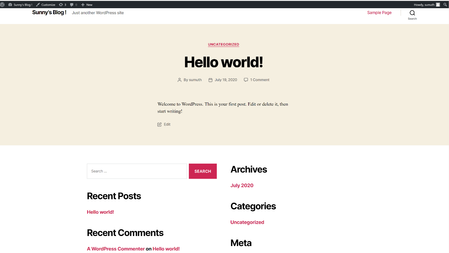
WordPress on Azure App Service combines the power of WordPress and Azure App Service to bring you a fully managed, scalable, and performant WordPress hosting solution. Let us learn how to create a new WordPress website on Azure App Service.20KViews2likes6CommentsHow to run Bash scripts in WordPress on Azure App Service
You might need to run custom Linux scripts in WordPress on Azure App Service for achieving specific goals, such as, updating Nginx settings, running WP-CLI commands, and installing system packages. This article is intended to guide you in running custom shell or bash scripts.12KViews2likes0Comments