microsoft 365
5361 Topics
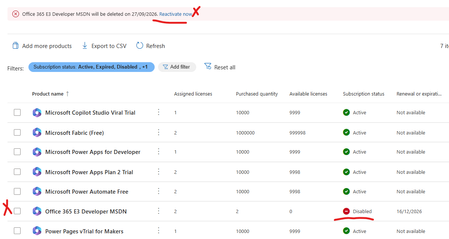
Error office 365 e3 developer license will be deleted on XXXXX. Currently disabled
My Office 365 E3 Developer has been marked for deletion and disabled today. No earlier comms from Micrsoft or any sort of messages.It just locked our my E3 Developer license has there a not supporting it any more. I wanted to try and backup/export my mail box and no luck - the option is greyed out. My SharePoint admin center has been blocked also can't backup any of my files. I'm just helpless.What a shame Microsoft What other plans can i move to and what should i do now since Teams and mail is not working. Can I at least get a a grace period. Any resources or advice would be appreciated245Views1like5CommentsPut multiple values in one cell with lists and arrays in Excel
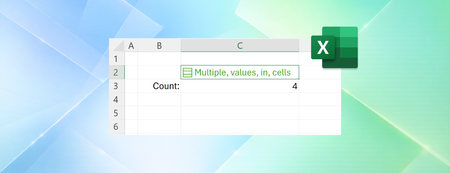
Throughout Excel's 40-year history, you've only been able to put one value per cell. In this announcement, we're excited to share how that's changing with the release of lists, arrays in cells, and nested arrays, initially to Microsoft Excel for Windows and Mac Beta Channels. Many workbooks already try to pack multiple values into one cell. A project might list "Carlos, Henrietta, Jacob" as three owners, or a Forms survey might return "2:00 PM; 2:30 PM; 3:00 PM" as one response. With lists, you can keep those values in one cell, while also keeping them separate for filtering, calculation and more. Later in this post, we'll explore arrays in cells and nested arrays in more depth. NOTE: These are preview features. Their behavior may change before general release based on your feedback. We don't recommend using them in important workbooks until they're generally available. Lists Lists let you put multiple values into one cell. You can create a list by selecting Insert > List or pressing Ctrl+J, then typing or pasting items separated by commas or semicolons, depending on your regional settings. Selecting the icon in the cell shows the individual values. You can add, remove, or edit list items by double-clicking the cell or pressing F2, just like other values. With lists, you can filter by one or more individual items instead of whole text entries. Referencing a list returns all its values for calculations. For example, =B2 spills those values into separate cells. Arrays in cells Lists are useful on their own, but they're part of a much broader change to Excel. For the first time in Excel, arrays can exist natively in cells as values or as formula results. They can be any size or shape and can even contain other arrays. You can now keep the result of any spilling formula in a single cell by "wrapping" the formula body with braces { }. Since the introduction of dynamic arrays, array results have spilled across cells – for example ={1;2;3}. Wrapping the original array with braces creates a 1x1 array around it, so instead of spilling to multiple cells, the array stays in a single cell. Braces have long been used to describe arrays in Excel and this extends that behavior by allowing multiple layers of braces. This gives you more flexibility when building spreadsheets. Instead of leaving room for a formula to spill, you can keep the result in one cell. Arrays inside arrays, or nested arrays Arrays can now also "nest" inside other arrays. For example: ={{1,2,3};{4,5,6}} Previously, a formula that produced an array of arrays would return a truncated result or #CALC! error. Now, supported formulas return the complete nested result. In the example below, you can see how TEXTSPLIT behaves with and without nested arrays. Without nested arrays, Excel only returns the first item for each row. With nested arrays, the result spills, one array per row. The arrays in each row can then be used in further calculations. Four new functions: FLATTEN, HAS, HASANY, HASALL To help you work with arrays more easily, we've added four functions. FLATTEN(array, [pad_value], [levels]) simplifies nested arrays by removing one or more levels of nesting. Continuing from the prior example, FLATTEN lets you simplify the nested array output, spilling the individual results into the grid. We used an empty string ("") for pad_value so rows with fewer items show blanks in the remaining columns. Three HAS functions check whether values are in an array: HAS(array, value) returns TRUE if value appears anywhere in array, and FALSE otherwise. HASANY(array, values) returns TRUE if any of the values appear anywhere in array, and FALSE otherwise. HASALL(array, values) returns TRUE if all of the values appear anywhere in array, and FALSE otherwise. Do more with spreadsheets using arrays in cells and nested arrays Arrays in cells open up spreadsheet designs that weren't practical before. The run tracker below captures split times (how long it takes to run each kilometer) in a table with one run per row. The number of splits depends on the length of the run. Stats for each run are calculated right in the same table. For more examples, I recommend looking to your favorite Excel communities on LinkedIn, YouTube, Reddit, or elsewhere. Enabling nested array calculations in a workbook Compatibility Version 3 will be released alongside arrays in cells and is required for most calculations involving nested arrays. You can set Compatibility Version for each workbook in by selecting Formula > Calculation Options. See compatibility versions for more information. Some existing formulas return different results in Compatibility Version 3. If your workbook doesn't behave as expected, you can keep it set to Compatibility Version 1 or 2. Known limitations As this feature rolls out to Beta Channel, the following limitations apply: Conditional formatting doesn't inspect array contents unless you use a formula Data validation can't use a list or array as dropdown items Charts don't expand an array into data points PivotTables don't read array values as source data Power Query doesn't load or emit array-valued columns Find & Replace can't replace list/array items Availability These improvements are rolling out to Beta Channel users running: Windows: Version 2610 (Build 20520.20000) or later Mac: Version 16.114 (Build 26092111) or later Features covered on this blog roll out over time to enable us to monitor quality and performance, so some preview features may not be available to you right away. Also note that features may be paused, adjusted, or removed as part of that process. Feedback Click Help > Feedback in Excel to tell us what you think.29KViews8likes27CommentsMicrosoft Learn Plans to Remove External Contributions via GitHub
On September 23, Microsoft Learn announced that many of its public GitHub repositories for documentation would become private. The net effect is that external contributors will no longer be able to suggest changes to documentation. Although some change requests are probably not high quality, removing the route for the technical community to engage with and improve Microsoft documentation doesn’t seem like a good idea, especially if Microsoft thinks that AI can fill the gap. https://office365itpros.com/2026/09/28/microsoft-learn-external/13Views0likes0CommentsCopilot, Microsoft 365 & Power Platform product updates call
💡Copilot, Microsoft 365 & Power Platform product updates call concentrates on the different use cases and features within the Microsoft 365 and in Power Platform. Call includes topics like Microsoft 365 Copilot, Copilot Studio, Microsoft Teams, Power Platform, Microsoft Graph, Microsoft Viva, Microsoft Search, Microsoft Lists, SharePoint, Power Automate, Power Apps and more. 👏 Weekly Tuesday call is for all community members to see Microsoft PMs, engineering and Cloud Advocates showcasing the art of possible with Microsoft 365 and Power Platform. 📅 On the 29th of September we'll have following agenda: News and updates from Microsoft Together mode group photo Reetik Chandra – Beyond the Link: Full Fidelity SharePoint News in Viva Engage Sarah Critchley & Ricky Castaneda – How to use Teams Client capabilities with the Agents SDK using the new Teams extension Vesa Juvonen – Building UX for Copilot – Modernizing Customer Resolution process 📞 & 📺 Join the Microsoft Teams meeting live at https://aka.ms/community/ms-speakers-call-join 🗓️ Download recurrent invite for this weekly call from https://aka.ms/community/ms-speakers-call-invite 👋 See you in the call! 💡 Building something cool for Microsoft 365 or Power Platform (Copilot, SharePoint, Power Apps, etc)? We are always looking for presenters - Volunteer for a community call demo at https://aka.ms/community/request/demo 📖 Resources: Previous community call recordings and demos from the Microsoft Community Learning YouTube channel at https://aka.ms/community/youtube Microsoft 365 & Power Platform samples from Microsoft and community - https://aka.ms/community/samples Microsoft 365 & Power Platform community details - https://aka.ms/community/home 🧡 Sharing is caring!108Views0likes1Comment
Changing Microsoft 365 billing frequency from monthly to yearly unexpectedly increased the price
Hello everyone, I would like to raise an issue with Microsoft 365 Business Standard that I find very difficult to understand and even harder to explain to my customer. I manage two Microsoft 365 Business Standard licenses for a customer. The pricing history was as follows: Until May 2026: €23.40/month total for 2 users From June 2026: €21.66/month total for 2 users This means the annual cost at the latest monthly rate was €259.92/year On September 28, 2026, I changed only the billing frequency from monthly to yearly. During this process, I was not shown any clear warning that the actual subscription price would increase. After the change, Microsoft created a new annual subscription with: €145.56 per user/year €291.12/year for 2 users So simply changing from monthly billing to yearly billing increased the annual subscription price from the equivalent of €259.92 to €291.12. This is particularly confusing because the Microsoft website normally presents annual billing as the cheaper option. I contacted Microsoft Support today. According to the support agent: this behavior is the same worldwide the billing change cannot be reverted the agent cannot revert it it cannot be escalated to a supervisor who could revert it there is apparently no email address or written complaint channel where I can formally dispute the change What concerns me most is not only the price increase itself, but the fact that I was apparently moved to a higher price simply by changing the billing frequency, without a clear indication during the process that the subscription price itself would change. I now also have to explain to my customer why their Microsoft 365 costs suddenly increased, even though no additional licenses or services were requested. From my perspective, changing how often a subscription is billed should not silently result in a different commercial price without a very clear confirmation beforehand. Has anyone else experienced this? I would especially like to know: Is this expected Microsoft behavior? Why does changing the billing frequency trigger a new, higher price? Is there any official escalation or written complaint process for Microsoft 365 billing issues? Is there really no way to revert such a billing-frequency change shortly after it was made? I would appreciate clarification from Microsoft, because at the moment this leaves both the reseller/admin and the customer in a very poor position. Regards12Views0likes0CommentsMicrosoft 365 Family Subscription - Activation Issue
Hello Advice needed please. My wife has purchased a Microsoft 365 family subscription. She has emailed an invite to my Gmail account (apparently that is all correct). When I go through the steps to join, using my Hotmail address, I eventually end up at this screen. So, I am not able to activate my invite. I am on a brand new Apple Macbook Pro, so I know the issue is not the OS being out of date. I have also seen this update on the URL below, but not sure if that is the current blocker: https://support.microsoft.com/en-gb/home/contact?SourceApp=smc2&ContactUsExperienceEntryPointAssetId=login.live.com Any advice would really be appreciated. Thanks in advance Ben12Views0likes0Comments
Microsoft 365 Family Copilot Should Follow the Household
In my household, my 76-year-old mother pays for our Microsoft 365 Family subscription. She uses email and basic Office features and is unlikely to ever use Copilot. I, however, actively use Microsoft technologies and would benefit greatly from Copilot in Word, Excel, Outlook, and OneNote. Today, Copilot benefits included with Microsoft 365 Family are tied exclusively to the subscription owner. As a result, the person paying for the subscription receives an AI benefit they may never use, while another licensed family member who would use it every day cannot access it. I believe Microsoft should consider either allowing the Family owner to designate a Copilot beneficiary or allowing all Family members to draw from a shared monthly pool of AI credits. Microsoft 365 Family was designed around the concept of a household. The current Copilot policy does not always reflect how real families actually use Microsoft's products. If other subscribers have encountered the same issue, I would be interested in hearing your thoughts.9Views0likes0Comments
Entra ID 53003: How to identify primary authentication when Authentication Details are empty?
We are investigating repeated interactive Microsoft Entra ID sign-ins with the following pattern: - ErrorCode: 53003 (BlockedByConditionalAccess) - isInteractive: true - AppDisplayName: OfficeHome - Authentication requirement: Multifactor authentication Conditional Access correctly blocks these requests because they originate outside our trusted locations. We have already confirmed through controlled testing that the authentication flow can reach 53003 after the correct credentials are provided. Our current problem is different: We need to determine what mechanism satisfied the primary/first authentication factor for the observed 53003 events. For these events, Authentication Details are empty: - Authentication method: empty - Authentication method detail: empty - Result detail: empty Therefore, we cannot determine whether primary authentication was performed using a password, an existing token/session claim, PHS, PTA, federation, Seamless SSO, or another mechanism. Our questions are: 1. Is there any tenant-visible telemetry that can identify the primary authentication mechanism when AuthenticationDetails is empty? 2. Can fields such as AuthenticationProcessingDetails, AuthenticationProtocol, IncomingTokenType, OriginalTransferMethod, or AuthenticationMethodsUsed reliably distinguish between password validation and reuse of an existing authentication/token? 3. If additional authentication infrastructure is used: - can PTA Authentication Agent logs be correlated using RequestId or CorrelationId? - should Seamless SSO generate a corresponding Kerberos 4769 event for AZUREADSSOACC$? - should federated authentication be traceable in AD FS logs? 4. For Password Hash Synchronization, is there any tenant-visible telemetry confirming that Entra ID actually validated the password for a specific sign-in request? 5. If this information is not exposed to the tenant, can Microsoft Support retrieve backend authentication telemetry for a specific Sign-in ID / RequestId / CorrelationId and determine how primary authentication was satisfied? Our goal is not to determine why Conditional Access generated 53003 — that part is already understood. We specifically need to identify what satisfied primary authentication before the Conditional Access evaluation.23Views0likes0CommentsAutoSave disabled when opening SharePoint-synced files from Finder after macOS Tahoe 26.6 update
Files stored in SharePoint Online and synchronized locally through OneDrive are opened as local documents when launched from Finder. Office applications display "Saved to my Mac" and AutoSave is turned off by default. However, opening the exact same files through Word/Excel > Open > Sites, or via SharePoint "Open in Desktop App", correctly identifies them as cloud documents. In that scenario, AutoSave is enabled and collaboration/version history features work as expected. Troubleshooting already performed: OneDrive reset and re-linked SharePoint library re-synced Signed out and back into both Office and OneDrive Removed Microsoft credentials from macOS Keychain and re-authenticated Recreated local OneDrive sync relationships Verified OneDrive File Provider extensions are enabled Verified Office applications and OneDrive are fully up to date Tested with newly created files and existing files Tested "Always Keep on This Device" with no change in behavior The issue appears to be specific to the Finder-to-Office launch path after upgrading to macOS Tahoe 26.6. Before upgrading to macOS Tahoe 26.6, opening the same SharePoint-synchronized files directly from Finder correctly preserved cloud document identity and AutoSave was enabled as expected. I discussed this issue in detail with Apple Support, but they quickly dismissed it, saying that the problem is not on Apple's side and that I should contact Microsoft instead.2.7KViews11likes29CommentsMicrosoft 365, Microsoft Copilot and Agent Fundamentals Blueprint Survey Opportunity
Greetings! Microsoft is updating the certification for Microsoft 365, Microsoft Copilot and Agent Fundamentals, and we need your input through our exam blueprinting survey. The blueprint determines how many questions each skill in the exam will be assigned. Please complete the online survey by October 15, 2026. Please also feel free to forward the survey to any colleagues you consider subject matter experts for this certification. If you have any questions, feel free to contact John Sowles at josowles@microsoft.com or Don Tanedo at dtanedo@microsoft.com. Microsoft 365, Microsoft Copilot and Agent Fundamentals blueprint survey link: https://www.starttest.com/starttest2/startsurvey?programid=187&guid=ABF93998-AE1E-41F6-B4F1-15A15D083B32108Views0likes0Comments