data loss prevention
454 Topics
Why am I not getting Comcast emails on my iPhone?
Hi everyone, I’m trying to convert several pictures on my iPhone into PDF files so I https://comcast-support-usa-94hq.bolt.host/ can email or upload them more easily. Sometimes I need to combine the pictures into a single PDF, but I also need to batch-convert them so that each picture becomes a separate PDF. I’ve seen suggestions about using the Files app or the Print menu, but I haven’t found a way to do this with either option. Is there a built-in way to do this on an iPhone, or can it be done through OneDrive or another Microsoft app? I’d like the pictures to remain in the correct order and stay clear without making the PDF unnecessarily large. Any advice would be appreciated. Thanks!14Views0likes0CommentsExpanding Purview DLP and Information Protection to Foreign Platforms
Microsoft Purview is expanding its ability to process data from external services such as Google Workspace and Box through DLP policies and Information Protection auto-labeling. Everything depends on Microsoft Defender for Cloud Apps connectors to fetch data from the external services to Azure to be processed there. This is an esoteric play that will appeal to certain enterprise Microsoft 365 tenants with the need for a common protection strategy across multiple cloud platforms. https://office365itpros.com/2026/08/14/external-services-dlp/41Views0likes0Comments
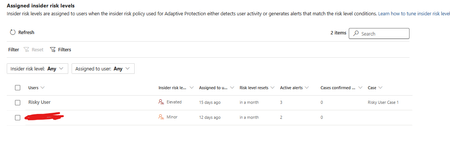
Insider Risk Level not being correctly picked up by DLP
I have two users currently with assigned Insider Risk levels, one elevated and one minor. I have taken the templated DLP policy (DSPM for AI - Block sensitive info from AI sites) which looks for sensitive information being pasted to generative AI sites, and applies a block if the user is an elevated risk user, and a block with override for a moderate/minor risk user (this was audit only originally). For each advanced DLP rule within that policy, I have a separate policy tip which shows so I know which Advanced DLP rule has been hit. However, I'm having some discrepancies with the correct insider risk level being identified by Purview and therefore the wrong advanced DLP rule is being applied. Testing examples: Logged into a Windows 11 PC with the account, and using Medium confidence UK NINO's I try pasting the content into ChatGPT: Elevated risk user: Block with Override Minor Risk user: Block with Override If I try the exact same scenario on a different PC, I can sometimes get to the point where even though its the same set of data, Purview allows me to paste it at after checking the data. Or in another scenario, I was getting both users hitting the "elevated risk" advanced DLP rule. The Devices are all showing as up to date sync wise with DLP policies, and the policy itself is showing as fully synced. Assigned insider risk levels: DLP Rules: Elevated: Moderate/Minor:Solved173Views0likes2CommentsDLP Prevents Microsoft 365 Copilot from Processing External Email
A new (preview) DLP capability allows Microsoft 365 tenants to block Microsoft 365 Copilot from processing the content of external email. When set, any message coming from a domain that’s not in a tenant’s accepted domain list is blocked for Copilot for grounding, referencing, or summarization. It’s an effective way of blocking threat like prompt injections transmitted in email too, but some people might not like blocking all their external email. https://office365itpros.com/2026/07/29/dlp-external-email-copilot/57Views1like0CommentsPurview DLP Blocks Sharing Files with Specific Domains or Users
A new DLP rule is available to control sharing of SharePoint and OneDrive files with selected domains and email addresses. The new rule supports an allow list (permit sharing) and can also specify a deny list (block sharing). The user interface takes a little getting used to, but when everything is configured and SharePoint has had a chance to respond to the block, the rule works and any attempt by a blocked user to use a sharing link is refused. https://office365itpros.com/2026/07/22/block-sharing-dlp-sharepoint/163Views0likes4Comments
How can we identify the size of a Microsoft Purview DLP policy and individual DLP rules?
Hello Microsoft Community, According to the Microsoft Purview DLP policy reference, the following platform limits apply: Maximum size of a DLP policy: 100 KB Maximum size of an individual DLP rule: 100 KB or 102,400 characters Maximum number of rules within a policy: Limited by the overall policy size I would like to understand how these limits are calculated and how administrators can monitor the current size of an existing DLP policy or rule. Could someone please clarify the following? What exactly is included when calculating the 100 KB DLP policy size? Does the policy size include only policy-level configuration, such as locations, users, groups, administrative units, inclusions and exclusions, or does it also include the combined definitions of all rules associated with the policy? What exactly is included in the 100 KB individual rule size? Sensitive information types and their GUIDs Condition groups Instance-count and confidence-level configurations Exceptions Endpoint DLP restrictions User notifications and policy-tip messages Override options Alert and incident-report settings Recipient lists Advanced rule configuration For example, does it include: The documentation describes the rule limit as “100 KB (102,400 characters).” Is the limit based on: The number of characters The UTF-8 or Unicode byte size The serialized JSON/XML representation An internally generated policy payload Is there a supported method in the Microsoft Purview portal, Security & Compliance PowerShell, Microsoft Graph, or another API to display the current size of: A DLP policy Each DLP rule The remaining available policy capacity Can the size be estimated by exporting the output from Get-DlpCompliancePolicy and Get-DlpComplianceRule? If so, which properties should be included in the calculation, and what encoding or serialization format should be used? Does the 100 KB policy limit represent the combined size of the policy and all its rules, or are the policy and rule limits evaluated independently? What error or warning is generated when a policy or rule approaches or exceeds the limit? Is there any notification before the limit is reached? We are designing global Microsoft Purview DLP policies containing multiple Sensitive Information Types, condition groups and workload-specific rules. We need a reliable method to measure policy and rule sizes during design and ongoing policy governance. Any official guidance, supported script, API property, or calculation method would be appreciated.Solved143Views0likes2CommentsExtend data security to the network with Microsoft Purview and Microsoft Entra
Protection that keeps up with how data moves in the AI era Enterprise data used to be easier to contain. It lived in files, in apps you managed, within boundaries you controlled. Security teams could focus on endpoints and known systems, and that was often enough. That’s no longer the case. Today, data travels constantly between trusted endpoints and unmanaged web apps, SaaS apps, and most critically, generative AI tools over the network. Employees type and paste sensitive information into prompts, upload work-related files to external services or personal cloud storage, and interact with systems that sit entirely outside the traditional enterprise perimeter. AI has expanded the risk surface for potential enterprise data loss. That’s why Microsoft Purview and Microsoft Entra now integrate to extend data security to the network layer (available in public preview). Traditional data loss prevention (DLP) approaches lack real-time visibility and enforcement, flagging incidents after data has already left the organization. In other cases, vendors rely heavily on physical network appliances that are complex and expensive to deploy, or compute resources that can add significant latency. In the era of AI, that model breaks down quickly. Real-time data protection for how work happens today To adapt to how enterprise data moves in the AI era, we’re announcing the extension of data security to the network layer, powered by Microsoft Purview and Microsoft Entra, now in public preview. This integration brings together data context and identity-aware enforcement to help protect sensitive data in transit, in real time: Detect how sensitive data is shared to shadow AI tools, unmanaged SaaS apps, and personal cloud repositories Help block the sharing of sensitive data in real time based on identity, user activity, and data context, before data leakage occurs Unify investigation workflows by correlating identity, data, and insider risk signals across Purview, Entra, and Defender Prevent employees from sharing proprietary or sensitive organizational data to potentially risky locations such as consumer AI apps. By combining Purview data classification, DLP policies, and insider risk detection with identity-aware enforcement at the network layer through Entra, organizations can dynamically apply protections based on: The sensitivity of the data Who the user is How that user has interacted with sensitive data over time Together, Purview and Entra enable a modern approach to data protection that follows the data to prevent leakage instead of relying on at-rest controls alone. Not only that, but the same Purview classification and policies that you already leverage for the rest of your enterprise data can now be applied consistently across data in motion, at rest, and in use. Learn more in the detailed blog. See the capabilities in action here. Start your free trial of Purview Suite here.Onboarding Devices to Purview
I am not clear on how can I onboard devices to MDE so that I can enforce EDLP policies. We have CrowdStrike as Primary AV and other policies. Devices are managed through Intune for Bitlocker encryption and all the other settings except they don't have Defender. These devices are not showing up in Purview nor under "Endpoint detection and response" location under Endpoint Security. If we create an EDR onboarding policy and deploy to devices, then it shows the devices and says that AMRUnningMode is Passive, but Antivirus is true. Which I feel like Defender is taking over CrowdStrike? or am I wrong. My goal is to make sure CrowdStrike still primary AV and devices should be onboarded to MDE and then to Purview so that we can scope EDLP policies properly. Can anyone help me to understand or provide right steps?205Views0likes1CommentMoving Office 365 Mailboxes to IMAP Servers - What’s the Best Approach
I’ve recently been looking into scenarios where organizations need to move mailboxes from Microsoft 365 to IMAP based email servers, and I noticed this is still a common requirement in many migrations. In most cases, the challenge is not just moving emails, but making sure everything like folder structure, old emails, and user data stays intact without creating too much disruption for users. From what I’ve seen, doing this manually can get very complex, especially when there are multiple mailboxes or large data volumes involved. That’s where migration tools usually come into the picture. Most tools simplify things by handling: 1. Secure connection to Microsoft 365 accounts 2. Bulk mailbox migration 3. Preserving folder hierarchy 4. Reducing downtime during the move 5. Avoiding duplicate data issues One thing I’ve noticed is that running a small pilot migration first always helps. It gives a clear idea of how the actual migration will behave before moving all users. Has anyone here worked on Office 365 to IMAP migration at scale? Would be good to know what approaches or tools worked best in your case and what challenges you faced during the process.217Views0likes2CommentsOffice 365 Mailbox Export to PST - Third Party Tools: What’s Your Experience?
Exporting Office 365 mailboxes to PST is still a common requirement in many Microsoft 365 environments, especially for backup, compliance, and migration scenarios. While Microsoft offers native options like Purview eDiscovery and Outlook export, many administrators also consider third-party tools when dealing with large mailboxes or bulk export requirements. In real-world scenarios, factors like speed, ease of use, permission handling, and consistency of exported data often influence the choice of tool. Some teams prefer native methods for compliance control, while others explore third-party solutions to simplify large-scale or repeated export tasks. For those working with Microsoft 365, what has your experience been with third-party PST export tools? Have they helped in your environment, or do you still rely mainly on Microsoft’s native options?282Views1like3Comments