ai
3 TopicsGetting Started with the Microsoft Commercial Marketplace (for SaaS and AI Agents)
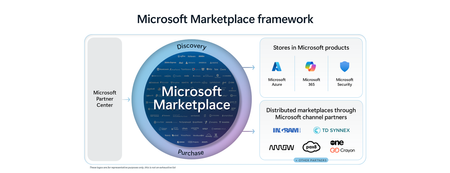
If you build software—whether you’re an early‑stage startup or a seasoned ISV—the Microsoft Commercial Marketplace is one of the fastest ways to reach millions of customers globally, simplify procurement, and enable transactable offers directly inside Microsoft purchasing channels. This post is a simple, public guide to help you understand what the Marketplace is, why it matters, and how to get your first offer live—whether that’s a SaaS app or an AI agent. Why the Microsoft Commercial Marketplace? Reach and trust: Sell where customers already buy, leveraging Microsoft’s commerce infrastructure and enterprise relationships. Frictionless procurement: Enable private offers, custom terms, and procurement through existing Microsoft agreements. Flexible business models: Support free trials, flat or tiered pricing, usage‑based (metered) billing, and both public and private plans. Explore the public catalog here: https://azuremarketplace.microsoft.com/ Step 1: Set up your publisher account Before you can list and transact, complete the publisher onboarding steps. This establishes your identity, payouts, tax profile, and the basics needed to publish offers. Guide: https://learn.microsoft.com/en-us/partner-center/marketplace-offers/transacting-commercial-marketplace Tip: Treat onboarding like opening a storefront—once complete, adding offers and plans becomes straightforward. Note: you will need to be a Global Admin on your Entra ID tenant to be able to enroll your company into Microsoft AI Partner Program (MAICPP) Step 2: Choose the right offer type The Marketplace supports multiple offer types (SaaS, virtual machines, containers, managed apps, professional services, and more). Pick the model that best matches how customers consume your solution. Overview by offer type: https://learn.microsoft.com/en-us/partner-center/marketplace/marketplace-offers-overview Step 3: SaaS offers 101 (plans, pricing, and provisioning) For SaaS publishers, you’ll define your offer once and attach one or more plans (e.g., Free, Pro, Enterprise). You can combine public plans for self‑serve purchase and private plans and private offer for negotiated deals. How to plan a SaaS offer: https://learn.microsoft.com/en-us/partner-center/marketplace-offers/plan-saas-offer Usage‑based (metered) billing: If your product usage varies (e.g., API calls, seats, storage), you can add metered dimensions to bill for what customers consume—both in public and private plans. https://learn.microsoft.com/en-us/partner-center/marketplace-offers/saas-metered-billing Step 4: Accelerate your SaaS integration Provisioning, activation, and subscription lifecycle events are part of any SaaS listing. Microsoft provides a reference implementation to speed this up: Open‑source accelerator: https://github.com/Azure/Commercial-Marketplace-SaaS-Accelerator This jump‑starts the technical integration (fulfillment, subscription events, webhook handling, and more). Prefer a ready‑made service? Some third‑party providers offer a SaaS fulfillment layer as a managed service: Example provider: https://www.wetransact.io/ (third‑party) Note: Third‑party solutions are optional and independently operated—evaluate them like any other vendor. You can keep both the Marketplace side and your product onboarding manual: publish your SaaS offer (including paid plans and private plans/offers) and route purchases to the SaaS Accelerator landing/admin portal, where new subscriptions appear so your team can manually activate and fulfill them; as order volume grows, you can add automation later using the Accelerator’s webhook/external‑notification features without changing your initial flow. The same manual‑first pattern applies if you prefer a third‑party fulfillment layer. Mastering the Marketplace is a great resource to go deeper on this integration. Step 5: Publish AI agents If you’re building AI agents, you can publish them in the Microsoft Marketplace as well. The process is similar to other offer types, with additional guidance specific to agent capabilities and compliance. How to publish AI agents: https://learn.microsoft.com/en-us/partner-center/marketplace-offers/ai-agent-overview Step 6: Unlock go‑to‑market benefits Publishing is just the beginning. The Marketplace comes with programs and benefits designed to help you grow awareness, generate demand, and accelerate sales. Go‑to‑market benefits: https://learn.microsoft.com/en-us/partner-center/marketplace-offers/gtm-your-marketplace-benefits Early‑stage accelerator: Consider ISV Success for Software Development Companies—it can speed up your Marketplace journey and overall product readiness. Practical next step: Publish your MVP offer with a clear value proposition and one to two simple plans, then layer in GTM benefits once you’re live. Often asked: Tax Information for Microsoft Marketplace Payout schedules and processes A simple launch checklist SignUp to ISV Success link Complete publisher onboarding (accounts, tax, payouts). Select your offer type (SaaS, AI agent, etc.). Define plans and pricing (public and/or private). Implement fulfillment (use the SaaS Accelerator or your own stack). Configure legal, images, and listing content (clear benefits, screenshots, pricing table). Test end‑to‑end (trial purchase, provisioning, seat changes, cancellation). Publish and activate GTM benefits (listing promotions, demand generation, co‑sell alignment). Final tips Start simple: One clear offer, one to two plans, crisp messaging. Make pricing obvious: Customers should instantly understand value vs. cost. Operational readiness: Test provisioning, suspension, upgrades, and cancellations before you go live. Leverage benefits: Use Marketplace GTM and programs like ISV Success early—they compound over time.Multi-tenancy in Agentic AI – session recap
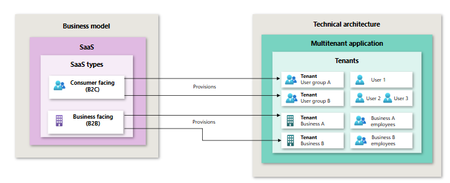
Software as a Service (SaaS) enables software development companies (SDCs) to deliver their products as managed services to customers. Whether offered business to business (B2B) or business to consumer (B2C), the way a product—new or existing—is designed to support multiple tenants (such as customers, user groups, or internal departments) can vary based on many factors. ‑to‑business (B2B) or business‑to‑consumer (B2C), the way a product—new or existing—is designed to support multiple tenants (such as customers, user groups, or internal departments) can vary based on many factors. SaaS and Multitenant Solution Architecture - Azure Architecture Center | Microsoft Learn To help you with architectural considerations (questions like “how will you define tenant”, “how will you deploy your infrastructure to support multitenancy”, “how will you monitor, automate, scale”, etc.), we have an assessment (available here) to guide you step by step through that. We’ve even built a checklist (more here) as a starting point to help you design and build your multitenant solution with ease. In general, most common ways / perspectives we can handle multi-tenancy are: Application (do we have shared apps for all customers, or we create apps specific for customers, …) Data (do we use one data storage, do we multiple, how do we effectively query through data, how do we scale / partition, when do we scale …) Infrastructure (do we handle one region, do we handle multiple, how do we do multiple customers across multiple regions, …) Agents (how we align agent with tenants, do we create agent per tenant, or load tenant-based tools, prompts, data in shared ecosystem, …) In the session (video available here, slides here, demos here) we were focusing on 2 things (with concrete examples): Application and data perspective with proposed architecture patterns (stamp pattern, circuit breaker) Agent usage with different techniques and patterns (semantic caching, agent id) Starting with a clean multi-tenant design is ideal, but we recognize that this is often not the reality in the field. With that in mind, the demos we are presenting in the session are built with: having web (UI) and API (backend business logic and agent usage) applications, which are not multi-tenant, and then go step by step and transform, highlighting what it takes to change the app and backend from single to multi customer usage. Continuing with focusing on how to handle agent usage with different approaches (semantic caching, loading tools / prompts based on tenant identifier, etc.) to server multiple tenants efficiently. Recording of the session After you watch the video, you’ll notice that multi-tenancy comes with many considerations, challenges, and different ways to approach it, locally and on Azure. Azure—and our team—are here to simplify this journey for you and your customers. p.s. Check also other webinars and recordings from our SDC academy.Introducing the EMEA SDC Academy: A Centralized Hub for Deep Technical Enablement
Software Development Companies (SDCs) across EMEA are building faster, smarter, and more scalable solutions than ever before. To support this momentum, we’re excited to introduce the SDC Academy - a new technical content hub designed to help SDCs accelerate innovation and bring high‑quality solutions to market. This blog and webinar series brings together expert‑led deep dives, architectural guidance, and applied best practices across the Microsoft ecosystem, including Azure, AI, Marketplace, and multi‑tenant design patterns. It also provides clear pathways for startups to engage with Microsoft programs such as Microsoft for Startups | Microsoft and benefit from technical, business, and go‑to‑market support. Why the SDC Academy? SDCs often face similar challenges - scaling architectures, building secure multi‑tenant SaaS, optimizing AI latency, or navigating Marketplace enrollment. Yet technical guidance is often scattered across repositories, documentation, and isolated experiences. The SDC Academy consolidates these learnings into a central, openly accessible space built for SDCs of every shape and maturity level. Sessions and posts will: Focus on deep technical scenarios rather than introductory content Highlight proven architectural patterns, trade‑offs, and real‑world best practices Combine technical depth with practical business guidance, including Marketplace strategy Provide clear next steps for engaging with Microsoft experts, resources, and partner programs What You Can Expect The Academy publishes content in a predictable ongoing cadence, including blog posts webinars Topics include: Architecting Agentic AI: Best practices in multi‑agent orchestration, latency management, and integrating MCP (Model Context Protocol) into production solutions. Extending Microsoft Copilot for SDC Scenarios: How to build and extend agents using Copilot Studio and pro‑code toolkits. Multi‑Tenant and Scalable SaaS Architectures: Patterns for resource design, isolation, API management, and scaling strategies on Azure. Marketplace Readiness and Monetization: Practical guidance on listing, transacting, and benefiting from Marketplace programs. As Agentic AI moves from experimentation to real-world adoption, SDCs are uniquely positioned to lead. The Academy will dedicate a significant portion of its content to Agentic AI best practices - this focus reflects direct partner demand as seen across our technical webinars and planning sessions. The blogs will be released gradually over the coming weeks as we build out the full public library of content! Follow us on this journey!