adoption
438 Topics
Meeting setup in teams Channel is not allowing me to update the Agenda and send updates
I am interested to understand why when I have setup a meeting from A channel I am not able to change the invitation to all the team members. When I go into teams Calendar ,. I update the agenda description, the send updates at the top right view shows up when I do the changes , however , When I click it , the changes don't take effect.216Views0likes1CommentMS TEAMS ON MOBILE BROWSER
Hi, So I want to be able to access MS Teams meetings on the mobile browser itself, i.e on the mobile web app. I don't want our customers to be asked to download the MS Teams mobile app. They should be able to join meetings directly from the browser itself. What should I do? Thanks, RichaSolved255KViews0likes35Comments
Planner for Private Channels
Hello all, Does anyone have any information on when Private Channels will get Planners? Teams is a collaborative tool, but you can't assign tasks to people in private channels due to the lack of planners. Any info would be greatly appreciated. Thanks!Solved419KViews29likes52CommentsTeams Delivers a Slack Migration Tool
Microsoft announced the availability of a Slack to Teams migration tool in the Microsoft 365 admin center. The new tool exists to assist the 79 million monthly active users of Slack who might want to move to Teams and don’t know how to get there. ISVs have been helping people move off Slack to Teams for years, so other migration options exist. https://office365itpros.com/2026/01/07/slack-to-teams-migration/505Views0likes1CommentWhat if Teams isn’t too complicated — but simply being compared to the wrong product?
Many users first experience Microsoft Teams through meetings, chat, and file sharing. So it feels natural to compare Teams with messaging apps. But I’ve started to wonder whether that comparison itself shapes how people experience Teams. In markets such as Taiwan, Japan, and Thailand, LINE is deeply embedded in everyday communication. For those unfamiliar with it, LINE is a widely used consumer messaging app in these markets. When users bring that same mental model into Teams, a familiar question appears: “Why does Teams have to be so complicated?” But what if that isn’t quite the right question? I explored the idea in this short interactive page: Maybe We've Been Thinking About Teams the Wrong Way https://teams-vs-line-vinci.vinciwang.chatgpt.site/en/teams-vs-line One analogy sits at the center of it: LINE is like a speedboat. Teams is more like an aircraft carrier. I’m particularly interested in whether people here agree — or think this analogy actually proves the opposite. Is the problem mainly Teams itself, or the mental model we use to judge it?231Views0likes0Comments
Teams phone demo
I work in the IS Department at a school and we (IS Dept) use Teams regularly and others are slowly getting around. Due to a mixed environment of Google Docs/Zoom users and M365 users, there is a lot of push back or silence whenever the topic of Teams comes up. It is my opinion that key to getting everyone to buy in is to add the calling feature to our system. We have an existing controller that will work with it (Mitel). Ideally we would not change our current phone system, instead we can just add our existing system to Teams adding the ability to call users extensions and outbound numbers. Is it possible to set up a demonstration or enable this ability for a small group?Solved8.3KViews0likes7Comments
Transforming Microsoft Teams into a Project Management Hub
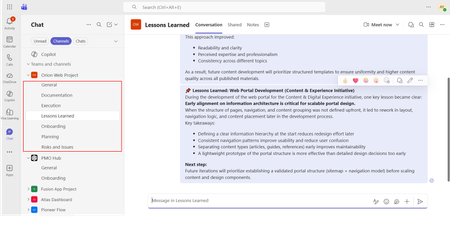
If you use Microsoft Teams only for chats and meetings, you’re missing much of what it can actually do. While Microsoft Teams is often seen as a communication tool, it can also function as a central workspace for managing projects - from planning and brainstorming to execution and documentation - all in one place. When combined with tools like Microsoft Planner, SharePoint, and Microsoft Loop, Teams can become a practical project management hub that keeps work organized and reduces the need to switch between systems. This article walks through a clear, practical approach to setting up and using Teams for real-world project delivery. Why Use Microsoft Teams for Project Management? Organizations often hesitate to introduce new tools due to cost, training effort, or resistance to change. Microsoft Teams offers a strong advantage: it is already widely adopted in many organizations as part of Microsoft 365. Using Teams for project management allows you to: Centralize communication and documentation Reduce tool fragmentation Improve team visibility and collaboration Leverage existing infrastructure without additional cost Instead of switching between multiple platforms, teams can manage conversations, files, tasks, and workflows in one place. Structuring Your Project in Teams A well-structured Team is the foundation of successful project management. Create a Dedicated Team Start by creating a Team specifically for your project. Avoid mixing multiple projects in one Team, as it leads to confusion and poor organization. Recommended channels structure: General (announcements and overview) Planning (timelines, scope, requirements) Execution (daily work discussions) Risks and Issues Documentation Onboarding Lessons Learned This structure ensures clarity and separates strategic discussions from operational ones. Managing Tasks with Planner Task management is a critical part of any project. Inside Microsoft Teams, you can add a Planner tab to manage tasks visually within the same workspace where communication and files are stored. How to use Planner effectively: Create buckets (e.g., To Do, In Progress, Completed, or structured by topic) Assign tasks to team members for clear ownership Set due dates and priorities Attach files and add comments directly to tasks Use labels to categorize work (e.g., Design, Frontend, Backend, Testing) for better filtering and tracking Planner also provides multiple views beyond the basic board: Board view (Kanban-style) for workflow tracking Charts view for progress and workload overview Schedule (Calendar) view to track deadlines visually across time This combination allows teams to switch between operational tracking and higher-level planning depending on the need. This visual approach improves accountability, transparency, and makes task tracking easier even for non-technical users. Document Management with SharePoint Every Team in Microsoft Teams is backed by a SharePoint site. This means all files shared in Teams are stored and managed through SharePoint. Using SharePoint effectively allows you to: Structured storage of project documentation through folders and metadata Maintain version control Role-based access management Centralized file organization Control access permissions Enable real-time collaboration Best practices: Create clear folder & metadata structures (e.g., Contracts, Designs, Reports) Avoid duplicate files Use naming conventions Instead of sending documents via email, teams can collaborate directly within Teams, ensuring everyone works on the latest version. SharePoint Lists in Microsoft Teams SharePoint Lists in Microsoft Teams provide a structured way to store, manage, and track information directly within the collaboration workspace. A SharePoint List is essentially a flexible data table, where each item represents a record with defined fields (such as status, owner, due date, priority, or category). They are especially useful for: Project roadmaps and milestone tracking Action item tracking with ownership and status Checklists for delivery and execution steps Simple status registers and progress tracking Unlike free-form messages or documents, SharePoint Lists keep information structured, filterable, and easy to update, which makes them suitable for ongoing tracking and reporting. When used inside Microsoft Teams, Lists help teams move from discussion to execution by turning decisions into trackable items with clear ownership, status, and visibility. Embedding SharePoint Pages in Teams Beyond file storage, Microsoft 365 allows SharePoint pages to be embedded as tabs within Teams, making key project information easily accessible in one place. SharePoint pages can be added as tabs inside Microsoft Teams channels, providing structured and persistent access to key project information without leaving the collaboration space. In practice, organizations often use SharePoint pages for: Project home page with key links and overview Governance page with rules and standards Onboarding page for new team members Documentation hub for core resources Centralized knowledge hubs This helps ensure that essential information is not scattered across chats or files, but is instead organized and always available within the project workspace. SharePoint is better suited for structured, stable, and long-term information. Microsoft Loop for Real-Time Collaboration Microsoft Loop introduces a more dynamic layer of collaboration inside Microsoft Teams, designed for fast, interactive work where content is continuously evolving. Loop components (such as notes, tables, task lists, and meeting agendas) can be embedded directly into Teams conversations and edited in real time by all participants. It is especially useful for: Live meeting notes Quick decision-making and feedback collection (including simple polls or inputs) 1:1 discussions and follow-ups Brainstorming sessions and idea capture Shared task tracking during discussions In practice, teams can collaborate on meeting notes or brainstorming pages during calls, with updates visible instantly to everyone. This removes the need to switch between documents or wait for post-meeting summaries. Unlike structured tools like SharePoint, Loop is designed for fluid, real-time collaboration, where information is shaped and refined as the discussion happens. Automating Workflows with Power Automate Manual processes can slow down project execution. With Power Automate, you can streamline repetitive tasks. Common automation examples: Notify the team when a task is completed Send reminders for upcoming deadlines Automatically save email attachments to SharePoint Trigger approval workflows Example scenario: When a task in Planner is marked as “Completed,” a notification is sent to the project manager and logged in a tracking list. This reduces manual follow-ups and improves efficiency. Power BI Dashboards Power BI can be integrated into Teams as a tab, allowing teams to access real-time reporting directly within their project workspace. It is commonly used for: Project status dashboards KPI and performance tracking Resource and workload visibility Financial or delivery reporting Instead of switching to a separate reporting tool, teams can monitor progress and insights directly inside Teams, ensuring better visibility and faster decision-making. Microsoft Whiteboard Microsoft Whiteboard provides a visual collaboration space for real-time ideation and planning. It is especially useful for: Brainstorming sessions Process mapping and flow design Workshop facilitation Visual planning during meetings Whiteboard supports freehand drawing, sticky notes, and structured diagrams, making it effective for capturing ideas during live discussions and workshops. Integration with Other Tools (Microsoft & Third-Party) Microsoft Teams can be extended with a wide range of Microsoft 365 services and external applications, allowing it to function as a central hub for project work, reporting, and collaboration. Teams also supports many external tools, allowing organizations to align existing systems without fully replacing them. Common examples include: Jira – agile project and issue tracking Trello – lightweight task and board management ServiceNow – IT service management workflows GitHub – development and repository tracking Salesforce – CRM data and customer-related workflows Communication and Collaboration Effective communication is essential for project success. Microsoft Teams provides multiple ways to facilitate this: Channel Conversations Keep discussions organized by topic instead of using scattered chats. Meetings and Calls Schedule regular check-ins, sprint reviews, or stakeholder updates directly within Teams. Mentions and Tags Use @mentions to notify specific team members and ensure accountability. Practical Use Case Consider a company implementing a new internal intranet. Using Microsoft Teams: A Team is created for the project Planner tracks tasks such as design, content migration, and testing SharePoint stores documents and site assets Power Automate sends reminders for deadlines Teams meetings are used for weekly progress reviews This setup enables the team to manage the entire project lifecycle without introducing additional tools. Best Practices for Success To maximize the effectiveness of Microsoft Teams for project management: Keep your structure simple and consistent Avoid creating too many channels Encourage team members to use channel conversations instead of private chats Regularly review and clean up tasks Use automation where it adds clear value Adoption is just as important as functionality. A well-designed system only works if the team actively uses it. Limitations to Consider While Microsoft Teams is powerful, it has limitations: Not suitable for highly complex project scheduling Limited dependency management compared to dedicated PM tools Reporting capabilities are basic without Power BI For large-scale or highly regulated projects, a dedicated project management tool may still be required. Professional Context and Applied Perspective The approach described in this article reflects practical experience in designing and implementing collaboration environments using Microsoft Teams within real organizational settings. It is based on applied use of integrated Microsoft 365 capabilities, including SharePoint, Microsoft Planner, and Microsoft Loop, to support structured project execution and improve cross-functional collaboration. Rather than relying on isolated tools, this approach focuses on designing a unified digital workspace that aligns communication, task management, documentation, and automation within a single environment. Microsoft Teams is more than just a communication platform. When used strategically, it becomes a practical and efficient tool for managing projects. By combining Teams with Planner, SharePoint, and Power Automate, organizations can create a unified workspace that supports collaboration, task management, and process automation. For teams looking to simplify their toolset while maintaining productivity, Microsoft Teams offers a compelling solution for modern project management.2.8KViews1like1CommentTeams for iOS (MAM only Call Identification)
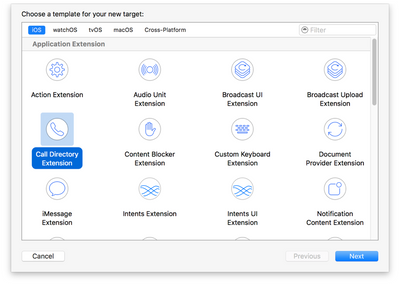
In order of the implementation of O365/M365 and with it Microsoft Intune, Teams and Outlook for iOS has become the standard collaboration and mail clients on iOS devices for many customers today. This is due to the excellent user experience and the constant stream of new features implemented by Microsoft. From a security perspective, in addition to the provision on managed devices (managed by Intune), the secure use on unmanaged devices with MAM or App Protection Policies (APP) is a big argument for using Teams and Outlook for iOS. A big pain point for many users who use Teams and Outlook for iOS in an MAM-only setup (and for MDM setup with Intune too) is the missing caller identification of Exchange Online (EXO) contacts, when someone is calling via a cellular connection. Outlook for iOS supports a one-way contact export process whereby contacts from within Outlook for iOS can be exported into the personal (unmanaged) part of the native iOS Contacts app. This means a contact must first be imported into the users personal contacts directory of EXO and then exported from Outlook for iOS to the native (unmanaged) iOS Contact app in order to see who is calling. This functionality enables Caller-ID, iMessage, and FaceTime integration for users’ Outlook contacts. The exported Outlook contacts are considered unmanaged and are accessible by unmanaged, personal apps. Especially for European customers who are subject to GDPR compliance, this is a no go, as personal data and company data must not be mixed. The unintentional outflow of contact data worthy of protection to commercial platforms, such as WhatsApp or Google, and the unintentional synchronization of address books with social media apps, represents a significant GDPR risk. Although the user's personal EXO contacts can be synchronized, there is currently no option to synchronize the GAL. Furthermore, there is currently no provision in Teams and Outlook for iOS to synchronize the GAL cyclically. The user has to add a GAL contact to his personal contacts as described above and then within the Outlook for iOS app export the contact to his native iOS contacts app to be able to see who is calling. To meet the GDPR compliance, we need to prevent the contact export. So this is not a solution. The question to ask is: Why does a user need to export a GAL/personal contact to their native iOS Contact app? There are already several paid app solutions that close exactly this gap (ebf Contacts, Secure Contacts, etc.) which offer more or less the same range of functions. The app builds a container and downloads the managed address books (GAL, personal) of the user and then enables the resolution of the CallerID or identification of the caller via the so-called Apple CallKit integration. Apple has been offering the so-called CallKit integration for years. With CallKit you can integrate your calling services with other call-related apps on the system. CallKit provides the calling interface, and you handle the back-end communication with your VoIP service. For incoming and outgoing calls, CallKit displays the same interfaces as the Phone app, giving your app a more native look and feel. CallKit also responds appropriately to system-level behaviors such as Do Not Disturb. In addition to handling calls, you can provide a Call Directory app extension to provide caller ID information and a list of blocked numbers associated with your service. When a phone receives an incoming call, the system first consults the user’s contacts to find a matching phone number. If no match is found, the system then consults your app’s Call Directory extension to find a matching entry to identify the phone number. This is useful for applications that maintain a contact list for a user that’s separate from the system contacts, such as Teams and Outlook for iOS. For example, consider a user who is a colleague to Jane, but doesn’t have her phone number in their contacts. If the Teams or Outlook for iOS app has a Call Directory app extension, which downloads and adds the phone numbers of all of the user´s colleagues. When the user gets an incoming call from Jane, the system displays something like “(App Name, e.g. Outlook) Caller ID: Jane Appleseed” rather than “Unknown Caller”. The effort to integrate the Call Directory Extension is minimal and would solve many pain points from both a security and user experience perspective. Apple has documented CallKit excellently on the developer site: https://developer.apple.com/documentation/callkit With the possibility of using Apple CallKit in combination with Teams and Outlook for iOS and the contact synchronization (personal/GAL) of a managed EXO mailbox, the use of M365 in a BYOD scenario for customers Blue Collar workers will massively increase. Furthermore, the use of contact synchronization is then also possible for devices managed by Intune. This creates an outstanding user experience while increasing user adoption! This article was also published as feedback in the Outlook Forum for iOS: https://feedbackportal.microsoft.com/feedback/idea/a80414f4-9598-ed11-a81b-000d3ae32cd0 There are already other requests within the Microsoft community that I would like to link here: @PatrickF11 : Outlook for iOS + Caller Identification - Microsoft Community Hub Daniel Huttenlocher: https://feedbackportal.microsoft.com/feedback/idea/bbfc8763-da97-ed11-a81b-000d3ae32cd02.1KViews0likes1Comment
Link URL to Team Channel
Hello all, I'm trying to link a URL from a fillable PDF to a "Teams Channel". If I plug in the following URL, it works great (it links the user directly to a personal Teams Chat). However, rather than link the user to Chat channel, I want the user to be linked directly to a general Teams Channel. (I hope this makes sense). Is any of this possible? https://teams.microsoft.com/l/chat/0/0?users=XXX@XXX.com&topicName=Completed-training&message=TrainingTraining Complete:Solved116KViews1like7Comments