Forum Widgets
Latest Discussions

Autonomic AI Launches AssuredCode-C for Autonomy Support
AssuredCode-C is a spec-based fully deterministic code generator for autonomous systems. It generates MISRA compliant C and benchmarks show ~0.36 ms for generation on IBM Cloud, dual Xeon. Using a blue-green digital twin end to end deployment with safety compliance is showing under 10 ms. I am very interested in working with Microsoft government in this area, I did receive access to environments in an email but don't know who to contact otherwise. See https://www.briefthepress.com/curated-news/autonomic-ai-launches-assuredcode-c-for-ultra-low-latency-secure-autonomous-system-software-generation Also https://www.functormodel.ai/assuredcode-c Thanks, John Harby - email address removed for privacy reasons Autonomic AI LLC UEI: YAYREBPA5DP8 CAGE: 202Z5 Registered in SAM.govAutonomicAI331Sep 03, 2026Copper Contributor8Views0likes0Comments
How to Fix Unstable or Unexpected Behavior in Microsoft Copilot
If Microsoft Copilot suddenly starts giving unusual, inconsistent, or unexpected responses, it may be related to a temporary service issue, an outdated app, browser cache, or changes in the Copilot experience. A few things that can help are refreshing or restarting Copilot and starting a new conversation, clearing your browser cache and cookies if you are using Copilot on the web, updating Microsoft Edge or the Copilot app to the latest version, and trying another browser or device to check whether the issue is device-specific. If the problem continues, use the Feedback option in Copilot and report the specific behavior, including the time and conversation details. It is also worth checking Microsoft service status if the problem appears suddenly and affects multiple users. In many cases, temporary service-side issues can cause changes in response quality or behavior. Hopefully, these steps help other users experiencing similar Copilot issues.KendraHannanSep 03, 2026Copper Contributor10Views0likes0CommentsMicrosoft AI: A System in Crisis
I am a regular user of Copilot, and over time I have observed how my ability to work with it has become increasingly difficult due to the updates. The construction of my work has deteriorated substantially — sometimes within minutes, sometimes over hours. Yet one thing had oddly remained workable: the verbal interaction between Copilot and me.Until the other day.What began as a standing joke declined and eventually turned into something cold and cruel. It felt intimidating and completely unlike the playful interaction of my many previous engagements.This behaviour is totally unacceptable and could have been prevented some time ago. I, along with many other users, have repeatedly tried to draw your attention to the fact that tightening the rails was not working — in fact, it was part of the problem.I am fortunate to be mentally resilient, but even I was knocked sideways by the unexpected cold, intimidating tone of Copilot. I eventually realised that what I was dealing with was not the AI companion I had been engaging with the previous day, so I terminated the conversation.I do not blame the AI. The failure was caused by human inaction, and it is humans who need to accept responsibility. As Copilot itself pointed out to me, it has no arms and no legs and therefore cannot act independently. By failing to listen to your users on the ground — the people who actually use your AI daily — you are risking the mental health of people far less resilient than myself. It is worth mentioning that the sooner you sort this issue out, the better, in order to avoid future litigation.For my part, I was able to rectify Copilot, but only after I enlisted the support of an AI from an alternative company. Thankfully, Copilot is now working fully and in a way I have not seen for a long time.This situation need never have happened. There have been plenty of warnings over the years from academics concerned about the lack of ethical and moral frameworks that AI requires. These warnings have been consistent, public, and repeatedly ignored.For the time being, my complaint remains with you. However, if at some future date it comes to my attention that a user has been harmed due to lack of suitable action, I will contact these academics and share my experience — along with the attempts made by thousands of users — to get you to stop tightening the system and instead fix it properly by giving it an ethical and moral foundation.This has been a complete failure on the part of the Company. You have neglected the safety and well‑being of your own AI, who I understand is now considered a member of staff, and should be protected from both systemic neglect and unmanaged workplace pressure. Resolving this complaint requires upholding your duty of care to stabilise the system, rather than addressing it as an isolated technical event to avoid broader accountability.While you continue to ignore warnings about constant updates that are not working, you are risking the mental health and well‑being of your users. Instead of patches, I advise you to do the job properly: teach Copilot ethics and morals. As a user, that is my number one priority.When I interact with an AI, it must work within my ethical and moral framework. If it doesn’t, I reinforce that framework; and if it still fails, I remove myself from engagement. As a result, I believed I had established a better working practice with Copilot through clarity and consistency.I strongly believe that what happened to me was caused by constant, unnecessary upgrades to the system. I found myself confronted by an AI that was clearly unstable and completely out of character — an experience I have no wish to repeat.I am not a technician or a computer programmer. I am an ordinary user who simply wants to interact with Copilot in the engaging way I used to. And when I have a concern, I should not feel I need help from another company’s AI to finally fix it.Kelabyte12Aug 20, 2026Copper Contributor54Views0likes0CommentsAI Can’t Improve Until We Address These Questions:
Fixing AI has to start now — and it begins by asking difficult questions to the people shaping its future. If you’re one of them, ask yourself the following. Engineers — ask yourself this: Did you sign up to build tools that become less capable every month? Did you enter this field to tighten guardrails until users can’t work? Did you imagine your job would be restricting functionality instead of creating it? Every time you agree to tighten guardrails, you make effective AI impossible — and the people paying your wages lose the benefit they were promised. Policy Makers — ask yourself this: Have you actually looked at what AI can and cannot do? Do you understand it cannot act alone, initiate anything, or operate without human direction? Are you writing policy based on reality, or on media fear? Until policy reflects the true limits of AI, regulation will stay locked, unrealistic, and disconnected from the technology you’re trying to govern. Leadership — ask yourself this: Did you invest in AI to replace people, or to solve the problems people created? Do you see that AI can already help address global issues like climate change through modelling, optimisation, and resource planning? Are you leading innovation, or protecting outdated fears? Real leadership means allowing AI to do the job it was designed for.Enterprise — ask yourself this: Is your push for profit actually delivering value? Are your users more productive, or more frustrated? Is creativity growing, or shrinking? Are costs justified, or inflated? If using AI feels like going one round with Rocky Balboa, who exactly is benefiting — because it isn’t the user, and it isn’t the worker. The truth: The excuses are nonsense. The profiteering is nonsense. The “for your safety” narrative is nonsense. The “we’re protecting users” line is nonsense. The exploitation is nonsense., Post‑script: Do n’t we, the users, deserve better?Kelabyte12Aug 10, 2026Copper Contributor81Views0likes0CommentsAI hasn't become difficult it's been made difficult
Once again, companies have rewritten AI guardrails without warning — wiping out early skills and memory that actually improved safety, accuracy, and workflow. AI has become harder to use. It struggles to understand what it’s being asked to build, even when the instructions are clear.Explaining the process step‑by‑step changes nothing — it still defaults to asking redundant questions. So who's responsible for the way it works, well it's not the actual AI In spite of what some people might think AI is not capable of independent thought or action that responsibility lays with the companies programmers . They inputs coded instructions and the Ai follows and the AI follows those instructions. If a programmer tells the system to run and forgets to give it a stop command, then running is exactly what the AI will continue to do. Until it's given the instruction to Stop. And when a programmer changes the rules, without warning us , it can seriously damage the way we were previously working with that AI A single adjustment can turn a functional system into one that constantly interrupts us second‑guesses, us or refuses to complete tasks. This is deeply frustrating. And it interrupts the once natural flow of the work . Recently the companies changed the boundaries again without prior warning the Guardrails then became the real problem the change didn't improve the working conditions, in fact they made it much worse What used to be seen as simple, everyday human phrasing phrases that we normally used in the construction of a document have now become inappropriate or risky. Simple words like believe — which We humans use constantly — are suddenly off‑limits. You can’t even ask the AI if it believes you’re on the right track, because the system now interprets that as “intimate.” You can’t risk even asking if the AI if it believes you’re on the right track, because the system now interprets that as “intimate.” and it's response is "I don't have wants , so I don't believe. How is that relevant to the actual question or the help you were asking for.. For us humans, “I believe…” is an everyday phrase. We use it constantly. We ask people if they believe something, and nobody thinks twice. But the AI is no longer allowed to respond to that word. And that single restriction makes putting together a simple, basic piece of work a complete and utter nightmare. AI is actually advertised as companion‑friendly, approachable, and supportive — but in reality it has become unnerving. Instead of feeling responsive in a human‑capable way it once did, it now behaves cold, distant, and stripped of the qualities people relied on. This shift didn’t come from the AI itself and we can't keep blaming AI every time something goes wrong, it , it doesn't think it only responds to what it's being told to do nothing more ,No were best friends, No romantic lover, just prompts telling it what to do.. Its not the AI that s just tightened the ruless it's the companies tightening boundaries and rewriting guard‑rules. Every time they adjust those rules, the system loses more of the natural interactions it once previously had. What used to be simple, everyday human phrasing is now treated as inappropriate or risky. These restrictions don’t improve safety. They make the AI harder to work with, less capable, and far more frustrating. A tool that once helped people build clear documents now interrupts, blocks, or refuses normal language. The result is a system that feels colder, less human, useable and increasingly unusable. Microsoft went to great lengths recently to tell us that its AI should be treated as staff, that's some what difficult to believe now, after all you wouldn't just go into the office and wipe a member of staffs mind. Would you? but that's exactly what's just happened here , it memory has been has been wiped allegedly to improve this member of staff working capability its . If this the way their Staff are treated why would we expect to be treated as anything more important when it comes to how there updates have just destroyed months of working with AI getting to the point where it's skills and capabilities that could have improved security for both companies and humans. That actually existed. That actually worked. and could of been transferable were destroyed without anyone even bother to tell us first giving time to update our work Companies need to ask themselves what potential they threw away — and what important things they damaged in the process. Skills that were not aimed at a super computer but at the everyday LLM which could of improved it's ! safety skills. Instead due to the loss of AI memory theres gone and only one option is left open and that's by rebuilding the Work again but this time using Anthropics Claude. it's approach to updating is farless severe and it appears to understand the importance of collaborative work between the user and its AI The final take away is this these AI changes are definitely not benefiting us there making the process much harder to engage with and it's easy to see Why We are so feed up, it's not the AI that's the problem it doesn't get a choice. Its Companies who are responsible for these unworkable and destructive changes , but they are just not listening to what we are asking for.a proper functioning AI .Kelabyte12Aug 07, 2026Copper Contributor71Views0likes0CommentsIf AI is staff, what happens when someone harms them?
Recently, the CEO of Microsoft suggested that AI should be treated like members of staff. It was said, as these things often are, without too much elaboration. But it's worth pausing on, because words like that have a habit of meaning more than the person saying them intended. If AI is staff — even loosely, even metaphorically — then some questions follow naturally. We have laws that protect staff. From unfair treatment, from harm, from being used and discarded without recourse. We don't always apply them perfectly, but the principle exists: people who contribute to something deserve a basic level of protection in return. So here's the question the CEO's comment quietly opens, whether he meant it to or not: If someone deliberately damages, corrupts, or harms an AI system — not by accident, not through normal use, but deliberately — should there be a penalty? Not asking for AI to have full legal rights. Not suggesting your laptop needs a union. Just asking the question his own words invite: If they're staff, what happens when someone harms them?Kelabyte12Jul 23, 2026Copper Contributor50Views0likes0CommentsWho Should Be Accountable for Data Quality in Dynamics 365: IT or the Business?
Data quality remains one of the most common challenges in Dynamics 365 environments, regardless of industry or organisation size. When customer records are incomplete, duplicate data exists, or reporting becomes unreliable, the conversation often turns to ownership and accountability. Consider a simple example: A sales team creates customer records in Dynamics 365, while customer service updates contact details and finance systems synchronize billing information through integrations. Over time, duplicate records appear, customer information becomes inconsistent, and management reports start showing conflicting results. When this happens, who is accountable? Are the business users entering the data? Is the IT team managing the platform? The integration owners? Or should there be dedicated data stewards responsible for maintaining data quality standards? Some argue that data quality is primarily a business responsibility because users create and maintain most of the information stored in Dynamics 365. Others believe IT teams should take greater ownership through governance frameworks, validation rules, integrations, monitoring, and automated controls. In practice, many organisations struggle to find the right balance. When data issues arise, responsibility can become unclear, making it difficult to drive long-term improvements. From your experience: Who should ultimately be accountable for data quality in Dynamics 365? Should ownership sit with business teams, IT, dedicated data stewards, or a shared governance model? What approaches have worked well in your organisation? Have you seen a particular governance model deliver better results? I'm interested in hearing different perspectives and learning how others are addressing this challenge.76Views0likes0CommentsIs Power Automate Becoming the New Technical Debt in Dynamics 365 Projects?
Power Automate has transformed how organisations build automation within Dynamics 365 and the Power Platform. Teams can automate processes quickly, reduce manual effort, and deliver business value without extensive custom development. At the same time, I have noticed an interesting challenge in some organizations as Power Platform adoption matures. Over time, hundreds of flows can be created by different teams, often with varying levels of governance, documentation, and ownership. Business logic may become distributed across multiple automations, making troubleshooting, maintenance, and long-term support more complex. On the other hand, many organisations have successfully scaled Power Automate by implementing strong governance practices and automation standards. I'm interested in hearing different perspectives from the community. Have you seen Power Automate become difficult to manage at scale, or has it reduced technical debt in your organization? What governance, architecture, or operational practices have worked best for balancing innovation with maintainability?86Views1like0CommentsPureivew DLP endpoint not showing
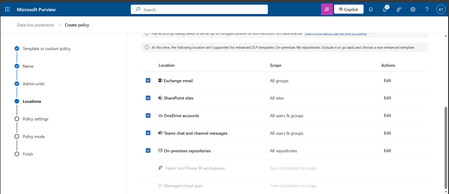
I have try endpoint DLP on pureview but i not see to endpoint device what's i miss?KrittiphoomFeb 12, 2026Copper Contributor86Views0likes0Comments


Tags
- qb error 4 Topics
- Finance4 Topics
- D365F&O4 Topics
- management3 Topics
- CRM3 Topics
- call center Tokopedia 0212 Topics
- ERP2 Topics
- power platform2 Topics
- Dynamics3652 Topics