voices of healthcare cloud
31 TopicsModernizing radiology reporting—without disrupting care: A practical path to PowerScribe One
With growing imaging volumes, increasing complexity, and the rapid emergence of AI, healthcare organizations are reevaluating how their reporting environments support clinicians and strengthen operational performance. They are faced with how to modernize without interrupting the work that matters most. We developed our PowerScribe One solution and implementation approach with that reality in mind. In active production across a wide range of healthcare environments (including large integrated delivery networks, academic medical centers, independent radiology practices, and community hospitals), PowerScribe One reflects a solution that is both proven in practice and designed for what comes next. Over 250 organizations and 10,000+ radiologists use PowerScribe One to generate millions of reports each month. This scale is significant; it’s validation of what we bring through our solution and support. It reflects a system and team tested across diverse environments, integration landscapes, and operational models, performing reliably in real-world conditions. Combining the strength of our solutions with an experienced Microsoft team, we deliver a seamless implementation that minimizes disruption. Redefining the migration experience As I’ve worked with customers modernizing their reporting environments, I’ve noticed a consistent pattern of concern: how to modernize without disrupting the workflows teams rely on or the care they deliver. In my experience, even when a solution offers meaningful capabilities, customers still worry about the potential downsides of a prolonged migration. I understand that perspective. Many have worked with vendors who promise a “lift-and-shift” implementation but fall short of that expectation. Migrations can introduce real challenges, including downtime, retraining, and workflow disruption. Over time, we’ve seen that successful transformation is driven not only by the strength of the technology, but also by how effectively the transition is managed. With years of experience supporting PowerScribe environments, we’ve taken those insights and applied them to our approach. We defined what a successful PowerScribe One implementation looks like and developed a migration model designed to reduce risk while supporting adoption. Rather than viewing migration as a single milestone, PowerScribe One transitions are designed as a structured journey with clearly defined phases and timing: Discovery: Align on goals, workflows, and integration requirements Build: Preparing the technical and operational foundation Testing: Validating workflows end to end and addressing issues proactively Production: Supporting go-live with a focus on stability and adoption Each phase includes checkpoints and shared accountability to increase transparency and reduce uncertainty. Our Microsoft team works closely with our customers to build a project timeline that fits their needs while existing PowerScribe 360 workflows and content are leveraged, eliminating the need to rebuild from scratch. I’d also like to highlight at the center of this migration model is a parallel transition strategy. We enable PowerScribe 360 and PowerScribe One to operate side-by-side during our customer’s migration period. This approach provides organizations with the flexibility to: Introduce PowerScribe One to early adopters Validate workflows and integrations in a live environment Phase adoption across teams Maintain continuity throughout the transition In this measured approach, our customers can move forward with confidence, ensuring that systems, workflows, and teams are ready for successful adoption. The result is a model that is both repeatable and adaptable, capable of supporting organizations with varying levels of complexity. Our efforts to center our implementation process on the customer experience shows how migration work is not simply a technical capability proposition. This focus reflects our broader philosophy: transformation should be deliberate, not disruptive. From implementation to enablement Minimizing disruption doesn’t end with implementation. It extends into how teams are supported, trained, and enabled in their day-to-day workflows. Our focus on enablement is especially important in radiology, where even small workflow disruptions can have outsized impacts on productivity and the radiologist experience. With PowerScribe One, organizations not only gain access to a modern reporting solution but also support from teams with deep experience in radiology workflows, integrations, and large-scale deployments. With that in mind, I’ve seen firsthand how the healthcare landscape has radically changed over the last six years. Our customers tell us how workforce shifts in radiology means they are adapting their staffing models and workflows to include telework. With these changes in the workforce, organizations benefit from training and support models that are flexible, digital, and accessible remotely. We made live expert access (known to our customers as “drop-in help”) easily accessible through a simple QR code. It can be an ad hoc or scheduled engagement which ensures the offering aligns with a radiologist’s schedule. The feedback on this level of access we’ve received has been extremely positive and is resonating strongly with customers. I know that for any healthcare solution deployment to be successful, it requires a learning and support model that aligns with clinical schedules and operational realities. Modernizing radiology reporting is both a technical and operational effort with its success depending on advancing capability without disrupting clinical continuity. The transition to PowerScribe One shows this balance is achievable through phased adoption, low-disruption deployment, and strong user readiness. Organizations can modernize without affecting day-to-day care delivery with our structured approach, proven expertise and a focus on provider experience and patient outcomes. If you want to learn more about our approach or PowerScribe One, I’ll be at SIIM26, June 10-12, please stop by the Microsoft booth at 630-632. You can also discover how we partner with our customers why they decided to move to PowerScribe One by reading our Industry Blog.
Transforming Clinical Workflows with Microsoft Dragon Copilot’s Partner-Driven AI Innovations
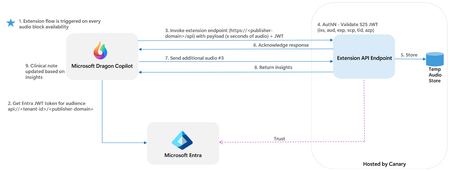
Healthcare software integration is notoriously complex, demanding technical rigor, regulatory compliance, organizational alignment, and workflow transformation. Clinicians face an overwhelming cognitive load—during a typical primary care visit, a physician may juggle over 150 discrete data points and make a dozen crucial decisions in less than 15 minutes. In this environment, AI must do more than offer intelligence—it must deliver the right information, at the right time, without increasing administrative burden or disrupting the clinician’s focus on patient care. Microsoft is expanding Dragon Copilot by enabling an open ecosystem of developer-built AI solutions for specific tasks and specialties, allowing healthcare organizations to access clinical intelligence at the point of care while further streamlining workflows, reducing administrative burden, boosting productivity, and enhancing revenue integrity. Dragon Copilot’s partner-driven AI extensibility empowers technology providers to deliver specialized solutions directly into clinical workflows, accelerating AI adoption at the point of care and enabling better outcomes for patients and clinicians. By opening Dragon Copilot, Microsoft enables the creation of seamless, scalable solutions that help clinicians reduce administrative tasks and improve patient care. Developers gain an opportunity to collaborate with industry leaders, shape healthcare technology, and deliver impactful AI applications for clinicians and patients. Partner Success Spotlight: Canary Health’s Innovative Solution Canary Speech is a Utah-based, AI-powered voice biomarker health tech company, utilizing patented real-time vocal analysis to screen for mental health and neurological disorders. Canary’s technology swiftly captures and analyzes speech data supporting clinicians in identifying cognitive and behavioral changes. Recently, Canary Speech launched Canary Ambient™, an API-first solution for real-time voice analysis in healthcare and contact centers. This software provides actionable insights from patient-clinician conversations by tracking speech patterns for real-time assessments of cognitive and behavioral health conditions. Canary Speech advances speech and language applications across health systems, payers, and pharmaceutical markets. The collaboration with Dragon Copilot is seamless and secure. Canary Speech receives patient audio—ideally during the encounter—via infrastructure designed to enable HIPAA compliance and newly developed endpoints. Their AI processes the audio, then surfaces summarized cognitive and behavioral assessments using Microsoft’s Adaptive Card framework. These interactive cards appear natively within Dragon Copilot, enabling clinicians to quickly review findings and to initiate follow-up assessments or treatment plans—all without leaving their workflow. The Canary Speech solution with Dragon Copilot is currently and being validated with real clinicians and patients. It demonstrates how Dragon Copilot can share not only encounter audio, but also clinical notes, patient context, and relevant history with trusted partners—expanding the universe of AI-powered insights available at the point of care. How AI Applications Work: Technical Enablement for Continuous Innovation Dragon Copilot’s extensibility framework supports partners in surfacing AI insights and enrichments at multiple points in the clinical workflow: Pre-encounter – Provide AI-generated insights to clinicians before they see the patient, supporting preparation and personalized care planning. During encounter – Surface real-time, contextual recommendations while the provider is examining the patient, ensuring decisions are timely and informed. Post-encounter – Deliver follow-up insights after the clinical note is generated, enabling comprehensive care coordination and outcome tracking. Microsoft’s Adaptive Card framework makes it easy for developers to build interactive platform-agnostic content blocks that integrate directly into Dragon Copilot. These cards support rich text, reference links, action buttons, and in-card feedback, creating a unified and intuitive user experience for clinicians. The following diagram shows the data flow between Microsoft Dragon Copilot and partner endpoints that provides extensions such as Canary, via infrastructure designed to enable HIPAA compliance, access to the encounter audio data. In addition to audio, other data elements such as turn transcript and the clinical note can also be made available to extensions. Driving Innovation Together through Partnership Our commitment to driving innovation through collaboration is sustained by actively engaging with partners and continually analyzing the market to keep our solutions effective and aligned with evolving needs. At this time, we have a growing list of early partners that have signaled interest in bringing their solutions to the point of care, through Dragon Copilot and help to represent the leading edge of healthcare technology, each bringing specialized expertise and transformative solutions to the table. Their work exemplifies how collaborative innovation can address real-world challenges across the care continuum. Artisight’s Smart Hospital Platform, brings hands-free, device-free documentation directly to the bedside. By pairing a clinician’s unique voice profile with their secure RTLS badge, Artisight eliminates logins and shared device interactions to allow care teams to focus on patients, not paperwork. Ambient documentation runs seamlessly in the background, generating accurate clinical notes while freeing clinicians to deliver more meaningful, face-to-face care. This integration streamlines workflows, reduces administrative burden, and drives measurable improvements in efficiency, compliance, and the overall patient experience. Atropos Health is the leader in translating real-world clinical data into personalized real-world evidence (RWE) and insights. Atropos Health is the developer of GENEVA OS®, the operating system for rapid healthcare evidence across a robust network of real-world data. Healthcare and life science organizations work with Atropos Health to close evidence gaps from bench to bedside, improving individual patient outcomes with data-driven care, expediting research that advances the field of medicine, and more. We aim to transform healthcare with timely, relevant real-world evidence. Cohere Health’s prior authorization application automates care requests, eliminating the administrative burden for clinicians and enabling real-time care approvals. Cohere's solution provides critical transparency right at the point of care while collecting relevant clinical documentation, patient summaries, and orders. It shares prior authorization requirements and offers in-the-moment guidance to physicians, helping them secure faster approvals and ensure patients receive the care they need more quickly. Elsevier's ClinicalKey AI delivers fast, reliable clinical insights at the point of care—combining proprietary medical content, leading textbooks, top scientific journals, government publications, and clinical guidelines into one trusted platform. Powered by advanced AI and backed by expert human review, it ensures answers are clinically relevant and backed by research. With privacy built in and citations clinicians can trust, ClinicalKey AI helps healthcare professionals make confident, informed decisions faster. Ensemble’s revenue cycle intelligence engine, EIQ, helps health systems proactively prevent payment denials, improve revenue integrity, and accelerate cash flow. Drawing on insights from more than 80,000 denial audit letters and 80 million annual claim transactions, EIQ analyzes clinical documentation against historic payer patters to detect nuanced issues that could trigger DRG downgrades or medical necessity rejections. It flags issues for operator intervention with context-aware prompts designed to ensure diagnoses are backed by precise clinical evidence and meet payer documentation requirements. Beyond denial prevention, EIQ strengthens the documentation foundation needed for downstream audits, ensuring that every claim is defensible and complete. hellocare.ai is a leading provider of AI-assisted virtual care solutions. Headquartered in Clearwater, FL, the company supports more than 80 health systems across the U.S. and is rapidly expanding globally. hellocare.ai helps health systems deliver high-quality, patient-centered care while improving clinical efficiency and staff wellbeing. Its fully integrated platform includes AI-Assisted Virtual Nursing, Virtual Sitting, Patient Engagement, Digital Whiteboard, Digital Room Signage, Ambient Documentation, Hospital-at-Home, Remote Patient Monitoring (RPM), and Digital Clinic, seamlessly embedding into existing healthcare EHRs, infrastructure, and care delivery models to power the next generation of healthcare. Humata Health is revolutionizing clinical clearance, moving beyond the narrow confines of traditional prior authorization to address the entire patient journey, from referrals and specialty drugs to post-acute care. By bringing providers and payers together on a single, shared infrastructure, its technology uses powerful AI and automation to streamline fragmented approvals. This collaborative approach unlocks faster, smarter, and more confident decisions, ensuring patients receive the appropriate care they deserve, exactly when they need it. Driven by a vision to see care move forward, Humata Health is built for yes. Lightbeam Health Solutions helps healthcare organizations manage and scale population health programs to improve performance within risk-based contracts. Leveraging clinical, health plan, and social determinants of health data, Lightbeam identifies and delivers actionable insights to clinicians and patients for proactive intervention. Proven outcomes include quality improvement, risk adjustment accuracy, reduced cost of care and avoidable utilization, and a better experience for clinicians and patients alike. Optum is collaborating with Microsoft to integrate ambient listening technology into clinical settings with Optum Real, helping physicians reduce documentation time and focus more on patient care. This integration supports smarter, real-time clinical workflows through AI-powered automation. Pangaea Data’s AI platform helps close care gaps by finding untreated and under-treated patients – including those who are undiagnosed, misdiagnosed, or miscoded – across hard-to–diagnose conditions. Seamlessly integrated with electronic health record (EHR) systems, the platform processes patient’s medical records along with their conversation with the treating clinician at the point of care, empowering clinicians to address care gaps without disrupting workflows. This enables better outcomes, lower costs through earlier diagnosis, smarter triaging, and more appropriate levels of revenue through faster pre-authorizations and treatment initiation. Built and deployed on Microsoft Azure, the platform ensures full compliance with privacy standards. Press Ganey turns patient-clinician conversations into actionable insights. By analyzing both content and tone alongside patient experience data, the platform helps organizations address concerns early and gives clinicians a more complete understanding of their patients. As AI reshapes healthcare, Regard is working towards its mission to ensure every patient receives exceptional care while giving physicians more time with their patients. Regard’s Proactive Documentation platform reviews all data in the medical record, and from physician-patient conversations, to recommend diagnoses to providers and surface critical clinical context. This diagnosis-first approach delivers accurate documentation at the point of care, supporting both clinical and revenue cycle teams, by ensuring no critical information is missed. Rhyme eliminates prior authorization through touchless workflows and a new sustainable approach to gold carding. They help 89 of the largest hospital systems and over 300 payers work together to process over 5 million auths per year, save millions of dollars, reduce claim denials, lower patient costs, and accelerate time to care. RhythmX AI enables clinicians to deliver hyper-personalized treatments that expand access and capture measurable value. The platform optimizes medical economics in both fee-for-service and value-based care settings. Built on more than $1B in R&D and validated through coding reviews and 25,000+ clinical assessments, it unifies 8+ data sources – including clinical, financial, payer, and formulary data – and can incorporate health system–specific guidelines and pathways into real-time care recommendations. RhythmX AI drives care orchestration across primary, specialty, and emergency settings, enabling comprehensive diagnoses, optimized specialist referrals and measurable ROI (e.g., $57M annually for 200 PCPs). With access to 300M patient records, 4.4B annual claims, 1.8M clinicians and 300K facilities, the platform provides broad data coverage, consistent accuracy in suspected condition identification and scalable precision-care capabilities across diverse care environments. Through these strategic collaborations, Dragon Copilot continues to expand its reach and deepen its impact, supporting a dynamic environment where developers, clinicians, and organizations can thrive. The collective expertise of our partners is not only shaping the future of healthcare technology but also driving meaningful change for patients and clinicians everywhere. Join Us in Shaping the Future of Healthcare AI Enabling partner-driven AI applications into Dragon Copilot ushers in a transformative period of collaborative innovation in healthcare. Through Dragon Copilot’s extensibility framework, we’re accelerating the delivery of clinical intelligence, reducing friction, and ensuring that every provider has the insights they need to deliver the highest quality care. Whether you’re building the next breakthrough AI application or seeking to bring transformative solutions to clinicians worldwide, we invite you to join our community. Ready to shape the future of healthcare AI? Explore our developer resources, connect with our team, and become a Dragon Copilot extensibility partner today. Read through our documentation on how extensions for Dragon Copilot work and how to build your own - https://learn.microsoft.com/en-us/industry/healthcare/dragon-copilot/extensions Check out the sample repo with sample code, and more – https://github.com/microsoft/dragon-copilot-extension-samples Contact dragon_extensions@microsoft.com Medical device disclaimer: Microsoft products and services (1) are not designed, intended or made available as a medical device, and (2) are not designed or intended to be a substitute for professional medical advice, diagnosis, treatment, or judgment and should not be used to replace or as a substitute for professional medical advice, diagnosis, treatment, or judgment. Customers/partners are responsible for ensuring solutions comply with applicable laws and regulations. Generative AI Disclaimer: Generative AI does not always provide accurate or complete information. AI outputs do not reflect the opinions of Microsoft. Customers/partners will need to thoroughly test and evaluate whether an AI tool is fit for the intended use and identify and mitigate any risks to end users associated with its use. Customers/partners should thoroughly review the product documentation for each tool.Voices of Healthcare Cloud brings you “Patient Referral Automation”
For this session, Matt Anderson, a Healthcare Architect at Microsoft (LinkedIn), will discuss the importance of automating patient referrals. We have heard too many stories of admins taking hours to manually look at faxes or emails and physically entering this data into a system to be processed. This story is just 1 of many.Voices of Healthcare Cloud brings you "Enhance your Employee Experience with MS Viva"
Voices of Healthcare Cloud is a webinar series hosted by myself, Vasu Sharma & Joshua Thompson. My name is Shelly Avery, I am currently a Dir Healthcare Specialist for Health and Life Sciences focusing on the largest Payor and Provider customers in the US, Vaus is a Sr Customer Success Manager for Microsoft 365 for Health and Life Sciences & Josh is an Account Executive for Healthcare. Our goal of this webinar series is to showcase how Healthcare is seeing positive business and clinical outcomes with cloud technology. We will be bringing new and creative solutions to you at least once a month so we hope you tune in live or catch the on-demand series after the session is completed.4.6KViews2likes0CommentsHealthcare Shorts: MedPolicy AI Assistant
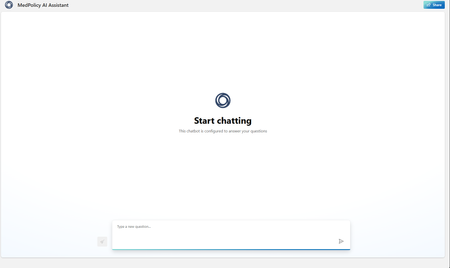
Large healthcare payers have complex contact centers where agents need detailed information about claims, cases, and medical policies. An AI assistant knowledgeable about medical policies can help these agents assist providers and members more efficiently. The main challenges include high turnover, extensive training needs, and dispersed information, leading to poor customer service and agent frustration. Implementing a medical policy AI chatbot can improve response times, first-time call resolution, member satisfaction, and reduce call center expenses. The solution involves using Azure AI Studio, Azure OpenAI models, Azure Blob Storage, APIs, Azure API Management, and Azure App Services.
Microsoft expands Azure scalability for Healthcare Organizations
Microsoft has expanded Azure's scalability for running Epic's Chronicles Operational Database (ODB) to 65 million global references per second (GRefs/s). This enhancement, utilizing the new Mbv3 VM series with Azure Boost and Ultra Disk, covers 94% of the Epic market and significantly boosts performance for large health care providers using Epic on Azure.1.9KViews1like0CommentsVoices of Healthcare Cloud brings, "Boosting FLW Productivity with Microsoft, IGEL and Imprivata"
For this session, Juan Sifuentes, a Senior Cloud Endpoint Technical Specialist at Microsoft, will be joined by Jason Mafera, CTO of North America at IGEL, and Christopher Feeney, Sr. Engineer and Team Lead at IGEL. They will discuss the partnership between IGEL, Imprivata, and Microsoft, and how we're collaborating together to create a more streamlined login experience for front line clinical workers that is also much easier to manage for IT teams.Voices of Healthcare Cloud: “How to help boost FLW productivity by reducing login timeframes"
For this session, Juan Sifuentes, a Senior Cloud Endpoint Technical Specialist at Microsoft, will discuss a major gap in the Healthcare industry that was recently unblocked with "Tap & Go login experience for Windows 365 Cloud PC." This is a developed solution focused on FLW clinicians to help boost their productivity by reducing login timeframes (e.g.. 10 seconds) compared to traditional VDI "username/pw" ranges from 50-60 second login times, and to enable a "Fast User Switching" login experience between doctors and nurses.1.8KViews0likes0CommentsVoices of Healthcare Cloud brings you “Virtual health brings value to physicians & patients!"
For this session, we were excited to have a conversation with two practicing physicians -- Dr. Camile Bradley, a Primary Care Physician with Baylor Scott and White Health, and Dr. Alfred Atanda Jr. an Orthopedics Sports Medicine Surgeon with Nemours Children. During our conversation, they discussed how embracing technology as a physician can bring value to your practice, provide better flexibility for your staff and lead to better patient outcomes. A few of the technological areas we explored with them were around; virtual care, telehealth, a-synchronous care, and ambient AI to all help provide better care!