training
70 TopicsCopilot Chat Adoption Feedback : Model Selection Governance and Prompt Library Reusability ?
Hello, As part of several Microsoft Copilot adoption projects that I am currently leading across different organizations, two questions frequently come up from both users and administrators. The first concerns the ability to lock or enforce a specific model in Copilot Chat for certain use cases. Several customers would like to guide users toward a particular model when working on specific scenarios (Opus for example) that require a certain level of reasoning, behavior, or response quality. To date, I have not found any official documentation or roadmap information indicating whether this capability is planned. The second concerns the Prompt Gallery / Prompt Library. Saved prompts are very useful for starting a conversation, but they do not appear to be reusable directly within an ongoing conversation. In several business scenarios, users would like to chain multiple approved prompts within the same conversation in order to preserve context while applying different working methods, analysis steps, or processes. Are there any planned developments regarding these two topics? The ability to lock or enforce a specific model in Copilot Chat. The ability to use prompts from the Prompt Gallery / Prompt Library during an already active conversation. I have not found any official information on these topics in Microsoft Learn documentation or in the Microsoft 365 roadmap. However, these capabilities seem likely to facilitate user adoption and help standardize usage patterns across organizations.594Views3likes2Comments
Free course: Unlocking AI for Nonprofits
With support from Microsoft, NetHope has launched a new free, CPD-certified course series - Unlocking AI for Nonprofits - designed specifically for nonprofit professionals. The series will help nonprofit teams build practical and responsible AI skills, no technical background required. The four learning pathways include: AI Basics – Learn what AI is and why it matters for nonprofits Applications of Generative AI – Explore time-saving tools for content, reporting, and data Advanced Applications: Microsoft Copilot and Beyond – Help your team adopt AI with clarity and confidence Responsible Use of AI – Understand ethics, inclusion, and organizational safeguards We’ve had more than 1,000 enrollments across the series to date – don't miss out! Courses are free and available through August 31, 2025. https://nethope.org/programs/unlocking-ai-for-nonprofits-enroll-in-our-new-ai-skills-course-for-nonprofits/?utm_medium=forum&utm_source=microsoftnonprofit&utm_campaign=msaiskillsjul&utm_content=unlockingai826Views3likes3CommentsOffice Hours Follow-up: What does your event team look like?
We just wrapped up a MGCI Training and Office Hours session talking about this very topic. (Link to recording will be added when it's ready) How does your team break down roles and responsibilities for your event planning? Tell us in the comments!319Views0likes1CommentJoin us at Microsoft 365 Copilot Discovery event in Huntsville, AL! - UPDATED LOCATION AND DATES!
The Microsoft 365 Copilot Discovery event in Huntsville, AL features hands-on demos, expert sessions, and real-world use cases showcasing AI-driven productivity, Microsoft Copilot capabilities, and modern workplace innovation. The event takes place on May 19th 2026 in Huntsville, AL.480Views0likes0CommentsExplore curated Microsoft Partner Digital Skilling Journeys
Partners like you understand that skilling isn't optional—it's foundational for success in an AI-first market. Keeping up with evolving technologies and capabilities will better position you with the skills needed to succeed in an ever-changing market. Explore Microsoft Partner Digital Skilling Journeys (PDJs), curated presales, sales, and tech skilling experiences designed to enhance your knowledge aligned with partner strategic wins. First-time users may need to register—use your work email credentials to sign up. Curated journeys include: Microsoft Security Copilot Drive Business Transformation with Microsoft Copilot 365 Innovate with Azure AI Platform Drive Windows in the Cloud with Windows 365 Cloud Endpoints Modern Security Operations Data Security for AI Migrate to Azure Drive Business Collaboration and Teamwork with Microsoft Teams Accelerate Data Analytics Journey with Microsoft Fabric Cloud Security These journeys are tailored to your interests, needs, and role within your organization. Select the link relevant to the journey you're interested in, register today on the Skilling Hub using your organizational login, answer a few questions, and you'll receive tech and sales-ready skilling experiences customized to your interests and goals. Register now178Views1like0CommentsMicrosoft Partners: Accelerate Your AI Journey at AgentCon 2026 (Free Community Event)
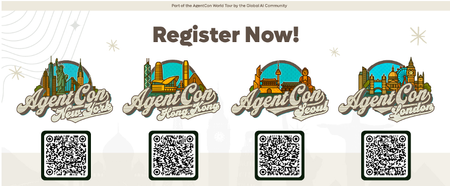
Recently, a customer asked me a question many Microsoft partners are hearing right now: “We have Copilot — how do we actually use AI to change the way we work?” That question captures where we are in the AI journey today. Organizations have moved past curiosity. Now they’re looking for trusted partners who can turn AI into real business outcomes. That’s why events like AgentCon 2026 matter. A free, community-led event built by practicioners AgentCon is not a traditional conference. It’s a free, community-driven global event organized by the Global AI Community together with Microsoft partners and ecosystem leaders. Simply put: it’s for the community, by the community. Across cities worldwide, developers, consultants, architects, and Microsoft partners come together to share practical experiences building with AI agents, Copilot, and the Microsoft platform. The focus isn’t theory — it’s implementation: What worked What didn’t What partners can apply immediately with customers This peer learning model reflects how many of us actually grow in the Microsoft ecosystem: by learning from other partners solving real problems. Why this matters for Microsoft partners The opportunity for partners is evolving quickly. Customers aren’t just asking about AI tools — they’re asking how to redesign processes, automate work, and unlock productivity using AI-powered solutions. The Microsoft AI Cloud Partner Program emphasizes partner skilling and helping customers realize value from AI investments. Community events like AgentCon accelerate that learning by bringing partners together to exchange proven approaches and practical insights. When partners upskill faster, customers succeed faster. Why attend AgentCon is designed to help partners move from AI awareness to AI delivery. As an attendee, you can expect: Practical sessions and demos from practitioners Real-world AI and agent scenarios Direct conversations with builders and peers New collaboration and co-sell opportunities You’ll leave with ideas and approaches you can bring directly into customer engagements. Why speak AgentCon thrives because partners share openly with one another. If you’ve implemented Copilot, explored AI agents, or learned lessons from customer deployments, your experience can help others accelerate their journey. Speaking at AgentCon allows you to: Share your expertise with the global partner community Build credibility within the Microsoft ecosystem Create new partnerships and opportunities Contribute to collective partner success You don’t need a perfect story — just an honest one others can learn from. Join the global AgentCon community AgentCon 2026 events takes place around the world including these upcoming events: March 9 - New York: https://aka.ms/AgentconNYC2026 April 11 - Hong Kong: https://aka.ms/AgentconHongKong2026 April 16 - Seoul: https://aka.ms/agentconLondon2026 April 22 - London: https://aka.ms/agentconSeoul2026 Each event is locally organized, community-led, and free to attend. Help shape the next phase of AI adoption AI transformation is happening now — and Microsoft partners play a critical role in guiding customers forward. AgentCon is an opportunity to learn together, share experiences, and strengthen the partner ecosystem driving AI innovation. 👉 Register or apply to speak: https://aka.ms/agentcon2026 We hope you’ll join us — and be part of the community helping customers turn AI potential into real impact.668Views0likes0CommentsFrom AI pilots to public decisions: what it really takes to close the intelligence gap
Across the public sector, the conversation about AI has shifted. The question is no longer whether AI can generate insight—most leaders have already seen impressive pilots. The harder question is whether those insights survive the realities of government: public scrutiny, auditability, cross‑department delivery, and the need to explain decisions in plain language. That challenge was recently articulated by Sadaf Mozaffarian, writing in Smart Cities World, in the context of city‑scale AI deployments. Governments don’t need more experiments. They need decision‑ready intelligence—intelligence that can be acted on safely, governed consistently, and defended when outcomes are questioned. What’s emerging now is a more operational lens on AI adoption, one that exposes two issues many pilots quietly avoid. Decision latency is the real enemy In government, decision latency is not about slow analytics, it’s the time lost between having a signal and being able to act on it with confidence. Much of the focus in AI discussions is on accuracy, bias, or model performance. But in cities, the more damaging problem is often this latency. When data is fragmented across departments, policies live in PDFs, and institutional knowledge walks out the door at 5pm, leaders may have insight but still can’t decide fast enough. AI pilots often demonstrate answers in isolation, but they don’t reduce the friction between insight, approval, and execution. Decision‑ready intelligence directly attacks this problem. It brings together: Operational data already trusted by the organization Policy and regulatory context that constrains decisions Human checkpoints that reflect how accountability actually works The result isn’t faster answers—it’s faster decisions that stick, because they align with how governments are structured to operate. Institutional memory is infrastructure Cities invest heavily in physical infrastructure—roads, pipes, facilities—but far less deliberately in institutional memory. Yet planning rationales, inspection notes, precedent cases, and prior decisions are often what make or break today’s choices. Consider a routine enforcement or permitting decision that looks reasonable on current data, but quietly contradicts a prior settlement, a regulator’s interpretation, or a lesson learned during a past inquiry. AI systems that don’t account for this history don’t just miss context, they create risk. Decision‑ready intelligence treats institutional memory as a first‑class asset. It ensures that when AI supports a decision, it does so with: Access to relevant historical records and prior outcomes Clear lineage back to source documents and policies Logging that preserves not just what was decided, but why This is what allows governments to move faster without relearning the same lessons under audit pressure. Why this matters now Public sector AI initiatives rarely fail because of a lack of ambition. They stall because trust questions—governance, records, explainability—arrive too late. By the time leaders ask, “Can we stand behind this decision?” the system was never designed to answer. Decision‑ready intelligence flips that sequence. Governance is not bolted on after the pilot; it’s built into the operating model from the start. That’s what allows agencies to scale from a single use case to repeatable patterns across departments. A practical starting point The cities making progress aren’t trying to transform everything at once. They start small but visible: Identify one cross‑department “moment of truth” Define what must be logged, retained, and explainable Connect just enough data, policy, and work context to support that decision From there, they reuse the same patterns—governed data products, policy knowledge bases, and human‑in‑the‑loop workflows—to scale responsibly. AI in government will ultimately be judged the same way every public investment is judged: by outcomes, fairness, and public confidence. Closing the intelligence gap isn’t about smarter models. It’s about designing decision systems that reflect how governments actually work—and are held accountable. Learn more by reading Sadaf's full article: Closing the intelligence gap: how cities turn AI experiments into operational impact323Views0likes0CommentsSertifiointiviikot tulevat Maaliskuussa
Sertifiointi kannattaa – nyt on oikea hetki toimia Microsoftin Certification Week -tapahtumat tarjoavat kumppaneille erinomaisen mahdollisuuden vahvistaa osaamista, kuroa umpeen osaamisvajeita ja vauhdittaa liiketoimintaa – joustavasti verkossa. Maaliskuun aikana järjestettävät englanninkieliset Certification Weekit keskittyvät erityisesti Cloud & AI Platformiin, Securityyn sekä AI Business Solutions -ratkaisuihin. Kyse ei ole vain teoriasta, vaan käytännönläheisestä, ohjatusta oppimisesta, joka auttaa kumppaneita etenemään suoraan kohti sertifiointeja ja asiakasprojekteja. Huom! Kun olet mukana vähintään 80% tunneista ja labroista, niin saat ILMAISEN voucherin varsinaiseen sertifiointitenttiin. ➡️ Osallistu ja ilmoittaudu alla olevista linkeistä: Sertifikaatioviikko Kieli Päivät Rekisteröintisivu Cloud & AI Platform + Security English Maaliskuu 2.-6. https://aka.ms/EMEA-CW-EN-AS AI Business Solutions English Maaliskuu 9.-13. https://aka.ms/EMEA-CW-EN-AB Cloud & AI Platform + Security Spanish Huhtikuu 13.-17. https://aka.ms/EMEA-CW-ES-AS Cloud & AI Platform + Security German Huhtikuu 20.-24. https://aka.ms/EMEA-CW-DE-AS Cloud & AI Platform + Security Italian Huhtikuu 20.-24. https://aka.ms/EMEA-CW-IT-AS Cloud & AI Platform + Security French Toukokuu 18.-22. https://aka.ms/EMEA-CW-FR-AS Miksi Certification Weekiin kannattaa osallistua? ✅ Nopea tapa edetä sertifiointiin Instructor-led -sessioissa käydään läpi sertifiointien kannalta olennaiset sisällöt tehokkaasti ja selkeästi. ✅ Käytännön osaamista, ei pelkkää teoriaa Mukana on hands-on-labeja ja asiantuntijoiden vetämiä osuuksia, jotka auttavat ymmärtämään, miten opittu näkyy oikeissa asiakasratkaisuissa. ✅ Matala kynnys – täysin verkossa Osallistuminen onnistuu omalta koneelta, ilman matkustamista. Useita kielivaihtoehtoja ja reaaliaikaiset tekstitykset tukevat oppimista eri rooleissa ja maissa. ✅ Tukee liiketoimintaa suoraan Sertifioitu osaaminen auttaa mm. Designaatioiden ja spesialisaatioiden saavuttamisessa Projektien läpiviennin nopeuttamisessa Asiakasluottamuksen ja kilpailukyvyn vahvistamisessa Kenelle Certification Week sopii? Certification Week -tapahtumat on suunnattu laajasti kumppaniorganisaatioille: Teknisille asiantuntijoille ja arkkitehdeille Konsulteille ja delivery-tiimeille Presales- ja sales-rooleihin Uusille osaajille sekä kokeneille konkareille, jotka haluavat päivittää taitonsa AI- ja pilvimaailmassa Nyt on aika kutsua tiimi mukaan Kevään Certification Weekit täyttyvät nopeasti, ja nyt on erinomainen hetki kutsua oma tiimi mukaan. Yhteinen osallistuminen kasvattaa osaamista systemaattisesti ja tukee samalla organisaation pitkän aikavälin tavoitteita. 👉 Tutustu ajankohtaisiin Certification Week -tapahtumiin ja ilmoittautumissivuihin Skilling Hubissa http://www.skilling-hub.com Osaaminen on yksi tärkeimmistä kilpailutekijöistä – ja nyt siihen panostaminen on helpompaa kuin koskaan. Nähdään Certification Weekissä! PS: Jos sinulla on kysyttävää Microsoftin koulutuksista, niin voit koska vain laittaa sähköpostia osoitteeseen AskSkilling@microsoft.com302Views0likes0Comments
Excel Copilot now supports local files (Preview): what this means for everyday users
In the Microsoft 365 Current Channel (Preview), Excel Copilot Chat now supports local Excel files, not just workbooks stored in the cloud. This is a meaningful usability improvement because many users, especially students and early-career professionals, still work primarily with datasets stored locally on their devices. Why this matters for adoption: Users can now interact with Copilot Chat while analysing local Excel files. This reduces friction for offline work, assignments, and exploratory data analysis. It makes Copilot more practical for everyday learning and productivity workflows. For users learning data analysis, reporting, or business intelligence, this update lowers the barrier to using Copilot consistently rather than only in cloud-based scenarios. I am exploring how these preview features can improve real-world adoption and learning experiences, particularly for students and early-career users who work with Excel daily.748Views0likes0Comments