microsoft graph
485 TopicsHow to Retrieve SharePoint Sites with the Microsoft Graph PowerShell SDKh sites
If you use the Microsoft Graph PowerShell SDK, you might know that the Graph APIs for SharePoint sites sometimes need a little help. For instance, finding a set of sites to process can be problematic because the APIs do not support extensive filtering capabilities. The solution is to use other Microsoft 365 cmdlets to find objects associated with sites. Inserting an intermediate step might seem crazy, but it can be the most effective way of solving the problem. https://office365itpros.com/2026/10/13/get-sharepoint-sites/5Views0likes0CommentsMaintaining Stable Azure Automation Runtime Environments
The problem with V2.41 of the Microsoft Graph PowerShell SDK that stopped runbooks executing in PowerShell V7 runtime environments was disappointing. However, it was also a good wake-up call for tenant administrators to pay attention to maintaining healthy Azure Automation custom runtime environments. This article proposes a separation between current and production environments and explains how to use PowerShell to get the right modules to the right place. https://office365itpros.com/2026/10/12/maintain-runtime-environments-ps/17Views0likes0CommentsUsing the Exchange Import-Export Graph API to Access Group Mailboxes
After saying that the Graph didn’t offer much support for group mailboxes, I was promptly countered with an article explaining how to use the Exchange Import-Export API to access folders and items in group mailboxes that wasn’t limited to just the Inbox. Well, the good news is that the approach works, as seen in a complete script written to prove the case, but whether I would ever use this API for a purpose it was never designed for is quite another matter. https://office365itpros.com/2026/10/07/group-mailbox-folder-items/44Views0likes0CommentsMicrosoft Graph PowerShell SDK V2.41 Finally Fixes Assembly Clash
The Microsoft Graph PowerShell SDK has long been plagued by assembly clashes that meant it couldn’t be used in the same session as other Microsoft 365 modules. After Microsoft engineering groups looked at the problem for 18 months, a solution was found by MVP Stephen van Rooij and is now available in V2.41. Apart from an issue with old PowerShell V7 versions (which affects Azure Automation runtime environments), the fix looks solid and the SDK can once again be loaded into PowerShell sessions alongside the Exchange Online and Teams modules. https://office365itpros.com/2026/10/05/microsoft-graph-powershell-sdk-fix/63Views0likes0CommentsFrom Domain Lists to Decisions: Scaling WHOIS Threat Intelligence with MDTI and Microsoft Graph
The real problem isn't WHOIS. It's what WHOIS costs you at scale. Ask any SOC analyst whether WHOIS data is useful and they'll say yes without hesitation. Registrant emails, creation dates, registrars, and nameservers are among the most durable pivots in domain-based threat intelligence — the threads that tie a single phishing domain back to an entire adversary campaign. Now ask them how often they actually pull WHOIS for every suspicious domain in an alert. The honest answer is: not always. And that gap is the real problem. Here's why. When a campaign surfaces two hundred lookalike domains, manual WHOIS becomes a losing game: It's slow. One-domain-at-a-time portal lookups don't finish before the incident clock runs out. It's inconsistent. Different analysts capture different fields, so the data can't be compared or correlated. It's un-auditable. Screenshots and copy-paste don't hold up in an investigation review months later. It loses the pattern. By the time you've checked twenty domains by hand, the shared registrant email that connected them has scrolled off the screen. The outcome of all this friction is the part that should worry a security leader: analysts quietly stop enriching, or enrich only a sample. The pivot that would have collapsed twenty alerts into one campaign never happens. The newly registered domain that should have been escalated gets triaged as routine. The intelligence exists — the process just can't reach it fast enough. The outcome we're actually after Reframe the goal. This isn't a project to "run WHOIS." It's a project to produce a specific set of outcomes: Every suspicious domain gets enriched — not a hand-picked sample. Enrichment is consistent and structured, so patterns across domains become visible instead of buried. The output is audit-ready — defensible in an investigation and reusable in a report. The whole thing is fast enough to happen inside the incident, not the day after. Get-MDTIWhois.ps1 exists to deliver exactly those outcomes. It reads a list of domains, calls Microsoft Defender Threat Intelligence (MDTI) through Microsoft Graph, and returns both a normalized CSV for immediate triage and the raw JSON for deep investigation — in one pass, read-only, with nothing changed in your environment. What changes for the analyst The clearest way to see the value is the before-and-after. Before: An alert fires on a suspected phishing campaign with two hundred candidate domains. The analyst opens a portal, checks a handful of domains, eyeballs a few registrant fields, and makes a judgment call on incomplete data. Correlation is mental and fragile. Twenty related alerts stay twenty separate alerts. After: The analyst drops the domains into a text file, runs one command, and gets a spreadsheet where all two hundred are enriched with the same fields. Sorting by registrant email instantly reveals that forty of them share one address, one budget registrar, and creation dates in the same week. Twenty alerts become one campaign. One judgment call becomes one defensible conclusion. That's the outcome: not "we ran WHOIS," but "we saw the campaign the manual process would have missed." Where the value shows up This translates into concrete wins across several SOC workflows: Faster campaign triage. Shared registrant emails and nameservers collapse dozens of alerts into a single adversary-infrastructure story — directly reducing mean-time-to-respond. Better newly-registered-domain hunting. Enrich domains from DNS or proxy logs, sort by registration date, and surface the freshly registered domains that are disproportionately malicious — before they're clicked. Enrichment that feeds the platform. The normalized CSV drops straight into a Sentinel watchlist, or the same Graph call can be wrapped in a Logic App / Azure Function playbook to auto-enrich domain entities the moment an incident is created. Reusable intelligence. Registrant and nameserver pivots become custom indicators and hunting queries — value that compounds over time instead of being thrown away after each investigation. Why this approach, specifically There are other ways to get WHOIS. A few reasons this approach earns its place in a modern, Defender-portal-centric SOC: It uses first-party intelligence. MDTI is Microsoft's own threat-intelligence graph, queried natively through Microsoft Graph — no third-party data broker, no separate contract, no data leaving your Microsoft trust boundary. It's read-only by design. The script cannot modify Sentinel, Defender, tenant settings, or domain records. Enrichment tooling should never be able to change the environment it observes — and this one can't. It's built to survive real-world APIs. Throttling (HTTP 429) and transient 5xx errors are retried with backoff; permanent misses (404) aren't retried needlessly; a single failed domain never aborts the run. You always get a complete, dependable result set. It handles secrets the way you'd want. Client secrets come from an environment variable or a secure prompt — never hard-coded, never committed to source control. The engineering exists to protect the outcome: a complete, consistent, trustworthy enrichment set every single time, even when the input list is messy or the API is having a bad day. The output is built for decisions, not just data Two files, two jobs: The normalized CSV is the decision surface. One row per domain, every registrant/registrar/date/nameserver field an analyst pivots on — sortable, filterable, watchlist-ready. This is where twenty alerts become one campaign. The raw JSON is the safety net. Full API fidelity per domain, preserved for the audit trail and for the registrar-specific edge cases the normalized view can't anticipate. Together they answer both questions a SOC actually asks: "What do I do right now?" (CSV) and "Can I stand behind it later?" (JSON). What it takes to get there The barrier to entry is low: An Entra ID app registration with the Graph application permission ThreatIntelligence.Read.All (admin-consented), on a tenant with MDTI API access. A text file of domains, one per line. One command: $env:MDTI_CLIENT_SECRET = "<client-secret>" .\Get-MDTIWhois.ps1 ` -TenantId "<tenant-id>" ` -ClientId "<client-id>" ` -InputTxt ".\domains.txt" Under the covers it authenticates with a client-credentials grant, normalizes and de-duplicates the input, calls GET /security/threatIntelligence/hosts/{domain}/whois per domain, and writes both outputs. Minutes of setup; a repeatable capability afterward. Use it responsibly The project is provided as-is, for educational and demonstration purposes, and is not intended for production use without independent review, validation, and monitoring. Keep in mind: A 404 means MDTI has no current WHOIS record for that host — not that the domain is safe. WHOIS fields vary by registrar — always retain the raw JSON for anything you'll act on. WHOIS can contain personal data — validate your storage and sharing obligations before distributing enrichment output. Never commit secrets — use the environment-variable or secure-prompt path. The bottom line The value here isn't that WHOIS is difficult. It's that the friction of doing WHOIS well, for everything, quietly erodes detection quality — analysts under time pressure enrich less, correlate by memory, and miss the campaign hiding in plain sight. Get-MDTIWhois.ps1 removes that friction. It turns a flat list of domains into structured, audit-ready intelligence in a single read-only pass, so the pivot that reveals the adversary's infrastructure actually happens — inside the incident, not after it. That's the outcome worth automating. Disclaimer This article and the referenced tooling are provided “as-is,” for educational and demonstration purposes only, without warranties of any kind, express or implied. They are not intended for production, safety-critical, or regulated use without independent review, testing, validation, and appropriate safeguards. The views expressed are the author’s own and do not necessarily represent those of any employer or of Microsoft. You are solely responsible for how you deploy, modify, or adapt this tooling, and for ensuring compliance with all applicable laws, regulations, licensing terms, privacy obligations, and organizational security policies. Source: MDTI-WHOIS in the Microsoft Security Operations Toolkit. Provided as-is for educational purposes; test in a controlled environment before production use.How to Use Separate Apps to Control Access to the Microsoft Graph PowerShell SDK
Administrators know how to use the default Microsoft Graph Command Line Tools app for delegated interactive Graph sessions. In this article, we cover the topic of using custom Entra ID apps to enable granular access for selected users who need some, but not all, Graph permissions to get their work done. Some changes have taken place in this area due to the advent of WAM, but the concepts and implementation steps are straightforward. https://office365itpros.com/2026/09/24/interactive-graph-sessions-apps/60Views0likes0Comments
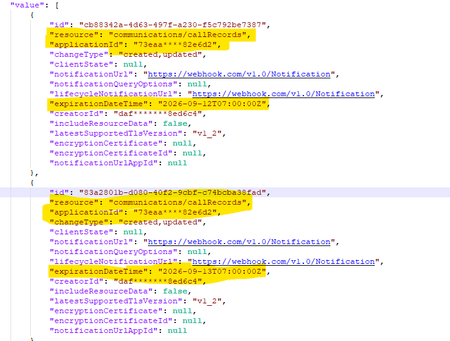
Duplicate subscriptions for a specific resource
Hello, Previously, we were not allowed to create duplicate subscriptions for the same resource. But now we can create duplicate subscriptions for a specific resource. Could you please confirm whether this functionality has been newly enabled or supported? Why duplicate subscriptions are now allowed for the same resource like (/users, /groups & communications/callRecords). Whether this is a change or a bug. We would appreciate clarification on the expected behavior and the supported use cases.396Views0likes2CommentsWhy Some Purview DLP Policies Need Days to Start Working
While testing the new DLP capabilities to block sharing to users and domains and stop Copilot from using external email, it was noticeable how long it took before policies became active. DLP policy synchronization to workloads is reasonably work (and getting faster), but these policies have a new retrospective effect that requires workloads to process files and messages to stop them being available. It’s a new twist to the DLP story. https://office365itpros.com/2026/09/11/dlp-policies-take-time/126Views1like0CommentsWhy Microsoft Graph Does Not Support Group Mailboxes
A reader asked why the Outlook Mail Graph API doesn’t support access to group mailboxes. The basic reason is that a group mailbox doesn’t have an account and the Outlook Mail API only supports mailboxes that are linked to an account. When you look at the current usage of group mailboxes, it doesn’t seem like there’s much data to mine. Maybe the need for Graph API support for group mailboxes isn’t such a big thing? https://office365itpros.com/2026/09/09/group-mailbox-graph-api/110Views0likes0CommentsWho's Performing Microsoft 365 License Audits For Their Clients?
If you’re an MSP or IT leader and aren't running these regularly, you might be leaving money on the table or letting your clients overpay by over 20% on average. Common quick wins we see all the time: Disabled user accounts that still hold active paid licenses. Inactive or dormant users that could easily be converted to free shared mailboxes. Over-licensed users who only need OWA/web access instead of full desktop suites. Paying for unassigned licenses sitting idle in the tenant. Doing a full, manual audit can feel tedious, but following a structured process makes it painless. If you want to run a complete audit via the Admin Center, PowerShell, or free automated tools, check out this comprehensive guide: https://www.gitbit.org/docs/microsoft-365-license-audit97Views0likes0Comments