microsoft excel
16 Topics
Powershell to refresh Excel with OLAP Query. Credential issues
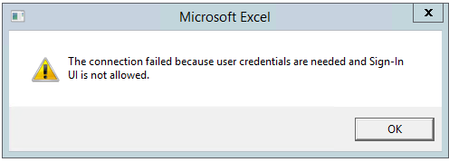
Hi Experts, I'm rather new with PowerShell scripting so please be patient with me 🙂 I have multiple excel file with OLAP Query connections connecting to Power BI Datasets, following are the script; $libraryPath = "C:\Repos\AUSD\3.0\Test" $excel = new-object -comobject Excel.Application $excel.Visible = $false # Give delay to open Start-Sleep -s 3 $allExcelfiles = Get-ChildItem $libraryPath -recurse -include “*.xls*” foreach ($file in $allExcelfiles) { $workbookpath = $file.fullname Write-Host "Updating " $workbookpath # Open the Excel file $excelworkbook = $excel.workbooks.Open($workbookpath) $connections = $excelworkbook.Connections # This will Refresh All the pivot tables data. $excelworkbook.RefreshAll() # The following script lines will Save the file. $excelworkbook.Save() $excelworkbook.Close() Write-Host "Update Complete " $workbookpath } $excel.quit() It is working fine if following options; $excel.Visible is true However this is going to be scheduled in the server and hopefully this could be done in the background, hence the $excel.Visible = $false This causing the following error; I suspect this is due to the Automatic sign in which happen when the Excel are open, due to its not being open, its failing the sign in process. -------------- Here come the question, how do I bypass or rather set the credentials/permission right?9.4KViews1like2CommentsMicrosoft Excel Beginners Tutorial (2026)
If you’re new to and getting started with Excel or coming from another app, in this video we teach the basics of Excel, the user interface, core concepts, and how to work with basic data. We’ll show you how to build a full Excel workbook from scratch using natural language prompts with Copilot. Format cells, write formulas, and analyze a year of data. Generate sample data, calculate totals, apply conditional formatting, and pin down outliers across columns and rows, all from your browser at excel.new. Share the workbook by name, group, or email and co-author with teammates across web, desktop, and phone. Every edit syncs to OneDrive in real time. Jeremy Chapman, Microsoft 365 Director, shares how to go from blank workbook to analyzed, shared spreadsheet in one sitting. A full data set with only one prompt. Copilot in Excel builds categories, columns, and currency-formatted cells from a natural language prompt. Try it now. Skip the formula syntax. Copilot inserts row and column totals from natural language prompts and exposes the underlying SUM logic so you can verify the math. See how it works. Pull reasoning out of your spreadsheet. Copilot in Excel surfaces the highest- and lowest-cost months and explains the drivers behind each. Try it in Excel. QUICK LINKS: 00:00 — Excel Essentials 00:57 — Start from a blank workbook 02:11 — Core terms and concepts 04:25 — Generate Sample Data with Copilot 06:16 — How to work with the numbers 09:35 — Copilot Writes Your SUM Formulas 09:57 — Conditional Formatting from a Prompt 10:40 — Outlier Analysis with Reasoning 11:36 — Real-Time Co-Authoring in OneDrive 12:22 — Wrap up Link References Check it out at https://microsoft.com/excel Unfamiliar with Microsoft Mechanics? As Microsoft’s official video series for IT, you can watch and share valuable content and demos of current and upcoming tech from the people who build it at Microsoft. Subscribe to our YouTube: https://www.youtube.com/c/MicrosoftMechanicsSeries Talk with other IT Pros, join us on the Microsoft Tech Community: https://techcommunity.microsoft.com/t5/microsoft-mechanics-blog/bg-p/MicrosoftMechanicsBlog Watch or listen from anywhere, subscribe to our podcast: https://microsoftmechanics.libsyn.com/podcast Keep getting this insider knowledge, join us on social: Follow us on Twitter: https://twitter.com/MSFTMechanics Share knowledge on LinkedIn: https://www.linkedin.com/company/microsoft-mechanics/ Enjoy us on Instagram: https://www.instagram.com/msftmechanics/ Loosen up with us on TikTok: https://www.tiktok.com/@msftmechanics Video Transcript: -Microsoft Excel can help you organize information, perform calculations, and discover patterns in your data all in one place, and you can get to it on your PC, your Mac, your phone, or on the web. I’m Jeremy Chapman, and I’ve been part of the product team responsible for Office at Microsoft since 2012. And today, I’ll walk you through the essentials of Excel and how to use it. So first, if you have a Microsoft account, like outlook.com, OneDrive, or Xbox, or if you use Microsoft 365 at work, you can use Excel on the web, in your browser, and you can get to Excel by navigating to excel.new. And by the way, if you have the Excel app installed, you can open that on your computer or your phone and follow along. When you’re signed into your work or personal Microsoft account, Excel saves your files to OneDrive, so you can easily find them and pull them up on other devices later. -So for today, I’ll keep things simple. So I’ll start with a blank workbook Using Excel on the web. Wherever you use Excel, it’s designed to be a consistent experience on large screen devices, so you can follow along if you’re using the local app on Windows or on a Mac. And Excel is designed to organize any kind of information, numbers, dates, texts, and more. In the main view, you can see that I have columns and rows all ready to enter data. In most cases, there’s a one-time step to create what’s called a workbook in Excel, which I have one open here. Now this is where you’ll use and create a blank workbook, or you can choose from dozens of different templates that are filled in with sample data and formatting to get you started. At that point, you can enter your data, your headers, and start formatting your cells. -Now if you have existing data in a table in another app, you can open it with Excel or just paste in the contents to start working with it. On top, Excel has what’s called the ribbon, with groups of controls presented as tabs that you can use. Within each tab, there are smaller groups of controls, like you can see here with the fonts, alignment, and number. Now let me define a few core names and concepts that you’ll use when you work with Excel in this workbook to manage data. So each field or rectangle that you can see here as I’m highlighting them, these are called cells. Then you have columns, and those are the vertical lines of cells, and those are represented with letters on top. -Next you have rows, and those are the horizontal lines, and those are represented by numbers. For example, the upper left cell is called A1, A for the column name and 1 for the row name. Now a block of multiple connected cells is called a range. So here, for example, I’ve selected range A1 to D4. Right now I’m in a sheet called Sheet1, and you can see in the lower left corner, I can add more sheets, like I’ll do now, and then I can move between multiple sheets and reference data across them as well. But I won’t do that today. -So now I’m going to go ahead and go back to Sheet1. And if you right-click and go to Format Cells, you’ll find options for things like number formats, for example, currency, date, time, and percentage. And on the Home tab, the font group is another place to change these settings, as well as Fill, which lets you change the background color for cells, columns, or rows. I’m going to add some text in this cell as a title for what I want to create today, a monthly expense tracker. Now this text looks like it’s spilling into cell B1, but it’s actually just in cell A1. So I can widen or narrow the columns as much as I want. And if I want this title to span several columns, like in my case, I know that I’m going to need 12 months. So I’ll go ahead and select rows M1 all the way back to A1. Then in the alignment group, I’ll choose the Merge & Center option right here, and that makes my 13 cells into one with the text centered. -So now, in the font group, I can choose the fill color that I want. So in my case, I’ll pick blue. Then for the font color, I’d like to choose something contrasting. So I’ll choose white in my case. And by using these formatting options, you can make things a lot easier to understand as you work with your data. But we still need some content, so let’s add some. So for that, I can use AI with Copilot to generate sample data. So I’m going to go ahead and pull up Copilot and type, “Generate monthly personal finance data for one year with months for columns and expense categories as rows, including sample data. Do not add columns or rows with totals.” -Now I added that last sentence because I want to show you how to calculate totals yourself in a moment. The Copilot is part of Excel on the web and in the desktop and mobile apps if you’re using Microsoft 365 Personal or a work or school account. And you’ll see, once it’s finished, that Copilot generated a Category column and several month columns, as well as multiple rows with different expense types all filled in with the sample data that I asked for. Now notice that it also formatted the row 2 and column A using formatting options that I mentioned before. And each cell in the middle is also formatted as a currency number with a dollar sign. -So I want to add a row here, in my case, for car payment. And you’ll see that it doesn’t match the others yet, and I’ll fix that in a second. Now I’ll add an amount for January, 300. And since this is the same amount every month, I can just select the cell. Then using this square in the lower right corner, I can just drag across the other months, and each, in this case, will have the same number, 300. Let’s fix our formatting. Now, to make the dollar amounts match the cells above, I’ll select this one above my new row, then click on the Format painter, this paintbrush icon here, then I’ll select my new cells. And now they all match. Now I can do the same thing for my Car Payment label in cell A16. -So now I have some formatted data to work with and I can show you how to work with those numbers. I’ll use the Formulas ribbon where you’ll see the most common options to analyze data. For example, if I select all the cells with numbers in column B, then I go up and click on AutoSum, it adds all of the numbers in that column. In fact, now if I click on that cell in the formula bar, I can see a simple formula. Now these start with an equal sign, in my case, SUM as the function itself. Then I have an open parentheses with my range, in my case, B3 to B16, and close parentheses for what I want to calculate. Now that was an example of a very simple formula. Like I did before with the numbers, I can even drag formulas into blank cells. -So I’ll go ahead and grab this one again by the lower right corner square and drag it across all of my columns. So that now has copied the original formula from the B column and duplicated it for each of the other columns. But as I click into each one, notice something that just happened, I have the column letters B all the way through M to each corresponding formula. That makes each sum specific to each of these column months. Likewise, I can select and drag entire columns into blank areas to fill in that data too. And because Excel detected a series of month names in row 2, it even filled in Jan as the new month name for the new cells that I added. Now let’s try another basic formula. For that, I’m going to select all the numbers above the totals row in column B. -Now I’m going to choose Average, and that adds a cell with the average across the entire range that I just selected. So now I want to clean up a few cells. And when you go to delete data, you’ll need to know a few different options. So first, I’ll select the month cells that I just added. And if I just hit the Delete key, it leaves the formatting in those columns, like this blue cell here. This is also called clearing content. I’ll use the Control key + Z simultaneously to bring that content back and undo changes. Now I’m going to go ahead and select the same cells. And when I right-click, you’ll see that there are options to Insert or Delete along with Clear Contents like I just did using the Delete key. -So this time, I’ll choose Delete, and then I have options to delete a column or shift cells left or up. In my case, deleting column N and shifting cells left will clear the contents and formatting. I’ll choose Shift cells left. So now I’ll clear the contents of rows 17 and 18 with my sums and the average to get my content data ready for other ways to analyze it. And there are hundreds of formula options in Excel. In fact, if I expand Financial functions, there are dozens related to accounting and finance. and hovering over each explains how they are used. And in math and trig, for example, there are dozens more that may look familiar if you’ve ever used a scientific calculator. And here I’m just scratching the surface. Those are just a few highlights of the functions that you can use. -But what if you know how to describe what you want but don’t know the function for it? And that’s another area where Copilot helps you get started. So this time, I’ll use Copilot to calculate the totals. I’ll type, “Add a row and column with totals for each month in category.” And Copilot adds the totals by month and even a new column with the totals per category. Copilot will also help with cell formatting. So if I add, “Make the cells you just added with formulas white and bold text in black,” in my prompt, Copilot then reformats those cells too. And you can also add colors to each cell to easily spot differences across these numbers using something called conditional formatting, which is something else that Copilot can help with. I’ll type, “Add conditional formatting in each row to highlight low and high numbers.” -And now we can see where the numbers are the lowest and the highest compared to the others in the same expense category for each month. So you just need to describe what you want and Copilot will do the rest. Now let’s go ahead and move on to deeper analysis of our data. With conditional formatting applied, it’s easier to see each month and how it varies in costs across our different categories. So let’s find some outliers. So I’ll ask Copilot, “What months have the highest expenses and why?” And Copilot analyzes the information and finds the months with the highest expenses. -Then for each, it explains why with the most likely reasons. In this case, December is my highest, and that’s likely due to holiday spending and seasonality. July is the next highest, likely due to air conditioning for utilities costs and the rest of the summer activities that were happening in July. Then August was third highest, also with more travel, AC costs, and dining out. The key insights here summarize what Copilot found with reasoning for increases and decreases along with the lowest months as well. And one more core component that I’ll touch on today is how Excel lets you edit workbooks simultaneously with others. -As I mentioned in the beginning, when you’re using Excel, signed in with a Microsoft account, or using Microsoft 365 at work or at school, it stores your files in OneDrive by default. Now, it also means that when you share an Excel workbook with other people using their name, group, or email, I’ll add Adele here, for example, and hit Send. Then they will be able to open the Excel workbook on their computer or phone and simultaneously edit it with you. And while you co-author with other people as changes are made, like with Adele here, changing the amounts for dining out and entertainment in January, they are saved to the same file. -So those are the basic concepts to navigate Excel, format data, analyze it, and work with others using sharing. And I showed you how Copilot AI can help you as you get started. To learn more, check out microsoft.com/excel. And be sure to subscribe to Microsoft Mechanics for the latest updates, and thanks for watching.3.2KViews0likes0CommentsWhat’s Included with Microsoft’s Granted Offerings for Nonprofits?
Are you a nonprofit looking to boost your impact with cutting-edge technology? Microsoft is here to help! From free software licenses to guided technical documentation and support, this program offers a range of resources designed to empower your organization. In this blog, we’ll dive into the incredible tools and grants available to nonprofits through Microsoft, showing you how to make the most of these generous offerings. Whether you’re managing projects or just trying to simplify your day-to-day tasks, there’s something here for everyone. Let’s explore what’s possible!2.8KViews0likes1CommentMicrosoft Excel Power User Updates | Agent Mode, Copilot Function & Formula AI
With Agent Mode, automate complex analysis, create pivot tables, and build interactive dashboards without manual setup. Streamline text analysis, formula generation, and complex calculations right inside Excel. Use the Copilot function to categorize feedback, score sentiment, or automate repetitive tasks, and leverage Formula AI to generate accurate formulas from plain language prompts. Jeremy Chapman, Microsoft 365 Director, shares how to work smarter and make faster, data-driven decisions in Microsoft Excel. No manual setup required. Auto-analyze your spreadsheets, generate KPIs, pivot tables, and charts. Check out Agent Mode in Microsoft Excel. Analyze text, categorize feedback, and score sentiment. Turn manual data tagging into instant AI-powered insights inside your spreadsheet. See how to use the =COPILOT() function. Save time and stay in flow. Generate formulas faster, understand what they do, and complete complex calculations with confidence. Take a look. QUICK LINKS: 00:00 — Excel and Microsoft 365 Copilot updates 01:24 — Agent Mode 03:55 — Copilot function 06:02 — Formula completion 07:13 — Formula AI 08:41 — Wrap up Unfamiliar with Microsoft Mechanics? As Microsoft’s official video series for IT, you can watch and share valuable content and demos of current and upcoming tech from the people who build it at Microsoft. Subscribe to our YouTube: https://www.youtube.com/c/MicrosoftMechanicsSeries Talk with other IT Pros, join us on the Microsoft Tech Community: https://techcommunity.microsoft.com/t5/microsoft-mechanics-blog/bg-p/MicrosoftMechanicsBlog Watch or listen from anywhere, subscribe to our podcast: https://microsoftmechanics.libsyn.com/podcast Keep getting this insider knowledge, join us on social: Follow us on Twitter: https://twitter.com/MSFTMechanics Share knowledge on LinkedIn: https://www.linkedin.com/company/microsoft-mechanics/ Enjoy us on Instagram: https://www.instagram.com/msftmechanics/ Loosen up with us on TikTok: https://www.tiktok.com/@msftmechanics Video Transcript: -If you’re using Excel with Microsoft 365 at work or school, it just got better. Now within Excel, Microsoft 365 Copilot brings more powerful AI directly into your spreadsheets. First, Agent Mode brings advanced agentic AI reasoning to your open files to help you analyze, apply formulas, create visualizations, and more to reach your intended outcomes. Then the =COPILOT function is a new formula that brings AI directly into your cells. Next, Formula AI makes it easy to find and use the right formula with automatic formula completion as you start typing and even natural language formula creation so that you can just describe what you want to do without knowing the formula name, and Copilot suggests the right one. -So most of what I’ll show today does need a Microsoft 365 Copilot license. That said, if you don’t have a license, and if your work or school uses almost any version of Microsoft 365 or Office 365, you’ll find Copilot in the home ribbon and can start using Copilot Chat with Excel on the web or the updated desktop apps right now. Now these are designed so that you don’t need to leave Excel and use an AI website, or even worse, upload your work files into AI tools that might not be safe or might not be managed by your company. -So now let’s dig in deeper into the updates. So starting with Agent Mode, which brings agentic reasoning directly into your spreadsheets, it can use Excel table structures, formula syntax, dynamic arrays, PivotTables, charts, and more to create workbooks that can be updated, refreshed, and verified. Let me show you an example using Excel on the web. So here we’re running a global B2B bicycle business, and I would need to generate a financial report. I’ve already opened Agent Mode from Copilot in Excel. Now I’ll type, “Run a full analysis on this data. Find important insights for making business decisions and create charts to help visualize insights.” And Agent Mode begins reasoning through the task. And you can watch its reasoning logic as it works through all the different tasks. It’s planning workflow steps, workbook structure, creating PivotTables, building a dashboard, and working through all the pieces of the dashboard. -Now depending on the job that you give Agent Mode, it can take a few minutes to generate its response. This took a bit over three minutes in my case. When I move back to its output, you’ll see the completed reasoning steps taken in the right pane, and I can see that it’s created a new sheet called Insights Dashboard. So I’ll open that, and it looks pretty visual. And with the sheet open, I’ll go ahead and move back into the Agent Mode output on the right, and you’ll see that it’s found insights in the data. So it’s found headline KPIs for sales, profit, units, and margin. It’s found segment profitability and discount impact. It’s also looked at my customer feedback, and we’ll dig in deeper into that in a moment. And it provides a few recommendations of where to focus on for the highest profit. -So it looks like we might be granting too many discounts and that we have a few seasonal spikes as well. Then it explains how it produced everything. And moving over to the dashboard itself, you can see this is all live data with references to the source content. It’s created PivotTables that you can edit if you want to, and here’s another one. And below that there are PivotCharts showing all of its work, just like I asked for, and it’s fully interactive. So you just need to tell it what you want, and Copilot builds, then evaluates, and iterates until the outcome is generated and verified. And even though I stopped in my case after one prompt, of course, you can also continue your conversation with Copilot until it builds exactly what you want. -Next is the =COPILOT function. This is a brand-new formula that takes Copilot AI right into the individual cells of your spreadsheets. This is designed for text-based analysis, and let me show you. In this case, we’ve received written feedback about various replacement bike parts that we sell. In the past, you might read each one and then tag every comment manually with a sentiment score or a category. Let’s have Copilot do this. So using the =COPILOT with a prompt of, “Rate the sentiment of this feedback as negative or neutral or positive,” and then the corresponding cell, H2, I’ll hit enter. -And here I’m using a single prompt and cell for context in this case, but I could use more parts. And if I drag this formula down, Copilot rates each comment by sentiment, whether it’s positive, negative, or neutral, and it enters the results. And this isn’t just a one-time operation because it’s part of Excel’s calculation engine. As you can see, if I make this positive comment here negative, and I’ll add another negative word here, then commit the change, the result in the cell updates automatically. -Now, if I wanted to categorize these lines of feedback based on the feedback categories here in my spreadsheet, I can use multiple parts. So this time I’ll type =COPILOT, then, “Categorize this feedback from” with the feedback cell again, H2. In the second part, I’ll complete the thought and say, “with the best matching option only from these feedback categories,” then choose the cell range with L$2:L$7 as absolute row references. Then I’ll hit confirm. Here Copilot uses my two prompts and cross-references the context range of feedback categories to generate its output. And these all look really accurate. So you can use the =COPILOT function for common text-based analysis right inside your workbook, and because it’s an Excel function, it persists and can even be nested in other functions too. -And that’s just one formula, and there are hundreds of others in Excel where even the best power users don’t know every single one. And that’s where the new formula completion helps you choose the right formulas using the context around your data to form a recommendation. I’m in Excel on the web, and I’ll type = in a cell. Copilot analyzes the context, the headers, the nearby cells, tables, and suggests a formula. For example, if I’m calculating year-over-year growth, because the column name here is YoY%, Copilot automatically suggests = /the last year again, D7. And it even shows a preview of the result as a percentage and a natural language explanation of what the formula does. -Now this output looks really good to me, and from there, I can just drag this formula down to the rest of the cells that I want to fill in down to total assets in this case. And I’ve got the year-over-year changes as percentages everywhere. This is even great for complex formulas, dynamic arrays, and REGEX patterns. You just need to type the equal sign, and Copilot will help you figure out what to use. And if you tend to know the formulas that you do want to use, well, from Excel options, you can always opt out of formula completion and select for how long. -Now let’s get back to the basics where you might not know where to start or what formula to use. And for that, from a blank cell, you can just use formula generation with natural language to describe what you want. Copilot then uses its language understanding to help. In this case, I have another sheet with global inventory levels for my bikes and parts, and I want to find out the inventory levels for the Trailhawk and the Roadhawk bikes in Europe. All I need to do is type =. Then I see a free text field with “Generate a formula that…” But in my case, I’ll describe what I want, so I’ll say, “Calculate the total number of Trailhawk and Roadhawk bikes that are available in warehouses located in Europe,” and the model knows which cities are in that area of the globe. -Then it generates a formula using SumIfs with the columns I want in range, B for the Trailhawks and A for the cities, repeats the same for the Roadhawk in column D. Then for the A column criteria, it lists out Dublin, Berlin, London, Paris, and Madrid as cities in the same geographical area. In fact, if I select each of these cells manually, first for Dublin, then Berlin, then London, then Paris, and all the way on the bottom, the Madrid row with columns B and C, you’ll see the total is 845. And this is still a relatively simple formula, but it might not be that easy if you’re new to formulas. -Those are just a few updates for how Copilot helps make Excel more powerful, whether you’re a power user or just getting started. Try out today by clicking the Copilot button in the Excel ribbon and as you add formulas right in your spreadsheet cells. And be sure to subscribe to Microsoft Mechanics for the latest AI tech, and thanks for watching.2.3KViews0likes0Comments
Sharepoint Excel doc not receiving data from Form
I created a Sharepoint page that has an Excel doc with a Form in the document which looks like a survey for over 50 people in our company to fill out requests. The Form is embedded in the Sharepoint home page. Using a modified "Notify the Team" Flow, once the request is submitted through the survey that triggers an email to the person who submitted so that they have a record, and that data then populates the Excel doc within the Sharepoint page. Everything has been going smoothly for the past 2 months, until last week when data that is submitted no longer populates the Excel doc. However, the flow history shows that the flow successfully ran. It's as if the data is getting "stuck" in limbo. When I submit a dummy request afterwards, that "pushes" the stuck data into populating the Sharepoint doc. Is there a way to fix this? Is a connection broken? Is this the appropriate place to ask? I appreciate any help. Thanks!1.3KViews0likes2Comments
Open a link in Excel with the desktop software
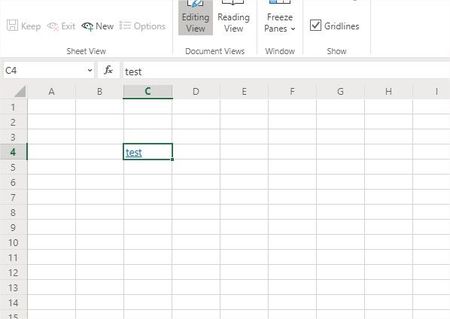
Hey everyone! I'm looking for a way to open a link from an excel documents to a desktop software. As you can see on the screenshot: - I have an excel documents with a link inside it - This link is going to a document in a teams folder. It's a pdf documents. I want teams to open this link automatically with acrobat reader. Is there a way to do it ? I don't want to download it on my computer. Thank you in advance, Best,1.2KViews0likes1Comment
Setting Up SharePoint FIrst Time
Hi We moved files from a local drive to to SharePoint (creating a site) in the process. The problem we have incurred is on excel sheets that have VLOOKUPs that reference another workbook. If both workbooks are moved to sharepoint should it update the external references or do you have to do this manually for each spreadsheet? Thanks StuartSolved1.1KViews0likes1Comment
Transform data in excel
Hi Recently, my client has shared raw data, which I have processed a bit (attached here for reference). The workbook has 2 sheets: 1. Raw Data 2. Converted Data I have data in the format provided in Raw Data sheet and want to get the data in format provided in Converted Data sheet. Is it possible in excel to get the data in the desired format899Views1like0Comments