iot
253 TopicsW3C Web of Things is now fully integrated in Azure IoT Operations
Industrial integration projects usually begin with a deceptively simple question: what is this asset, and how do I talk to it? With OPC UA, much of that answer travels with the machine. With a Modbus power meter, a REST-enabled sensor or the older controller on line three, it often arrives as a PDF, and an engineer still has to turn that document into configuration by hand. In April, we introduced W3C Web of Things (WoT) Thing Models as a first-class input for developer workflows in Azure IoT Operations, backed by the Protocol Compiler in the Azure IoT Operations SDKs. We can now carry that model further. A machine-readable asset description now drives onboarding and data processing. What’s new With the 2610 preview release now available, a WoT Thing Description can be provided by the user and, more importantly, it remains attached to the asset as it moves through Azure IoT Operations. It can be stored with the asset definition, interpreted for connectivity and processing and exchanged with compatible partner software. Thing Descriptions are used in two critical areas: Storage: Thing Descriptions are stored with the asset definitions in Azure IoT Operations, so the description of an asset lives with the asset instead of in a document. Data exchange: The same Thing Description can be handed to WoT-Connectivity capable industrial software from our partners, which onboards the asset on their side with no re-typing of tag names, units or types, and additionally enables automatic mapping to OPC UA. Better together: OPC UA and Web of Things OPC UA is at the center. Azure IoT Operations was built on open standards such as MQTT and OPC UA, and OPC UA brings structured, semantically modeled data from the shop floor for every asset that supports it. The gap is the assets that don’t natively present an OPC UA information model. WoT fills that gap with a standardized, machine-readable description of what an asset exposes and how to reach it. The two standards are designed to work together. The OPC Foundation’s OPC UA for WoT Connectivity specification (OPC 10100-1) defines a configuration API that lets industrial connectivity software map non-OPC UA assets, for example a device with a Modbus interface, into OPC UA using a WoT Thing Description to describe the asset. The OPC UA for WoT Binding (OPC 10101) works in the other direction and describes how to express an OPC UA server’s interface in a Thing Description. Azure IoT Operations now supports both paths: OPC UA for assets that speak it, WoT for the ones that don’t, feeding one consistent data plane at the edge. Asset How it’s described What happens OPC UA-native asset OPC UA information model Azure IoT Operations connects through its OPC UA connector and publishes structured data and its semantics to the built-in MQTT broker. Non-OPC UA asset (e.g., Modbus, LoRaWAN, Siemens S7Comm, Ethernet/IP, ...) W3C WoT Thing Description Azure IoT Operations stores and processes the Thing Description to onboard the asset and maps its data to OPC UA via OPC 10100-1 and Partner software. An ecosystem on the receiving side A specification becomes useful when independent products can exchange the same description without proprietary translation. Two partners have implemented, or are implementing, the receiving side of OPC UA WoT-Connectivity, plus we contributed an open-source reference version called UA-EdgeTranslator to the OPC Foundation. Prosys OPC UA Forge, an industrial DataOps and IT/OT integration platform, built around an OPC UA server, added WoT connectivity in version 1.4, including Modbus, BACnet, Siemens S7Comm and Ethernet/IP device onboarding through WoT. “Configuring connectivity has been the part of an industrial data pipeline that still depended on each vendor’s own tools and APIs. With WoT-Connectivity, Azure IoT Operations can onboard assets into Prosys OPC UA Forge using OPC UA itself, starting from a machine-readable asset description. For our customers, this means an asset is described once and that description works across the edge and the cloud, whichever vendor’s software they choose.”, said Pyry Grönholm, CEO, Prosys OPC. COPA-DATA is implementing the receiving side of OPC UA WoT-Connectivity in its zenon software platform, so an asset described once in WoT can be brought into zenon without manual mapping. COPA-DATA will show an early version at SPS 2026. "Open standards are the foundation of Industrial AI: only when machine and plant data is accessible in a consistent, vendor-neutral way can AI deliver real value on the shop floor. With W3C Web of Things support in zenon, COPA-DATA makes industrial assets directly consumable by modern AI services, so customers can scale from pilot to production without proprietary lock-in.", said Juergen Mayrbaeurl, AI & Transformation Lead, COPA-DATA. The important point for the OPC UA community is that a WoT Thing Description can move between Azure IoT Operations and independent industrial software without being manually recreated for each system. ”Web of Things fills the large brownfield asset onboarding gap. With this W3C standard, we have created a vendor-neutral asset description language which can be used with AI agents to fully automatically onboard any asset. The engineering effort to integrate WoT-Connectivity is also small, making it an ideal candidate for retrofitting existing industrial connectivity software”., said Erich Barnstedt, Chair, OPC Foundation WoT working groups and OPC Foundation Cloud Initiative. What it looks like in practice Start with a WoT Thing Description for the asset, from the vendor, a partner or authored in-house with the help of agentic AI. Eclipse ediTDor, an open-source web-based editor, can create and validate one (https://eclipse-editdor.github.io/editdor). Import it into Azure IoT Operations, where it’s stored as the asset’s description (https://learn.microsoft.com/en-us/azure/iot-operations/discover-manage-assets/howto-configure-opc-ua-web-of-things-connectivity). Azure IoT Operations processes the description to configure connectivity and publish the asset’s data to the MQTT broker, ready for dataflows to the cloud, e.g. to Microsoft Fabric. Running on Arm64 Azure IoT Operations now also supports Arm64, so it can run on compact, Arm-based industrial gateways, for example ones based on the lost-cost, industrial-grade Raspberry Pi 5 Compute Module. Combined with WoT-based onboarding, you can bring new assets online from an industrial gateway that fits in the palm of your hand. See it live at SPS 2026 We’ll be showcasing Web of Things and OPC UA working together in Azure IoT Operations at Smart Production Solutions 2026 in Nuremberg, Germany, 24–26 November 2026, at the OPC Foundation booth in hall 5, booth 140. Stop by to see our demo! Get started Read the first post in this series: W3C Web of Things (WoT) support in Azure IoT Operations What is Azure IoT Operations? Web of Things Connectivity configuration in Azure IoT Operations Eclipse ediTDor for authoring Thing Descriptions OPC UA for WoT Connectivity, OPC 10100-1 OPC UA for WoT Binding, OPC 10101 What’s next Next, we’re working with the W3C to add more standardized protocol bindings to WoT, see https://github.com/w3c/wot-binding-templates.182Views0likes0CommentsAzure IoT Operations 2610 is now available: Scaling the foundation for Physical AI
AI is moving out of dashboards and onto factory floors, oil fields, and production lines, where it can sense, reason, and act in the physical world. Most industrial organizations are only beginning to make that shift, and they need a platform that lets them start with confidence and keep going as their ambitions grow. Azure IoT Operations 2610 is built for exactly that. For the first time, Azure IoT Operations ships on two channels at once. The generally available (GA) release delivers production-ready capabilities that help organizations understand their operations across many more sites, at lower cost. A new public preview channel gives customers hands-on access to the capabilities that are coming next, including governed access to operations for AI agents and AI inference running directly inside edge data pipelines. Taken together, the two channels show where the platform is today and where it is heading. This release is part of a broader set of Physical AI announcements at Microsoft Ignite. Microsoft's Ignite Physical AI announcement (https://aka.ms/Ignite2026/PhysicalAIBlog) describes how IoT, Industrial AI, and Physical AI connect data, decisions, and action: IoT helps organizations understand their operations, Industrial AI helps them reason, and Physical AI helps them act, together forming a continuous learning loop. Within Microsoft's adaptive cloud approach, Azure IoT Operations is the on-site foundation for that loop. This post goes one level deeper into what 2610 delivers and what it makes possible. Physical AI and where Azure IoT Operations fits Physical AI is AI that works in the physical world. It perceives what is happening across an operation, reasons about what it means, and acts to improve the outcome. Getting there is a journey rather than a single leap, and customers should not feel they have to take on everything at once. Azure IoT Operations is designed to make that journey practical, so organizations can start simply, prove value, and evolve toward far more sophisticated applications of AI and agents at their own pace. The journey begins with easy integration into the physical operation customers already run. Many start with perception: connecting equipment, bringing in data from sensors and cameras, and seeing what is happening in real time. From there, they move into reasoning, with AI models and agents that diagnose issues and recommend improvements. Ultimately, they move into action, where approved decisions reach equipment through partner control systems. Each step builds on the one before it, on the same platform. Azure IoT Operations is also designed from the ground up to protect each customer's proprietary operational data. Customers decide who can access which data and how, and that applies to AI agents as much as to people and applications. They also decide what data leaves the site, if any at all. That control lets customers choose the deployment model that fits their operation: cloud-first deployments that rely on AI in the cloud, hybrid deployments that combine cloud AI with local AI models and agents, and fully local deployments where AI and agents run only on site and data never leaves it. Whichever path and deployment model a customer chooses, the role of Azure IoT Operations comes down to three core functions and two key intersections with the systems around it. Three core functions Understand the operation. Azure IoT Operations keeps trusted operational context close to the process: what each asset is, what its data means, how equipment relates, its current and historical state, observations from cameras and other sensors, and the capabilities and constraints of the process. Standards such as OPC UA and W3C Web of Things are the tools. The outcome is context that people and AI can rely on. Optimize the operation. AI models and agents run at the edge, next to the operational data and the process, where they can perceive, diagnose, recommend, optimize, and coordinate. Microsoft Foundry supplies the models and agent development capabilities. Azure IoT Operations supplies the operational environment in which those agents become useful. Govern action. When an agent proposes an action, Azure IoT Operations turns it into an authorized, bounded, and observable operation. It authenticates the actor, evaluates policy and current conditions, obtains approval where required, invokes an authoritative command path, records the decision, and verifies the result. Two key intersections Where AI meets control: Azure IoT Operations optimizes, partners actuate. Azure IoT Operations decides, predicts, and recommends, sometimes in the form of a control input such as a new setpoint, and issues that intent through governed interfaces. Partner control systems and robots run the deterministic real-time loop and own safety, for people and machines, at all times. As a simple example, Azure IoT Operations can set the thermostat, but the thermostat and the HVAC system get the room to the correct temperature. Partners are already proving this pattern. Azure IoT Operations integrates with Rockwell Automation's FactoryTalk Optix and is part of Schneider Electric's EcoStruxure Automation Expert. In Schneider's green-hydrogen pilot with H2E Power, AI agents validated control logic in simulation before deploying it to hardware; the system ran for more than 6,000 hours autonomously and cut the levelized cost of hydrogen by roughly 10%. Where edge meets cloud: local intelligence at the edge, enterprise intelligence in the cloud. Azure IoT Operations integrates local operational intelligence at each site. Microsoft Fabric integrates enterprise-wide and cross-site intelligence. The two are federated, so when customers choose to share data beyond the site, the context created at the edge flows to the cloud without being rebuilt. These three core functions follow the same path customers take into Physical AI: understanding the operation turns raw data into trusted context, optimizing it is where AI reasons over that context, and governing action is how decisions safely reach the physical world. Clear roles at each intersection are what make AI credible to the people who run plants. Customers get AI that is useful on the floor without trading away the control systems, certifications, and safety practices they already trust. What 2610 delivers Azure IoT Operations already provides the foundation many industrial customers run in production today: governed cloud-to-edge management actions, no-code data flow graphs, broad industrial connectivity, and unified health reporting. Release 2610 builds on that foundation in two directions. The GA release deepens the first core function, understanding the operation, and makes it practical at fleet scale. It also strengthens the intersection where edge meets cloud by landing edge data directly in the lakehouse. The preview release takes the first concrete steps into the second and third core functions: running AI against live operational data at the edge, and giving AI agents governed, auditable access to operations. Core function Generally available in 2610 In preview with 2610 Understand the operation Essentials SKU for large fleets, ODBC-based connector for SQL Server, smarter OPC UA collection, leaner data flow writes to the lakehouse Asset context with Web of Things and the edge registry, type-based OPC UA discovery, live data in the operations experience, Azure Marketplace connectors and the Akri Connector Builder, Microsoft Fabric integration Optimize the operation Service calls from custom WebAssembly modules, AI-assisted data flow authoring in VS Code Inference connector with Foundry Local and Azure Machine Learning, file-backed graph processing Govern action Management actions for HTTP/REST assets MCP server with policy-governed tool access, data-driven management actions, application lifecycle for agents and MCP servers Two release channels: what you can run today, and what is coming next Starting with 2610, every Azure IoT Operations release ships on two channels. GA (stable) is production-ready and fully supported. This is what you run on the factory floor. Preview includes everything in GA plus new capabilities that are ready for hands-on feedback. Use it in test or pilot environments to evaluate what is coming and help shape it before it reaches GA. You choose a channel when you deploy, through the Azure portal deployment wizard or the Azure CLI, and you upgrade within that channel. Switching an existing instance between GA and preview is not supported, so production deployments stay on a predictable, stable path. Connector and transform versions follow the same rule: GA instances see only GA versions, while preview instances see both. For technology leaders, the second channel changes how you can plan. You no longer have to wait for GA to evaluate a major capability or sign up for a one-off private preview. The preview channel is a working view of the roadmap, available every release, that your teams can put in front of real equipment and real operators while production keeps running. Generally available: understanding operations at scale Physical AI is only as good as the operational context beneath it, and that context has to exist at every site, not just at the flagship plant. The GA capabilities in 2610 turn on-site data into actionable intelligence: they make operational context cheaper to establish, broader in what it covers, and easier to hand up to enterprise analytics. Bring Physical AI to more sites: Azure IoT Operations Essentials A new Essentials SKU sits alongside the full-featured offering, now called Standard. Essentials delivers the core of Azure IoT Operations, the edge MQTT broker, Akri connectors, and data flows, on single-node clusters at a lower price point. Many organizations need a reliable edge data layer at hundreds or thousands of small sites, such as stores, substations, wind turbines, or remote equipment, that do not need the full industrial feature set. Essentials makes those fleet-wide rollouts cost-effective. Standard remains the choice for full industrial deployments that need OPC UA connectivity or multi-node clusters. You choose the SKU when you create an instance, and moving to Essentials requires a new deployment. Together with ARM64 support, generally available since release 2607, Essentials lowers both the cost and the hardware bar for line-level and pilot deployments. Data flow graphs that land data directly in your lakehouse Data flow graphs write directly to Azure Data Lake Storage Gen2 in Delta or Parquet, Microsoft Fabric OneLake tables in Delta, and Azure Data Explorer or local storage in Parquet. Teams can branch, window, filter, and run custom WebAssembly transforms at the edge, then write the result straight into analytics-ready tables with no extra messaging hop and no second pipeline to maintain. In 2610, Delta Lake writes use less memory and carry less transaction-log overhead, with checkpoints running in the background. Less, cleaner data goes to the cloud, which lowers storage and ingestion costs. This is where edge meets cloud, in practice: the edge does the local work, and Fabric receives context it can use for cross-site analysis. More of the plant, connected The new ODBC-based connector for SQL Server brings data from the databases behind MES, quality, batch, and historian systems into the same pipelines as OPC UA and MQTT telemetry. Teams configure a SQL Server connection and its assets in the operations experience and define datasets with SQL queries, with no custom extraction code. Management actions now extend to assets connected through the HTTP/REST connector as well, so teams can collect data from and act on REST-connected equipment alongside everything else. That brings governed management actions to more of the plant. Smarter OPC UA data collection OPC UA is a widely used open standard that lets industrial machines share their data, and 2610 makes the Azure IoT Operations connector for it smarter about what it collects and sends. It can now ignore values that barely change, drop readings the equipment itself flags as unreliable, and sample data at a fixed interval. Filtering out noise and bad readings at the source means less data to move and store, lower cloud costs, and cleaner input for analytics and AI. When a machine restarts or the network drops, applications can request a complete snapshot of the machine's current state, or receive one automatically when a key value changes, instead of waiting for values to trickle back in. Optional health signals confirm that the connection is alive and that data has been delivered, and an optional fast failover gets data flowing again sooner when a connection fails. Faster to build, easier to operate Several GA capabilities shorten the path from idea to running pipeline. Developers can describe a data flow in plain language to GitHub Copilot in VS Code, validate it locally, and deploy it. Custom WebAssembly modules in data flow graphs can now call request-response services over MQTT while processing a message, for enrichment, lookups, routing decisions, or asset management actions. The edge state store now supports paged key scans and multi-key reads, so applications can discover and retrieve the context available to them. Live data views in the Azure IoT Operations Data Flow extension for VS Code speed up commissioning and troubleshooting, and an updated navigation layout in the operations experience makes instances and their resources easier to find. Public preview: AI that reasons over operations, with action that stays governed The preview channel is where 2610 reaches furthest toward Physical AI. These capabilities put agentic AI to work on live plant data at the edge, within the governance controls the customer sets, and give agents a governed path into operations. Customers can evaluate them now in test and pilot environments. Connect AI agents to edge operations, with guardrails Azure IoT Operations now includes a Model Context Protocol (MCP) server that gives compatible AI agents and assistants authenticated, authorized access to live MQTT telemetry and state store data at the edge. A single endpoint aggregates supported first-party and third-party MCP tools, so teams can register their own MCP servers behind the same entry point instead of managing separate client connections. Authentication and authorization policies that you control govern access to every registered tool, so each agent gets only the tools its role allows, and publishing MQTT messages requires Admin permissions. New application lifecycle capabilities also let teams deploy and manage agents and MCP servers on the cluster, alongside connectors. This is the third core function, govern action, taking shape. Teams want AI copilots that can answer "why is line 3 down?" or "which assets are unhealthy?" without giving AI broad access to production systems. With a single governed entry point, organizations bring the agent they already use and decide exactly what that agent can see and do. Run predictive AI models in the data pipeline The new Inference connector runs registered machine learning models, using predictive models served by Foundry Local on the cluster or models hosted in Azure Machine Learning, with multiple models running concurrently. Large inputs such as high-resolution images are read from files rather than passed through the message broker, and new graph-level file stores let custom WebAssembly transforms read and write those files on persistent cluster storage. Moving a model from a notebook onto a live production line usually means custom integration code for every model. With the Inference transform, a model becomes another step in the pipeline, and its results can feed downstream transforms or trigger management actions on connected assets, closing the loop from perception through reasoning to action. This is the second core function, optimize the operation, running where the data is. Give data meaning: asset context and the edge registry Raw tag values are not enough for analytics or AI to reason about an operation. A new WoT Enrich transform uses Web of Things mappings to give asset messages a consistent structure and add context such as what a value means and its units, and a new Microsoft Fabric integration formats and batches that telemetry for Eventhouse or Lakehouse. The new edge registry stores JSON Schemas and Web of Things Thing Models and Thing Descriptions on the cluster, where local workloads can reach them, and keeps them in sync with the cloud registry. Type-based OPC UA discovery finds assets and event groups from OPC UA type information, and assets such as Modbus pumps or S7 PLCs can be onboarded through OPC UA servers that implement the OPC UA Web of Things Connectivity API. When context travels with the data from the source, both Fabric reports and AI agents understand what they are looking at, even when cloud connectivity is interrupted. See data as it flows, and connect more sources Live data in the operations experience lets authorized users inspect incoming asset messages and validate data as it moves through transforms, WebAssembly modules, and data flow graphs, which answers the first question in every rollout: is the data arriving, and does it look right? To broaden connectivity, customers on the preview channel can discover and deploy supported third-party connectors from Azure Marketplace through the Azure portal or Azure CLI. For protocols that no connector covers yet, the Akri Connector Builder, a GitHub Copilot agent plugin, turns protocol specifications into connector code, tests, and documentation, and validates the result against a generated protocol simulator and a local Azure IoT Operations environment. Azure IoT Operations in Azure Government Azure IoT Operations is now in public preview in Azure Government (US Gov Virginia), running the 2610 GA feature set. US government agencies and their partners can evaluate edge data collection and processing in a government cloud, deploying through Azure CLI and using the operations experience. The preview channel is not available in Azure Government. Physical AI in action Customers are already putting this foundation to work. Unilever, working with Microsoft, NVIDIA, and Accenture, has built an advanced digital twin that captures the behavior of a whole factory as a connected system. The solution uses Azure IoT Operations to ingest and integrate sensor data, contextualize it at the edge, and feed it to edge and cloud AI services. By identifying bottlenecks, testing interventions, and recommending actions before issues affect production, it helps unlock greater efficiency, faster changeovers, and reduced waste, while giving engineers and factory teams AI-powered insight to make faster, better-informed decisions. What comes next Each Azure IoT Operations release now shows two things: what is ready for production, and what is coming next. Over the coming releases, the platform will keep moving from perceiving and informing, to reasoning and recommending, to orchestrating action through partner control systems. As it does, the human role shifts from approving every step to overseeing the system with the ability to intervene, and the platform's two key intersections, with partner control systems and with the cloud, stay the same throughout. Get started Deploy Azure IoT Operations 2610 with the Azure portal deployment wizard, Azure CLI, or Bicep, and choose the GA or preview channel and the Essentials or Standard SKU at deployment. Upgrade existing instances with Azure CLI, following the release-specific upgrade instructions. To try preview capabilities, deploy a new instance on the preview channel in a test or pilot environment. Review the public documentation (https://aka.ms/aiodocs) and release notes (https://github.com/Azure/azure-iot-operations/releases) for full details. Read Microsoft's Ignite Physical AI announcement (https://aka.ms/Ignite2026/PhysicalAIBlog) for the full picture across Azure IoT Hub, Azure Device Registry, Azure Local, Microsoft Fabric, and our partner ecosystem. Azure IoT Operations 2610 strengthens the foundation that is in production today and shows where Physical AI is heading. Wherever your organization is starting from, we look forward to building the next era of Physical AI with you.456Views3likes0CommentsAdvancing Device Firmware Security with Fleet Insights and Continuous Vulnerability Visibility
Firmware underpins IoT, OT, and network-device security, yet remains difficult to inventory, assess, and secure continuously. Earlier this year, we expanded firmware analysis enabled by Azure Arc to connect vulnerabilities to devices through Azure Device Registry, enrich CVE prioritization, analyze complex firmware, and improve software-supply-chain collaboration. At Microsoft Ignite, we're adding capabilities to surface firmware insights in device management, identify potentially risky function calls, refresh vulnerability information, and expand component discovery. These updates turn point-in-time firmware assessments into actionable insights across the device lifecycle. Bringing firmware security insights directly into Azure Device Registry In April, we introduced an integration between firmware analysis and Azure Device Registry (ADR) that maps analyzed firmware to the devices and assets running it, revealing fleet impact rather than an isolated scan result. At Ignite, we’re bringing firmware security insights directly into the Azure Device Registry experience. From an ADR device or asset, customers can view a firmware security summary, see whether vulnerabilities appear in the CISA Known Exploited Vulnerabilities (KEV) Catalog, and open the full firmware analysis report. Firmware is associated with devices and assets by manufacturer, model, and software version. Why it matters: Security teams can move from a vulnerability to affected devices, while operations teams can move from a device to firmware risk. Connecting firmware analysis and ADR reduces manual correlation and helps teams prioritize devices exposed to vulnerabilities known to be exploited in the wild. This makes firmware security part of the device-management lifecycle rather than a separate workflow. Keep firmware vulnerability information current with Latest CVEs A firmware image doesn't become static from a security perspective simply because its bits haven't changed. A firmware image’s security posture can change even when its bits do not. New CVEs or updated vulnerability data can introduce risk after the original analysis, requiring customers to re-upload firmware and compare results manually. With Latest CVEs, now in Preview, firmware analysis provides a refreshed view of vulnerabilities affecting an existing firmware image while preserving the original results for comparison and audit. It includes original and newly identified CVEs, relevant metadata changes, and additions to the CISA Known Exploited Vulnerabilities (KEV) Catalog—the authoritative catalog of vulnerabilities with evidence of exploitation in the wild. Customers can compare Original results captured at upload with the Latest view and filter for newly identified CVEs or severity-impacting metadata changes. Why it matters: Firmware may remain deployed for years, so teams need a fresh risk picture—not only the original assessment. Latest CVEs surfaces newly introduced risk, including when a vulnerability enters CISA KEV, and helps identify affected firmware and devices for priority patching, mitigation, or investigation. Finding potentially unsafe function calls in firmware Vulnerabilities aren't limited to known CVEs. Security issues can also originate in the way firmware itself is implemented. The new Unsafe Function Calls analysis, now in preview, scans supported ELF executables for functions that can create security issues without controls such as input validation, bounds checking, and buffer-size validation. The preview identifies calls to functions including strcpy, strcat, printf, fprintf, sprintf, system, mmap, and popen. It also surfaces network-related function-call information, allowing analysts to consider prioritizing executables containing both unsafe function calls and network-related calls for further review. This helps security and firmware-engineering teams identify binaries for deeper review and investigate risky implementation patterns beyond CVE analysis. A flagged function does not necessarily indicate a vulnerability; exploitability depends on its use, input data, and surrounding protections. The preview supports ELF user-space executables on AMD64/x86-64, ARM64/AArch64, ARM32 and MIPS32. Broader SBOM discovery across firmware An accurate Software Bill of Materials is essential to firmware risk assessment: unidentified components cannot be reliably mapped to disclosed vulnerabilities. Over the past few months we have added 70 new SBOM component detectors to expand discovery of software embedded in firmware images. These detectors expand the range of software components that firmware analysis can identify, improving software inventory visibility and supporting component-level vulnerability analysis. This expansion addresses component-discovery gaps across real-world firmware through ongoing validation of customer firmware and comparison results. Why it matters: Better component discovery improves software-supply-chain visibility and helps identify affected firmware when vulnerabilities are disclosed. Extending firmware security visibility beyond the initial scan Together, these capabilities make firmware security insights broader, more current, and easier to operationalize: Azure Device Registry integration connects firmware security posture—including CISA KEV findings—to the devices and assets customers manage. Latest CVEs helps customers understand how firmware vulnerability posture changes after initial analysis and prioritize affected firmware and devices when a CVE is added to CISA KEV. Unsafe Function Calls analysis adds another layer of static security analysis beyond known vulnerabilities and software inventory. Expanded SBOM detection increases visibility into the software components that make up firmware. Firmware security should continue after the scan by connecting findings to devices, detecting risks beyond CVEs, tracking vulnerabilities over time, and maintaining visibility into fleet software. These investments in firmware analysis, enabled by Azure Arc and Azure Device Registry, make firmware security more visible, actionable, and integrated into edge management and security. As always, we welcome customer feedback as we expand firmware analysis.166Views0likes0CommentsPut Your Industrial Data to Work with New Azure Capabilities
In almost every conversation I have with industrial leaders, the same question comes up: how do we do more with fewer skilled workers, less predictable supply chains, and customers who expect products made just for them? The answer isn't more sensors. Most organizations already have plenty. The problem is that the data and knowledge they need is scattered across people, processes, and systems that were never designed to work together. Closing that gap gets easier with a continuous learning loop, where organizational processes can perceive, reason, act, and manage at scale, with governance built into every step. Perceive: Gather data to create visibility from operational assets and make contextualized industrial data available at scale so teams can see what's really happening across their operations. Reason: Contextualized intelligence helps people understand why something is happening and what should happen next. Act: Put that intelligence to work through machines, systems and people, turning insight into results in the physical world. Manage: A consistent foundation to deploy, operate, and update assets, applications, and agent models across every site, from the edge to the cloud, so what works in one plant can scale to all of them. Put simply, IoT gave us visibility to know what happened. Industrial AI tells us what should happen. Physical AI helps us make it happen. Together, these form a continuous learning loop. Every action creates new data, and each cycle makes operations smarter. Customers like Unilever and Ecopetrol are already using this loop to improve throughput, quality, and asset reliability. Today, I'm excited to share new Azure capabilities that help industrial organizations see more, reason faster, act with confidence, and scale with trust. Azure as the Foundation for Physical AI In industrial settings, intelligence is only useful if it can be trusted. That means knowing where data comes from, who can access it, how AI reaches its recommendations, and what guardrails are in place before anything acts in the physical world. When governance is designed in from the start, organizations can move faster without giving up safety, security, or control. Azure makes this easier. Microsoft helps customers turn successful pilots into coordinated, governed, repeatable operations across equipment and sites. This requires a consistent, scalable foundation spanning edge to cloud that supports continuous learning and drives business outcomes. With Azure Arc, Azure management and Microsoft data services extend into industrial environments, providing a common foundation for governance, integration, and intelligence. This edge to cloud foundation is powered by Azure IoT Operations, Azure IoT Hub, Azure Device Registry, Microsoft Fabric, Foundry Local and Azure Local. Unilever is a global consumer goods company whose products reach 3.7 billion consumers every day. Across Unilever, the company is using intelligent technology to build the next generation of manufacturing. Smarter, faster and more connected factories help Unilever deliver superior products, improve efficiency, and serve consumers better than ever before. Working with Microsoft, NVIDIA and Accenture, the company has created an advanced digital twin that captures the behavior of the whole factory as a connected system. The solution leverages Azure IoT Operations to ingest and integrate sensor data, contextualize it, and feed that data to edge and cloud-based intelligence services for insight. By identifying bottlenecks, testing interventions and recommending actions before issues affect production, the platform can help unlock greater efficiency, faster changeovers and reduced waste. Just as importantly, it gives engineers and factory teams intelligence-powered insights to make faster, better-informed decisions. Microsoft, along with its partners, are excited to help Unilever scale this blueprint across its manufacturing network with the goal of advancing intelligent operations. What You’ll See at Ignite Deploy, Manage and Secure at Scale Scaling physical AI starts with a simpler path to deploying, managing, and securing connected device fleets. Azure Device Registry (ADR) introduces a unified onboarding flow anchored by an ADR namespace, guiding customers through setting up a new IoT solution or bringing existing IoT Hubs into ADR without recreating them. By linking multiple hubs to a shared ADR namespace, organizations gain a unified management surface across their fleet, with Hub-connected devices represented as Azure resources so they can apply the same auditing, Azure Policy, and governance practices they use across the rest of Azure. This unified management experience also simplifies device security. ADR certificate management helps customers issue, renew, and revoke operational X.509 certificates for Hub-connected devices, strengthening device authentication without requiring them to build and operate their own certificate infrastructure. We are also enhancing ADR’s integration with Firmware Analysis so customers can view analysis results for their devices’ firmware directly in ADR, bringing visibility into firmware vulnerabilities alongside device inventory. Together, these capabilities help customers build on existing IoT investments while simplifying deployment and ongoing fleet operations under a consistent Azure governance model. Turn Data into Actionable Intelligence We are simplifying the ability to access and transform complex industrial data into shapes that are ready for AI consumption whether the devices and assets emitting that data sit within an industrial site or are globally distributed. Distributed connected assets/devices: Agent-ready data in a unified operational data store is essential for building intelligent connected operations. Azure IoT Hub brings large volumes of operational data from the physical world into Azure. We have now built a direct route from IoT Hub to Microsoft Fabric Eventstreams, making it easier to bring IoT data into a unified data foundation for agentic operations. As part of Fabric Real-Time Intelligence, Eventstreams ingests events from multiple sources, transforms and enriches them using no-code and low-code processing, and routes them to downstream destinations. This integration helps organizations turn real-world IoT signals into agent-ready insights and accelerate the path from ingestion to action within a managed environment. On-site connected assets/devices: Azure IoT Operations 2610 brings more plant data into one governed pipeline and lands it ready for analytics and intelligence. A new ODBC-based connector for SQL Server pulls data from the databases behind MES, quality, batch and historian systems, and the REST connector is now generally available with management actions. Data flow graphs now write directly to Microsoft Fabric OneLake, Azure Data Lake Storage, Azure Data Explorer and local storage in Delta or Parquet, so data processed at the edge lands in analytics-ready tables with no second pipeline. Developers can also describe a data flow graph in plain language in VS Code and deploy it. In preview, W3C Web of Things models attach meaning to telemetry before it leaves the site, and an on-cluster Edge Registry keeps asset definitions available at the edge. Optimize Operations with Agents Operations teams want intelligence that can answer "Why is line 3 down?" However, security teams won't give intelligence broad access to production. Azure IoT Operations and Azure IoT Hub both now preview a built-in Model Context Protocol (MCP) server and gateway that meets both needs. Every agent is authenticated, with Microsoft Entra ID for remote agents, and every tool call is authorized against policies the customer controls. Customers bring the agent they already use and decide exactly what it can do on live plant data. A new inference connector, also in preview, runs vision and anomaly detection models from Foundry Local or Azure Machine Learning as a step in the edge pipeline, so predictions feed straight into operational workflows. Agents recommend and act through governed interfaces, while partner control systems run the real-time loop and own safety. Bring Physical AI to More Devices and Environments Azure IoT Operations Essentials is a new, lower-cost SKU for organizations that need a reliable edge data layer at hundreds or thousands of small sites, such as stores, substations, wind turbines and remote equipment. Essentials delivers the core data plane (MQTT broker, Akri connectors, data flows) on single-node clusters. The full offering, now Azure IoT Operations Standard, remains the choice for OPC UA and multi-node industrial deployments. Azure IoT Operations also supports ARM64 with full parity from installation through lifecycle operations. Together, these lower both the cost and the hardware bar for line-level and smaller footprint deployments. With Azure Local, organizations can centrally provision, configure, monitor, and update infrastructure across supported hardware architectures, providing a consistent management experience across distributed environments. By bringing Azure-managed infrastructure to smaller, AI-capable devices, organizations can more easily deploy and scale physical AI applications across factories, retail locations, robotics, and other environments where space, power, and cost are important considerations. Today, we're announcing several new capabilities for Azure Local small form factor deployments, including support for Arm64-based hardware, starting with NVIDIA Jetson AGX Thor, the ability to run vision-language-action (VLA) models with Foundry Local on Azure Local, and new features to simplify GPU management, networking, security, and device operations. These advancements bring together the infrastructure and AI capabilities needed to build and operate intelligent physical systems at the edge. Innovating with the Ecosystem Physical AI requires more than technology. It takes an ecosystem that brings together industrial equipment, operational expertise, AI innovation, and the ability to deploy at scale in real-world environments. Across the Microsoft ecosystem, partners are already building on Azure tobring these capabilities to life. Helin Data is bringing edge intelligence to energy and industrial operations, combining local intelligence processing with cloud-scale device management and analytics. Industrial technology partners like Siemens, Litmus, and Rockwell Automation are connecting existing automation environments to Azure through their industrial platforms. Forescout is bringing OT security visibility through its Akri Connector. Sight Machine is collaborating with Microsoft on information models that enrich and share operational context, making industrial data more meaningful for intelligent applications. NVIDIA is advancing industrial visualization and simulation with Omniverse, alongside edge intelligence on Jetson Thor devices. Partners are also turning these capabilities into repeatable customer solutions. Mesh Systems is combining connectivity, cloud platforms, and AI-enabled applications, while transformation partners like TCS are developing industry-specific accelerators to help customers modernize operations and adopt intelligence at their own pace. Through our engineering partner program, we are working directly with partners to design, validate, and scale solutions built around real customer needs. The next step starts with your operations Physical AI is opening new possibilities for how industries operate, and the opportunity starts with the data, equipment, and expertise organizations already have. With Azure and our growing partner ecosystem, customers can begin connecting their operations, applying intelligence to real business challenges, and building toward more intelligent, adaptive operations. Explore how Azure IoT and our partner ecosystem can help you get started: Microsoft Azure Physical AI Solution Resource Guide Microsoft Azure Physical AI Partner Resource Guide494Views2likes0CommentsScaling Industrial AI at the Edge with Helin and Azure IoT
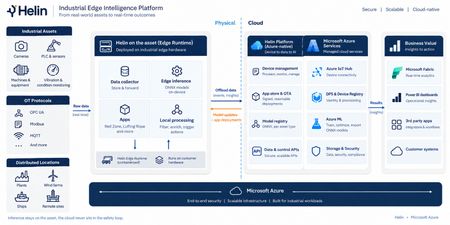
Remote industrial sites generate operational data continuously, but the ability to act on that data in near real time can be challenging. Bandwidth is often limited; connectivity is inconsistent, and the analysis needed to turn raw signals into insight typically depends on cloud connection. When worker safety is on the line, that gap matters even more, since a person entering a hazardous zone has to be detected and flagged on site independent of a cloud connection. Meeting those conditions calls for a secure, repeatable foundation, one that trains models in the cloud, runs inference locally, governs distributed edge devices, and turns the right signals into insight. Helin Data built that foundation: an edge-to-cloud platform that combines local inference, industrial data collection, and fleet observability on Azure. RedZone, Helin's vision AI application for hazardous-zone monitoring, is the first proof point of this platform. It uses the CCTV cameras already installed on a rig to detect when a person enters a defined danger zone around active equipment, triggering a local alert through an on-site interface and status lights, and logging the event for later safety and operational analysis. Because inference runs at the edge, RedZone can detect and alert without waiting on a connection to the cloud, while Azure handles centralized management, analysis, and model lifecycle activities. What sets this solution apart Designed for constrained environments – Inference runs directly on the edge box, so RedZone keeps detecting and alerting even through network outages, with no dependence on the cloud at runtime. Only priority events and metadata detected by RedZone sync to Azure, which keeps bandwidth use low on a constrained connection such as satellite connectivity used at some offshore sites. Secure, scalable fleet governance – Devices onboard automatically through Device Provisioning Service (DPS) with per-device X.509 certificates. Every device is listed in Azure Device Registry (in preview) and projected as native ARM resources, so updates and configuration changes can be targeted, governed, and audited using standard Azure tooling. Helin adds multi-level security, including public key infrastructure (PKI), data encryption, and industry-trusted authentication, protecting data as it moves from the rig to the cloud. Helin's observability layer spans device health, firmware updates, application status, and the data pipeline, so organizations can promptly identify and investigate potential issues across the edge-to-cloud pipeline. A closed edge-to-cloud AI loop – Models are trained and versioned in Azure Machine Learning, then deployed to the edge for local inference. Detections stream back into Microsoft Fabric, where the data can inform model evaluation and future model versions, closing the loop between the field and the cloud. A reusable application foundation – RedZone runs on the same platform and loop that can be adapted for additional customer scenarios. A different hazard, a different zone, or a different operational question can become its own application. Delivering a governed device fleet Azure IoT Hub and DPS provide secure device connectivity, messaging, and automated provisioning. The Azure IoT Hub integration with Azure Device Registry, currently in public preview, represents devices as Azure resources, providing a foundation for Azure-native fleet inventory and governance. Together, these services help Helin onboard, connect, and manage distributed edge deployments. Azure Device Registry (public preview with Azure IoT Hub): Provides the management plane, representing each device as an Azure Resource Manager resource so it can be governed with the same patterns used for other Azure resources including role-based access control, resource groups, tags, and resource-level management, with namespaces acting as the organizational and security boundary. Azure Device Registry integration with Azure IoT Hub and Microsoft-backed X.509 certificate management is in public preview and is not recommended for production workloads. Azure IoT Hub and DPS: Deliver secure onboarding and bidirectional messaging between the devices and the cloud. Helin Data Edge Inference and Data Collector: Runs vision AI inference at the edge and connects into the industrial control systems already on site, so each detection carries operational context. Industrial data is collected, contextualized, buffered, and filtered locally before important signals are sent to Azure. Microsoft Fabric: Ingests telemetry and turns it into an operational model for analysis and reporting, giving organizations clearer insight into their operations. Customer Impact This solution is already proven in a demanding industrial environment. When Helin Data implemented RedZone on Noble’s Maersk Discoverer rig, RedZone detected a person entering a hazardous zone and raised an alert in roughly 150 milliseconds. Processing the detection locally is particularly important offshore, where limited connectivity makes a cloud-dependent response impractical. Helin’s broader edge platform is already supporting Noble across its operations. The offshore drilling contractor, which operates a fleet of more than 40 rigs, uses Helin’s Remote CCTV Manager to provide authorized personnel with live video from more than 20 rigs. Reduced resolution streams sync to Noble’s secure Azure environment for viewing while full resolution recordings stay at the rig to reduce bandwidth use. Together, these examples demonstrate the broader platform pattern: process high-volume data locally, transmit the signals that matter, and centrally manage applications deployed across a distributed industrial fleet. Closing RedZone shows what becomes possible when Azure IoT Hub is used as more than a device-connectivity service. Combined with secure provisioning, Azure-native device governance, edge inference, model lifecycle management, and Microsoft Fabric, it becomes part of a repeatable platform for building and operating industrial AI applications at scale. For customers, the value extends beyond a single safety scenario. The same foundation can support new applications across worker safety, operational visibility, process improvement, and other industrial use cases, without rebuilding the underlying device and data infrastructure each time. Helin brings the industrial application expertise; Azure provides the scalable foundation on which those applications can be deployed, governed, and continuously improved. Take the next step Read the customer case study, Improving safety across a fleet of drilling rigs Learn more about RedZone in Seeing the Human Layer: Helin Brings Edge Vision AI to Industrial Operations on Azure. Explore Helin’s Intelligent Edge Application Platform is now available in Azure Marketplace Resources Deploy Azure IoT Hub with Device Registry integration and certificate management (preview) Azure IoT Hub Documentation Product documentation | Helin Documentation826Views0likes1CommentDirect IoT Hub-to-Fabric message routing, with context preserved via CloudEvents, in Public Preview
Announcing Public Preview of Microsoft Fabric Eventstreams as a native Azure IoT Hub routing endpoint. Customers can now send device telemetry directly into Fabric without building custom integration pipelines, using the same routing rules, filters, and enrichments configurable in IoT Hub. Events are delivered using the CloudEvents envelope, which preserves critical metadata for downstream analytics.732Views1like1CommentHow Mesh Systems Builds on Azure IoT Hub and Azure IoT Operations to Accelerate Industrial AI
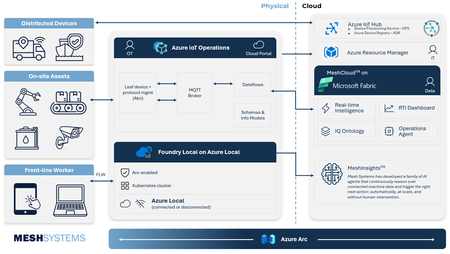
Manufacturers generate vast amounts of operational data, yet its complexity and fragmentation across historians, Operational Technology (OT) systems, and cloud platforms can slow AI adoption at scale. As organizations invest in AI to enhance productivity, quality, and decision making, the ability to connect and contextualize operational data becomes critical. Azure IoT Hub, Azure IoT Operations, and Mesh address this challenge together, spanning the full path from device connectivity to actionable AI-powered insights. Mesh brings deep Azure IoT platform experience and a practical path to industrial AI, with MeshCloud built on Azure IoT Hub, an open-source .NET Akri framework for Azure IoT Operations, and MeshInsights delivering generative AI-powered operational intelligence. This expertise is backed by a long history with Azure; Mesh launched its first IoT solution on Azure in private preview in 2009 and remained an early adopter of every major Azure IoT service since. Together, Azure IoT Hub, Azure IoT Operations, and Mesh give manufacturers a streamlined way to unify operational data and apply AI where it matters most. Unlocking legacy data with Mesh's Akri Connector Industrial organizations often struggle to modernize operations because critical operational data sits isolated inside historians and legacy Operational Technology (OT) systems. Many manufacturers are also wary of integrations that create new dependencies and limit future flexibility. Azure IoT Operations addresses this through an open architecture built around Akri, connecting industrial data sources while preserving interoperability across hardware and software environments. Mesh built on this foundation with its Akri Historian Connector, bringing historian and legacy operational data into Azure IoT Operations through prebuilt connectivity rather than source-by-source integration work. The result is faster access to operational data ready for analytics, AI, and industrial automation. The key features of this connector include: Restart-safe data continuity: Manufacturers can trust that operational data keeps flowing even through outages or restarts, with no data loss and no time spent recovering or reprocessing data. Secure, flexible authentication: Modern and legacy industrial systems connect under one security model, meeting enterprise-grade authentication standards without restructuring existing infrastructure. A foundation other connectors can be built on: The underlying framework handles the heavy lifting, so teams only need to build what's unique to each new OT data source. This means faster time to value for every new data source. Built in alignment with Azure IoT Operations roadmap: The connector stays up to date automatically, as new Azure IoT Operations features become available. This means manufacturers have access to the latest capabilities as the platform evolves. Together, Mesh and Azure IoT Operations give organizations a production-ready path from the shop floor into Azure IoT Operations and onward to Microsoft Fabric. Delivering Scalable Connected Products with Azure IoT Hub and MeshCloud MeshCloud helps manufacturers move from connected product pilots to fleet scale deployments faster by providing a platform build on Azure IoT Hub and other Azure native services. Azure IoT Hub provides per-device identity, support for MQTT, AMQP, and HTTPS, and built-in capabilities like device twins, direct methods, and rules-based message routing. Azure Device Provisioning Service (DPS) extends this foundation with zero-touch, just-in-time onboarding using X.509, TPM, or symmetric key attestation. Mesh operates as one cohesive engineering practice across the full connected product lifecycle, delivering hardware, firmware, wireless, edge, and cloud integration natively for Azure IoT Hub and Azure IoT Operations. That end-to-end scope is what MeshCloud, their Azure-native connected product platform, brings together. MeshCloud embeds Azure IoT Hub and DPS into an Azure-native connected product platform, giving organizations a faster path to connected product delivery without sacrificing control, scale, or solution ownership. The platform comes together across four layers: Edge to cloud: Connected devices, from MCU controllers to tablets and phones, register and authenticate through DPS and connect securely to IoT Hub, giving organizations a direct, secure line from shop floor to enterprise systems. Messaging and command: Event Hubs and Container Apps move telemetry and commands between devices and the cloud, with asset and ontology data exposed for digital twin management and device control. IT and operations: Azure Monitor, OpenTelemetry, Microsoft Entra, and Application Gateway bring platform observability, identity management, and secure ingress together, equipping IT and operations teams with a unified way to manage and secure the environment. Analytics and visualization: Telemetry flows into Azure Data Explorer and Microsoft Fabric for processing and storage, with Grafana, Power BI, and a Device Health UI giving teams fleet-wide visibility. This architecture enables organizations to move from pilot projects to fleet-scale deployments using Azure-native services, while maintaining interoperability across devices, connectivity protocols, and analytics platforms. For manufacturers, this means less time integrating infrastructure and more time delivering operational insights, connected services, and AI-powered workflows. Advancing Industrial Intelligence with MeshInsights As organizations connect more assets and operational systems, the next challenge becomes turning information into consistent actions and decisions. Microsoft Azure provides the cloud, data, and AI foundation for intelligent operational workflows, while giving organizations control over their data and business processes. Mesh extends this foundation through MeshInsights. MeshInsights is Mesh's AI agent offering for connected-product manufacturers. Mesh works with organizations to define a specific operational decision worth automating, such as classifying an alert or determining the right service response, and builds an evaluation standard from real telemetry, service history, and expert-validated examples. AI agents are then developed and measured against that standard, acting automatically on high-confidence cases and routing the rest to the organization's own experts. This extends connected systems beyond monitoring and reporting into trusted, auditable operational decisions. By combining Azure IoT platform services with MeshInsights, Mesh helps organizations move from connected infrastructure to autonomous, AI-driven action without changing where their data lives or who owns the architecture. Why This Matters Industrial transformation increasingly depends on strong collaboration between hyperscale cloud platforms and ecosystem partners who bring operational expertise, deployment acceleration, and industry-specific engineering capabilities. Mesh Systems demonstrates how partners can build differentiated value on top of Azure IoT platform services while helping organizations accelerate deployment timelines, standardize industrial data architectures, and operationalize AI across connected environments. Organizations are already putting this value to work in everyday operations. BUNN's cloud-connected coffee machines now give technicians a head start before every service call. As Kurt Powell, Executive Vice President at BUNN, put it: "With this solution, we know exactly which component to fix before we get there." WLS Lighting Systems has turned that same visibility into measurable savings at scale. Built on MeshCloud and Azure IoT, WLS's netLiNK gives property owners remote monitoring and control over individual light fixtures. Kevin Fletcher, President National Accounts at WLS, shared that the company has saved customers a little over $50 million in electrical costs since bringing netLiNK to market. Together, Azure IoT Hub, Azure IoT Operations, and Mesh Systems help manufacturers reduce integration complexity and operationalize industrial data, creating a foundation for AI driven operations spanning plant, edge, and cloud. The result: manufacturers spend less time on integration and more time improving productivity, resiliency, and decision making across their operations. Learn More Explore Mesh Systems solutions on Azure Marketplace: https://marketplace.microsoft.com/en-us/product/saas/mesh-systems.cloud?tab=Overview Read customer success stories: https://meshsystems.com/case-study-eaton-1/ Learn more about Azure IoT Operations: https://azure.microsoft.com/products/iot-operations/791Views1like0CommentsAzure IoT Edge 1.6 LTS is now available
IoT Edge 1.6 is built on .NET 10, which is an LTS release supported through November 14, 2028. IoT Edge 1.6 is supported for that same window. So if you're planning for the long term, 1.6 is the version to move to. For context, IoT Edge 1.5 LTS is supported through November 10, 2026 (it tracks .NET 8). If you're on 1.5, you have a clear, supported path forward, and we recommend planning your move to 1.6. How to upgrade from 1.5 Moving from 1.5 to 1.6 is a minor release upgrade, so update both the security daemon and the runtime containers: Update the IoT Edge security daemon on the device. sudo apt-get update && sudo apt-get install aziot-edge Update the runtime container tags in your deployment manifest. Point edgeAgent and edgeHub at 1.6, for example "mcr.microsoft.com/azureiotedge-hub:1.6", and apply the deployment. Verify the versions match. iotedge version && iotedge check Full steps are in Update IoT Edge. (Worth noting: 1.6 drops support for Debian 11. 1.5 continues to support Debian 11 through August 2026 if you need more time.) Release notes are on the Azure IoT Edge releases page. Give it a try.602Views0likes0CommentsAzure IoT guidance for DigiCert Global Root G1 trust-store updates in sovereign clouds
At a glance The technology industry is retiring trust in an older root certificate - the DigiCert Global Root G1. As operating systems, firmware images, and CA certificate bundles update over time, some clients may stop trusting this older root. This can affect both your Azure IoT devices and the applications that connect to Azure IoT service APIs. If those devices or application hosts run on Linux or rely on a system trust store that receives periodic updates, this post explains what you might see and the simple steps to stay connected. This guidance is relevant only for a subset of Azure IoT customers using Azure Government (Fairfax) or Azure China (Mooncake) environments, and only if devices or applications adopt operating system, firmware, or trust-store updates that remove trust for the DigiCert Global Root G1 certificate. Azure public cloud customers are not affected because Azure IoT public cloud endpoints already use newer certificate chains. This is a client-side trust-store change, not a security incident, service outage, or certificate expiration event. Scope: Azure public cloud customers are not affected. This guidance applies only to specific Azure Government (Fairfax) and Azure China (Mooncake) scenarios where updated client trust stores no longer trust DigiCert Global Root G1. Could this affect my deployment? For most Azure IoT customers, the answer is no. If you use Azure IoT in the Azure public (commercial) cloud, you are not affected by this change. Azure IoT public cloud endpoints already use newer certificate chains and do not rely on the DigiCert Global Root G1 certificate. This guidance is relevant only for a subset of customers using Azure Government (Fairfax) or Azure China (Mooncake) environments, and only if: Your devices or applications rely on operating system trust stores. You recently applied Linux operating system, firmware, container image, OpenSSL, NSS, or CA certificate bundle updates. You began seeing TLS connectivity or provisioning errors after those updates were installed. If your devices continue to connect normally and you have not observed any TLS-related issues following recent updates, no action is required at this time What should I do? If your devices and applications are connecting normally, no action is required. If you manage Linux-based devices or applications that rely on operating system trust stores, we recommend validating OS, firmware, and CA bundle updates in a test environment before production rollout. If connectivity issues appear following a trust-store update, contact Microsoft Support for assistance. What you may observe After an operating system, firmware, or CA-certificate-bundle update, an affected device or application may show the symptoms below. These typically appear first in test or QA environments, because fleets and application environments usually stage updates before production. Failure to connect to Azure IoT during the TLS handshake. A certificate trust, “untrusted root,” or “unknown CA” error. Telemetry, provisioning, or service-API calls stop, while clients still running the previous trust store keep working normally. Why it could happen Your device or application validates the Azure IoT server certificate against the list of trusted root certificates in its local trust store. As updates remove the older DigiCert Global Root G1 from that store, a client that still expects it may reject the connection - even though the server certificate is valid. The change is on the client side, in the trust store, not in the Azure service. What you should check If you see connectivity or provisioning failures, confirm the following: Was there a recent OS, firmware, or CA-bundle update on the affected devices or application hosts? Do clients still running the previous trust store continue to connect? If so, the cause is a trust-store change. Is the error a certificate or trust error rather than an authentication error? What we recommend A few simple steps keep your devices and applications connected through this change: Validate firmware and OS updates in a test ring before production rollout, the single most effective way to catch trust-store changes early. If clients begin failing after such an update, pause the rollout and, where feasible, roll back the update on the affected device or application host to restore connectivity. Contact Microsoft Support if you see connectivity or provisioning failures following an OS, firmware, or CA-bundle update. Support can confirm the cause and guide you through the appropriate next steps for your configuration. Questions If you have questions, contact Microsoft Support or your Microsoft account team.535Views0likes0CommentsUnlocking the Human Telemetry Layer for Safer Industrial Operations
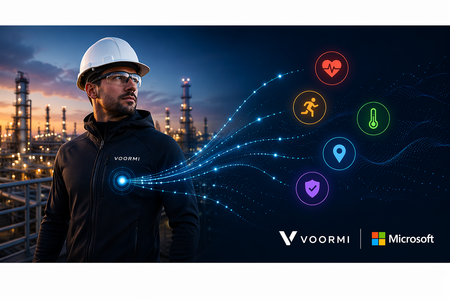
What if we could track human health & safety conditions as precisely as we do with machines, and take immediate actions to protect our greatest asset, our people? Many industrial organizations still lack visibility into real-time human conditions, even as worker safety and operational risk remain major investment priorities. One of the most important operational signals has largely remained outside the industrial data estate: the human telemetry. VOORMI and Microsoft have joined forces to fill this gap in understanding real human conditions. Through the Mij™ platform, VOORMI brings human telemetry into Azure IoT, enabling enterprises to integrate worker conditions such as heat stress and fatigue into the same operational architecture already used for machines and industrial systems. VOORMI, SWNR’s performance apparel brand, is among the first to bring this technology into garments designed for real industrial field conditions. This integration brings their proprietary wearable technology directly into high-impact worker safety and field operations scenarios. The partnership helps establish a new telemetry layer for industrial operations, allowing human, machine, and environmental signals to converge and drive safer operations, real-time awareness, and adaptive AI workflows. Bringing the Human Signal into Industrial AI with Azure Industrial organizations increasingly recognize that many safety, productivity, and operational challenges occur at the intersection of people and machines. Workers operate in high-heat environments, hazardous conditions, remote sites, and physically demanding field scenarios where situational awareness matters in real time. Historically, worker telemetry has remained fragmented across proprietary wearable platforms and disconnected safety systems, creating governance and operational challenges for enterprise IT and OT teams. Mij™ is designed differently, integrating directly into customer-controlled Azure environments through Azure IoT Operations running at the edge or Azure IoT Hub in the cloud rather than introducing another isolated platform. Running intelligence at the edge enables virtual safety agents and operational workflows to execute closer to the worker, supporting low-latency responses, local interaction with OT systems, and operational resilience even in disconnected or bandwidth-constrained environments. This gives enterprises flexibility to support real-time worker safety responses at the edge while also enabling long-term analytics, reporting, and operational intelligence through Microsoft Fabric. Telemetry from garment-integrated sensors flows through edge gateways into Azure services including Azure IoT Operations, Azure Data Explorer, Azure Managed Grafana, and Microsoft Fabric. The result is a unified operational environment where worker telemetry can live beside machine, site, and environmental data under the customer’s existing identity, security, governance, and analytics model. The vision is simple and transformative: make human telemetry a trusted, first-class industrial data source. Azure Digital Operations as the Intelligence Layer The reference architecture demonstrates how Azure IoT Operations can serve as a scalable operational intelligence layer for worker safety and connected operations scenarios across manufacturing, energy, and field environments. Mij™-enabled garments broadcast Bluetooth Low Energy (BLE) telemetry that can be processed locally through edge gateways and routed into Azure IoT Operations using MQTT and dataflows. Data is then operationalized through Azure Data Explorer and visualized using Azure Managed Grafana dashboards for field operations, worker safety, fleet health, gateway monitoring, and operational readiness scenarios. Telemetry can also be made available to Foundry Local-hosted GenAI agents to support real-time, context aware safety guidance, such as prompting workers operating in high-heat conditions to hydrate or seek cooler environments. While Mij™-enabled garments are the initial implementation, the edge device-to-cloud architecture creates a broader onboarding point for additional wearable, sensor, and field telemetry scenarios over time. This allows enterprises to bring more human and operational signals into a unified Azure-native operational environment. The architecture also supports flexible ingestion patterns for environments where dedicated edge gateways are not practical. Using Microsoft Entra External ID, Azure Container Apps, and Azure IoT Hub, telemetry can securely flow into Azure services without exposing operational infrastructure credentials to client devices. This pattern aligns with the broader Azure adaptive cloud approach: enabling customers to run distributed edge-native services on Arc-enabled Kubernetes infrastructure while maintaining centralized security, governance, and analytics capabilities across the enterprise. Depending on customer architecture preferences, telemetry can be processed through Azure IoT Operations at the edge or ingested directly through Azure IoT Hub for cloud-first analytics and downstream processing in services such as Microsoft Fabric. Edge processing also enables real-time sensor fusion across worker telemetry, ambient environmental conditions, machine parameters, and site-level operational signals, supporting faster safety interventions and more context-aware operational decisions. This gives enterprises flexibility in how they balance edge processing, operational responsiveness, governance and privacy requirements. Enabling the Next Generation of Industrial Workflows The long-term opportunity extends well beyond visualization dashboards. As worker telemetry becomes part of the operational fabric, enterprises can begin building more adaptive and intelligent workflows across worker safety, field readiness, incident response, compliance, environmental monitoring, and industrial AI systems. Human telemetry can provide critical real-time context that complements machine and environmental signals enabling more responsive operations and eventually more autonomous decision-support experiences. By bringing human telemetry into enterprise AI and analytics workflows, organizations can build more adaptive operational systems that improve worker safety, situational awareness, and real-time decision making at scale. This partnership reflects a broader industry shift: industrial transformation is no longer only about connected machines. It is about connected operations where people, equipment, environments, and AI systems participate in a shared operational intelligence layer. With SWNR’s Mij™platform and Azure IoT Operations, Microsoft and VOORMI are helping unlock that future. Learn more: Mij™ product page: https://swnrtechnologies.com/pages/mij Learn more about Azure IoT Operations: Documentation & Getting Started See what’s new with Azure IoT Hub: Preview Documentation To get started with a pilot, contact: pilots@swnrtechnologies.com765Views1like0Comments