In almost every conversation I have with industrial leaders, the same question comes up: how do we do more with fewer skilled workers, less predictable supply chains, and customers who expect products made just for them?
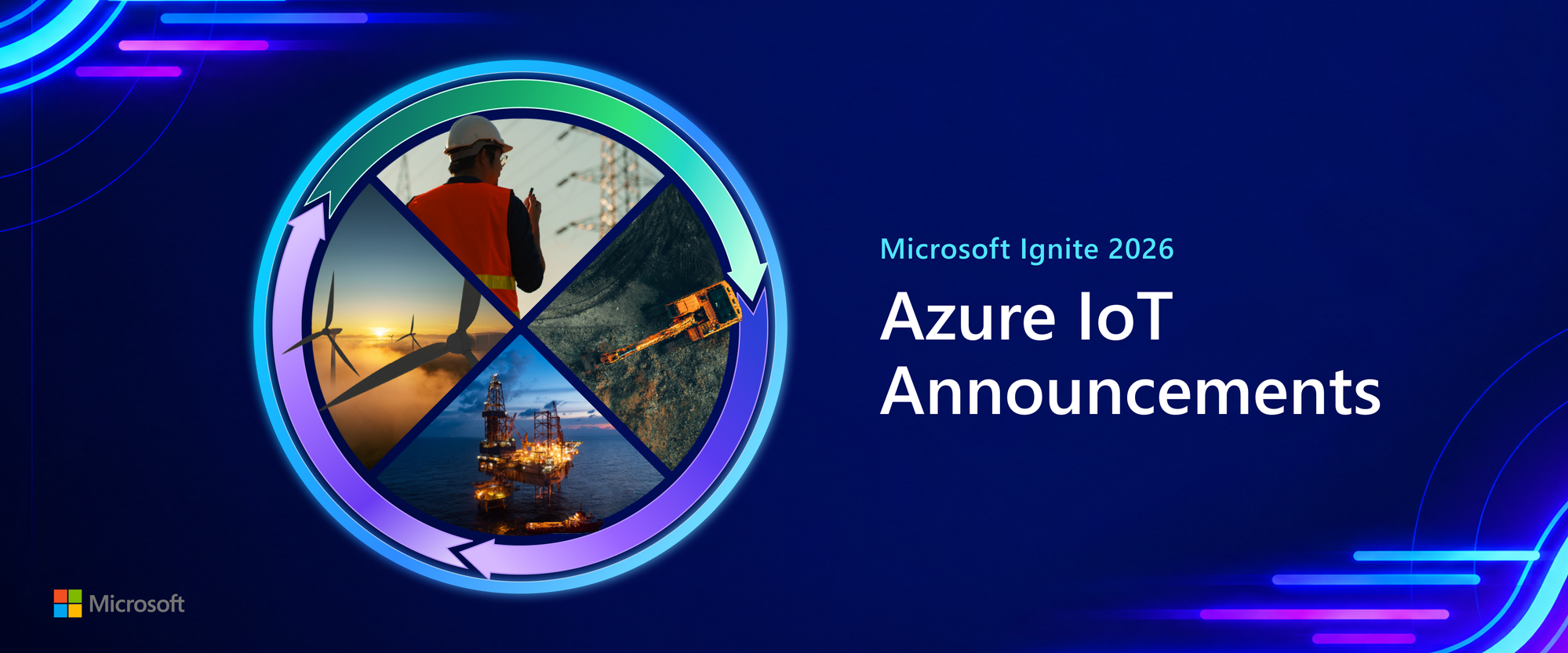
The answer isn't more sensors. Most organizations already have plenty. The problem is that the data and knowledge they need is scattered across people, processes, and systems that were never designed to work together. Closing that gap gets easier with a continuous learning loop, where organizational processes can perceive, reason, act, and manage at scale, with governance built into every step.
- Perceive: Gather data to create visibility from operational assets and make contextualized industrial data available at scale so teams can see what's really happening across their operations.
- Reason: Contextualized intelligence helps people understand why something is happening and what should happen next.
- Act: Put that intelligence to work through machines, systems and people, turning insight into results in the physical world.
- Manage: A consistent foundation to deploy, operate, and update assets, applications, and agent models across every site, from the edge to the cloud, so what works in one plant can scale to all of them.
Put simply, IoT gave us visibility to know what happened. Industrial AI tells us what should happen. Physical AI helps us make it happen. Together, these form a continuous learning loop. Every action creates new data, and each cycle makes operations smarter. Customers like Unilever and Ecopetrol are already using this loop to improve throughput, quality, and asset reliability. Today, I'm excited to share new Azure capabilities that help industrial organizations see more, reason faster, act with confidence, and scale with trust.
Azure as the Foundation for Physical AI
In industrial settings, intelligence is only useful if it can be trusted. That means knowing where data comes from, who can access it, how AI reaches its recommendations, and what guardrails are in place before anything acts in the physical world. When governance is designed in from the start, organizations can move faster without giving up safety, security, or control. Azure makes this easier.
Microsoft helps customers turn successful pilots into coordinated, governed, repeatable operations across equipment and sites. This requires a consistent, scalable foundation spanning edge to cloud that supports continuous learning and drives business outcomes. With Azure Arc, Azure management and Microsoft data services extend into industrial environments, providing a common foundation for governance, integration, and intelligence. This edge to cloud foundation is powered by Azure IoT Operations, Azure IoT Hub, Azure Device Registry, Microsoft Fabric, Foundry Local and Azure Local.
Unilever is a global consumer goods company whose products reach 3.7 billion consumers every day. Across Unilever, the company is using intelligent technology to build the next generation of manufacturing. Smarter, faster and more connected factories help Unilever deliver superior products, improve efficiency, and serve consumers better than ever before.
Working with Microsoft, NVIDIA and Accenture, the company has created an advanced digital twin that captures the behavior of the whole factory as a connected system. The solution leverages Azure IoT Operations to ingest and integrate sensor data, contextualize it, and feed that data to edge and cloud-based intelligence services for insight. By identifying bottlenecks, testing interventions and recommending actions before issues affect production, the platform can help unlock greater efficiency, faster changeovers and reduced waste. Just as importantly, it gives engineers and factory teams intelligence-powered insights to make faster, better-informed decisions.
Microsoft, along with its partners, are excited to help Unilever scale this blueprint across its manufacturing network with the goal of advancing intelligent operations.
What You’ll See at Ignite
Deploy, Manage and Secure at Scale
Scaling physical AI starts with a simpler path to deploying, managing, and securing connected device fleets. Azure Device Registry (ADR) introduces a unified onboarding flow anchored by an ADR namespace, guiding customers through setting up a new IoT solution or bringing existing IoT Hubs into ADR without recreating them. By linking multiple hubs to a shared ADR namespace, organizations gain a unified management surface across their fleet, with Hub-connected devices represented as Azure resources so they can apply the same auditing, Azure Policy, and governance practices they use across the rest of Azure.
This unified management experience also simplifies device security. ADR certificate management helps customers issue, renew, and revoke operational X.509 certificates for Hub-connected devices, strengthening device authentication without requiring them to build and operate their own certificate infrastructure. We are also enhancing ADR’s integration with Firmware Analysis so customers can view analysis results for their devices’ firmware directly in ADR, bringing visibility into firmware vulnerabilities alongside device inventory. Together, these capabilities help customers build on existing IoT investments while simplifying deployment and ongoing fleet operations under a consistent Azure governance model.
Turn Data into Actionable Intelligence
We are simplifying the ability to access and transform complex industrial data into shapes that are ready for AI consumption whether the devices and assets emitting that data sit within an industrial site or are globally distributed.
Distributed connected assets/devices:
Agent-ready data in a unified operational data store is essential for building intelligent connected operations. Azure IoT Hub brings large volumes of operational data from the physical world into Azure. We have now built a direct route from IoT Hub to Microsoft Fabric Eventstreams, making it easier to bring IoT data into a unified data foundation for agentic operations. As part of Fabric Real-Time Intelligence, Eventstreams ingests events from multiple sources, transforms and enriches them using no-code and low-code processing, and routes them to downstream destinations. This integration helps organizations turn real-world IoT signals into agent-ready insights and accelerate the path from ingestion to action within a managed environment.
On-site connected assets/devices:
Azure IoT Operations 2610 brings more plant data into one governed pipeline and lands it ready for analytics and intelligence. A new ODBC-based connector for SQL Server pulls data from the databases behind MES, quality, batch and historian systems, and the REST connector is now generally available with management actions. Data flow graphs now write directly to Microsoft Fabric OneLake, Azure Data Lake Storage, Azure Data Explorer and local storage in Delta or Parquet, so data processed at the edge lands in analytics-ready tables with no second pipeline. Developers can also describe a data flow graph in plain language in VS Code and deploy it. In preview, W3C Web of Things models attach meaning to telemetry before it leaves the site, and an on-cluster Edge Registry keeps asset definitions available at the edge.
Optimize Operations with Agents
Operations teams want intelligence that can answer "Why is line 3 down?" However, security teams won't give intelligence broad access to production. Azure IoT Operations and Azure IoT Hub both now preview a built-in Model Context Protocol (MCP) server and gateway that meets both needs. Every agent is authenticated, with Microsoft Entra ID for remote agents, and every tool call is authorized against policies the customer controls. Customers bring the agent they already use and decide exactly what it can do on live plant data. A new inference connector, also in preview, runs vision and anomaly detection models from Foundry Local or Azure Machine Learning as a step in the edge pipeline, so predictions feed straight into operational workflows. Agents recommend and act through governed interfaces, while partner control systems run the real-time loop and own safety.
Bring Physical AI to More Devices and Environments
Azure IoT Operations Essentials is a new, lower-cost SKU for organizations that need a reliable edge data layer at hundreds or thousands of small sites, such as stores, substations, wind turbines and remote equipment. Essentials delivers the core data plane (MQTT broker, Akri connectors, data flows) on single-node clusters. The full offering, now Azure IoT Operations Standard, remains the choice for OPC UA and multi-node industrial deployments. Azure IoT Operations also supports ARM64 with full parity from installation through lifecycle operations. Together, these lower both the cost and the hardware bar for line-level and smaller footprint deployments.
With Azure Local, organizations can centrally provision, configure, monitor, and update infrastructure across supported hardware architectures, providing a consistent management experience across distributed environments. By bringing Azure-managed infrastructure to smaller, AI-capable devices, organizations can more easily deploy and scale physical AI applications across factories, retail locations, robotics, and other environments where space, power, and cost are important considerations. Today, we're announcing several new capabilities for Azure Local small form factor deployments, including support for Arm64-based hardware, starting with NVIDIA Jetson AGX Thor, the ability to run vision-language-action (VLA) models with Foundry Local on Azure Local, and new features to simplify GPU management, networking, security, and device operations. These advancements bring together the infrastructure and AI capabilities needed to build and operate intelligent physical systems at the edge.
Innovating with the Ecosystem
Physical AI requires more than technology. It takes an ecosystem that brings together industrial equipment, operational expertise, AI innovation, and the ability to deploy at scale in real-world environments. Across the Microsoft ecosystem, partners are already building on Azure tobring these capabilities to life. Helin Data is bringing edge intelligence to energy and industrial operations, combining local intelligence processing with cloud-scale device management and analytics. Industrial technology partners like Siemens, Litmus, and Rockwell Automation are connecting existing automation environments to Azure through their industrial platforms. Forescout is bringing OT security visibility through its Akri Connector. Sight Machine is collaborating with Microsoft on information models that enrich and share operational context, making industrial data more meaningful for intelligent applications. NVIDIA is advancing industrial visualization and simulation with Omniverse, alongside edge intelligence on Jetson Thor devices.
Partners are also turning these capabilities into repeatable customer solutions. Mesh Systems is combining connectivity, cloud platforms, and AI-enabled applications, while transformation partners like TCS are developing industry-specific accelerators to help customers modernize operations and adopt intelligence at their own pace. Through our engineering partner program, we are working directly with partners to design, validate, and scale solutions built around real customer needs.
The next step starts with your operations
Physical AI is opening new possibilities for how industries operate, and the opportunity starts with the data, equipment, and expertise organizations already have. With Azure and our growing partner ecosystem, customers can begin connecting their operations, applying intelligence to real business challenges, and building toward more intelligent, adaptive operations.
Explore how Azure IoT and our partner ecosystem can help you get started:
- Microsoft Azure Physical AI Solution Resource Guide
- Microsoft Azure Physical AI Partner Resource Guide

 Microsoft