healthcare shorts
20 Topics
Clinical precision starts with more complete documentation
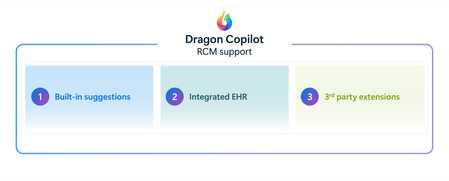
This blog is authored by Josh Waldo, Product Manager Every patient has a story, and that story deserves to be accurately reflected in the clinical documentation. Clinicians work hard to assess, diagnose, and care for patients, often while balancing complex cases, competing priorities, and limited time. While the diagnosis itself may be clear, the documentation does not always capture every detail that helps tell the full patient story. Important clinical information about severity, complexity, acuity, or related conditions may be discussed during the encounter but not fully reflected in the medical record. These details matter. Clinical documentation serves as the foundation for communication across care teams, supports quality reporting and care coordination, and provides an accurate record of the care delivered. Dragon Copilot helps clinicians create more complete documentation by identifying potential opportunities where additional specificity may be appropriate based on information already present within the encounter. This capability helps ensure that the documentation more fully reflects the clinician's assessment and the patient's clinical story. Rather than asking clinicians to remember every documentation requirement or revisit records after the encounter, Dragon Copilot can surface contextual suggestions that highlight where additional detail may strengthen the completeness of the note. For example, when documenting certain conditions, clinicians may receive suggestions that help capture additional clinically relevant details that were discussed during the visit and support a more complete description of the patient's condition. Importantly, these suggestions do not change a diagnosis, influence clinical decision-making, or replace clinician judgment. The clinician remains responsible for every diagnosis and every documentation decision. Dragon Copilot simply helps ensure that the documentation accurately reflects what the clinician already knows and has determined. Supporting better documentation without disrupting workflow Documentation quality should not require additional chart reviews, extensive research, or time-consuming follow-up work. Dragon Copilot is designed to fit naturally into existing clinical workflows, providing documentation support within the course of the encounter. By surfacing opportunities for greater specificity at the point of documentation, clinicians can address potential gaps in the moment rather than correcting them later. This may help reduce the need for downstream clarification requests from CDI and coding teams, saving time while improving the completeness of the medical record. Most importantly, clinicians remain in control. Suggestions are simply that suggestions. The clinician decides what is relevant, appropriate, and ultimately included in the note. Why more complete documentation matters Clinical documentation is used by many people beyond the author of the note. Physicians, nurses, specialists, care coordinators, coding professionals, quality teams, and healthcare organizations all rely on documentation to understand a patient's condition and the care that was provided. When documentation more fully reflects the clinician's assessment, it can support clearer communication across teams and a more consistent understanding of the patient's clinical status throughout the care journey. More complete documentation can also help organizations better reflect patient complexity, support quality initiatives, and reduce the administrative effort associated with documentation clarification and follow-up. For clinicians, that means less time spent revisiting notes and more confidence that the patient's story has been accurately captured in the record. AI that supports clinical expertise Dragon Copilot is built on a simple principle: AI should support clinical expertise, not replace it. Diagnosis specificity suggestions is built on a foundation of proven clinical AI innovation, informed by more than a decade of real-world healthcare experience. Drawing on years of clinician interactions and documentation insights, the feature is designed to surface meaningful opportunities for greater diagnostic specificity while fitting naturally into existing workflows. The technology does not diagnose patients, recommend treatments, or override clinical judgment. Instead, it acts as an intelligent assistant that helps clinicians identify opportunities to enhance documentation based on information already available during the encounter. By reducing some of the cognitive burden associated with documentation, Dragon Copilot allows clinicians to focus their attention where it matters most: caring for patients. Helping the right patient story reach the medical record Healthcare organizations continue to look for ways to improve documentation quality while reducing administrative burden. Achieving both goals requires technology that works alongside clinicians, helping them document care more efficiently without creating additional work. By helping clinicians capture greater detail within their existing workflows, Dragon Copilot supports more complete records, more accurate documentation, and a smoother documentation experience. Because better documentation is not about changing the diagnosis. It is about helping ensure that the right patient story is reflected in the medical record with greater clarity, completeness, and confidence. Learn more about Dragon Copilot.Healthcare Shorts: MedPolicy AI Assistant
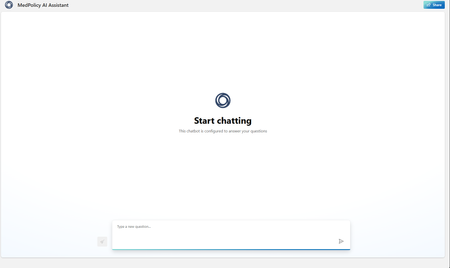
Large healthcare payers have complex contact centers where agents need detailed information about claims, cases, and medical policies. An AI assistant knowledgeable about medical policies can help these agents assist providers and members more efficiently. The main challenges include high turnover, extensive training needs, and dispersed information, leading to poor customer service and agent frustration. Implementing a medical policy AI chatbot can improve response times, first-time call resolution, member satisfaction, and reduce call center expenses. The solution involves using Azure AI Studio, Azure OpenAI models, Azure Blob Storage, APIs, Azure API Management, and Azure App Services.🦸🏾♀️Analyze your communications: Superhero to Organization Leader Analysis Prompt evolution
In this snackable you will learn how you can analyze your emails, meetings, and chats to understand who your superhero, anime character, and leadership style is. This video goes through the evolution of prompting on a fun topic to one that is focused on professional growth. To see all HLS Copilot Snacks video click here. 2.8KViews6likes3Comments
Healthcare Shorts: Digital Huddle Boards
Provider customers all do huddles, these huddles come in many different forms, they could be at the unit, manager, and facility level. These huddles can be about patients, safety, throughput, communication, notification, announcements, and praises. We have found many enterprise customers have not standardized on these "boards" and many of them are manual and static, some have moved towards a digital board but even when digital these boards and not connected or feed the data up throughout the system.3.4KViews0likes0CommentsHealthcare Short: SDOH Predictive Analytics for Personalized Patient or Member Outreach
A solution like this can greatly impact the wellbeing of people with these conditions helping them get the services they need that are approved and appropriate for their care. This creates better patient outcomes and positive patient experiences with their provider.2.5KViews0likes0CommentsHealthcare Shorts: Home Adaptations
When someone has a tragic accident or gets to an age where they cannot live without assistance a medical device like a wheelchair is not the only thing they need to get along with life they need physical changes to their home. We refer to those at Home Adaptations. Historically, field workers supporting cases for Medicaid members of their health plan used manual processes to track Home Modifications (ramp needed, pets present, support bars needed in the bathroom, etc.).Healthcare Shorts: Pneumonia Prediction Model
Pneumonia is an infection that affects one or both lungs. It causes the air sacs, or alveoli, of the lungs to fill up with fluid or pus. Bacteria, viruses, or fungi may cause pneumonia. signs vary from mild to severe, depending on the type of germ, age, and overall health. Mild signs and symptoms often are similar to those of a cold or flu, but they last longer which includes chest pain, cough, fatigue, nausea, vomiting or diarrhea. A traditional approach to diagnosing pneumonia includes a review of the patient’s medical history, a physical exam, and ordering diagnostic tests such as a chest X-ray. This information can help determine the type of pneumonia.1.7KViews0likes0CommentsHealthcare Short: Outreach Campaign for Diabetes Propensity
Early detection of any condition, chronic or not, gives us the ability to take necessary interventions. Once the diagnosis of diabetes is made, diabetes-related tissue damage occurs in nearly half of the patients. Even after diagnosis, the likelihood of leading to vascular complications is quite high. Evidence suggests that early detection of diabetes by appropriate screening methods, especially in subjects with high risk for diabetes will help to prevent or delay vascular complications and thus reduce the clinical, social, and economic burden of the disease. There is evidence to show that intervention at the prediabetic stage is superior to the diagnosis of diabetes.1.3KViews0likes0CommentsHealthcare Short: Alzheimer's Predictive Model and Intervention
Alzheimer’s disease is one of the top 10 leading causes of death in the United States. The 5th leading cause of death among adults aged 65 years or older. In 2020, an estimated 5.8 million Americans aged 65 years or older had Alzheimer’s disease. In 2010, the costs of treating Alzheimer’s disease were projected to fall between $159 and $215 billion. The science of risk reduction is quickly evolving, and major breakthroughs are within reach. There is growing scientific evidence that healthy behaviors, which have been shown to prevent cancer, diabetes, and heart disease, may also reduce the risk for subjective cognitive decline.1.3KViews0likes0CommentsHealthcare Short: Expert Finder
It can be hard to find the right person at the right time. Many search/directory tools exist but require users to know how to use multiple applications, and when to switch between them. This results in a disrupted workflow, barriers that make simple tasks take more time, and a poor user experience. A universal people-finder solution that helps to reduce wasted time and cost while providing an improved experience for providers, staff, agents, volunteers, and others.1.3KViews2likes0Comments