github
17 TopicsAccelerate your AI or agent build to sell on Marketplace with Quick-Start Development Toolkit
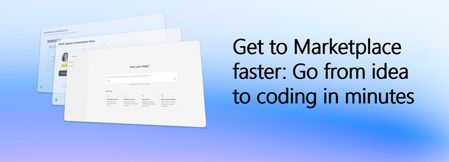
Want to skip right to coding in minutes? Start with the interactive wizard in App Advisor Building AI products quickly is becoming table stakes. Building them in a way that supports scalability, repeatability, and a path to commercialization is where software companies create advantage. The challenge now is reducing the time between identifying an opportunity and getting developers working inside a proven structure that supports real deployment outcomes. That’s where the AI, agentic, and Copilot branch of the Quick-Start Development Toolkit helps. Embedded directly within App Advisor, Quick-Start Development Toolkit helps software companies move from concept to implementation faster using guided development patterns, trusted architectures, deployable reference code, and practical resources designed to reduce friction across the development process. Build AI & agentic products faster without starting from scratch Development teams often know the customer scenario they want to solve. What slows momentum is deciding where to begin, selecting architecture patterns, and aligning implementation decisions across teams. The Quick-Start Development Toolkit helps remove that uncertainty. By answering a few focused questions about what you want to build, who it serves, and the products you’re building with, you’re matched with a development pattern designed to accelerate execution. Each development pattern includes: Self-serve, click-to-deploy reference code aligned to your scenario, Sample solution architecture to help visualize products and reduce guesswork, and Practical how-to resources and implementation guidance to overcome friction points, Everything is structured to support faster decision making and help teams move confidently into development. Accelerate development with purpose-built AI accelerators The AI and agent branch of Quick-Start Development Toolkit includes development accelerators designed around high-value scenarios, so your team can spend less time assembling foundations and more time building differentiated experiences. Each of these accelerators is built and fully maintained by Microsoft experts, so you can be confident your code template isn’t stale. Our most popular accelerators include: Multi-Agent Custom Automation Engine Accelerator: Delegate complex, repetitive tasks to AI agents that act on your behalf—executing work efficiently, reducing manual effort, and ensuring results align with your organization's standards. Conversation Knowledge Mining Accelerator: Improve contact center performance with AI-powered conversation intelligence—analyzing audio and text data on a large scale to show insights, improve service, and drive smarter decisions. Accelerate agentic applications for Unified Data Foundations (with Microsoft Fabric): Accelerate decision making at scale with secure, agentic AI built on a unified data foundation with two use cases for sales performance and customer insights. Each pattern includes common use cases, related resources, and pathways to adjacent scenarios so teams can continue progressing without losing momentum. The goal is to help your team move from experimentation to a product that can be packaged, deployed, and prepared for customers. You can see more of our accelerators here Coming this week: The Microsoft IQ solution accelerator leverages a shared intelligence layer to unify data, knowledge, and workflows, enabling AI-powered insights and coordinated actions for measurable business outcomes. Build with Microsoft Marketplace outcomes in mind Development choices shape commercial outcomes. Starting with trusted architecture and structured implementation guidance can help reduce redesign cycles later when preparing to package, publish, and scale. Quick-Start Development Toolkit helps software companies: Shorten time from idea to deployable AI product, Improve alignment across implementation decisions, Reduce development overhead through reusable foundations, and Create repeatable pathways toward publishing and selling. When development starts with clarity, commercialization becomes easier. Keep moving forward with App Advisor Quick-Start Development Toolkit is embedded within App Advisor because building is only one stage of the journey. App Advisor helps connect decisions across design, development, publishing, and growth so teams can continue moving forward with less context switching and more confidence. As your solution evolves, App Advisor provides curated, step-by-step guidance to help you prepare for Marketplace readiness and make the next decision faster. Ready to start? Explore Quick-Start Development Toolkit Start where you need help with App Advisor270Views4likes1CommentTurning AI Insights into Marketplace-Ready Solutions
Want to accelerate your AI journey on Microsoft Marketplace? This blog distills key takeaways from recent Microsoft and partner webinars, giving you expert guidance on building production-ready AI apps and agents. Learn best practices for performance, deployment, and scaling—so your solutions reach more customers, faster. Don’t miss these insider insights—read the full article today: Building production‑ready AI apps and agents for Microsoft MarketplaceBuilding production‑ready AI apps and agents for Microsoft Marketplace
What developers can learn from Microsoft and partner AI webinars As software companies race to build AI‑powered applications and agents, success in Microsoft Marketplace requires more than a compelling idea. Customers expect solutions that are secure, scalable, governed, and built on trusted Azure services. A recent set of Microsoft and partner webinars offer practical guidance for developers who are building AI apps or agent‑based solutions with the intent to commercialize them through Microsoft Marketplace. Together, these sessions highlight how Microsoft is evolving the AI development lifecycle—from agentic DevOps and secure agent architectures to real‑world customer examples—helping software developers move from experimentation to enterprise‑ready solutions. From prototype to product: Agentic DevOps on Azure One of the biggest challenges Marketplace publishers face is turning an AI prototype into a reliable, supportable product. The “Transform Software Development with Agentic DevOps” webinar shows how Microsoft is embedding AI agents across the entire software development lifecycle using tools like GitHub Copilot and Azure services. Rather than focusing only on code generation, agentic DevOps introduces intelligent agents that assist with planning, implementation, testing, and operational insights. For Marketplace developers, this approach directly supports: Faster iteration while maintaining quality Improved code consistency and security posture Reduced technical debt as applications evolve These practices align closely with what enterprise buyers expect when evaluating Marketplace solutions: predictable delivery, maintainability, and long‑term support readiness. Building AI apps that scale on Azure: Microsoft and NVIDIA, better together Performance and scalability are critical for AI solutions sold through Marketplace. The “NVIDIA and Generative AI: Better Together – Building Your AI Apps” webinar focuses on how developers can build and deploy generative AI applications on Azure using optimized infrastructure and models such as PHI‑3, combined with NVIDIA acceleration. This content is especially relevant for Marketplace publishers because it addresses common customer concerns: Running AI models efficiently at scale Optimizing performance without custom infrastructure Deploying AI workloads using Azure‑native services By leveraging Azure AI services and NVIDIA‑optimized components, developers can deliver solutions that meet enterprise performance expectations while remaining aligned with Azure consumption models commonly used in Marketplace offers. Real‑world agentic AI in action: Lessons from Pantone The “Color Meets Code: Pantone’s Agentic AI Journey on Azure” webinar provides a concrete example of how a software company built an agentic AI experience using Azure services such as Azure AI Search, Microsoft Foundry, and Azure Cosmos DB. Pantone’s journey illustrates several principles that translate directly to Marketplace‑ready solutions: Using agentic architecture to deliver domain‑specific expertise Grounding AI responses with enterprise data using retrieval‑augmented generation Designing AI experiences that scale globally while maintaining consistency For Marketplace developers, this case study demonstrates how agent‑based applications can deliver differentiated value when built on Azure’s AI and data platforms—an important consideration when positioning an offer to enterprise buyers. Designing secure and governed AI agents on Azure Enterprise customers evaluating Marketplace solutions expect strong security and governance. The “Powerful and Secure Agents on Azure” webinar highlights how Microsoft is approaching secure AI agent design, emphasizing identity, access control, and operational oversight. This guidance is particularly relevant for Marketplace publishers building autonomous or semi‑autonomous agents, as it reinforces the importance of: Running agents within Azure’s security and compliance frameworks Applying governance to agent behavior and access Designing AI solutions that can operate safely in enterprise environments These considerations are essential for earning customer trust and supporting broader adoption through Microsoft Marketplace. What this means for Microsoft Marketplace publishing For software companies building AI apps and agents, these sessions reinforce a clear takeaway: enterprise-ready AI starts with how you build—and succeeds with how you publish. If you plan to distribute your solution through Microsoft Marketplace, now is the time to: Design for enterprise trust from day one Build agents on Azure using secure, governed architectures that meet customer expectations for security, compliance, and operational control. Move from prototype to production readiness Apply agentic DevOps practices to improve code quality, reliability, and maintainability—critical factors for customer adoption and long-term success in Marketplace. Differentiate with real-world AI value Ground your AI experiences in domain expertise and enterprise data to deliver outcomes customers can clearly understand, evaluate, and justify purchasing. Align with Azure-native services Solutions built on Azure AI, data, and infrastructure services are easier for customers to deploy, manage, and scale—strengthening your Marketplace positioning. By applying these patterns and best practices, you’re not just building innovative AI apps—you’re creating commercially viable, enterprise-grade solutions ready to be discovered, transacted, and scaled through Microsoft Marketplace. Explore the on-demand sessions to start turning your AI innovation into a Marketplace-ready offering. Transform Software Development with Agentic DevOps NVIDIA and Generative AI: Better Together – Building Your AI Apps Color Meets Code: Pantone’s Agentic AI Journey on Azure Powerful and Secure Agents on Azure276Views0likes0CommentsExplore Curated Marketplace Resources
Good morning, afternoon, evening community! I wanted to introduce myself; I am Stephanie, a pug and plant lover, and a leader in Marketplace FastTrack at Microsoft. I am here to help you streamline your Marketplace journey through curated self-serve resources to help you go further, faster. Reach out if you have any questions, feedback, or need help to publish an offer or win an imminent deal. 📘 Looking for a guide on publishing and transacting on the Azure Marketplace? Explore the Marketplace Playbook. ⚙️ Need to simplify SaaS offer creation? Use the open-source code on Git Hub for SaaS Accelerator. 🎥 Want to learn how flexible billing can unlock new deal structures? Learn more about Flexible Billing. Use Mastering the Marketplace videos and labs to upskill end-to-end. 💸 Bringing an off-Marketplace renewal or renewing a Marketplace offer? Don’t forget the agency fee discount. 🤖 Have you tried the App Advisor or Partner Center AI Assistant? We’d love your feedback!
Discover what's new with GPT-4.1 on Azure OpenAI
The latest evolution in generative AI is here—GPT-4.1, along with 4.1-mini and 4.1-nano, is now available on Microsoft Azure OpenAI Service and GitHub. With major upgrades in coding, instruction following, and long-context processing, GPT-4.1 is designed to help developers build smarter, faster, and more customized AI solutions. Plus, fine-tuning support is rolling out soon, making it even easier to tailor the models to your business needs. 👉 Learn more and explore the new features, performance benchmarks, and how to get started with GPT-4.1 today. Announcing the GPT-4.1 model series for Azure AI Foundry and GitHub developersA new era of AI reasoning has arrived
We’re excited to share that the latest o-series models — o3 and o4-mini — are now available in the Azure OpenAI Service via Azure AI Foundry and GitHub! These new models unlock powerful capabilities in reasoning, safety, and multimodal AI — including: Enhanced reasoning & safety with deliberative alignment Vision support to analyze and understand visual data Multiple API options with reasoning summaries Parallel tool calling for advanced agentic solutions New audio models for transcriptions and customizable text-to-speech Whether you're building intelligent apps or exploring AI-driven innovation, these models are built to take your ideas further, faster. Learn more to get started!136Views1like0CommentsExciting update: New Advanced Package benefit for ISV Success participants!
We are delighted to share yet another exciting benefit for our ISV Success program participants. In our ongoing commitment to support ISVs, we are introducing a new Advanced Package Benefit that could significantly enhance your development projects. NEW – Advanced Package Benefit - $25,000 USD ISV Success participants with an Azure, Security, or Industry AI certified software designation may now be eligible for additional Azure Sponsorship, providing another $25,000 USD, totaling an impressive $50,000 USD when combined with the Expanded and Core benefits packages. This substantial sponsorship aims to help you maximize the potential of Azure and drive innovation in your projects. Determine your eligibility To find out if you qualify for this advanced benefit, please reach out to your Build and Publish Engagement Manager. They will assist you in understanding the eligibility criteria and guide you through the process of applying for this additional Azure Sponsorship. At ISV Success, we are dedicated to offering valuable resources and support to help you achieve your development goals. Don't miss out on this exceptional opportunity to enhance your productivity and bring your projects to life with the power of Azure. To learn more about the ISV Success offering, go to https://www.microsoft.com/en-us/isv/isv-success692Views1like0CommentsStrengthening the software development company supply chain with DevSecOps practices
As cyber threats grow in complexity and frequency, embedding security into the product design lifecycle is no longer optional—it’s essential. In the Microsoft Security for ISV series, our fourth session, “Strengthen the software development company supply chain with DevSecOps practices,” provides in‐depth insights into how software development companies can build robust, secure, and resilient applications while accelerating development processes. By integrating security into every phase—from design to production—software development companies can protect customer data, ensure compliance, and build lasting trust. Understanding the Evolving Threat Landscape According to GitGuardian’s 2024 report, public GitHub repositories saw an alarming surge in hardcoded secrets — with nearly 24 million new secrets (23,770,171) added last year. This represents a 25% increase compared to the previous year and highlights a troubling trend: long-lived plaintext credentials such as API keys, passwords, and authentication tokens continue to proliferate in open-source projects. Despite GitHub’s efforts to filter out known credential patterns during the push process, the rise in generic secrets—which can include common usernames, unstructured passwords, or basic auth strings—remains largely unmitigated, providing attackers of any skill level with an easy entry point and the ability to move laterally within systems. Key Security Strategies for Software Development Companies Embedding Security Throughout the Software Development Lifecycle The evolution of DevSecOps is transforming how organizations approach application security. Michael Friedrich, Cloud Solution Architect at Microsoft, underscored two primary challenges: Growing code bases often come with increased vulnerabilities Developers need intuitive security tooling that doesn’t disrupt productivity DevSecOps is all about “shifting security left” by integrating security practices throughout development—as code is written, built, and deployed—instead of addressing vulnerabilities only after production. This approach not only saves time and resources but also reduces the likelihood of exploiting application-level vulnerabilities. Key strategies include: Early threat modelling to identify and mitigate risks before deployment Collaborative workflows that bring together developers and security teams Continuous scanning methods (static analysis, secret scanning, dependency review) to catch issues early For a deeper dive, explore Microsoft’s Secure Development Lifecycle guide (https://www.microsoft.com/en-us/securityengineering/sdl). Integrating GitHub Advanced Security and Microsoft Defender for Cloud GitHub and Microsoft work in unison for a unified secure development experience. GitHub Advanced Security is embedded directly into the developer workflow to detect vulnerabilities through advanced code scanning (powered by CodeQL), secret scanning, and dependency checks. The integration means that security alerts are provided as developers code—not as an afterthought—which speeds up remediation and reduces production issues. In parallel, Microsoft Defender for Cloud (formerly Defender CSPM) offers a cloud security posture management solution that: Pinpoints and prioritizes risks with a context-aware engine Provides actionable, recommendation-driven insights for DevOps environments Delivers continuous scanning across multi-cloud environments and CI/CD pipelines Learn more about Microsoft Defender for Cloud at https://docs.microsoft.com/en-us/azure/defender-for-cloud and enhance your cloud security posture. The Secure Future Initiative: Secure by Design, Default, and Operations Microsoft’s “Secure Future Initiative” (SFI) is comprehensive framework ensures that security is embedded into every stage of product development and operations through three core principles: Secure by Design Incorporate security during the planning and architecture phases Protect identities and secrets from the start with strong key rotation, hardware security modules, and no hard-coded secrets Secure by Default Enforce robust security configurations so that protection is on by default (for example, MFA enforcement and least privilege access) Secure Operations Establish continuous monitoring protocols, rapid incident response, and centralized security logs Use tools like Microsoft Sentinel for real-time threat analytics These foundational elements ensure that as software development companies develop and scale innovative solutions—including those leveraging artificial intelligence—security remains a steadfast pillar. For additional guidance on Secure Future Initiative, visit https://www.microsoft.com/en-us/trust-center/security/secure-future-initiative Strengthening the Software Development Company Supply Chain with Modern DevSecOps Practices Modern software supply chains often include third-party dependencies, open-source libraries, and automated pipelines. Traditional security measures can’t keep pace with today’s integrated development models. Therefore, it’s critical to: Employ code signing and package verification for third-party components Adopt continuous security scanning using solutions like GitHub’s secret scanning with push protection Integrate Microsoft Defender for DevOps for comprehensive visibility from code to cloud For more on secure supply chain strategies, check out the Secure Supply Chain Consumption Framework (https://www.microsoft.com/en-us/securityengineering/opensource) Real-World Insights from BuildKite and the Role of DevSecOps Guest speaker Ken Thompson, VP of Product at BuildKite, shared practical examples from the front lines of secure continuous integration and delivery. BuildKite’s hybrid model, combining a software-as-a-service control plane with open-source on-premises agents, ensures that sensitive code and secrets never leave a customer’s infrastructure. This design enhances security while enabling: Rapid build times with hyper-parallelized pipelines Integrated security scanning within every build, thereby “shifting left” security Proven practices like the SLSA framework for artifact provenance, which verifies that code and pipelines are built in a trusted manner Ken highlighted examples where Uber have reduced build times from an hour to mere minutes while ensuring every pipeline pass incorporates critical vulnerability scanning. This demonstrates that robust security practices and efficiency can go hand in hand. Taking Action: Strengthening Your Security Posture Today Security is an ongoing journey. By adopting proactive security strategies, embracing DevSecOps practices, and integrating industry-leading tools, software development companies can build resilient, trusted applications that stand up to today’s cyber threats. Action Steps for Software Development Companies: Embed security into every phase of your SDLC Strengthen identity and access with strong MFA, conditional access, and the Zero Trust model Secure secrets using Azure Key Vault and GitHub Advanced Security for automated secret scanning Enhance supply chain security through continuous scanning and vulnerability remediation Monitor your cloud environments with Microsoft Defender for Cloud and Microsoft Sentinel for real-time insights Additional Resources: Microsoft Secure Development Lifecycle – https://www.microsoft.com/en-us/securityengineering/sdl Secure Supply Chain Consumption Framework – https://www.microsoft.com/en-us/securityengineering/opensource Cloud Adoption Framework – https://aka.ms/caf Zero Trust Guidance Center – https://aka.ms/Zero-Trust Start with Security – https://aka.ms/trysecurity SaaS Workload Guidance – https://learn.microsoft.com/en-us/azure/well-architected/saas/ Join ISV Success – https://www.microsoft.com/isv555Views1like0Comments
Building your first AI Agent with Azure AI Agent Service
AI agents are transforming the way developers create intelligent AI applications, and Azure AI Agent Service is leading the charge. At a recent hands-on workshop at the Azure AI Foundry Partner Council, we explored how to build an agent application using Azure AI Agent Service, leveraging its powerful tools and SDKs to simplify AI development. Whether you're an experienced developer or just starting, this blog provides key insights into streamlining AI agent creation and integrating with enterprise systems. In this blog post, we’ll summarize the key topics covered during the workshop and highlight how Azure AI Agent Service empowers developers to create scalable, intelligent agents with minimal complexity. Introduction to Azure AI Agent Service The workshop kicked off with an overview of Azure AI Agent Service, explaining how it enables developers to create goal-driven AI agents with advanced reasoning and execution capabilities. Unlike simple chatbots, these agents can integrate with external data sources, automate workflows, and execute complex business processes autonomously. Creating Your First AI Agent Developers were guided through the step-by-step process of building an AI agent using Python and the Azure AI Agent Service SDK. Key concepts covered included: Setting up the development environment Defining tools for the agent Managing conversations with threads Using system prompts to guide AI behavior Function Calling and SQL Queries One of the most exciting demonstrations involved function calling, where AI agents interact with external systems. The session showcased how agents can: Generate and execute SQL queries Retrieve, analyze, and manipulate real-time data Seamlessly integrate with databases for enterprise applications Code Interpreter for Data Visualization To enhance user interactions, the workshop highlighted the code interpreter tool, allowing AI agents to: Write and execute Python code Generate visual representations like pie charts Process CSV files for advanced data analysis Retrieval Augmented Generation (RAG) Developers were introduced to Retrieval Augmented Generation (RAG), a technique that improves AI responses by leveraging external documents. The session covered: Setting up a simple vector store Using file search to provide context-aware responses This technique is valuable for applications where AI agents need to reference structured data to provide accurate, informed answers. Bing Grounding for Competitive Insights A standout feature discussed was Bing Search grounding, which enables AI agents to: Retrieve up-to-date web data Perform competitive product analysis Deliver real-time business insights By integrating Bing Search, AI agents can stay informed with the latest industry trends, making them highly relevant in business environments. About the Azure AI Foundry Partner Council: The Azure AI Foundry Partner Council is a dynamic and collaborative initiative designed to foster innovation and drive advancements in artificial intelligence. This council brings together a diverse group of industry leaders, technology experts, and strategic partners who are committed to leveraging the power of Azure AI to solve complex business challenges. Through the Azure AI Foundry Partner Council, members are empowered to push the boundaries of what is possible with AI, ultimately driving progress and delivering value to their organizations and customers. Call to Action and Resources Leverage this GitHub Repo with Presenter and Proctor Resources Azure AI Agent Service Documentation Fundamentals of AI Agents on Azure Introducing Azure AI Agent Service Blog Post Python Library Workshop Repository Export and Import Agents using Solutions How to use Grounding with Bing Search in Azure AI Agent Service Sample Code for Custom Functions If you’re looking to take your AI development skills to the next level, don’t miss this opportunity. Watch the recording today and start building intelligent AI agents with Azure AI Agent Service!627Views0likes0CommentsNew GitHub Copilot benefit for ISV Success Expanded Package
We are thrilled to announce a new benefit for some of our ISV Success participants. As part of our continuous commitment to supporting and empowering ISVs, we are introducing a NEW Expanded Package benefit that can take your development projects to the next level. NEW – Expanded Package benefit ISV Success Expanded Package participants are now potentially eligible for up to $5,000 in Azure credits, exclusively for GitHub Copilot. This incredible opportunity is designed to help you leverage the power of GitHub Copilot, an innovative AI tool that assists developers in writing code faster, with greater efficiency and confidence. How to determine your eligibility To find out if you qualify for this enhanced benefit, please reach out to your Engagement Manager. (To find out who is your assigned ISV Success Engagement Manager, type “who is my engagement manager” into the AI-powered assistant on ISV Hub: https://www.microsoft.com/isv/. If you are in Marketplace Rewards, you can email rewards@microsoft.com a member of the Market Rewards team will respond within 1-2 business days.) They will assist you in understanding if you are eligible for criteria and guide you through the process of applying for Expanded Package and these additional GitHub Copilot credits. At ISV Success, we are dedicated to offering valuable resources and support to help you achieve your development goals. Don't miss out on this exceptional opportunity to enhance your productivity and bring your projects to life with the power of GitHub Copilot. Stay tuned for more updates and exciting announcements from ISV Success! Additional Resources: Join ISV Success Review all ISV Success benefits Learn more about expanded benefits1KViews0likes0Comments