enterprise integration
127 TopicsAzure API Management Your Auth Gateway For MCP Servers
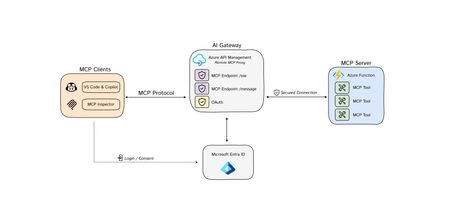
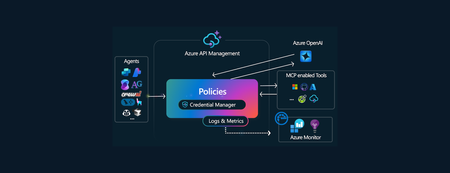
The Model Context Protocol (MCP) is quickly becoming the standard for integrating Tools 🛠️ with Agents 🤖 and Azure API Management is at the fore-front, ready to support this open-source protocol 🚀. You may have already encountered discussions about MCP, so let's clarify some key concepts: Model Context Protocol (MCP) is a standardized way, (a protocol), for AI models to interact with external tools, (and either read data or perform actions) and to enrich context for ANY language models. AI Agents/Assistants are autonomous LLM-powered applications with the ability to use tools to connect to external services required to accomplish tasks on behalf of users. Tools are components made available to Agents allowing them to interact with external systems, perform computation, and take actions to achieve specific goals. Azure API Management: As a platform-as-a-service, API Management supports the complete API lifecycle, enabling organizations to create, publish, secure, and analyze APIs with built-in governance, security, analytics, and scalability. New Cool Kid in Town - MCP AI Agents are becoming widely adopted due to enhanced Large Language Model (LLM) capabilities. However, even the most advanced models face limitations due to their isolation from external data. Each new data source requires custom implementations to extract, prepare, and make data accessible for any model(s). - A lot of heavy lifting. Anthropic developed an open-source standard - the Model Context Protocol (MCP), to connect your agents to external data sources such as local data sources (databases or computer files) or remote services (systems available over the internet through e.g. APIs). MCP Hosts: LLM applications such as chat apps or AI assistant in your IDEs (like GitHub Copilot in VS Code) that need to access external capabilities MCP Clients: Protocol clients that maintain 1:1 connections with servers, inside the host application MCP Servers: Lightweight programs that each expose specific capabilities and provide context, tools, and prompts to clients MCP Protocol: Transport layer in the middle At its core, MCP follows a client-server architecture where a host application can connect to multiple servers. Whenever your MCP host or client needs a tool, it is going to connect to the MCP server. The MCP server will then connect to for example a database or an API. MCP hosts and servers will connect with each other through the MCP protocol. You can create your own custom MCP Servers that connect to your or organizational data sources. For a quick start, please visit our GitHub repository to learn how to build a remote MCP server using Azure Functions without authentication: https://aka.ms/mcp-remote Remote vs. Local MCP Servers The MCP standard supports two modes of operation: Remote MCP servers: MCP clients connect to MCP servers over the Internet, establishing a connection using HTTP and Server-Sent Events (SSE), and authorizing the MCP client access to resources on the user's account using OAuth. Local MCP servers: MCP clients connect to MCP servers on the same machine, using stdio as a local transport method. Azure API Management as the AI Auth Gateway Now that we have learned that MCP servers can connect to remote services through an API. The question now rises, how can we expose our remote MCP servers in a secure and scalable way? This is where Azure API Management comes in. A way that we can securely and safely expose tools as MCP servers. Azure API Management provides: Security: AI agents often need to access sensitive data. API Management as a remote MCP proxy safeguards organizational data through authentication and authorization. Scalability: As the number of LLM interactions and external tool integrations grows, API Management ensures the system can handle the load. Security remains to be a critical piece of building MCP servers, as agents will need to securely connect to protected endpoints (tools) to perform certain actions or read protected data. When building remote MCP servers, you need a way to allow users to login (Authenticate) and allow them to grant the MCP client access to resources on their account (Authorization). MCP - Current Authorization Challenges State: 4/10/2025 Recent changes in MCP authorization have sparked significant debate within the community. 🔍 𝗞𝗲𝘆 𝗖𝗵𝗮𝗹𝗹𝗲𝗻𝗴𝗲𝘀 with the Authorization Changes: The MCP server is now treated as both a resource server AND an authorization server. This dual role has fundamental implications for MCP server developers and runtime operations. 💡 𝗢𝘂𝗿 𝗦𝗼𝗹𝘂𝘁𝗶𝗼𝗻: To address these challenges, we recommend using 𝗔𝘇𝘂𝗿𝗲 𝗔𝗣𝗜 𝗠𝗮𝗻𝗮𝗴𝗲𝗺𝗲𝗻𝘁 as your authorization gateway for remote MCP servers. 🔗For an enterprise-ready solution, please check out our azd up sample repo to learn how to build a remote MCP server using Azure API Management as your authentication gateway: https://aka.ms/mcp-remote-apim-auth The Authorization Flow The workflow involves three core components: the MCP client, the APIM Gateway, and the MCP server, with Microsoft Entra managing authentication (AuthN) and authorization (AuthZ). Using the OAuth protocol, the client starts by calling the APIM Gateway, which redirects the user to Entra for login and consent. Once authenticated, Entra provides an access token to the Gateway, which then exchanges a code with the client to generate an MCP server token. This token allows the client to communicate securely with the server via the Gateway, ensuring user validation and scope verification. Finally, the MCP server establishes a session key for ongoing communication through a dedicated message endpoint. Diagram source: https://aka.ms/mcp-remote-apim-auth-diagram Conclusion Azure API Management (APIM) is an essential tool for enterprise customers looking to integrate AI models with external tools using the Model Context Protocol (MCP). In this blog, we've emphasized the simplicity of connecting AI agents to various data sources through MCP, streamlining previously complex implementations. Given the critical role of secure access to platforms and services for AI agents, APIM offers robust solutions for managing OAuth tokens and ensuring secure access to protected endpoints, making it an invaluable asset for enterprises, despite the challenges of authentication. API Management: An Enterprise Solution for Securing MCP Servers Azure API Management is an essential tool for enterprise customers looking to integrate AI models with external tools using the Model Context Protocol (MCP). It is designed to help you to securely expose your remote MCP servers. MCP servers are still very new, and as the technology evolves, API Management provides an enterprise-ready solution that will evolve with the latest technology. Stay tuned for further feature announcements soon! Acknowledgments This post and work was made possible thanks to the hard work and dedication of our incredible team. Special thanks to Pranami Jhawar, Julia Kasper, Julia Muiruri, Annaji Sharma Ganti Jack Pa, Chaoyi Yuan and Alex Vieira for their invaluable contributions. Additional Resources MCP Client Server integration with APIM as AI gateway Blog Post: https://aka.ms/remote-mcp-apim-auth-blog Sequence Diagram: https://aka.ms/mcp-remote-apim-auth-diagram APIM lab: https://aka.ms/ai-gateway-lab-mcp-client-auth Python: https://aka.ms/mcp-remote-apim-auth .NET: https://aka.ms/mcp-remote-apim-auth-dotnet On-Behalf-Of Authorization: https://aka.ms/mcp-obo-sample 3rd Party APIs – Backend Auth via Credential Manager: Blog Post: https://aka.ms/remote-mcp-apim-lab-blog APIM lab: https://aka.ms/ai-gateway-lab-mcp YouTube Video: https://aka.ms/ai-gateway-lab-demo25KViews12likes4CommentsIntroducing Azure API Management Policy Toolkit
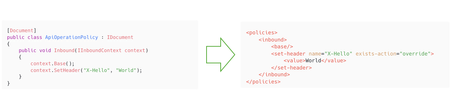
We’re excited to announce the early release of the Azure API Management Policy Toolkit, a set of libraries and tools designed to change how developers work with API Management policies, making policy management more approachable, testable, and efficient for developers. Empowering developers with Azure API Management Policy Toolkit Policies have always been at the core of Azure API Management, offering powerful capabilities to secure, change behavior, and transform requests and responses to the APIs. Recently, we've made the policies easier to understand and manage by adding Copilot for Azure features for Azure API Management. This allows you to create and explain policies with AI help directly within the Azure portal. This powerful tool lets developers create policies using simple prompts or get detailed explanations of existing policies. This makes it much easier for new users to write policies and makes all users more productive. Now, with the Policy Toolkit, we’re taking another significant step forward. This toolkit brings policy management even closer to the developer experience you know. Elevating policy development experience Azure API Management policies are written in Razor format, which for those unfamiliar with it can be difficult to read and understand, especially when dealing with large policy documents that include expressions. Testing and debugging policy changes requires deployment to a live Azure API Management instance, which slows down feedback loop even for small edits. The Policy Toolkit addresses these challenges. You can now author your policies in C#, a language that feels natural and familiar to many developers and write tests against them. This shift improves the policy writing experience for developers, makes policies more readable, and shortens the feedback loop for policy changes. Key toolkit features to transform your workflow: Consistent policy authoring. Write policies in C#. No more learning Razor syntax and mixing XML and C# in the same document. Syntax checking: Compile your policy documents to catch syntax errors and generate Razor-based equivalents. Unit testing: Write unit tests alongside your policies using your favorite unit testing framework. CI/CD integration: Integrate Policy Toolkit into automation pipelines for testing and compilation into Razor syntax for deployment. Current Limitations While we’re excited about the capabilities of the Policy Toolkit, we want to be transparent about its current limitation: Not all policies are supported yet, but we’re actively working on expanding the coverage. We are working on making the Policy Toolkit available as a NuGet package. In the meantime, you’ll need to build the solution on your own. Unit testing is limited to policy expressions and is not supported for entire policy documents yet. Get Started Today! We want you to try the Azure API Management Policy Toolkit and to see if it helps streamlining your policy management workflow. Check out documentation to get started. We’re eager to hear your feedback! By bringing policy management closer to the developer, we’re opening new possibilities to efficiently manage your API Management policies. Whether you’re using the AI-assisted approach with Copilot for Azure or diving deep into C# with the Policy Toolkit, we’re committed to making policy management more approachable and powerful.4.8KViews10likes2CommentsIntroducing GenAI Gateway Capabilities in Azure API Management
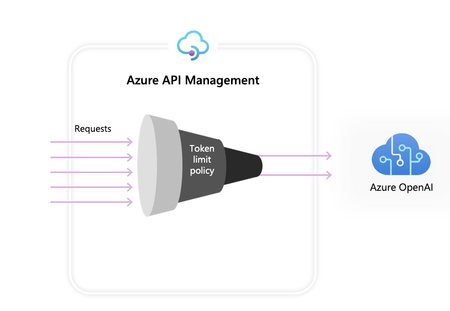
We are thrilled to announce GenAI Gateway capabilities in Azure API Management – a set of features designed specifically for GenAI use cases. Azure OpenAI service offers a diverse set of tools, providing access to advanced models like GPT3.5-Turbo to GPT-4 and GPT-4 Vision, enabling developers to build intelligent applications that can understand, interpret, and generate human-like text and images. One of the main resources you have in Azure OpenAI is tokens. Azure OpenAI assigns quota for your model deployments expressed in tokens-per-minute (TPMs) which is then distributed across your model consumers that can be represented by different applications, developer teams, departments within the company, etc. Starting with a single application integration, Azure makes it easy to connect your app to Azure OpenAI. Your intelligent application connects to Azure OpenAI directly using API Key with a TPM limit configured directly on the model deployment level. However, when you start growing your application portfolio, you are presented with multiple apps calling single or even multiple Azure OpenAI endpoints deployed as Pay-as-you-go or Provisioned Throughput Units (PTUs) instances. That comes with certain challenges: How can we track token usage across multiple applications? How can we do cross charges for multiple applications/teams that use Azure OpenAI models? How can we make sure that a single app does not consume the whole TPM quota, leaving other apps with no option to use Azure OpenAI models? How can we make sure that the API key is securely distributed across multiple applications? How can we distribute load across multiple Azure OpenAI endpoints? How can we make sure that PTUs are used first before falling back to Pay-as-you-go instances? To tackle these operational and scalability challenges, Azure API Management has built a set of GenAI Gateway capabilities: Azure OpenAI Token Limit Policy Azure OpenAI Emit Token Metric Policy Load Balancer and Circuit Breaker Import Azure OpenAI as an API Azure OpenAI Semantic Caching Policy (in public preview) Azure OpenAI Token Limit Policy Azure OpenAI Token Limit policy allows you to manage and enforce limits per API consumer based on the usage of Azure OpenAI tokens. With this policy you can set limits, expressed in tokens-per-minute (TPM). This policy provides flexibility to assign token-based limits on any counter key, such as Subscription Key, IP Address or any other arbitrary key defined through policy expression. Azure OpenAI Token Limit policy also enables pre-calculation of prompt tokens on the Azure API Management side, minimizing unnecessary request to the Azure OpenAI backend if the prompt already exceeds the limit. Learn more about this policy here. Azure OpenAI Emit Token Metric Policy Azure OpenAI enables you to configure token usage metrics to be sent to Azure Applications Insights, providing overview of the utilization of Azure OpenAI models across multiple applications or API consumers. This policy captures prompt, completions, and total token usage metrics and sends them to Application Insights namespace of your choice. Moreover, you can configure or select from pre-defined dimensions to split token usage metrics, enabling granular analysis by Subscription ID, IP Address, or any custom dimension of your choice. Learn more about this policy here. Load Balancer and Circuit Breaker Load Balancer and Circuit Breaker features allow you to spread the load across multiple Azure OpenAI endpoints. With support for round-robin, weighted (new), and priority-based (new) load balancing, you can now define your own load distribution strategy according to your specific requirements. Define priorities within the load balancer configuration to ensure optimal utilization of specific Azure OpenAI endpoints, particularly those purchased as PTUs. In the event of any disruption, a circuit breaker mechanism kicks in, seamlessly transitioning to lower-priority instances based on predefined rules. Our updated circuit breaker now features dynamic trip duration, leveraging values from the retry-after header provided by the backend. This ensures precise and timely recovery of the backends, maximizing the utilization of your priority backends to their fullest. Learn more about load balancer and circuit breaker here. Import Azure OpenAI as an API New Import Azure OpenAI as an API in Azure API management provides an easy single click experience to import your existing Azure OpenAI endpoints as APIs. We streamline the onboarding process by automatically importing the OpenAPI schema for Azure OpenAI and setting up authentication to the Azure OpenAI endpoint using managed identity, removing the need for manual configuration. Additionally, within the same user-friendly experience, you can pre-configure Azure OpenAI policies, such as token limit and emit token metric, enabling swift and convenient setup. Learn more about Import Azure OpenAI as an API here. Azure OpenAI Semantic Caching policy Azure OpenAI Semantic Caching policy empowers you to optimize token usage by leveraging semantic caching, which stores completions for prompts with similar meaning. Our semantic caching mechanism leverages Azure Redis Enterprise or any other external cache compatible with RediSearch and onboarded to Azure API Management. By leveraging the Azure OpenAI Embeddings model, this policy identifies semantically similar prompts and stores their respective completions in the cache. This approach ensures completions reuse, resulting in reduced token consumption and improved response performance. Learn more about semantic caching policy here. Get Started with GenAI Gateway Capabilities in Azure API Management We’re excited to introduce these GenAI Gateway capabilities in Azure API Management, designed to empower developers to efficiently manage and scale their applications leveraging Azure OpenAI services. Get started today and bring your intelligent application development to the next level with Azure API Management.37KViews10likes14CommentsAI Gateway tier of API Management now in public preview
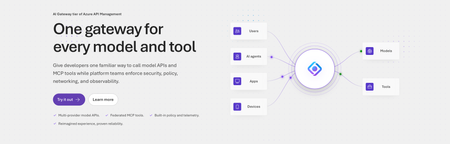
Today, we are introducing the AI Gateway tier of Azure API Management, now in public preview. It gives platform teams a purpose-built experience built specifically for AI workloads - publishing and governing models and MCP servers. Controls are configured through policy cards rather than XML and expressions, and the portal experience and control plane are structured around models, MCP servers, and tools rather than APIs. (For brevity, we refer to the AI Gateway tier as AI Gateway throughout the rest of this article.) AI Gateway is built on Azure API Management, bringing proven operational capabilities to AI workloads. The resource runs in your subscription, uses your Entra tenant, and sends telemetry to destinations you control. The operating model will be familiar to existing API Management customers, but the interface is built around AI workloads. The AI Gateway tier is intended for teams that want this focused experience; other API Management tiers remain the right choice when organizations also need general-purpose API management or capabilities not included in the AI Gateway experience. A practical model for platform teams The AI Gateway gives platform teams a shared place to manage models, MCP servers, policies, and observability destinations, with access controlled through Azure RBAC. For example, a central platform group can connect a set of approved models and tools and publish them for application teams. The application teams can test those assets in the test console and build against them without routing every change through the central group. The platform group still owns the shared guardrails and can see how the assets are being used. After an asset is published, developers can create a named runtime key and begin calling the gateway immediately. Bring the models and tools you already use Most organizations don't standardize on a single model provider. Different models are selected based on quality, latency, cost, geography, or specialized capabilities. The preview supports models from Microsoft Foundry including OpenAI, Anthropic, Mistral, and other Foundry hosted models, as well as models hosted in AWS Bedrock, Google Vertex AI, OpenAI, and Anthropic. A guided wizard simplifies importing models from Microsoft Foundry. Other providers can be added by configuring a connection, with backend authentication configured as part of that connection. All published models are available under the same stable endpoint. Applications continue to use supported API formats such as OpenAI Chat Completions and Responses or Anthropic Messages directly or via SDKs. The AI Gateway extends governance beyond models to the MCP servers and tools agents use to interact with enterprise systems. You can expose an existing MCP server over SSE or Streamable HTTP, turn all or selected operations from a REST API into an MCP server by uploading its OpenAPI specification, or use more than 1,400 connector-backed tools from the Power Platform and Logic Apps library. You can also federate multiple MCP servers behind a single server, so an agent connects once and sees the tools across those servers. Backend authentication supports an API key, OAuth client credentials, managed identity, or mTLS. Governance that's built in Organizations need consistent governance across models and MCP servers without requiring every application team to implement those capabilities independently. The AI Gateway portal presents governance policies through an intuitive card-based experience rather than requiring policy XML. The same policies are expressed as JSON properties, making them easy to manage as infrastructure as code and to audit and enforce across a fleet with Azure Policy. In the public preview, those cards cover request and token rate limits, token quotas, Azure AI Content Safety, and fallback to a secondary model. Policies are applied per asset, making it clear which controls protect each model or MCP server. OpenTelemetry-based token metrics The AI Gateway emits token-usage metrics through OpenTelemetry, with attributes following GenAI and cloud semantic conventions. Metrics can be sent to Application Insights, Datadog, Splunk, Grafana Cloud, or another OTLP endpoint. The portal provides a monitoring view over Application Insights data. Better together: Microsoft Foundry and AI Gateway With AI Gateway, teams can extend the same governance controls, for example token rate limits and quotas, across models hosted in Microsoft Foundry and models hosted elsewhere. Foundry and non-Foundry models are published through gateway-managed endpoints, giving applications and agents a consistent way to access governed models regardless of where they are hosted. Foundry-hosted agents can consume curated sets of tools from Foundry toolboxes, with access to the underlying MCP servers and APIs governed through AI Gateway. Together, Microsoft Foundry and AI Gateway cover the enterprise application lifecycle: Foundry for building and running AI applications, and AI Gateway for publishing, governing, and observing models, tools, and MCP servers across your AI estate. The new AI Gateway tier will soon be available through the gateway experience in Microsoft Foundry portal. We are working toward a seamless, integrated AI Gateway experience within Foundry portal and will share more about that work separately. Available today in public preview The AI Gateway tier is available today at no cost in public preview in East US 2 and Sweden Central. Pricing will be shared separately. To provision a resource, add a model or MCP server, and make a first call click this to go to the AI Gateway tier portal and try it. If you prefer to start from code, use a sample to deploy all the required resources for a Foundry-hosted agent configured to access its model and tools through AI Gateway. We look forward to your feedback as we continue to rapidly evolve AI Gateway.8.2KViews5likes10Comments
Expose REST APIs as MCP servers with Azure API Management and API Center (now in preview)
As AI-powered agents and large language models (LLMs) become central to modern application experiences, developers and enterprises need seamless, secure ways to connect these models to real-world data and capabilities. Today, we’re excited to introduce two powerful preview capabilities in the Azure API Management Platform: Expose REST APIs in Azure API Management as remote Model Context Protocol (MCP) servers Discover and manage MCP servers using API Center as a centralized enterprise registry Together, these updates help customers securely operationalize APIs for AI workloads and improve how APIs are managed and shared across organizations. Unlocking the value of AI through secure API integration While LLMs are incredibly capable, they are stateless and isolated unless connected to external tools and systems. Model Context Protocol (MCP) is an open standard designed to bridge this gap by allowing agents to invoke tools—such as APIs—via a standardized, JSON-RPC-based interface. With this release, Azure empowers you to operationalize your APIs for AI integration—securely, observably, and at scale. 1. Expose REST APIs as MCP servers with Azure API Management An MCP server exposes selected API operations to AI clients over JSON-RPC via HTTP or Server-Sent Events (SSE). These operations, referred to as “tools,” can be invoked by AI agents through natural language prompts. With this new capability, you can expose your existing REST APIs in Azure API Management as MCP servers—without rebuilding or rehosting them. Addressing common challenges Before this capability, customers faced several challenges when implementing MCP support: Duplicating development efforts: Building MCP servers from scratch often led to unnecessary work when existing REST APIs already provided much of the needed functionality. Security concerns: Server trust: Malicious servers could impersonate trusted ones. Credential management: Self-hosted MCP implementations often had to manage sensitive credentials like OAuth tokens. Registry and discovery: Without a centralized registry, discovering and managing MCP tools was manual and fragmented, making it hard to scale securely across teams. API Management now addresses these concerns by serving as a managed, policy-enforced hosting surface for MCP tools—offering centralized control, observability, and security. Benefits of using Azure API Management with MCP By exposing MCP servers through Azure API Management, customers gain: Centralized governance for API access, authentication, and usage policies Secure connectivity using OAuth 2.0 and subscription keys Granular control over which API operations are exposed to AI agents as tools Built-in observability through APIM’s monitoring and diagnostics features How it works MCP servers: In your API Management instance navigate to MCP servers Choose an API: + Create a new MCP Server and select the REST API you wish to expose. Configure the MCP Server: Select the API operations you want to expose as tools. These can be all or a subset of your API’s methods. Test and Integrate: Use tools like MCP Inspector or Visual Studio Code (in agent mode) to connect, test, and invoke the tools from your AI host. Getting started and availability This feature is now in public preview and being gradually rolled out to early access customers. To use the MCP server capability in Azure API Management: Prerequisites Your APIM instance must be on a SKUv1 tier: Premium, Standard, or Basic Your service must be enrolled in the AI Gateway early update group (activation may take up to 2 hours) Use the Azure Portal with feature flag: ➤ Append ?Microsoft_Azure_ApiManagement=mcp to your portal URL to access the MCP server configuration experience Note: Support for SKUv2 and broader availability will follow in upcoming updates. Full setup instructions and test guidance can be found via aka.ms/apimdocs/exportmcp. 2. Centralized MCP registry and discovery with Azure API Center As enterprises adopt MCP servers at scale, the need for a centralized, governed registry becomes critical. Azure API Center now provides this capability—serving as a single, enterprise-grade system of record for managing MCP endpoints. With API Center, teams can: Maintain a comprehensive inventory of MCP servers. Track version history, ownership, and metadata. Enforce governance policies across environments. Simplify compliance and reduce operational overhead. API Center also addresses enterprise-grade security by allowing administrators to define who can discover, access, and consume specific MCP servers—ensuring only authorized users can interact with sensitive tools. To support developer adoption, API Center includes: Semantic search and a modern discovery UI. Easy filtering based on capabilities, metadata, and usage context. Tight integration with Copilot Studio and GitHub Copilot, enabling developers to use MCP tools directly within their coding workflows. These capabilities reduce duplication, streamline workflows, and help teams securely scale MCP usage across the organization. Getting started This feature is now in preview and accessible to customers: https://aka.ms/apicenter/docs/mcp AI Gateway Lab | MCP Registry 3. What’s next These new previews are just the beginning. We're already working on: Azure API Management (APIM) Passthrough MCP server support We’re enabling APIM to act as a transparent proxy between your APIs and AI agents—no custom server logic needed. This will simplify onboarding and reduce operational overhead. Azure API Center (APIC) Deeper integration with Copilot Studio and VS Code Today, developers must perform manual steps to surface API Center data in Copilot workflows. We’re working to make this experience more visual and seamless, allowing developers to discover and consume MCP servers directly from familiar tools like VS Code and Copilot Studio. For questions or feedback, reach out to your Microsoft account team or visit: Azure API Management documentation Azure API Center documentation — The Azure API Management & API Center Teams9.4KViews5likes7CommentsAnnouncing General Availability of Workspaces in Azure API Management
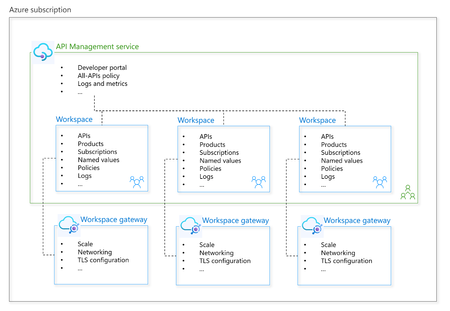
We are excited to announce the general availability of workspaces in Azure API Management! Workspaces enable organizations to manage APIs more productively, securely, and reliably using a federated approach.9.1KViews5likes3CommentsIntroducing native Service Bus message publishing from Azure API Management (Preview)
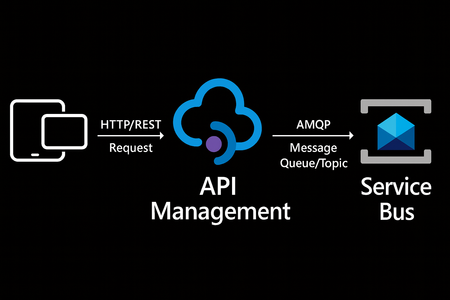
We’re excited to announce a preview capability in Azure API Management (APIM) — you can now send messages directly to Azure Service Bus from your APIs using a built-in policy. This enhancement, currently in public preview, simplifies how you connect your API layer with event-driven and asynchronous systems, helping you build more scalable, resilient, and loosely coupled architectures across your enterprise. Why this matters? Modern applications increasingly rely on asynchronous communication and event-driven designs. With this new integration: Any API hosted in API Management can publish to Service Bus — no SDKs, custom code, or middleware required. Partners, clients, and IoT devices can send data through standard HTTP calls, even if they don’t support AMQP natively. You stay in full control with authentication, throttling, and logging managed centrally in API Management. Your systems scale more smoothly by decoupling front-end requests from backend processing. How it works The new send-service-bus-message policy allows API Management to forward payloads from API calls directly into Service Bus queues or topics. High-level flow A client sends a standard HTTP request to your API endpoint in API Management. The policy executes and sends the payload as a message to Service Bus. Downstream consumers such as Logic Apps, Azure Functions, or microservices process those messages asynchronously. All configurations happen in API Management — no code changes or new infrastructure are required. Getting started You can try it out in minutes: Set up a Service Bus namespace and create a queue or topic. Enable a managed identity (system-assigned or user-assigned) on your API Management instance. Grant the identity the “Service Bus data sender” role in Azure RBAC, scoped to your queue/ topic. Add the policy to your API operation: <send-service-bus-message queue-name="orders"> <payload>@(context.Request.Body.As<string>())</payload> </send-service-bus-message> Once saved, each API call publishes its payload to the Service Bus queue or topic. 📖 Learn more. Common use cases This capability makes it easy to integrate your APIs into event-driven workflows: Order processing – Queue incoming orders for fulfillment or billing. Event notifications – Trigger internal workflows across multiple applications. Telemetry ingestion – Forward IoT or mobile app data to Service Bus for analytics. Partner integrations – Offer REST-based endpoints for external systems while maintaining policy-based control. Each of these scenarios benefits from simplified integration, centralized governance, and improved reliability. Secure and governed by design The integration uses managed identities for secure communication between API Management and Service Bus — no secrets required. You can further apply enterprise-grade controls: Enforce rate limits, quotas, and authorization through APIM policies. Gain API-level logging and tracing for each message sent. Use Service Bus metrics to monitor downstream processing. Together, these tools help you maintain a consistent security posture across your APIs and messaging layer. Build modern, event-driven architectures With this feature, API Management can serve as a bridge to your event-driven backbone. Start small by queuing a single API’s workload, or extend to enterprise-wide event distribution using topics and subscriptions. You’ll reduce architectural complexity while enabling more flexible, scalable, and decoupled application patterns. Learn more: Get the full walkthrough and examples in the documentation 👉 here5.3KViews4likes10CommentsAnnouncing the Public Preview of the Applications feature in Azure API management
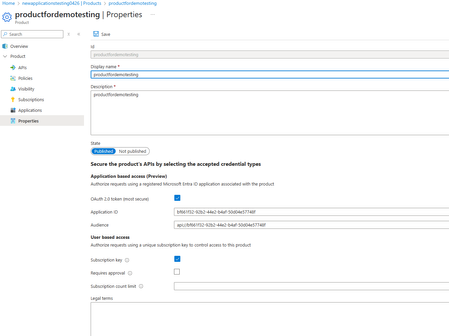
API Management now supports built-in OAuth 2.0 application-based access to product APIs using the client credentials flow. This feature allows API managers to register Microsoft Entra ID applications, streamlining secure API access for developers through OAuth 2.0 authorization. API publishers and developers can now more effectively manage client identity, access, and authorization flows. With this feature: API managers can identify which products require OAuth authorization by setting a product property to enable application-based access API managers can create and manage client applications and assign them access to specific products. Developers can see their registered applications in API management developer portal and use OAuth tokens to securely call APIs and products OAuth tokens presented in API requests are validated by the API Management gateway to authorize access to the product's APIs. This feature simplifies identity and access management in API programs, enabling a more secure and scalable approach to API consumption. Enable OAuth authorization API managers can now identify specific products which are protected by Microsoft Entra identity by enabling "Application based access". This ensures that only valid client applications which have a secure OAuth token from Microsoft Entra identity can access the APIs associated with this product. An application is created in Microsoft Entra corresponding to the product, with appropriate app role. Register client applications and assign products API managers can register client applications, identify specific developers as owners of these applications and assign products to these applications. This creates a new application in Microsoft Entra and assigns API permissions to access the product. Securely access the API using client applications Developers can login into API management developer portal and see the appropriate applications assigned to them. They can retrieve the application credentials and call Microsoft Entra to get an OAuth token, use this token to call APIM gateway and securely access the product/API. Preview limitations The public preview of the Applications is a limited-access feature. To participate in the preview and enable Applications in your APIM service instance, you must complete a request form. The Azure API Management team will review your request and respond via email within five business days. Learn more Securely access product APIs with Microsoft Entra applicationsIBM MQ Built-in (In-App) connector and Queue Handles: The math behind Queue Handles
In some scenarios, we found that it might be challenging to understand how IBM MQ server needs to be configured to be able to poll without experiencing the dreaded IBM MQ returned Reason Code: 2017 - MQRC_HANDLE_NOT_AVAILABLE.3.3KViews4likes0CommentsBuilt-in gateway support for workspaces in Azure API Management
Workspaces in Azure API Management let platform teams hand off API ownership to individual API teams while keeping centralized governance. Until now, using them meant deploying a dedicated workspace gateway on the Premium tier — adding cost, operational overhead, and limiting regional availability. That requirement is going away. Workspaces can now be associated directly with the built-in gateway, and this capability is generally available. What changes Available in more tiers. Use workspaces on the built-in gateway in any API Management tier except Consumption. Available in every region. Create workspaces in any region where API Management is supported. All built-in gateway capabilities apply. Workspaces deployed with the built-in gateway inherit features that dedicated workspace gateways don't offer today, including multi-region deployments, custom hostnames, and Private Link connectivity. Availability Rolling out now to v2 tiers, with Azure portal UI support expected around July. Rollout to classic tiers (Developer, Basic, Standard, Premium) will begin by August and may take up to a few months to complete. Get started Learn more about workspaces and how to deploy them on the built-in gateway.1.7KViews3likes3Comments