developer
68 Topics
Microsoft Project Service Core Jan 2026 Update locked Plans table
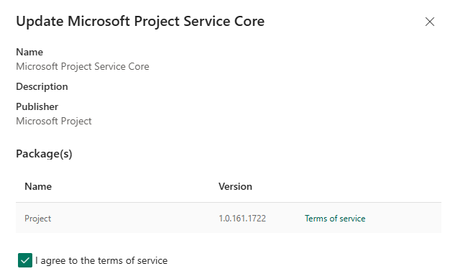
We recently noted the Microsoft Project Service Core was updated to 1.0.161.1772: This update has locked our Plans table, no changes are allowed to the forms and creating new columns is greyed out: We cannot make use of Planner in our model driven app (Planner Premium, non-default environment). After a new Plan is created, the user receives this message when opening the Plan: Two days ago we were in this version 1.0.160.2874): and everything was working as expected. Any guidance would be much appreciated as we are not sure if this is a permanent lock or once the update cycle is completed we will be able to go back to edit Plan forms and columns. Thank you in advanceSolved2.2KViews9likes14Comments
Strategic Missing Capabilities in the new Microsoft Planner (Enterprise Perspective)
The Present State of Microsoft Planner’s Vision Enterprises want one coherent work-management layer in Microsoft 365 Microsoft’s ambition is to merge To Do, Planner, and Project for the Web into a single platform with Copilot, Goals, unified List/Board/Timeline views, and templates The direction is sound: reduce fragmentation and tool sprawl, standardize data, and give leaders a clean and solid portfolio picture while teams execute in familiar interfaces. In an environment where all employees have access to the same tool, are already included in the resource pool and integration options are basically unlimited, this is a step, that everyone was looking forward to. Nonetheless, the quip that “Microsoft abandoned MS Project 20 years ago” is a joke, but it reflects a real anxiety: if the new Planner displaces familiar scheduling experiences without enterprise-grade controls, PMOs will feel left alone again and disengage, in presence of abundant alternatives. Planner will not replace Microsoft Project, Primavera, or other detailled scheduling tools; those remain essential for deep dependencies, resource leveling, and baselining. Planner’s highest-value role is the management and aggregation layer above them: align goals, normalize metadata, and expose cross-program status. Simplicity matters, but simplicity cannot mean missing capability. If essential functions are absent, governance, traceability, and portfolio visibility suffer, and organizations turn to external tools. Following is a list of core functionality that is currently missing and was needed about a month ago. Current Structural Gaps Date logic too rigid for management use No independent target/due date field; planning often hinges on Start/Finish + Duration, which limits top-down milestone control Custom fields capped at 10 per plan Insufficient for enterprise metadata models and standardized portfolio reporting Maximum task duration of 1,250 days Constricts representation of multi-year initiatives and capital programs No enterprise-grade audit trail Lacks comprehensive, exportable change logs with retention controls for compliance Flat responsibility model Multiple assignees exist, but no roles such as Owner, Reviewer, Approver; no RACI support Insufficient hierarchy and dependencies for roll-ups Summary/sub-tasks exist, but cross-plan links and robust multi-plan aggregation are weak Group-based permissions only Sharing tied to M365 Groups/Teams; no fine-grained task- or field-level permissions; no simple view-only for externals Custom fields lack hyperlink behavior No URL field type; links in text fields are often not clickable for seamless navigation Inconsistent text capture and formatting Notes lack reliable rich-text structure; long entries are hard to read No page breaks or robust formatting for long descriptions Executive-level narratives and governance documentation become unwieldy Limited standardization across plans No global library for reusable custom fields, bucket structures, or templates at tenant/portfolio level Required Enhancements for Enterprise Readiness Flexible date logic Allow target/due dates independent of Start/Finish; add constraints, buffers, alerts, and escalation rules Expanded metadata framework Raise the custom-field limit; add field types (URL, Person, Multi-select), required fields, validation rules, and global field templates Enterprise auditability Provide full change history with export, retention policies, filters by field/user, and API access Role-aware assignments (RACI) Support roles (Owner, Doer, Reviewer, Approver), secondary ownership, and role-based views in people and reports Portfolio-grade structure Enable cross-plan dependencies, milestone roll-ups, program-level summaries, consolidated capacity and risk views Granular access control Introduce view-only sharing, external access without group membership, and task/field-level ACLs to protect sensitive data Hyperlink-enabled fields Add a URL type and clickable rendering in text fields, with previews and allow-lists for approved domains Robust editor for management communication Paragraphs, lists, headings, tables, code/quote blocks, and clean print/PDF output for formal documentation Reusable enterprise templates Tenant-wide libraries for custom fields, buckets, and workflows; versioning and approval flows for governed rollout Reliable data layer A standardized Power BI dataset, webhooks/events, incremental exports, and stable keys for multi-plan, multi-tenant analytics Scaling for long-horizon work Lift or mitigate the 1,250-day limit for leaf tasks and provide guidance or rules for multi-year programs Bottom line Planner can succeed as the enterprise management layer if it remains simple but gains the capabilities listed above. One does not work without the other. If Microsoft does not deliver these functions, enterprises will continue using Project, Primavera, or other scheduling tools — while adopting third-party platforms for governance and portfolio visibility. This would directly undermine Planner’s goal of becoming the unified standard within Microsoft 365. Please, do us a favor and spare organizations from having to implement yet another third-party tool. (And yes: I am aware of multiple enterprises that are in the process of testing and implementating different tools, presicely because of this missing capability)288Views6likes0CommentsHow to clone a Plan using PowerShell and Graph
Just sharing a recent blog post where I walk through PowerShell example that uses Graph to read and write Plan details - https://blogs.msdn.microsoft.com/brismith/2017/02/17/microsoft-planner-how-to-clone-a-plan-with-graph/ Now at https://techcommunity.microsoft.com/t5/planner-blog/microsoft-planner-how-to-clone-a-plan-with-graph/ba-p/3622302.7KViews5likes3Comments
Filtering tasks based on custom columns in Microsoft Planner?
In Microsoft Planner, I can add a custom column, and it appears in the table view. However, I do not see an option to filter tasks based on the new column. Is this a supported feature, or is there any workaround to enable filtering on custom fields?Solved360Views3likes2CommentsPlans to add "Completed/Archived Bucket" section?
We've recently started using planner and within 1 plan (IT Plan) we have several buckets (Projects). Each bucket for us represents a different project, and within the buckets you have your tasks. Well, as we complete tasks and eventually the entire bucket (meaning project is completed), we move the bucket to the end of all active buckets/projects. Eventually this list will be huge. We want to save all past projects/buckets however we do not want them flooding the current projects. Doesn't seem like best practice to just throw the completed buckets at the end and pretend they're not there (Image 1 ). I don't think the answer is "Create a plan per projects" since there is also no ability to archive plans it would seem and the left side would be flooded with projects as well. Ultimately if we could have more bucket management/control/archive feature as a drop down (Image 2). Thank you! Image 1 Image 29.5KViews3likes5CommentsPlans from Planner are not showing in Flow or third party Add-ins
I have seen several case where Plans from the Planner are not showing in the API. This means you will not be able to use Microsoft Flows for the Planner or use third party Add-ins with the Planner. I am not sure why this happens and I have only seen this on af few O365 tenants. It is a big prblem for these organisation and the Planner is simply not a useful tool. Please advice? and it would be interesting to hear if any other have the same problem.6KViews2likes15CommentsPlanner Task URL Scheme
We are looking to integrate the automation and management of Planner tasks through other systems with Flow and would also like to notify people via email if they are assigned to a task with a direct link to that task in Planner. Can anyone provide a URL schema to be able to put together the link via an e-mail notification?6.9KViews2likes4Comments