data platform
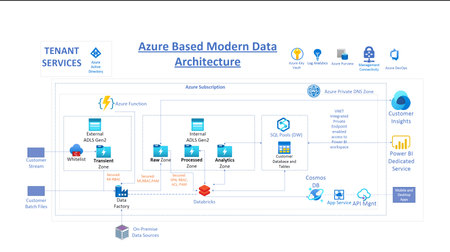
42 TopicsDesigning and Implementing Modern Data Architecture on Azure Cloud.
Designing a modern, cloud data architecture is a critical component of the digital transformation journey of any enterprise. In this post, we cover some of the Azure Data Services used to deliver a solution designed to meet the customer's current and evolving future needs.44KViews8likes2CommentsAzure Database Security Newsletter - January 2026
Happy New Year and welcome to our first newsletter of 2026! This year, we’re doubling down on something that matters to every one of us: keeping data safe without slowing innovation. Security isn’t just a checkbox—it’s the backbone of everything we build. That’s why our database security strategy is rooted in the Zero Trust model, a simple but powerful idea: never assume, always verify. Here’s what that means in practice: Identity first: Every user and workload proves who they are, every time. Devices matter: Only trusted endpoints get through the door. Networks stay clean: Segmentation and encryption keep traffic locked down. Apps and workloads: Least privilege isn’t optional—it’s standard. Data protected everywhere: Protected at rest, in transit, and under constant watch. Driving all of this is our Security First Initiative (SFI)—a mindset that makes security part of the design, not an afterthought. It’s how we ensure that trust isn’t just a promise; it’s a practice. 2026 is about scaling this vision and making security seamless for everyone. Feature highlights of 2025 Dynamic Data Masking in Cosmos DB Now in public preview, Dynamic Data Masking is a server-side, policy-based security feature that automatically masks sensitive fields at query time for non-privileged users, while leaving the underlying data unchanged. Masking policies are enforced based on user roles and Entra ID identity, supporting privacy and compliance scenarios (PII/PHI) and reducing the need for custom app logic. This enables granular, real-time protection, secure data sharing, and safe testing with anonymized production data. Auditing in Fabric SQL Database Auditing is now in public preview for Fabric SQL Database. This feature allows organizations to track and log database activities—answering critical questions like who accessed what data, when, and how. It supports compliance requirements (HIPAA, SOX), enables robust threat detection, and provides a foundation for forensic investigations. Audit logs are stored in One Lake for easy access, and configuration is governed by both Fabric workspace roles and SQL-level permissions. Customer-Managed Keys in Fabric SQL Database Now in public preview, Customer-Managed Keys (CMK) let you use your own Azure Key Vault keys to encrypt data in Microsoft Fabric workspaces, including all SQL Database data. This provides greater flexibility and control over key rotation, access, and auditing, helping organizations meet data governance and encryption standards. SQL Server 2025 SQL Server 2025 raises the bar for enterprise data protection with a suite of powerful, built-in security enhancements. From eliminating client secrets through managed identity authentication to adopting stronger encryption standards and enforcing stricter connection protocols, this release is designed to help organizations stay ahead of evolving threats. With these updates, SQL Server 2025 simplifies compliance and strengthens data security—right out of the box. Best Practices Corner Don’t use passwords—use Entra instead Modern identity security for Azure SQL means eliminating SQL authentication wherever possible and adopting Microsoft Entra ID–based passwordless authentication. This strengthens security, simplifies identity governance, and aligns with Zero Trust and Microsoft’s Secure Future Initiative principles. Failover Ready? Don’t Forget Your TDE Keys For successful geo-replication setup and failover, all necessary encryption keys for Transparent Data Encryption must be created and available on both primary and secondary servers. It is possible and, in certain cases, required to configure different TDE protectors on replicas, as long as the key material is available on each server. It’s time for TLS 1.2 Legacy TLS 1.0 and 1.1 are no longer secure and are being retired across Azure services. To avoid connection failures and strengthen your security posture, make sure all applications, drivers, and clients connect using TLS 1.2 or higher. Blogs and Video Spotlight Geo-Replication and Transparent Data Encryption Key Management in Azure SQL Database | Microsoft Community Hub Everything you need to know about TDE key management for database restore | Microsoft Community Hub Secure by default: What’s new in SQL Server 2025 security | Microsoft Community Hub Secure by Design: Upcoming CMK and Auditing Features in Fabric SQL Database | Data Exposed Latest progress update on Microsoft’s Secure Future Initiative | Microsoft Security Blog Community & Events The data platform security team will be on-site at several upcoming events. Come and say hi! SQL Konferenz SQLCON - Microsoft SQL Community Conference Call to Action Last year brought some seriously powerful updates—Dynamic Data Masking in Cosmos DB, Auditing in Fabric SQL Database, and Customer Managed Keys that give you full control over your security strategy. These features are built to help you move faster, stay compliant, and protect data without friction. Try them out and see the impact firsthand. If this got you fired up, share it with your team and drop a comment to keep the momentum going. And don’t wait—download SQL Server 2025 today and experience the newest security capabilities in action. Let’s push data security forward together.Azure Resiliency: Proactive Continuity with Agentic Experiences and Frontier Innovation
Introduction In today’s digital-first world, even brief downtime can disrupt revenue, reputation, and operations. Azure’s new resiliency capabilities empower organizations to anticipate and withstand disruptions—embedding continuity into every layer of their business. At Microsoft Ignite, we’re unveiling a new era of resiliency in Azure, powered by agentic experiences. The new Azure Copilot resiliency agent brings AI-driven workflows that proactively detect vulnerabilities, automate backups, and integrate cyber recovery for ransomware protection. IT teams can instantly assess risks and deploy solutions across infrastructure, data, and cyber recovery—making resiliency a living capability, not just a checklist. The Evolution from Azure Business Continuity Center to Resiliency in Azure Microsoft is excited to announce that the Azure Business Continuity Center (ABCC) is evolving into resiliency capabilities in Azure. This evolution expands its scope from traditional backup and disaster recovery to a holistic resiliency framework. This new experience is delivered directly in the Azure Portal, providing integrated dashboards, actionable recommendations, and one-click access to remediation—so teams can manage resiliency where they already operate. Learn more about this: Resiliency. To see the new experience, visit the Azure Portal. The Three Pillars of Resiliency Azure’s resiliency strategy is anchored in three foundational pillars, each designed to address a distinct dimension of operational continuity: Infrastructure Resiliency: Built-in redundancy and zonal/regional management keep workloads running during disruptions. The resiliency agent in Azure Copilot automates posture checks, risk detection, and remediation. Data Resiliency: Automated backup and disaster recovery meet RPO/RTO and compliance needs across Azure, on-premises, and hybrid. Cyber Recovery: Isolated recovery vaults, immutable backups, and AI-driven insights defend against ransomware and enable rapid restoration. With these foundational pillars in place, organizations can adopt a lifecycle approach to resiliency—ensuring continuity from day one and adapting as their needs evolve. The Lifecycle Approach: Start Resilient, Get Resilient, Stay Resilient While the pillars define what resiliency protects, the lifecycle stages in resiliency journey define how organizations implement and sustain it over time. For the full framework, see the prior blog; below we focus on what’s new and practical. The resiliency agent in Azure Copilot empowers organizations to embed resiliency at every stage of their cloud journey—making proactive continuity achievable from day one and sustainable over time. Start Resilient: With the new resiliency agent, teams can “Start Resilient” by leveraging guided experiences and automated posture assessments that help design resilient workloads before deployment. The agent surfaces architecture gaps, validates readiness, and recommends best practices—ensuring resiliency is built in from the outset, not bolted on later. Get Resilient: As organizations scale, the resiliency agent enables them to “Get Resilient” by providing estate-wide visibility, automated risk assessments, and configuration recommendations. AI-driven insights help identify blind spots, remediate risks, and accelerate the adoption of resilient-by-default architectures—so resiliency is actively achieved across all workloads, not just planned. Stay Resilient: To “Stay Resilient,” the resiliency agent delivers continuous validation, monitoring, and improvement. Automated failure simulations, real-time monitoring, and attestation reporting allow teams to proactively test recovery workflows and ensure readiness for evolving threats. One-click failover and ongoing posture checks help sustain compliance and operational continuity, making resiliency a living capability that adapts as your business and technology landscape changes Best Practices for Proactive Continuity in Resiliency To enable proactive continuity, organizations should: Architect for high availability across multiple availability zones and regions (prioritize Tier-0/1 workloads). Automate recovery with Azure Site Recovery and failover playbooks for orchestrated, rapid restoration. Leverage integrated zonal resiliency experiences to uncover blind spots and receive tailored recommendations. Continuously validate using Chaos Studio to simulate outages and test recovery workflows. Monitor SLAs, RPO/RTO, and posture metrics with Azure Monitor and Policy; iterate for ongoing improvement. Use the Azure Copilot resiliency agent for AI-driven posture assessments, remediation scripts, and cost analysis to streamline operations. Conclusion & Next Steps Resiliency capabilities in Azure unifies infrastructure, data, and cyber recovery while guiding organizations to start, get, and stay resilient. Teams adopting these capabilities see faster posture improvements, less manual effort, and continuous operational continuity. This marks a fundamental shift—from reactive recovery to proactive continuity. By embedding resiliency as a living capability, Azure empowers organizations to anticipate, withstand, and recover from disruptions, adapting to new threats and evolving business needs. Organizations adopting Resiliency in Azure see measurable impact: Accelerated posture improvement with AI-driven insights and actionable recommendations. Less manual effort through automation and integrated recovery workflows. Continuous operational continuity via ongoing validation and monitoring Ready to take the next step? Explore these resources and sessions: Resiliency in Azure (Portal) Resiliency in Azure (Learn Docs) Agents (preview) in Azure Copilot Resiliency Solutions Reliability Guides by Service Azure Essentials Azure Accelerate Ignite Announcement Key Ignite 2025 Sessions to Watch: Resilience by Design: Secure, Scalable, AI-Ready Cloud with Azure (BRK217) Resiliency & Recovery with Azure Backup and Site Recovery (BRK146) Architect Resilient Apps with Azure Backup and Reliability Features (BRK148) Architecting for Resiliency on Azure Infrastructure (BRK178) All sessions are available on demand—perfect for catching up or sharing with your team. Browse the full session catalog and start building resiliency by default today.1.5KViews5likes0CommentsExploring AI Agent-Driven Auto Insurance Claims RAG Pipeline.
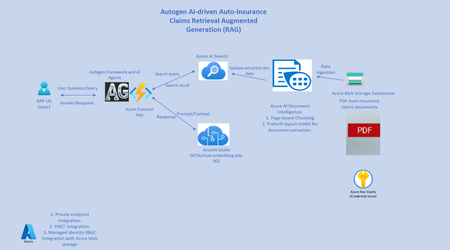
In this post, I explore a recent experiment aimed at creating a RAG pipeline tailored for the insurance industry, specifically for handling automobile insurance claims, with the goal of potentially reducing processing times.4.8KViews5likes0CommentsBuilding AI Agents: Workflow-First vs. Code-First vs. Hybrid
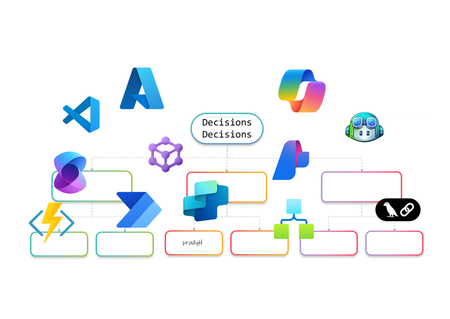
AI Agents are no longer just a developer’s playground. They’re becoming essential for enterprise automation, decision-making, and customer engagement. But how do you build them? Do you go workflow-first with drag-and-drop designers, code-first with SDKs, or adopt a hybrid approach that blends both worlds? In this article, I’ll walk you through the landscape of AI Agent design. We’ll look at workflow-first approaches with drag-and-drop designers, code-first approaches using SDKs, and hybrid models that combine both. The goal is to help you understand the options and choose the right path for your organization. Why AI Agents Need Orchestration Before diving into tools and approaches, let’s talk about why orchestration matters. AI Agents are not just single-purpose bots anymore. They often need to perform multi-step reasoning, interact with multiple systems, and adapt to dynamic workflows. Without orchestration, these agents can become siloed and fail to deliver real business value. Here’s what I’ve observed as the key drivers for orchestration: Complexity of Enterprise Workflows Modern business processes involve multiple applications, data sources, and decision points. AI Agents need a way to coordinate these steps seamlessly. Governance and Compliance Enterprises require control over how AI interacts with sensitive data and systems. Orchestration frameworks provide guardrails for security and compliance. Scalability and Maintainability A single agent might work fine for a proof of concept, but scaling to hundreds of workflows requires structured orchestration to avoid chaos. Integration with Existing Systems AI Agents rarely operate in isolation. They need to plug into ERP systems, CRMs, and custom apps. Orchestration ensures these integrations are reliable and repeatable. In short, orchestration is the backbone that turns AI Agents from clever prototypes into enterprise-ready solutions. Behind the Scenes I’ve always been a pro-code guy. I started my career on open-source coding in Unix and hardly touched the mouse. Then I discovered Visual Studio, and it completely changed my perspective. It showed me the power of a hybrid approach, the best of both worlds. That said, I won’t let my experience bias your ideas of what you’d like to build. This blog is about giving you the full picture so you can make the choice that works best for you. Workflow-First Approach Workflow-first platforms are more than visual designers and not just about drag-and-drop simplicity. They represent a design paradigm where orchestration logic is abstracted into declarative models rather than imperative code. These tools allow you to define agent behaviors, event triggers, and integration points visually, while the underlying engine handles state management, retries, and scaling. For architects, this means faster prototyping and governance baked into the platform. For developers, it offers extensibility through connectors and custom actions without sacrificing enterprise-grade reliability. Copilot Studio Building conversational agents becomes intuitive with a visual designer that maps prompts, actions, and connectors into structured flows. Copilot Studio makes this possible by integrating enterprise data and enabling agents to automate tasks and respond intelligently without deep coding. Building AI Agents using Copilot Studio Design conversation flows with adaptive prompts Integrate Microsoft Graph for contextual responses Add AI-driven actions using Copilot extensions Support multi-turn reasoning for complex queries Enable secure access to enterprise data sources Extend functionality through custom connectors Logic Apps Adaptive workflows and complex integrations are handled through a robust orchestration engine. Logic Apps introduces Agent Loop, allowing agents to reason iteratively, adapt workflows, and interact with multiple systems in real time. Building AI Agents using Logic Apps Implement Agent Loop for iterative reasoning Integrate Azure OpenAI for goal-driven decisions Access 1,400+ connectors for enterprise actions Support human-in-the-loop for critical approvals Enable multi-agent orchestration for complex tasks Provide observability and security for agent workflows Power Automate Multi-step workflows can be orchestrated across business applications using AI Builder models or external AI APIs. Power Automate enables agents to make decisions, process data, and trigger actions dynamically, all within a low-code environment. Building AI Agents using Power Automate Automate repetitive tasks with minimal effort Apply AI Builder for predictions and classification Call Azure OpenAI for natural language processing Integrate with hundreds of enterprise connectors Trigger workflows based on real-time events Combine flows with human approvals for compliance Azure AI Foundry Visual orchestration meets pro-code flexibility through Prompt Flow and Connected Agents, enabling multi-step reasoning flows while allowing developers to extend capabilities through SDKs. Azure AI Foundry is ideal for scenarios requiring both agility and deep customization. Building AI Agents using Azure AI Foundry Design reasoning flows visually with Prompt Flow Orchestrate multi-agent systems using Connected Agents Integrate with VS Code for advanced development Apply governance and deployment pipelines for production Use Azure OpenAI models for adaptive decision-making Monitor workflows with built-in observability tools Microsoft Agent Framework (Preview) I’ve been exploring Microsoft Agent Framework (MAF), an open-source foundation for building AI agents that can run anywhere. It integrates with Azure AI Foundry and Azure services, enabling multi-agent workflows, advanced memory services, and visual orchestration. With public preview live and GA coming soon, MAF is shaping how we deliver scalable, flexible agentic solutions. Enterprise-scale orchestration is achieved through graph-based workflows, human-in-the-loop approvals, and observability features. The Microsoft Agent Framework lays the foundation for multi-agent systems that are durable and compliant. Building AI Agents using Microsoft Agent Framework Coordinate multiple specialized agents in a graph Implement durable workflows with pause and resume Support human-in-the-loop for controlled autonomy Integrate with Azure AI Foundry for hosting and governance Enable observability through OpenTelemetry integration Provide SDK flexibility for custom orchestration patterns Visual-first platforms make building AI Agents feel less like coding marathons and more like creative design sessions. They’re perfect for those scenarios when you’d rather design than debug and still want the option to dive deeper when complexity calls. Pro-Code Approach Remember I told you how I started as a pro-code developer early in my career and later embraced a hybrid approach? I’ll try to stay neutral here as we explore the pro-code world. Pro-code frameworks offer integration with diverse ecosystems, multi-agent coordination, and fine-grained control over logic. While workflow-first and pro-code approaches both provide these capabilities, the difference lies in how they balance factors such as ease of development, ease of maintenance, time to deliver, monitoring capabilities, and other non-functional requirements. Choosing the right path often depends on which of these trade-offs matter most for your scenario. LangChain When I first explored LangChain, it felt like stepping into a developer’s playground for AI orchestration. I could stitch together prompts, tools, and APIs like building blocks, and I enjoyed the flexibility. It reminded me why pro-code approaches appeal to those who want full control over logic and integration with diverse ecosystems. Building AI Agents using LangChain Define custom chains for multi-step reasoning [it is called Lang“Chain”] Integrate external APIs and tools for dynamic actions Implement memory for context-aware conversations Support multi-agent collaboration through orchestration patterns Extend functionality with custom Python modules Deploy agents across cloud environments for scalability Semantic Kernel I’ve worked with Semantic Kernel when I needed more control over orchestration logic, and what stood out was its flexibility. It provides both .NET and Python SDKs, which makes it easy to combine natural language prompts with traditional programming logic. I found the planners and skills especially useful for breaking down goals into smaller steps, and connectors helped integrate external systems without reinventing the wheel. Building AI Agents using Semantic Kernel Create semantic functions for prompt-driven tasks Use planners for dynamic goal decomposition Integrate plugins for external system access Implement memory for persistent context across sessions Combine AI reasoning with deterministic code logic Enable observability and telemetry for enterprise monitoring Microsoft Agent Framework (Preview) Although I introduced MAF in the earlier section, its SDK-first design makes it relevant here as well for advanced orchestration and the pro-code nature… and so I’ll probably write this again in the Hybrid section. The Agent Framework is designed for developers who need full control over multi-agent orchestration. It provides a pro-code approach for defining agent behaviors, implementing advanced coordination patterns, and integrating enterprise-grade observability. Building AI Agents using Microsoft Agent Framework Define custom orchestration logic using SDK APIs Implement graph-based workflows for multi-agent coordination Extend agent capabilities with custom code modules Apply durable execution patterns with pause and resume Integrate OpenTelemetry for detailed monitoring and debugging Securely host and manage agents through Azure AI Foundry integration Hybrid Approach and decision framework I’ve always been a fan of both worlds, the flexibility of pro-code and the simplicity of workflow drag-and-drop style IDEs and GUIs. A hybrid approach is not about picking one over the other; it’s about balancing them. In practice, this to me means combining the speed and governance of workflow-first platforms with the extensibility and control of pro-code frameworks. Hybrid design shines when you need agility without sacrificing depth. For example, I can start with Copilot Studio to build a conversational agent using its visual designer. But if the scenario demands advanced logic or integration, I can call an Azure Function for custom processing, trigger a Logic Apps workflow for complex orchestration, or even invoke the Microsoft Agent Framework for multi-agent coordination. This flexibility delivers the best of both worlds, low-code for rapid development (remember RAD?) and pro-code for enterprise-grade customization with complex logic or integrations. Why go Hybrid Ø Balance speed and control: Rapid prototyping with workflow-first tools, deep customization with code. Ø Extend functionality: Call APIs, Azure Functions, or SDK-based frameworks from visual workflows. Ø Optimize for non-functional requirements: Address maintainability, monitoring, and scalability without compromising ease of development. Ø Enable interoperability: Combine connectors, plugins, and open standards for diverse ecosystems. Ø Support multi-agent orchestration: Integrate workflow-driven agents with pro-code agents for complex scenarios. The hybrid approach for building AI Agents is not just a technical choice but a design philosophy. When I need rapid prototyping or business automation, workflow-first is my choice. For multi-agent orchestration and deep customization, I go with code-first. Hybrid makes sense for regulated industries and large-scale deployments where flexibility and compliance are critical. The choice isn’t binary, it’s strategic. I’ve worked with both workflow-first tools like Copilot Studio, Power Automate, and Logic Apps, and pro-code frameworks such as LangChain, Semantic Kernel, and the Microsoft Agent Framework. Each approach has its strengths, and the decision often comes down to what matters most for your scenario. If rapid prototyping and business automation are priorities, workflow-first platforms make sense. When multi-agent orchestration, deep customization, and integration with diverse ecosystems are critical, pro-code frameworks give you the flexibility and control you need. Hybrid approaches bring both worlds together for regulated industries and large-scale deployments where governance, observability, and interoperability cannot be compromised. Understanding these trade-offs will help you create AI Agents that work so well, you’ll wonder if they’re secretly applying for your job! About the author Pradyumna (Prad) Harish is a Technology leader in the WW GSI Partner Organization at Microsoft. He has 26 years of experience in Product Engineering, Partner Development, Presales, and Delivery. Responsible for revenue growth through Cloud, AI, Cognitive Services, ML, Data & Analytics, Integration, DevOps, Open-Source Software, Enterprise Architecture, IoT, Digital strategies and other innovative areas for business generation and transformation; achieving revenue targets via extensive experience in managing global functions, global accounts, products, and solution architects across over 26 countries.12KViews4likes0CommentsAzure AI Foundry, GitHub Copilot, Fabric and more to Analyze usage stats from Utility Invoices
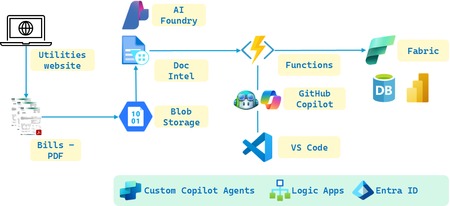
Overview With the introduction of Azure AI Foundry, integrating various AI services to streamline AI solution development and deployment of Agentic AI Workflow solutions like multi-modal, multi-model, dynamic & interactive Agents etc. has become more efficient. The platform offers a range of AI services, including Document Intelligence for extracting data from documents, natural language processing and robust machine learning capabilities, and more. Microsoft Fabric further enhances this ecosystem by providing robust data storage, analytics, and data science tools, enabling seamless data management and analysis. Additionally, Copilot and GitHub Copilot assist developers by offering AI-powered code suggestions and automating repetitive coding tasks, significantly boosting productivity and efficiency. Objectives In this use case, we will use monthly electricity bills from the utilities' website for a year and analyze them using Azure AI services within Azure AI Foundry. The electricity bills is simply an easy start but we could apply it to any other format really. Like say, W-2, I-9, 1099, ISO, EHR etc. By leveraging the Foundry's workflow capabilities, we will streamline the development stages step by step. Initially, we will use Document Intelligence to extract key data such as usage in kilowatts (KW), billed consumption, and other necessary information from each PDF file. This data will then be stored in Microsoft Fabric, where we will utilize its analytics and data science capabilities to process and analyze the information. We will also include a bit of processing steps to include Azure Functions to utilize GitHub Copilot in VS Code. Finally, we will create a Power BI dashboard in Fabric to visually display the analysis, providing insights into electricity usage trends and billing patterns over the year. Utility Invoice sample Building the solution Depicted in the picture are the key Azure and Copilot Services we will use to build the solution. Set up Azure AI Foundry Create a new project in Azure AI Foundry. Add Document Intelligence to your project. You can do this directly within the Foundry portal. Extract documents through Doc Intel Download the PDF files of the power bills and upload them to Azure Blob storage. I used Document Intelligence Studio to create a new project and Train custom models using the files from the Blob storage. Next, in your Azure AI Foundry project, add the Document Intelligence resource by providing the Endpoint URL and Keys. Data Extraction Use Azure Document Intelligence to extract required information from the PDF files. From the resource page in the Doc Intel service in the portal, copy the Endpoint URL and Keys. We will need these to connect the application to the Document Intelligence API. Next, let’s integrate doc intel with the project. In the Azure AI Foundry project, add the Document Intelligence resource by providing the Endpoint URL and Keys. Configure the settings as needed to start using doc intel for extracting data from the PDF documents. We can stay within the Azure AI Foundry portal for most of these steps, but for more advanced configurations, we might need to use the Document Intelligence Studio. GitHub Copilot in VS Code for Azure Functions For processing portions of the output from Doc Intel, what better way to create the Azure Function than in VS Code, especially with the help of GitHub Copilot. Let’s start by installing the Azure Functions extension in VS Code, then create a new function project. GitHub Copilot can assist in writing the code to process the JSON received. Additionally, we can get Copilot to help generate unit tests to ensure the function works correctly. We could use Copilot to explain the code and the tests it generates. Finally, we seamlessly integrate the generated code and unit tests into the Functions app code file, all within VS Code. Notice how we can prompt GitHub Copilot from step 1 of Creating the Workspace to inserting the generated code into the Python file for the Azure Function to testing it and all the way to deploying the Function. Store and Analyze information in Fabric There are many options for storing and analyzing JSON data in Fabric. Lakehouse, Data Warehouse, SQL Database, Power BI Datamart. As our dataset is small, let’s choose either SQL DB or PBI Datamart. PBI Datamart is great for smaller datasets and direct integration with PBI for dashboarding while SQL DB is good for moderate data volumes and supports transactional & analytical workloads. To insert the JSON values derived in the Azure Functions App either called from Logic Apps or directly from the AI Foundry through the API calls into Fabric, let’s explore two approaches. Using REST API and the other Using Functions with Azure SQL DB. Using REST API – Fabric provides APIs that we can call directly from our Function to insert records using HTTP client in the Function’s Python code to send POST requests to the Fabric API endpoints with our JSON data. Using Functions with Azure SQL DB – we can connect it directly from our Function using the SQL client in the Function to execute SQL INSERT statements to add records to the database. While we are at it, we could even get GitHub Copilot to write up the Unit Tests. Here’s a sample: Visualization in Fabric Power BI Let's start with creating visualizations in Fabric using the web version of Power BI for our report, UtilitiesBillAnalysisDashboard. You could use the PBI Desktop version too. Open the PBI Service and navigate to the workspace where you want to create your report. Click on "New" and select "Dataset" to add a new data source. Choose "SQL Server" from the list of data sources and enter "UtilityBillsServer" as the server name and "UtilityBillsDB" as the DB name to establish the connection. Once connected, navigate to the Navigator pane where we can select the table "tblElectricity" and the columns. I’ve shown these in the pictures below. For a clustered column (or bar) chart, let us choose the columns that contain our categorical data (e.g., month, year) and numerical data (e.g., kWh usage, billed amounts). After loading the data into PBI, drag the desired fields into the Values and Axis areas of the clustered column chart visualization. Customize the chart by adjusting the formatting options to enhance readability and insights. We now visualize our data in PBI within Fabric. We may need to do custom sort of the Month column. Let’s do this in the Data view. Select the table and create a new column with the following formula. This will create a custom sort column that we will use as ‘Sum of MonthNumber’ in ascending order. Other visualizations possibilities: Other Possibilities Agents with Custom Copilot Studio Next, you could leverage a custom Copilot to provide personalized energy usage recommendations based on historical data. Start by integrating the Copilot with your existing data pipeline in Azure AI Foundry. The Copilot can analyze electricity consumption patterns stored in your Fabric SQL DB and use ML models to identify optimization opportunities. For instance, it could suggest energy-efficient appliances, optimal usage times, or tips to reduce consumption. These recommendations can be visualized in PBI where users can track progress over time. To implement this, you would need to set up an API endpoint for the Copilot to access the data, train the ML models using Python in VS Code (let GitHub Copilot help you here… you will love it), and deploy the models to Azure using CLI / PowerShell / Bicep / Terraform / ARM or the Azure portal. Finally, connect the Copilot to PBI to visualize the personalized recommendations. Additionally, you could explore using Azure AI Agents for automated anomaly detection and alerts. This agent could monitor electricity bill data for unusual patterns and send notifications when anomalies are detected. Yet another idea would be to implement predictive maintenance for electrical systems, where an AI agent uses predictive analytics to forecast maintenance needs based on the data collected, helping to reduce downtime and improve system reliability. Summary We have built a solution that leveraged the seamless integration of pioneering AI technologies with Microsoft’s end-to-end platform. By leveraging Azure AI Foundry, we have developed a solution that uses Document Intelligence to scan electricity bills, stores the data in Fabric SQL DB, and processes it with Python in Azure Functions in VS Code, assisted by GitHub Copilot. The resulting insights are visualized in Power BI within Fabric. Additionally, we explored potential enhancements using Azure AI Agents and Custom Copilots, showcasing the ease of implementation and the transformative possibilities. Finally, speaking of possibilities – With Gen AI, the only limit is our imagination! Additional resources Explore Azure AI Foundry Start using the Azure AI Foundry SDK Review the Azure AI Foundry documentation and Call Azure Logic Apps as functions using Azure OpenAI Assistants Take the Azure AI Learn courses Learn more about Azure AI Services Document Intelligence: Azure AI Doc Intel GitHub Copilot examples: What can GitHub Copilot do – Examples Explore Microsoft Fabric: Microsoft Fabric Documentation See what you can connect with Azure Logic Apps: Azure Logic Apps Connectors About the Author Pradyumna (Prad) Harish is a Technology leader in the GSI Partner Organization at Microsoft. He has 26 years of experience in Product Engineering, Partner Development, Presales, and Delivery. Responsible for revenue growth through Cloud, AI, Cognitive Services, ML, Data & Analytics, Integration, DevOps, Open Source Software, Enterprise Architecture, IoT, Digital strategies and other innovative areas for business generation and transformation; achieving revenue targets via extensive experience in managing global functions, global accounts, products, and solution architects across over 26 countries.5.3KViews4likes1Comment