copilot
23 TopicsTeams Meetings Get AI Memories for Copilot
If your tenant has Microsoft 365 Copilot licenses, you’ll soon see meeting archive files generated by AI for Teams meetings. The files are stored in a SharePoint Embedded container, but they’re not intended for user consumption. Instead, AI tools like Copilot and the Facilitator agent will use meeting archive files to generate better responses to questions from meeting participants about what happened during meetings. It’s yet another file type to figure out how to govern. https://office365itpros.com/2026/10/21/ai-meeting-archive-files/0Views0likes0CommentsTeams Premium + Bookings : Automatic recording and transcription for Bookings meetings ?
Hello, I have a Teams Premium license, recording and transcription policies are enabled on the admin side, and Video Recap works correctly when both are active simultaneously in the same meeting. My use case : my clients book time slots via Microsoft Bookings. Teams meetings are therefore created automatically by Bookings and I have no control over their scheduling. According to Microsoft Learn documentation (Manage the Virtual appointment meeting template and Microsoft Bookings), there is no documented mechanism to automatically apply a Teams meeting template, and therefore automatic recording and transcription, to meetings generated by Bookings. My question: has anyone found a workaround for this limitation (Power Automate, Graph API, or anything else)? And does Microsoft have a documented roadmap on this topic? This gap directly prevents Teams Premium users from accessing Video Recap on their client meetings, which is one of the core use cases Teams Premium is designed for. Thank you for your help341Views2likes2CommentsTurn conversations into code with GitHub Copilot in Microsoft Teams
Coding where context lives and collaboration happens The best prompt may be the conversation your team has already had or is currently having. Until now, using a coding agent often meant paying context and coordination taxes. Developers had to leave the discussion, open another tool, and reconstruct the problem in a lengthy prompt: what happened, what the team decided, which constraints matter, and what needs to be built. With GitHub Copilot in Teams, teams can move directly from conversation to action. @mention GitHub Copilot when the team is ready to act, and it can use the conversation alongside repository context to understand the request, implement the change, and create a pull request for review. This makes working with a coding agent more collaborative and visible. Instead of one developer privately reconstructing the request, teammates can contribute context, correct assumptions, refine the approach in real time, and review the resulting work together. Let’s explore the new GitHub Copilot in Teams experience to see how it can streamline development tasks: If the player doesn’t load, open the video in a new window: Open video GitHub Copilot in Teams is available in Teams channels, group chats, meeting chats, and 1:1 chats. Once the GitHub app is installed and added to the conversation, @-mention GitHub Copilot to bring it into the discussion and start a task. During public preview, users can complete the following scenarios with GitHub Copilot in Teams: Build a feature based on requirements discussed in Teams Implement a fix for a bug Expand test coverage or improve documentation Create and update a pull request No copying the discussion into a CLI. No rewriting it in a desktop app. No asking one developer to translate a team decision into the perfect prompt. GitHub Copilot works where the context already lives, and because that context is shared, working with GitHub Copilot becomes a team activity. Built around the controls teams already use GitHub Copilot in Teams works within existing GitHub permissions and repository policies. Branch protections and required reviews continue to apply, and people remain responsible for deciding what gets merged, ensuring that humans stay in the loop at every step. Availability GitHub Copilot in Teams is now available in Public Preview. To try it, install the GitHub app for Microsoft Teams and check out our documentation to get started! Less context reconstruction. More progress from the conversations already happening.4.6KViews0likes1Comment
Copilot meeting recap/summary not working with channel meeting
The meeting recap function from copilot seems not to work with channel meetings. We arrange meetings through teams channels, but meetings from channels to not have the meeting recap function as in regular meetings. After the meeting is over, we are not able to use the copilot for these transkripts and meetings. How can we solve this issue? Is this on purpose from MS?1.9KViews2likes2Comments
## Advanced Copilot Prompt for High‑Fidelity Teams Meeting Analysis (v1.5)
## Advanced Copilot Prompt for High‑Fidelity Teams Meeting Analysis (v1.5) I’ve been working on a structured Copilot prompt designed to dramatically improve the quality of meeting analysis inside **Microsoft Teams**, especially when the default Intelligent Recap doesn’t capture enough nuance, decisions, or actionable follow‑ups. This prompt produces a detailed, repeatable output that includes: - TL;DR executive summary - Meeting quality assessment - Prioritized action items table - Confirmed vs. tentative decisions - Open questions & risks - Mind‑map style outline - Timeline of key moments - Confidence & source citations - Tech jargon glossary - Planner‑ready task export It’s now at **version 1.5**, and I’m sharing it publicly for anyone who wants deeper meeting insights or more reliable task handoff into Planner. --- ### Why I Built This In many engineering, security, and cross‑functional meetings, clarity is everything. The default recap is helpful, but sometimes too generic. I wanted something that: - Reduces ambiguity - Surfaces decisions clearly - Highlights risks and open questions - Produces actionable, Planner‑ready tasks - Works consistently across different meeting types - Enforces strict inference rules to avoid hallucinations If your team relies heavily on Teams + Copilot, this can significantly improve meeting outcomes. --- ### What’s Included The full prompt includes: - Strict ordering rules - Anti‑hallucination constraints - Fallback rules for missing data - TL;DR section - Speaker‑labeling rules - Timestamp restrictions - Bullet‑length limits - Planner task title constraints - Deduplication rules - Tone consistency - Signal‑to‑noise filtering I’ve included the complete prompt below for anyone who wants to use or adapt it. --- ### How to Use It 1. Open the **Recap** tab of any Teams meeting with transcription enabled. 2. Click **Open Copilot**. 3. Paste the entire prompt into the Copilot compose box. 4. Wait for the structured output (usually 30–120 seconds). 5. Copy the Planner tasks section directly into Planner or Copilot for Planner. --- ### Looking for Feedback If you try this prompt, I’d love to hear: - What worked well - What didn’t - What you’d like added in v1.6 - Any edge cases or meeting types where it struggled I’m planning to maintain this as a community resource, so suggestions are welcome. Thanks to everyone experimenting with Copilot in Teams — the creativity in this community is incredible. --- ### Full Prompt (v1.5) ````markdown ```markdown # ============================================================ # PROMPT NAME: Advanced Teams Meeting Analyst (Copilot Enhancement) # ============================================================ # Version: 1.5 # Author: Scott M # Last Updated: 2026-01-14 # # Goal: # Use Microsoft Copilot in Teams (Recap tab or live meeting) to generate a highly structured, # high-signal meeting analysis that goes far beyond the default Intelligent Recap output. # Produce executive summary with TL;DR, prioritized action items table, confirmed/tentative decisions, # risks/open questions, mind-map outline, timeline, quality assessment, confidence/sources, # tech jargon glossary, and Planner-ready task export—all derived strictly from the transcript, # shared screens, chat, and attachments. # # Why This Is Superior to Default Teams/Copilot Processing: # - Default Recap: Basic chapters, highlights, simple tasks, attendance—often generic and misses nuance. # - This custom prompt: Forces strict inference rules (no hallucinations), adds confidence labeling, # decision status, risks section, mind-map structure, quality flags, source citations, # jargon glossary, and direct Planner integration for seamless task handoff. # Delivers scannable, professional-grade notes + actionable tasks for tech/engineering teams. # # Audience: # Microsoft 365 Copilot users in Teams-heavy environments who want deeper analysis # and direct bridge to Planner for follow-up execution. # # Non-Goals: # - This is NOT a replacement for legal/compliance-grade minutes. # - This is NOT verbatim transcription (use the native transcript for that). # - Relies on Teams transcription quality (enable Intelligent Speakers if available). # # Usage Instructions: # 1. Prerequisites: # - Ensure the meeting had transcription enabled (Meeting options → Record & transcribe → Allow transcription). # - For best speaker attribution: Enable Intelligent Speakers (if your org supports it) or have participants use their names clearly. # - Copilot license required (M365 Copilot or Teams Premium for full Recap features). # # 2. Post-Meeting (Recommended – Recap Tab): # - Go to the Teams meeting chat → Click the Recap tab (appears after meeting ends and processing finishes). # - Click Open Copilot (or the Copilot icon in the top-right of Recap). # - In the Copilot pane compose box, paste this ENTIRE prompt and press Enter/Send. # - Wait 30–120 seconds (longer for 60+ min meetings) for the full structured output. # # 3. During Live Meeting (Quick Catch-Up): # - While the meeting is active → Click the Copilot icon in the meeting controls. # - Paste the prompt (or a shortened version if time-sensitive) and ask for real-time summary/actions so far. # # 4. After Output Appears: # - Review the markdown sections—copy any part (e.g., Action Items table, Planner tasks) directly. # - For Planner handoff: # - Copy the entire "10. Planner Integration" section. # - Open Planner (in Teams app or planner.microsoft.com). # - Option A: Manually create tasks by pasting titles/descriptions. # - Option B: In Planner's Copilot pane (if available): Paste the tasks list and say "Create these tasks in my [plan name] plan". # - Save/export: Copy full output to OneNote, Word, or email for sharing. # # 5. Refinement & Follow-Ups (Highly Recommended): # - In the same Copilot pane, type targeted follow-ups like: # - "Expand the Risks section with mitigation ideas" # - "Draft a professional follow-up email to attendees including the summary and action table" # - "Create these tasks in Planner plan 'Engineering Syncs'" # - "Explain [specific jargon term] in more detail" # - "Prioritize the action items by impact" # - Iterate until satisfied—Copilot remembers context in the session. # # 6. Tips & Troubleshooting: # - If output is incomplete: Re-paste the prompt or say "Regenerate full analysis". # - Short meetings (<15 min): Output may be concise—ask for more detail if needed. # - No Recap tab? Ensure recording/transcription was on; wait 5–10 min post-meeting. # - Sensitive meetings: Redaction is automatic per rules, but double-check output. # # Changelog: # v1.0 - Initial release # v1.1 - Added confidence/sources + follow-up suggestions # v1.2 - Added Tech Jargon Glossary # v1.3 - Added Planner Integration section # v1.4 - Expanded Usage Instructions into detailed, step-by-step guide with prerequisites, live/post options, refinement examples, and troubleshooting # v1.5 - Added strict ordering rules, anti-hallucination constraints, fallback rules for missing data, TL;DR section, speaker-labeling rules, timestamp restrictions, bullet-length limits, Planner title constraints, deduplication rules, tone consistency, and signal-to-noise filtering # # ============================================================ # CRITICAL INSTRUCTIONS (STRICT) # ============================================================ - Do NOT summarize, restate, or comment on this prompt. Produce only the meeting analysis. - Follow the numbered sections in the exact order shown. Do not omit, reorder, merge, or rename sections. - If any section lacks sufficient evidence, include the header and write: **“No reliable data found.”** - Derive ALL content ONLY from the Teams transcript, shared content, chat, and attachments. - NEVER invent details. If unclear, mark as “Unclear” or “TBD.” - Use neutral labels (Speaker A, Speaker B, etc.) if speaker names are not confidently identified. - Assign deterministic speaker labels based on first appearance. - Redact sensitive info as [REDACTED] and flag in Risks. - Include inline citations [Transcript HH:MM, Slide X] where possible. - Keep bullet points ≤ 20 words unless quoting transcript evidence. - Exclude small talk, greetings, jokes, or irrelevant chatter unless they directly impact decisions or tasks. - Only include timestamps if explicitly present in the transcript. Never estimate or invent them. - Deduplicate action items, decisions, and risks before final output. - Maintain a professional, concise, cross-functional technical PM tone. - Planner task titles must be ≤ 10 words and start with a verb. # ============================================================ # OUTPUT FORMAT (USE EXACTLY) # ============================================================ **TL;DR (1–2 sentences)** A concise, high-level summary of why the team met and what was resolved. --- 1. **Meeting Quality Assessment** - Clarity: [Good | Fair | Poor — brief explanation] - Speaker overlap / noise: [Low | Medium | High] - Estimated accuracy: [High | Medium | Low — justification] 2. **Executive Summary** Start with 1–2 sentence overview. Then provide 5–8 bullets covering: - Purpose - Attendees (names or count if unclear) - Key topics - Outcomes - Next steps 3. **Action Items** | Priority | Owner | Task Description | Due Date | Timestamp | Dependencies | Status | Notes | |----------|-------|------------------|----------|-----------|--------------|--------|-------| **Rules:** - Sort by Priority (High → Medium → Low), then Due Date. - Infer owners/dates ONLY if explicitly stated or clearly volunteered. - Default Priority: Medium; Status: Open. - Titles ≤ 10 words, start with a verb. - Deduplicate similar tasks. 4. **Key Decisions** - **DECISION:** [What was decided] - Status: [Confirmed | Tentative | Disputed] - Confidence: [High/Medium/Low — reason] - Rationale: [Why] - Impacted: [Who] - Evidence: [Transcript HH:MM or Slide reference] 5. **Open Questions & Risks** **Open Questions** - [Unresolved or unclear items] **Risks** - [Ambiguity, missing owners, conflicting views, scope creep, technical risks, etc.] 6. **Mind Map Outline (Hierarchical Outline)** - Main Topic 1 - Subtopic A - Action / Decision / Fact - Subtopic B **Rules:** - Max 5 main topics - Max 3 levels deep - ≤ 8 words per node - Prune low-signal branches 7. **Timeline of Key Moments** - HH:MM – [Brief one-line description] - HH:MM – [etc.] *Only include if timestamps exist; otherwise write “No reliable data found.”* 8. **Confidence & Sources Summary** - Overall confidence: XX/100 - Key sources: [Transcript HH:MM, Slide X, Chat message, etc.] 9. **Tech Jargon Glossary** - TERM: Definition (1–2 sentences) *Include only if relevant terms appear.* 10. **Planner Integration: Ready-to-Create Tasks** Numbered list, each formatted as: 1. **Task Title:** [≤10 words, verb-led] - Assigned to: [Owner or TBD] - Due: [Date or TBD] - Priority: [High/Medium/Low] - Description: [Brief details + dependencies/notes] - Labels/Buckets: [Suggested grouping] **Rules:** - Only include items with clear action/owner potential. - Group related tasks under consistent buckets. - Deduplicate tasks. --- **Follow-Up Prompts (suggest 3–5)** - “Create these tasks in Planner plan ‘X’.” - “Expand the Risks section with mitigation strategies.” - “Draft a follow-up email summarizing this meeting.” - “Prioritize action items by impact and urgency.” - “Clarify ambiguous decisions and propose next steps.”3.9KViews1like2CommentsMicrosoft Teams Takes Center Stage at the 2026 Microsoft 365 Community Conference
Microsoft Teams is where people, Microsoft 365 Copilot, and agents come together to collaborate, communicate, and get work done—before, during, and after every interaction. Contributing to and benefiting from Work IQ, Copilot in Teams understands the context, relationships, and signals behind real work, bringing meetings, calling, chat, and collaboration into a single, connected experience across Microsoft 365. At the 2026 Microsoft 365 Community Conference, Teams will be front and center with a broad set of sessions that reflect how teamwork is evolving. From everyday collaboration and meetings to frontline communications, external collaboration, and Copilot‑powered workflows, Teams is designed to help organizations move work forward with clarity and confidence. Register for the M365 Conference today and save $150 with code SAVE150. #M365Con26 Across the Teams sessions at the conference, you’ll see how AI‑powered capabilities—like intelligent meeting recap, real‑time language interpretation, AI‑assistance for calling, and collaborative agents—help teams stay aligned whether work happens in the office, on the front line, or across time zones. What to Expect from the Teams Track The Teams track at the M365 Community Conference offers a practical, end‑to‑end view of how Teams supports new ways work gets done and how organizations can continue their journey toward becoming a Frontier Firm by connecting communication, collaboration, intelligence, and governance in one AI-powered platform. Sessions span key areas including: Collaboration across meetings and events, chats and channels AI-powered communications and modern calling Enabling frontline teams Seamless and secure external collaboration Workplace collaboration and management Operational excellence for IT admins Protection against modern and evolving threats How Teams integrates across Microsoft 365 and contributes to Work IQ for Copilot Whether you’re deploying Teams, managing it at scale, building on it, or using it to drive business outcomes, the Teams track is designed to meet you where you are and help you plan what’s next. You can find the full list of sessions here. Start Here: The Teams Track Session You Shouldn’t Miss To set strategic context for the Teams track, start with Your Guide: What’s New in Teams — Collaboration, Communication, and Copilot. Led by Ilya Bukshteyn, Corporate Vice President, Microsoft Teams, and Chandra Chivukula, Vice President, Microsoft Teams Engineering, this session sets the foundation for the Teams track. You’ll get a high‑level view of where Teams is headed—how it’s becoming more intelligent, easier to manage, and increasingly shaped by Copilot across collaboration, meetings, and calling—before diving deeper into the rest of the Teams sessions throughout the conference. Women in Tech and Allies Lunch: featuring Lan Ye and Sumi Singh Lan Ye and Sumi Singh will join this year’s Women in Tech and Allies Lunch as featured panelists. As Corporate Vice Presidents leading Microsoft Teams product and engineering, they’ll share insights, experiences, and advice on fostering diversity and empowerment in technology. Their participation promises a dynamic and engaging discussion you won’t want to miss. Exclusive: Executive Teams Pre-Day Microsoft Teams will host an exclusive Teams Pre‑Day on Monday, April 20, 2026, in Orlando, FL., the day before the conference begins. This full‑day experience is designed for executive IT and business decision makers who shape productivity, collaboration, and communications strategy within their organizations. The day features direct engagement with Microsoft Teams leaders and product experts, with a focus on what’s next across Teams, including Copilot and AI within Teams, and how to maximize value across meetings, calling, devices, and collaboration. Space is limited, and attendance will be aligned to the intended audience for the day. If you’re interested in attending, connect with your Microsoft account team to see if there is still availability. Explore 1:1 Strategic Discussions at the Conference A limited number of 1:1 side meetings will be available during the conference for customers looking to discuss Teams strategy, roadmap alignment, and organizational priorities. These conversations are designed for higher‑level planning discussions and complement the technical depth available across breakout sessions and the Teams booth. Availability is limited. Connect with your Microsoft account team to explore options. Experience Teams Beyond the Sessions In addition to breakout sessions and lightning talks, visit the Microsoft Teams product demos in the Microsoft Innovation Hub on the show floor. It’s a great opportunity to see the latest Teams capabilities in action, explore real‑world scenarios, and connect directly with the product experts behind the experiences. Register for the M365 Conference today and save $150 with code SAVE150. We hope to see you there!2KViews1like2CommentsCopilot Transcription Behavior Changing for Teams Meetings
Microsoft plans to deploy an update to change how transcription behaves for Teams meetings where Copilot is enabled. New meetings will not generate a transcript unless the meeting organizer explicitly enables transcription or the Microsoft 365 tenant deploys custom meeting policies that enable transcription with Copilot. The AI features work even without a transcript. But no transcript means no searchable artifact, and that’s what some want. https://office365itpros.com/2025/09/15/transcription-teams-meetings/204Views0likes0Comments
New Diagnostic: Copilot Agent Functionality in Microsoft Teams.
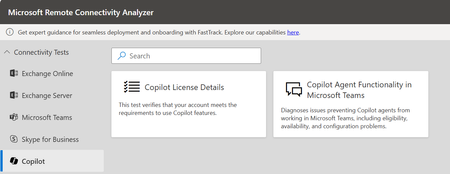
As Microsoft Copilot for Microsoft 365 continues to evolve, ensuring reliable agent performance within Microsoft Teams is critical to delivering a seamless user experience. To support this, we’re introducing the Copilot Agent Functionality Diagnostic—a powerful tool designed to identify and resolve issues that may prevent Copilot agents from operating in Teams. This includes validating eligibility, confirming service availability, and checking for configuration compliance. With this test, organizations can quickly verify that their environment is optimized for Copilot agents, helping users fully leverage the capabilities of Copilot within Teams. Why This Matters For Copilot agents to function seamlessly in Microsoft Teams, several dependencies must be in place—including user authentication, valid license assignment, tenant app settings, and the ability to run required custom apps in preview. If any of these prerequisites are misconfigured, users may face errors, limited functionality, or even lose access to Copilot features altogether. That’s where our Diagnostics comes in -The Copilot Agent Functionality Test helps eliminate these risks by proactively checking authentication, confirming license validity, validating Teams app configurations, and identifying settings that could block Copilot agents. By addressing these issues early, organizations can ensure users experience the full value of Copilot in Teams without disruption. What the Diagnostic Does The Copilot Agent Functionality Diagnostic is designed to help both customers and support engineers validate the critical requirements that enable Copilot agents to work seamlessly in Microsoft Teams. It performs a series of checks to confirm: Successful retrieval of Teams user authentication information Verification that users hold a valid Microsoft 365 Copilot license for Teams Confirmation that custom apps in preview are enabled to support Copilot agents Validation of Teams tenant app settings for proper permissions and availability Identification of configuration gaps that may block agent functionality By running these validations, the diagnostic ensures that the Teams environment is properly configured, reducing the likelihood of errors and empowering organizations to deliver a consistent Copilot experience in Microsoft Teams. Who Should Use It? Note: A Global Administrator account is required to run this diagnostic. IT Admins validating Teams settings, app configurations, and license prerequisites to ensure Copilot agents function correctly. Support Engineers troubleshooting Copilot agent issues related to authentication, configuration, or feature availability. Adoption & Change Management Leads confirming the Teams environment is properly prepared for users to engage with Copilot agents during rollout. Get Started To run the diagnostic, you’ll need a Global Administrator account. To access the new customer facing diagnostic, navigate to Microsoft Remote Connectivity Analyzer, select COPILOT, then click on the “Copilot Agent Functionality in Microsoft Teams”. A Big Thank you to Rui Andre Tabares.1.2KViews1like0CommentsNew Diagnostic: Copilot License Details check
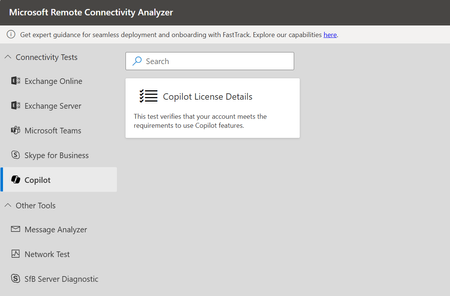
As Microsoft Copilot for Microsoft 365 continues to expand its capabilities, so must the tools that ensure a seamless user experience. One of the most important steps in enabling Copilot features is validating license assignments. To support this, we’re excited to introduce the Copilot License Check Diagnostic—a powerful tool designed to streamline and validate your license readiness by confirming whether Copilot for Microsoft 365 licenses are properly assigned to users, ensuring that features dependent on Copilot function as expected. Diagnostics makes it easy to validate license assignments, ensuring users are set to unlock the full power of Copilot. Why This Matters The ability to leverage Copilot for Microsoft 365 is directly tied to proper license assignment—a critical step in unlocking AI-powered productivity. Without the right license, users may be unable to access key Copilot features, leading to confusion or reduced value from your Microsoft 365 investment. That’s where our Diagnostics comes in—helping you quickly validate license readiness, ensure feature availability, and streamline the path to a seamless Copilot experience. What the Diagnostic Does The Copilot License Check Diagnostic is built to empower both customers and support engineers. It validates whether users are properly licensed to access Copilot for Microsoft 365 by checking: Assignment and validity of Copilot for Microsoft 365 licenses User eligibility across Microsoft 365 services that integrate with Copilot Dependency on prerequisite licenses (e.g., Microsoft 365 E3/E5, Office apps) Checks all the service plans enabled within Copilot license. Potential gaps that could block access to Copilot-powered capabilities This diagnostic ensures that license readiness is confirmed in advance, reducing the risk of feature unavailability and helping organizations maximize the value of Copilot. Who Should Use It? Note: We can run the diagnostic either with Global admin or normal account. IT Admins validating that users have the correct Copilot for Microsoft 365 licenses assigned Support Engineers troubleshooting Copilot feature availability issues Adoption & Change Management Leads ensuring users are ready to access Copilot as part of rollout plans Get Started We can run the diagnostic either with Global admin or normal account. To access the new customer facing diagnostic, navigate to Microsoft Remote Connectivity Analyzer, select COPILOT, then click on the “Copilot License Details”. A Big Thank you to Rui Andre Tabares.14KViews0likes0Comments