copilot
79 TopicsIntroducing GitHub Copilot for Azure: Your Cloud Coding Companion in VS Code!
🚀 Ready to Elevate Your Cloud Coding Game? Meet “@azure” – your companion in GitHub Copilot Chat. Get personalized answers about Azure resources, streamline deployments, and improve your troubleshooting. Early access awaits – sign up now! 🌟50KViews15likes17CommentsCopilot Learning Hub: Your Gateway to Mastering Microsoft Copilot
Have you ever wanted a single place to go to learn all about Microsoft Copilot? The Copilot Learning Hub is designed to be your go-to source for everything related to Microsoft Copilot, with articles, videos, and hands-on labs for all tech areas.Demystifying GitHub Copilot Security Controls: easing concerns for organizational adoption
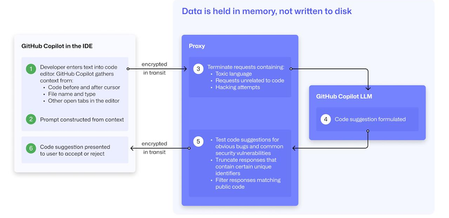
At a recent developer conference, I delivered a session on Legacy Code Rescue using GitHub Copilot App Modernization. Throughout the day, conversations with developers revealed a clear divide: some have fully embraced Agentic AI in their daily coding, while others remain cautious. Often, this hesitation isn't due to reluctance but stems from organizational concerns around security and regulatory compliance. Having witnessed similar patterns during past technology shifts, I understand how these barriers can slow adoption. In this blog, I'll demystify the most common security concerns about GitHub Copilot and explain how its built-in features address them, empowering organizations to confidently modernize their development workflows. GitHub Copilot Model Training A common question I received at the conference was whether GitHub uses your code as training data for GitHub Copilot. I always direct customers to the GitHub Copilot Trust Center for clarity, but the answer is straightforward: “No. GitHub uses neither Copilot Business nor Enterprise data to train the GitHub model.” Notice this restriction also applies to third-party models as well (e.g. Anthropic, Google). GitHub Copilot Intellectual Property indemnification policy A frequent concern I hear is, since GitHub Copilot’s underlying models are trained on sources that include public code, it might simply “copy and paste” code from those sources. Let’s clarify how this actually works: Does GitHub Copilot “copy/paste”? “The AI models that create Copilot’s suggestions may be trained on public code, but do not contain any code. When they generate a suggestion, they are not “copying and pasting” from any codebase.” To provide an additional layer of protection, GitHub Copilot includes a “duplicate detection filter”. This feature helps prevent suggestions that closely match public code from being surfaced. (Note: This duplicate detection currently does not apply to the Copilot coding agent.) More importantly, customers are protected by an Intellectual Property indemnification policy. This means that if you receive an unmodified suggestion from GitHub Copilot and face a copyright claim as a result, Microsoft will defend you in court. GitHub Copilot Data Retention Another frequent question I hear concerns GitHub Copilot’s data retention policies. For organizations on GitHub Copilot Business and Enterprise plans, retention practices depend on how and where the service is accessed from: Access through IDE for Chat and Code Completions: Prompts and Suggestions: Not retained. User Engagement Data: Kept for two years. Feedback Data: Stored for as long as needed for its intended purpose. Other GitHub Copilot access and use: Prompts and Suggestions: Retained for 28 days. User Engagement Data: Kept for two years. Feedback Data: Stored for as long as needed for its intended purpose. For Copilot Coding Agent, session logs are retained for the life of the account in order to provide the service. Excluding content from GitHub Copilot To prevent GitHub Copilot from indexing sensitive files, you can configure content exclusions at the repository or organization level. In VS Code, use the .copilotignore file to exclude files client-side. Note that files listed in .gitignore are not indexed by default but may still be referenced if open or explicitly referenced (unless they’re excluded through .copilotignore or content exclusions). The life cycle of a GitHub Copilot code suggestion Here are the key protections at each stage of the life cycle of a GitHub Copilot code suggestion: In the IDE: Content exclusions prevent files, folders, or patterns from being included. GitHub proxy (pre-model safety): Prompts go through a GitHub proxy hosted in Microsoft Azure for pre-inference checks: screening for toxic or inappropriate language, relevance, and hacking attempts/jailbreak-style prompts before reaching the model. Model response: With the public code filter enabled, some suggestions are suppressed. The vulnerability protection feature blocks insecure coding patterns like hardcoded credentials or SQL injections in real time. Disable access to GitHub Copilot Free Due to the varying policies associated with GitHub Copilot Free, it is crucial for organizations to ensure it is disabled both in the IDE and on GitHub.com. Since not all IDEs currently offer a built-in option to disable Copilot Free, the most reliable method to prevent both accidental and intentional access is to implement firewall rule changes, as outlined in the official documentation. Agent Mode Allow List Accidental file system deletion by Agentic AI assistants can happen. With GitHub Copilot agent mode, the "Terminal auto approve” setting in VS Code can be used to prevent this. This setting can be managed centrally using a VS Code policy. MCP registry Organizations often want to restrict access to allow only trusted MCP servers. GitHub now offers an MCP registry feature for this purpose. This feature isn’t available in all IDEs and clients yet, but it's being developed. Compliance Certifications The GitHub Copilot Trust Center page lists GitHub Copilot's broad compliance credentials, surpassing many competitors in financial, security, privacy, cloud, and industry coverage. SOC 1 Type 2: Assurance over internal controls for financial reporting. SOC 2 Type 2: In-depth report covering Security, Availability, Processing Integrity, Confidentiality, and Privacy over time. SOC 3: General-use version of SOC 2 with broad executive-level assurance. ISO/IEC 27001:2013: Certification for a formal Information Security Management System (ISMS), based on risk management controls. CSA STAR Level 2: Includes a third-party attestation combining ISO 27001 or SOC 2 with additional cloud control matrix (CCM) requirements. TISAX: Trusted Information Security Assessment Exchange, covering automotive-sector security standards. In summary, while the adoption of AI tools like GitHub Copilot in software development can raise important questions around security, privacy, and compliance, it’s clear that existing safeguards in place help address these concerns. By understanding the safeguards, configurable controls, and robust compliance certifications offered, organizations and developers alike can feel more confident in embracing GitHub Copilot to accelerate innovation while maintaining trust and peace of mind.Essential Microsoft Resources for MVPs & the Tech Community from the AI Tour
Unlock the power of Microsoft AI with redeliverable technical presentations, hands-on workshops, and open-source curriculum from the Microsoft AI Tour! Whether you’re a Microsoft MVP, Developer, or IT Professional, these expertly crafted resources empower you to teach, train, and lead AI adoption in your community. Explore top breakout sessions covering GitHub Copilot, Azure AI, Generative AI, and security best practices—designed to simplify AI integration and accelerate digital transformation. Dive into interactive workshops that provide real-world applications of AI technologies. Take it a step further with Microsoft’s Open-Source AI Curriculum, offering beginner-friendly courses on AI, Machine Learning, Data Science, Cybersecurity, and GitHub Copilot—perfect for upskilling teams and fostering innovation. Don’t just learn—lead. Access these resources, host impactful training sessions, and drive AI adoption in your organization. Start sharing today! Explore now: Microsoft AI Tour Resources.Supercharge Your Dev Workflows with GitHub Copilot Custom Skills
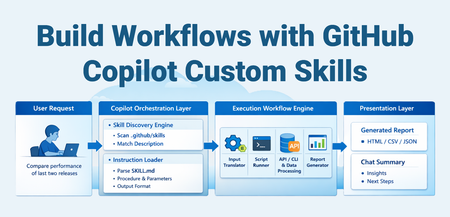
The Problem Every team has those repetitive, multi-step workflows that eat up time: Running a sequence of CLI commands, parsing output, and generating a report Querying multiple APIs, correlating data, and summarizing findings Executing test suites, analyzing failures, and producing actionable insights You've probably documented these in a wiki or a runbook. But every time, you still manually copy-paste commands, tweak parameters, and stitch results together. What if your AI coding assistant could do all of that — triggered by a single natural language request? That's exactly what GitHub Copilot Custom Skills enable. What Are Custom Skills? A skill is a folder containing a SKILL.md file (instructions for the AI), plus optional scripts, templates, and reference docs. When you ask Copilot something that matches the skill's description, it loads the instructions and executes the workflow autonomously. Think of it as giving your AI assistant a runbook it can actually execute, not just read. Without Skills With Skills Read the wiki for the procedure Copilot loads the procedure automatically Copy-paste 5 CLI commands Copilot runs the full pipeline Manually parse JSON output Script generates a formatted HTML report 15-30 minutes of manual work One natural language request, ~2 minutes How It Works The key insight: the skill file is the contract between you and the AI. You describe what to do and how, and Copilot handles the orchestration. Prerequisites Requirement Details VS Code Latest stable release GitHub Copilot Active Copilot subscription (Individual, Business, or Enterprise) Agent mode Select "Agent" mode in the Copilot Chat panel (the default in recent versions) Runtime tools Whatever your scripts need — Python, Node.js, .NET CLI, az CLI, etc. Note: Agent Skills follow an open standard — they work across VS Code, GitHub Copilot CLI, and GitHub Copilot coding agent. No additional extensions or cloud services are required for the skill system itself. Anatomy of a Skill .github/skills/my-skill/ ├── SKILL.md # Instructions (required) └── references/ ├── resources/ │ ├── run.py # Automation script │ ├── query-template.sql # Reusable query template │ └── config.yaml # Static configuration └── reports/ └── report_template.html # Output template The SKILL.md File Every skill has the same structure: --- name: my-skill description: 'What this does and when to use it. Include trigger phrases so Copilot knows when to load it. USE FOR: specific task A, task B. Trigger phrases: "keyword1", "keyword2".' argument-hint: 'What inputs the user should provide.' --- # My Skill ## When to Use - Situation A - Situation B ## Quick Start \```powershell cd .github/skills/my-skill/references/resources py run.py <arg1> <arg2> \``` ## What It Does | Step | Action | Purpose | |------|--------|---------| | 1 | Fetch data from source | Gather raw input | | 2 | Process and transform | Apply business logic | | 3 | Generate report | Produce actionable output | ## Output Description of what the user gets back. Key Design Principles Description is discovery. The description field is the only thing Copilot reads to decide whether to load your skill. Pack it with trigger phrases and keywords. Progressive loading. Copilot reads only name + description (~100 tokens) for all skills. It loads the full SKILL.md body only for matched skills. Reference files load only when the procedure references them. Self-contained procedures. Include everything the AI needs to execute — exact commands, parameter formats, file paths. Don't assume prior knowledge. Scripts do the heavy lifting. The AI orchestrates; your scripts execute. This keeps the workflow deterministic and reproducible. Example: Build a Deployment Health Check Skill Let's build a skill that checks the health of a deployment by querying an API, comparing against expected baselines, and generating a summary. Step 1 — Create the folder structure .github/skills/deployment-health/ ├── SKILL.md └── references/ └── resources/ ├── check_health.py └── endpoints.yaml Step 2 — Write the SKILL.md --- name: deployment-health description: 'Check deployment health across environments. Queries health endpoints, compares response times against baselines, and flags degraded services. USE FOR: deployment validation, health check, post-deploy verification, service status. Trigger phrases: "check deployment health", "is the deployment healthy", "post-deploy check", "service health".' argument-hint: 'Provide the environment name (e.g., staging, production).' --- # Deployment Health Check ## When to Use - After deploying to any environment - During incident triage to check service status - Scheduled spot checks ## Quick Start \```bash cd .github/skills/deployment-health/references/resources python check_health.py <environment> \``` ## What It Does 1. Loads endpoint definitions from `endpoints.yaml` 2. Calls each endpoint, records response time and status code 3. Compares against baseline thresholds 4. Generates an HTML report with pass/fail status ## Output HTML report at `references/reports/health_<environment>_<date>.html` Step 3 — Write the script # check_health.py import sys, yaml, requests, time, json from datetime import datetime def main(): env = sys.argv[1] with open("endpoints.yaml") as f: config = yaml.safe_load(f) results = [] for ep in config["endpoints"]: url = ep["url"].replace("{env}", env) start = time.time() resp = requests.get(url, timeout=10) elapsed = time.time() - start results.append({ "service": ep["name"], "status": resp.status_code, "latency_ms": round(elapsed * 1000), "threshold_ms": ep["threshold_ms"], "healthy": resp.status_code == 200 and elapsed * 1000 < ep["threshold_ms"] }) healthy = sum(1 for r in results if r["healthy"]) print(f"Health check: {healthy}/{len(results)} services healthy") # ... generate HTML report ... if __name__ == "__main__": main() Step 4 — Use it Just ask Copilot in agent mode: "Check deployment health for staging" Copilot will: Match against the skill description Load the SKILL.md instructions Run python check_health.py staging Open the generated report Summarize findings in chat More Skill Ideas Skills aren't limited to any specific domain. Here are patterns that work well: Skill What It Automates Test Regression Analyzer Run tests, parse failures, compare against last known-good run, generate diff report API Contract Checker Compare Open API specs between branches, flag breaking changes Security Scan Reporter Run SAST/DAST tools, correlate findings, produce prioritized report Cost Analysis Query cloud billing APIs, compare costs across periods, flag anomalies Release Notes Generator Parse git log between tags, categorize changes, generate changelog Infrastructure Drift Detector Compare live infra state vs IaC templates, flag drift Log Pattern Analyzer Query log aggregation systems, identify anomaly patterns, summarize Performance Bench marker Run benchmarks, compare against baselines, flag regressions Dependency Auditor Scan dependencies, check for vulnerabilities and outdated packages The pattern is always the same: instructions (SKILL.md) + automation script + output template. Tips for Writing Effective Skills Do Front-load the description with keywords — this is how Copilot discovers your skill Include exact commands — cd path/to/dir && python script.py <args> Document input/output clearly — what goes in, what comes out Use tables for multi-step procedures — easier for the AI to follow Include time zone conversion notes if dealing with timestamps Bundle HTML report templates — rich output beats plain text Don't Don't use vague descriptions — "A useful skill" won't trigger on anything Don't assume context — include all paths, env vars, and prerequisites Don't put everything in SKILL.md — use references/ for large files Don't hardcode secrets — use environment variables or Azure Key Vault Don't skip error guidance — tell the AI what common errors look like and how to fix them Skill Locations Skills can live at project or personal level: Location Scope Shared with team? .github/skills/<name>/ Project Yes (via source control) .agents/skills/<name>/ Project Yes (via source control) .claude/skills/<name>/ Project Yes (via source control) ~/.copilot/skills/<name>/ Personal No ~/.agents/skills/<name>/ Personal No ~/.claude/skills/<name>/ Personal No Project-level skills are committed to your repo and shared with the team. Personal skills are yours and roam with your VS Code settings sync. You can also configure additional skill locations via the chat.skillsLocations VS Code setting. How Skills Fit in the Copilot Customization Stack Skills are one of several customization primitives. Here's when to use what: Primitive Use When Workspace Instructions (.github/copilot-instructions.md) Always-on rules: coding standards, naming conventions, architectural guidelines File Instructions (.github/instructions/*.instructions.md) Rules scoped to specific file patterns (e.g., all *.test.ts files) Prompts (.github/prompts/*.prompt.md) Single-shot tasks with parameterized inputs Skills (.github/skills/<name>/SKILL.md) Multi-step workflows with bundled scripts and templates Custom Agents (.github/agents/*.agent.md) Isolated subagents with restricted tool access or multi-stage pipelines Hooks (.github/hooks/*.json) Deterministic shell commands at agent lifecycle events (auto-format, block tools) Plugins Installable skill bundles from the community (awesome-copilot) Slash Commands & Quick Creation Skills automatically appear as slash commands in chat. Type / to see all available skills. You can also pass context after the command: /deployment-health staging /webapp-testing for the login page Want to create a skill fast? Type /create-skill in chat and describe what you need. Copilot will ask clarifying questions and generate the SKILL.md with proper frontmatter and directory structure. You can also extract a skill from an ongoing conversation: after debugging a complex issue, ask "create a skill from how we just debugged that" to capture the multi-step procedure as a reusable skill. Controlling When Skills Load Use frontmatter properties to fine-tune skill availability: Configuration Slash command? Auto-loaded? Use case Default (both omitted) Yes Yes General-purpose skills user-invocable: false No Yes Background knowledge the model loads when relevant disable-model-invocation: true Yes No Skills you only want to run on demand Both set No No Disabled skills The Open Standard Agent Skills follow an open standard that works across multiple AI agents: GitHub Copilot in VS Code — chat and agent mode GitHub Copilot CLI — terminal workflows GitHub Copilot coding agent — automated coding tasks Claude Code, Gemini CLI — compatible agents via .claude/skills/ and .agents/skills/ Skills you write once are portable across all these tools. Getting Started Create .github/skills/<your-skill>/SKILL.md in your repo Write a keyword-rich description in the YAML frontmatter Add your procedure and reference scripts Open VS Code, switch to Agent mode, and ask Copilot to do the task Watch it discover your skill, load the instructions, and execute Or skip the manual setup — type /create-skill in chat and describe what you need. That's it. No extension to install. No config file to update. No deployment pipeline. Just markdown and scripts, version-controlled in your repo. Custom Skills turn your documented procedures into executable AI workflows. Start with your most painful manual task, wrap it in a SKILL.md, and let Copilot handle the rest. Further Reading: Official Agent Skills docs Community skills & plugins (awesome-copilot) Anthropic reference skillsGetting Started with Azure MCP Server: A Guide for Developers
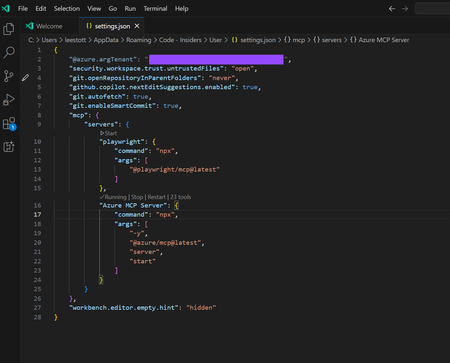
The world of cloud computing is growing rapidly, and Azure is at the forefront of this innovation. If you're a student developer eager to dive into Azure and learn about Model Context Protocol (MCP), the Azure MCP Server is your perfect starting point. This tool, currently in Public Preview, empowers AI agents to seamlessly interact with Azure services like Azure Storage, Cosmos DB, and more. Let's explore how you can get started! 🎯 Why Use the Azure MCP Server? The Azure MCP Server revolutionizes how AI agents and developers interact with Azure services. Here's a glimpse of what it offers: Exploration Made Easy: List storage accounts, databases, resource groups, tables, and more with natural language commands. Advanced Operations: Manage configurations, query analytics, and execute complex tasks like building Azure applications. Streamlined Integration: From JSON communication to intelligent auto-completion, the Azure MCP Server ensures smooth operations. Whether you're querying log analytics or setting up app configurations, this server simplifies everything. ✨ Installation Guide: One-Click and Manual Methods Prerequisites: Before you begin, ensure the following: Install either the Stable or Insiders release of VS Code. Add the GitHub Copilot and GitHub Copilot Chat extensions. Option 1: One-Click Install You can install the Azure MCP Server in VS Code or VS Code Insiders using NPX. Here's how: Simply run: npx -y /mcp@latest server start Option 2: Manual Install If you'd prefer manual setup, follow these steps: Create a .vscode/mcp.json file in your VS Code project directory. Add the following configuration: { "servers": { "Azure MCP Server": { "command": "npx", "args": ["-y", "@azure/mcp@latest", "server", "start"] } } } Here an example of the settings.json file Now, launch GitHub Copilot in Agent Mode to activate the Azure MCP Server. 🚀 Supercharging Azure Development Once installed, the Azure MCP Server unlocks an array of capabilities: Azure Cosmos DB: List, query, manage databases and containers. Azure Storage: Query blob containers, metadata, and tables. Azure Monitor: Use KQL to analyze logs and monitor your resources. App Configuration: Handle key-value pairs and labeled configurations. Test prompts like: "List my Azure Storage containers" "Query my Log Analytics workspace" "Show my key-value pairs in App Config" These commands let your agents harness the power of Azure services effortlessly. 🛡️ Security & Authentication The Azure MCP Server simplifies authentication using Azure Identity. Your login credentials are handled securely, with support for mechanisms like: Visual Studio credentials Azure CLI login Interactive Browser login For advanced scenarios, enable production credentials with: export AZURE_MCP_INCLUDE_PRODUCTION_CREDENTIALS=true Always perform a security review when integrating MCP servers to ensure compliance with regulations and standards. 🌟 Why Join the Azure MCP Community? As a developer, you're invited to contribute to the Azure MCP Server project. Whether it's fixing bugs, adding features, or enhancing documentation, your contributions are valued. Explore the Contributing Guide for details on getting involved. The Azure MCP Server is your gateway to leveraging Azure services with cutting-edge technology. Dive in, experiment, and bring your projects to life! What Azure project are you excited to build with the MCP Server? Let’s brainstorm ideas together!5.4KViews4likes2CommentsGitHub Copilot for Azure: 6 Must-Try Features
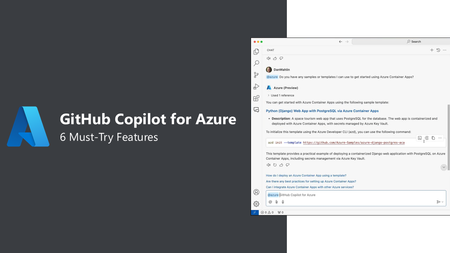
Ready to supercharge your Azure game right within GitHub Copilot? Dive into our latest blog where we break down six must-try features of GitHub Copilot for Azure. From deploying containers and managing AI models to exploring resources and planning migrations, we've got you covered. Check out the videos to see great examples of how GitHub Copilot for Azure can make your cloud projects smoother and more efficient.Building your own copilot – yes, but how? (Part 1 of 2)
Today, there’s a wide range of built-in services and features designed to enable organizations and developers to build their own copilots, able to answer questions based on their own knowledge bases and data sources. But how to choose the most suitable one for each scenario? This blog post wants to provide an overview of some of the main choices you have in the Microsoft technology ecosystem. Part 1 will look into low-code tools and out-of-the-box features, while part 2 will focus on code-heavy and extensible options.