azure sql
4 TopicsGenerally Available: SQL Migration to SQL Server on Azure Virtual Machines in Azure Architecture
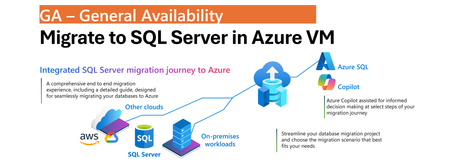
One Migration Experience, More Flexibility Modernizing SQL Server estates is rarely a single-step journey. Organizations often operate across on-premises, hybrid, and cloud environments while balancing application dependencies, operational requirements, and modernization goals. SQL Server migration enabled by Azure Arc simplifies this process by bringing migration activities into a single experience in the Azure portal. With the July 2026 release, we are announcing General Availability of SQL Server on Azure Virtual Machines as a migration target in Azure Arc, allowing customers to have a greater flexibility to choose Azure destination that best aligns with to your needs without introducing additional tools or migration processes. Whether migrating to the fully managed Azure SQL Managed Instance service or to SQL Server running on Azure VMs, the experience remains consistent and familiar. Unified Migration Workflow A key benefit of SQL Server migration enabled by Azure Arc is that the entire migration lifecycle is managed from a single tool in Azure portal. After a SQL Server instance is enabled by Azure Arc, customers can: Assess migration readiness Select a migration target Configure migration settings Monitor migration progress Validate results Perform final cutover All of these activities are performed directly from the Azure portal using a guided workflow designed to simplify migration planning and execution. The prerequisite remains unchanged: source SQL Server instances must be enabled by Azure Arc before migration can begin. The result is a flexible, scalable, and consistent migration experience that supports hybrid realities, reduces operational overhead, and helps customers modernize SQL Server estates at their own pace. Consistent Experience Across Azure SQL Targets Migration to SQL Server on Azure Virtual Machines follows the same operational model already available for Azure SQL Managed Instance migration scenarios. Customers use the same migration dashboard, monitoring experience, and guided workflow regardless of the destination. This consistency reduces learning curves, simplifies operational processes, and enables teams to select the most appropriate Azure SQL platform without changing migration methodology. Online Migration Using Backup and Log Shipping Migration to SQL Server on Azure Virtual Machines uses backup and restore with log shipping to support online migration scenarios while minimizing downtime. The process begins with a full database backup that is restored to the target SQL Server instance running on an Azure Virtual Machine. Transaction log backups that are uploaded continuously by your workflows to Azure Blob Storage are continuously applied to the target database, keeping it closely synchronized with the source environment. Azure Blob Storage serves as the intermediary staging location between source and target systems. To support efficient data movement and restore operations, both the Azure Blob Storage account and the target SQL Server on Azure Virtual Machines must reside in the same Azure region. Within the Azure Arc migration experience, customers select the Azure Blob Storage container that stores the backup files. Azure Arc automatically restores the full backup and continuously applies transaction log backups as they become available. Customers are responsible for configuring and maintaining the continuous upload of transaction log backups to Azure Blob Storage. Customer-Controlled Cutover When the customer is ready to complete migration, upon customer initiated cutover, Azure Arc performs the final synchronization by applying the last uploaded backup and bringing the target database online. This approach gives organizations full control over the migration timeline and cutover window, allowing downtime to be planned according to business requirements while reducing operational complexity. Learn More To learn more about SQL Server migration enabled by Azure Arc, see: Migration Overview For information about migrating to SQL Server in Azure VM, see: Migrate to SQL Server in Azure VM1.1KViews0likes1CommentNew database migration experience for SQL Server enabled by Azure Arc – Public Preview
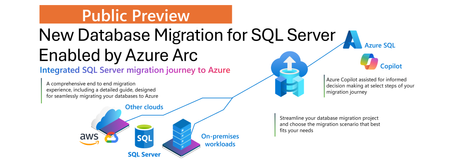
We’re excited to announce a new database migration experience for SQL Server enabled by Azure Arc - now in public preview. This experience is designed to simplify and accelerate SQL Server migration journey to Azure SQL Managed Instance offering a unified, end-to-end workflow directly within the Azure portal. 🚀 What Is It? This new migration experience integrates existing Azure Database Migration Service capabilities into Azure Arc by enabling the entire end to end migration journey with the following capabilities: Continuous database migration assessments with Azure SQL target recommendations and cost estimates. Seamless provisioning of Azure SQL Managed Instance as destination target, also with an option of free instance evaluation. Option to choose between two built-in migration methods: real-time database replication using Distributed Availability Groups (powered by the MI link feature), or log shipping via backup and restore (powered by the Log Replay Service feature). Unified interface that eliminates the need to use multiple tools or to jump between various places in Azure portal. Microsoft Copilot is integrated to assist you at select points during the migration journey. 💡 Why It Matters Traditionally, migrating SQL Server workloads to Azure required juggling between multiple tools, various places in portal, and some manual steps. This new experience changes that by: Providing a single pane of glass in the Azure portal for the entire migration journey. Reducing migration timelines from months to days. Offering real-time replication and minimal downtime migration Enabling validation of target environments using read-only replicas before cutover. Automatically capturing application client connection data to simplify mapping between applications and databases. With built-in support for both MI link and Log Replay Service (LRS), customers can choose the migration method that best fits their SQL Server version and business needs. Optional failback for SQL Server 2022 and above with external tooling. Providing intelligent step-by-step guidance with Microsoft Copilot at select points of the migration journey, helping users make informed decisions. 🧭 Start Your Migration Journey Today In case your SQL Server is Arc enabled, you could proceed right away to Azure portal. If you need to enable it, then onboard your SQL Server to Azure Arc today. In the portal, navigate to Arc enabled SQL Server resource, and on the left-hand side select Migration, then Database Migration (preview). This is where you will navigate to the new database migration experience. ▶️ Demo Video Included below is a short YouTube video demonstrating the database migration experience you can expect. From the main screen, you can navigate through each stage of the migration journey - starting with the database migration readiness assessment, followed by selecting or provisioning an Azure SQL Managed Instance as the target destination, choosing the appropriate migration method, monitoring progress, and performing the final cutover. By selecting the Azure SQL Benefits tab, you’ll gain insights into the advantages of Azure SQL - helping you make well-informed decisions about your migration. You can consult the integrated Microsoft Copilot at select points in the journey for guidance and support to ensure confident and informed decision-making. ➡️ Next steps To get started with the new database migration experience for SQL Server enabled by Azure Arc, visit Microsoft Learn: Learn more about new migration experience in Azure Arc on Microsoft Learn We love hearing from our customers! Any feedback or suggestions for the product group, use the following online form to let us know: Provide feedback on database migrations for SQL Server enabled by Azure Arc to the product group We hope that you will enjoy our solution, and we look forward to your feedback as you embark on your migration journey!2.2KViews2likes0Comments