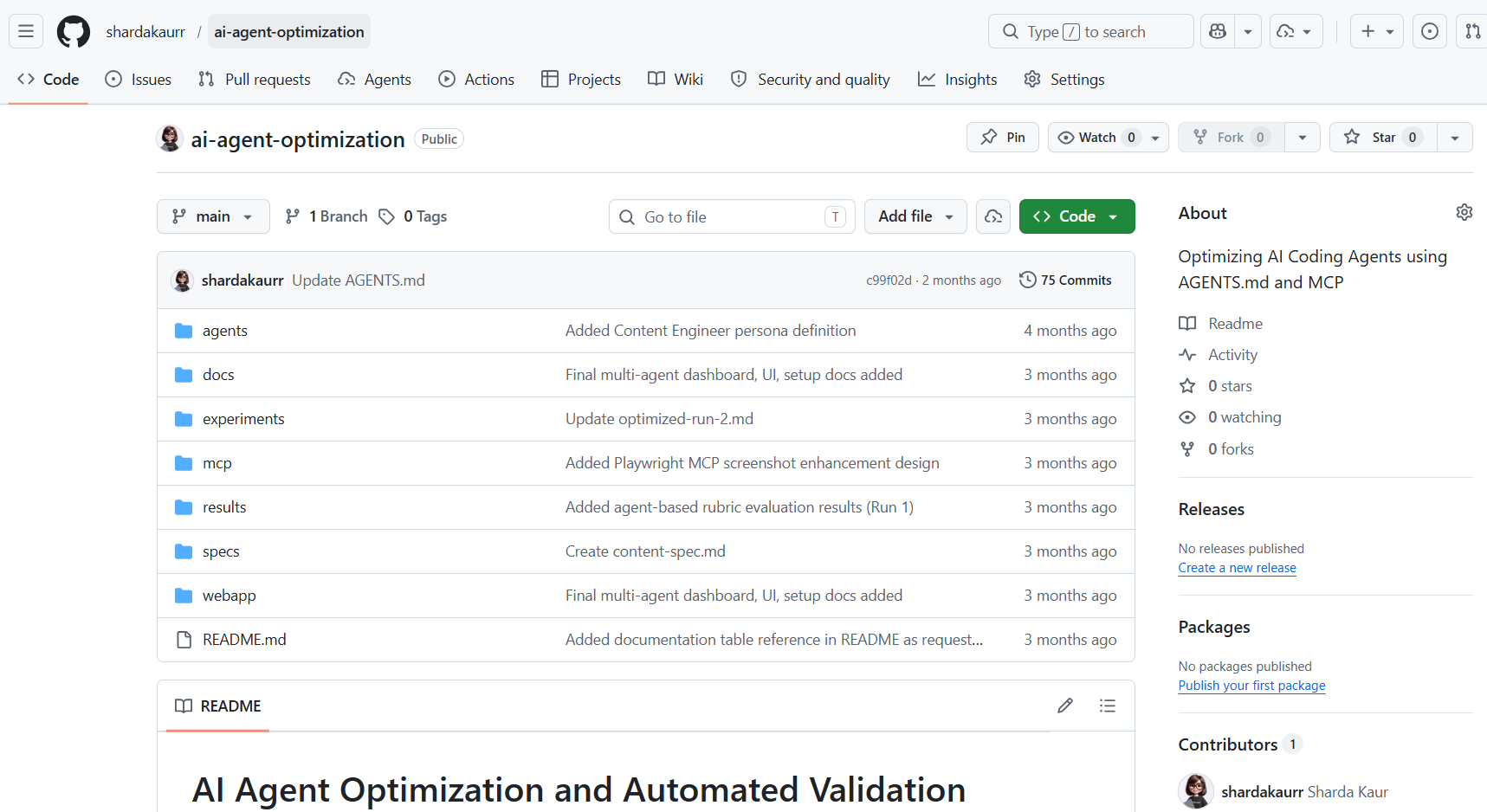
Artificial Intelligence is rapidly transforming the modern software development industry. AI-powered coding assistants such as GitHub Copilot, Claude Code, and other Large Language Model (LLM)-based systems are helping developers automate repetitive coding tasks, improve productivity, and accelerate software development processes. These tools can generate code, assist with debugging, provide recommendations, and support developers during implementation. However, despite their growing capabilities, many AI coding assistants still face challenges related to reliability, maintainability, project-specific conventions, and structured software engineering workflows.
Most coding assistants perform well for generic programming tasks but often struggle when working with domain-specific development requirements, API integrations, project architectures, validation workflows, and coding standards. In real-world software engineering environments, developers require systems that not only generate code but also follow project conventions, maintain readability, support modular development, and improve long-term maintainability.
The project “AI Agents Optimization” focuses on improving the reliability and effectiveness of AI coding agents by designing structured workflows, modular configurations, validation mechanisms, and optimized task execution strategies. The objective of the project is to investigate how AI agents can become dependable collaborators in practical software engineering tasks instead of functioning only as autocomplete systems.
The project explores different approaches for organizing AI agent workflows using structured instruction handling, modular task division, context management, validation systems, and integration of external tools and documentation sources. Different agent configurations are analyzed and evaluated to understand how workflow optimization affects software development quality and performance.
Why Existing AI Coding Workflows Often Fail
Most AI coding assistants perform well for isolated coding tasks but struggle in real-world engineering environments where projects involve multiple files, coding standards, APIs, validation requirements, and contextual dependencies.
For example, a generic prompt such as:
“Build authentication middleware”
may generate functional code, but the output often lacks:
- Project-specific architecture
- Error handling consistency
- Validation logic
- Security best practices
- Dependency awareness
This project approaches the problem differently by introducing a structured workflow pipeline where AI agents operate in defined stages rather than generating outputs in a single step.
The workflow separates planning, generation, validation, and refinement into independent modules. This improves maintainability, reduces inconsistent outputs, and supports iterative refinement similar to real software engineering workflows.
Project Objectives
The primary objective of this project is to optimize AI coding agents for real-world software engineering workflows. The project aims to improve how AI systems handle development tasks such as code generation, debugging, testing, validation, feature implementation, and workflow management.
Another major objective is to design modular AI workflows where different stages of software development are managed systematically. The workflow focuses on task planning, instruction processing, validation, refinement, and output evaluation. This structured approach improves transparency, maintainability, and consistency in AI-generated outputs.
The project also aims to evaluate how AI coding agents perform under different configurations and development scenarios. By testing multiple workflows and structured instruction methods, the project analyzes how optimization techniques improve development reliability and coding quality.
Technologies and Tools Used
The project utilizes multiple modern technologies and development tools for experimentation and workflow optimization.
|
Technology / Tool |
Purpose |
|
Python |
Automation and scripting |
|
GitHub Copilot |
AI-assisted coding |
|
Claude / LLM APIs |
AI workflow experimentation |
|
Visual Studio Code |
Development environment |
|
Git & GitHub |
Version control and repository management |
|
Structured Prompting |
Workflow optimization |
|
MCP Concepts |
Tool and context integration |
These tools collectively support the implementation and testing of optimized AI coding workflows.
Implementation Workflow
The system was implemented using a modular AI workflow pipeline where each stage performs a dedicated engineering task.
Step 1 — Task Parsing
The user submits a development task or coding requirement. The Instruction Processing Module extracts:
- Objective
- Constraints
- Project context
- Expected output format
Example structured prompt:
Task: Create JWT authentication middleware
Language: Node.js
Constraints:
- Use Express.js
- Add token validation
- Follow modular architecture
- Include error handling
Step 2 — Planning & Reasoning
The Planning Module divides the task into subtasks such as:
- Route handling
- Token verification
- Error management
- Security validation
This improves reasoning consistency before generation begins.
Step 3 — Code Generation
The Code Generation Module produces outputs using structured prompts and contextual references instead of generic instructions.
Step 4 — Validation
Generated outputs are validated using:
- Syntax checks
- Logical consistency checks
- Formatting standards
- Dependency validation
Step 5 — Refinement
If validation fails, the workflow loops back into refinement where issues are corrected before final delivery.
System Workflow
The workflow of the AI Agents Optimization system is based on modular task execution and structured development processes. The workflow begins with task planning and requirement analysis. The AI agent receives structured instructions along with coding constraints, project context, and validation requirements.
The system processes the provided instructions and generates outputs according to defined workflows and development standards. Different configurations are tested to evaluate how instruction structures and modular task handling influence the quality of generated code
The workflow also includes validation and refinement stages where generated outputs are analyzed for correctness, maintainability, and consistency. The project focuses not only on code generation but also on improving readability, workflow transparency, debugging support, and adherence to project conventions.
Key Features of the Project
- Structured AI workflow design
- Modular task execution
- AI-assisted software development
- Workflow optimization strategies
- Validation and refinement mechanisms
- Integration of development tools and documentation
- Improved maintainability and readability
- Support for practical software engineering workflows
Challenges Faced During Development
One of the major challenges encountered during the project was maintaining consistency and reliability in AI-generated outputs. Different AI models often produce different responses depending on prompts, context, and task structure. Designing workflows that improve output stability and maintain coding standards required careful experimentation and optimization.
Another challenge involved integrating structured workflows while ensuring flexibility in task execution. AI systems often require clear instructions and contextual information to produce accurate outputs. Balancing automation with maintainability and project-specific requirements was an important aspect of the project.
Managing validation and refinement processes was also challenging because generated outputs needed to be evaluated not only for correctness but also for readability, maintainability, and software engineering best practices.
Observations and Outcomes
During experimentation, structured workflows produced more reliable and maintainable outputs compared to single-prompt generation approaches.
Some important observations included:
- Reduced repetitive corrections during code refinement
- Improved consistency in generated outputs
- Better adherence to coding structure and formatting
- More stable workflow behavior for multi-step tasks
- Improved readability and maintainability of generated code
The validation and refinement stages were particularly effective in reducing incomplete outputs and improving response quality.
Although the project focuses primarily on workflow architecture and qualitative analysis rather than benchmark testing, the results demonstrate that modular AI pipelines can significantly improve practical software engineering workflows.
Future Enhancements
The project can be further enhanced by implementing advanced multi-agent collaboration systems where multiple AI agents work together on complex software development tasks. Future versions may also include real-time documentation integration, automated testing frameworks, cloud-based workflow management, and improved reasoning models.
Additional enhancements may include IDE extensions, intelligent debugging systems, automated code review mechanisms, and adaptive workflow optimization based on project requirements.
Conclusion
The AI Agents Optimization project demonstrates how structured workflows and modular configurations can improve the effectiveness of AI-powered coding assistants in modern software engineering environments.
By focusing on workflow optimization, validation mechanisms, modular task execution, and structured instruction handling, the project highlights the future potential of AI agents as reliable development collaborators capable of supporting real-world software engineering processes.
The project represents an important step toward building dependable AI-assisted development systems that improve productivity, maintainability, and software quality while supporting modern engineering practices.
How to Try This Workflow
- Define a structured development task
- Provide project constraints and context
- Break the task into subtasks
- Generate output using structured prompts
- Validate output quality
- Refine based on validation feedback
