power platform
118 TopicsBuilding Reliable AI Coding Workflows Using Modular AI Agent Optimization
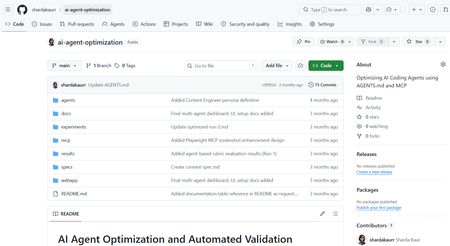
Artificial Intelligence is rapidly transforming the modern software development industry. AI-powered coding assistants such as GitHub Copilot, Claude Code, and other Large Language Model (LLM)-based systems are helping developers automate repetitive coding tasks, improve productivity, and accelerate software development processes. These tools can generate code, assist with debugging, provide recommendations, and support developers during implementation. However, despite their growing capabilities, many AI coding assistants still face challenges related to reliability, maintainability, project-specific conventions, and structured software engineering workflows. Most coding assistants perform well for generic programming tasks but often struggle when working with domain-specific development requirements, API integrations, project architectures, validation workflows, and coding standards. In real-world software engineering environments, developers require systems that not only generate code but also follow project conventions, maintain readability, support modular development, and improve long-term maintainability. The project “AI Agents Optimization” focuses on improving the reliability and effectiveness of AI coding agents by designing structured workflows, modular configurations, validation mechanisms, and optimized task execution strategies. The objective of the project is to investigate how AI agents can become dependable collaborators in practical software engineering tasks instead of functioning only as autocomplete systems. The project explores different approaches for organizing AI agent workflows using structured instruction handling, modular task division, context management, validation systems, and integration of external tools and documentation sources. Different agent configurations are analyzed and evaluated to understand how workflow optimization affects software development quality and performance. Why Existing AI Coding Workflows Often Fail Most AI coding assistants perform well for isolated coding tasks but struggle in real-world engineering environments where projects involve multiple files, coding standards, APIs, validation requirements, and contextual dependencies. For example, a generic prompt such as: “Build authentication middleware” may generate functional code, but the output often lacks: Project-specific architecture Error handling consistency Validation logic Security best practices Dependency awareness This project approaches the problem differently by introducing a structured workflow pipeline where AI agents operate in defined stages rather than generating outputs in a single step. The workflow separates planning, generation, validation, and refinement into independent modules. This improves maintainability, reduces inconsistent outputs, and supports iterative refinement similar to real software engineering workflows. Project Objectives The primary objective of this project is to optimize AI coding agents for real-world software engineering workflows. The project aims to improve how AI systems handle development tasks such as code generation, debugging, testing, validation, feature implementation, and workflow management. Another major objective is to design modular AI workflows where different stages of software development are managed systematically. The workflow focuses on task planning, instruction processing, validation, refinement, and output evaluation. This structured approach improves transparency, maintainability, and consistency in AI-generated outputs. The project also aims to evaluate how AI coding agents perform under different configurations and development scenarios. By testing multiple workflows and structured instruction methods, the project analyzes how optimization techniques improve development reliability and coding quality. Technologies and Tools Used The project utilizes multiple modern technologies and development tools for experimentation and workflow optimization. Technology / Tool Purpose Python Automation and scripting GitHub Copilot AI-assisted coding Claude / LLM APIs AI workflow experimentation Visual Studio Code Development environment Git & GitHub Version control and repository management Structured Prompting Workflow optimization MCP Concepts Tool and context integration These tools collectively support the implementation and testing of optimized AI coding workflows. Implementation Workflow The system was implemented using a modular AI workflow pipeline where each stage performs a dedicated engineering task. Step 1 — Task Parsing The user submits a development task or coding requirement. The Instruction Processing Module extracts: Objective Constraints Project context Expected output format Example structured prompt: Task: Create JWT authentication middleware Language: Node.js Constraints: - Use Express.js - Add token validation - Follow modular architecture - Include error handling Step 2 — Planning & Reasoning The Planning Module divides the task into subtasks such as: Route handling Token verification Error management Security validation This improves reasoning consistency before generation begins. Step 3 — Code Generation The Code Generation Module produces outputs using structured prompts and contextual references instead of generic instructions. Step 4 — Validation Generated outputs are validated using: Syntax checks Logical consistency checks Formatting standards Dependency validation Step 5 — Refinement If validation fails, the workflow loops back into refinement where issues are corrected before final delivery. System Workflow The workflow of the AI Agents Optimization system is based on modular task execution and structured development processes. The workflow begins with task planning and requirement analysis. The AI agent receives structured instructions along with coding constraints, project context, and validation requirements. The system processes the provided instructions and generates outputs according to defined workflows and development standards. Different configurations are tested to evaluate how instruction structures and modular task handling influence the quality of generated code The workflow also includes validation and refinement stages where generated outputs are analyzed for correctness, maintainability, and consistency. The project focuses not only on code generation but also on improving readability, workflow transparency, debugging support, and adherence to project conventions. Key Features of the Project Structured AI workflow design Modular task execution AI-assisted software development Workflow optimization strategies Validation and refinement mechanisms Integration of development tools and documentation Improved maintainability and readability Support for practical software engineering workflows Challenges Faced During Development One of the major challenges encountered during the project was maintaining consistency and reliability in AI-generated outputs. Different AI models often produce different responses depending on prompts, context, and task structure. Designing workflows that improve output stability and maintain coding standards required careful experimentation and optimization. Another challenge involved integrating structured workflows while ensuring flexibility in task execution. AI systems often require clear instructions and contextual information to produce accurate outputs. Balancing automation with maintainability and project-specific requirements was an important aspect of the project. Managing validation and refinement processes was also challenging because generated outputs needed to be evaluated not only for correctness but also for readability, maintainability, and software engineering best practices. Observations and Outcomes During experimentation, structured workflows produced more reliable and maintainable outputs compared to single-prompt generation approaches. Some important observations included: Reduced repetitive corrections during code refinement Improved consistency in generated outputs Better adherence to coding structure and formatting More stable workflow behavior for multi-step tasks Improved readability and maintainability of generated code The validation and refinement stages were particularly effective in reducing incomplete outputs and improving response quality. Although the project focuses primarily on workflow architecture and qualitative analysis rather than benchmark testing, the results demonstrate that modular AI pipelines can significantly improve practical software engineering workflows. Future Enhancements The project can be further enhanced by implementing advanced multi-agent collaboration systems where multiple AI agents work together on complex software development tasks. Future versions may also include real-time documentation integration, automated testing frameworks, cloud-based workflow management, and improved reasoning models. Additional enhancements may include IDE extensions, intelligent debugging systems, automated code review mechanisms, and adaptive workflow optimization based on project requirements. Conclusion The AI Agents Optimization project demonstrates how structured workflows and modular configurations can improve the effectiveness of AI-powered coding assistants in modern software engineering environments. By focusing on workflow optimization, validation mechanisms, modular task execution, and structured instruction handling, the project highlights the future potential of AI agents as reliable development collaborators capable of supporting real-world software engineering processes. The project represents an important step toward building dependable AI-assisted development systems that improve productivity, maintainability, and software quality while supporting modern engineering practices. How to Try This Workflow Define a structured development task Provide project constraints and context Break the task into subtasks Generate output using structured prompts Validate output quality Refine based on validation feedback1.1KViews0likes0CommentsEmbracing Responsible AI: A Comprehensive Guide and Call to Action
In an age where artificial intelligence (AI) is becoming increasingly integrated into our daily lives, the need for responsible AI practices has never been more critical. From healthcare to finance, AI systems influence decisions affecting millions of people. As developers, organizations, and users, we are responsible for ensuring that these technologies are designed, deployed, and evaluated ethically. This blog will delve into the principles of responsible AI, the importance of assessing generative AI applications, and provide a call to action to engage with the Microsoft Learn Module on responsible AI evaluations. What is Responsible AI? Responsible AI encompasses a set of principles and practices aimed at ensuring that AI technologies are developed and used in ways that are ethical, fair, and accountable. Here are the core principles that define responsible AI: Fairness AI systems must be designed to avoid bias and discrimination. This means ensuring that the data used to train these systems is representative and that the algorithms do not favor one group over another. Fairness is crucial in applications like hiring, lending, and law enforcement, where biased AI can lead to significant societal harm. Transparency Transparency involves making AI systems understandable to users and stakeholders. This includes providing clear explanations of how AI models make decisions and what data they use. Transparency builds trust and allows users to challenge or question AI decisions when necessary. Accountability Developers and organizations must be held accountable for the outcomes of their AI systems. This includes establishing clear lines of responsibility for AI decisions and ensuring that there are mechanisms in place to address any negative consequences that arise from AI use. Privacy AI systems often rely on vast amounts of data, raising concerns about user privacy. Responsible AI practices involve implementing robust data protection measures, ensuring compliance with regulations like GDPR, and being transparent about how user data is collected, stored, and used. The Importance of Evaluating Generative AI Applications Generative AI, which includes technologies that can create text, images, music, and more, presents unique challenges and opportunities. Evaluating these applications is essential for several reasons: Quality Assessment Evaluating the output quality of generative AI applications is crucial to ensure that they meet user expectations and ethical standards. Poor-quality outputs can lead to misinformation, misrepresentation, and a loss of trust in AI technologies. Custom Evaluators Learning to create and use custom evaluators allows developers to tailor assessments to specific applications and contexts. This flexibility is vital in ensuring that the evaluation process aligns with the intended use of the AI system. Synthetic Datasets Generative AI can be used to create synthetic datasets, which can help in training AI models while addressing privacy concerns and data scarcity. Evaluating these synthetic datasets is essential to ensure they are representative and do not introduce bias. Call to Action: Engage with the Microsoft Learn Module To deepen your understanding of responsible AI and enhance your skills in evaluating generative AI applications, I encourage you to explore the Microsoft Learn Module available at this link. What You Will Learn: Concepts and Methodologies: The module covers essential frameworks for evaluating generative AI, including best practices and methodologies that can be applied across various domains. Hands-On Exercises: Engage in practical, code-first exercises that simulate real-world scenarios. These exercises will help you apply the concepts learned tangibly, reinforcing your understanding. Prerequisites: An Azure subscription (you can create one for free). Basic familiarity with Azure and Python programming. Tools like Docker and Visual Studio Code for local development. Why This Matters By participating in this module, you are not just enhancing your skills; you are contributing to a broader movement towards responsible AI. As AI technologies continue to evolve, the demand for professionals who understand and prioritize ethical considerations will only grow. Your engagement in this learning journey can help shape the future of AI, ensuring it serves humanity positively and equitably. Conclusion As we navigate the complexities of AI technology, we must prioritize responsible AI practices. By engaging with educational resources like the Microsoft Learn Module on responsible AI evaluations, we can equip ourselves with the knowledge and skills necessary to create AI systems that are not only innovative but also ethical and responsible. Join the movement towards responsible AI today! Take the first step by exploring the Microsoft Learn Module and become an advocate for ethical AI practices in your community and beyond. Together, we can ensure that AI serves as a force for good in our society. References Evaluate generative AI applications https://learn.microsoft.com/en-us/training/paths/evaluate-generative-ai-apps/?wt.mc_id=studentamb_263805 Azure Subscription for Students https://azure.microsoft.com/en-us/free/students/?wt.mc_id=studentamb_263805 Visual Studio Code https://code.visualstudio.com/?wt.mc_id=studentamb_2638051KViews0likes0CommentsHow to Populate SharePoint List with Files from SharePoint Document Library using Power Automate
Microsoft SharePoint Online is a platform for document management, information sharing, internal collaboration and more that is a part of the Microsoft 365 family of apps. In this blog post, I will show you how to create a document library and list in SharePoint for an Employee Record and how to populate the data from an Excel sheet in SharePoint Document Library using a Power Automate Flow. This process eliminates the process of entering the data from the Excel sheet manually into the SharePoint list. It enables us to easily automate all the data in the Excel sheet into our SharePoint list. Use Case: Track Employee Data Record Here we will work on a scenario to help better understand the process. The HJK company has started making changes to the way they work and one of those things is moving their employee's data from an Excel sheet where it is stored to a SharePoint list. This can be done manually but they will prefer a process where the moving of the data can be achieved easily. In the Excel sheet these are the data types of the columns in the table. Column Data Type EEID Text Job Title Text Department Text Business Unit Text Gender Text Ethnicity Text Age Number Hire Date Date Annual Salary Currency Country Text City Text Exit Date Date Disclaimer: This is not an actual company but a scenario created to show you how the populating process works with SharePoint and Power Automate. The Excel sheet used in this blog post is a free sample data gotten online. Note: Make sure the Data in your Excel sheet is in a table format. I will walk you through the process Create the SharePoint Document Library. Upload the Excel file to the SharePoint Document Library Create the SharePoint List for the employee's data. Create the Instant cloud flow to populate the SharePoint list Create a SharePoint Document Library In this step, we will be working on creating the document library where the Excel sheet that contains the Company's employee information will be uploaded. Login into Microsoft 365. At the left hand side, click on the App Launcher. 2. From the App launcher we will be clicking on SharePoint. From this process we can easily access SharePoint Online. From the list of application shown, click on SharePoint. 3. I already created my SharePoint site so lets go ahead and create our SharePoint Document Library. Click on +New. 4. After clicking on Document library from the drop-down, this gives us an opportunity to create a New SharePoint document library. So on the right hand side, on Name, give the document library a name (a name that you can easily identify and understand). Here I will be using Employee_Record. Next, click on Create. Upload the Excel Sheet to the Document Library In this step, we would be uploading the excel sheet to the SharePoint Document Library. With this process it will make it easier for us to populate the SharePoint list with the data in the Excel sheet easily using power Automate. Follow these steps: 1. At the top of the screen close to the name of the document library click on Upload. After clicking on Upload, we have a drop-down of names to select from which is Files, Folder and Template. Here we will be click on Files. 2. Next, click on the file you need uploaded. Here I will be clicking on the Excel file named Excel Record Sample Data. Next click on Open. From the second screenshot below you can see our excel sheet Employee record sample data has been uploaded to our document library. Create the SharePoint List In this step, we will work on creating the SharePoint list which will be the new place were will be keeping track of the employee's record data in the company. 1. Let's go ahead and create the Employee SharePoint list. At this step we have already created the SharePoint document library, in order to leave the SharePoint document library click on the name of the SharePoint Site, here the name of SharePoint site is Communication site. 2. Now let's create the SharePoint list by clicking on +New at the left-hand side of our screen. 3. After clicking on + New, it shows a drop-down that shows List, Document Library, Page, Space, News post, News link, App. Here we will be clicking on List. 4. Click on Blank list. We have different options here to create our SharePoint list which can either use a blank list, from an already existing list or from an Excel sheet. Our data is an Excel file and we might think of going for this option but it most advisable to create the list from blank. 5. After clicking on the Blank list option for the SharePoint list, now we need to give the list a name and description which is optional. Here on Name I am naming my list as Employee Sample Data to make it easier for me to identify what the SharePoint is for. Click on Create. 6. We will adding the columns shown in the Excel sheet to the list. The first column we will be creating here is EEID which the data type is a single line of text. Click on +Add Column, select Text as the data type and this is a Single line of text. Click on Next. 7. On Name, give your column a name. Here I will be using EEID. Click on Save Note: None of this columns created here are required columns, so take notice of this when creating your column. When creating a column the field for Description is optional. 8. From the screenshot above you can notice the column named Title, this is a default column that is created with the SharePoint list and would not be needed. In this step, will be the hiding the Title Column. Click on drop-down beside Title. Click on Column settings. Click on Show/hide column.On click on Title and then click on Apply. 8. Let’s add the next column to the SharePoint list. Click on +Add Column.Select Text. Click on Next. Give the column a name here on Name I will be giving my Column Job Title. Click on Save. Next, add the remaining columns to the SharePoint List with their specific data types. Column Data Type EEID Single line of text Job Title Single line of text Department Single line of text Business Unit Single line of text Gender Single line of text Ethnicity Single line of text Age Number Hire Date Date Annual Salary Currency Country Single line of the text City Single line of text Exit Date Date Populate the SharePoint List using Power Automate In this step, we will be working on creating the flow that will be used to auto populate the SharePoint list with the data from the Excel sheet. 1. Login Power Automate 2. On the Home screen at the left-side of your screen. Click on Create. Here we will creating an Instant cloud flow; this is a type of Power Automate cloud flow that only runs when a button is triggered. Click on Instant cloud flow. 3. Next thing here is to name your flow and select the trigger. Give your flow a name you can easily identify. Here, I will be using Populate Employee Record. From choose how to trigger this flow, select the trigger Manually trigger a flow. Click on Create. 4. Add another action to the flow. Click on +New Step. 5. On choose an operation, search for the action, List rows present in table. Click on the action. 6. In the List rows present in a table action, we have location, document library, file and table. On Location we will be selecting the SharePoint site where our document library is located. On the drop down or search for the name of your SharePoint site and click on it. On Document Library; select the name of the document library you uploaded your Excel sheet. 7. On File; click on the folder icon at the right-hand side. Next, select the file uploaded to the document library. 8. On Table; click on the dropdown and select the Excel table. 9. Add the Apply to each action to the flow. Click on +New step. On choose an operation, search for the action, Apply to each. Click on it. 10. In the Apply to each action, where we have Select an output from previous steps click on the box and go Dynamic content and select value (this is coming from the action List rows present in a table. The screenshot image of this is shown below). 11. Here we will be adding an action inside of the Apply to each. Click on Add an action. On choose an operation, search for the action, Create item and select (The create item action is coming from SharePoint). 12. In the Create item action; on Site Address, click on the dropdown or search for the SharePoint site and select your SharePoint site where your SharePoint list is located. On List name; click on the drop-down and select the name of your SharePoint list. 13. In the Create item action, we have our columns from our SharePoint list listed in the action from the first column EEID to the last column Exit Date. Here, for each columns in the action we will be adding Dynamics contents to them where the Dynamics contents are coming from the action List rows present in a table (which is the data in our excel sheet). On the EEID column in the action, go the Dynamic content and click on the dynamic content EEID. As seen the screenshot image below. Repeat this step for the remaining columns in the action except Title (which we are not using) and Hire date, exit date. 14. For the Hire Date column in the action, while running the flow I ran into an issue in the Hire Date and Exit Date column that addressed that the datetime string must match ISO 8601 format.'. I will be discussing more about this in my newsletter in the following weeks on how I used Copilot to resolve it but here let's go ahead and understand the actions and steps used. For the Hire Date column, before the apply to each action, add the Initialize variable action to the flow. In the initialize variable; on Name give your variable a name and select the Type as a String. Next, add a Set variable action inside of the Apply to each action (this action should come before the Create item action). In the Set variable action; on Name go to your dynamic content and select the variable coming from the initialize variable action. On Value add the expression addDays('1899-12-30',int(items('Apply_to_each')?['Hire Date']),'yyyy-MMM-dd') Now go ahead to the Create item action and on the Hire Date column, go to the dynamic content and select the variable. Repeat this step for Exit Date. 15. So here let's make a few changes to our flow, this step allows the flow to populate more than 150 items to the SharePoint list. Click on the three dots at the right-hand side of the action List row present in a table action. Click on Settings. 16. On the toggle button for Pagination, switch it on and on Threshold enter the value 2000. Click on Done. Save and run the flow. Thank you for reading! Resources How to delete items in a SharePoint list using Power Automate39KViews0likes2CommentsCreate a responsive menu navigation bar in Canvas Power Apps using Gallery control
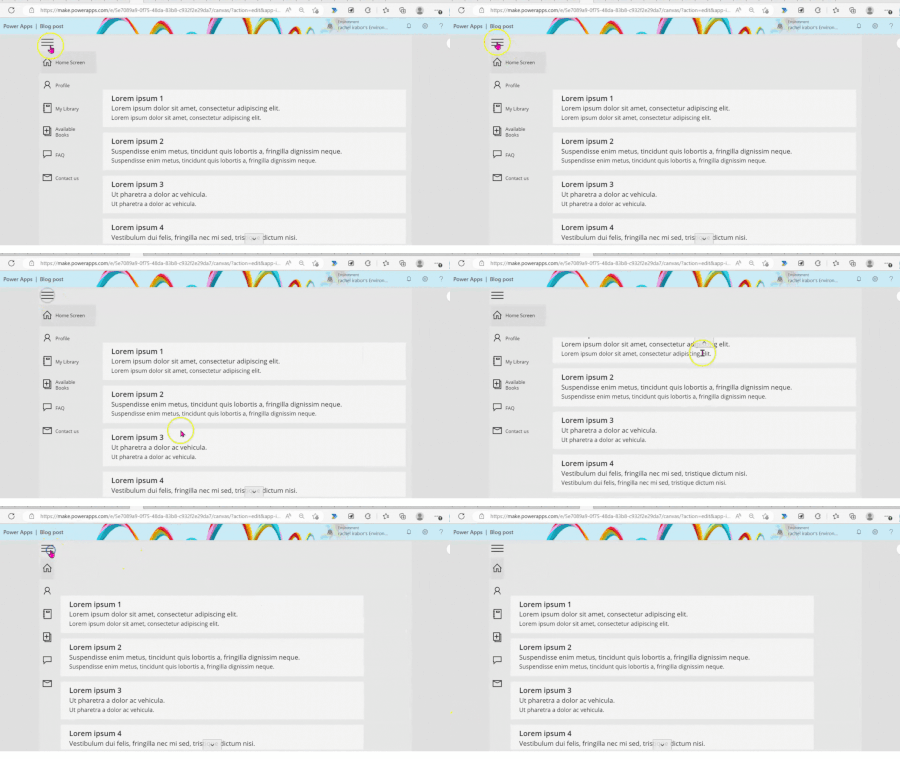
In this blog post I will show how to use two Gallery control in one screen and how to create responsive menu navigation bar in Canvas Power Apps using Gallery control and Collection, which you can use to navigate to different screens in your application.52KViews2likes6CommentsSimulation game designed to train students to handle a bankruptcy case using Power Platform
Technology is transforming the education sector, increasingly helping teachers around the world to provide better, more interactive learning experiences. Dutch institution Avans Applied Science University is a prime example. Here, a law teacher (with no technical background) has recently created a simulation game designed to train students to handle a bankruptcy case as it would happen in real life. Built using Microsoft Power Platform, the game takes students through various steps of the case. All with the help of a chatbot created using Power Virtual Agents, which interacts with students and asks them legal questions.2.2KViews1like2Comments