Forum Discussion

Lambda Example: Generate Fibonacci series
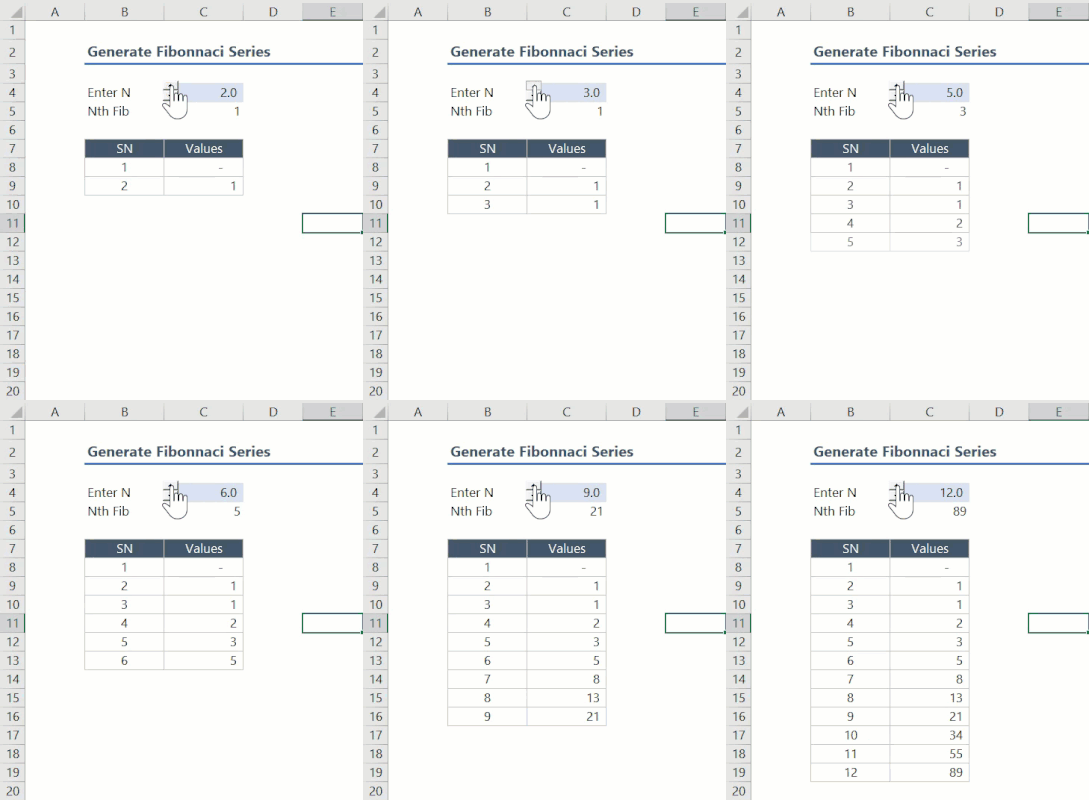

I have still to get to grips with your formula; I find recursive formulae especially opaque!
One observation, though. It is possible to conduct the recursion, and maintain a counter that could be used as a backup termination criterion, without building the array as you go.
When the end point is reached, all the values obtained along the way are still present within the memory stack and are accessible one at a time following return from the previous level. In the Fibonacci example I used this to combine the current value and the return array to build the complete series as an array of known length.

PS: Part of wrapping my head around this is has been this useful post: https://www.sumproduct.com/news/article/lambda-formulaic-recursion-its-all-about-me
 lori_mJan 19, 2021Iron Contributor
Your Collatz example looks intriguing I will try and make time to look. And thanks for that useful link; it is stated near the end that:
"do note that the current operand stack limit in Excel is 1,024. This should be borne in mind together with calculation times, as the current recursion limit is set as 1,024 divided by (number of lambda parameters + 1)."
The 1024 stack limit does seem to tally with Sergei's results further up. It appears that the figures all roughly divide 1024 (within a few units of rounding):
341 ~ 3 stack operands per call
256 ~ 4 stack operands per call
146 ~ 7 stack operands per call
This also suggests other parameters may need to be taken into account in addition to lambda parameters.