Blog Post

Copilot Studio Blog
1 MIN READ

White paper: Choosing between the GitHub Copilot and Standard harnesses in Copilot Studio

Lucia_Mosner's avatar
Lucia_Mosner
Icon for Microsoft rankMicrosoft
Sep 02, 2026

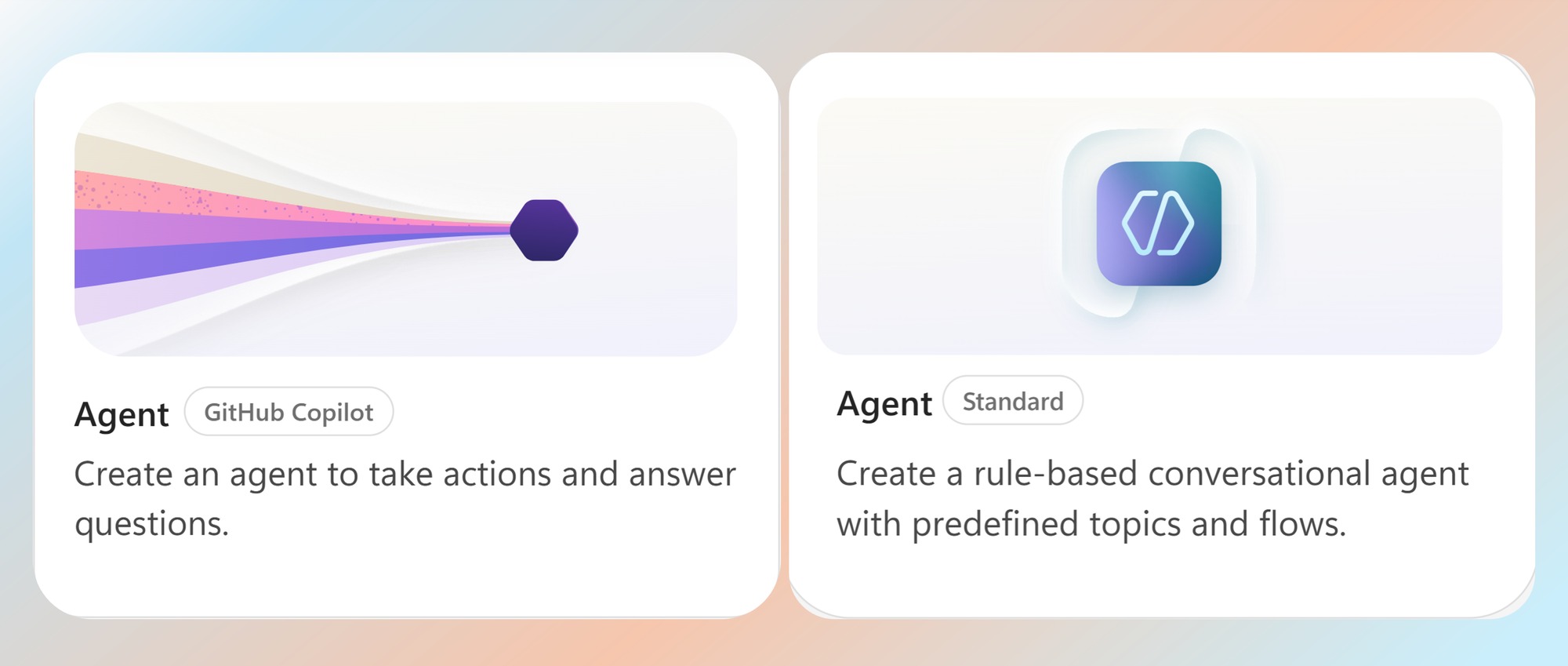
The Standard harness and GitHub Copilot harness are two authoring and runtime options within Microsoft Copilot Studio. A harness is the operating layer between the model and the agent’s configuration. It determines how the model receives context, uses instructions and tools, interprets results, and moves through a task toward completion. Put simply, the model provides the reasoning capability, while the harness equips and directs it.

Both harnesses are built for task-based, multi-step agents that create real business value, but they are suited to different scenarios. The Standard harness supports consistent, reliable execution of bounded business processes, while the GitHub Copilot harness extends these capabilities to longer-running, coordination-heavy, and reasoning-intensive work at a larger scale.

This paper explains the key differences, tradeoffs, and scenarios to help you choose which harness is right for your business process. 


Read the full paper by clicking the PDF attachment below.

Updated Sep 03, 2026
Version 2.0

2 Comments

  • Paul Katz's avatar
    Paul Katz
    Brass Contributor

    This is a fantastic whitepaper. I plan to use it when guiding clients on which harness to use. It makes a strong case for the Standard Harness for the proper scenarios.

    At the same time, the "New experience" UI in Copilot Studio completely throws the Standard Harness under the bus. Right now, Copilot Studio implementers must reconcile the guidance from your whitepaper with the highly strong visual cues insinuating the Standard Harness's days are numbered.


    I'm not here to complain but rather offer a solution. Copilot Studio "New Experience" and traditional Copilot Studio are completely different products serving two different needs. Here is what I propose:

    • Copilot Studio "New Experience" is rebranded to Copilot Cowork Studio. This makes all the sense in the world. Agents created in "New Experience" drive complex business processes in ways equivalent to the end-user Copilot Cowork. They aren't copilots, they are coworkers. Copilot Cowork Studio is the maker's answer to Copilot Cowork.

    • Copilot Studio continues its existence as a Copilot creator, geared toward interactive sessions with users. By untangling "New Experience" from Copilot Studio, there is once again a clean roadmap for improving what is a fantastic product.
       

    The potential of these two amazing products can truly be unlocked if they are recognized as two separate amazing products. I encourage Microsoft to do so.


  • CJ_LMLLP's avatar
    CJ_LMLLP
    Copper Contributor

    For anyone else trying to sort out the difference, here's the example use case that came to my mind: Say you've developed an agentic workflow to review your inbox and update your Outlook calendar at the start of each day. It reads an email, identifies the date, time, and subject of a proposed meeting, and creates the appointment. Now say a client offers two possible meeting times. On the standard harness, the agent follows your pathing architecture. If you never accounted for the possibility of more than one option for a proposed appointment, you risk the agent quietly making the wrong choice. The way I avoid issues like this is to build in a hard stop-gate when unexpected hurdles crop up. The agent sees something it didn't expect, it asks the user to weigh in. The GitHub harness on the other hand might parse the rest of your calendar, weighing the long-running context of its interactions with you and selecting the time it determines is best. I'd want the standard harness here, because I want the final call. Others might want the more advanced harness because they prefer the efficiency over control and figure, "Hey, if both are open on my schedule then either works."

    I reached that conclusion on my own after a lot of consideration as to what the article was actually trying to say. Much of the blog's explanation assumes a lexicon I don't have - 'blockers', 'publishing channel', and 'feature coverage' feel more standard for a reader who already understands much of the content at hand, rather than an amateur like myself. I've spent a couple of years and several hundred hours working with these models, plus a fair bit of coursework and actual development time with Cowork skills, yet I don't feel educated enough to glean any meaningful takeaways from the article. Maybe this information is simply intended for a more educated customer. 

    What I'd really like to know is what separates an organization that possesses a "readiness to govern usage-based billing" from one that doesn't. To me, readiness implies a willingness more than it does a certain degree of preparedness. In my job, for example, I've developed a billing skill package to allocate per-session credit costs internally. I'd think that meets the criteria, but I'm not totally sure because what constitutes readiness is not well-defined. In a world where many are spending thousands of dollars each month on AI-augmented work product, I'd really like to know how our protocols stack up against your metric so that we can make informed decisions about picking the right tool for the job.