small and medium business (smb)
93 Topics
Extreamly frustrated that I cannot get help for a serious problem
What the devil do I have to do to get help with a serious problem with the cloud for our non-profit business account for our small charity. I have 'lost' sight of a large number of documents from the cloud since we had to start paying for our subscription. After many chats with ai and emails and the problem being escalated I have now been told to go back to where I started at Non-profit support and put a support ticket in. Doesnt matter what machine I use, what browser I use, what network I use, I cannot get past the submit form page and keep getting an error message - this has been going on for weeks now. Ive tried ringing and the call keeps dropping while on hold - no one, no-one will call me about the problem and no one seems interested in dealing with the problem and its not just affecting me on our system either. Please will someone tell me how to get to a human for support without using an AI help system,105Views0likes1Comment
Locked Out of Global Admin – Lost Authenticator – Case 2602060010000939 – Need Escalation
I am locked out of my Global Administrator account because my phone broke on February 5, 2026 and I no longer have access to Microsoft Authenticator. There is no alternative authentication method configured. Case ID: 2602060010000939. I contacted support on February 6 and the ticket was set as Severity C with an 8-hour response expectation. After several days, I have only received generic replies and no contact from an engineer. This account is critical for my business operations, and I have now been without access for five days. I understand it was my responsibility to maintain backup methods, but I urgently need help from Microsoft to recover access. Please contact me. Samuel LeoSolved367Views1like2CommentsAnnouncing the 2026 Microsoft 365 Community Conference Keynotes
The Microsoft 365 Community Conference returns to Orlando this April, bringing together thousands of builders, innovators, creators, communicators, admins, architects, MVPs, and product makers for three unforgettable days of learning and community. This year’s theme, “A Beacon for Builders, Innovators & Icons of Intelligent Work,” celebrates the people shaping the AI‑powered future — and the keynote lineup reflects exactly that. These leaders will set the tone for our biggest, boldest M365 Community Conference. Below is your first look at the official 2026 keynote order and what to expect from each session. Opening Keynote Jeff Teper — President, Microsoft 365 Collaborative Apps & Platforms Building for the future: Microsoft 365, Agents and AI, what's new and what's next Join Jeff Teper, to discover how AI-powered innovation across Copilot, Teams, and SharePoint is reshaping how people communicate, create, and work together. This session highlights what’s new, what’s fundamentally different, and why thoughtful design continues to matter. See the latest advances in AI and agents, gain insight into where collaboration is headed, and learn why Microsoft is the company to continue to bet on when it comes to building what’s next. Expect: New breakthroughs in collaboration powered by AI and agents Fresh innovations across Teams, Copilot, and SharePoint Practical guidance on how design continues to shape effective teamwork Real world demos that show how AI is transforming communication and content Insight into what is new, what is changing, and what is coming next Business Apps & Agents Keynote Ryan Cunningham — Corporate Vice President, Power Platform In this keynote, Ryan Cunningham will share how Microsoft 365 Copilot, Copilot Studio, Power Apps, and Agent 365 come together to help makers build powerful agents and help IT teams deploy and govern them at scale. We’ll share how organizations can design, extend, and govern a new model for the intelligent workplace – connecting data, workflows, and systems into intelligent agents that move work forward. Copilot, apps, and agents: the next platform shift for Microsoft 365 Microsoft 365 Copilot has changed how we interact with software. Now AI agents are changing how work gets done – moving from responding to prompts to taking action, across the tools and data your organization already relies on. Expect: A clear explanation of how to leverage and build with Copilot and agents How agents access data, use tools, and complete multi-step work A deeper look at the latest capabilities across Microsoft 365 Copilot, Copilot Studio, and Power Apps End-to-end demos of agents in action Security, Trust & Responsible AI Keynote Vasu Jakkal — Corporate Vice President, Microsoft Security & Rohan Kumar — Corporate Vice President, Microsoft Security, Purview & Trust In our third keynote, Vasu Jakkal and Rohan Kumar join forces to address one of the most urgent topics of the AI era: trust and security at scale. As organizations accelerate into AI‑powered work, safeguarding identities, data, compliance, and governance is mission‑critical. Securing AI: Building Trust in the Era of AI Join Vasu Jakkal and Rohan Kumar as they unveil Microsoft’s vision for securing the new frontier of AI—showing how frontier firms are protecting their data, identities, and models amid rapid AI adoption. This session highlights how Microsoft is embedding security and governance into every layer of our AI platforms and unifying Purview, Defender, Entra, and Security Copilot to defend against threats like prompt injection, model tampering, and shadow AI. You’ll see how built-in protections across Microsoft 365 enable responsible, compliant AI innovation, and gain practical guidance to strengthen your own security posture as AI transforms the way everyone works. Expect: Microsoft's unified approach to secure AI transformation Forward‑looking insights across Security, Purview & Trust Guidance for building safe, responsible AI environments How to protect innovation without slowing momentum Future of Work Fireside Keynote Dr. Jaime Teevan — Chief Scientist & Technical Fellow, Microsoft Dr. Jaime Teevan, one of the foremost thought leaders on AI, productivity, and how work is evolving. In this intimate fireside‑style session, she’ll share research, real‑world insights, and Microsoft’s learnings from being both the maker and the first customer of the AI‑powered workplace. Expect: Insights from decades of workplace research The human side of AI transformation Practical guidance for leaders, creators, and practitioners Why collaboration is essential to unlock the true potential of AI. Community Closer Keynote Karuana Gatimu - Director, Microsoft Customer Advocacy Group & Heather Cook - Principal PM, MIcrosoft Customer Advocacy Group From Momentum to Movement: Where Community Goes Next As the final moments of Microsoft 365 Community Conference come to a close, Heather Cook and Karuana Gatimu invite the community to pause, reflect, and look forward together. This Community Closer keynote connects the breakthroughs, conversations, and shared experiences of the week into a bigger story—one about people, purpose, and progress. Together, they’ll explore how community transforms technology into impact, how advocates and builders shape what’s next across Microsoft 365, and why this moment matters more than ever. More than a recap, this session is a call to action—challenging attendees to take the energy of the conference back to their teams, regions, and communities, and turn inspiration into sustained momentum. You’ll leave not just with ideas, but with clarity, confidence, and a renewed sense of belonging—because community doesn’t end when the conference does. It’s where the real work begins. More Than Keynotes: Why You’ll Want to Be in Orlando The M365 Community Conference brings together: 200+ sessions and breakouts 21 hands‑on workshops 200+ Microsoft engineers and product leaders onsite The Microsoft Innovation Hub Ask the Experts, Meet & Greets, and Community Studio Women in Tech & Allies Luncheon SharePoint’s 25th Anniversary Celebration And an epic attendee party at Universal’s Islands of Adventure Whether you create, deploy, secure, govern, design, or lead with Microsoft 365 — this is your community, and this is your moment. Join Us for the Microsoft 365 Community Conference April 21–23, 2026 Loews Sapphire Falls & Loews Royal Pacific 👉 Register now: https://aka.ms/M365Con26 Use the SAVE150 code for $150USD off current pricing Come be part of the global community building the future of intelligent work.4.1KViews3likes2CommentsHelp Shape the Future of Microsoft 365: Join Research Sessions at Microsoft 365 Community Conference
One of the best ways to get value from the Microsoft 365 Community Conference isn’t just attending sessions, it’s helping shape what gets built next. The Research sessions at Microsoft 365 Community Conference give attendees a rare, behind-the-scenes chance to collaborate directly with the Microsoft teams designing the products millions of people use every day. These sessions are designed for customers, practitioners, and IT professionals who want their real-world experiences to influence what’s coming next across Microsoft 365. What to Expect These aren’t traditional lectures or breakouts. Research sessions are small-group, interactive conversations designed to bring your voice into the product design process. In a typical session, you can expect: Spending dedicated time with Microsoft researchers (and sometimes partner team members) Discuss scenarios drawn from real customer workflows Review early ideas or prototypes and share what would (or wouldn’t) work in your environment Offer candid feedback to help prioritize and refine future experiences Topics That Matter to You The Research sessions focus on some of the most widely used and fast-evolving Microsoft 365 experiences, including: SharePoint OneDrive Microsoft Teams Microsoft Planner Microsoft Lists Viva Engage Whether you’re managing these tools at scale, supporting adoption, or building solutions on top of them, your perspective helps teams understand what’s working today and what needs to change next. How to Participate Research sessions are invite-only to keep the groups small and ensure everyone has time to contribute. Here’s how it works: Registered conference attendees will receive an email invitation to sign up for Research sessions. The invitation includes short descriptions of each session and a brief signup form so you can indicate which topics you’re interested in. Participants are required to complete a consent form and a non-disclosure agreement. Participation in Research sessions is optional. Completing the survey does not affect your ability to attend the conference if you choose not to participate. Spots are filled first-come, first-served, so early registration is encouraged. Be Part of What’s Next The Microsoft 365 Community Conference is all about learning, connection, and community—and the Research sessions take that mission one step further. This is your opportunity to go beyond listening and actively contribute to the evolution of Microsoft 365. If you’ve ever wanted to influence the tools you rely on every day, the Research sessions are one of the most meaningful ways to do it. Keep an eye out for the invitation, choose a session that matches your interests, and bring your real-world experience to the table. -- Attendees of the research sessions must be registered attendees of the Microsoft 365 Community Conference.340Views0likes0CommentsThe Microsoft 365 Community Conference Experience Starts with Community
At the Microsoft 365 Community Conference, the learning does not stop when a session ends. Some of the most meaningful moments happen between the keynotes, in shared conversations, hands on exploration, and spontaneous connection with others who are solving similar challenges. This year in Orlando, we are creating more opportunities for the Microsoft 365 community to come together through interactive activations, informal meetups, creative experiences, and live product engagement inside the Microsoft Innovation Hub within the Expo Hall. Here is a look at what you can expect throughout the week. Women in Tech and Allies Lunch Discussion Grab your lunch and network with peers, discuss progress, and focus on how we can continue to make the Microsoft ecosystem the best in the world for supporting women. All individuals are welcome regardless of gender for an open and compassionate conversation on allyship and inclusiveness. The discussion will be hosted by Heather Cook, Principal Customer Experience PM and distinguished panelists including: Vasu Jakkal, Corporate Vice President, Microsoft Security Business Jaime Teevan, Chief Scientist & Technical Fellow Lan Ye, Corporate Vice President, Microsoft Teams Sumi Singh, Corporate Vice President, Microsoft Teams Karuana Gatimu, Director, Customer Advocacy - AI & Collaboration, Microsoft Kate Faaland, Program Manager of Data and AI, AvePoint Celebrity meet-n-greet Stop by the Microsoft Community News Desk on Tuesday from 2pm to 4pm right outside of the Expo Hall, for a special photo meet and greet with guest speakers and former WNBA athletes Chasity Melvin and Kia Vaughn. Snap a photo with these legendary pros at our on-site photobooth and celebrate the spirit of teamwork and leadership they bring to conversations on collaboration and the future of AI at this year’s Microsoft 365 Community Conference. More Than Code: SharePoint Movie Premiere Tuesday, April 21, 12:30 PM to 1:30 PM Be among the first to watch More Than Code, a documentary styled short film honoring the global community behind SharePoint’s 25 year journey. Featuring voices from MVPs, customers, and Microsoft leaders, this film explores how connection, creativity, and collaboration helped turn a product into a movement that powers teamwork and knowledge sharing around the world today. SharePoint 25th Birthday Celebration Panel Tuesday, April 21, 5:00 PM to 6:30 PM Join longtime community leaders and Microsoft experts as we celebrate 25 years of SharePoint. From early on premises deployments to today’s AI powered experiences, this special birthday panel reflects on the moments, milestones, and people who helped shape SharePoint into the platform it is today, and what comes next. Stick around after the discussion for birthday cake and photo moments with fellow community members. Microsoft 365 Champions Community Meetup + Session Join Karuana Gatimu for a Microsoft 365 Champions Community Meetup, where you can connect with peers and learn more about growing your AI and Microsoft skills while engaging with the product team. Then, attend the separate Champions Program session on Tuesday, April 21 from 1:45 PM to 2:30 PM to learn how to build, nurture, and measure the success of your internal Champions program to drive Copilot and broader technology adoption. Microsoft Global Community Initiative (MGCI) The Microsoft Global Community Initiative (MGCI) will be onsite all week connecting organizers, speakers, board members, and regional leaders from across our global tech communities. Meet up with Heather Cook, Principal Customer Experience PM, MGCI Board Members, and Regional Leaders on Tuesday at 4:15 PM to connect with the people powering Microsoft’s grassroots ecosystem, join the MGCI Roundtable on Wednesday at 1:30 PM to discover how MGCI and CommunityDays.org are transforming grassroots tech engagement. And don’t miss the MGCI Lightning Talk on the power of community and how local engagement can create global impact. Stop by the Microsoft Innovation Hub to learn more about how MGCI supports community‑driven learning around the world. MVP Presence at #M365Con26 Microsoft MVPs will be onsite all week bringing community insight directly into the Microsoft Innovation Hub inside the Expo Hall. Join us on Tuesday, April 21 at 5:00 PM for a special MVP Photo Opportunity with an executive sponsor in the Innovation Hub (Microsoft Booth). We will also be hosting an MVP Meetup during the event with more details to come. Stop by the booth or connect with Bryan Wofford to collect exclusive MVP swag available only onsite. Reservable Podcast Room Microsoft FTEs, MVPs, and community leaders can reserve time in the on-site Podcast Room at Microsoft 365 Community Conference to record interviews, podcast episodes, or social content. The space will be equipped with branded backdrops along with professional video and audio equipment to support high quality content creation. Complete the reservation form to request a time slot. Calendar invites will be sent once confirmed. Questions can be directed to Jonathan Jones. Community News Desk + Interviews: Stop by the Community News Desk to catch live conversations from across the ecosystem and explore opportunities for 1:1 executive and customer interviews taking place throughout the week inside the Microsoft Innovation Hub. Community Meetups and Product Roundtables Community meetups are informal, connection first gatherings where attendees can meet others who share a role, interest, or identity. These sessions are designed to bring people together in a relaxed environment to build relationships and exchange ideas. Product roundtables offer a more focused space for discussion. In these small group conversations, attendees can share real world use cases, common pain points, and direct feedback with Microsoft teams and peers. Please use this signup sheet to reserve a social meetup with your community. Lightning Talks in the Microsoft Innovation Hub Lightning Talks are quick, TED talk style sessions designed to deliver real world learnings fast. Stop by the Microsoft Innovation Hub within the Expo Hall for rapid insights from community experts and Microsoft teams, along with a few surprises throughout the week. Explore the Microsoft Surface Device Bar Visit the Microsoft Device Bar for an interactive, hands on experience with the latest Copilot+ PCs and Surface for Business devices. You can engage with real world demos, explore Windows 11 and Copilot capabilities, and connect with Microsoft experts for live demonstrations, Q&A, and practical guidance across modern work scenarios and enterprise security needs. Attendees who visit the Device Bar will also have the opportunity to enter a daily drawing to win a Surface Pro for Business by following Microsoft Surface on LinkedIn and sharing a photo from the event. Build Your Own Mini LEGO Figurine After exploring a demo scenario, stop by for a quick creative break and build a mini LEGO figurine. It is a fun, hands-on moment that adds some play and personality to your conference experience and gives you something to take home with you. Guided Demo Stations The Microsoft Innovation Hub will feature multiple demo stations offering guided, live walkthroughs led by experts who can answer questions in real time. Each station is designed for scenario based conversations and hands on exploration, giving you the chance to see how Microsoft 365 solutions come to life across different roles, industries, and business needs. Stay loose with facilitated posture improvement and seated stretching Tuesday, April 21, 5:00 PM to 6:30 PM Recharge during the conference with a low impact seated session designed to relieve muscle tension and reduce screen fatigue. Join us in the Microsoft Innovation Hub to learn simple posture checks, guided eye exercises, and gentle mobility movements that can help improve comfort and restore energy during long workdays. Join Us in Orlando! Whether you are attending your first Microsoft 365 Community Conference or returning to reconnect with peers and colleagues, these community experiences are designed to help you build relationships, learn from others, and get more out of your time onsite. We look forward to seeing you in the Microsoft Innovation Hub within the Expo Hall. Register now to be part of the Microsoft 365 Community Conference experience.267Views0likes0CommentsMicrosoft 365 E5 Security is now available as an add-on to Microsoft 365 Business Premium
The threat landscape continues to evolve creating ongoing challenges for small and medium businesses (SMBs) that are faced with increased regulations and cyberinsurance requirements. Today, Microsoft 365 Business Premium delivers core security solutions to SMBs that help safeguard data, defend against cyberthreats, and manage access and devices. With the growing volume of attacks and increased sophistication of threats, there are SMBs that want enhanced cybersecurity protection for their business. We are pleased to announce that Business Premium customers are now able to purchase Microsoft 365 E5 Security as an add-on to further enhance their security. E5 Security brings new security value on top of Business Premium with Microsoft Entra ID Plan 2, Microsoft Defender for Identity, Microsoft Defender for Endpoint Plan 2, Microsoft Defender for Office 365 Plan 2, and Microsoft Defender for Cloud Apps. (ENHANCED) Identity and access controls Business Premium includes Microsoft Entra ID P1, which provides single sign-on, multi-factor authentication (MFA), and conditional access to help SMBs manage user identities and enable access to applications and resources from trusted users, devices, and locations. Microsoft Entra ID P2 offers advanced security and governance features including Microsoft Entra ID Protection and Microsoft Entra ID Governance. Microsoft Entra ID protection offers risk-based conditional access that helps block identity attacks in real time using behavioral analytics and signals from both user risk and sign-in risk. It also enables SMBs to detect, investigate, and remediate potential identity-based risks using sophisticated machine learning and anomaly detection capabilities. With detailed reports and alerts, your business is notified of suspicious user activities and sign-in attempts, including scenarios like a password-spray where attackers try to gain unauthorized access to company employee accounts by trying a small number of commonly used passwords across many different accounts. ID Governance capabilities are also included to help automate workflows and processes that give users access to resources. For example, IT admins historically manage the onboarding process manually and generate repetitive user access requests for Managers to review which is time consuming and inefficient. With ID Governance capabilities, pre-configured workflows facilitate the automation of employee onboarding, user access, and lifecycle management throughout their employment, streamlining the process and reducing onboarding time. (NEW) Extended Detection and Response (XDR) Microsoft Defender XDR delivers a unified and efficient approach to incident-level visibility across the attack lifecycle. Together XDR and exposure management (XSPM) consolidate multiple siloed security solutions to provide best-of-breed capabilities across identities, endpoints, apps, and email. (NEW) Identity threat detection and response (ITDR) Identities are one of the most common attack vectors making identity-specific threat detection and response a critical element to secure your business. Microsoft Defender for Identity includes dedicated sensors and connectors for common identity elements that offer visibility into your unique identity landscape and provide detailed posture recommendations, robust detections and response actions. These powerful detections are then automatically enriched and correlated with data from other domains across Defender XDR for true incident-level visibility. (ENHANCED) Device security Microsoft Defender for Business (MDB) already brings enterprise-grade device protection capabilities to Business Premium customers across Windows, MacOS, iOS, and Android devices. It includes vulnerability management, next-generation antivirus protection, AI-powered endpoint detection and response with automatic attack disruption, and automated investigation and remediation. With streaming APIs, customers and partners can build Managed Detection and Response (MDR) services with Defender for Business. For customers who need advanced hunting, Microsoft Defender for Endpoint P2 adds advanced hunting, and 6 months of data retention on the device, along with endpoint security for IoT devices. (ENHANCED) Email and Collaboration security Microsoft Defender for Office 365 P1 in Business Premium includes SafeLinks with time of click URL filtering, safe attachments with real-time attachment scanning in sandbox, and phishing and malware defense across email, Microsoft Teams, OneDrive and SharePoint. It also has AI-powered LLM-based threat protection with 99.995% attacker intent detection accuracy. With Defender for Office 365 P2, you gain access to cyber-attack simulation training, which provides SMBs with a safe and controlled environment to simulate real-world cyber-attacks, helping to train employees in recognizing phishing attempts. Additionally automated response capabilities and post-breach investigations help reduce the time and resources required to identify and remediate potential security breaches. Detailed reports are also available that capture information on employees’ URL clicks, internal and external email distribution, and more. (NEW) Software-as-a-service (SaaS) security Microsoft Defender for Cloud Apps is a comprehensive, AI-powered software-as-a-service (SaaS) security solution that enables IT teams to identify and manage shadow IT and ensure that only approved applications are used. It protects against sophisticated SaaS-based attacks, OAuth attacks, and risky interactions with GenAI apps by combing SaaS app discovery, security posture management, app-to-app protection, and integrated threat protection. IT teams can gain full visibility into their SaaS app landscape, understand the risks and set up controls to manage the apps. SaaS security posture management quickly identifies app misconfigurations and provides remediation actions to reduce the attack surface. E5 Security delivers added protection to meet the growing needs of SMBs in a package that is cost-effective. Purchasing E5 Security has 57% savings when compared to the cost of separately purchasing the individual products that are included. FAQ When will E5 Security be available for purchase? E5 Security is available for purchase as an add-on to Business Premium starting today, 3/6. How can I purchase E5 Security? You can purchase E5 Security as an add-on to Business Premium through Microsoft Security for SMBs website or through your Partner. Does Microsoft 365 Business Premium plus Microsoft 365 E5 Security allow mixed licensing for endpoint security solutions? Microsoft Defender for Business does not support mixed licensing so a tenant with Defender for Business (included in Microsoft 365 Business Premium) along with Defender for Endpoint Plan 2 (included in Microsoft 365 Security) will default to Defender for Business. For example, if you have 80 users licensed for Microsoft 365 Business Premium and you’ve added Microsoft 365 E5 Security for 30 of those users, the experience for all users will default to Defender for Business. If you would like to change that to the Defender for Endpoint Plan 2 experience, you should license all users for Defender for Endpoint Plan 2 (either through standalone or Microsoft 365 E5 Security) and then contact Microsoft Support to request the switch for your tenant. You can learn more here. What are the differences between Microsoft Defender for Business and Microsoft Defender for Endpoint P2? MDB includes many of the same features as MDE P2, including enterprise-grade device protection for Windows, MacOS, iOS, and Android devices, vulnerability management, next-generation antivirus protection, AI-powered endpoint detection and response with automatic attack disruption, and automated investigation and remediation. MDE P2 adds endpoint security for IoT devices, threat hunting, and 6 months of data retention on the device. A detailed comparison is available here. As a Partner, how do I build Managed Detection and Response (MDR) services with MDB? For partners or customers looking to build their own security operations center (SOC) with MDR, Defender for Business supports the streaming of device events (device file, registry, network, logon events and more) to Azure Event Hub, Azure Storage, and Microsoft Sentinel to support advanced hunting and attack detection. If you are using the streaming API for the first time, you can find step-by-step instructions in the Microsoft 365 Streaming API Guide on configuring the Microsoft 365 Streaming API to stream events to your Azure Event Hubs or to your Azure Storage Account. To learn more about Microsoft Security solutions for SMBs you can visit our website. Partners can access training resources, customer decks and deployment checklists from our Business Premium Partner Playbook and find additional resources for Microsoft Security for Partners.95KViews11likes19Comments
Bookings Page not sending confirmation emails to customers
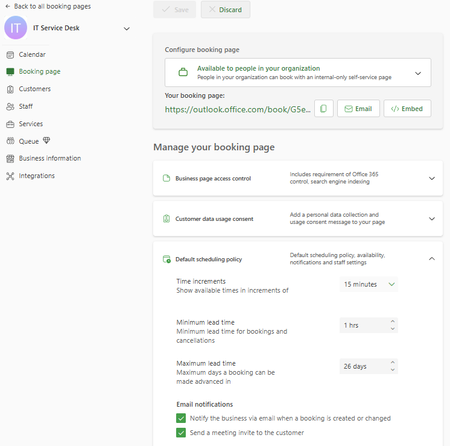
Hello, I am the main technician for my company's service desk. We have a Bookings page, but any time anyone books a time slot, they receive a message indicating that they will receive a confirmation email, but no email comes to them. In the settings, it shows the checkbox to send a confirmation email is checked. I have also looked in Exchange Admin and run a message trace and cannot find any confirmation email sent to myself or other testers. In Bookings, I have unchecked the confirmation email checkbox, saved, checked, saved, and tested - same result. Additionally, this Bookings page is only for internal users, and all of them are 'customers' with their full organization email address. In researching, I found that there was mention of the Bookings needing to have an Exchange account as a shared mailbox, which I do not believe we have - when I search the email that confirms for me that someone has booked with me, it is a long string of seemingly random letters and numbers with an internal domain address. I have also tried searching in Exchange Admin for 'IT' 'Service Desk' 'Service', and 'Desk', none of which have any results under Mailboxes (which would include shared mailboxes). Any advice/suggestions would be greatly appreciated. Screenshot:1.2KViews0likes2Comments
Dibbling Microsoft AutoUpdate - macOS
I have a customer with a Mac mini M4 with multiple user accounts. Each user has an access to Office 365 apps, Outlook, Excel and Word. The issue I am having is with Microsoft AutoUpdate. I have turned off "Automatically keep Microsoft apps up to date" on all of the users. This has not stopped update application from opening and showing on each of the users there are updates available. If one of the users tries to run the update while an application is open by another user, it cause all kinds of problems. My questions is, "Is there another way to prevent AutoUpdate from indicating there are updates available? Thanks Len Levin BSC139Views0likes1Comment