serverless
2 TopicsAzure Databricks at Databricks Data + AI Summit 2026: updates and new announcements
Databricks Data + AI Summit brings together the global data and AI community in San Francisco to share product news, technical breakthroughs, and customer stories. This year, as usual, we have a lot of Azure Databricks announcements, a strong presence across the event, and a continued focus on helping customers put their data to work across analytics, AI, and enable business productivity. Find us at Data and AI Summit As a Legend Sponsor and Databricks’ long-standing strategic partner, Microsoft is joining Databricks Data + AI Summit during the keynote, multiple breakout sessions, and at the Expo booth. We're also engaging with customers 1:1 to hear from you. Satya Nadella will join Ali Ghodsi, CEO Databricks, in a pre-recorded keynote conversation on the importance of data in AI implementation and the deep integrations we co-engineer. We encourage you to visit us at the Microsoft Booth (Booth # 103) on the Expo floor to chat with the Azure Databricks team, see demos, and learn more about the recent announcements. Azure Databricks Breakout Sessions Unlocking the Microsoft Data & AI Ecosystem with Azure Databricks: From Insight to Impact Wednesday, June 17 | 1:50 PM – 2:30 PM PDT | Speaker: Anavi Nahar, Head of Product, Azure Data Lake Storage & Azure Databricks, Microsoft In today’s data-driven landscape, organizations need more than analytics—they need a unified platform that turns raw data into actionable intelligence across the Microsoft ecosystem. This session explores how Azure Databricks serves as the backbone of modern data architecture, integrating with core Microsoft cloud services and platforms to accelerate innovation. Learn how to use Azure Databricks for scalable data engineering, advanced analytics, and AI-driven solutions while enabling real-time collaboration and governance. Through practical examples and architectural patterns, we’ll show how to eliminate data silos, optimize performance, and empower teams to deliver insights faster. Zero-Copy Federated Energy Analytics: ADME + Databricks in Action Wednesday, June 17 | 12:40 PM - 1:20 PM PDT | Speaker: Andy Corran, Principal Product Manager, Azure Databricks, Microsoft Oil and gas companies have standardized on Azure Data Manager for Energy (ADME) as their subsurface system of record, but running analytics and AI on that data has meant copying massive datasets into downstream platforms, breaking governance and slowing every workflow that follows. In this jointly developed Microsoft and Databricks session, we introduce a new zero‑copy, federated path that brings Databricks compute directly to data, with native governance and serverless scale. We walk through the architecture, show the solution in action against live ADME, and share how operators across the industry are accelerating subsurface analytics while keeping ADME as the single source of truth. Unity Catalog External Locations: Extending Governance to OneLake and Beyond Wednesday, Jun 17 | 5:20 PM - 5:40 PM PDT | Speaker: Ljubica Vujovic Boskovic, Senior Product Manager, Databricks In this session, we'll show how External Locations provide a consistent, extensible pattern for connecting Databricks to any storage platform — and walk through what it takes to create External Location for Microsoft OneLake. You'll see the architecture, the setup end-to-end, and a demo reading and writing UC-governed assets directly into OneLake storage without needing to setup any ETL pipelines. Latest announcements We recently announced new ways to build AI apps and agents with Azure Databricks, Copilot Studio, and GitHub Copilot, including authoring Copilot Studio agents that reason over an entire Azure Databricks workspace through one MCP connection. At Microsoft Build, PepsiCo also shared its blueprint for agentic AI, illustrating how Azure Databricks can provide the data foundation for agentic apps. This week’s announcements make it easier to use Azure Databricks with the Microsoft tools your teams rely on every day, including Microsoft Teams, M365 Copilot, Excel, SharePoint, Power BI, and OneLake: Genie for Microsoft Teams and M365 Copilot (Beta): You can tag Genie in a Teams thread and get a context-aware answer from your Azure Databricks lakehouse without leaving the conversation. Responses are governed by Unity Catalog, so each answer is scoped to what the user is permitted to see. It’s part of the broader Genie One experience for report generation, reusable agents, low-code apps, and natural-language pipeline design. See it in action in the Databricks + Microsoft co-authored training in AI Skills Navigator Genie in Copilot Cowork (Beta): Available today, Databricks Genie works seamlessly with M365 Copilot Cowork. This integration will allow teams to anchor Cowork’s tasks with the Genie Ontology, bringing trusted data intelligence straight into their workflows Azure Databricks Excel Add-in (Public Preview): This brings governed lakehouse data into Excel without SQL or per-user ODBC setup. Unity Catalog metric views let business logic be defined once and stay consistent across tools, and the add-in supports write-back, so permitted users can push updates from Excel into Databricks. Learn how to set it up. SharePoint Connector (Beta) via Lakeflow Connect. A fully managed connector for point-and-click ingestion pipelines that bring SharePoint content — structured sheets and unstructured PDFs, Word docs, and PowerPoints — into Delta tables, keeping downstream analytics, Genie spaces, and Excel workbooks supplied with current data. Read the documentation here. Azure Databricks OneLake Catalog Federation (Generally Available): The ability to query OneLake data directly from Azure Databricks without pipelines, duplication, or data movement is generally available. This announcement coupled with the Azure Databricks Mirrored Catalog item enable bidirectional READ from Azure Databricks and OneLake. Learn more here Storing Unity Catalog Managed Tables in OneLake (Beta): You can now customers can use OneLake as a storage location option for Unity Catalog tables in addition to Azure Data Lake Storage (ADLS). Read more on how to do this here. CustomerLake: a customer data platform inside the lakehouse Introducing CustomerLake, a Customer Data Platform (CDP) built directly within the lakehouse rather than as a separate application. CustomerLake is now available in Azure Databricks. Two kinds of agents do much of the work: Profile Agents help assemble business-ready Customer 360 profiles from fragmented sources, reducing the manual effort of stitching customer data together. Campaign Agents give marketing teams a workspace to segment audiences, recommend next-best actions, activate across channels, and continuously optimize personalized experiences. Because CustomerLake runs inside your governed storage boundary, customer data, AI models, and governance stay together — avoiding much of the data movement and duplication that come with connecting separate marketing tools. For Azure customers, that means building customer engagement on the same governed lakehouse foundation they already use for analytics and AI, rather than maintaining a parallel stack. “What excites us most about the CustomerLake and the new CDP capability is the ability to bring customer data together in a way that is actionable, timely, and scalable. By creating a more complete view of each customer, we can better understand behaviors, preferences, and needs across channels, which will help us deliver more personalized experiences and more relevant offers. Ultimately, we see this as a powerful step toward stronger engagement, deeper loyalty, and better outcomes for both our business and our customers.” Jay Malepati Global Director of Data Science, Circle K All of these announcements benefit from built in Governance with Azure Databricks Unity Catalog. By connecting governed lakehouse data to the Microsoft tools your teams already use — Teams, M365 Copilot, Excel, SharePoint, OneLake, and Power BI — these updates make it easier to put trusted AI to work on Azure. To learn more, explore the Azure Databricks documentation and try these capabilities in your own workspace.2KViews1like0CommentsAzure Databricks Lakebase is now generally available
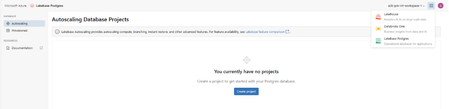
Modern applications are built on real-time, intelligent, and increasingly powered by AI agents that need fast, reliable access to operational data—without sacrificing governance, scale, or simplicity. To solve for this, Azure Databricks Lakebase introduces a serverless, Postgres database architecture that separates compute from storage and integrates natively with the Databricks Data Intelligence Platform on Azure. Lakebase is now generally available in Azure Databricks enabling you and your team to start building and validating real-time and AI-driven applications directly on your lakehouse foundation. Why Azure Databricks Lakebase? Lakebase was created for modern workloads and reduce silos. By decoupling compute from storage, Lakebase treats infrastructure as an on-demand service—scaling automatically with workload needs and scaling to zero when idle. Key capabilities include: Serverless Postgres for Production Workloads: Lakebase delivers a managed Postgres experience with predictable performance and built-in reliability features suitable for production applications, while abstracting away infrastructure management. Instant Branching and Point-in-Time Recovery: Teams can create zero-copy branches of production data in seconds for testing, debugging, or experimentation, and restore databases to precise points in time to recover from errors or incidents. Unified Governance with Unity Catalog: Operational data in Lakebase can be governed using the same Unity Catalog policies that secure analytics and AI workloads, enabling consistent access control, auditing, and compliance across the platform. Built for AI and Real-Time Applications: Lakebase is designed to support AI-native patterns such as real-time feature serving, agent memory, and low-latency application state—while keeping data directly connected to the lakehouse for analytics and learning workflows. Lakebase allows applications to operate directly on governed, lake-backed data—reducing complexity with pipeline synchronization or duplicating storage On Azure Databricks, this unlocks new scenarios such as: Real-time applications built on lakehouse data AI agents with persistent, governed memory Faster release cycles with safe, isolated database branches Simplified architectures with fewer moving parts All while using familiar Postgres interfaces and tools. Get Started with Azure Databricks Lakebase Lakebase is integrated into the Azure Databricks experience and can be provisioned directly within Azure Databricks workspaces. For Azure Databricks customers building intelligent, real-time applications, it offers a new foundation—one designed for the pace and complexity of modern data-driven systems. We’re excited to see what you build, get started today!1.6KViews0likes0Comments