microsoft detection and response team (dart)
13 TopicsCustom Detection Rules as Code in Sentinel Repositories: What Your Pipeline Owns Now
While going through the June Sentinel updates I almost scrolled past this one, and I think that would have been a mistake: custom detection rules can now be managed as code in Sentinel Repositories, the same way analytics rules, playbooks, parsers and workbooks already are. You connect a GitHub or Azure DevOps repo, enable the Custom Detection Rules content type, and rules are synced on every commit. There is also a standalone path via the Bicep CLI for teams running their own pipelines. The feature is in preview per the Learn documentation, and in my view it matters more than the low-key rollout suggests. Microsoft has been positioning custom detections as the unified experience for building rules over both Defender XDR and Sentinel data since late 2025. If custom detections are becoming the primary detection type, then this preview is the moment your primary detection type becomes pipeline-managed. I spent some time in the documentation to understand what that actually means, and there is one implication I have not seen anyone talk about yet. How it works Custom detection rules use a different mechanism than every other content type in Repositories. Analytics rules deploy as Microsoft.OperationalInsights/workspaces/providers/alertRules resources, with the Microsoft.SecurityInsights provider sitting in the resource name. Custom detection rules instead use a dedicated Bicep extension. You declare it in a `bicepconfig.json` at the repo root: { "extensions": { "MicrosoftSecurity": "br:mcr.microsoft.com/bicep/extensions/microsoftsecurity:v1.0.1" } } The rule itself is a `Microsoft.Security/detectionRules` resource. This is the structure from the Microsoft documentation: extension MicrosoftSecurity resource detectionRule 'Microsoft.Security/detectionRules@2026-06-01-preview' = { id: 'custom-rule-id' displayName: 'Custom Rule Display Name' status: 'enabled' queryCondition: { queryText: 'DeviceProcessEvents | take 10 | project DeviceId, Timestamp, FileName' } schedule: { frequency: 'PT1H' } detectionAction: { alertTemplate: { title: '<ruleTitle>' description: 'Custom detection rule' severity: 'medium' tactics: [ { tactic: 'Execution' techniques: [ { technique: 'T1059' } ] } ] entityMappings: { hosts: [ { id: 'h' deviceIdColumn: 'DeviceId' } ] } } } } Rules are uniquely identified by the `id` property, which you provide in the template. Deployment is either the automatic Repositories sync or a plain `az deployment group create` against a resource group. That last part is what I like most about the design: any CI/CD system that can run Azure CLI can ship these rules. Prerequisites beyond the standard Repositories setup: a Microsoft 365 E5 license or equivalent that includes Defender XDR, and a Sentinel workspace onboarded to the Defender portal. Two preview limitations are documented: custom frequency for Sentinel-only data is not supported yet, and neither are custom details. The part that made me stop reading and think Repositories are designed as the single source of truth. The documentation is explicit that content in your repo overwrites changes made through the portal. That is the whole point of the feature, and for analytics rules it has been mostly harmless. For custom detections I see a wrinkle. When Microsoft renames tables or columns in the advanced hunting schema, those naming changes are applied automatically to queries saved in Microsoft Defender, including the queries inside custom detection rules. The docs are equally explicit that this automatic migration does not cover queries run via API or saved anywhere outside Defender. A Git repo is outside Defender. Play that forward with a current example. The `AIAgentsInfo` table stopped being accessible on July 1, 2026, replaced by the unified `AgentsInfo` table with a changed column set. A portal-managed custom detection referencing the old table got migrated automatically. The same rule managed as code did not, because the authoritative copy of the query now lives in your repo, and nothing in the sync path rewrites your Bicep files. Your repo is now the thing standing between Microsoft's server-side fix and your production detection. Either the sync starts failing, or the stale query gets reasserted over the migrated rule. The documentation does not say which of the two happens, and honestly, neither is good. No alert fires for either. And if smart deployments, which skip files that have not changed since the last deployment, apply to this content type the same way they do to the rest of Repositories, it gets slightly worse in a way I find almost funny: a stale rule would sit untouched until someone happens to edit it. What I would put in front of the merge To be clear, none of this is an argument against the feature. I want detections in Git, and I suspect most people reading this do too. It is an argument that moving custom detections into a repo moves the schema lifecycle responsibility into your review process, because the portal safety net explicitly does not reach into source control. Concretely, a PR touching detection content should be checked for references to deprecated or transitioning advanced hunting tables, for the result columns the custom detection docs recommend (`Timestamp` or `TimeGenerated`, plus `DeviceId` or `DeviceName` for Defender for Endpoint tables, plus `Timestamp` and `ReportId` from the same event for the other Defender tables), and for complete entity mappings, since entities drive how alerts group into incidents. One more detail from the custom detection docs that I suspect will trip up people coming from analytics rules, because it goes against years of muscle memory: avoid filtering on `Timestamp` or `TimeGenerated` in the query itself. The service prefilters data based on the detection lookback using ingestion time. The scheduled-analytics-rule reflex of always pinning a time window works against you here. Whether you enforce these checks with a homegrown script or a linting step in the pipeline matters less than doing it before merge rather than discovering it in the alert queue. The deployment mechanics are now solved. The content governance is yours. Full transparency: I have worked through the documentation and the sample content, but I have not yet run a retired-table scenario through the sync myself. So if you are testing the preview, I would genuinely like to hear how it behaves in your environment when a repo-managed rule references a table like `AIAgentsInfo`. That failure mode is the one I want to understand before this reaches GA. Beyond that specific case, I am curious where you all stand: are you moving custom detections into Git now, or waiting for GA? And if you already run detections as code for analytics rules, what checks have earned a permanent place in your PR pipeline? My used references: Manage content as code with Microsoft Sentinel repositories: https://learn.microsoft.com/en-us/azure/sentinel/ci-cd-custom-content Advanced hunting schema naming changes: https://learn.microsoft.com/en-us/defender-xdr/advanced-hunting-schema-changes Create custom detection rules in Microsoft Defender XDR: https://learn.microsoft.com/en-us/defender-xdr/custom-detection-rules Custom detections as the unified detection experience: https://techcommunity.microsoft.com/t5/microsoft-defender-threat-protection/custom-detections-are-now-the-unified-experience-for-creating/ba-p/4463875SolvedSecurity Copilot Agents in Defender XDR: where things actually stand
With RSAC 2026 behind us and the E5 inclusion now rolling out between April 20 and June 30, anyone planning SOC workflows or sitting on a capacity budget needs to get a clear picture of what is GA, what is preview, and what was just announced. The marketing pages tend to blur those lines. This is my sober look at the current state, with the operational details that matter for adoption decisions. What is actually shipping right now The Phishing Triage Agent is GA. It only handles user-reported phish through Defender for Office 365 P2, but for most SOCs that is a meaningful chunk of the L1 queue. Verdicts come with a natural-language rationale rather than just a label, which is the part that determines whether analysts will trust it. The agent learns from analyst confirmations and overrides, so the feedback loop matters more than the initial setup. There is a setup detail that is easy to miss: the agent will not classify alerts that have already been suppressed by alert tuning. The built-in rule "Auto-Resolve - Email reported by user as malware or phish" needs to be off, and any custom tuning rules that touch this alert type need review. If you skip this, the agent runs on an empty queue and you wonder why nothing is happening. The Threat Intelligence Briefing Agent is also GA. It produces tenant-tailored intel briefings on a regular cadence. Useful, but lower operational impact than the triage agents. Copilot Chat in Defender went GA with the April 2026 update. Conversational Q&A inside the portal, grounded in your incident and entity data. This is the lowest-risk way to get value out of Security Copilot and probably where most teams should start. Public preview, worth watching The Dynamic Threat Detection Agent is the most technically interesting one. It runs continuously in the Defender backend, correlates across Defender and Sentinel telemetry, generates its own hypotheses, and emits a dynamic alert when the evidence converges. Detection source on the alert is Security Copilot. Each alert includes the structured fields (severity, MITRE techniques, remediation) plus a narrative explaining the reasoning. For EU tenants the residency point is worth confirming with whoever owns data protection in your org: the service runs region-local, so customer data and required telemetry stay inside the designated geographic boundary. During public preview it is enabled by default for eligible customers and is free. At GA, currently targeted for late 2026, it transitions to the SCU consumption model and can be disabled. The Threat Hunting Agent is also in public preview. Natural language to KQL with guided hunting. Lower stakes, but useful for teams without deep KQL expertise on hand. Announced at RSAC, still preview Two agents got the headlines in March: The Security Alert Triage Agent extends the agentic triage approach beyond phishing into identity and cloud alerts. The longer-term direction is consolidating phishing, identity, and cloud triage under a single agent. Rollout is from April 2026, in preview. The Security Analyst Agent is the multi-step investigation agent. Deeper context across Defender and Sentinel, prioritised findings, transparent reasoning trace. Preview since March 26. Both look promising on paper, but Microsoft's history of preview features that take a long time to mature is well-documented. I would not plan production workflows around either of them yet. What you actually get with the E5 inclusion This is the licensing change most people are dealing with right now. Security Copilot has been part of the E5 product terms since January 1, 2026. Tenant rollout is phased between April 20 and June 30, 2026, with a 7-day notification before activation. The numbers: 400 SCUs per month for every 1,000 paid user licenses Capped at 10,000 SCUs per month, which you hit at around 25,000 seats Linear scaling below that, so a 3,000-seat tenant gets 1,200 SCUs per month No rollover, the pool resets monthly What is included: chat, promptbooks, agentic scenarios across Defender, Entra, Intune, Purview, and the standalone portal. Agent Builder and the Graph APIs are in. If you also run Sentinel, the included SCUs apply to Security Copilot scenarios there. What is not included: Sentinel data lake compute and storage. Those still run through Azure on the regular meters. Beyond the included pool you pay 6 USD per SCU pay-as-you-go, with 30 days notice before that mode kicks in. Practical things worth knowing before activation A few details that are easy to miss in the docs: Under System > Settings > Copilot in Defender > Preferences, switch from Auto-generate to Generate on demand. Auto-generate will burn SCUs on incidents nobody is going to look at. Generate on demand gives you direct control. In the Security Copilot portal workspace settings, check the data storage location and the data sharing toggle. Data sharing is on by default, which means Microsoft uses interaction data for product improvement. If your compliance position does not allow that, change it before agents start running. Changing it requires the Capacity Contributor role. Agent runs are not equivalent to the same number of analyst chat prompts. A triage agent processing fifty alerts in one run consumes meaningfully more SCUs than fifty manual prompts on the same data. If you have a high-volume phishing pipeline, model that out before you flip the switch broadly. The usage dashboard in the Security Copilot portal breaks down consumption by day, user, and scenario. Output quality depends on telemetry quality. Flaky connectors, gaps in log sources, or a high baseline of misconfigured alerts will produce verdicts that match. Connector health monitoring (the SentinelHealth table in Advanced Hunting is a sensible starting point) is a precondition. The agents only improve if analysts feed the override loop. If your team treats the verdicts as background noise rather than confirming or correcting them, the feedback signal is lost and calibration stays where it shipped. That is a process problem, not a product problem, but it determines whether any of this is worth the SCUs. A reasonable adoption order A rough sequence that minimises capacity surprises: Copilot Chat in Defender first. Lowest risk, immediate value through natural language Q&A in the investigation context. Phishing Triage Agent on a controlled subset, with a review cadence in place. Check the built-in tuning rules first. Watch the SCU dashboard for the first month before adding anything else. Let the Dynamic Threat Detection Agent run while it is in public preview, since it is default-on and free anyway. Compare its alerts against existing Sentinel detections. Security Alert Triage Agent for identity and cloud once the phishing baseline is stable. Establish a monthly review covering agent decisions, false-positive rate, SCU cost, and MTTD/MTTR trends. Technically, agentic triage is moving past phishing into identity and cloud, and the Dynamic Threat Detection Agent represents a genuine attempt at the false-negative problem rather than just another rule engine. Lizenziell, the E5 inclusion removes the biggest barrier to adoption that previously existed. The risk is enabling everything at once. Agents that nobody reviews are agents that consume capacity without delivering value, and the SCU dashboard is the only thing that will tell you that is happening. One agent, one use case, a 30-day baseline, then the next one. The order matters more than the speed.Ingesting Windows Security Events into Custom Datalake Tables Without Using Microsoft‑Prefixed Table
Hi everyone, I’m looking to see whether there is a supported method to ingest Windows Security Events into custom Microsoft Sentinel Data Lake–tiered tables (for example, SecurityEvents_CL) without writing to or modifying the Microsoft‑prefixed analytical tables. Essentially, I want to route these events directly into custom tables only, bypassing the default Microsoft‑managed tables entirely. Has anyone implemented this, or is there a recommended approach? Thanks in advance for any guidance. Best Regards, Prabhu Kiran
Question malware detected Defender for Windows 10
Why did my Microsoft Defender detect a malicious file in AppData\Roaming\Secure\QtWebKit4.dll (Trojan:Win32/Wacatac.C!ml) during a full scan and the Kaspersky Free and Malwarebytes Free scans didn't detect it? Was it maliciously modifying, corrupting, or deleting various files on my PC before detection? I sent it to Virus Total, the hash: 935cd9070679168cfcea6aea40d68294ae5f44c551cee971e69dc32f0d7ce14b Inside the same folder as this DLL, there's another folder with a suspicious file, Caller.exe. I sent it to Virus Total, and only one detection from 72 antivirus programs was found, with the name TrojanPSW.Rhadamanthys. VT hash: d2251490ca5bd67e63ea52a65bbff8823f2012f417ad0bd073366c02aa0b3828
Device Stuck on Restart Screen After Update - Error Code: ATTEMPTED WRITE TO READONLY MEMORY
Hi everyone, I’m experiencing an issue with my Windows device that started after a recent update. For the past three days, my device has been stuck on a restart screen with the following error message: Your device ran into a problem and needs to restart. We'll restart for you. For more information about this issue and possible fixes, visit https://www.windows.com/stopcode If you call a support person, give them this info: Stop Code: ATTEMPTED WRITE TO READONLY MEMORY I’ve tried restarting the device multiple times, but it keeps returning to this screen. I’m unable to access my system or troubleshoot further. Has anyone else encountered this issue after an update? Any suggestions on how to resolve this would be greatly appreciated. Thank you in advance for your help!
Microsoft's recommendation regarding traffic inspection of m365 traffic
Hi, does anyone know, what is microsoft's official recommendation to prevent any attackers from distributing malware via microsoft's own cloud resources like discussed at https://www.theregister.com/2024/08/08/microsoft_google_cloud_storage_malware/? According to microsoft's networking principles, traffic related to Microsoft 365 shouldn't be inspected by any networking component and routed directly to microsoft (bypassing proxies and other traffic inspection solutions). How can this be configured safely, when there is such attack path?403Views0likes0Comments
Newsletter for updates - as per customer request
one of my colleague asked a question and i couldn't help him maybe here you ll be able to clarify <::One of my customers mentioned, that they want to be proactively informed about security incidents and news around the topic security from Microsoft, as they have critical infrastructure. Does anyone know, which newsletter that customer could register for?::>
New Blog Post | Data Connectors for Azure Log Analytics and Data Explorer Now in Public Preview
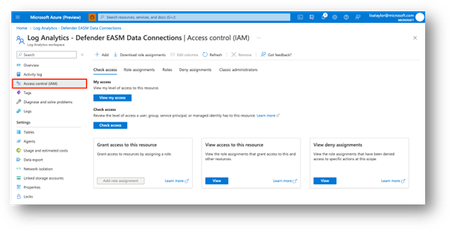
Data Connectors for Azure Log Analytics and Data Explorer Now in Public Preview - Microsoft Community Hub The Microsoft Defender EASM (Defender EASM) team is excited to share that new Data Connectors for Azure Log Analytics and Azure Data Explorer are now available in public preview. Defender EASM continuously discovers an incredible amount of up-to-the-minute Attack Surface Data, so connecting and automating this data flow to all our customers’ mission-critical systems that keep their organizations secure is essential. The new Data Connectors for Log Analytics and Azure Data Explorer can easily augment existing workflows by automating recurring exports of all asset inventory data and the set of potential security issues flagged as insights to specified destinations to keep other tools continually updated with the latest findings from Defender EASM. Original Post: New Blog Post | Data Connectors for Azure Log Analytics and Data Explorer Now in Public Preview - Microsoft Community HubNew Blog Post | Microsoft Defender Weekly Wrap – Issue #50
Microsoft Defender Weekly Wrap – Issue #50 - Azure Cloud & AI Domain Blog (azurecloudai.blog) Happy Friday all! This newsletter is 50! I just want to make it a quick point to thank you all for tuning in and continuing to tune in. This newsletter - and this community - continues to grow by leaps and bounds. Who knew 50 weeks ago that a simple idea like this could swell into something so far reaching and valuable to many of you. I receive commentary frequently from folks that count on this newsletter weekly and participate heavily in the associated LinkedIn group. Your community patronage is amazing and always appreciated. Remember, if you see something you like in the newsletter content don’t keep it to yourself. Share it with someone that needs it. That’s how we continue to grow. … GitLab Survey - Defender for DevOps GitLab Integration The Defender for DevOps team is looking to broaden the Microsoft Defender for Cloud ecosystem by offering customers the ability to onboard their GitLab resources into Defender for DevOps. If your DevOps team uses GitLab in any capacity, we request your feedback to better understand how you interact with the GitLab platform. Survey link: https://rodtrent.com/o9o … The Must Learn KQL Christmas edition has been relaunched for the holidays! Know someone (or yourself) that lives KQL? Could be better than a Christmas Hallmark movie. https://must-learn-kql.creator-spring.com/listing/get-kql-for-christmas All proceeds go to St. Jude. … Even with the purposeful effort to consolidate security portals I think you’ll agree with me that Microsoft still has portal glut. I found the Microsoft Cloud command line this past week and thought I’d share with all of you. If you’ve not seen this already, you’ll thank me for the link: https://cmd.ms/ … That’s it from me for this week. Have a wonderful weekend and week ahead! Talk soon. -RodThis was my preparation for the exam Microsoft Certified: Cybersecurity Architect Expert (SC-100)!
Dear Microsoft 365 Security and Azure Security Friends, When I first read about this certification I was immediately excited! But at the same time I had a lot of respect, because it is an expert certification. I quickly started collecting information. The first thing I learned was that it takes a so-called prerequisite exam to become a Microsoft Certified: Cybersecurity Architect Expert certification. The following prerequisite exams are available (only one of these exams must be passed): Microsoft Certified: Security Operations Analyst Associate (SC-200) https://docs.microsoft.com/en-us/learn/certifications/security-operations-analyst/ Microsoft Certified: Identity and Access Administrator Associate (SC-300) https://docs.microsoft.com/en-us/learn/certifications/identity-and-access-administrator/ Microsoft Certified: Azure Security Engineer Associate (AZ-500) https://docs.microsoft.com/en-us/learn/certifications/azure-security-engineer/ Microsoft 365 Certified: Security Administrator Associate (MS-500) https://docs.microsoft.com/en-us/learn/certifications/m365-security-administrator/ I have taken all these prerequisite exams. The two exams AZ-500 and MS-500 helped me the most in preparing for the SC-100 (this is certainly not the case for everyone). In this SC-100 exam you will be quizzed on topics in Microsoft Sentinel, Microsoft Defender for Cloud, Microsoft 365 Defender for Cloud Apps (and all other Defender products), Azure Policy, Azure landing zone, etc. This spectrum is huge, please take enough time to "explore" these "portals" deeply. You don't have to have the technical knowledge down to the last detail. No not at all, in this exam it is important to use all the features and products with the right strategy. This was among other things my way to success! Now to my preparations for the exam: 1. First of all, I looked at the Exam Topics to get a first impression of the scope of topics. https://docs.microsoft.com/en-us/learn/certifications/cybersecurity-architect-expert/ Please take a close look at the skills assessed: https://query.prod.cms.rt.microsoft.com/cms/api/am/binary/RWVbXN 2. So that I can prepare for an exam I need an Azure test environment (this is indispensable for me). You can sign up for a free trial here. https://azure.microsoft.com/en-us/free/ Next, I set up a Microsoft 365 test environment. You can sign up for a free trial here. https://www.microsoft.com/en-us/microsoft-365/business/compare-all-microsoft-365-business-products I chose the "Microsoft 365 Business Premium" plan for my testing. I have also registered several free trials to test the various Defender products. 3. Now it goes to the Microsoft Learn content. These learn paths (as you can see below, all 4) I have worked through completely and "mapped"/reconfigured as much as possible in my test environment. https://docs.microsoft.com/en-us/learn/paths/sc-100-design-zero-trust-strategy-architecture/ https://docs.microsoft.com/en-us/learn/paths/sc-100-evaluate-governance-risk-compliance/ https://docs.microsoft.com/en-us/learn/paths/sc-100-design-security-for-infrastructure/ https://docs.microsoft.com/en-us/learn/paths/sc-100-design-strategy-for-data-applications/ 4. Register for the exam early. This creates some pressure and you stay motivated. https://docs.microsoft.com/en-us/learn/certifications/cybersecurity-architect-expert/ 5. Please also watch the video of John Savill, it is very helpful! https://youtu.be/2Qu5gQjNQh4 6. The Exam Ref for the SC-200 exam was also very supportive. https://www.microsoftpressstore.com/store/exam-ref-sc-200-microsoft-security-operations-analyst-9780137666720 7. Further I have summarized various links that have also helped me a lot. Sorted by Functional Group. Design a Zero Trust strategy and architecture: https://docs.microsoft.com/en-us/security/cybersecurity-reference-architecture/mcra https://docs.microsoft.com/en-us/azure/cloud-adoption-framework/secure/security-governance https://docs.microsoft.com/en-us/azure/architecture/framework/security/monitor-audit https://docs.microsoft.com/en-us/security/benchmark/azure/security-control-logging-monitoring https://docs.microsoft.com/en-us/azure/security/fundamentals/log-audit https://docs.microsoft.com/en-us/azure/architecture/framework/security/design-network-connectivity https://docs.microsoft.com/en-us/azure/architecture/framework/security/design-network-segmentation https://docs.microsoft.com/en-us/security/zero-trust/deploy/infrastructure https://docs.microsoft.com/en-us/security/zero-trust/integrate/infrastructure https://docs.microsoft.com/en-us/azure/cloud-adoption-framework/strategy/define-security-strategy https://docs.microsoft.com/en-us/azure/cloud-adoption-framework/secure/business-resilience https://docs.microsoft.com/en-us/azure/cloud-adoption-framework/strategy/technical-considerations/ https://docs.microsoft.com/en-us/azure/cloud-adoption-framework/organize/ https://docs.microsoft.com/en-us/azure/security/fundamentals/operational-checklist https://azure.microsoft.com/en-us/services/defender-for-cloud/#features https://docs.microsoft.com/en-us/azure/sentinel/overview https://docs.microsoft.com/en-us/azure/defender-for-cloud/workflow-automation https://docs.microsoft.com/en-us/security/compass/incident-response-overview https://docs.microsoft.com/en-us/security/compass/incident-response-planning https://docs.microsoft.com/en-us/security/compass/incident-response-process https://docs.microsoft.com/en-us/azure/cloud-adoption-framework/secure/security-operations https://docs.microsoft.com/en-us/security/compass/security-operations https://docs.microsoft.com/en-us/azure/cloud-adoption-framework/ready/azure-setup-guide/organize-resources https://docs.microsoft.com/en-us/azure/cloud-adoption-framework/ready/azure-setup-guide/manage-access https://docs.microsoft.com/en-us/azure/cloud-adoption-framework/ready/landing-zone/design-area/identity-access https://docs.microsoft.com/en-us/azure/security/fundamentals/identity-management-best-practices https://docs.microsoft.com/en-us/azure/active-directory/external-identities/external-identities-overview https://docs.microsoft.com/en-us/azure/active-directory/authentication/concept-authentication-methods https://docs.microsoft.com/en-us/microsoft-365/education/deploy/design-credential-authentication-strategies https://docs.microsoft.com/en-us/azure/active-directory/hybrid/choose-ad-authn https://docs.microsoft.com/en-us/azure/architecture/framework/security/design-identity-authentication https://docs.microsoft.com/en-us/azure/architecture/framework/security/design-identity-authorization https://docs.microsoft.com/en-us/azure/active-directory/conditional-access/overview https://docs.microsoft.com/en-us/azure/active-directory/conditional-access/plan-conditional-access https://docs.microsoft.com/en-us/azure/architecture/guide/security/conditional-access-zero-trust https://docs.microsoft.com/en-us/azure/active-directory/roles/best-practices https://docs.microsoft.com/en-us/azure/active-directory/governance/entitlement-management-delegate https://docs.microsoft.com/en-us/azure/active-directory/roles/groups-concept https://docs.microsoft.com/en-us/azure/active-directory/privileged-identity-management/pim-configure https://docs.microsoft.com/en-us/security/compass/identity https://docs.microsoft.com/en-us/azure/active-directory/governance/entitlement-management-overview https://docs.microsoft.com/en-us/azure/active-directory/governance/entitlement-management-delegate https://docs.microsoft.com/en-us/microsoft-identity-manager/pam/privileged-identity-management-for-active-directory-domain-services https://docs.microsoft.com/en-us/microsoft-identity-manager/pam/principles-of-operation https://docs.microsoft.com/en-us/azure/active-directory/roles/security-planning Evaluate Governance Risk Compliance (GRC) technical strategies and security operations strategies: https://docs.microsoft.com/en-us/azure/cloud-adoption-framework/govern/policy-compliance/regulatory-compliance https://docs.microsoft.com/en-us/azure/security/fundamentals/technical-capabilities https://docs.microsoft.com/en-us/security/compass/governance https://docs.microsoft.com/en-us/azure/defender-for-cloud/regulatory-compliance-dashboard https://docs.microsoft.com/en-us/microsoft-365/compliance/compliance-manager?view=o365-worldwide https://docs.microsoft.com/en-us/microsoft-365/compliance/compliance-score-calculation?view=o365-worldwide https://docs.microsoft.com/en-us/azure/defender-for-cloud/secure-score-security-controls https://docs.microsoft.com/en-us/azure/governance/policy/overview https://docs.microsoft.com/en-us/azure/governance/policy/tutorials/create-and-manage https://azure.microsoft.com/en-us/global-infrastructure/data-residency/ https://azure.microsoft.com/en-us/resources/achieving-compliant-data-residency-and-security-with-azure/ https://azure.microsoft.com/en-us/overview/trusted-cloud/privacy/ https://azure.microsoft.com/en-us/blog/10-recommendations-for-cloud-privacy-and-security-with-ponemon-research/ https://docs.microsoft.com/en-us/security/benchmark/azure/introduction https://docs.microsoft.com/en-us/azure/defender-for-cloud/update-regulatory-compliance-packages https://docs.microsoft.com/en-us/azure/defender-for-cloud/regulatory-compliance-dashboard https://docs.microsoft.com/en-us/azure/defender-for-cloud/secure-score-access-and-track https://docs.microsoft.com/en-us/azure/defender-for-cloud/enhanced-security-features-overview https://docs.microsoft.com/en-us/azure/architecture/framework/security/design-governance-landing-zone https://docs.microsoft.com/en-us/azure/cloud-adoption-framework/ready/considerations/landing-zone-security https://docs.microsoft.com/en-us/azure/cloud-adoption-framework/ready/landing-zone/design-area/security https://docs.microsoft.com/en-us/microsoft-365/security/office-365-security/office-365-ti?view=o365-worldwide https://docs.microsoft.com/en-us/microsoft-365/compliance/insider-risk-management?view=o365-worldwide https://techcommunity.microsoft.com/t5/security-compliance-and-identity/reduce-risk-across-your-environments-with-the-latest-threat-and/ba-p/2902691 Design security for infrastructure: https://docs.microsoft.com/en-us/windows/security/threat-protection/windows-security-configuration-framework/windows-security-baselines https://docs.microsoft.com/en-us/windows-server/security/security-and-assurance https://docs.microsoft.com/en-us/microsoft-365/security/defender-endpoint/minimum-requirements?view=o365-worldwide https://docs.microsoft.com/en-us/mem/intune/protect/security-baselines https://docs.microsoft.com/en-us/windows-server/identity/ad-ds/plan/security-best-practices/best-practices-for-securing-active-directory https://docs.microsoft.com/en-us/azure/active-directory-domain-services/secure-your-domain https://docs.microsoft.com/en-us/azure/key-vault/general/about-keys-secrets-certificates https://docs.microsoft.com/en-us/azure/security/fundamentals/management https://docs.microsoft.com/en-us/security/benchmark/azure/baselines/cloud-services-security-baseline https://azure.microsoft.com/en-us/overview/iot/security/ https://docs.microsoft.com/en-us/azure/azure-sql/database/security-overview?view=azuresql https://docs.microsoft.com/en-us/azure/azure-sql/database/security-best-practice?view=azuresql https://docs.microsoft.com/en-us/security/benchmark/azure/baselines/sql-database-security-baseline https://docs.microsoft.com/en-us/azure/cosmos-db/database-security?tabs=sql-api https://docs.microsoft.com/en-us/security/benchmark/azure/baselines/synapse-analytics-security-baseline https://docs.microsoft.com/en-us/azure/app-service/overview-security https://docs.microsoft.com/en-us/azure/app-service/security-recommendations https://docs.microsoft.com/en-us/security/benchmark/azure/baselines/app-service-security-baseline https://docs.microsoft.com/en-us/security/benchmark/azure/baselines/storage-security-baseline https://docs.microsoft.com/en-us/security/benchmark/azure/baselines/container-instances-security-baseline https://docs.microsoft.com/en-us/security/benchmark/azure/baselines/container-registry-security-baseline https://docs.microsoft.com/en-us/security/benchmark/azure/baselines/aks-security-baseline https://docs.microsoft.com/en-us/azure/aks/concepts-security https://docs.microsoft.com/en-us/azure/aks/operator-best-practices-cluster-security?tabs=azure-cli https://docs.microsoft.com/en-us/azure/architecture/framework/services/compute/azure-kubernetes-service/azure-kubernetes-service Design a strategy for data and applications: https://docs.microsoft.com/en-us/azure/security/develop/threat-modeling-tool-mitigations https://docs.microsoft.com/en-us/azure/architecture/framework/security/design-threat-model https://docs.microsoft.com/en-us/compliance/assurance/assurance-security-development-and-operation https://docs.microsoft.com/en-us/azure/security/develop/secure-design https://docs.microsoft.com/en-us/azure/defender-for-cloud/defender-for-app-service-introduction https://docs.microsoft.com/en-us/azure/architecture/framework/security/resilience https://docs.microsoft.com/en-us/security/benchmark/azure/security-controls-v3-governance-strategy https://docs.microsoft.com/en-us/azure/architecture/data-guide/scenarios/securing-data-solutions https://docs.microsoft.com/en-us/azure/architecture/framework/security/design-storage https://docs.microsoft.com/en-us/security/benchmark/azure/security-controls-v3-data-protection https://docs.microsoft.com/en-us/azure/security/fundamentals/encryption-overview https://docs.microsoft.com/en-us/azure/security/fundamentals/data-encryption-best-practices https://docs.microsoft.com/en-us/azure/security/fundamentals/encryption-atrest https://docs.microsoft.com/en-us/azure/architecture/framework/security/design-storage-encryption 8. You can find a list of all the links here: https://github.com/tomwechsler/Microsoft_Cloud_Security/blob/main/SC-100/Links.md I know you've probably read and heard this many times: read the exam questions slowly and accurately. Well, that was the key to success for me. It's the details that make the difference between success and failure. Let me give you an example at this point. You want to make a business app available. The authentication should be done by each person with his own LinkedIn account. Which variant of Azure Active Directory do you use for this? At this point you should know the different types of Azure Active Directory. One final tip: When you have learned something new, try to explain what you have learned to another person (whether or not they know your subject). If you can explain it in your own words, you understand the subject. That is exactly how I do it, except that I do not explain it to another person, but record a video for YouTube! I hope this information helps you and that you successfully pass the exam. I wish you success! Kind regards, Tom Wechsler P.S. All scripts (#PowerShell, Azure CLI, #Terraform, #ARM) that I use can be found on github! https://github.com/tomwechsler9.5KViews10likes6Comments