azure migrate
8 Topics
Enhanced data protection for Azure Files
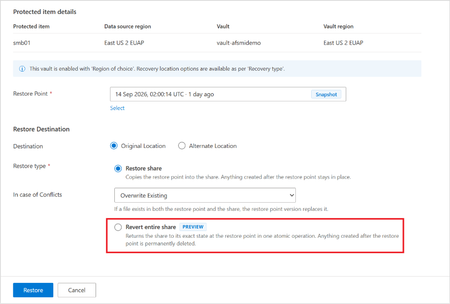
Organizations rely on Azure Files for business-critical workloads such as VDI, SAP, and general-purpose file shares that hold their enterprise data. For these workloads, backup and disaster recovery are day-one requirements. Customers need a simple, scalable way to recover from an accidental change to production data, a regional disruption or a ransomware attack, both within a region and across regions. Today, we’re announcing new capabilities, in Public Preview, that expand business continuity and disaster recovery (BCDR) capabilities for Azure Files. They help customers recover from operational issues, strengthen regional resilience and protect critical file data from cyber threats: Vaulted backup for NFS shares: Protect NFS file shares with isolated recovery points through Azure Backup for protected, trusted recovery from cyber incidents. Revert snapshot: Roll an existing file share back to a known-good point in time, in place, without changing the endpoint or mount path for fast. This gives you fast recovery from operational issues. Azure Files-to-Azure Files copy and sync with Storage Mover: Use Azure Storage Mover to maintain a secondary copy of your SMB file share data in the Azure region of your choice, with scheduled incremental transfers to keep it current for disaster recovery. Together, these capabilities let customers build Azure Files resiliency in layers: roll back quickly, maintain secondary copies and recover from protected backups. Vaulted backup for Azure Files NFS shares Cyber recovery introduces another dimension to resiliency: When ransomware or another security incident compromises the production environment, organizations need protected recovery points and may need to validate recovered data before reconnecting it to production. Azure Files already supports vaulted backup for SMB shares. With this preview, that protection extends to NFS shares. Vaulted backup for Azure Files NFS shares adds an additional protection layer through Azure Backup. Recovery points are maintained separately from the production file share and managed through backup policies designed to support long-term retention, immutability, and cyber recovery objectives. Vaulted backup helps customers protect critical file data when: Recovery points need protection separate from production: Maintain protected recovery points separately from the production file share, adding another layer of protection for critical file data. Backup strategies require immutability: Support immutable backup strategies as part of the broader approach to protecting recovery points and meeting cyber recovery objectives. Data must be retained long term: Manage recovery points through backup policies designed to support long-term retention and meet the organization’s retention requirements. Ransomware resilience is a priority: Strengthen resilience with protected recovery points for recovery when ransomware or another security incident compromises the production environment. To participate in the Vaulted backup for NFS shares preview, sign up here. Roll back quickly with Revert snapshot Operational mistakes are among the most common reasons applications need data recovery. A deployment can modify the wrong files, a configuration rollout can affect an entire namespace, or an administrator can accidentally overwrite critical content. Azure Files Revert Snapshot initially provides in-place recovery for data and applications hosted on SMB file shares, with NFS support coming next. Customers can select a point-in-time snapshot and restore the existing file share to that state while applications continue using the same file share, endpoint, and mount path. Common scenarios include: Failed application deployments: Roll back after a deployment modifies the wrong files. Incorrect configuration changes: Restore the share after a configuration rollout affects the namespace. Accidental mass modifications: Return to a point-in-time snapshot after unintended changes or overwrites. Development and test environment resets: Reset the file share to a selected snapshot. Azure Backup offers an integrated experience in the Azure portal restore blade to revert snapshots it manages. To participate in the Revert Snapshot preview, sign up here. Azure Files-to-Azure Files copy and sync with Storage Mover From disaster readiness and regional expansion to workload relocation and storage consolidation, customers need a simple, scalable way to copy and sync file data across storage accounts and Azure regions. Common use cases include Virtual Desktop Infrastructure (VDI) users maintaining secondary copies of FSLogix profiles and user data to support regional continuity, SAP and enterprise applications moving application data during regional expansion, organizations consolidating distributed content to simplify administration, and AI workflows placing datasets closer to AI and analytics compute to support distributed development and processing. Azure Files-to-Azure Files copy and synchronization with Azure Storage Mover gives customers a fully managed Azure service to copy data between SMB file shares across storage accounts, regions, and subscriptions (within the same tenant). They can also schedule incremental transfers to keep destination shares up to date. Customers can: Maintain secondary copies for business-critical workloads to an Azure region of choice. Schedule incremental synchronization of application data, user profiles, and shared content to another Azure region, helping organizations strengthen business-continuity and recovery planning. Copy or migrate file share data between regions: Copy data for regional expansion, datacenter transitions, or workload relocation. Consolidate file shares: Bring data together across storage accounts and regions to simplify management. Operate at scale with less overhead: Centrally schedule, monitor, and audit transfers instead of maintaining scripts or copy infrastructure. Azure Storage Mover reduces operational overhead with centralized scheduling, monitoring, auditing, metadata preservation, and orchestration for recurring file transfers. Figure: Storage Mover (West Central US) copies File share 1 in East US to File share 2 in West Central US. Preview support for Azure Files to Azure Files data copy is now available for SMB shares, with NFS support coming soon. To participate in the preview program, sign up here. Together, these capabilities help customers protect critical file data, recover quickly from operational issues and strengthen continuity across regions. Vaulted backup for NFS shares, Revert Snapshot and Azure Files copy and synchronization with Storage Mover provide complementary layers for a more resilient BCDR strategy. Learn more About Azure Files backup - Azure Backup | Microsoft Learn Use Azure Files Share Snapshots | Microsoft Learn Get started with Azure Files-to-Azure Files data copy in Azure Storage Mover (preview) | Microsoft Learn For questions or feedback, please reach out to the team at azurefiles@microsoft.com.144Views0likes0Comments
Discover and assess on-premises Network Attached Storage (NAS) shares using Azure Migrate
Network-attached storage (NAS) holds much of an enterprise’s data; home directories, project shares, media libraries, application data, and analytics datasets, often spanning tens or hundreds of terabytes across protocols and administrative boundaries. Moving this estate to Azure starts not with copying data, but with understanding what you have, where each share should go, and what it will cost. Building on the file share assessment capability we announced in May, today we’re announcing the public preview of NAS share discovery and assessment in Azure Migrate. It connects directly to Dell PowerScale/Isilon and NetApp ONTAP clusters, inventories every SMB, NFS, and S3 share, and assesses each against Azure Files, Azure Blob Storage, and Azure NetApp Files—providing readiness, right-sized configurations, cost estimates, and migration tooling guidance. Your NAS assets now join servers, applications, and databases in the same Azure Migrate project, inventory, and business case. Why does this matter NAS planning has historically been done with spreadsheets, vendor-specific tools, and a lot of manual reconciliation. Storage ends up being assessed separately from the servers and applications that depend on it, which makes it hard to sequence a migration or defend a budget. This capability is designed to help you: Replace manual inventory with automated discoveries across Dell and NetApp platforms, so you can go from "we think we have a few thousand shares" to a verified, per-share inventory. Effectively plan your NAS shares alongside everything else. NAS clusters and their shares appear in the same Azure Migrate inventory as your VMware, Hyper-V, and physical servers, databases, and web apps. Make your informed decision before you migrate. Each share gets a readiness verdict, a recommended Azure service and SKU, and a monthly cost estimate. What's available in public preview Add Dell or NetApp NAS clusters: Discover Dell PowerScale / Isilon (OneFS) and NetApp ONTAP AFF / FAS clusters, and inventory every SMB, NFS, and S3 shares they host — including shares exposed through more than one protocol. Explore and review on-prem shares and workloads: Review cluster and share details in the portal: model, nodes, total and used capacity, protocol versions, volume, and estimated size. Group and filter shares by tag — by business unit, cost center, or application — so related workloads can be planned together. Suitable Azure storage targets: Assess each share against Azure Files, Azure Blob Storage, and Azure NetApp Files, with control over target region, sizing criteria, comfort factor, redundancy, media type, access frequency, and workload type. Alternative migration paths: Compare various migration paths side by side — a recommended mixed path that sends each share to its best-fit service, alongside single-service alternatives — with readiness, monthly cost, and estimated emissions for each. Business case: Build a business case for a NAS-only estate or for a mixed estate of VMs and NAS, comparing a modernization approach against lift-and-shift. End-to-end experience The experience follows the same guided workflow you already know from Azure Migrate. 1. Enable the feature Install the latest Azure Migrate appliance or turn on auto-update, so your existing appliance picks up the new capability. Unlike file shares hosted on Windows and Linux servers, NAS clusters need to be added explicitly: in the appliance configuration manager, add a credential of source type NAS Server, then add a discovery source of type NAS Server with your cluster's FQDN and port. The account needs read-only permission at cluster level — Azure Migrate only reads metadata and never writes to your storage. 2. Discover your NAS estate Create an Azure Migrate project, deploy the appliance on VMware, Hyper-V, or a physical server, and point it at your clusters. The appliance connects to each cluster's management endpoint and collects system and share metadata, vendor, product and model, operating system version, cluster nodes, total and used capacity, share and bucket paths, protocols and protocol versions; followed by performance signals such as IOPS and throughput. Discovered clusters and their shares appear as first-class inventory objects, listed alongside the Windows and Linux file servers the appliance already finds. Filter by type, search, tag, and export the inventory at whatever scale your estate demands. Discovery runs a daily cycle and updates existing items as new metadata arrives, so the picture improves over time rather than being a one-shot snapshot. 3. Create an assessment Select the shares you care about — individually, by tag, or a whole cluster at a time — and create an assessment. The share is the unit of assessment, so every SMB, NFS, or S3 share receives its own verdict rather than inheriting one from its host. Assessment settings let you shape the recommendation to your environment: choose the target Azure region, pick as-is or performance-based sizing, set a comfort factor for headroom, and configure redundancy, Azure Files media preferences, and Azure Blob access frequency. A workload type setting from general purpose file shares through to AI/ML and mission-critical, helps Azure Migrate recommend an appropriate performance level. Azure NetApp Files is added to the evaluation automatically when the source share is detected on NetApp NAS. Settings can be changed, and the assessment recalculated at any time. 4. Review results and build the business case Results are organized as migration paths. The recommended path routes each share to its best-fit Azure service and is shown next to single-service alternatives, so you can compare readiness and cost on the same basis. Key insights include: Readiness for every share — Ready, Ready with conditions, or Not ready — with the warnings that need attention before you move. A recommended Azure configuration per share. For example, a multi-protocol NetApp volume is recommended for Azure NetApp Files, while a general-purpose SMB share is recommended for Azure Files with a specific media type and redundancy. Provisioned size, IOPS, and throughput behind the recommendation, plus the reasoning Azure Migrate used to select the SKU and access tier. Monthly cost estimates per share and per path, an on-premises versus Azure TCO comparison, and estimated carbon savings. Next, you can generate a wave plan to sequence the migration or build a business case that helps you with cost modernizing Azure storage services. Assessment results showing the recommended path, source-to-target mappings, estimated Azure TCO, and carbon savings. Note: All screenshots in this post are from a sample environment. Cluster and share names, capacity values, readiness distributions, cost and TCO estimates, and emissions figures are illustrative and shown for reference and indicative purposes only. They are not a price quote. Your own results depend on your discovered environment, the assessment settings you choose, your target Azure region, and the pricing and offers that apply to your subscription. Prepare for migration with the right tool Assessment tells you where each share should go; Azure Migrate then points you at the tool to get it there. Azure Storage Mover is the recommended path for moving shares to Azure Files and Azure Blob Storage. For ONTAP volumes heading to Azure NetApp Files, the Azure NetApp Files migration assistant is recommended, and Azure File Sync remains the option for active sync and hybrid scenarios with Windows file servers. To learn more about our recommendations for unstructured data migration, visit https://aka.ms/migratemydata. Get started Update your Azure Migrate appliance, add your first NAS cluster, and let a discovery cycle run. Within a few hours you'll start to see a per-share picture of your NAS estate; you can then create an assessment to view the right target service to migrate to Azure. Learn more in our documentation. Connect and discover your NAS appliance Review discovered NAS resources Create a fileshare assessment of NAS shares Review NAS File share assessment recommendations Write to us at azurestoragemigrations@microsoft.com with questions or feedback, or to suggest additional NAS systems you’d like this capability to support. We look forward to hearing from you!114Views0likes1CommentSimplify On-prem File share Migration to Azure: Discover & assess suitability using Azure Migrate
UPDATE as of 20th May 2026: We are happy to announce that this capability is now GA worldwide. Migrating on‑premises file servers to the cloud is a complex infrastructure transformation—not just a data move. Many organizations lack the visibility needed to decide whether to rehost or modernize file shares spread across Windows and Linux servers. Azure Migrate now extends its discovery and assessment capabilities to SMB and NFS file shares, enabling a data‑driven approach to modernizing on‑premises file workloads with Azure Files, or alternatively rehosting to deployment within an Azure VM. We are pleased to introduce the public preview of Azure Migrate’s new comprehensive discovery and assessment of on-premises SMB and NFS file shares for migration to Azure Files. This enhancement simplifies the migration process by integrating discovery and evaluation tools for SMB and NFS shares across both Windows and Linux platforms. Users can efficiently identify file shares, analyze their compatibility, and compare cost benefits for transitioning to Azure Files, all within an intuitive and streamlined interface. Why does this matter File shares remain a foundational service for most workloads - supporting applications, analytics, user home directories, and shared content. Planning such a vast amount of data for migration can be slow, manual, and fragmented. This new Azure Migrate capability is designed to help with: Reduce migration planning from months to weeks through automated discovery and assessment of SMB and NFS file shares. Perform holistic migration planning of your data and storage alongside servers, applications and data bases from within Azure Migrate experience. Modernize confidently to Azure Files with tailored SKU recommendations, readiness assessments, and comprehensive cost insights, enabling you to build a clear business case by comparing ongoing on-premises and Azure Files costs. What’s available in public preview Discover and view details of all on-premises SMB, NFS shares hosted on Windows and Linux servers Group, tag, filter shares by Production, non-production, project, business group for better planning. Create and review assessment for each share, its target Azure Files SKU based on region, redundancy, pricing options and media type. Generate a business case for selected group of shares running on Azure Files against on-premises cost. How do you get this feature? Install the latest Azure Migrate appliance, or enable the auto update feature for the appliance will receive this new capability. All existing SMB, NFS file shares will be reported in the Azure Migrate portal along with their Windows and Linux hosts. You do not need to perform any additional steps to discover the shares. End-to-end experience The experience is fully integrated into Azure Migrate and follows a familiar, guided workflow as below. 1. Discover on‑premises file servers and file shares You can start by creating an Azure Migrate project in the Azure portal and enabling discovery using the Azure Migrate appliance. The appliance can be deployed in connected or disconnected mode and runs on VMware, Hyper‑V, or physical servers. Once deployed, the appliance automatically discovers file servers and the file shares they host, including: Operating system (Windows or Linux) File share protocol (SMB or NFS) Associated volumes Estimated capacity Basic performance metrics such as IOPS and throughput (when performance collection is enabled) Discovered file shares appear directly in Azure Migrate inventory views, where they are surfaced as inventory items under respective Windows or Linux systems. This makes it easy to filter, tag, and review all shares at scale. 2. Build a business case The next step is to create a business case. This offers a clear comparison of on-premises costs versus Azure, highlights long-term savings and operational benefits, and justifies modernizing to Azure Files rather than rehosting file servers on virtual machines. This allows IT leaders to make data-driven decisions confidently. 3. Create and review an Azure Files assessment Once you have finalised your business case and decided to move to Azure Files, you can initiate an Azure Files assessment right from the Azure Migrate platform. The assessments are adaptable, allowing you to focus solely on file shares, include their parent servers, or even expand to scenarios that cover VMs, databases, and file shares—reflecting real-world planning needs. Each assessment reviews readiness and provides recommendations based on inventory and performance metrics gathered. Furthermore, you can tailor assessment settings, including selecting a target Azure region, pricing and savings preferences, media type, redundancy options, and choosing either performance-based or as-is sizing. The assessment offers a detailed overview of migration readiness and economic factors, supporting well-informed decisions for subsequent actions. Key insights include: Readiness states for each file share (Ready, Ready with conditions, or Not ready) Recommended Azure Files SKU based on performance and suitability. For example, Azure Files provisioned v2 premium SSD for a NFS 4.1 share as target. Monthly cost estimates for the recommended SKU. On‑premises vs Azure TCO comparison, helping customers understand long‑term cost implications Azure Migrate also identifies potential warnings and provides necessary remediation guidance. For example, when a redundancy type is not available in an Azure region, it is flagged as ready with conditions and recommend choosing an alternative redundancy type and fallback to next available option. Prepare for migration with appropriate tools Once you are ready to migrate, Azure Migrate also highlights recommended migration tools as part of the assessment. Azure Storage Mover is the default recommended path for file share migrations—providing a first party, managed service to move data efficiently to Azure Files. To learn more about Microsoft’s recommendations to unstructured data migration using other tools, please visit: https://aka.ms/migratemydata. Learn more about creation of assessment and review assessment to get started with understanding your on-premises file shares estate today. Write to us at migratemydata@microsoft.com for any questions or feedback - we look forward to hearing from you!1KViews1like5Comments
File share migrations simplified with Azure Copilot Migration Agent
Building on our earlier announcement of discovery and assessment support for SMB and NFS file shares in Azure Migrate, we are extending the experience to support end-to-end file share migrations within the same workflow. With Azure Copilot Migration Agent, customers can move from discovery and assessment to migration through a single guided experience in Azure Migrate. By bringing planning and execution together, the agent helps organizations streamline migration activity, reduce handoffs, and maintain continuity across stages. Overview Since the release of file share discovery and assessment in Azure Migrate earlier this year, customers have indicated that while visibility into their file share estate improved, the transition to execution remained fragmented. In many cases, teams still had to work across separate workflows for inventory, readiness planning, and migration, increasing operational friction and the risk of losing context between stages. Azure Copilot Migration Agent helps address this gap by bringing discovery, assessment, planning, and execution into a single guided journey. Azure Migrate provides visibility and recommendations, while Azure Storage Mover supports execution in a connected, agentic experience. The result is a more consistent migration path that reduces complexity, preserves context, and helps teams move file shares to Azure with greater operational confidence. Customer Value This update streamlines the migration journey by connecting each stage of the process and reducing operational overhead. Natural language guidance helps teams start and manage migration activities much faster, often in hours or days instead of weeks. The experience supports the following scenarios: End-to-end discovery, assessment, and migration for on-premises Windows and Linux file shares (SMB) to Azure Files. Discovery and assessment for on-premises Windows and Linux file shares (NFS). Data transfers from one Azure Blob container to another container. Design principles The experience preserves continuity across inventory, readiness insights, and execution planning, enables direct movement of validated shares when heavyweight orchestration is unnecessary, maintains approval and sequencing controls, and supports the file and object movement patterns commonly required in production environments. Getting Started with Storage Migration in Azure Copilot Migration Agent (ACMA) Launch Azure Migrate: Sign-in to the Azure portal, open Azure Migrate. From the Getting Started page, open Azure Copilot Migration Agent, then select or create an Azure Migrate project. Describe the migration in natural language. The agent detects storage migration intent and assists with storage migration planning and routes execution requests seamlessly. Examples scenarios and prompts Migration of on-premises Windows Server data over SMB to Azure Files 2. Prompt: Help me transfer data from one Azure blob container to another blob container Call to action Storage integrated capability is launching in Limited Preview at Microsoft Build. Sign up for the Preview here. For questions, contact storagemigrationcopilotagent@microsoft.com. Learn More File share discovery and assessment in Azure Migrate Azure Copilot Migration Agent Azure Storage Mover775Views2likes0CommentsAHEAD helps us launch the Strategic Azure Storage Services Partner Program
AHEAD becomes the first Azure Storage Strategic Channel Partner by demonstrating their expertise in helping customers select the ideal Azure Storage, or Azure Storage ISV, Service to offer the ideal price / performance solution for their application and helping customers to migrate to Azure quickly and safely.857Views0likes0CommentsUnlocking AI-Ready Unstructured Data at Scale with Komprise and Azure
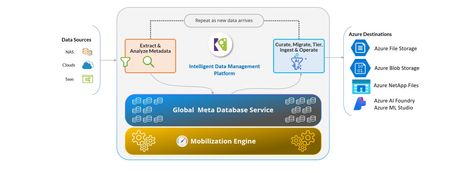
Why Move Unstructured Data to Azure On-premises storage environments are often over-provisioned to accommodate future growth, driving costs and operational complexity. Azure’s cloud-based storage platform enables organizations to right-size their environments through elastic scaling and Microsoft’s global economies of scale. This flexibility is especially critical for regulated industries managing sensitive data at massive scale. Azure also delivers enterprise-grade security capabilities, including immutability and object locking, which protect data against ransomware and malicious deletion. By moving unstructured data to Azure, organizations gain not only cost efficiency, but also a more resilient and secure data foundation. A strong example of this approach is the Florida Department of Environmental Protection. With support from Komprise and funding through Microsoft’s Azure Migrate program, the department successfully migrated large volumes of data to Azure, enabling the phase-out of on-premises data centers while maintaining access to data for analysis across regions. This demonstrates how organizations can modernize data infrastructure without disrupting business operations. Hybrid Cloud and Intelligent Tiering Most enterprises operate in hybrid environments, balancing on-premises systems with cloud storage. Komprise and Microsoft address this reality by enabling intelligent tiering of unstructured data across environments. Using Azure Blob Storage, organizations can transparently move cold and infrequently accessed data to lower-cost cloud tiers while keeping frequently accessed data close to applications and users. This approach reduces pressure on expensive on-premises storage infrastructure without sacrificing accessibility. For example, a major healthcare organization achieved approximately $2.5 million in storage cost savings by tiering cold data to Azure while maintaining seamless access for clinicians and applications. AI Depends on Data Curation AI's efficacy is reliant on data quality. The need for high-quality and curated data cannot be enough emphasized so AI can generate meaningful and accurate results. In partnership with Komprise, organizations can efficiently cleanse and enhance their data by identifying and eliminating redundancies. By curating data before AI processes, organizations have achieved impressive accuracy improvements—as demonstrated by a financial services firm that increased their AI output accuracy by 135%. Making Data AI-Ready on Azure Azure provides a powerful execution platform for AI and Komprise enhances this by bringing structure to unstructured data through its data classification, metadata extraction capabilities and with search, curation and intelligent ingestion via its data workflow and governance capabilities. These ensure only high-quality, relevant and compliant data feeds AI workflows. This approach enables smoother integration with AI services and applications such as Microsoft Foundry and Copilot, while preserving flexibility. By treating data readiness as a foundational step, organizations can accelerate time to value from AI while reducing risk. Security, Governance, and Responsible AI As cyber threats and regulatory requirements continue to intensify, security and governance are no longer optional. Organizations must manage data flows carefully, maintain auditability, and protect sensitive information—especially when using data for AI. Azure’s built-in security capabilities, including immutability, versioning, and backup, provide a strong foundation for protecting unstructured data. Komprise complements these capabilities by automating data governance policies, enforcing compliance, and helping organizations maintain visibility and control across hybrid environments. Together, they enable organizations to use data safely and responsibly, supporting both regulatory compliance and responsible AI practices. Conclusion As AI adoption accelerates, success increasingly depends on data readiness rather than algorithms alone. Clean, well-governed, and properly placed data is the foundation for meaningful AI outcomes. By combining Azure’s scalable and secure cloud platform with Komprise’s intelligent data management, organizations can reduce costs, strengthen security, and unlock real value from unstructured data at scale. To learn more, watch the Microsoft–Komprise fireside chat, where we discuss customer examples, architectural best practices, and proven approaches for managing unstructured data across hybrid environments. We also invite you to explore our joint Azure and Komprise solutions to see how you can move from data sprawl to AI value while maintaining control, security, and flexibility. In a recent fireside chat now available on YouTube, Azure Storage VP Aung Oo joined Komprise COO Krishna Subramanian to explore how Azure and Komprise are empowering customers to mobilize, curate, and optimize unstructured data to make it AI-ready. To leverage the Storage Migration Program with Komprise to migrate your data to Azure find more information at Microsoft Marketplace. To take advantage of the full Komprise suite including automated tiering and smart workflows – additional details are available here.667Views1like0Comments
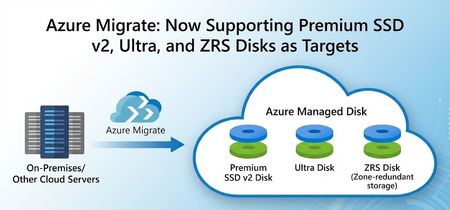
Azure Migrate: Now Supporting Premium SSD V2, Ultra and ZRS Disks as Targets
We are excited to announce that we have added assessment and migration support for Premium SSD v2,Ultra Disk and ZRS Disks as storage options in Azure Migrate, with Premium SSD v2 and ZRS Disks now Generally Available and Ultra Disk in Public Preview. This further enhances the assessment and migration experience Azure Migrate offers and allows you to bring your mission critical workloads to these key Azure Storage offerings seamlessly. What’s New Additional Assessment targets: Premium SSD v2 and Ultra Disks As part of the migration journey to the cloud, Azure Migrate makes recommendations on what cloud resources to move your workloads to. Post successful discovery of on-prem workloads, Azure Migrate utilizes multiple parameters like size, IOPS, and throughput to make target recommendations in Azure. Instead of just static sizing, assessments can map actual performance demand to Azure VM and disk SKUs, optimizing performance, resiliency, and total cost of ownership to give you a tailored recommendation that fits your cloud migration journey. With today’s announcement, we are adding more supported disks to Azure Migrate, providing you with improved guidance to ensure that you land on the resources in Azure that align with your goals. If you are looking to migrate your demanding on-premises applications and workloads to Azure, you will benefit from these advanced disk options, which come with greater flexibility and enhanced performance. For example, Premium SSD v2 disks decouple capacity from performance, allowing you to dial IOPS and throughput precisely to your workload’s needs. For high-end scenarios, Ultra Disks offer the highest performance among Azure managed disks, while ZRS disks provide zonally redundant storage to further protect your data. With these included in Azure Migrate’s assessment engine, you end up with a right‑sized, data‑driven target configuration that aligns Azure storage choices with how workloads actually run. Below is a snippet of how the assessment recommendations appear in Azure Migrate for Premium V2 SSD disks. Customers can get details on the disk type, provisioned IOPS, throughput, cost, and seamlessly migrate using the assessment to the recommended target. Migrating to Premium SSD v2 and Ultra Disks in Azure Migrate When Premium SSD v2 or Ultra disks are identified as the optimal targets based on workload characteristics during the assessment phase, they can be auto-populated seamlessly into the migration process. This workflow accelerates the lift-and-shift of on-prem disks to Azure’s high performance managed disks. Below is a snippet from the replication step during migration: Assessing and Migrating to ZRS Disks in Azure Migrate Azure Migrate also has enhanced resiliency by supporting migration to ZRS Disks during Migration. Zone-Redundant Storage (ZRS) for Azure Disks synchronously replicates data across three physically separate availability zones within a region - each with independent power, cooling, and networking - enhancing Disk availability and resiliency. While creating Assessments in Azure Migrate, you can configure a range of target preferences, including the newly introduced option to enable zone-redundant storage (ZRS). You can opt-in to enable ZRS Disk recommendations by editing the Server (Machine) default settings in the Advanced settings blade. Since the preview announcement for these capabilities, recommendations for Ultra, Premium v2 and ZRS Disks have led to petabytes of data being successfully migrated into Azure. Below is a quote from our Premium v2 (Pv2) customer that was provided during the preview: "Through this preview, we have Pv2 disks recommendations in place of Pv1, which is beneficial for our estate during migration in terms of both cost and performance. We are now awaiting General Availability " – Yogesh Patil, Cloud Enterprise Architect, Tata Consultancy Services (TCS) With these added capabilities, Azure Migrate and Azure disk storage are more ready than ever for migrating your most demanding and mission-critical workloads. Learn more about Azure Migrate and for expert migration help, please try Azure Accelerate. You can also contact your preferred partner or Microsoft field for next steps. Get started in Azure today!772Views1like1CommentTransforming Data migration using Azure Copilot
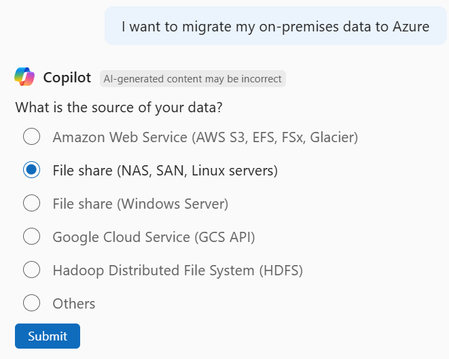
Introduction Data migration is critical, yet it is one of the most complex tasks in any cloud adoption journey. Whether you’re moving workloads from on-premises environments, consolidating hybrid deployments, or transitioning from other cloud providers, the migration process involves multiple tools, intricate planning, and risk management. What’s New in Azure Copilot With the new “Storage Migration Solutions Advisor” capability in Azure Copilot, Microsoft is transforming this experience into a conversational, AI-driven workflow that accelerates decision-making and reduces operational friction. Why This Matters Traditionally, customers faced challenges such as: Weeks of advisory time spent choosing the right migration tool amongst the many (Azure Storage Mover, AzCopy, Data Box, File Sync etc., and various Partner solutions). High support overhead due to missteps during migration if a sub-optimal tool or service is used. The Storage Migration Solutions Advisor feature introduces: Conversational Guidance: Share your migration needs with Copilot, like talking with an Azure advisor. Scenario-Based Recommendations: Tailored suggestions based on transfer data size, protocol, and bandwidth. Expanded Coverage: Supports on-premises to Azure, cloud-to-cloud (AWS/GCP to Azure), and hybrid scenarios. Native and Partner solutions: Copilot can recommend Microsoft-native (1P) solutions and third-party (3P) tools for specialized scenarios —ensuring flexibility for enterprise needs. User Workflow: Step-by-Step Initiate Migration: Start with a prompt like “How can I migrate my data into Azure?” or “What’s the best tool for moving 1 PB from AWS S3 to Azure Blob?” Provide Details: Copilot will guide you by asking for details about your requirement, such as source type (e.g., NAS, SAN, AWS S3, GCS), protocol (e.g., NFS, SMB, S3 API), target (e.g., Azure Blob, Files, Elastic SAN), data size, and bandwidth. Azure and Partner Solutions: Based on your requirements, Copilot recommends the best-fit Azure solution. If a partner solution is better suited to your requirement, Copilot will also select and recommend the appropriate solution with links to its documentation and/or its Azure marketplace page. Examples Copilot generates recommendations for migrating an on-premises file share to Azure Files. Figure 1 Prompt from user invokes Copilot Migration recommendation workflow Figure 2 Copilot understanding protocols that customer environment has access to Figure 3 Copilot asking user's target Storage type Figure 4 Copilot gathering inputs on data size, network bandwidth availability and transfer direction Figure 5 Copilot recommendation for user scenario Copilot recommends Partner solutions for specialized migration scenarios Figure 1 Prompt from user invokes Copilot Migration recommendation workflow Figure 2 Copilot understanding protocols that customer environment has access to Figure 3 Copilot asking user's target Storage type Figure 4 Copilot gathering inputs on data size, network bandwidth availability and transfer direction Figure 5 Copilot recommendation for user scenario Pro Tips Run a small proof-of-concept migration to estimate throughput and timing, especially for large datasets or small file sizes. Combine Copilot’s recommendations with Azure Storage Discovery for visibility into your storage estate after migration. Getting Started Navigate to Azure Portal → Copilot. Try prompts like: o “Help me migrate an NFS share to Azure Files.” o “What’s the best tool for moving 1 PB from AWS S3 to Azure Blob?” Explore Manage and migrate storage accounts using Azure Copilot | Microsoft Learn for detailed guidance. Ready to simplify your migration journey? Start using Azure Copilot’s Storage Migration Solutions Advisor today and experience AI-driven efficiency for your cloud transformation.735Views1like0Comments