azure migrate
64 TopicsMicrosoft is headed to VMware Explore 2023 in Las Vegas
VMware Explore is back in Las Vegas for 2023! If you want to know about Azure, the work we are doing with VMware, or just have a great conversation, don’t be shy and reach out to say hello. We'd love to talk to you so stop by our booth! We may even have some cool stickers too. This year we will have a bunch of sessions with Microsoft employees on stage, so if you're building out your schedule check them out: Microsoft Keynote: Transform your VMware Workloads with Microsoft Azure Speakers: Brett Tanzer, VP of Product Management, Microsoft Jeff Woolsey, Principal PM Manager, Microsoft Date/Time: Wednesday, August 23 @ 9:00 AM – 9:45 AM PDT Brett and Jeff will share how customers can transform their on-prem VMware environments using Microsoft Azure. Keynote attendees will learn how to: Learn about everything that’s new in Windows Server 2022 and address end of support for Windows Server 2012 Use familiar VMware skills to migrate or extend your VMware environment to the cloud, including hybrid cloud options with Azure VMware Solution and Azure Arc Modernize hybrid work with Azure Virtual Desktop and Horizon Cloud Learn how Azure VMware Solution could be the ideal landing spot for those looking to migrate their SQL Server workloads to Azure, but still want to use Unlimited Virtualization In addition, here are some other Microsoft Azure-related sessions that we highly recommend for learning more about Azure + VMware: Day, Time, Topic Session Title Monday, August 21 1:30-3:00 PM Azure VMware Solution Azure VMware Solution: New Guidance for Networking and Security CEIT3041LVS Monday, August 21 4:30-4:50 PM Azure VMware Solution Integrate Azure VMware Solution with Azure Native Services, Workbooks CODE1933LV - VMware {code} Theater Tuesday, August 22 10:30-11:15 AM Azure Virtual Desktop & Windows 365 Horizon DaaS and Microsoft Virtualization Solutions: The Path to the Cloud EUSB2734LV Tuesday, August 22 10:30-11:15 AM Azure VMware Solution Modernize Hybrid Multi-Cloud Environments - NetApp Customer Case Studies CEIB2924LVS Tuesday, Aug 22 2:00-2:30 PM Azure VMware Solution Ask me anything about Azure VMware Solution CEIM3039LVS Wednesday, Aug 23 9:00-9:45 AM Microsoft Azure Microsoft Executive Keynote: Transform your VMware workloads with Azure CEIB3042LVS Wednesday, August 23 10:15-11:00 AM Azure VMware Solution Azure VMware Solution Lessons Learned: Designing, Migrating, and Operating EIB3043LVS Wednesday, August 23 10:15-10:30 AM Azure VMware Solution Embracing Hybrid Cloud: Azure VMware Solution for Innovation and Growth VMTN2829LV - VMTN TechTalk Wednesday, Aug 23 12:00-12:45 PM Windows Server & Azure Arc Pave the way to innovation with Azure, Azure Arc, Windows & SQL Server! EIB3044LVS Wednesday, August 23 2:00-2:20 PM Azure VMware Solution Availability and Resilience of Azure VMware Solution CEIB2540LV Wednesday, Aug 23 12:45-1:30 PM Azure Arc Bring Azure to your VMware vSphere environment on premises and in the cloud CEIB3045LVS Wednesday, Aug 23 12:45-1:30 PM Azure VMware Solution Speed Your Azure Migration with the Latest Azure VMware Solution Features CEIB2549LV Wednesday, August 23 1:15-2:00 PM Azure VMware Solution Migrate and Modernize with Cloud Solutions from Azure VMware Solution CEIB3038LVS Wednesday, August 23 1:15-2:00 PM Azure VMware Solution Accelerate Your Public Cloud Strategy with VMware Cloud CEIB2557LV Wednesday, August 23 2:00-2:45 PM Azure Virtual Desktop & Windows 365 Extending Windows in the Cloud with VMware Horizon EUSB3046LVS Wednesday, August 23 2:00-2:20 PM Azure VMware Solution Learn How to Leverage Automation and Azure VMware Solution CODE1932LV - VMware {code} Theater Wednesday, Aug 23 2:00-2:30 PM Azure VMware Solution Ask me anything about Azure VMware Solution CEIM3040LVS Thursday, August 24 12:30-1:15 PM Azure VMware Solution State of Alaska: Rapid Cloud Migration from the Last Frontier CEIB2447LV Thursday, August 24 12:30-1:15 PM Azure VMware Solution The Enterprise Playbook for Operational Readiness for Azure VMware Solution CEIB1433LVBuild business case with Azure Migrate - Do More with Less (DMWL)
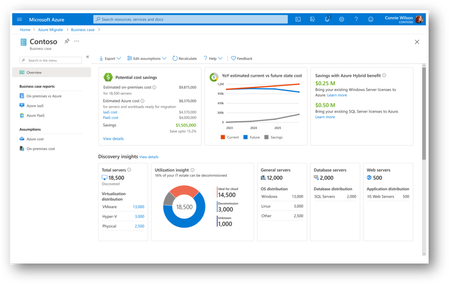
Justifying the move to cloud is a crucial decision for a business and it could be difficult to know where to start. To make an informed decision to move to cloud, customers are looking into all available migration strategies and associated costs. They are also looking for ways to build and validate such proposals to be able to decide quickly. With the current economic situation, it is becoming much more important to address cashflow challenges, add capacity and prevent security attacks while ensuring business continuity. Microsoft is committed to helping you navigate this journey with confidence and eliminate the guess work involved in the cost planning process with Azure Migrate’s new data driven business case capability. With this feature, you can conduct financial analysis with just a few clicks and create customized proposals, which can then be shared with decision makers for quick decisions. Azure Migrate Azure Migrate is Microsoft’s unified platform for migrating to and modernizing in Azure. It provides discovery, assessment, planning, migration, and modernization capabilities for various workloads on your premises. Azure Migrate allows you to run and manage your migration and modernization projects from a unified, secure portal. About Business Case Capability The Azure Migrate business case in preview helps you to understand the return on investment for migrating your servers, SQL Server deployments and ASP.NET web apps running in your datacenter to Azure. Till April 2023, this feature was available only for servers and workloads running in your VMware environment. To continuously keep supporting our customers accelerate their decision-making process to Azure, we have added some of the enhancements this month: You will also be able to build business cases on servers and workloads discovered from your Microsoft Hyper-V and Physical/ Bare-metal environments as well as IaaS services of other public clouds. If you are looking for a quick business case, without the need to deploy an appliance to collect your server inventory, you can now also use .csv-based import and build a quick business case. Learn more You can build business cases for SQL Server Always On Failover Cluster Instances and Always On Availability Groups. Learn more The business case can be created with just a few clicks and can help you understand how Azure can bring the most value to your business. It highlights: On-premises vs Azure total cost of ownership and year on year cashflow analysis. Resource utilization-based insights to identify servers and workloads that are ideal for cloud and right-sized recommendations in Azure. Azure Hybrid Benefits savings by bringing your existing Windows and SQL Server licenses to Azure Quick wins for migration and modernization including end of support Windows OS and SQL versions. Long term cost savings by moving from a capital expenditure model to an Operating expenditure model, by paying for only what you use. How to get started? Please refer to the steps below: If you have an existing Azure Migrate project: 1. The Business Case feature is already enabled on your existing Azure Migrate projects once the discovery from Azure Migrate appliance has been completed. If you already have a business case with VMware servers and workloads scoped in, you can recalculate the business case to scope in servers and workloads from Hyper-V or Physical environments. To create a new business case, simply click on ‘Build business case’ to get started: 2. Build a business case using minimal inputs 3. Review the Business Case reports including the Overview, on-premises vs Azure, Azure IaaS and Azure PaaS reports. You can also create different what-if scenarios by editing the assumptions that went into the calculations. 4. Get buy-ins from stakeholders and start your migration and modernization journey with confidence. If you are new to Azure Migrate: You will first need to set up an Azure Migrate project. Once you have created a project, you can choose to use one of the two discovery sources: 1. To use more accurate data insights collected via Azure Migrate appliance, you need to deploy and configure the Azure Migrate appliance. This appliance enables you to perform discovery from your datacenter. 2. To build a quick business case using existing server inventory available, you can import the server details via a .csv file Click here to learn more to understand the two discovery sources. After the discovery, you can build and review the business case reports. Create an Azure Migrate project from the Azure Portal, and download the Azure Migrate appliance or download the Azure Migrate template to import. Customers who already have an active Azure Migrate project can start using the feature directly. Based on your use case and chosen discovery source: Deploy a new Azure Migrate appliance for discovery . To enable you to discover your datacenter easily, the appliance lets you enter multiple credentials – Windows authentication (both Domain and non-Domain) and SQL Server authentication. The Azure Migrate appliance will automatically map each server to the appropriate credential when multiple credentials are specified. These credentials are encrypted and stored on the deployed appliance locally and are never sent to Microsoft. For import via .csv, you need to populate the template with the server inventory and import the .csv View the summary of the discovered IT estate from your Azure Migrate project and click on ‘Build business case’. You can view details of the discovered servers such as their configurations, software inventory (installed apps), dependencies, count of SQL instances and ASP.NET web apps etc. Click on 'Build business case' 5. Build a business case using minimal inputs 6. Review the Business Case reports including the Overview, on-premises vs Azure, Azure IaaS and Azure PaaS reports. You can also create different what-if scenarios by editing the assumptions that went into the calculations. 7. Get buy ins from stakeholders and start your migration and modernization journey with confidence. Learn more Check out our demo to see the preview in action. Check out this documentation for more details. Learn more about Azure Migrate. Get migration assistance from the Azure migration and modernization program (AMMP). AMMP is now a comprehensive program for all migration and modernization needs of our customers. Join AMMP today.Migrate or modernize your applications using Azure Migrate
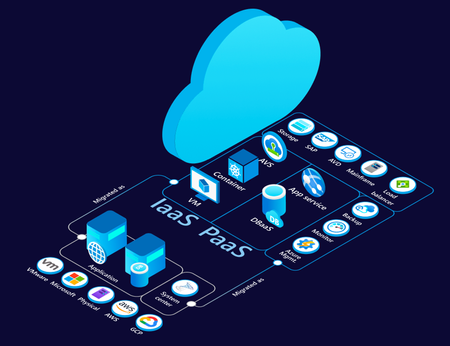
Introduction The journey to the cloud is an essential step for modern enterprises looking to leverage the benefits of security, innovation (AI), scalability, flexibility, and cost-efficiency. To help unlock these benefits migration or modernization to Azure is critical for reasons such as colocation of IT assets. A crucial part of this transformation is understanding the current state of your IT infrastructure, including workloads, applications, and their interdependencies. Often, organizations aim to set their migration goals based on the applications they want to move to the cloud, rather than focusing on individual servers or databases in isolation. In our endeavour to both simplify and enrich your cloud adoption journey. We are introducing new capabilities in Azure Migrate to help you achieve your goals. About Azure Migrate Azure Migrate is Microsoft’s free platform for migrating to and modernizing in Azure. It provides IT resource discovery, assessment, business case analysis, planning, migration, and modernization capabilities in a workload agnostic manner. You can run and monitor your migration/ modernization journey from a single, secure portal. Currently, Azure Migrate's application aware experience supports the discovery of following workloads: Windows Server, Linux, SQL Server, .NET webapp on IIS, and Java on Tomcat running on various platforms including, VMware, Microsoft, Bare-metal, AWS EC2, GCP CE, and Xen. Further, it will support migration assessments for Azure VM, Azure VMware Solution (AVS), Azure SQL Managed Instance, Azure SQL Database, App Service Code, App Service Containers, and Azure Kubernetes Service. Last, it will support in-line Lift and Shift migration to Azure VM. Note: MySQL discovery and assessment is available in the classic experience only. Introducing Application awareness in Azure Migrate A key step in any cloud transformation plan is a current state analysis of the entire IT estate covering workloads and applications, and relationships/ dependencies among them. We are excited to announce the preview of application aware experiences in Azure Migrate – across every phase of the migration journey. This allows you to gain insights into the total cost of ownership, identify suitable IaaS and PaaS targets, and receive tailored migration and modernization guidance. To get started with Azure Migrate, simply create an Azure Migrate project on Azure portal, and leverage Azure Migrate’s wide-ranging discovery capabilities, including the Azure Migrate appliance or importing inventory via RVTools to discover your environment. Azure Migrate allows you to explore inventory across Infra-Data-Web tiers and use the updated dependency analysis to identify application boundaries. As part of the application aware experiences, we are introducing the concept of tags within Azure Migrate. So once dependencies are identified, you can group the dependent workloads comprising an application via tags. “Tagging has significantly streamlined the assignment of applications name and its environment associations with discovered servers. We consider this feature to be highly advantageous, as it will assist in generating an application-based inventory and assessment. Furthermore, it will be instrumental in organizing a high-level migration move group.” - Tata Consultancy Services (Engineering Practice (Azure) | AI.Cloud) Next, Azure Migrate can be used to create application-specific business cases to identify savings and ROI, assess ideal migration strategies, and get recommendations for Azure services, SKUs, resource costs, and migration/modernization tools. Further, as part of executing the migration and onboarding to Azure, customers can use the recommended tools to modernize via re-platform and refactor (out of band) techniques or use the integrated rehost migration experience to rehost to Azure VM. Complemented with a refreshed user experience As part of delivering application awareness and sustainability insights, Azure Migrate will also feature a refreshed user interface. The new experience is designed to help you in every step of your migration journey – across Decide, Plan and Execute phases. The experience provides you with a new intuitive table of contents and overview page to allow easy navigation. You can explore discovered workloads and their relationships through effective search, sort, and seamless transition from Azure Migrate to other specialized migration tools, depending on your specific goals and requirements. Finally, you can quickly create and visualize different migration and modernization strategies side-by-side. “There has been a notable improvement in User Experience, where with the help of Overview page I can Explore and run assessment, Business case once I access Azure Migrate. Action Centre feature will be highly beneficial to track the issues, which was quite useful in our customer validation.” - Tata Consultancy Services (Engineering Practice (Azure) | AI.Cloud) Interested in trying the new feature-set and experience? The capabilities described above are currently in preview. You can try the new feature-set and experience by selecting the banner shown below from the classic Azure Migrate experience, or by using the URL https://aka.ms/AzureMigrate/Preview. These enhancements in Azure Migrate underscore our commitment to providing comprehensive, user-friendly, and efficient migration solutions. Curious to learn more? Here are key links – Documentation - https://aka.ms/AzureMigrate/Documentation Training videos - Seismic - https://aka.ms/AzureMigrate/Recipes* YouTube - https://aka.ms/AzureMigrate/QuickBytes* *Training videos will be available shortly on the respective sites/ applications.Announcing more Azure VMware Solution enhancements
Announcing more Azure VMware Solution enhancements Greetings from Barcelona, where the Microsoft team is thrilled to be part of VMware Explore 2023. My team and I will be presenting and are eager to meet with customers and partners in person! Having been at Microsoft for over two decades, I have recently taken the helm of the Azure VMware Solution team and I am excited to hear about your thoughts and experiences using our product. Here is some of what I have already heard from customers about how Azure VMware Solution is helping their organizations: “As a public institution, we were very sensitive to the security implemented by Azure VMware Solution in terms of data protection. Our data is hosted in the European Union. On one hand, there is protection for the container that hosts our data, on the other hand, data transmission between SOLIDEO and the Microsoft servers. There's really a portability between the VMware-based SOLIDEO virtual machines, and the Azure cloud. It's a perfect match.” —Dominique Renard, Director of Information Systems Security, SOLIDEO “As a large, mature organization, we couldn’t undertake a greenfield implementation, but we were able to quickly migrate and stand up our environment in the cloud with Azure VMware Solution” and “Our migration to Azure VMware Solution extended compliance to workloads approaching end of service because of Microsoft support.” —Mark Wiltshire, IT Director, Kier Group These stories underscore the versatility and efficiency of Azure VMware Solution in addressing diverse organizational needs. We’re eager to hear your experiences too! Please stop by our booth and connect with me and the team. Check out what’s new in Azure VMware Solution I am also excited to share some of the recent updates we’ve made to Azure VMware Solution. Azure Elastic SAN, in preview, is a cloud-native managed SAN offering scalability, cost-efficiency, high performance, and security. It now supports snapshots, enhanced security, and integrates with Azure VMware Solution. Furthermore, as a VMware Certified datastore, Elastic SAN allows you to independently scale your storage and performance, optimizing your total cost of ownership and scalability. Learn more. Azure VMware Solution in Microsoft Azure Government was approved to be added as a service within the Azure Government Federal Risk and Authorization Management Program (FedRAMP) High Provisional Authorization to Operate (P-ATO). Azure VMware Solution is already available in Azure Commercial and included in the Azure Commercial FedRAMP High P-ATO. With this latest approval, customers and their partners who require the data sovereignty that Azure Government provides can now meet FedRAMP requirements with Azure VMware Solution in Azure Government. Learn more. Azure NetApp Files for Azure Government All Azure NetApp Files features available on Azure public cloud are also available on supported Azure Government regions. For Azure Government regions supported by Azure NetApp Files, see the Products Available by Region page. Azure Arc-enabled VMware vSphere is now available. Customers can start their onboarding with Azure Arc-enabled VMware vSphere, install agents at-scale, and enable Azure management, observability, and security solutions, while benefitting from the existing lifecycle management capabilities. Azure Arc-enabled VMware vSphere VMs will now show up alongside other Azure Arc-enabled servers under ‘Machines’ view in the Azure portal. Learn more. Five-year Reserved Instance promotion is available for Azure VMware Solution until March 31, 2024 for customers looking to lock-in their VMware costs for multiple years. Contact your sales representative for details. Visit our pricing page. vSphere 8.0 will be rolled out starting at the end of November. If you would like to stay up to date with the latest releases from Azure VMware Solution, please follow Azure updates. Learn more If you are here at VMware Explore Barcelona, check out all our Azure Breakout Sessions during the event, and stop by the Microsoft booth #303 for our hourly in-booth theater sessions. Later this month you can also attend Microsoft Ignite Online: November 15–16, 2023 Learn more. As always, you can visit the Azure VMware Solution website or documentation for more information.Powering application migration and modernization with Azure Migrate and CAST
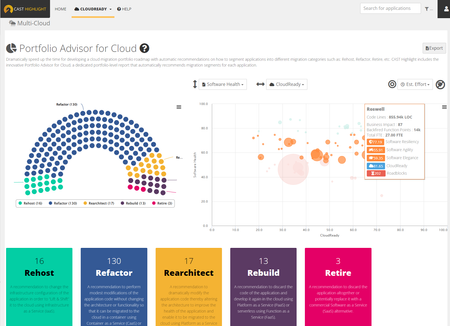
Microsoft and CAST partner together to automate migration and modernization of custom applications with Azure Migrate and CAST used together, under the Azure Migrate & Modernize Program, complementing the current Azure tooling capabilities.Migrate or modernize your applications using Azure Migrate
Introduction Moving to cloud is an essential step for enterprises looking to leverage the benefits of security, innovation (AI), scalability, flexibility, and cost-efficiency. To help unlock these benefits migration or modernization to Azure is critical for reasons such as colocation of IT assets. A crucial part of this transformation is understanding the current state of your IT infrastructure, including workloads, applications, and their interdependencies. Cloud migration is most effective when you can decide, plan and execute it holistically focusing on applications rather than focusing on individual servers or workloads in isolation. In our endeavour to both simplify and enrich your cloud adoption journey, we are evolving Application awareness in Azure Migrate that we introduced last year with features summarized below. Overview “The new design of Azure Migrate is much more intuitive, it allows us to group workloads into applications and track them throughout the migration journey. The Business Case Generator is a true game changer, providing insights that are ready for presentation at Leadership meetings. Azure Migrate continues to improve, making the execution of migration programs more seamless, faster, and secure. It has been an invaluable tool for our customers who are in the path of migrating to Azure” - Karthik Balachandran | Architect | EY Azure Migrate delivers a major evolution in cloud migration capabilities with application awareness. Here are key new features and why they matter: Multi-Server Dependency Mapping – Provides a holistic view of application topology, so you understand all server interactions before migrating. This reduces risk by ensuring no server is left behind and dependencies are respected during cloud transition. Software & Security Insights– Offers built-in intelligence on software inventory and vulnerabilities (e.g. highlighting outdated software and missing patches). This helps improve your environment’s security and stability as part of the migration journey, benefiting IT admins and security teams. Application definition & import– Allows you to treat applications as first-class citizens in Azure Migrate (not just tag groupings). You can create and manage app groupings easily, enabling a shift from managing individual workloads to managing whole applications in your migration project. Application migration or modernization RoI – Allows you to identify investments required in respective migration strategies as well as savings that would accrue as application are moved to Azure. Application Assessments– Delivers holistic migration plans per app, including recommended strategies (Rehost, Replatform, Refactor), target Azure services, sizing, cost estimates, and readiness checks. This empowers cloud architects to make informed decisions with an application-level focus. Code insight integration – GitHub Copilot assessment – Enables a developer-driven assessment loop by incorporating GitHub App Modernization Assessment reports. This tightens collaboration with dev teams and can dynamically adjust migration recommendations (e.g., flagging apps that need refactoring). CAST Highlight– Brings code-level analytics at scale into the migration plan. By importing CAST’s code scan results, you can identify technical debt and required code changes upfront, ensuring the recommended cloud approach truly fits the app’s codebase. Wave Planning with 1P Tool Integration– Provides a planning and execution framework to migrate in phases and launch the appropriate migration tools for each component seamlessly. This ensures end-to-end coverage – from migration scheduling to real-time execution – all within Azure Migrate. Capability deep dive Identify your applications using multi-server dependency mapping and subsequently define them One of the first steps in cloud migration planning is identifying application boundaries and dependencies. Azure Migrate’s new multi-server dependency mapping provides a rich visualization of how servers communicate with each other in your environment. This goes beyond the single-server dependency view of the past – now you can visualize an entire datacenter’s topology in one view. When you discover your on-premises environment, Azure Migrate’s agentless dependency analysis automatically begins mapping connections. It even measures connection strength, helping distinguish steady, critical communication from ephemeral connections. You can subsequently define applications, and assign metadata such as Name, type – Custom or Packaged (Commercial off the shelf), Criticality, Complexity (based on the number of dependencies), etc. Additionally, you can export your discovered inventory, assign application names in a spreadsheet, and import it back to quickly create many application grouping. You are free to refine or correct groupings, too. If during analysis you realize a server or workload was grouped incorrectly, simply update the application to add or remove that member (with no need to re-run discovery). Deleting an application grouping will not delete the underlying servers; it just removes the logical app wrapper, so you can reorganize safely as needed. Now, you can plan migrations by application units rather than individual workloads. This leads to more predictable outcomes (since all interdependent pieces move together), and it eliminates guesswork that used to come from manually correlating server relationships. Proactive Software and Security Insights Migration is not just about moving workloads – it’s an opportunity to remediate and improve what you have. The new Software and Security Insights surface critical information about your IT estate early on, so you can address potential issues before migration. Once your inventory is discovered, Azure Migrate now highlights: Software Insights:The portal flags certain software or OS components that might need attention or have cloud-friendly alternatives. For example, it might detect that some VMs run outdated middleware or unsupported OS versions. The tool provides recommendations for replacement or upgrade – e.g. suggesting you Repurchase a legacy product through Azure Marketplace or move to a SaaS solution for that functionality. This helps you plan modernization (repurchasing or upgrading software) as part of the migration project, rather than carrying technical debt to the cloud. Security Insights:Azure Migrate also integrates with security monitoring to detect vulnerabilities and missing updates in your servers. More importantly, it advises how to fix them: e.g. enabling Microsoft Defender for Cloud to address vulnerabilities, and using Azure Update Manager to apply pending updates. In essence, you get a mini security assessment alongside your inventory. These insights empower IT admins and security teams to tackle risks as part of migration planning. Rather than “lift-and-shift and then fix later,” you can remediate issues in parallel with migration, leading to a more secure and optimized environment on Azure. RoI for modernizing applications We are bringing in updates to Azure Migrate Business case to help ascertain the value you stand to gain by modernizing your applications – Custom or Packaged, as well as providing spend analysis across recommended migration strategies – Rehost, Replatform and Refactor. Holistic application assessments covering Infra-Data-Web tiers Application assessment builds on Azure Migrate’s existing server, database and webapp assessments, to give a migration game-plan for an entire application. It analyzes each component and then recommends An overall migration strategyamong Rehost, Replatform and Refactor, for the application under consideration. Migration readiness, and blockers that need to be addressed for respective strategy Target Azure Services and SKUs for workloads comprising the application Monthly cost estimates to run the application on Azure Migration tooling recommendations per workload comprising the application. Instead of piecemeal workload assessments, Cloud architects get a unified view per application – making it much easier to prioritize and plan. For example, you might discover that one application is an easy rehost (quick win), while another would clearly benefit from refactoring to eliminate costly components. Application assessments surface such insights with data, so stakeholders (including application owners and developers) can agree on a path forward with confidence. Ultimately, this leads to high-confidence migration plans and minimizes surprises during execution. Improve analysis with Code-Level Insights from Github Copilot assessment and CAST Most times, whether an application can be easily Replatformed or needs Refactoring depends on the application’s source code. Hence, we are bridging the gap between infrastructure and application development realities and are offering Integration with code analysis tools – GitHub Copilot assessment and CAST Highlight – to incorporate code-level insights into Azure Migrate’s recommendations. Talking about GitHub copilot – it is an indispensable tool for the application development. Developers can identify changes required in the code bases of their applications to make them ready for modernization to PaaS services such as AKS, App Service, etc. The cloud architect running Azure Migrate application assessment can request the application developers to ingest the code change insights from GitHub copilot assessment into Azure Migrate assessment. Once this report is ingested, you’ll see the Azure Migrate assessment refine its recommendations conclusively – such readiness, effort to make the code changes, migration strategy – depending upon whether the code changes are minimal or significant. Similarly, at-scale/ portfolio level code analysis performed using CAST Highlight, a prominent software intelligence platform, can be imported into Azure Migrate to improve the assessment recommendations. In practice, this means Azure Migrate will know if the code has, say, outdated libraries or many hard-coded dependencies that make cloud migration harder. Overall, the integration of code insights leads to more realistic migration plans and smoother hand-offs between cloud infrastructure teams and dev teams. Wave Planning and Integrated Migration Execution After discovering applications, assessing them, and incorporating any code insights, you’re ready to migrate or modernize – but large migrations often happen in phases. That’s where the new Wave Planning feature comes in. Wave planning in Azure Migrate helps you organize and sequence the actual migration execution in waves or batches, plan the migration activities and execute using integrated first party migration tools and track the end-to-end migrations; thereby providing a single place where different users – Cloud architects, developers, application owners, etc. can collaborate and coordinate through the migration journey. If your strategy for an application (or a particular server in the application) is Rehost (lift-and-shift to Azure VMs), Azure Migrate will use its built-in Server Migration capability. You can start the replication of that server to Azure right from the wave plan. If your strategy is Replatform or Refactor and involves migrating data, the wave plan can redirect you to Azure Database Migration Service (DMS). All these integrations mean you can coordinate multi-step migrations from one place. Wave planning is aware of various target strategies and helps orchestrate them, so cloud administrators don’t have to juggle separate tool interfaces for VMs vs. databases vs. web apps. As each part of a wave completes, Azure Migrate updates the wave status for Rehost scenarios and users can manually update the status’ for Refactor or Replatform scenarios where some steps may take out of band. Interested in trying the new feature set and experience? All the above features are available in Azure Migrate now (in preview as of 7 th November, 2025). Just create a new Azure Migrate project and you’ll be greeted with the new interface. From there, you can start defining applications and exploring these capabilities with your own data. About Azure Migrate Azure Migrate is Microsoft’s free platform for migrating and modernizing to Azure. It provides IT resource discovery, assessment, business case analysis, wave planning, migration, and modernization capabilities in a workload agnostic manner. You can run and monitor your migration/ modernization journey from a single, secure portal. Currently, Azure Migrate's application aware experience supports the discovery of following workloads: Windows Server, Linux Server, SQL Server, PostgreSQL, .NET webapp on IIS, and Java on Tomcat running on various platforms including, VMware, Microsoft, Bare-metal, AWS EC2, GCP CE, and Xen. Further, it supports assessments and wave planning for Azure VM, Azure VMware Solution (AVS), Azure SQL Managed Instance, Azure SQL Database, Azure Database for PostgreSQL Flexible Server, App Service Code, App Service Containers, and Azure Kubernetes Service. Last, it supports in-line Lift and Shift migration to Azure VM and Azure Local. Note: MySQL discovery and assessment is available in the classic experience only