azure logic apps
39 Topics
How much can you save by using SSV2?
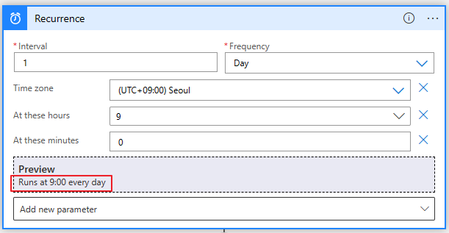
Overview The SSV2 feature starts or stops Azure Virtual Machines instances across multiple subscriptions. It starts or stops virtual machines on user-defined schedules, provides insights through Azure Application Insights, and sends optional notifications by using action groups. Azure offers an ARM template for deployment. So, you can easily deploy SSV2 using GitHub. For more detail, please see the SSV2 docs. Purpose of SSV2 The main purpose of using SSV2 is to save costs. By using Scheduled SSV2, we can turn on the VM only during business hours (ex. 9AM-6PM) and shut it down the rest of the time. Also, we can set the VM to automatically shut down when not in use by the Auto Stop function. In this post, I focus on how much we can save VM resource costs using SSV2. SSV2 scenario In this test, I use only scheduled function. : turn VM on at 9:00 : turn VM off at 18:00 SSV2 pricing SSV2 uses various resources such as the Logic app, function app, Monitor, and Storage. Nevertheless, the monthly cost of SSV2 is not high. For checking the monthly price, I set scheduled and auto-stop scenarios. My VMs turn on at 9AM and turn off at 6PM every day. Also, VMs turn off when VM CPU usage is under 5%. I checked the monthly price with this scenario. I tested for 2 months and monthly costs are under $5. Below is the cost detail. As you can see Logic app is the most expensive resource and storage, monitor is next. Everyone's cost will be different because logic app settings, storage size, and function execution counts will be different case by case. However, I want to show the average SSV2 cost. VM pricing comparison There are many kinds of VM skus. Currently, the cheapest VM is B1s and the price is $0.014/hour. In this sku, we can save $1.3. Running Time (30days) VM(B1s) SSV2 resources Total 24hrs $10.08 $10.08 9AM-6PM (9hrs) VM + SSV2 $3.78 $5 $8.78 The higher the VM sku, the more you can save. If I use D3 VM, then I can save more. Running Time (30days) VM(D3) SSV2 resources Total 24hrs $403.2 $403.2 9AM-6PM (9hrs) VM + SSV2 $151.2 $5 $156.2 Conclusion Everyone can easily use SSV2 function for VM cost deduction. In my test, SSV2 monthly cost is around $5, but the monthly VM saving cost is more than $5. SSV2 is a good solution if you want to control VM on/off with VM usage time and usage.3.5KViews3likes0CommentsBuilding AI apps and agents for the new frontier
Every new wave of applications brings with it the promise of reshaping how we work, build and create. From digitization to web, from cloud to mobile, these shifts have made us all more connected, more engaged and more powerful. The incoming wave of agentic applications, estimated to number 1.3 billion over the next 2 years[1] is no different. But the expectations of these new services are unprecedented, in part for how they will uniquely operate with both intelligence and agency, how they will act on our behalf, integrated as a member of our teams and as a part of our everyday lives. The businesses already achieving the greatest impact from agents are what we call Frontier Organizations. This week at Microsoft Ignite we’re showcasing what the best frontier organizations are delivering, for their employees, for their customers and for their markets. And we’re introducing an incredible slate of innovative services and tools that will help every organization achieve this same frontier transformation. What excites me most is how frontier organizations are applying AI to achieve their greatest level of creativity and problem solving. Beyond incremental increases in efficiency or cost savings, frontier firms use AI to accelerate the pace of innovation, shortening the gap from prototype to production, and continuously refining services to drive market fit. Frontier organizations aren’t just moving faster, they are using AI and agents to operate in novel ways, redefining traditional business processes, evolving traditional roles and using agent fleets to augment and expand their workforce. To do this they build with intent, build for impact and ground services in deep, continuously evolving, context of you, your organization and your market that makes every service, every interaction, hyper personalized, relevant and engaging. Today we’re announcing new capabilities that help you build what was previously impossible. To launch and scale fleets of agents in an open system across models, tools, and knowledge. And to run and operate agents with the confidence that every service is secure, governed and trusted. The question is, how do you get there? How do you build the AI apps and agents fueling the future? Read further for just a few highlights of how Microsoft can help you become frontier: Build with agentic DevOps Perhaps the greatest area of agentic innovation today is in service of developers. Microsoft’s strategy for agentic DevOps is redefining the developer experience to be AI-native, extending the power of AI to every stage of the software lifecycle and integrating AI services into the tools embraced by millions of developers. At Ignite, we’re helping every developer build faster, build with greater quality and security and deliver increasingly innovative apps that will shape their businesses. Across our developer services, AI agents now operate like an active member of your development and operations teams – collaborating, automating, and accelerating every phase of the software development lifecycle. From planning and coding to deployment and production, agents are reshaping how we build. And developers can now orchestrate fleets of agents, assigning tasks to agents to execute code reviews, testing, defect resolution, and even modernization of legacy Java and .NET applications. We continue to take this strategy forward with a new generation of AI-powered tools, with GitHub Agent HQ making coding agents like Codex, Claude Code, and Jules available soon directly in GitHub and Visual Studio Code, to Custom Agents to encode domain expertise, and “bring your own models” to empower teams to adapt and innovate. It’s these advancements that make GitHub Copilot, the world’s the most popular AI pair programmer, serving over 26 million users and helping organizations like Pantone, Ahold Delhaize USA, and Commerzbank streamline processes and save time. Within Microsoft’s own developer teams, we’re seeing transformative results with agentic DevOps. GitHub Copilot coding agent is now a top contributor—not only to GitHub’s core application but also to our major open-source projects like the Microsoft Agent Framework and Aspire. Copilot is reducing task completion time from hours to minutes and eliminating up to two weeks of manual development effort for complex work. Across Microsoft, 90% of pull requests are now covered by GitHub Copilot code review, increasing the pace of PR completion. Our AI-powered assistant for Microsoft’s engineering ecosystem is deeply integrated into VS Code, Teams, and other tools, giving engineers and product managers real-time, context-aware answers where they work—saving 2.2k developer days in September alone. For app modernization, GitHub Copilot has reduced modernization project timelines by as much as 88%. In production environments, Azure SRE agent has handled over 7K incidents and collected diagnostics on over 18K incidents, saving over 10,000 hours for on-call engineers. These results underscore how agentic workflows are redefining speed, scale, and reliability across the software lifecycle at Microsoft. Launch at speed and scale with a full-stack AI app and agent platform We’re making it easier to build, run, and scale AI agents that deliver real business outcomes. To accelerate the path to production for advanced AI applications and agents is delivering a complete, and flexible foundation that helps every organization move with speed and intelligence without compromising security, governance or operations. Microsoft Foundry helps organizations move from experimentation to execution at scale, providing the organization-wide observability and control that production AI requires. More than 80,000 customers, including 80% of the Fortune 500, use Microsoft Foundry to build, optimize, and govern AI apps and agents today. Foundry supports open frameworks like the Microsoft Agent Framework for orchestration, standard protocols like Model Context Protocol (MCP) for tool calling, and expansive integrations that enable context-aware, action-oriented agents. Companies like Nasdaq, Softbank, Sierra AI, and Blue Yonder are shipping innovative solutions with speed and precision. New at Ignite this year: Foundry Models With more than 11,000 models like OpenAI’s GPT-5, Anthropic’s Claude, and Microsoft’s Phi at their fingertips, developers, Foundry delivers the broadest model selection on any cloud. Developers have the power to benchmark, compare, and dynamically route models to optimize performance for every task. Model router is now generally available in Microsoft Foundry and in public preview in Foundry Agent Service. Foundry IQ, Delivering the deep context needed to make every agent grounded, productive, and reliable. Foundry IQ, now available in public preview, reimagines retrieval-augmented generation (RAG) as a dynamic reasoning process rather than a one-time lookup. Powered by Azure AI Search, it centralizes RAG workflows into a single grounding API, simplifying orchestration and improving response quality while respecting user permissions and data classifications. Foundry Agent Service now offers Hosted Agents, multi-agent workflows, built-in memory, and the ability to deploy agents directly to Microsoft 365 and Agent 365 in public preview. Foundry Tools, empowers developers to create agents with secure, real-time access to business systems, business logic, and multimodal capabilities. Developers can quickly enrich agents with real-time business context, multimodal capabilities, and custom business logic through secure, governed integration with 1,400+ systems and APIs. Foundry Control Plane, now in public preview, centralizes identity, policy, observability, and security signals and capabilities for AI developers in one portal. Build on an AI-Ready foundation for all applications Managed Instance on Azure App Service lets organizations migrate existing .NET web applications to the cloud without the cost or effort of rewriting code, allowing them to migrate directly into a fully managed platform-as-a-service (PaaS) environment. With Managed Instance, organizations can keep operating applications with critical dependencies on local Windows services, third-party vendor libraries, and custom runtimes without requiring any code changes. The result is faster modernizations with lower overhead, and access to cloud-native scalability, built-in security and Azure’s AI capabilities. MCP Governance with Azure API Management now delivers a unified control plane for APIs and MCP servers, enabling enterprises to extend their existing API investments directly into the agentic ecosystem with trusted governance, secure access, and full observability. Agent Loop and native AI integrations in Azure Logic Apps enable customers to move beyond rigid workflows to intelligent, adaptive automation that saves time and reduces complexity. These capabilities make it easier to build AI-powered, context-aware applications using low-code tools, accelerating innovation without heavy development effort. Azure Functions now supports hosting production-ready, reliable AI agents with stateful sessions, durable tool calls, and deterministic multi-agent orchestrations through the durable extension for Microsoft Agent Framework. Developers gain automatic session management, built-in HTTP endpoints, and elastic scaling from zero to thousands of instances — all with pay-per-use pricing and automated infrastructure. Azure Container Apps agents and security supercharges agentic workloads with automated deployment of multi-container agents, on-demand dynamic execution environments, and built-in security for runtime protection, and data confidentiality. Run and operate agents with confidence New at Ignite, we’re also expanding the use of agents to keep every application secure, managed and operating without compromise. Expanded agentic capabilities protect applications from code to cloud and continuously monitor and remediate production issues, while minimizing the efforts on developers, operators and security teams. Microsoft Defender for Cloud and GitHub Advanced Security: With the rise of multi-agent systems, the security threat surface continues to expand. Increased alert volumes, unprioritized threat signals, unresolved threats and a growing backlog of vulnerabilities is increasing risk for businesses while security teams and developers often operate in disconnected tools, making collaboration and remediation even more challenging. The new Defender for Cloud and GitHub Advanced Security integration closes this gap, connecting runtime context to code for faster alert prioritization and AI-powered remediation. Runtime context prioritizes security risks with insights that allow teams to focus on what matters most and fix issues faster with AI-powered remediation. When Defender for Cloud finds a threat exposed in production, it can now link to the exact code in GitHub. Developers receive AI suggested fixes directly inside GitHub, while security teams track progress in Defender for Cloud in real time. This gives both sides a faster, more connected way to identify issues, drive remediation, and keep AI systems secure throughout the app lifecycle. Azure SRE Agent is an always-on, AI-powered partner for cloud reliability, enabling production environments to become self-healing, proactively resolve issues, and optimize performance. Seamlessly integrated with Azure Monitor, GitHub Copilot, and incident management tools, Azure SRE Agent reduces operational toil. The latest update introduces no-code automation, empowering teams to tailor processes to their unique environments with minimal engineering overhead. Event-driven triggers enable proactive checks and faster incident response, helping minimize downtime. Expanded observability across Azure and third-party sources is designed to help teams troubleshoot production issues more efficiently, while orchestration capabilities support integration with MCP-compatible tools for comprehensive process automation. Finally, its adaptive memory system is designed to learn from interactions, helping improve incident handling and reduce operational toil, so organizations can achieve greater reliability and cost efficiency. The future is yours to build We are living in an extraordinary time, and across Microsoft we’re focused on helping every organization shape their future with AI. Today’s announcements are a big step forward on this journey. Whether you’re a startup fostering the next great concept or a global enterprise shaping your future, we can help you deliver on this vision. The frontier is open. Let’s build beyond expectations and build the future! Check out all the learning at Microsoft Ignite on-demand and read more about the announcements making it happen at: Recommended sessions BRK113: Connected, managed, and complete BRK103: Modernize your apps in days, not months, with GitHub Copilot BRK110: Build AI Apps fast with GitHub and Microsoft Foundry in action BRK100: Best practices to modernize your apps and databases at scale BRK114: AI Agent architectures, pitfalls and real-world business impact BRK115: Inside Microsoft's AI transformation across the software lifecycle Announcements aka.ms/AgentFactory aka.ms/AppModernizationBlog aka.ms/SecureCodetoCloudBlog aka.ms/AppPlatformBlog [1] IDC Info Snapshot, sponsored by Microsoft, 1.3 Billion AI Agents by 2028, #US53361825 and May 2025.9.6KViews2likes0CommentsFollow-Up to ‘Important Changes to App Service Managed Certificates’: November 2025 Update
This post provides an update to the Tech Community article ‘Important Changes to App Service Managed Certificates: Is Your Certificate Affected?’ and covers the latest changes introduced since July 2025. With the November 2025 update, ASMC now remains supported even if the site is not publicly accessible, provided all other requirements are met. Details on requirements, exceptions, and validation steps are included below. Background Context to July 2025 Changes As of July 2025, all ASMC certificate issuance and renewals use HTTP token validation. Previously, public access was required because DigiCert needed to access the endpoint https://<hostname>/.well-known/pki-validation/fileauth.txt to verify the token before issuing the certificate. App Service automatically places this token during certificate creation and renewal. If DigiCert cannot access this endpoint, domain ownership validation fails, and the certificate cannot be issued. November 2025 Update Starting November 2025, App Service now allows DigiCert's requests to the https://<hostname>/.well-known/pki-validation/fileauth.txt endpoint, even if the site blocks public access. If there’s a request to create an App Service Managed Certificate (ASMC), App Service places the domain validation token at the validation endpoint. When DigiCert tries to reach the validation endpoint, App Service front ends present the token, and the request terminates at the front end layer. DigiCert's request does not reach the workers running the application. This behavior is now the default for ASMC issuance for initial certificate creation and renewals. Customers do not need to specifically allow DigiCert's IP addresses. Exceptions and Unsupported Scenarios This update addresses most scenarios that restrict public access, including App Service Authentication, disabling public access, IP restrictions, private endpoints, and client certificates. However, a public DNS record is still required. For example, sites using a private endpoint with a custom domain on a private DNS cannot validate domain ownership and obtain a certificate. Even with all validations now relying on HTTP token validation and DigiCert requests being allowed through, certain configurations are still not supported for ASMC: Sites configured as "Nested" or "External" endpoints behind Traffic Manager. Only "Azure" endpoints are supported. Certificates requested for domains ending in *.trafficmanager.net are not supported. Testing Customers can easily test whether their site’s configuration or set-up supports ASMC by attempting to create one for their site. If the initial request succeeds, renewals should also work, provided all requirements are met and the site is not listed in an unsupported scenario.25KViews2likes0CommentsReimagining App Modernization for the Era of AI
This blog highlights the key announcements and innovations from Microsoft Build 2025. It focuses on how AI is transforming the software development lifecycle, particularly in app modernization. Key topics include the use of GitHub Copilot for accelerating development and modernization, the introduction of Azure SRE agent for managing production systems, and the launch of the App Modernization Guidance to help organizations modernize their applications with AI-first design. The blog emphasizes the strategic approach to modernization, aiming to reduce complexity, improve agility, and deliver measurable business outcomes5.2KViews2likes0CommentsDiagnose Web App Issues Instantly—Just Drop a Screenshot into Conversational Diagnostics
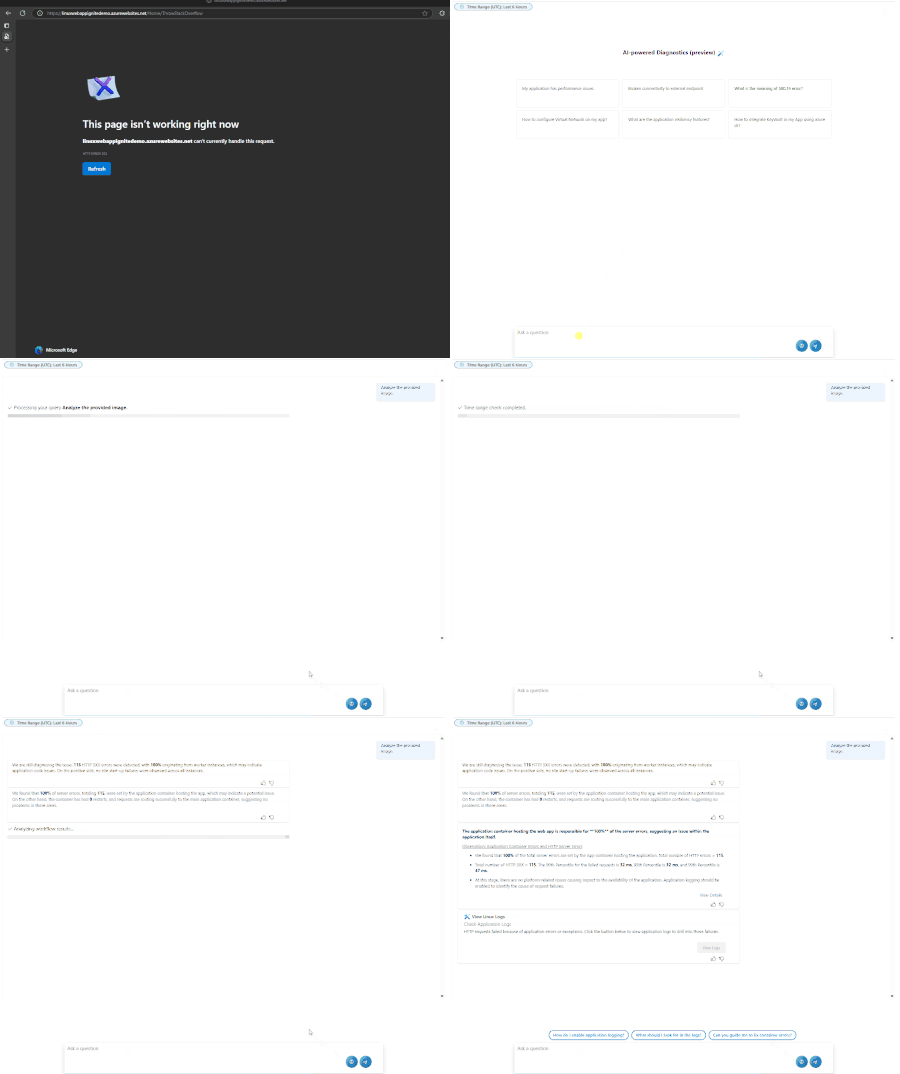
It’s that time of year again—Microsoft Build 2025 is here! And in the spirit of pushing boundaries with AI, we’re thrilled to introduce a powerful new preview feature in Conversational Diagnostics. 📸 Diagnose with a Screenshot No more struggling to describe a tricky issue or typing out long explanations. With this new capability, you can simply paste, upload, or drag a screenshot into the chat. Conversational Diagnostics will analyze the image, identify the context, and surface relevant diagnostics for your selected Azure Resource—all in seconds. Whether you're debugging a web app or triaging a customer issue, this feature helps you move from problem to insight faster than ever. Thank you!496Views2likes0CommentsBuilding the Agentic Future
As a business built by developers, for developers, Microsoft has spent decades making it faster, easier and more exciting to create great software. And developers everywhere have turned everything from BASIC and the .NET Framework, to Azure, VS Code, GitHub and more into the digital world we all live in today. But nothing compares to what’s on the horizon as agentic AI redefines both how we build and the apps we’re building. In fact, the promise of agentic AI is so strong that market forecasts predict we’re on track to reach 1.3 billion AI Agents by 2028. Our own data, from 1,500 organizations around the world, shows agent capabilities have jumped as a driver for AI applications from near last to a top three priority when comparing deployments earlier this year to applications being defined today. Of those organizations building AI agents, 41% chose Microsoft to build and run their solutions, significantly more than any other vendor. But within software development the opportunity is even greater, with approximately 50% of businesses intending to incorporate agentic AI into software engineering this year alone. Developers face a fascinating yet challenging world of complex agent workflows, a constant pipeline of new models, new security and governance requirements, and the continued pressure to deliver value from AI, fast, all while contending with decades of legacy applications and technical debt. This week at Microsoft Build, you can see how we’re making this future a reality with new AI-native developer practices and experiences, by extending the value of AI across the entire software lifecycle, and by bringing critical AI, data, and toolchain services directly to the hands of developers, in the most popular developer tools in the world. Agentic DevOps AI has already transformed the way we code, with 15 million developers using GitHub Copilot today to build faster. But coding is only a fraction of the developer’s time. Extending agents across the entire software lifecycle, means developers can move faster from idea to production, boost code quality, and strengthen security, while removing the burden of low value, routine, time consuming tasks. We can even address decades of technical debt and keep apps running smoothly in production. This is the foundation of agentic DevOps—the next evolution of DevOps, reimagined for a world where intelligent agents collaborate with developer teams and with each other. Agents introduced today across GitHub Copilot and Azure operate like a member of your development team, automating and optimizing every stage of the software lifecycle, from performing code reviews, and writing tests to fixing defects and building entire specs. Copilot can even collaborate with other agents to complete complex tasks like resolving production issues. Developers stay at the center of innovation, orchestrating agents for the mundane while focusing their energy on the work that matters most. Customers like EY are already seeing the impact: “The coding agent in GitHub Copilot is opening up doors for each developer to have their own team, all working in parallel to amplify their work. Now we're able to assign tasks that would typically detract from deeper, more complex work, freeing up several hours for focus time." - James Zabinski, DevEx Lead at EY You can learn more about agentic DevOps and the new capabilities announced today from Amanda Silver, Corporate Vice President of Product, Microsoft Developer Division, and Mario Rodriguez, Chief Product Office at GitHub. And be sure to read more from GitHub CEO Thomas Dohmke about the latest with GitHub Copilot. At Microsoft Build, see agentic DevOps in action in the following sessions, available both in-person May 19 - 22 in Seattle and on-demand: BRK100: Reimagining Software Development and DevOps with Agentic AI BRK 113: The Agent Awakens: Collaborative Development with GitHub Copilot BRK118: Accelerate Azure Development with GitHub Copilot, VS Code & AI BRK131: Java App Modernization Simplified with AI BRK102: Agent Mode in Action: AI Coding with Vibe and Spec-Driven Flows BRK101: The Future of .NET App Modernization Streamlined with AI New AI Toolchain Integrations Beyond these new agentic capabilities, we’re also releasing new integrations that bring key services directly to the tools developers are already using. From the 150 million GitHub users to the 50 million monthly users of the VS Code family, we’re making it easier for developers everywhere to build AI apps. If GitHub Copilot changed how we write code, Azure AI Foundry is changing what we can build. And the combination of the two is incredibly powerful. Now we’re bringing leading models from Azure AI Foundry directly into your GitHub experience and workflow, with a new native integration. GitHub models lets you experiment with leading models from OpenAI, Meta, Cohere, Microsoft, Mistral and more. Test and compare performance while building models directly into your codebase all within in GitHub. You can easily select the best model performance and price side by side and swap models with a simple, unified API. And keeping with our enterprise commitment, teams can set guardrails so model selection is secure, responsible, and in line with your team’s policies. Meanwhile, new Azure Native Integrations gives developers seamless access to a curated set of 20 software services from DataDog, New Relic, Pinecone, Pure Storage Cloud and more, directly through Azure portal, SDK, and CLI. With Azure Native Integrations, developers get the flexibility to work with their preferred vendors across the AI toolchain with simplified single sign-on and management, while staying in Azure. Today, we are pleased to announce the addition of even more developer services: Arize AI: Arize’s platform provides essential tooling for AI and agent evaluation, experimentation, and observability at scale. With Arize, developers can easily optimize AI applications through tools for tracing, prompt engineering, dataset curation, and automated evaluations. Learn more. LambdaTest HyperExecute: LambdaTest HyperExecute is an AI-native test execution platform designed to accelerate software testing. It enables developers and testers to run tests up to 70% faster than traditional cloud grids by optimizing test orchestration, observability and streamlining TestOps to expedite release cycles. Learn more. Mistral: Mistral and Microsoft announced a partnership today, which includes integrating Mistral La Plateforme as part of Azure Native Integrations. Mistral La Plateforme provides pay-as-you-go API access to Mistral AI's latest large language models for text generation, embeddings, and function calling. Developers can use this AI platform to build AI-powered applications with retrieval-augmented generation (RAG), fine-tune models for domain-specific tasks, and integrate AI agents into enterprise workflows. MongoDB (Public Preview): MongoDB Atlas is a fully managed cloud database that provides scalability, security, and multi-cloud support for modern applications. Developers can use it to store and search vector embeddings, implement retrieval-augmented generation (RAG), and build AI-powered search and recommendation systems. Learn more. Neon: Neon Serverless Postgres is a fully managed, autoscaling PostgreSQL database designed for instant provisioning, cost efficiency, and AI-native workloads. Developers can use it to rapidly spin up databases for AI agents, store vector embeddings with pgvector, and scale AI applications seamlessly. Learn more. Java and .Net App Modernization Shipping to production isn’t the finish line—and maintaining legacy code shouldn’t slow you down. Today we’re announcing comprehensive resources to help you successfully plan and execute app modernization initiatives, along with new agents in GitHub Copilot to help you modernize at scale, in a fraction of the time. In fact, customers like Ford China are seeing breakthrough results, reducing up to 70% of their Java migration efforts by using GitHub Copilot to automate middleware code migration tasks. Microsoft’s App Modernization Guidance applies decades of enterprise apps experience to help you analyze production apps and prioritize modernization efforts, while applying best practices and technical patterns to ensure success. And now GitHub Copilot transforms the modernization process, handling code assessments, dependency updates, and remediation across your production Java and .NET apps (support for mainframe environments is coming soon!). It generates and executes update plans automatically, while giving you full visibility, control, and a clear summary of changes. You can even raise modernization tasks in GitHub Issues from our proven service Azure Migrate to assign to developer teams. Your apps are more secure, maintainable, and cost-efficient, faster than ever. Learn how we’re reimagining app modernization for the era of AI with the new App Modernization Guidance and the modernization agent in GitHub Copilot to help you modernize your complete app estate. Scaling AI Apps and Agents Sophisticated apps and agents need an equally powerful runtime. And today we’re advancing our complete portfolio, from serverless with Azure Functions and Azure Container Apps, to the control and scale of Azure Kubernetes Service. At Build we’re simplifying how you deploy, test, and operate open-source and custom models on Kubernetes through Kubernetes AI Toolchain Operator (KAITO), making it easy to inference AI models with the flexibility, auto-scaling, pay-per-second pricing, and governance of Azure Container Apps serverless GPU, helping you create real-time, event-driven workflows for AI agents by integrating Azure Functions with Azure AI Foundry Agent Service, and much, much more. The platform you choose to scale your apps has never been more important. With new integrations with Azure AI Foundry, advanced automation that reduces developer overhead, and simplified operations, security and governance, Azure’s app platform can help you deliver the sophisticated, secure AI apps your business demands. To see the full slate of innovations across the app platform, check out: Powering the Next Generation of AI Apps and Agents on the Azure Application Platform Tools that keep pace with how you need to build This week we’re also introducing new enhancements to our tooling to help you build as fast as possible and explore what’s next with AI, all directly from your editor. GitHub Copilot for Azure brings Azure-specific tools into agent mode in VS Code, keeping you in the flow as you create, manage, and troubleshoot cloud apps. Meanwhile the Azure Tools for VS Code extension pack brings everything you need to build apps on Azure using GitHub Copilot to VS Code, making it easy to discover and interact with cloud services that power your applications. Microsoft’s gallery of AI App Templates continues to expand, helping you rapidly move from concept to production app, deployed on Azure. Each template includes fully working applications, complete with app code, AI features, infrastructure as code (IaC), configurable CI/CD pipelines with GitHub Actions, along with an application architecture, ready to deploy to Azure. These templates reflect the most common patterns and use cases we see across our AI customers, from getting started with AI agents to building GenAI chat experiences with your enterprise data and helping you learn how to use best practices such as keyless authentication. Learn more by reading the latest on Build Apps and Agents with Visual Studio Code and Azure Building the agentic future The emergence of agentic DevOps, the new wave of development powered by GitHub Copilot and new services launching across Microsoft Build will be transformative. But just as we’ve seen over the first 50 years of Microsoft’s history, the real impact will come from the global community of developers. You all have the power to turn these tools and platforms into advanced AI apps and agents that make every business move faster, operate more intelligently and innovate in ways that were previously impossible. Learn more and get started with GitHub Copilot3.1KViews2likes0CommentsUnlock New AI and Cloud Potential with .NET 9 & Azure: Faster, Smarter, and Built for the Future
.NET 9, now available to developers, marks a significant milestone in the evolution of the .NET platform, pushing the boundaries of performance, cloud-native development, and AI integration. This release, shaped by contributions from over 9,000 community members worldwide, introduces thousands of improvements that set the stage for the future of application development. With seamless integration with Azure and a focus on cloud-native development and AI capabilities, .NET 9 empowers developers to build scalable, intelligent applications with unprecedented ease. Expanding Azure PaaS Support for .NET 9 With the release of .NET 9, a comprehensive range of Azure Platform as a Service (PaaS) offerings now fully support the platform’s new capabilities, including the latest .NET SDK for any Azure developer. This extensive support allows developers to build, deploy, and scale .NET 9 applications with optimal performance and adaptability on Azure. Additionally, developers can access a wealth of architecture references and sample solutions to guide them in creating high-performance .NET 9 applications on Azure’s powerful cloud services: Azure App Service: Run, manage, and scale .NET 9 web applications efficiently. Check out this blog to learn more about what's new in Azure App Service. Azure Functions: Leverage serverless computing to build event-driven .NET 9 applications with improved runtime capabilities. Azure Container Apps: Deploy microservices and containerized .NET 9 workloads with integrated observability. Azure Kubernetes Service (AKS): Run .NET 9 applications in a managed Kubernetes environment with expanded ARM64 support. Azure AI Services and Azure OpenAI Services: Integrate advanced AI and OpenAI capabilities directly into your .NET 9 applications. Azure API Management, Azure Logic Apps, Azure Cognitive Services, and Azure SignalR Service: Ensure seamless integration and scaling for .NET 9 solutions. These services provide developers with a robust platform to build high-performance, scalable, and cloud-native applications while leveraging Azure’s optimized environment for .NET. Streamlined Cloud-Native Development with .NET Aspire .NET Aspire is a game-changer for cloud-native applications, enabling developers to build distributed, production-ready solutions efficiently. Available in preview with .NET 9, Aspire streamlines app development, with cloud efficiency and observability at its core. The latest updates in Aspire include secure defaults, Azure Functions support, and enhanced container management. Key capabilities include: Optimized Azure Integrations: Aspire works seamlessly with Azure, enabling fast deployments, automated scaling, and consistent management of cloud-native applications. Easier Deployments to Azure Container Apps: Designed for containerized environments, .NET Aspire integrates with Azure Container Apps (ACA) to simplify the deployment process. Using the Azure Developer CLI (azd), developers can quickly provision and deploy .NET Aspire projects to ACA, with built-in support for Redis caching, application logging, and scalability. Built-In Observability: A real-time dashboard provides insights into logs, distributed traces, and metrics, enabling local and production monitoring with Azure Monitor. With these capabilities, .NET Aspire allows developers to deploy microservices and containerized applications effortlessly on ACA, streamlining the path from development to production in a fully managed, serverless environment. Integrating AI into .NET: A Seamless Experience In our ongoing effort to empower developers, we’ve made integrating AI into .NET applications simpler than ever. Our strategic partnerships, including collaborations with OpenAI, LlamaIndex, and Qdrant, have enriched the AI ecosystem and strengthened .NET’s capabilities. This year alone, usage of Azure OpenAI services has surged to nearly a billion API calls per month, illustrating the growing impact of AI-powered .NET applications. Real-World AI Solutions with .NET: .NET has been pivotal in driving AI innovations. From internal teams like Microsoft Copilot creating AI experiences with .NET Aspire to tools like GitHub Copilot, developed with .NET to enhance productivity in Visual Studio and VS Code, the platform showcases AI at its best. KPMG Clara is a prime example, developed to enhance audit quality and efficiency for 95,000 auditors worldwide. By leveraging .NET and scaling securely on Azure, KPMG implemented robust AI features aligned with strict industry standards, underscoring .NET and Azure as the backbone for high-performing, scalable AI solutions. Performance Enhancements in .NET 9: Raising the Bar for Azure Workloads .NET 9 introduces substantial performance upgrades with over 7,500 merged pull requests focused on speed and efficiency, ensuring .NET 9 applications run optimally on Azure. These improvements contribute to reduced cloud costs and provide a high-performance experience across Windows, Linux, and macOS. To see how significant these performance gains can be for cloud services, take a look at what past .NET upgrades achieved for Microsoft’s high-scale internal services: Bing achieved a major reduction in startup times, enhanced efficiency, and decreased latency across its high-performance search workflows. Microsoft Teams improved efficiency by 50%, reduced latency by 30–45%, and achieved up to 100% gains in CPU utilization for key services, resulting in faster user interactions. Microsoft Copilot and other AI-powered applications benefited from optimized runtime performance, enabling scalable, high-quality experiences for users. Upgrading to the latest .NET version offers similar benefits for cloud apps, optimizing both performance and cost-efficiency. For more information on updating your applications, check out the .NET Upgrade Assistant. For additional details on ASP.NET Core, .NET MAUI, NuGet, and more enhancements across the .NET platform, check out the full Announcing .NET 9 blog post. Conclusion: Your Path to the Future with .NET 9 and Azure .NET 9 isn’t just an upgrade—it’s a leap forward, combining cutting-edge AI integration, cloud-native development, and unparalleled performance. Paired with Azure’s scalability, these advancements provide a trusted, high-performance foundation for modern applications. Get started by downloading .NET 9 and exploring its features. Leverage .NET Aspire for streamlined cloud-native development, deploy scalable apps with Azure, and embrace new productivity enhancements to build for the future. For additional insights on ASP.NET, .NET MAUI, NuGet, and more, check out the full Announcing .NET 9 blog post. Explore the future of cloud-native and AI development with .NET 9 and Azure—your toolkit for creating the next generation of intelligent applications.10KViews2likes1Comment