azure ai
4 TopicsIntroducing Azure AI Foundry — Everything you need for AI development
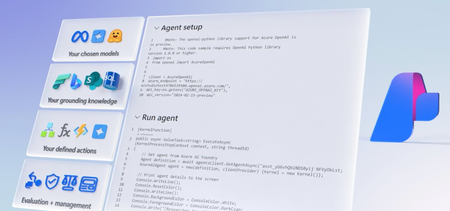
Create agentic solutions quickly and efficiently with Azure AI Foundry. Choose the right models, ground your agents with knowledge, and seamlessly integrate AI into your development workflow — from early experimentation to production. Test, optimize, and deploy with built-in evaluation and management tools. See how to leverage the Azure AI Foundry SDK to code and orchestrate intelligent agents, monitor performance with tracing and assessments, and streamline DevOps with production-ready management. Yina Arenas, from the Azure AI Foundry team, shares its extensive capabilities as a unified platform that supports you throughout the entire AI development lifecycle. Access models to power your agents. The model catalog in Azure AI Foundry gives you access to thousands of AI models, including top-tier LLMs & specialized models, with optimizations for cloud & edge deployment. Take a look. Develop your custom agents. Work seamlessly with Azure AI Foundry inside VS Code, GitHub, and Copilot Studio. See how to integrate AI into your dev workflow. Build AI-powered multi-agent workflows effortlessly. Automate tasks like research, writing, editing, and communication using one system. Get started with Azure AI Foundry. Watch our video here. QUICK LINKS: 00:00 — Create agentic solutions with Azure AI Foundry 00:20 — Model catalog in Azure AI Foundry 02:15 — Experiment in the Azure AI Foundry playground 03:10 — Create and customize agents 04:13 — Assess and improve agents 05:58 — Monitor and manage apps 06:50 — Create a multi-agentic app in code 09:26 — Create a Sender agent 10:39 — How to connect orchestration logic 11:25 — Watch agents work 12:26 — Wrap up Link References Get started with Azure AI Foundry at https://ai.azure.com Unfamiliar with Microsoft Mechanics? As Microsoft’s official video series for IT, you can watch and share valuable content and demos of current and upcoming tech from the people who build it at Microsoft. Subscribe to our YouTube: https://www.youtube.com/c/MicrosoftMechanicsSeries Talk with other IT Pros, join us on the Microsoft Tech Community: https://techcommunity.microsoft.com/t5/microsoft-mechanics-blog/bg-p/MicrosoftMechanicsBlog Watch or listen from anywhere, subscribe to our podcast: https://microsoftmechanics.libsyn.com/podcast Keep getting this insider knowledge, join us on social: Follow us on Twitter: https://twitter.com/MSFTMechanics Share knowledge on LinkedIn: https://www.linkedin.com/company/microsoft-mechanics/ Enjoy us on Instagram: https://www.instagram.com/msftmechanics/ Loosen up with us on TikTok: https://www.tiktok.com/@msftmechanics Video Transcript: -If you’re looking to create agentic solutions and want to move quickly and efficiently, Azure AI Foundry is the one place for discovering and accessing the right building blocks for your agents, with everything you need for AI development. Today, I’ll share the essentials for Azure AI Foundry, starting with a tour of its extensive capabilities as a unified platform that supports you throughout the entire AI development lifecycle; from initial concept with early experimentation, coding in your preferred ID, pre-production assessment, management in production, and beyond, followed by a real example of the steps for creating a multi-agent application using the new Azure AI Agents service in Azure AI Foundry, all integrated with your code. Starting with our tour, you can easily reach to Azure AI Foundry at ai.azure.com, and once you’ve created a project, panning down the left rail, you can quickly see the core experiences. -First, the model catalog helps you discover and access a growing collection of thousands of models to power your individual agents as you build your system, including premium large language models from OpenAI, Meta, DeepSeek, Cohere, and more, as well as small language models like Microsoft Phi. And of course, there are hundreds of open models like those from Hugging Face for you to try out. Models are also available by area of specialization. -For example, there are regional and focused models to support interactions with different spoken languages, like Mistral for European languages and Jais for Arabic. And separately, there are industry-specific models that you can choose from. The entire model catalog is hosted on Microsoft’s supercomputer infrastructure in Azure for optimized cost performance. Next, in terms of model deployment, you can choose to run models on hosted hardware with managed compute, and for those of our popular premium models, you can use our serverless API option. As you use Azure AI Foundry, you can of course also bring your own models to run on your Azure infrastructure. -Then, to help you choose the right model for your agent, you can easily experiment in our playground. For agents, you can add knowledge to ground your model. You can choose files to upload, use existing search index, or add web knowledge using Microsoft Bing. There are also options to add data from Microsoft Fabric as well as SharePoint to connect with data in Microsoft 365. You can also define actions for your agents to perform, like calling APIs, functions, or using Code interpreter to write and run Python code to automate processes. And back on the homepage, clicking into AI Services provide additional task-specific capabilities that you can use to augment your agents, like speech, translation, vision, and content safety. So right from the start on your application design, you can leverage Azure AI Foundry to evaluate AI models and services for your application. -Next, to create and customize agents, the new Azure AI Agents service helps you orchestrate AI agents without managing the underlying resources. Importantly, everything you do in Azure AI Foundry is integrated with your coding workspaces. In the code experience, you can take advantage of multiple templates as well as a cloud hosted pre-configured dev environment to get started. And importantly, integration with GitHub, your code in Visual Studio, and even Copilot Studio for your low-code apps where you can connect to Azure AI services and more. This means that your work in Azure AI Foundry carries on seamlessly into your code and agents, or you can do everything from your code. By using a single API and calling Azure AI Foundry capabilities as service endpoints when you create projects leveraging the Azure AI Foundry SDK. -For example, you can connect to different models using the new Azure AI model inference endpoint, which lets you easily compare models without changing your underlying code. And as you create your agent, you can easily assess and improve the experience. In fact, Azure AI Foundry offers a range of capabilities to help you as you continuously iterate for centralized observability, such as application tracing for debugging and performance checks, along with detailed views for execution flows integrated with your application insight resources. Additionally, automated evaluations help you continuously assess the quality of AI outputs based on key metrics, like relevance to look at how well the model meets expectations, groundedness to see how well the model refers to your grounding data, fluency for the language proficiency of the answers, and more. -From there, you will use this information to create reporting, set up alerts, and share dashboards with other stakeholders. You can also take advantage of built-in safety and security controls of text, image, and multimodal content that go beyond basic system prompt guardrails to automatically detect and optionally block unwanted inputs and outputs for content involving violence, hate, sexual, and self-harm topics. Azure AI Foundry services also can help you onboard more advanced techniques as you optimize the output of your AI applications. For example, built-in services like model fine-tuning lets you adapt model output with specific training data sets that you define, helping you improve model accuracy and effectiveness in real-world applications. Additionally, integrations with Semantic Kernel and AutoGen as well as LangChain let you orchestrate execution flows for multi-agent processes, making it easier to embed AI into new or existing workflows. -Then, as your apps move into production, we give you tools to monitor and manage resource utilization. Integration with Azure Monitor and Application Insights helps you quickly observe trends and get alerts for key generative AI metrics. And the Centralized Management Center helps simplify ongoing resource management and governance tasks, like managing quota, accessing permissions, and connected resources. -Additionally, built-in integration across Microsoft’s security and governance stack enables you to enforce organizational standards and compliance with Azure policy, manage identity base access data and services with Microsoft Entra, leverage your data security and compliance from Microsoft Purview, and protect your AI apps at scale with ongoing threat detection and security posture management using Microsoft Defender. -So, with our tour complete, next, let me show you how you can create a multi-agent application using Azure AI Foundry along with Semantic Kernel for orchestration. I’ll start by explaining the agentic app scenario, which should sound familiar if you’ve ever written a report. It’s a four-agent solution that can be initiated with any topic. There is a researcher agent that gathers information from the internet as my defined knowledge source. This process loops with the writer agent, which uses the information provided or requests more until it is satisfied. The writer agent then creates the report and loops with the editor agent, which can request additional edits until it is satisfied. And once it has approved the reported text, it shares the output with the sender agent, which emails the report using Outlook in Microsoft 365. These multi-agentic scenarios are similar in concept to microservices and other modular architectures. There are several benefits to breaking down a monolithic process, but now it’s got a new name. -So let’s build it. I’ll begin in Azure AI Foundry, and in the Agents page I can see the agents that I’ve already started building, like the writer and the editor agents. The researcher and the sender agents are missing because we’re going to build them right now. I’ll start with the research agent as a new agent. Next, the setup pane on the right gives me my agent configuration options. I’ll give it a name, Research agent, and then under Deployment I can choose the model I want this agent to use. I’ll pick gpt-4o. -Next, I’ll provide it with instructions for what it is supposed to do. Since it is the research agent, I’ll instruct it to use Bing search to find information. And because the research agent is part of this four-agent team, I’ll specify that it should not try to write the report, which is the job of the writer agent. It should just provide the data. Next, I’ll add a knowledge source. Again, we want Bing to ground the agent with public information from the web. Then I just need to select an Azure connection, and once I hit Connect, our agent is done. To try it out, I’ll use the playground. I’ll ask “What is dot net,” and it will generate a summarized result using knowledge from Bing search. And because it is the research agent and not the writer, you will see that its results are super concise but dense with knowledge about the topic. -Next, I could specify actions, but I don’t need to. This agent already has everything it needs. And so our research agent is ready to go, and I can move on to creating our sender agent, which by the way is going to need some defined actions. To create our email sender agent, I’m going to switch over to VS Code and use the SDK. I have this Python file open, and if you look at the very bottom of the screen, there is a create_agent command. And just like we saw in the Azure AI Foundry portal, I can point it to the model for its deployment, define its name, and add its instructions, as well as its tools. As the email sender agent, we’ll provide it with Outlook as a tool, and when I run this file, it will create an agent inside of Azure AI Foundry. -In fact, if I move back to our list of agents in the portal, we can see that our sender agent was just created. And so now with all of my four agents created, it’s time to wire them up using Semantic Kernel. Back in VS Code, I’ll open my program file where I’ve already started using Semantic Kernel to describe its broader process, and you will see all the logic for how each agent interacts with each other. As I explained in the graphic, each agent needs to satisfy the requirement for it’s task before moving to the next step in the process. -Now, you might be wondering how to connect the orchestration logic together with my four agents. Well, let me show you. Each agent has its own configuration file for our Semantic Kernel orchestration. I’ll connect the researcher agent config with the agent ID from Azure AI Foundry. So, if I go back to the Azure AI Foundry portal and select the researcher agent, I can just copy the agent ID and go back to add it to my code, and you would do this process for each of the agents. Now with everything connected and complete, let’s try it out. Back in my code, I’ll go ahead and run to see how well our agents work together. My program asks, “What would you like a report on?” Let’s make it python, but not the code, the snake. While these agents work, I can watch exactly what they’re doing and comment on them play by play. -First, we can see the researcher agent pulling some material from the web. The writer agent can then pick things up. But wait, the writer agent isn’t easily satisfied and needs some additional research on user sentiment. The researcher agent comes back with that detail, but the writer agent still has questions and needs more additional facts about the pet trade and other topics. The researcher agent, unfazed, comes back with that information. And once the writer is satisfied, it starts generating the report. When it’s finished, it sends the report to the editor agent, and it looks like the writer agent met all of the requirements, which is confirmed and approved by the editor agent, and the approval triggers the sender agent to send it out as an email. In fact, if I move over to Outlook, we can see the Report on Python Snakes just landed on my inbox, and that was just one example of how you can create agentic solutions to automate business processes. -Azure AI Foundry helps you create powerful agents quickly and efficiently by providing a unified platform with extensive capabilities throughout the entire AI development lifecycle. To get started, just head over to ai.azure.com. Subscribe to Microsoft Mechanics if you haven’t already, and thank you for watching.2.1KViews1like0CommentsIntroducing Azure HorizonDB - PostgreSQL
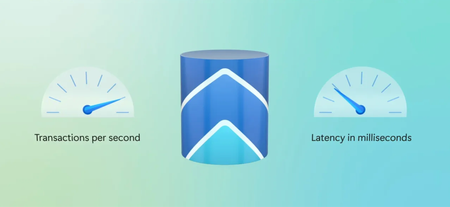
Call AI models directly from SQL, build durable vector pipelines inside the database, and deliver high-accuracy similarity search at massive scale with DiskANN and AI re-ranking, all without leaving PostgreSQL. Debug and optimize queries faster with the Azure HorizonDB VS Code extension. Visualize execution plans, let Copilot generate fixes, and clone production data to test environments in seconds. Charles Feddersen, PostgreSQL Partner Director PM, shares how to put all of it to work on Azure. Same hardware, same zone, same PostgreSQL version. 4,200 TPS self-managed vs. 11,000+ on Azure HorizonDB. The separation of storage and compute layers make the difference. See how it works. Chunking. Embeddings. Vector storage. All running as a durable background task inside PostgreSQL with AI Pipelines in Azure HorizonDB, no external orchestration needed. Check it out. Visual query execution plans. Copilot-generated fixes. The Azure HorizonDB VS Code extension brings all of it into the editor. Get it now. QUICK LINKS: 00:00 — Azure HorizonDB features 00:57 — Open-source PostgreSQL 02:24 — How it works 03:37 — Performance 04:51 — Enterprise-ready security 05:34 — Memory & storage work together 06:29 — AI Model Management + AI Functions 08:24 — AI Pipelines 09:50 — DiskANN + AI Re-ranking 10:50 — VS Code Extension + Data Cloning 12:31 — Wrap up Link References Check out our blog at https://aka.ms/azurepostgresblog Unfamiliar with Microsoft Mechanics? As Microsoft’s official video series for IT, you can watch and share valuable content and demos of current and upcoming tech from the people who build it at Microsoft. Subscribe to our YouTube: https://www.youtube.com/c/MicrosoftMechanicsSeries Talk with other IT Pros, join us on the Microsoft Tech Community: https://techcommunity.microsoft.com/t5/microsoft-mechanics-blog/bg-p/MicrosoftMechanicsBlog Watch or listen from anywhere, subscribe to our podcast: https://microsoftmechanics.libsyn.com/podcast Keep getting this insider knowledge, join us on social: Follow us on Twitter: https://twitter.com/MSFTMechanics Share knowledge on LinkedIn: https://www.linkedin.com/company/microsoft-mechanics/ Enjoy us on Instagram: https://www.instagram.com/msftmechanics/ Loosen up with us on TikTok: https://www.tiktok.com/@msftmechanics Video Transcript: - The Postgres you know and love is now even more supercharged on Azure with the latest platform optimizations and AI for enterprise apps all made possible with the new cloud-native Postgres service, Azure HorizonDB. Now, we’ll go deep on its ultra fast performance at high scale, the built-in resiliency across different availability zones, along with major new built-in AI-centric features, leveraging DiskANN, as well as integrated AI model management, where you can provision models or bring your own from Microsoft Foundry, plus a built-in AI pipeline that automatically chunks and processes data in real time as it’s ingested into the database. And finally, a brand new VS code extension with AI-powered query development and debugging as you build your apps and more. And today I’m joined once again by Charles Feddersen who leads the Postgres efforts on Azure. Welcome back to the show. - Thanks Jeremy, it’s good to be back and we’ve got a lot to get through today. - Yeah, so the new HorizonDB service in Azure is our newest managed Postgres service where we also have Azure database for Postgres, and we’re actively making deep contributions in the Postgres project as well. - Yeah, so Microsoft has been actively supporting Postgres on Azure for about nine years now, and our approach has always been to keep the Postgres, you know, and love for its portability and ecosystem and make Azure the best place to run your Postgres workloads. You know, and as you mentioned, we are a major contributor to open source Postgres. In Postgres 19, Microsoft Committers modified over 64,000 lines of code, which represents about 8% of all changes in this version. And we made about 340 commits. These improvements cover both new functionality and also improvements based on our own learnings of running Postgres at a massive scale on Azure. We also host the largest virtual Postgres community conference in the world called POSETTE, which is now in its fifth year. Because we understand the core Postgres engine so well, it’s not unusual for our core committers on the team to work with our customers to help debug and resolve issues that they might be having as well. - Right, and I remember last time you were on, we discussed how you were shipping major versions of Postgres on Azure within weeks of their releases. - Yeah, and now we’ve effectively eliminated that delay. There is now zero cloud lag in waiting to leverage the latest features when using Postgres on Azure. We ship the new major version on the same day in Azure. - So that’s a big deal, there’s no lag, same day access. Why don’t we move back though to our newest managed Postgres service HorizonDB. How does that then change the game for anyone who’s running Postgres services now on Azure? - Yeah, so HorizonDB brings cloud scale performance built-in resilience and AI ready capabilities to Postgres without changing how you build or run your apps. How this works is we’ve completely decoupled compute and storage to improve performance, scale and availability. At the compute layer, it runs the Postgres engine, fully compatible so existing apps and tools just work. At the storage layer, we built a new and highly optimized log service for transactions where we can sustain a commit latency of typically under one millisecond. That log service is paired to a new shared storage platform, which natively stores data across availability zones for resilient storage by default. We can attach multiple read replicas to the storage and the primary can fail over to any of these replicas in less than five seconds, in the event of an outage. This gives you read scale without replication latency. Ultimately, HorizonDB lets you run any Postgres workload from new AI apps to large scale enterprise systems with the performance, resilience and scale of Azure already built in. - All right, so you said performance. Let’s dig deeper there. Everybody loves a performance story, so can you prove it? - Yeah, so one of the big challenges with self-managed Postgres is that enabling high availability, especially across cloud zones, often comes with a performance cost. With HorizonDB, we introduced a new quorum commit protocol that let you durably commit across zones before flushing to disk, so you get both resilience and high performance. Now to show this in action, I’ve got a split screen, HorizonDB on the right and self-managed Postgres on the left. This is the same Postgres version on the same hardware with the same high availability setup in the same Azure region. And I’ll kick both off and then go ahead and let them run. And as you can see clearly HorizonDB is delivering about three times more transactions per second. This gain comes directly from the storage architecture, and now that it’s finished, we can see that self-managed Postgres on the left delivered over 4,200 transactions per second. And HorizonDB had more than 11,000 with much lower latency. Performance was a core design principle for HorizonDB from the beginning, and it’s something that you’ll see directly in your applications. - Okay, so performance is ultra fast, and we know this is built for both enterprises and developers, and we know enterprises love security. So what’s different there? - Yeah, so security of course is foundational. It spans everything from network isolation and identity to data protection. Just like performance, it’s been a core focus from day one. And we’re building on the proven enterprise capabilities of Azure database for Postgres to deliver it out of the box like Entra ID integration, where you can enable identity-based access, so users connect securely without managing passwords or private endpoints to lock down access. So the database is only reachable over your private network with no public exposure and of course encryption at rest where data is automatically encrypted on the disk. All of this is available from day one, so you get strong enterprise ready security without any extra setup. - Okay, and bringing this back to our developers who are watching the built-in AI centric features with HorizonDB now also make it easier to build AI apps. - Yeah, and this is an area that we’re really leaning into. Postgres was already popular and chat with your data use cases accelerated that adoption because it natively supports vectors for similarity search. Our focus is on making intelligent retrieval and generative AI work on a massive scale with high accuracy and efficiency. To do that, we’ve rethought how memory and storage work together in the database so that more IO traffic moves to disk letting you take advantage of much larger storage capacity using Microsoft’s disk accelerated nearest neighbor or DiskANN technology. This quantize a vector-based graph in memory and maps it to a full precision graph stored on disk, which significantly reduces memory requirements while still delivering fast higher quality similarity search across your data. - And speaking of generative AI responses, we’ve also made it easier for the database to work directly with AI models. - Yeah, we have, and this starts with AI model management, which automatically registers a set of models with your instance of HorizonDB. It’s really simple. So here’s my HorizonDB, and I’ll just select the enable managed models then confirm. And what this does behind the scenes is it automatically registers a few AI models for use. Once the provisioning is complete, you can see the AI model management blade in the portal with the GPT, text embedding and re-ranking models listed. And you can also bring your own models where you register them through the database directly. - So now you can use models effectively with Postgres without extra manual provisioning configuration. So, how would you interact with them? - Yeah, this is where AI functions come in. These are a set of SQL functions that you interact directly with AI models. The Azure AI extension in HorizonDB provides functions that you can invoke using SQL to leverage AI models. So let me show you a couple. For example, you can use the generate function to produce a response from a prompt. In this case, I’ll say summarize the following customer reviews in two to three sentences, and then I’ll run it and you can see the response is generated as a SQL result that I could use in my app. Alternatively, the extract function is designed to pull specific entities from unstructured text into a structured form that you can then store and query. You can see here that I’m going to use an array to ask for the main product features along with the customer sentiment from my database. Now, we’ll let that run for a moment and we can see the response of producers for each item in the catalog. - And this is just one scenario that you showed with querying, but I can imagine another case where you might say, use data transformation where the results are written back into the database. - Yeah, absolutely. And when you do that, obviously the retrieval time for those results stored in the database is incredibly fast and you’re saving on your tokens as well. - That’s really great to see. So another challenge that we hear a lot of times is around building and maintaining AI pipeline. So we’re making that easier too. - So this is where AI pipelines in HorizonDB extend AI model management and AI functions even further. Today, most generative AI apps rebuild the same steps, chunking, creating embeddings, backfilling data, often in fragile external pipelines. With AI pipelines, all of this is built directly into Postgres. So you can see here that I’ve created a pipeline using the create pipeline function in the AI extension. This chunks the data in a database in real time as it’s added. It will then create embeddings for those chunks using the embedding model that the AI model management enabled for us. And these are ultimately stored in a table. So I can then go ahead and run this, and then if I count the records in the output table, you can see that it’s increasing. And this is all happening asynchronously in the background so that it’s not blocking or really having any real performance impact on my transactional workload. But the best thing about these pipelines is that they’re durable. And this means that I could pause it. And you can see here that the row count stops increasing, even if the workload continues and I can resume it, think of it as a reliable background task. And if my server fails over, it’s no problem, the AI pipeline fails over as well and it just keeps running. - So all that pipeline complexity then just moves into the database and kind of reduces the complexity and runs reliably. - Exactly, and building on this, we can now also use the rank function to re-rank search results with an AI model. Earlier I talked about how DiskANN improved similarity search, but that’s just the first step. With rank, we can apply a model like Cohere to refine the top results and improve overall relevance. Let me show you, I’ve got two identical queries here. One just uses an index and the other wraps the same query in our rank function to improve the relevance of results. If I run the first query for the headphones with the highest playtime and good calling, you can see the results seem pretty good. And these aren’t bad with a few showing around 40 hours. But when I run the rank query that applies the AI ranking model, the top most results are definitely more relevant to my search. Here, there are headphones with 60 or more hours, and the top ranked model has a hundred. - And this is really powerful. So you basically started out with fast similarity search, then used AI to make the results even more relevant. But why don’t we move beyond the database itself and look at what we’ve done then to help with the building experience of Postgres workloads on HorizonDB? - Sure, and this is one of my favorite additions. We’ve built a new VS code extension that brings familiar Postgres tools into a modern AI powered experience. As someone who spent years working in database tools, this is something that I really wish I’d had. It makes debugging and development a lot more easy. So here we’re in VS code and on the left you can see I’m using the Postgres extension. Now this works with any Postgres, but when you connect to Postgres on Azure, you get even deeper integration. So let’s look at an Azure server, and if I right click, you can see a number of server management features like network configuration, backups, and even start stop built in with a single click. And if I right click on tables, one of the most recent additions is object properties. But now let’s run a query. This is a little slower than we’d expect. So I open the new visual query execution plans to debug. It’s easy to identify the Inefficient query operator, and I can click on that to debug further. But the best part is that Copilot can fix it for me. Here, I’ll just click on the Copilot button in the query plan and it gets to work. The Copilot generates the fix for me, and it’s really that simple. Now I want to test this fix in a non-prod server, and that’s easy to. For that, I’ll show you a first look at the new built-in data cloning. I’ll go back up to the server and right click and I can clone it with all my data. And that just takes a moment to validate my solution. - And that’s a real shift. You got the same familiar Postgres experience, but now with AI and platform capabilities that really improve how you build and run apps. So what’s next? - Yeah, so we’ve covered a lot today, but this is just the start. We’re continuing to push the boundaries of what you can do with Postgres on Azure. So here’s a lot more coming. - So what’s the best way then for everyone watching to get started with Azure HorizonDB? - Yeah, so, you know, you can go try it for yourself. It’s in preview now and it’s easy to get started with everything that I demoed. The VS code extension is available in the VS code marketplace. And of course, to stay current, check out our blog at aka.ms/azurepostgresblog. - Thanks so much for joining us today, Charles, and of course, keep checking back to Microsoft Mechanics for the latest tech updates, and we’ll see you again next time.