azure ad domain services
31 Topics
Introducing the Entra Helpdesk Portal: A Zero-Trust, Dockerized ITSM Interface for Tier 1 Support
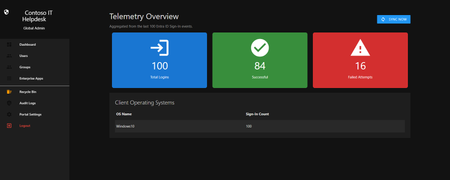
Hello everyone, If you manage identity in Microsoft Entra ID at an enterprise scale, you know the struggle: delegating day-to-day operational tasks (like password resets, session revocations, and MFA management) to Tier 1 and Tier 2 support staff is inherently risky. The native Azure/Entra portal is incredibly powerful, but it’s complex and lacks mandatory ITSM enforcement. Giving a helpdesk technician the "Helpdesk Administrator" role grants them access to a portal where a single misclick can cause a major headache. To solve this, I’ve developed the Entra Helpdesk Portal (Community Edition)—an open-source, containerized application designed to act as an isolated "airlock" between your support team and your Entra ID tenant. Why This Adds Value to Your Tenant Instead of having technicians log into the Azure portal, they log into this clean, Material Design web interface. It leverages a backend Service Principal (using MSAL and the Graph API) to execute commands on their behalf. Strict Zero Trust: Logging in via Microsoft SSO isn’t enough. The app intercepts the token and checks the user’s UPN against a hardcoded ALLOWED_ADMINS whitelist in your Docker environment file. Mandatory ITSM Ticketing: You cannot enforce ticketing in the native Azure Portal. In this app, every write action prompts a modal requiring a valid ticket number (e.g., INC-123456). Local Audit Logging: All actions, along with the actor, timestamp, and ticket number, are written to an immutable local SQLite database (audit.db) inside the container volume. Performance: Heavy Graph API reads are cached in-memory with a Time-To-Live (TTL) and smart invalidation. Searching for users or loading Enterprise Apps takes milliseconds. What Can It Do? Identity Lifecycle: Create users, auto-generate secure 16-character passwords, revoke sign-in sessions, reset passwords, and delete specific MFA methods to force re-registration. Diagnostics: View a user's last 5 sign-in logs, translating Microsoft error codes into plain English. Group Management: Add/remove members to Security and M365 groups. App/SPN Management: Lazy-load raw requiredResourceAccess Graph API payloads to audit app permissions, and instantly rotate client secrets. Universal Restore: Paste the Object ID of any soft-deleted item into the Recycle Bin tab to instantly resurrect it. How Easy Is It to Setup? I wanted this to be universally deployable, so I compiled it as a multi-architecture Docker image (linux/amd64 and linux/arm64). It will run on a massive Windows Server or a simple Raspberry Pi. Setup takes less than 5 minutes: Create an App Registration in Entra ID and grant it the necessary Graph API Application Permissions (e.g., User.ReadWrite.All, AuditLog.Read.All). Create a docker-compose.yml file. Define your feature toggles. You can literally turn off features (like User Deletion) by setting an environment variable to false. version: '3.8' services: helpdesk-portal: image: jahmed22/entra-helpdesk:latest container_name: entra_helpdesk restart: unless-stopped ports: - "8000:8000" environment: # CORE IDENTITY - TENANT_ID=your_tenant_id_here - CLIENT_ID=your_client_id_here - CLIENT_SECRET=your_client_secret_here - BASE_URL=https://entradesk.jahmed.cloud - ALLOWED_ADMINS=email address removed for privacy reasons # CUSTOMIZATION & FEATURE FLAGS - APP_NAME=Entra Help Desk - ENABLE_PASSWORD_RESET=true - ENABLE_MFA_MANAGEMENT=true - ENABLE_USER_DELETION=false - ENABLE_GROUP_MANAGEMENT=true - ENABLE_APP_MANAGEMENT=true volumes: - entra_helpdesk_data:/app/static/uploads - entra_helpdesk_db:/app volumes: entra_helpdesk_data: entra_helpdesk_db: 4.Run docker compose up -d and you are done! I built this to give back to the community and help secure our Tier 1 operations. If you are interested in testing it out in your dev tenants or want to see the full architecture breakdown, you can read the complete documentation on my website here I’d love to hear your thoughts, feedback, or any feature requests you might have!295Views0likes0CommentsJoin Merill Fernando and other guests for our Identity and Network Practitioner Webinar Series!
This October, we’re hosting a three-part webinar series led by expert Merill Fernando for Identity and Network Access practitioners. Join us as we journey from high-level strategy to hands-on implementation, unifying identity and network access every step of the way. Each session builds on the last, helping you move from understanding why a unified approach matters to what are the foundations to get started, and finally to how to configure in practice. The goal is to equip you with actionable skills, expert insights, and resources to secure your organization in a unified, Zero Trust way. Register below: Identity and Network Security Practitioner Webinar Series | Microsoft Community Hub142Views1like0Comments
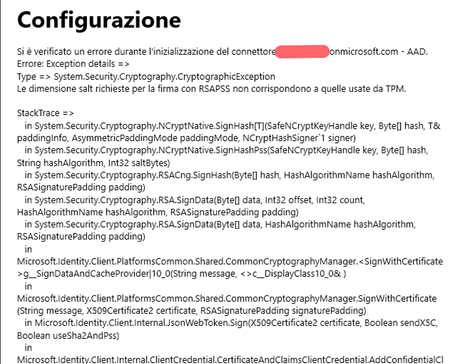
The salt sizes required for signing with RSAPSS do not match those used by TPM.
Good evening everyone. I'm getting this error when I try to perform the first sync on my Windows Server 2022. I'm trying to sync the entire directory to manage my employees' licenses. I already have a tenant with users who can stay there without any problems. I had already synced the tenant with my old server in the past. For business reasons, the infrastructure has changed, and so has the server. In Entra ID, I don't see any old syncs, but in Admin Center, I do. Could this be the problem? Any advice is invaluable, as I'm at my wits' end.465Views0likes2Comments
User Identities in EntraID - how to remove?
I have a user that shows up with multiple identities. No other users are like this and we believe its stopping him from logging in with his alias email address. When i run get-entrauser it returns the following under Identities: {@{signInType=federated; issuer=MicrosoftAccount; issuerAssignedId=}, @{signInType=federated; issuer=MicrosoftAccount; issuerAssignedId=}, @{signInType=userPrincipalName; issuer=OURPRIMARYDOMAIN.onmicrosoft.com; issuerAssignedId=UPN}} Every other account just has this @{signInType=userPrincipalName; issuer=OURPRIMARYDOMAIN.onmicrosoft.com; issuerAssignedId=UPN}} How would i go about removing those identies from that user? Struggling to find any info online.568Views0likes1Comment
Cross-tenant synchronization and resource access
Hello My company is investigating options pertaining to the separation of a splitting a set of users into a separate Entra ID tenant. This is being driven from a political and governance perspective whereby a portion of the organisation is looking to split away from the conglomerate for their cloud identifies only (not the on-premises AD). They effectively want their users and Entra ID identities to be moved to a new Entra ID tenant however still want to maintain access to the source tenant resources and applications for a period of time (potentially ongoing). For the purpose of my questions, assume that: existing on-premises domain is orga.internal existing EntraID tenant is OrgA.onmicrosoft.com new EntraID tenant is OrgB.onmicrosoft.com Ultimately the goal is to migrate user identities, their M365 license and mailbox to OrgB.onmicrosoft.com whilst still enabling them to access the cloud resources attached to OrgA.onmicrosoft.com. Looking at the capabilities of the cross-tenant synchronisation service to sync users from OrgA.onmicrosoft.com to OrgB.onmicrosoft.com, I'm not sure if this will meet my requirements as it will effectively sync the users from OrgA.onmicrosoft.com to OrgB.onmicrosoft.com as B2B guests. Is that correct? If my understanding is correct what we really need to do is: Migrate EntraId identities and mailboxes to OrgB.onmicrosoft.com, removing the OrgA.onmicrosoft.com account in the process Use cross-tenant synchronisation to sync the new OrgB.onmicrosoft.com identities back to OrgA.onmicrosoft.com as B2B guests whereby access to resources is provided to the guest account. If this is correct then is it technically supported to have multiple instances of Entra ID Cloud Sync synchronsing a subset of the orga.internal users to Entra ID OrgB.onmicrosoft.com whilst another instance of the Cloud Sync continues to sync orga.internal users to the existing OrgA.onmicrosoft.com EntraID tenant? I can't seem to find any reference to this architecture in the MS doco. I can see this scenario references in the legacy Cloud Connect doco but not the newer Cloud Sync agent doco. Any advise is appreciated.668Views0likes1CommentEntra ID Connect Sync - Issue Updating the SQL 2019 Local DB
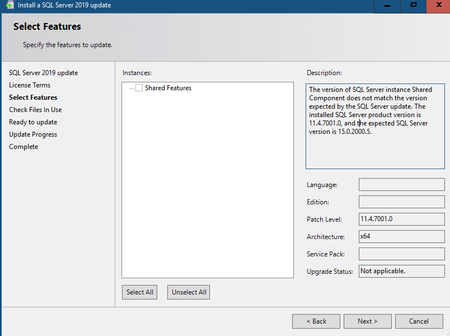
Hello, Does anyone know how to patch/update the SQL Server 2019 LocalDB utilised by Microsoft AD Connect / Entra Connect? We have identified vulnerabilities on the version of SQL 2019 LocalDB used by Microsoft Entra Connect. The trace file in C:\ProgramData\AADConnect shows the following version: Package=Microsoft SQL Server 2019 LocalDB , version=15.0.4138.2 (CU11) We are attempting to update this local database to version 15.0.4415.2 (CU30), using the following package: https://www.microsoft.com/en-us/download/details.aspx?id=100809 However, when we run the package it cannot identify the SQL Server 2019 LocalDB server instance. There is a message stating: "The version of SQL Server instance Shared Component does not match the version expected by the SQL Server update. The installed SQL Server product version is 11.4.7001.0, and the expected SQL Server version is 15.0.2000.5" The version it references is SQL Server 2012, however the logs show the database as SQL 2019 and the database instance name within the Entra Connect / AD Connect agent includes 2019. I have attempted leaving the service running, manually starting the database instance, running as admin, and running the package via command prompt targeting the instance. Any insight would be greatly appreciated. Many thanks.1KViews0likes1Comment
Enable MFA method
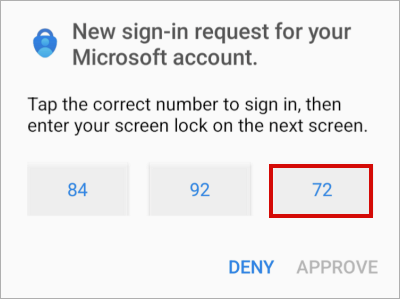
Dear, Currently in our company, the authentication methods policy > Microsoft Authenticator defaults to “any”. Either “passwordless” or “Push”. It is possible to enable the following authentication method through a conditional access policy, currently it is enabled for some users. Desired authentication method: The current method is as follows: Can it be enabled for professional accounts or is it only focused on personal accounts? Thanks in advance.407Views0likes1Comment
User and Permissions Management Issues in Microsoft Entra ID (Assigned Roles)
Hello everyone, I’m encountering some challenges with user and permission management in Microsoft Entra ID. Here are the main issues I'm facing: Revoking Local Administrator Permissions: After removing a user from the Local Device Administrator group in Microsoft Entra, the device continues to recognize the user as an administrator, even after multiple synchronization attempts. What’s the recommended procedure to force a permissions update on the associated devices? Device Join Issue via PowerShell: I'm trying to join a device to Microsoft Entra ID using PowerShell with the command dsregcmd /join to force a policy update, but I'm encountering the following error: Error 0x80041326: "Failed to schedule Join Task. Error: 0x80041326." Does anyone know how to resolve this issue or have suggestions for an alternative approach to join the device or enforce the policy? I’ve checked permissions and task scheduling services, but the problem persists. Has anyone experienced similar issues or have suggestions on how to address these challenges? Any advice would be greatly appreciated! Thanks so much in advance!9.4KViews0likes1CommentNo Application acces policy found fpr graph API in MS Teams Virtual Integration
Hello , I’ve encountered an issue while integrating Microsoft Teams Virtual Events using Microsoft Graph API and would appreciate any guidance on how to resolve it. Here’s the setup: I have registered an application in Microsoft Entra ID. The app is granted application-level permissions: 1. VirtualEvent.Read.All 2. VirtualEventRegistration-Anon.ReadWrite.All I’ve set up an OAuth flow for users to authenticate with their Microsoft accounts and approve these permissions. After authentication, the user is redirected back to our app, where we fetch an application access token. The issue: We receive an access token successfully. The Entra ID dashboard shows that the app has the required permissions. However, when using the Graph API to access virtual events (Teams webinars), I receive the following error: GET: https://graph.microsoft.com/beta/solutions/virtualEvents/webinars/:id Response: { "error": { "code": "General", "message": "No application access policy found for the app (707b5896-7828-4010-834e-74d3201a3137) on the user (7f27a9fb-af1a-4d36-a102-3a9591e6aaf9).", "innerError": { "request-id": "00af9b4e-043c-4f93-8a02-a5ee14e7d29c", "date": "2024-10-02T09:10:26", "client-request-id": "00af9b4e-043c-4f93-8a02-a5ee14e7d29c" } } } My question: What does this error mean? Could this issue be related to any additional application access policies that need to be set up for Microsoft Teams or Exchange? How should I go about troubleshooting or resolving this issue? Any help or pointers would be much appreciated! Thank you!365Views0likes0CommentsNo Application Access Policy Found for Graph API in MS Teams Virtual Events Integration
Hello Microsoft Community, I’ve encountered an issue while integrating Microsoft Teams Virtual Events using Microsoft Graph API and would appreciate any guidance on how to resolve it. Here’s the setup: I have registered an application in Microsoft Entra ID. The app is set up with application-level permissions: VirtualEvent.Read.All VirtualEventRegistration-Anon.ReadWrite.All I’ve configured an OAuth flow for users to authenticate with their Microsoft accounts and grant these permissions. After authentication, the user is redirected to our app, where we successfully fetch an application access token. The app is registered as a multi-tenant application. The issue: We are using application permissions and receiving an access token correctly. The Entra ID dashboard shows that the app has been granted the required permissions. However, when using the Graph API to access virtual events (Teams webinars), I get the following error: bash Copy code GET: https://graph.microsoft.com/beta/solutions/virtualEvents/webinars/ Additional Details: The app is meant to access data related to Microsoft 365 services (especially Teams). We are using application permissions and not delegated permissions. The app needs to work across multiple tenants. My question: Do I need to configure additional application access policies for Microsoft Teams or Exchange Online to allow this app to access Teams-related data? Should I use Exchange PowerShell to create this policy, given the data is related to Microsoft 365 services (like Teams webinars)? Is there anything else I should verify for multi-tenant application permissions? Any insights or troubleshooting guidance would be much appreciated! Thank you!321Views0likes0Comments