ama
48 TopicsAnnouncing a Serverless and Azure Functions AMA!
We are very excited to announce a Serverless & Azure Functions AMA on October 29! This is the third in a series of AMAs around Azure, all held here in the Tech Community in this discussion space, coinciding with the Microsoft Azure Hack for Social Justice event. Upcoming dates/events are below: November 5 - App Services & Static Web Apps The AMA will take place on Thursday, October 29, 2020 from 9:00 a.m. to 10:00 a.m. PT in the Azure AMA space. Add the event to your calendar and view in your time zone here. An AMA is a live online event similar to a “YamJam” on Yammer or an “Ask Me Anything” on Reddit. This AMA gives you the opportunity to connect with cloud solution architects who will be on hand to answer your questions and listen to feedback.6.5KViews6likes8Comments6/8 - Low Code Application Development AMA announcement!
We are very excited to announce a Low Code Application Development AMA! The AMA will take place on Tuesday, June 8, 2021 from 9:00 a.m. to 10:00 a.m. PT in the Azure AMA space. Add the event to your calendar and view in your time zone here. An AMA is a live text-based online event similar to a “YamJam” on Yammer or an “Ask Me Anything” on Reddit. This AMA gives you the opportunity to connect with Microsoft product experts who will be on hand to answer your questions and listen to feedback. The space will be open 24 hours before the event, so feel free to post your questions anytime beforehand during that period if it fits your schedule or time zone better.4.9KViews4likes1CommentWelcome to the Azure Application Services AMA!
Welcome to the Azure Application Services Ask Microsoft Anything (AMA)! This live hour gives you the opportunity to ask questions and provide feedback. Please introduce yourself by replying to this thread. Post your questions in a new thread within the Azure AMA space, by clicking on, "Start a New Conversation" at the top of the page.3KViews2likes4CommentsThat's a wrap! 6/8 Low Code Application Development AMA
Thank you for joining us and voicing your questions and feedback during this fun and action-packed hour. We'll attach a summary document of what was covered as soon as it is available. See you next time - we have an Azure Application Services AMA in this space on 6/10 so hope to see you there!694Views2likes0Comments6/10 - Azure Application Services AMA!
We are very excited to announce an Azure Application Services AMA! The AMA will take place on Thursday, June 10, 2021 from 9:00 a.m. to 10:00 a.m. PT in the Azure AMA space. Add the event to your calendar and view in your time zone here. An AMA is a live text-based online event similar to a “YamJam” on Yammer or an “Ask Me Anything” on Reddit. This AMA gives you the opportunity to connect with Microsoft product experts who will be on hand to answer your questions and listen to feedback. The space will be open 24 hours before the event, so feel free to post your questions anytime beforehand during that period if it fits your schedule or time zone better.5.6KViews2likes7Comments
Using Claude Opus 4.6 in Github Copilot
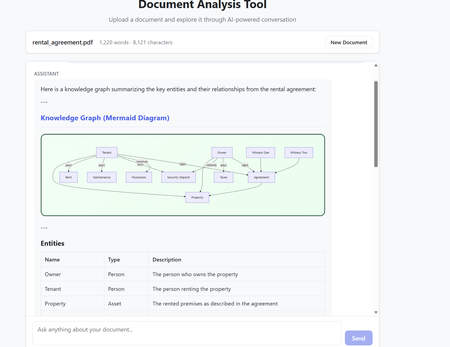
The model selection in Github Copilot got richer with the addition of Claude Opus 4.6. The Model capability along with the addition of agents makes it a powerful combination to build complex code which requires many hours or days. Claude Opus 4.6 is better in coding skills as compared to the previous models. It also plans more carefully, performs more reliably in larger codebases, and has better code review as well as debugging skills to catch its own mistakes. In my current experiment, I used it multiple times to review its own code and while it took time (understandably) to get familiar with the code base. After that initial effort on the evaluation, the suggestions for fixes/improvements were on dot and often even better than a human reviewer (me in this case). Opus 4.6 also can run agentic tasks for longer. Following the release of the model, Anthropic published a paper on using Opus 4.6 to build C Compiler with a team of parallel Claudes. The compiler was built by 16 agents from scratch to get a Rust-based C compiler which was capable of compiling the Linux kernel. This is an interesting paper (shared in resources). Using Claude Opus 4.6 in Agentic Mode In less than an hour, I built a document analyzer to analyse the content, extract insights, build knowledge graphs and summarize elements. The code was built using Claude Opus 4.6 alongwith Claude Agents in Visual Studio Code. The initial prompt built the code and in the next hour after a few more interactions - unit tests were added and the UI worked as expected specifically for rendering the graphs. In the second phase, I converted the capabilities into Agents with tools and skills making the codebase Agentic. All this was done in Visual Studio using Github Copilot. Adding the complexity of Agentic execution was staggered across phases but the coding agent may well have built it right in the first instance with detailed specifications and instructions. The Agent could also fix UI requirements and problems in graph rendering from the snapshot shared in the chat window. That along with the logging was sufficient to quickly get to an application which worked as expected. The final graph rendering used mermaid diagrams in javascript while the backend was in python. Knowledge Graph rendering using mermaid What are Agents? Agents perform complete coding tasks end-to-end. They understand your project, make changes across multiple files, run commands, and adapt based on the results. An agent runs in the local, background, cloud, or third-party mode. An agent takes a high-level task and it breaks the task down into steps. It executes those steps with tools and self-corrects on errors. Multiple agent sessions can run in parallel, each focused on a different task. On creating a new agent session, the previous session remains active and can be accessed between tasks via the agent sessions list. The Chat window in Visual Studio Code allows for changing the model and also the Agent Mode. The Agent mode can be local for Local Agents or run in the background or on Cloud. Additionally, Third Party Agents are also available for coding. In the snapshot below, the Claude Agent (Third Party Agent) is used. In this project Azure GPT 4.1 was used in the code to perform the document analysis but this can be changed to any model of choice. I also used the ‘Ask before edits” mode to track the command runs. Alternatively, the other option was to let the Agent run autonomously. Visual Studio Code - Models and Agent Mode The local Agentic mode was also a good option and I used it a few times specifically as it is not constrained by network connectivity. But when the local compute does not suffice, the cloud mode is the next best option. Background agents are CLI-based agents, such as Copilot CLI running in the background on your local machine. They operate autonomously in the editor and Background agents use Git worktrees to work in an isolated environment from your main workspace to prevent conflicts with your active work. How to get the model? The model is accessible to GitHub Copilot Pro/Pro+, business, and enterprise users. Opus 4.6 operates more reliably in large codebases, offering improved code review and debugging skills. The Fast mode for Claude Opus 4.6, rolled out in research preview, provides a high-speed option with output token delivery speeds up to 2.5 times faster while maintaining comparable capabilities to Opus 4.6. Resources https://www.anthropic.com/news/claude-opus-4-6 https://www.anthropic.com/engineering/building-c-compiler https://github.blog/changelog/2026-02-05-claude-opus-4-6-is-now-generally-available-for-github-copilot https://code.visualstudio.com/docs/copilot/agents/overview5.3KViews1like2CommentsAnnouncing an Azure App Services & Static Web Apps AMA!
We are very excited to announce an Azure App Services & Static Web Apps AMA on November 5! This is the fourth in a series of AMAs around Azure, all held here in the Tech Community in this discussion space, coinciding with the Microsoft Azure Hack for Social Justice event. The AMA will take place on Thursday, November 5, 2020 from 9:00 a.m. to 10:00 a.m. PT in the Azure AMA space. Add the event to your calendar and view in your time zone here. An AMA is a live online event similar to a “YamJam” on Yammer or an “Ask Me Anything” on Reddit. This AMA gives you the opportunity to connect with cloud solution architects who will be on hand to answer your questions and listen to feedback.1.8KViews1like0Comments
Monte Carlo Simulations using Durable Azure Functions
Apologies, this question is rather general as I still need to get around prototyping this, but you experts may have a good feel for whether it's feasible or not, and where issues may crop up 🙂 Azure Batch is typically mentioned when searching around for running Monte Carlo simulations in Azure...but in terms of PaaS, would using the Fan Out pattern in Azure Durable Functions be a feasible approach?3.7KViews1like4Comments
Execute Azure Function using ADF activity and AAD Login
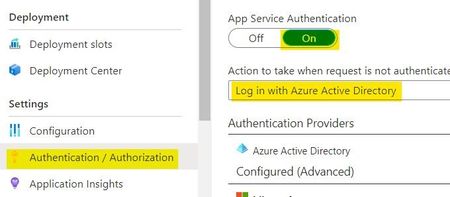
We are trying to execute an Azure Function (HTTP type) using Azure Data Factory (ADF). The Function App has the App Service Authentication set as "On" and the action to take when request is not authenticated is set as "Log in with Azure Active Directory". If we have this configuration in the Function App, is it possible to execute the Azure Function from ADF? We configured the Azure Function and Active Directory App by following this documentation: https://urldefense.proofpoint.com/v2/url?u=https-3A__nam06.safelinks.protection.outlook.com_-3Furl-3Dhttps-253A-252F-252Fdocs.microsoft.com-252Fen-2Dus-252Fazure-252Fapp-2Dservice-252Fconfigure-2Dauthentication-2Dprovider-2Daad-26data-3D04-257C01-257CFelipe.Rocha-2540microsoft.com-257C3e259ade08c043f75b0908d87b8bce47-257C72f988bf86f141af91ab2d7cd011db47-257C1-257C0-257C637395187680813277-257CUnknown-257CTWFpbGZsb3d8eyJWIjoiMC4wLjAwMDAiLCJQIjoiV2luMzIiLCJBTiI6Ik1haWwiLCJXVCI6Mn0-253D-257C1000-26sdata-3DaLtqA0RLT-252BnOQgzRvpO3-252FBHymas6xDVnCjtNg-252BLTPn8-253D-26reserved-3D0&d=DwMFAw&c=eIGjsITfXP_y-DLLX0uEHXJvU8nOHrUK8IrwNKOtkVU&r=6PBUmFEROSKfIVB29NY06e8Dp-dqEFIr6V8Pn_TTogM&m=2xNcTOHFliLYWEEUfrAbIYlhonao8kIgcQ1S3dP6kyI&s=87sJjlggshqh-zIdTp1NjIVjCOkX3R0es972xbuL3A8&e= We aren’t using a web app and maybe that’s the confusing part when trying to follow the steps from the documentation. ADF is the one that needs to authenticate when trying to access/execute the function. Do you know anything about this type of configuration?11KViews1like12Comments