ai
8 TopicsSecure Sensitive AI on Azure Confidential Computing with NVIDIA and Protopia
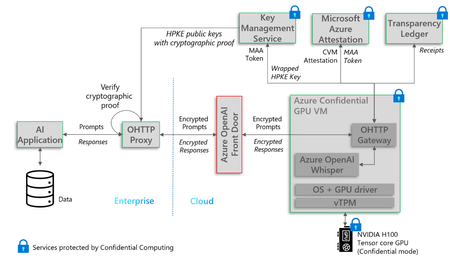
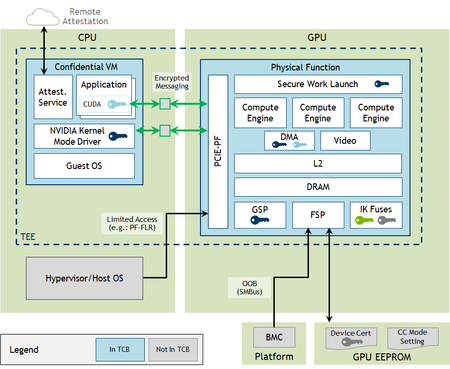
Your most valuable AI use cases often involve your most sensitive information: customer records, claims, clinical notes, and transaction histories. Dedicated infrastructure can offer control, but it can also limit access to flexible cloud capacity. The opportunity is to expand where that work can run without treating data protection as an afterthought. For a team exploring claims review or clinical-note analysis, the question is not simply whether a model can run in the cloud. It is where sensitive information could be exposed along the journey from application to model and back. Enterprises want to run their highest-value inference on the same scalable cloud they already run everything else on. The catch is that the highest-value inference is usually the most sensitive: customer records, claims and underwriting packets, clinical notes, transaction histories. Data policy keeps that work off shared, multi-tenant capacity and pins it to dedicated, single-tenant deployments. That is the isolation tax: the most valuable, most token-heavy workloads are exactly the ones kept off the infrastructure built to run them, so dedicated capacity sits underused and costs more than it should. Microsoft Foundry already gives this work an enterprise platform: a model catalog that now includes NVIDIA Nemotron, managed and serverless endpoints, and the governance regulated industries require. What has been missing is a way to run sensitive agentic workflows on that shared capacity while reducing the risk of data exposure. The trust dilemma on public cloud Azure Confidential Computing (ACC) addresses a fundamental trust challenge for AI workloads in multi-tenant cloud environments: the model, infrastructure, and data may each be owned or controlled by different parties. Model owners need to protect proprietary weights and intellectual property, and data owners need safeguards for sensitive information throughout processing. ACC provides the trusted foundation for addressing these requirements by helping protect models and their execution from unauthorized host access while enabling additional safeguards across the inference data path. The reference architecture brings together Azure Confidential Computing with NVIDIA H100 GPU capabilities and Protopia AI’s Stained Glass Transform to provide layered protection for sensitive AI workloads running at Azure scale. Confidential Computing: securing the model with NVIDIA Confidential Computing is designed to protect data and AI models while they are in use inside the enclave. The NVIDIA Hopper architecture introduced GPU-based confidential computing, extending the hardware trusted execution environment from the CPU to the GPU so that model weights, activations, and execution state remain within an attested boundary and are designed to be inaccessible to the host operating system, hypervisor, and infrastructure operator. NVIDIA device attestation provides cryptographic evidence about the GPU’s identity and security state before keys are released. For a model owner, these controls are designed to restrict access to model IP while the model runs. Enterprises should not have to choose between protecting their models and running them where compute is available and most convenient. NVIDIA has designed Confidential Computing to keep a model’s weights and execution within the GPU’s trusted execution environment, helping proprietary models run on shared infrastructure while limiting access to their IP. Combined with Protopia’s inference data protection on Azure, customers have a path designed to support sensitive AI workloads in the cloud they already trust. Bring confidential inference to Azure Azure brings confidential inference to production scale, surrounding the confidential GPU with the platform an enterprise needs to operate AI. The Azure NCCads H100 v5 series combines 4th-generation AMD EPYC confidential VMs with NVIDIA H100 Tensor Core GPUs to support confidential AI workloads. The trusted execution environment spans the AMD SEV-SNP CPU and the attached H100 in confidential mode, isolating GPU memory and the channel between CPU and GPU. When enabled and properly configured, Confidential Computing is designed to help limit access to unencrypted customer data within that boundary, including the cloud operator. Azure provides tools to help verify and operate the boundary: Microsoft Azure Attestation (MAA) can assess the confidential VM, while Azure Key Vault Managed HSM can be configured to release decryption keys after successful attestation. "Azure was the first cloud to bring Confidential Computing to NVIDIA H100 GPUs, so customers can protect their data in use, even from the cloud operator, while getting the performance they need for AI. Paired with Protopia’s Stained Glass Transform, this reference architecture protects data across the full inference path, helping regulated organizations bring their most sensitive agentic workloads to Azure.“ - Vikas Bhatia, Head of Product, Azure Confidential Computing, Microsoft Protecting the inference data path Confidential execution does not, by itself, cover every component of a managed inference service. Gateways, logs, traces, caches, and scheduler metadata can sit outside the trusted execution environment. Protopia AI’s Stained Glass Transform (SGT) converts sensitive inputs into protected representations inside the data owner’s trust boundary. The architecture is designed for downstream components to receive those representations, not the original inputs. An SGT-enabled model reasons over them directly, without a host-side decoder. Security teams should inspect the serving layer to verify that this pattern is implemented as intended. This distinction matters when reviewing a service: an attested GPU does not establish how a gateway or cache handles requests. Start with a map of the data flow, then check the controls at each boundary. “Sensitive AI should not automatically mean having to operate every part of the infrastructure yourself. Applying Stained Glass Transform inside the data owner's trust boundary, or within confidential execution on Azure, offers a way to securely deploy to the cloud without exposing sensitive data to the model hosting environment (other tenants or operator), and retaining the data owner's control over their sensitive enterprise data.” - Eiman Ebrahimi, Co-Founder and CEO, Protopia AI From customer boundary to confidential inference At the data owner’s trust boundary, the Stained Glass Proxy, an OpenAI-compatible sidecar, applies the Stained Glass Transform to the prompt and its context, with no changes to the upstream stack. In transit to Azure, the architecture sends the protected representation beyond the customer’s trust boundary rather than the original plaintext input, reducing the likelihood that sensitive plaintext is captured in downstream logs, caches, or interception points. In-transit encryption is used as standard. On Azure NCCads H100 v5 confidential VMs, the request reaches an SGT-enabled model endpoint. Configure and verify confidential execution, attestation, and key-release policies for the chosen serving stack. Across the serving path, verify that components outside the execution boundary handle protected representations rather than original sensitive inputs, including logs, caches, and traces. On return, the client receives a result intended to be interpretable within the data owner’s environment. Expand your options for sensitive AI For enterprises, the value comes down to expanding where sensitive AI workloads can run while maintaining strong protections for models and data. Azure Confidential Computing provides a trusted foundation for running sensitive AI workloads on Azure, helping protect models and data while in use and enabling organizations to take advantage of Azure’s scalable GPU infrastructure. Depending on the workload and deployment configuration, this approach may provide greater infrastructure flexibility and utilization while helping organizations manage performance, model quality, and cost. Learn more Azure Confidential GPU OptionsPreview of multiparty analytics with Azure Confidential Clean Rooms
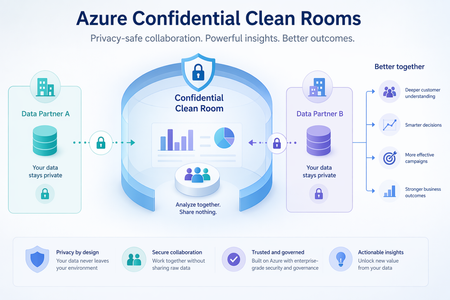
Today, we are excited to announce the preview of multiparty analytics feature of Azure Confidential Clean Rooms, a fully managed service that allows customers and their partners to securely analyze privacy-sensitive datasets from multiple parties. It uses confidential compute enabled Apache Spark-based big-data analytics (Spark SQL) which helps protect their raw data from other collaborators and from the Azure operator by performing computations in a Trusted Execution Environment (TEE). Privacy-sensitive datasets include personally identifiable information (PII), protected health information (PHI) and cryptographic secrets. Organizations across industries are increasingly looking to supplement their data with data from business partners, to build a complete view of their business. For example, brands, publishers, and their partners need to collaborate using datasets containing Intellectual Property (IP) to improve the relevance of their campaigns. Confidential data clean rooms help solve this challenge by enabling organizations to share and analyze granular datasets in a secure environment that helps prevent raw data exfiltration—protecting intellectual property, preserving customer privacy, and addressing concerns around regulatory compliance. You can sign up for the preview here Key Features Fully Managed: Azure takes care of the infrastructure provisioning and scaling with no user intervention. This significantly reduces your onboarding effort allowing you to focus on the queries and insights, not on infra management. Confidential Spark SQL: Spark SQL allows you to query large datasets and run complex queries in a distributed computing environment. In the confidential computing enabled version, the Spark driver and executors are fully attested policy-governed enclaves running as virtual nodes on confidential Azure Container Instances (ACI) which helps prevent exfiltration of collaborators’ data during query execution. Governance: Helps manage membership to cleanrooms, enables and verifies approval for queries from relevant collaborators before executing them and verifies consent to access sensitive collaborator data. It also helps generate tamper-resistant audit trails containing salient clean room events. This is made possible with the help of an implementation of the Confidential Consortium Framework (CCF). Telemetry: Throughout every clean-room run, detailed logs are streamed out in real time to monitor performance, troubleshoot issues, and keep the analytics healthy — all without ever exposing the collaborators’ data at any time. Verifiable trust: Cryptographic remote attestation viz. full attestation based on confidential hardware reports allows independent verification of the TEE along with along with all components that are part of it, without just trusting the cloud provider, before sensitive data and decryption keys are made available to the TEE Open-source containers: All Microsoft provided cleanroom containers and sidecars are open-sourced here and can be verified for provenance and integrity guarantees using GitHub artifact attestation Use Cases Multi-party confidential big-data analytics unlocks value in scenarios where data sensitivity, regulatory pressure, or competitive concerns previously blocked collaboration. These are some early scenarios that can benefit from this. Media & Advertising Collaboration of advertiser CRM data with publisher data for audience targeting and segment activation. Collaboration of audience data with measurement partners for measurement and attribution. Banking & Finance Collaboration between banks and insurance firms to upsell relevant products to existing bank customers without sharing raw data from either side Collaboration with retailers to generate customized offers for bank customers, without exposing either party’s underlying data. Government & Public Sector Secure collaboration of data across government departments to deliver better citizen welfare outcomes. Secure collaboration between government and private enterprises on shared-interest workloads such as traffic monitoring and weather systems. Healthcare Enable healthcare firms — including biopharma organizations — to combine their data with third-party institutions to accelerate clinical development, like identifying eligible participants for a clinical trial, without exposing underlying patient data. Combine patient datasets across hospitals to study disease patterns or outcomes without exposing sensitive protected health information. "A higher standard for protecting user privacy and trust, the phase-out of third-party cookies, and global regulations demand more sophisticated data collaboration tools to support advertising marketplaces. Azure Confidential Cleanrooms (ACCR) provides a secure, feature-rich, and flexible foundation to implement privacy-preserving functions and enable insights without sharing privacy-sensitive data outside of organization boundaries. Built on the Azure Confidential Compute (ACC) platform and offering cohesion with Azure's diverse set of services, ACCR offers the attestation, audit, fine-grained access control, and verifiable trust tools required for secure and privacy-safe data collaboration in today's world." — Andrei Mackenzie, Engineering Manager, Microsoft AI "Azure Confidential Clean Rooms enabled our team to evaluate how clean room capabilities can support secure, governed data collaboration at scale. Through the Proof-of-Concept (PoC), we explored how privacy-preserving workflows, trusted access controls, and scalable compute can create a stronger foundation for responsibly leveraging first-party data. This helps reduce operational friction while supporting business growth, improving customer engagement, and enabling more relevant customer experiences." — Nic Dregne, Director, Microsoft AdTech Engineering Beyond Spark SQL Realizing other multi-party scenarios like custom analytics, ML training and inferencing on Azure Confidential Clean Rooms is in our roadmap. If you have such a scenario to be realized, you can fill in and submit the preview signup form with the details of your scenario and we’ll get back to you. Learn More · Signup for the preview of Azure Confidential Clean Rooms for Analytics · Confidential Consortium Framework (CCF) · Virtual Nodes on Azure Container InstancesPreview of Azure Confidential Clean Rooms for secure multiparty data collaboration
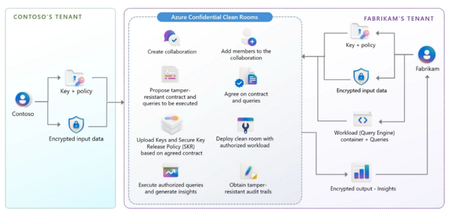
Today, we are excited to announce the preview of Azure Confidential Clean Rooms, a cutting-edge solution designed for organizations that require secure multi-party data collaboration. With Confidential Clean Rooms, you can share privacy sensitive data such as personally identifiable information (PII), protected health information (PHI) and cryptographic secrets confidently, thanks to robust trust guarantees that help ensure that your data remains protected throughout its lifecycle from other collaborators and from Azure operators. This secure data sharing is powered by confidential computing, which helps protect data in-use by performing computations in hardware-based, attested Trusted Execution Environments (TEEs). These TEEs help prevent unauthorized access or modification of application code and data during use. Organizations across industries need to perform multi-party data collaboration with business partners, outside organizations, and even within company silos to improve business outcomes and bolster innovation. Confidential Clean Rooms help derive true value from such collaborations by enabling granular and private data to be shared while providing safeguards on data exfiltration hence protecting the intellectual property of the organization and the privacy of its customers and addressing concerns around regulatory compliance. Whether you’re a data scientist looking to securely fine-tune your ML model with sensitive data from other organizations, or a data analyst wanting to perform secure analytics on joint data with your partner organizations, Confidential Clean Rooms will help you achieve the desired results. You can sign up for the preview here Key Features Secure Collaboration and Governance: Allows collaborators to create tamper-resistant contracts that contain the constraints which will be enforced by the clean room. Governance verifies validity of those constraints before allowing data to be released into clean rooms and helps generate tamper-resistant audit trails. This is made possible with the help of an implementation of the Confidential Consortium Framework CCF). Enhanced Data Privacy: Provides a sandboxed execution environment which allows only authorized workloads to execute and prevents any unauthorized network or IO operations from within the clean room. This helps keep your data secure throughout the workload execution. This is possible with the help of deploying clean rooms in confidential containers on Azure Container Instances (ACI) which provides container group level integrity with runtime enforcement of the same. Verifiable trust at each step with the help of cryptographic remote attestation forms the cornerstone of Confidential Clean Rooms. Salient Use Cases Azure Confidential Clean Rooms caters to use cases spanning multiple industries. Healthcare: For fine-tuning and inferencing with predictive healthcare machine-learning (ML) models and for joint data analysis for advancing pharmaceutical research. This can help protect the privacy of patients and intellectual property of organizations while demonstrating regulatory compliance. Finance: For financial fraud detection through analysis of combined data across banks and other financial institutions and for providing personalized offers to customers through secure analysis of transaction data and purchase data in retail outlets Media and Advertising: For improving marketing campaign effectiveness by combining data across advertisers, ad-techs, publishers and measurement firms for audience targeting and attribution and measurement Retail: For enhanced personalized marketing and improved inventory and supply chain management Government and Public Sector Organizations: For analysis of high security data across multiple government and public sector organizations to streamline benefits for citizens Customer Testimonials We are already partnering with several organizations to accelerate their secure multi-party collaboration journey with confidential clean rooms. Confidential computing in healthcare allows secure data processing within isolated environments, called 'clean rooms', protecting sensitive patient data during AI model development, validation and deployment. Apollo Hospitals uses Azure Confidential Clean Rooms to enhance data privacy, encrypt data, and securely train AI models. The benefits include secure collaboration, anonymized patient privacy, intellectual property protection, and enhanced cybersecurity. Apollo’s pilot with Confidential Clean Rooms showed promising results, and future efforts aim to scale secure AI solutions, ensuring patient safety, privacy, and compliance as the healthcare industry advances technologically. - Dr. Sujoy Kar, Chief Medical Information Officer and Vice President, Apollo Hospitals Azure Confidential Clean Rooms is a game changer to make collaborations on sensitive data both seamless and secure. When combined with Sarus, any data processing job is automatically analyzed using the most advanced privacy technology. Once validated, they are processed securely in Confidential Clean Rooms protecting both the privacy of data and the confidentiality of the analysis itself. This eliminates administrative overheads and makes it very easy to build advanced data processing pipelines. With our partner EY, we're already leveraging it to help international banks improve AML practices without compromising privacy. - Maxime Agostini, CEO & Cofounder of Sarus Read here to learn more about how Sarus is using Confidential Clean Rooms. As co-leaders on this Data Consortium Pilot, we are thrilled to be working with industry partners, Sarus and Microsoft, to drive this initiative forward. By combining Sarus’ privacy preserving technologies and Microsoft’s Azure Confidential Clean Rooms, not only does this project push the edge of technology innovation, but it strives to address a pivotal issue that affects us as Canadians. Through this work, we aim to help financial services organizations and regulators navigate the complexities of private and personal data sharing, without compromising the integrity of the data, and adhering to all relevant privacy regulations. For the purposes of this pilot, we are focusing our efforts on how this technology can play a pivotal role in helping better detect cases of human trafficking, however, we recognize that it can be used to help organizations for multiple other use cases, and cross industries, including health care and government & public sector. - Jessica Hansen, Privacy Partner EY Canada, and Dana Ohab, AI & Data Partner EY Canada Retrieval-Augmented Generation (RAG) applications accessing Large Language Models (LLMs) are common in private AI workflows, but managing secure access to sensitive data can be complex. SafeLiShare’s integration of its LLM Secure Data Proxy (SDP) with Azure Confidential Clean Rooms (ACCR) simplifies access control and token management. The joint solution helps ensure runtime security through advanced Public Key Infrastructure (PKI) and centralized policy management in Trusted Execution Environments (TEEs), enforcing strict access policies and admission controls to guarantee authorized access to sensitive data. This integration establishes trust bindings between the Identity Provider (IDP), applications, and data, safeguarding each layer without compromise. It also enables secure creation, sharing, and management of applications and data assets, ensuring compliance in high-performance AI environments. - Cynthia Hsieh, VP of Marketing, SafeLiShare Read here to learn more about how SafeLiShare is using Confidential Clean Rooms. Learn More Signup for the preview of Azure Confidential Clean Rooms Confidential Consortium Framework (CCF) Confidential containers on Azure Container Instances (ACI)General Availability: Azure confidential VMs with NVIDIA H100 Tensor Core GPUs
Today, we are announcing the general availability of Azure confidential virtual machines (VMs) with NVIDIA H100 Tensor core GPUs. These VMs combine the hardware-based data-in-use protection capabilities of 4 th generation AMD EPYC TM processor based confidential VMs with the performance of NVIDIA H100 Tensor Core GPUs.Unlocking the potential of Privacy-Preserving AI with Azure Confidential Computing on NVIDIA H100
Learn how Azure and NVIDIA enable high-performance privacy-preserving machine learning scenarios by augmenting Azure Confidential VMs with confidential computing enabled NVIDIA H100 GPUs21KViews0likes0CommentsFrictionless Collaborative Analytics and AI/ML on Confidential Data
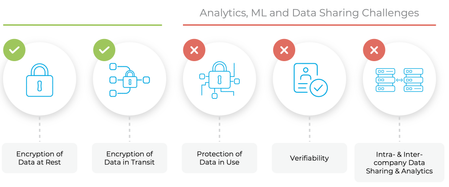
Secure enclaves protect data from attack and unauthorized access, but confidential computing presents significant challenges and obstacles to performing analytics and machine learning at scale across teams and organizational boundaries. In this article, we'll explore the Opaque platform and describe how it can enable multiple parties to easily collaborate and analyze shared data while keeping it fully confidential.5.4KViews2likes0Comments