ai
1392 TopicsHow multiparty private offers are unlocking new channel growth opportunities in Australia
As Microsoft Marketplace continues to evolve as a strategic go-to-market platform, the introduction of multiparty private offers (MPOs) in Australia is creating new opportunities for software companies, resellers, distributors, managed service providers, and systems integrators to collaborate more effectively. This new capability enables multiple partners to participate in a single Microsoft Marketplace transaction, helping simplify procurement, streamline commercial workflows, and strengthen partner-to-partner collaboration. By bringing software solutions, implementation expertise, managed services, and Microsoft cloud investments together through one purchasing experience, organizations can focus on delivering customer outcomes rather than managing transactional complexity. In this article, explore how multiparty private offers support channel-led growth, when to use MPOs versus resale-enabled offers, how Azure benefit eligible solutions can enhance customer conversations, and the foundational steps partners should take to build a scalable Marketplace strategy. Read the full article to learn how Australian partners can leverage Microsoft Marketplace to accelerate growth, expand customer reach, and create repeatable go-to-market motions powered by collaborative selling. Read the blog Multiparty private offers are creating new opportunities for channel-led growth in AustraliaMultiparty private offers are creating new opportunities for channel-led growth in Australia
The launch of multiparty private offers in Australia marks more than the availability of a new Microsoft Marketplace capability. It signals a meaningful shift in how software companies, channel partners, distributors, and Microsoft can collaborate to deliver customer outcomes through a single commercial experience. For years, many partner-led software transactions followed a fragmented model. A software company sold the application. A reseller owned the customer relationship. A services partner supported deployment or implementation. The customer then had to navigate separate commercial relationships, invoices, and procurement steps. Each participant added value, but the commercial process often created unnecessary complexity. Multiparty private offers help address that challenge by bringing software companies and channel partners into one Marketplace transaction. The model gives partners a more structured way to collaborate on customer opportunities, align commercial roles, and simplify procurement through Microsoft Marketplace. For partners developing a Marketplace strategy in Australia, this capability creates a practical path to combine software, customer expertise, implementation knowledge, and Microsoft cloud investments into a more cohesive go-to-market motion. Microsoft Marketplace is becoming a go-to-market platform Organizations are modernizing infrastructure, strengthening security, and improving data and analytics capabilities while looking for simpler ways to procure and deploy cloud solutions. Software remains a critical part of these initiatives, but customers often need more than a single application. They need software, implementation expertise, managed services, and customer-specific customization to come together in a practical solution. Microsoft Marketplace provides a framework for bringing those elements together. Software companies can publish applications through Marketplace while channel partners contribute implementation expertise, managed services, and customization for regulatory or proprietary needs. Microsoft cloud services provide the platform foundation, and Marketplace creates the commercial pathway that supports the software solution. This approach allows partners to move beyond individual product conversations and focus on solving broader business challenges. Instead of discussing a single application, partners can bring together software from relevant software companies with Azure, security, data and analytics capabilities, implementation support, and customer-specific customization. The result is a larger customer conversation centered on outcomes rather than individual technologies. Multiparty private offers bring multiple partners together in one transaction Multiparty private offers are designed to support collaborative selling through Microsoft Marketplace. The workflow begins when a channel partner identifies a customer opportunity. That opportunity may come from a software renewal, an Azure modernization project, a security initiative, or a broader business transformation need. After the opportunity is qualified, the channel partner engages the software company. The software company creates a multiparty private offer in Partner Center and extends it to the channel partner. The channel partner can then customize the offer, add margin, and present the final customer-ready offer through Marketplace. Once the customer accepts and purchases the offer, Microsoft manages invoicing and payment processing. Microsoft collects payment from the customer and distributes funds according to the transaction structure. This approach reduces operational complexity while preserving the commercial role of both the software company and the channel partner. For customers, the value is a more streamlined purchasing experience. They can acquire a partner-led software solution through a single Marketplace transaction instead of coordinating separate commercial relationships across multiple providers. For partners, the value is a clearer structure for collaboration, margin, customer engagement, and participation in Microsoft Marketplace-led sales motions. Channel-led growth is central to Marketplace success Successful software adoption rarely happens without partner expertise. Customers often depend on trusted advisors, managed service providers, systems integrators, distributors, and resellers to evaluate technology options, design solutions, manage implementation, and optimize long-term value. Multiparty private offers recognize that reality by placing the channel partner directly inside the Marketplace transaction. Rather than operating outside the software sale, the channel partner can participate in the commercial workflow and contribute differentiated customer value. For software companies, this model can extend reach through the Microsoft partner ecosystem. Channel partners often have established customer relationships, industry expertise, and delivery capabilities that help software companies enter or expand within target markets. For channel partners, multiparty private offers create a more direct way to participate in Marketplace software transactions. Partners can strengthen customer relationships, collaborate more closely with software companies, and engage Microsoft sellers around opportunities that align with eligible Marketplace offers. The result is stronger commercial alignment across the organizations responsible for delivering customer outcomes. Partners should choose the Marketplace offer model that fits the sales motion Resale enabled offers and multiparty private offers both support channel-led Marketplace selling, but they serve different collaboration patterns. Resale enabled offers are useful when a software company wants to delegate more of the transaction workflow to a trusted channel partner or distributor. In that model, the reseller assumes greater responsibility for creating the offer, managing the customer transaction, and handling partner-to-partner financial arrangements outside Microsoft’s direct view. Multiparty private offers are better suited to collaborative selling scenarios where both the software company and the channel partner remain actively involved in shaping the customer opportunity. The software company creates the offer and sends it to the channel partner, while the channel partner customizes and presents the offer to the customer. Partners deciding between the two models should evaluate several practical factors: The level of collaboration required between the software company and channel partner. Existing distributor or reseller relationships. Preferred payment and revenue recognition models. Geographic availability of each Marketplace capability. Customer purchasing agreements, including whether the customer buys through an Enterprise Agreement, Microsoft Customer Agreement, or Cloud Solution Provider motion. Whether the software company or channel partner needs to manage more of the commercial workflow. Multiparty private offers do not replace resale enabled offers. They expand Marketplace flexibility by giving partners another way to structure customer engagements based on the relationship, transaction model, and customer buying path. Azure benefit eligible offers can strengthen customer conversations Azure benefit eligible offers play an important role in Marketplace transactions because many enterprise customers have Microsoft Azure consumption commitments, commonly referred to as MACC. When customers purchase eligible solutions through Microsoft Marketplace, those purchases can contribute toward fulfilling their Azure consumption commitments. This creates a practical connection between software procurement and cloud investment strategy. Instead of treating a software purchase and an Azure commitment as separate discussions, customers can evaluate how Marketplace procurement may support both technology needs and existing Microsoft cloud commitments. For software companies and channel partners, this context can make customer conversations more relevant and actionable. If a customer has a MACC, partners can prioritize Azure benefit eligible offers and explain how Marketplace purchasing may help the customer apply eligible spend toward that commitment. This is especially important in enterprise sales cycles, where procurement efficiency, budget alignment, and cloud investment optimization can influence how customers evaluate software options. Repeatable Marketplace growth starts with partner readiness Channel partners that want to transact multiparty private offers must complete foundational Marketplace readiness steps. They need to be Microsoft partners, enroll in commercial Marketplace through Partner Center, receive a seller ID, and complete the associated tax and payment profile. Completing these steps helps partners become eligible to participate in multiparty private offer transactions. It can also support broader Marketplace engagement, including Marketplace Rewards and engagement with Microsoft sellers on eligible Marketplace opportunities. Readiness alone, however, is not enough to build a sustainable Marketplace business. Partners also need strategic focus. Rather than pursuing every software vendor relationship, channel partners should prioritize software companies that align with their customer base, delivery capabilities, and growth priorities. A security-focused partner may choose to build relationships with cybersecurity software providers. A data modernization partner may focus on analytics, monitoring, or data platform providers. An application development partner may look for software companies that complement application development, monitoring, or modernization work. By selecting aligned software relationships and creating repeatable solution patterns, partners can turn Marketplace from a transaction channel into a scalable go-to-market motion. The future of Marketplace collaboration is already taking shape Customer interest in Marketplace procurement is increasing as organizations seek more agile purchasing experiences and faster deployment timelines. Industries ranging from financial services to education and mining are exploring how Marketplace can help them simplify procurement and accelerate technology adoption. At the same time, Microsoft sellers are becoming increasingly aligned to Marketplace-driven opportunities, creating additional incentives for collaboration across the ecosystem. Together, these trends point toward a future where Marketplace serves not only as a procurement destination but also as the foundation for solution selling across software companies, distributors, channel partners, and Microsoft teams. Watch the full session to explore the complete Marketplace opportunity The launch of multiparty private offers in Australia creates new possibilities for software companies, distributors, managed service providers, systems integrators, and resellers seeking to expand their Marketplace business. By enabling collaborative selling, simplifying transactions, and aligning customer procurement with Azure investments, multiparty private offers provide a framework for building stronger customer solutions through Microsoft Marketplace. To hear the complete discussion, explore the decision frameworks, and learn directly from the Microsoft experts who shared these insights, watch the full Marketplace partner office hour session and continue the conversation in the Marketplace community. Watch and learn Multiparty private offers through Marketplace: channel growth in Australia35Views0likes0CommentsBuild channel-led Marketplace growth in Japan
Multiparty private offers are now available in Japan, opening new opportunities for software companies and channel partners to sell collaboratively through Microsoft Marketplace. Join this session conducted in Japanese to learn how offers move between software companies, distributors, systems integrators, resellers, and customers and what each participant needs to do next. The Enterprise Partner Solutions team will cover eligible offer types, prerequisites, practical first steps, and how eligible purchases can contribute toward a customer’s Azure consumption commitment. Attendees will gain guidance for identifying opportunities, aligning partner roles, strengthening co-sell conversations, and telling a clearer customer-value story. A live Q&A will address practical questions from the Japanese partner ecosystem. Registration is not required. Add the session to your calendar, sign in to Tech Community, and select Attend to receive reminders. Multiparty private offers through Microsoft Marketplace: channel growth in Japan15Views0likes0CommentsMicrosoft Marketplace drives shared growth in FY27
As AI adoption accelerates and organizations move from experimentation to production, Microsoft Marketplace is becoming a critical growth engine for the partner ecosystem. In the latest partner blog, Mira Ayad, General Manager, Global Marketplace, shares how software companies, channel partners, and Microsoft are coming together through a unified commercial platform to help customers turn AI investments into measurable business outcomes. With Marketplace billed sales continuing to grow and new investments planned for FY27, partners can take advantage of expanded multiparty private offers, enhanced co-sell opportunities, intelligent AI-powered solution discovery, and new programs designed to simplify onboarding and accelerate growth. Marketplace now enables partners to reach customers across 141 markets while supporting local buying preferences and trusted channel relationships. Read the full article Built to grow together: The FY27 Microsoft Marketplace opportunity.26Views0likes0CommentsNew Microsoft 365 Certified: AI Services Administrator Associate Certification
As AI moves deeper into mission-critical work, organizations need trusted administrators who can govern access, secure data, monitor services, and keep Microsoft 365 AI experiences running at enterprise scale. Show you’re ready with new Exam AB-650 (beta). AI-powered productivity is no longer just about enabling new capabilities, it’s about operating them with the right controls, safeguards, and visibility. Organizations need administrators who can help make Microsoft 365, Microsoft 365 Copilot, agents, and connected AI services secure, compliant, reliable, and scalable across the enterprise. The new Microsoft 365 Certified: AI Services Administrator Associate Certification validates the skills to configure, manage, secure, govern, and continuously optimize Microsoft 365 tenants, workloads, and AI services so organizations can adopt AI with confidence and drive effective outcomes at scale. To earn this Microsoft Certification, you’ll need to pass Exam AB-650: Administering Microsoft 365 and AI Services, currently in beta. Is this the right Certification for you? Candidates for this Certification: Configure, manage, secure, and govern Microsoft 365 tenants, workloads, and AI services, including Copilot, agents, and connected AI capabilities. Govern data access, protect information, and support collaboration between users and agents. Operate and continuously optimize Microsoft 365 and AI services at enterprise scale, helping to ensure reliable and effective outcomes in an AI-powered workplace. Candidates should have experience with Microsoft 365 workloads and Microsoft Entra ID, an understanding of Defender XDR capabilities, and familiarity with Microsoft Graph PowerShell. Ready to prove your skills? Take advantage of the discounted beta exam offer. The first 300 people who take Exam AB-650 (beta) on or before August 18, 2026, can get 80% off. To receive the discount, when you register for the exam and are prompted for payment, use code AB-650SkyClub . This is not a private access code. The seats are offered on a first-come, first-served basis. As noted, you must take the exam on or before August 18, 2026. Please note that this discount is not available in Turkey, Pakistan, India, or China. How to prepare Get ready to take Exam AB-650 (beta): Review the Exam AB-650 (beta) page for training resources, exam registration, and other details. The Exam AB-650 study guide explores key topics covered in the exam. Connect with Microsoft Training Services Partners in your area for in-person offerings. Need other preparation ideas? Check out Just How Does One Prepare for Beta Exams? Ready to get started? You can take Certification exams online, from your home or office. Get the details in Online proctored exams: What to expect and how to prepare. Remember, only the first 300 candidates can get 80% off Exam AB-650 (beta) with code AB-650SkyClub on or before August 18, 2026. Beta exam rescoring begins when the exam goes live, with final results released approximately 10 days later. For more details, read Creating high-quality exams: The path from beta to live. Stay tuned for general availability of this Certification in October 2026. Additional information For more Certification updates, read our recent blog post, Microsoft Credentials roundup: June 2026. Follow our credentials news on The Skills Hub Blog as we roll out additional new Certifications in August and September 2026. Join our Microsoft Worldwide Learning SME Group for Credentials on LinkedIn for beta exam alerts and opportunities to help shape future Microsoft learning and assessments. Explore Microsoft Credentials on AI Skills Navigator.3.5KViews2likes15CommentsAI Gateway tier of API Management now in public preview
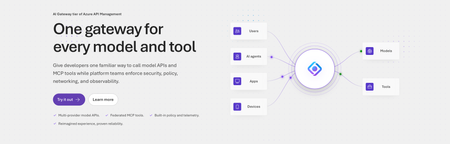
Today, we are introducing the AI Gateway tier of Azure API Management, now in public preview. It gives platform teams a purpose-built experience built specifically for AI workloads - publishing and governing models and MCP servers. Controls are configured through policy cards rather than XML and expressions, and the portal experience and control plane are structured around models, MCP servers, and tools rather than APIs. (For brevity, we refer to the AI Gateway tier as AI Gateway throughout the rest of this article.) AI Gateway is built on Azure API Management, bringing proven operational capabilities to AI workloads. The resource runs in your subscription, uses your Entra tenant, and sends telemetry to destinations you control. The operating model will be familiar to existing API Management customers, but the interface is built around AI workloads. The AI Gateway tier is intended for teams that want this focused experience; other API Management tiers remain the right choice when organizations also need general-purpose API management or capabilities not included in the AI Gateway experience. A practical model for platform teams The AI Gateway gives platform teams a shared place to manage models, MCP servers, policies, and observability destinations, with access controlled through Azure RBAC. For example, a central platform group can connect a set of approved models and tools and publish them for application teams. The application teams can test those assets in the test console and build against them without routing every change through the central group. The platform group still owns the shared guardrails and can see how the assets are being used. After an asset is published, developers can create a named runtime key and begin calling the gateway immediately. Bring the models and tools you already use Most organizations don't standardize on a single model provider. Different models are selected based on quality, latency, cost, geography, or specialized capabilities. The preview supports models from Microsoft Foundry including OpenAI, Anthropic, Mistral, and other Foundry hosted models, as well as models hosted in AWS Bedrock, Google Vertex AI, OpenAI, and Anthropic. A guided wizard simplifies importing models from Microsoft Foundry. Other providers can be added by configuring a connection, with backend authentication configured as part of that connection. All published models are available under the same stable endpoint. Applications continue to use supported API formats such as OpenAI Chat Completions and Responses or Anthropic Messages directly or via SDKs. The AI Gateway extends governance beyond models to the MCP servers and tools agents use to interact with enterprise systems. You can expose an existing MCP server over SSE or Streamable HTTP, turn all or selected operations from a REST API into an MCP server by uploading its OpenAPI specification, or use more than 1,400 connector-backed tools from the Power Platform and Logic Apps library. You can also federate multiple MCP servers behind a single server, so an agent connects once and sees the tools across those servers. Backend authentication supports an API key, OAuth client credentials, managed identity, or mTLS. Governance that's built in Organizations need consistent governance across models and MCP servers without requiring every application team to implement those capabilities independently. The AI Gateway portal presents governance policies through an intuitive card-based experience rather than requiring policy XML. The same policies are expressed as JSON properties, making them easy to manage as infrastructure as code and to audit and enforce across a fleet with Azure Policy. In the public preview, those cards cover request and token rate limits, token quotas, Azure AI Content Safety, and fallback to a secondary model. Policies are applied per asset, making it clear which controls protect each model or MCP server. OpenTelemetry-based token metrics The AI Gateway emits token-usage metrics through OpenTelemetry, with attributes following GenAI and cloud semantic conventions. Metrics can be sent to Application Insights, Datadog, Splunk, Grafana Cloud, or another OTLP endpoint. The portal provides a monitoring view over Application Insights data. Better together: Microsoft Foundry and AI Gateway With AI Gateway, teams can extend the same governance controls, for example token rate limits and quotas, across models hosted in Microsoft Foundry and models hosted elsewhere. Foundry and non-Foundry models are published through gateway-managed endpoints, giving applications and agents a consistent way to access governed models regardless of where they are hosted. Foundry-hosted agents can consume curated sets of tools from Foundry toolboxes, with access to the underlying MCP servers and APIs governed through AI Gateway. Together, Microsoft Foundry and AI Gateway cover the enterprise application lifecycle: Foundry for building and running AI applications, and AI Gateway for publishing, governing, and observing models, tools, and MCP servers across your AI estate. The new AI Gateway tier will soon be available through the gateway experience in Microsoft Foundry portal. We are working toward a seamless, integrated AI Gateway experience within Foundry portal and will share more about that work separately. Available today in public preview The AI Gateway tier is available today at no cost in public preview in East US 2 and Sweden Central. Pricing will be shared separately. To provision a resource, add a model or MCP server, and make a first call click this to go to the AI Gateway tier portal and try it. If you prefer to start from code, use a sample to deploy all the required resources for a Foundry-hosted agent configured to access its model and tools through AI Gateway. We look forward to your feedback as we continue to rapidly evolve AI Gateway.1.5KViews2likes2CommentsMCP Connect: Why Every AI Engineer and Developer Should Care About the Model Context Protocol
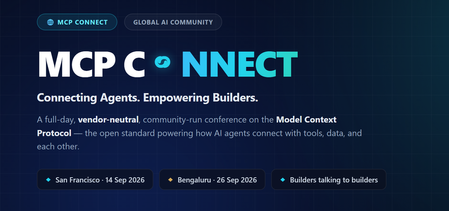
There is a quiet standardization happening underneath the AI agent boom, and it has a name: the Model Context Protocol (MCP). If you build agents, wire tools into Copilot, or ship anything that lets a language model act on the real world, MCP is fast becoming the layer you cannot ignore. That is exactly why the community is gathering for MCP Connect a full-day, vendor-neutral, community-run conference dedicated entirely to the protocol powering how AI agents connect with tools, data, and each other. This post is written for AI engineers and developers. It explains what MCP is and why it matters now, previews what MCP Connect offers builders, walks through real, runnable server code, and points you at the best Microsoft resources starting with MCP for Beginners so you arrive at the event ready to build, not just watch. What is MCP Connect? MCP Connect is described by its organizers as "Connecting Agents. Empowering Builders." It is a community-driven conference dedicated to the Model Context Protocol, the open standard that defines how AI agents talk to tools, data, and one another. The pitch is refreshingly direct: no vendor pitches, just builders talking to builders about making the protocol work in production. Expect a day built around practical, engineering-first content: Hands-on workshops on building and securing MCP servers. Talks on client integration and agent interoperability. A community showcase of what people are actually shipping with the protocol today. Deep protocol discussion the kind of conversation you rarely get outside a focused, single-topic event. The first two in-person dates on the calendar are: MCP Connect, San Francisco, Monday 14 September 2026 (event details), hosted by Global AI San Francisco. MCP Connect, Bengaluru, Saturday 26 September 2026 (event details), hosted by Global AI Bengaluru. It is organized under the Global AI Community umbrella built by and for the people shaping agent connectivity. You can subscribe for updates on the event page as new cities are announced. Why MCP matters now If you have built with large language models recently, you have hit the same wall everyone hits: the model reasons brilliantly but is blind to your world. It cannot read your database, call your internal API, search your documents, or trigger a deployment unless you hand-write glue code for every integration. Think of MCP as a universal translator for AI applications. Just as USB-C lets any peripheral connect to any laptop without a custom cable per device, MCP lets an AI model connect to any tool or data source through one standardized protocol. The economics are the real story. Before MCP, integrations were an M × N problem: every one of your M AI applications needed bespoke code to talk to each of your N tools. MCP turns that into an M + N problem. Build a tool once as an MCP server, and any MCP-compatible client VS Code, GitHub Copilot, Claude Desktop, Cursor, and many others can use it immediately. The protocol is built on a clean client–server model with a small, learnable set of primitives: Tools functions the model can call (query a database, send an email, run code). Resources data the server exposes for context (files, records, documents). Prompts reusable, parameterized prompt templates. Sampling a server asking the client's model to generate a completion, enabling collaborative workflows. Elicitation a server requesting structured input from the user mid-task. Roots boundaries that tell a server which directories or resources it is allowed to touch. Communication runs over JSON-RPC, with transports for local processes ( stdio ) and remote servers (streamable HTTP). Write to the spec, and you interoperate with the entire ecosystem. The canonical reference lives at modelcontextprotocol.io. Your first MCP server: see how little code it takes The best way to prepare for a builder-focused event is to build something. Here is a minimal MCP server in Python using FastMCP . Notice how the protocol plumbing disappears — you just decorate functions and describe them. # server.py — a minimal MCP server with two tools from mcp.server.fastmcp import FastMCP # Name your server; this identifies it to MCP clients mcp = FastMCP("Calculator") @mcp.tool() def add(a: int, b: int) -> int: """Add two numbers and return the result.""" return a + b @mcp.tool() def subtract(a: int, b: int) -> int: """Subtract b from a and return the result.""" return a - b if __name__ == "__main__": # Run over stdio so local hosts (VS Code, Claude Desktop) can connect mcp.run() The same idea in TypeScript, using the official @modelcontextprotocol/sdk : // server.ts — minimal MCP server in TypeScript import { McpServer } from "@modelcontextprotocol/sdk/server/mcp.js"; import { StdioServerTransport } from "@modelcontextprotocol/sdk/server/stdio.js"; import { z } from "zod"; const server = new McpServer({ name: "Calculator", version: "1.0.0" }); // Register a tool with a typed input schema server.tool( "add", { a: z.number(), b: z.number() }, async ({ a, b }) => ({ content: [{ type: "text", text: String(a + b) }], }) ); // Connect over stdio and start listening const transport = new StdioServerTransport(); await server.connect(transport); That is a complete, runnable server. The docstrings and schemas are not decoration — MCP exposes them to the model so it knows when and how to call each tool. Clear descriptions are effectively prompt engineering for your tools. A common pitfall is leaving them vague, which leads the model to misuse or ignore the tool. Connecting it in VS Code Once your server runs, an MCP host connects to it. A typical VS Code configuration looks like this: { "servers": { "calculator": { "command": "python", "args": ["server.py"] } } } VS Code has first-class MCP support for adding, managing, and debugging servers directly in the editor see Add and manage MCP servers in VS Code. From demo to production: what to focus on A calculator is a great first server, but MCP Connect is about production. The gap between the two is where most engineering effort — and most of the event's value lives. Three areas deserve your attention. 1. Security is not optional An MCP server is an API that an autonomous model can invoke. Treat it that way. The practices to internalize before you ship: Least privilege via roots constrain what a server can reach. Tool annotations mark tools readOnlyHint or destructiveHint so clients can warn users before destructive actions. Never pass untrusted input through a shell a classic command-injection vector when a tool wraps a subprocess. Dependency hygiene audit regularly and pin patched releases. Proper auth use OAuth2 and, in Microsoft environments, Microsoft Entra ID rather than long-lived secrets. 2. Interoperability is the whole point The reason to write to the protocol instead of a single framework is that your server then works across the ecosystem. Test your server with the MCP Inspector before wiring it into any host — it is the single best debugging habit you can build early, letting you exercise tools, resources, and prompts in isolation. 3. Operations and observability Remote MCP servers are real services. Plan for deployment (containers scale well), authentication, rate limiting, structured logging, and monitoring. If you run on Azure, Application Insights and Container Apps give you a straightforward path from a local stdio prototype to a monitored HTTP-streaming server. Microsoft resources to prepare with You do not need to walk into MCP Connect cold. Microsoft maintains a strong, free, and current set of MCP resources for exactly this journey. MCP for Beginners the most complete hands-on curriculum, with code in C#, Java, JavaScript, Python, Rust, and TypeScript, from a 10-line server to a multi-lab production capstone. Start at https://aka.ms/mcp-for-beginners (the GitHub repository). Catalog of official Microsoft MCP servers reference implementations you can learn from and build on: github.com/microsoft/mcp. Azure MCP Server connect agents to Azure resources through MCP: Azure MCP Server documentation. MCP in VS Code add, configure, and debug servers in your editor: Add and manage MCP servers in VS Code. The official specification the source of truth for every primitive and transport: modelcontextprotocol.io. A fast way to prepare: fork MCP for Beginners using a sparse checkout to skip translations, then build and debug your first server before the event. git clone --filter=blob:none --sparse https://github.com/microsoft/mcp-for-beginners.git cd mcp-for-beginners git sparse-checkout set --no-cone "/*" "!translations" "!translated_images" Why AI engineers and developers should attend For AI engineers MCP is becoming the default integration layer for agents. Instead of re-implementing tool calling for every framework, you write to one open protocol and your tools work everywhere. MCP Connect's deep-dive sessions on sampling, roots, elicitation, scaling, and multi-agent patterns are exactly the techniques that move agents from demo to production and hearing them from practitioners who have shipped is worth more than any slide deck. For developers MCP is already wired into the tools you use daily: VS Code, GitHub Copilot, Claude Desktop, and Cursor. Learning to build an MCP server means you can expose your systems — internal APIs, databases, CI/CD to AI assistants safely. A vendor-neutral event is the ideal place to compare integration approaches and pick up the security patterns that keep you out of trouble. Responsible and secure by design Because MCP hands an autonomous model the keys to real tools, responsible engineering is a first-class concern, not an afterthought. Carry these principles into whatever you build: Constrain scope grant the minimum access a server needs, and make destructive actions explicit and reviewable. Guard the boundary validate inputs, avoid shells for user-supplied data, and authenticate remote servers properly. Evaluate and monitor log tool calls, watch for anomalous behavior, and govern what agents can do in production. Key takeaways MCP standardizes how AI connects to tools and data, turning a combinatorial integration problem into a simple, reusable one. MCP Connect is builder-first vendor-neutral, community-run, focused on making the protocol work in production. A working server takes minutes, but production requires deliberate attention to security, interoperability, and operations. Microsoft's MCP resources are the fastest on-ramp start with MCP for Beginners and the official spec. Show up ready to build, not just to watch, the value compounds when you can follow along hands-on. Get involved Explore the event: globalai.community/events/mcp-connect and subscribe for new city announcements. Register for a date near you San Francisco (14 Sep 2026) or Bengaluru (26 Sep 2026). Learn the protocol with MCP for Beginners and the official spec. Build your first server this week, debug it with the MCP Inspector, and connect it in VS Code. Bring a project to the community showcase the best way to learn a protocol is to ship something with it. MCP is quietly becoming the connective tissue of the AI ecosystem, and MCP Connect is where the builders shaping it are gathering. Learn the protocol, build a server, and come ready to connect your agents to the world.Behind the Build with Gigamon: Enriching Microsoft Sentinel with Network-Derived Telemetry
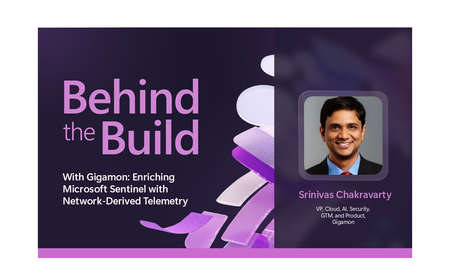
Behind the Build is an ongoing series spotlighting standout Microsoft partner collaborations. Each edition dives into the technical and strategic decisions that shape real-world integrations—highlighting engineering excellence, innovation, and the shared customer value created through partnership. Security teams today operate across an expanding set of signals, spanning identity, endpoint, cloud and application environments. Yet many organizations still lack sufficient visibility into how systems communicate across their infrastructure, creating gaps in detection, investigation, and response. In this edition of Behind the Build, I spoke with Srinivas Chakravarty, vice president, cloud ecosystems at Gigamon, about how Microsoft and Gigamon collaborated to bring network-derived telemetry into Microsoft Sentinel, helping customers enrich security investigations with deeper runtime context and AI-driven insights. The Evolution of Network Intelligence and Why It Matters For more than twenty years, Gigamon has helped organizations access and operationalize network traffic across complex environments. Today, the Gigamon Deep Observability Pipeline, helps enable organizations to extract actionable network-derived telemetry across hybrid infrastructure, encrypted traffic, containers, and modern application environments. That foundation makes the Gigamon Deep Observability Pipeline a strong complement to Microsoft Sentinel. Microsoft Sentinel brings together security telemetry from across the enterprise—including identity, endpoint, cloud, application, and network data sources—while Gigamon contributes enriched network-derived telemetry that provides additional runtime context into how systems, applications, and services communicate. Together, these signals can help organizations gain deeper insight for threat detection, investigation, and response. As Srinivas put it: “You have logs, you have metrics, you have traces, but network telemetry completes the picture.” Together, these data sources provide deeper context for threat detection, investigation, and AI-driven analysis. Read the full announcement here: Behind the Build with Gigamon: Enriching Microsoft Sentinel with Network-Derived Telemetry Original Publication: Microsoft Sentinel Blog, June 30th, 202661Views0likes0CommentsHow partners can lead Frontier Transformation in FY27
As organizations move from AI experimentation to business-wide transformation, Microsoft partners are uniquely positioned to help customers innovate, operate, and grow. In the FY27 MCAPS Start for Partners keynote, Nicole Dezen, Chief Partner Officer and CVP, Global Channel Partner Sales, shares how Microsoft is investing in partner capability, go-to-market acceleration, co-sell engagement, and Microsoft Marketplace opportunities to help partners deliver greater customer value. From new AI-focused skilling and specializations to expanded incentives and Marketplace investments, the FY27 updates provide practical resources to help partners build differentiated offerings, drive adoption, and scale growth in the agentic AI era. Read the full blog and explore the FY27 partner priorities: ➡️ MCAPS Start for Partners FY27 blog Help amplify this important announcement across your networks: Nicole Dezen on LinkedIn Microsoft AI Cloud Partner Program on LinkedIn Microsoft Tech Community post Microsoft Partner on X Microsoft Partner on Facebook25Views0likes0CommentsPost-Stream Refinement is now generally available in Microsoft Foundry
When we introduced Post-Stream Refinement in public preview earlier this year, it closed the oldest trade-off in real-time speech: you could finally keep instant streaming results and get a highly accurate final transcript, with no penalty to first-token latency. A second recognition pass runs in parallel with streaming and replaces each final segment with a more accurate version once the utterance completes. Today, Post-Stream Refinement reaches general availability for Azure AI Speech in Microsoft Foundry, backed by a production SLA. Just as important, it now ships with the capabilities production transcription actually depends on: diarization to preserve who said what, phrase lists for your product names and domain vocabulary, and a much wider footprint of 19 locales across 22 Azure regions. Everything you already know about Post-Stream Refinement still applies. The real-time contract is unchanged, your partial results stream exactly as before, and you enable refinement by setting a single property on your existing SpeechConfig. What changes at GA is that the refined transcript is now production-grade and speaker-aware. 📖 Read the Documentation What's new at general availability If you have already used Post-Stream Refinement in preview, here is exactly what changes at GA, and what stays the same. The streaming path and SDK contract are untouched; the refinement pass is now production-ready and gains speaker and vocabulary features. How Post-Stream Refinement works Real-time and final results serve different needs. Partial results must appear quickly so captions, voice interfaces, and agent turn-taking stay responsive. Final results need enough context to support storage, search, summarization, and business workflows. Post-Stream Refinement runs both at once: a fast streaming pass and a deeper refinement pass over the same audio, in parallel. Because the two passes share one input stream, enabling refinement does not require a second transcription job or a separate client pipeline. Your existing recognition events and partial-result handling stay exactly as they are. Speaker attribution with diarization New at GA, diarization is supported on the Post-Stream Refinement path, so the refined final transcript keeps its speaker labels. That makes the release a strong fit for meetings, contact centers, interviews, and any workflow where the transcript needs to identify who spoke, not just what was said. The refinement pass improves the wording, including proper nouns and named entities, while every utterance stays attributed to the right speaker. Phrase lists for your vocabulary Phrase lists let the recognizer prioritize the names and terms that matter to your application: product catalogs, medical and technical vocabulary, organization names, and acronyms that general speech models might not recognize consistently. At GA you can pair phrase lists with refinement so the second pass has both broad audio context and your domain vocabulary to draw on, which is where the largest accuracy gains on named entities show up. Quality impact In internal testing and partner evaluations across supported locales, Post-Stream Refinement reduced final-transcript word error rate by double-digit relative percentages compared with standard real-time transcription, with the largest gains on the hardest content: long utterances, proper nouns, and domain-specific speech. Pairing phrase lists with refinement improves named-entity accuracy further. Partial-result latency is unchanged; only the final transcript is refined. The refined final result may add a small amount of latency to the final segment because refinement happens after the segment audio is received. Partial results are unaffected. Supported languages and regions General availability supports 19 locales. You declare one locale per session, so the service is tuned to the language you expect. Alongside the Tier-1 languages, GA adds Indic locales, including Bengali, Marathi, Punjabi, and Telugu. Post-Stream Refinement is generally available in 22 Azure regions across the Americas, Europe, and Asia Pacific. Proven at Microsoft scale The technology behind Post-Stream Refinement already powers meeting transcription and Microsoft 365 Copilot experiences in Microsoft Teams, serving millions of users across meetings, webinars, and live events every day. General availability brings the same quality bar to every Azure AI Speech customer through a supported SDK integration, not a research prototype. Preview customers across industries, including automotive, consumer electronics, and aviation, reported positive gains in transcription quality, with the clearest improvements on the hardest content: proper nouns, long-form speech, and domain-specific audio. Several are now moving those workloads into production on the GA release. Get started Enabling Post-Stream Refinement is a small configuration change on your existing SpeechConfig. You will need: Speech SDK 1.50 or later. Earlier versions do not support the refinement path. A Speech resource in one of the supported regions listed above. The session locale you expect, set on the recognizer. Set the post-processing option to PostRefinement. The example below also shows the optional phrase list for your domain vocabulary. import azure.cognitiveservices.speech as speechsdk speech_config = speechsdk.SpeechConfig( subscription="YourSpeechKey", region="YourSpeechRegion") # Declare one locale for the session speech_config.speech_recognition_language = "en-US" # 1) Refine the final transcript (Post-Stream Refinement) speech_config.set_property( speechsdk.PropertyId.SpeechServiceResponse_PostProcessingOption, "PostRefinement") audio_config = speechsdk.AudioConfig(use_default_microphone=True) recognizer = speechsdk.SpeechRecognizer( speech_config=speech_config, audio_config=audio_config) # 2) (Optional) Phrase list for names, acronyms, and domain terms phrase_list = speechsdk.PhraseListGrammar.from_recognizer(recognizer) for term in ["Contoso", "Fabrikam", "Foundry", "OAuth"]: phrase_list.addPhrase(term) Your existing recognition events and partial-result handling remain unchanged. For speaker attribution, enable diarization through the established real-time diarization path; refinement applies to the final transcript while speaker labels are preserved. Choose the right release for your workload Post-Stream Refinement now has two paths. They are the same product family with a different feature boundary, so match the path to what your customer needs. Monolingual PSR — generally available Multilingual PSR — public preview Language selection One locale declared per session Automatic detection and code-switching in a single stream (open-range, no locale declared) Supported locales 19 locales, including Indic bn / mr / pa / te 25 languages / 29 locales, auto-detected Azure regions 22 Azure regions across the Americas, Europe, and Asia Pacific 6 Azure regions Phrase lists & diarization Supported Only diarization is supported Working across languages? If a single stream needs to handle multiple languages or code-switching without a declared locale, use Multilingual Post-Stream Refinement, now in public preview. For a known session locale with phrase lists and diarization, monolingual GA is the right path. Try Post-Stream Refinement Today Turn on higher-accuracy, language-aware transcription in your Azure AI Speech applications with a single configuration change. 📖 Read the Documentation We would love your feedback. Try Post-Stream Refinement in your applications and tell us how it improves your transcription quality.307Views0likes0Comments