business applications
101 Topics
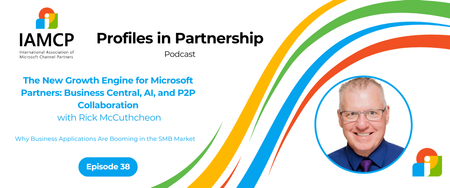
Ep 38 | The New Growth Engine for Microsoft Partners: Business Central, AI, and P2P Collaboration
The Microsoft Partner Ecosystem Is Entering a New Growth Phase The Microsoft partner ecosystem is evolving rapidly as organizations accelerate cloud adoption and digital transformation, creating new opportunities—and challenges—across the SMB and mid-market landscape. Three forces are reshaping the ecosystem: Rapid adoption of Microsoft Business Central and other Business Applications The accelerating push toward AI-enabled services Increasing reliance on partner-to-partner collaboration (P2P) to deliver complex solutions These trends are converging to create a new growth model for Microsoft partners. The key takeaway: Success will rely on integrated solutions, deeper specialization, and stronger ecosystem relationships. In the latest episode of IAMCP Profiles in Partnership, “How Microsoft Partners Can Grow Faster with Business Central, AI, and P2P Collaboration,” hear insights from longtime Microsoft MVP and industry leader Rick McCutcheon as he sits down with Anthony Carrano and Rudy Rodriquez to discuss how these shifts are unfolding and what partners should be doing to stay competitive. Why Business Applications Are Booming in the SMB Market One of the strongest signals in the Microsoft partner ecosystem today is the growth of Business Applications, particularly Microsoft Business Central. The SMB and mid-market segments are experiencing a surge in ERP modernization. Several factors are driving this expansion: Companies migrating from Microsoft Dynamics NAV Organizations moving off Dynamics GP Businesses outgrowing QuickBooks Enterprise The increasing demand for cloud-based ERP platforms Business Central sits at the center of this transition. Microsoft recently announced that the platform surpassed 50,000 customers, and many partners expect continued double-digit growth as migrations accelerate. For Microsoft Dynamics partners, this shift is a significant opportunity. As legacy systems reach end-of-life and SMBs modernize, demand for ERP consulting, implementation, and integration continues to rise, but the opportunity extends beyond ERP deployments alone. Modern ERP Is Becoming an Ecosystem A modern ERP implementation rarely exists in isolation. Instead, it increasingly acts as a platform that integrates multiple solutions from the broader Microsoft ISV ecosystem. In a typical Business Central deployment today, partners often integrate five to ten independent software vendor (ISV) solutions that extend ERP functionality. Common integrations include: Accounts payable automation Marketing automation platforms Warehouse management systems Logistics and shipping solutions CRM integrations Industry-specific vertical applications This shift means ERP deployments are now comprehensive business platforms. The key takeaway is that partners can now deliver end-to-end solutions rather than just single software tools. This shift greatly expands consulting opportunities for partners. A single ERP project can evolve into a broader transformation initiative involving workflow automation, analytics, and operational modernization. AI Is the Next Major Opportunity, But Data Readiness Matters While ERP modernization is driving immediate demand, AI adoption is emerging as the next major wave in the Microsoft ecosystem. Microsoft’s push toward “frontier partners”—organizations capable of delivering AI-enabled solutions—is accelerating across the channel. Tools such as Microsoft Copilot and AI agents are already improving productivity within partner organizations themselves. Examples include: Automating proposal writing Accelerating RFP responses Summarizing meetings and documentation Supporting research and content creation However, deploying AI within customer environments is far more complex. The biggest barrier to AI adoption is not the technology, it is data readiness. Many organizations still operate with fragmented systems, including: CRM platforms disconnected from marketing automation ERP systems that do not fully integrate with customer data Multiple databases containing duplicate or inconsistent records Without strong data governance, AI systems struggle to produce reliable insights. For partners delivering AI solutions, data architecture is becoming a core capability. Before deploying AI tools, partners must often help clients: Consolidate data sources Standardize data models Improve data quality Establish governance policies The main takeaway: Only after data consolidation and governance can AI offer meaningful business results for clients. Why MSPs and BizApps Partners Are Converging Historically, managed service providers (MSPs) and Business Applications partners operated in separate worlds. MSPs focused on infrastructure, security, and cloud services. BizApps partners specialize in ERP, CRM, and operational systems. Today, those boundaries are dissolving. Several factors are driving convergence: The Microsoft cloud integrates Modern Work, Azure, and Business Applications. Customers expect a single partner experience. AI solutions increasingly require data, infrastructure, and application expertise. As a result, MSPs are entering the Business Applications market in several ways: Building internal ERP and CRM practices Acquiring BizApps consulting firms Partnering with specialized implementation partners For MSPs, the opportunity is compelling. Business Applications projects often generate significantly higher service revenue than software licensing. The key takeaway: Due to the complexity of ERP and CRM, MSPs often need to collaborate with experienced BizApps partners to deliver complete solutions. Why Partner-to-Partner Collaboration Is Becoming Essential As the Microsoft ecosystem becomes more complex, no single partner can deliver everything on their own. Modern customer environments often require expertise across multiple domains: Infrastructure and cloud architecture ERP and CRM systems Data platforms and analytics AI deployment and automation Industry-specific solutions This reality is driving a shift toward partner-to-partner collaboration (P2P). Successful collaborations typically share several characteristics: Long-Term Trust: Effective partnerships are built over time, not through one-off project engagements. Complementary Expertise: Partners focus on their strengths while bringing in specialists where needed. Shared Opportunity: Strong P2P relationships create reciprocal value—partners refer opportunities to each other rather than competing. Communities such as the International Association of Microsoft Channel Partners (IAMCP) play an important role in facilitating these relationships. To summarize: As the Microsoft ecosystem becomes more interconnected, building strong partner networks is becoming essential for success. Strategic Moves Microsoft Partners Should Make Now For Microsoft partners navigating these changes, several strategic priorities are emerging. Invest in Business Applications Expertise The demand for ERP and CRM solutions is growing rapidly, particularly in the SMB market. Partners who understand Business Central and related ISV ecosystems will be well-positioned. Build Data and AI Capabilities AI will increasingly shape how businesses operate. Partners must develop expertise in: Data architecture Data governance AI deployment frameworks Develop P2P Partnerships Strategic alliances allow partners to expand capabilities without building every skill internally. Engage in the Partner Community Industry conferences, partner networks, and learning platforms provide invaluable opportunities to build relationships and stay informed. The main takeaway: Active participation in the partner community is vital to thriving in the Microsoft ecosystem. The Future of Microsoft Partner Growth The Microsoft partner ecosystem is entering a new era. ERP modernization, AI adoption, and collaboration are combining to create larger, more complex opportunities. The partners who succeed in this environment will not be those who try to do everything themselves. Instead, the winners will be the firms that: Build deep expertise in key solution areas. Invest in data and AI capabilities. Form strong, trusted partnerships across the ecosystem The key takeaway: Collaboration has become the foundation of partner growth in the increasingly interconnected Microsoft ecosystem. Listen to the Full Episode To hear the full conversation and additional insights on Microsoft partner growth, listen to the complete episode of IAMCP Profiles in Partnership featuring Rick McCutcheon on demand.62Views0likes0Comments
Explore updated performance requirements for the SMB Management specialization
Microsoft is updating performance criteria for the Small and Midsize Business (SMB) Management specialization to better align with how partners go to market. Starting March 27, 2026, we're reducing the monthly active user (MAU) growth requirement from 35% to 15% and increasing the deployment requirement from 10 to 15 deployments. The revised criteria, which are based on partner feedback, emphasize new customer deployments while maintaining a focus on overall performance. The updates help ensure the SMB Management specialization continues to represent partners who meet the highest standards for service delivery and support. Review your current progress toward the SMB Management specialization in Partner Center and adjust your deployment and growth strategy to align with the updated criteria.165Views0likes0CommentsLearn to maximize your productivity at the proMX Project Operations + AI Summit 2026
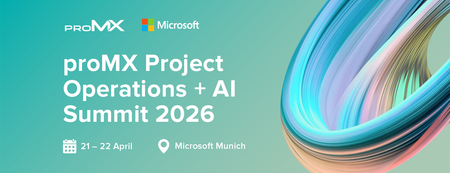
As organizations accelerate AI adoption across business applications, mastering how Microsoft Dynamics 365 solutions, Copilot, and agents work together is becoming a strategic priority. Fortunately, businesses no longer need to rely on speculation — they can gain practical insights with fellow industry professionals during a unique two-day event: On April 21-22, 2026, Microsoft and proMX will jointly host the fourth edition of proMX Project Operations Summit at the Microsoft office in Munich, but this time with an AI edge. The summit brings together Dynamics 365 customers and Microsoft and proMX experts to explore how AI is reshaping project delivery, resource management, and operational decision‑making across industries. On day one, participants will discover how Dynamics 365 Project Operations, Copilot, Project Online, proMX 365 PPM, and Contact Center can strategically transform business processes and drive organizational growth. On day two, they can explore the technical side of these solutions. Secure your spot! What to expect from the summit Expert-led, actionable insights Join interactive sessions led by Microsoft and proMX experts to learn practical AI and Dynamics 365 skills you can use right away. Inspiring keynotes Gain future-focused perspectives on Dynamics 365, Copilot, and AI to prepare your organization for what’s next. In between our special guests we have Microsoft's Rupa Mantravadi, Chief Product Officer, Dynamics 365 Project Operations, Rob Nehrbas, Head of AI Business Solutions, Archana Prasad, Worldwide FastTrack Leader for Project Operations, and Mathias Klaas, Partner Development Manager. Hands-on AI workshops Take part in workshops where Sebastian Sieber, Global Technology Director (proMX) and Microsoft MVP will show the newest AI features in Dynamics 365, giving you real-world experience with innovative tools. Connect with industry leaders Engage with experts through Q&A sessions, round tables, and personalized Connect Meetings for tailored guidance on your business needs. Real customer success stories Hear case studies from proMX customers who are already using Dynamics 365 solutions and learn proven strategies for successful digital transformation. Who should attend? This summit is tailored for business and IT decision-makers that are using Dynamics 365 solutions and want to drive more business impact with AI, but also for those who might be planning to move away from other project management solutions such as Project Online and need practical guidance grounded in real-life implementations. Date: Apr 21 & 22, 2026 | 2 -Days event Location: Microsoft Munich, Walter-Gropius Straße 5, Munich, Bavaria, DE, 80807 Ready to maximize your productivity? Register here.156Views1like0CommentsEP 35 | Business Central Data Migration Without Chaos
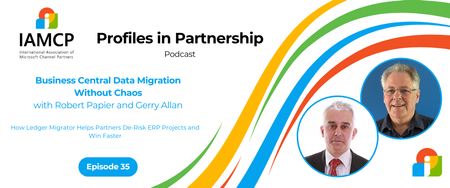
If you’ve ever been part of a Microsoft Dynamics 365 Business Central implementation, you’ve probably felt it. That moment when the project is going well… until someone says, “Okay, now we need to migrate the financial data.” Suddenly, timelines stretch. Confidence drops. And the entire go-live starts to feel fragile. Because here’s the uncomfortable truth: data migration is where Business Central projects either stay on track—or completely unravel. That’s exactly how host, Anthony Carrano with Dunamis Marketing, opened a recent episode of IAMCP Profiles in Partnership episode “Ledger Migrator: Automating Financial Migration for Business Central Partners,” featuring Ledger Migrator founders Robert Papier and Gerry Allan. And if you’re a Microsoft partner helping customers move from legacy ERPs (Enterprise Resource Planning systems) like GP (Dynamics GP), SL (Dynamics SL), NAV (Dynamics NAV), or “some system we’ve had forever,” this episode hits close to home. Listen to full episode here! In this post, we’ll break down the most useful insights from the conversation and show how Ledger Migrator’s approach is becoming a real advantage for partners. Let’s dive in and see why faster migrations, cleaner outcomes, and shorter sales cycles are within reach. Why ERP Migration Still Feels Like a High-Risk Bet ERP migration shouldn’t feel like a gamble. But for most partners, it does—regardless of how powerful Business Central is or how capable partners are. Not because Business Central isn’t powerful. It is. Not because partners aren’t capable. They are. It’s because financial data migration is still stuck in an old world of exports, spreadsheets, manual cleanup, and endless reconciliation loops. And when something goes wrong, it’s never small. It’s a trial balance. Vendor balances. Customer history. Audit trails. Trust. That’s why migration has quietly become the “make or break” phase of ERP delivery. Introduction: What This Episode Reveals (and Why It Matters) In this episode (recorded 12/2/2025 and releasing 1/27/2026), Robert and Gerry share the real story behind Ledger Migrator: two seasoned ERP professionals who got tired of watching migration become the bottleneck—and decided to fix it. Their thesis is simple: Partners shouldn’t have to talk customers out of migrating their financial history. But many do. Traditionally, the cost and complexity of bringing historical data into Business Central made it hard to justify, so partners migrated only the chart of accounts and opening balances, moving forward with a "clean slate." The problem is… CFOs don’t want a clean slate. They want continuity. Context. Intelligence. And now, with Microsoft Copilot (an AI-powered assistant) and AI-driven insights accelerating inside Business Central, historical data isn’t just “nice to have.” It’s the fuel. The Real Problem: Migration Is Still an Excel-Driven Process Gerry describes the “old way” of doing ERP (Enterprise Resource Planning) migration in a way that every partner immediately recognizes: And you repeat… because the source system keeps changing during the project. That repeat part is what kills you. ERP implementations take time, but business doesn’t pause: invoices still go out, payments come in, and journal entries are made. The data keeps moving. So even if you “migrate once,” you’re not done. You migrate again. And again. This is why financial data migration becomes expensive, risky, and time-consuming. Not because it’s impossible—but because it’s not repeatable without automation. How does Ledger Migrator deliver value by enabling organizations to bring their full financial history into Business Central? Ledger Migrator goes beyond basics, migrating all financial and historical transactions so customers retain valuable data when moving to Business Central. It migrates all financial data, including historical transactions, so customers aren’t forced to abandon years of financial intelligence just to get into Business Central. Robert shared a key insight from early market research: Many partners have learned to “lead the witness” in conversations with customers. In other words, they guide the discussion until the customer agrees they don’t need historical data—because migrating it is too difficult. But finance leaders do want it. They want to look back. They want continuity for reporting. They want the business's story preserved, not erased. Ledger Migrator allows partners to transfer complete financial history—not just opening balances—so customers move to Business Central with full data continuity. Automation + Date Chunking = Less Risk at Cutover One of the smartest tactical ideas discussed in the episode is date chunking. Instead of trying to migrate 5–10 years of data in a single massive run (which can take days and introduce significant risk), Ledger Migrator lets partners migrate in segments—often by financial year. This gives partners a safer, more controllable migration path: Move older historical data to the early part of the project. Validate and reconcile as you go. Leave only the most recent open periods for final cutover. Reduce the “big bang” risk at go-live. In a world where ERP projects can be derailed by one reconciliation issue, this matters. It means partners can test, prove, and validate outcomes throughout the project—not just hope everything works at the end. And that’s the real shift: migration becomes a process, not an event. The Presale License Model: A Sales Accelerator for Partners If you sell Business Central, you know the biggest objection isn’t always spoken out loud: “What happens to our data?” CFOs and finance leaders may not say it in the first meeting. But it’s there. Because experienced finance leaders have lived through migrations before, and they know migration is the part that hurts. Ledger Migrator’s presale license model is designed to eliminate that fear early. A presale license is a temporary license that lets customers preview migrated data before a full purchase. With the pre-sale license, partners can migrate real customer data into a sandbox environment (not production). That means: No more demos with sample data No more “trust us, it will work” conversations. Customers can see their data inside Business Central before they commit. This changes the sales conversation from theoretical to tangible. It builds trust. It reduces perceived risk. And it often shortens the sales cycle because stakeholders can validate outcomes earlier. Robert emphasized that the presale license is refundable when the production license is purchased, because Ledger Migrator views it as an enablement tool rather than a profit center. That’s a partner-first move. Why This Matters Even More Now: Copilot Needs History One of the most forward-looking moments in the episode was the discussion about AI. Gerry makes a strong point: If you migrate only opening balances and master data, Business Central doesn’t have enough historical context for Copilot and AI agents to deliver meaningful insights right away. You may have to wait years before the system has enough data to become truly intelligent. But if you migrate the full history? Now Copilot can work with real context from day one. That’s a huge advantage for customers—and a differentiator for partners. Because the conversation shifts from: “Let’s implement an ERP.” To: “Let’s unlock intelligence, forecasting, and insight immediately.” Conclusion: The New Standard for Business Central Migration This episode reinforces five clear takeaways for Microsoft partners: Data migration is still the biggest risk in ERP projects. Most partners avoid migrating the full history because it’s traditionally painful. Ledger Migrator makes full financial data migration repeatable and automated. Presale sandbox migrations reduce objections and accelerate deals. Historical data unlocks faster Copilot and AI value inside Business Central. If you’re helping customers migrate into Microsoft Dynamics 365 Business Central, the opportunity is clear: The partners who can make migration safer, faster, and more complete won’t just deliver better projects. They’ll win more deals. Because in ERP, trust is the product. Curious to learn more and hear directly from the founders? Listen or watch to the full episode of IAMCP Profiles in Partnership featuring Robert Papier and Gerry Allan from Ledger Migrator. Take the next step—discover how you can transform your next migration project. If you’re a Microsoft partner working on Business Central migrations, share this episode with your delivery or sales team today. Start using these strategies now to reframe migration in your next client conversation and win more deals. Don't forget to click follow in the top right corner of the IAMCP Vodcast Series tag so you get notifications of all new articles!115Views0likes0Comments
Stand out in the marketplace with a Microsoft Copilot specialization
The Microsoft Copilot specialization demonstrates your experience and capabilities with Copilot, including Microsoft 365 Copilot, Copilot Chat, Copilot Studio, and agents. Partners with this specialization can help their customers: Explore AI Advisory Services for Microsoft Copilot. Adopt Copilot. Deliver data security and deployment. Enable extensibility with agentic focus. To earn this specialization, you must first attain one of three Solutions Partner designations: Business Applications, Modern Work, and/or Security. If your organization has already attained one or more of these designations, please review the Microsoft Copilot specialization criteria—which include performance metrics, skilling requirements, and customer references—and begin to work toward meeting them. You can check whether you currently meet the requirements by viewing your Partner Center dashboard. The requirements include: Performance requirements 1,000 monthly active users (MAU) growth of M365 Copilot in the trailing 12 months (TTM) (Claiming partner of record (CPOR), Cloud Solution Provider (CSP) Tier 1, CSP Tier 2) AND 5 net customer growth for Copilot in TTM (CPOR, CSP Tier 1, CSP Tier 2) Skilling requirements 5 people with MS-102: Microsoft 365 Certified: Enterprise Administrator Expert AND 5 people with, cumulatively: SC-401: Implement information protection in Microsoft 365 OR APL-4002: Prepare security and compliance to support Copilot AND 5 people with APL-7008: Create custom agents with Microsoft Copilot Studio Customer references Provide three customer references, which must include at least one example of transforming business processes with agent implementation. Learn more7.2KViews3likes0CommentsRegister for the Business Applications and Modern Work FY26 GTM Kickoff Event
Join us on July 22, 2025, at 8:00 AM Pacific Time—or watch on demand after 12:00 PM Pacific Time—to learn about the exciting go-to-market (GTM) priorities and initiatives planned for FY26 across the Business Applications and Modern Work solution areas. This year’s event will cover the investments we’re making to help you grow your business and deliver customer engagements that bring the value of AI to life. The event will be more accessible than ever before, with closed captions available in 32 languages. Plus, you’ll be able to: Engage with Business Applications and Modern Work leadership to understand the strategic initiatives planned for FY26. Align your business strategies with Microsoft to maximize your potential for success in FY26. Stay informed about the latest developments and resources available to support your business growth. Register early to reserve your spot—and get the agenda, session details, and updates sent directly to your inbox. Can’t attend the live event? Register anyway to get notified when the event content is available on demand. Register here!579Views1like0CommentsMeet market demand with Microsoft skilling opportunities
As AI continues to transform industries, businesses that prioritize skilling are positioning themselves to seize market opportunities and become leaders. That’s why Microsoft is committed to empowering our partners with the knowledge and resources they need to lead. We’re excited to announce the upcoming launches of Microsoft Sales Titan, a powerful new offering built for sales professionals—currently in private preview for Cloud Solution Provider (CSP) partners—and Microsoft AI Agents Day, a virtual event built to help you sharpen your agentic AI skills. Learn how these new offerings can grow your business—and explore other purpose-built skilling opportunities below. Close deals, sharpen AI skills, and earn badges Sales Titan—available to all partners in summer 2025—is a centralized skilling portal designed to enhance proficiency in Microsoft Threat Protection SKUs, help sales professionals position themselves as industry leaders, and build knowledge to drive meaningful customer conversations. Learn more about Sales Titan today. Microsoft AI Agents Day is a virtual training event focused on how to use Microsoft 365 Copilot, Copilot Studio, and Azure AI Foundry to build agents and drive customer success. This offering is designed for all roles—from executives to architects to those who are new to Microsoft AI solutions—and participants who attend the live session will earn a digital badge. Register today to get started. Explore more skilling opportunities No matter where you are in your AI journey, Microsoft provides the tools and opportunities you need to thrive in 2025 and beyond. We offer bootcamps, workshops, and self-guided learning opportunities, such as: Certification Weeks: Designed to accelerate AI and cloud certification paths, we offer Certification Weeks for the following solution areas: Azure Business Applications Modern Work Security. Sales and Pre-sales Skilling Bootcamps: These sales bootcamps help you plan, build, and assess strategies for closing sales. Register today to get started. Partner Project Ready Workshops: Deepen your ability to assess customer needs and seamlessly implement Azure solutions in these multi-day events, available for the following solution areas: Azure Business Applications Modern Work Security. Technical workshops and AI Training Days: Sharpen your skills with hands-on sessions focusing on modern AI, security, and data analytics. Register today to get started. AI Envisioning Series: Kickstart your generative AI development plan, accelerate your time to market, and explore how AI is reshaping industries in these workshops. Register today to get started. To learn more about skilling opportunities, explore our Skilling Hub.274Views1like0CommentsDrive demand for your offers with solution area campaigns in a box.
Take your marketing campaigns further with campaigns in a box (CiaBs), collections of partner-ready, high-quality marketing assets designed to deepen customer engagement, simplify your marketing efforts, and grow revenue. Microsoft offers both new and refreshed campaigns for the following solution areas: Data & AI (Azure), Modern Work, Business Applications, Digital & App Innovation (Azure), Infrastructure (Azure), and Security. Check out the latest CiaBs below and get started today by visiting the Partner Marketing Center, where you’ll find resources such as step-by-step execution guides, customizable nurture tactics, and assets including presentations, e-books, infographics, and more. AI transformation Generate interest in AI adoption among your customers. As AI technology grabs headlines and captures imaginations, use this campaign to illustrate your audience’s unique opportunity to harness the power of AI to deliver value faster. Learn more about the campaign: AI Transformation (formerly Era of AI): Show audiences how to take advantage of the potential of AI to drive business value and showcase the usefulness of Microsoft AI solutions delivered and tailored by your organization. Data & AI (Azure) Our Data & AI campaigns demonstrate how your customers can win customers with AI-enabled differentiation. Show how they can transform their businesses with generative AI, a unified data estate, and solutions like Microsoft Fabric, Microsoft Power BI, and Azure Databricks. Campaigns include: Unify your intelligent data - Banking: Help your banking customers understand how you can help them break down data silos, meet compliance demands, and deliver on rising customer expectations. Innovate with the Azure AI platform: Help your customers understand the potential of generative AI solutions to differentiate themselves in the market—and inspire them to build GenAI solutions with the Azure AI platform. Unify your intelligent data and analytics platform - ENT: Show enterprise audiences how unifying data and analytics on an open foundation can help streamline data transformation and business intelligence. Unify your intelligent data and analytics platform - SMB: Create awareness and urgency for SMBs to adopt Microsoft Fabric as the AI-powered, unified data platform that will suit their analytics needs. Modern Work Our Modern Work campaigns help current and potential customers understand how they can effectively transform their businesses with AI capabilities. Campaigns include: Connect and empower your frontline workers: Empower your customers' frontline workers with smart, AI-enhanced workflows with solutions based on Microsoft Teams and Microsoft 365 Copilot. Use this campaign to show your customers how they can make their frontline workers feel more connected, leading to improved productivity and efficiency. Microsoft 365 Copilot SMB: Increase your audience's understanding of the larger potential of Microsoft 365 Copilot and how AI capabilities can accelerate growth and transform operations. Smart workplace with Teams: Use this campaign to show your customers how to use AI to unlock smarter communication and collaboration with Microsoft Teams and Microsoft 365 Copilot. This campaign demonstrates to customers how you can help them seamlessly integrate meetings, calls, chat, and collaboration to break down silos, gain deeper insights, and focus on the work that matters. Cloud endpoints: Help customers bring virtualized applications to the cloud by providing secure AI-powered productivity and development on any device with Microsoft Intune Suite and Windows in the cloud solutions. Business Applications Nurture interest with audiences ready to modernize and transform their business operations with these BizApps go-to-market resources. Campaigns include: AI-powered customer service: Highlight how AI-powered solutions like Microsoft Dynamics 365 are transforming customer service with more personalized experiences, smarter teamwork, and improved efficiency. Migrate and modernize your ERP with Microsoft Dynamics 365: Position yourself as the right partner to modernize or replace your customers' legacy on-premises ERP systems with a Copilot-powered ERP. Business Central for SMB: Offer customers Microsoft Dynamics 365, a comprehensive business management solution that connects finance, sales, service, and operations teams with a single application to boost productivity and improve decision-making. AI-powered CRM: Help your customers enhance their customer experiences and close more deals with Microsoft 365 Dynamics Sales by making data AI-ready, which empowers them to create effective marketing content with Microsoft 365 Copilot and pass qualified leads on to sales teams. Use this campaign to show audiences how Copilot and AI can supercharge their CRM to increase productivity and efficiency, ultimately leading to better customer outcomes. Modernize at scale with AI and Microsoft Power Platform: This campaign is designed to introduce the business values unlocked with Microsoft Power Platform, show how low-code solutions can accelerate development and drive productivity, and position your company as a valuable asset in the deployment of these solutions. Digital & App Innovation (Azure) Position yourself as the strategic AI partner of choice and empower your customers to grow their businesses by helping them gain agility and build new AI applications faster with intelligent experiences. Campaigns include: Build and modernize AI apps: Help customers building new AI-infused applications and modernizing their application estate take advantage of the Azure AI application platform. Accelerate developer productivity: Help customers reimagine the developer experience with the world’s most-adopted AI-powered platform. Use this campaign to show customers how you can use Microsoft and GitHub tools to help streamline workflows, collaborate better, and deliver intelligent apps faster. Infrastructure (Azure) Help customers tap into the cloud to expand capabilities and boost their return on investment by transforming their digital operations. Campaigns include: Modernize VDI to Azure Virtual Desktop - SMB: Show SMB customers how they can meet the challenges of virtual work with Azure Virtual Desktop and gain flexibility, reliability, and cost-effectiveness. Migrate VMware workloads to Azure: Help customers capitalize on the partnership between VMware and Microsoft so they can migrate VMware workloads to Azure in an efficient and cost-effective manner. Migrate and secure Windows Server and SQL Server and Linux - ENT: Showcase the high return on investment (ROI) of using an adaptive cloud purpose-built for AI workloads, and help customers understand the value of migrating to Azure at their own pace. Modernize SAP on the Microsoft Cloud: Reach SAP customers before the 2027 end-of-support deadline for SAP S/4HANA to show them the importance of having a plan to migrate to the cloud. This campaign also underscores the value of moving to Microsoft Azure in the era of AI. Migrate and secure Windows Server and SQL Server and Linux estate - SMB: Use this campaign to increase understanding of the value gained by migrating from an on-premises environment to a hybrid or cloud environment. Show small and medium-sized businesses that they can grow their business, save money, improve security, and more when they move their workload from Windows Server, SQL Server, and Linux to Microsoft Azure. Security Demonstrate the power of modern security solutions and help customers understand the importance of robust cybersecurity in today’s landscape. Campaigns include: Defend against cybersecurity threats: Increase your audience's understanding of the powerful, AI-driven Microsoft unified security platform, which integrates Microsoft Sentinel, Microsoft Defender XDR, Security Exposure Management, Security Copilot, and Microsoft Threat Intelligence. Data security: Show customers how Microsoft Purview can help fortify data security in a world facing increasing cybersecurity threats. Modernize security operations: Use this campaign to sell Microsoft Sentinel, an industry-leading cloud-native SIEM that can help your customers stay protected and scale their security operations. **Stay up to date on all Skilling announcements by subscribing to the skilling tag!**323Views2likes0CommentsUpdated requirements for Finance, Sales, Service, and Supply Chain specializations
To empower more partners to qualify for specializations, we’ve adjusted the Performance and Knowledge requirements to earn certain Business Applications specializations. Updated Finance, Sales, Service, and Supply Chain requirements The Performance and Knowledge threshold requirements have been changed. The requirements are the same across all four specializations: Performance 3 large deployments (previously 5) >0% monthly consumption value (MCV) growth rate (previously >30%) Baseline of 25,000 MCV Knowledge 5 unique individuals with intermediate certifications (previously 15) No minimum number of individuals required to earn each certification (previously 3) 2 unique individuals with expert certifications (previously 5) Additionally, specific to the Sales specialization, the intermediate certification Customer Experience Analyst Associate has been added to replace the expired certifications. Your partner admin can check to see if you meet these new requirements and apply for the audit. If you’ve already earned one of the specializations, check to see if you meet the updated requirements before applying for renewal. Full details on the requirements can be found on the individual specialization websites: Finance Sales Service Supply Chain786Views2likes0Comments
August Business Applications Community Call
Thanks so much for joining us on our August Business Applications Partner Community Call last week! Our next call will be on Friday 1st September. You can add these sessions to your diary via the link: https://aka.ms/BAaddtoCalendar For those of you who were unable to attend, you can find the slides attached to this post and the recording on demand at UK Partner Community Calls (microsoft.com)844Views1like0Comments