Forum Discussion

MBZ1_
Mar 09, 2022Iron Contributor
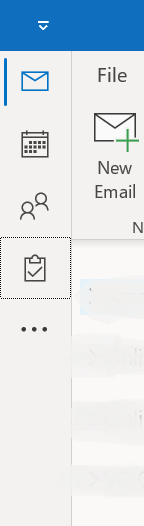
navigation bar moved to left
Dears, The navigation bar has been moved to the left. How can I change it back to be on the bottom?

jergrafs
Aug 12, 2022Tin Contributor
NOTE: Do be cautious making any edits to your registry! Errors can make your computer need to be reset, cause data loss or become unusable!!!
Solved!
The registry editor does resolve this issue.
For those who do not know how to do this, here are the steps:
- Step one: It is very important that a registry backup be made and only desired changes be made to the registry.
- If you are unsure how to do a backup, search online how to do this (I use Google).
- Step two: close Outlook:
- Note: Ensure all important emails/drafts are saved before closing Outlook.
- Hold the "Ctrl+Alt+Delete" keys and select "Task Manager". Then, in the pop-up box select Microsoft Outlook and click on "End Task".
- Step three: in your Windows Operating System (OS) taskbar search box type "Registry Editor".
- Step four: Click on the Registry Editor (App) icon to open.
- Step five: in the left column of the Registry Editor window, you should see a folder hierarchy. You will need to click through the folders to find the correct one (which will open on the right). Follow this folder path:
- HKEY_CURRENT_USER > Software > Microsoft > Office > 16.0 > Common > ExperimentEcs > Overrides
- How to navigate through folders: Each ">" symbol above represents a transition into a sub-folder. Each sub-folder can be navigated to by double-clicking the folder icon or single-clicking the ">" expand icon.
- HKEY_CURRENT_USER > Software > Microsoft > Office > 16.0 > Common > ExperimentEcs > Overrides
- Step six: When you have navigated to the "Overrides" folder, look in the right-hand column to determine whether there is a key called: "Microsoft.Office.Outlook.Hub.HubBar".
- If yes: then right click on the key, select "Modify...", In the "Value Data:" field, replace whatever is there with the single word "false" (do not include quotes).
- Note: You may want to remember the exact value that was there in case you ever want to revert this.
- If no: If the "Microsoft.Office.Outlook.Hub.HubBar" key does not exist in this folder, you can easily create it by right-clicking on an empty space in the right-hand column, hovering over "New > " in the pop-up selector, and clicking on "String Value". Then, simply type or copy and paste: "Microsoft.Office.Outlook.Hub.HubBar" into the key naming box (without quotes).
- To save your new key: click any blank area in the right side of the Registry Editor and outside the key naming box.
- After you have created the new key, right click on the key and select "Modify...". In the "Value Data:" field, replace whatever is there with the single word "false" (do not include quotes).
- If yes: then right click on the key, select "Modify...", In the "Value Data:" field, replace whatever is there with the single word "false" (do not include quotes).
- Step seven: close the Registry Editor application by clicking the "X" in the top-right corner.
- Step eight: This is the fun part! Restart Outlook with no pesky left-sidebar navigation pane!!!
- Step nine: share this solution with someone who needs help! 🙂
NOTE: Do be cautious making any edits to your registry! Errors can make your computer need to be reset, cause data loss or become unusable!!!

BochulainCV
Aug 16, 2022Copper Contributor
I just went through this procedure on a client's computer and for some reason didn't have the same result literally everyone else seems to have had. I've checked and triple checked the Registry location, as well as the key and its value. Tried a reboot, no luck. I'm sure you've relayed it correctly, so I'm just worried that Microsoft got wind of this fix and disabled it. Anyone else run into this, or have any other ideas?
- jergrafsAug 16, 2022Tin ContributorBochulainCV
Others have mentioned that possibly based on individual user settings/setup, there is a different registry folder to put the key. You could try removing it from the original folder that I indicated and instead put the key here:
HKEY_CURRENT_USER > Software > Microsoft > Office > 16.0 > Common > ExperimentConfigs > ExternalFeatureOverrides > outlook
Let us know if this works for you. Thanks!- BochulainCVAug 16, 2022Copper ContributorWhat I only recently realized is that the user isn't an admin so I'd opened Regedit as admin. This, of course, loads the admin's ntuser.dat, so the changes you'd described wouldn't apply to the client I was working with. I'm going to temporarily make him admin, try the first way first, then this way if that doesn't work, and let you know the result. Thanks for getting back to me!