threat hunting & ti
177 TopicsNinja Cat Giveaway: Episode 3 | Sentinel integration
For this episode, your opportunity to win a plush ninja cat is the following - Reply to this thread with: what was your favorite feature Javier presented? Oh and what does UEBA stand for? This offer is non-transferable and cannot be combined with any other offer. This offer ends on April 14 th , 2023, or until supplies are exhausted and is not redeemable for cash. Taxes, if there are any, are the sole responsibility of the recipient. Any gift returned as non-deliverable will not be re-sent. Please allow 6-8 weeks for shipment of your gift. Microsoft reserves the right to cancel, change, or suspend this offer at any time without notice. Offer void in Cuba, Iran, North Korea, Sudan, Syria, Region of Crimea, Russia, and where prohibited.55KViews6likes38CommentsMITRE ATT&CK Coverage
Morning from the UK! I am trying to better understand how Defender \ Sentinel protect against the MITRE ATT&CK framework. I am particularly interested in mapping to the tactics \ techniques that tools such as Bloodhound and PingCastle highlight for Active Directory \ Azure Active Directory, but am struggling to see what is available in the product and what is still on the roadmap: https://www.pingcastle.com/PingCastleFiles/ad_hc_rules_list.html In terms of what coverage exists within a Tenant, I know there is improvements planned in the roadmap to the current MITRE coverage in Microsoft Sentinel, but is there any way that I could use a Graph query to get what is currently covered?54KViews0likes7CommentsNinja Cat Giveaway: Episode 4 | Defender Experts for Hunting Overview
For this episode , your opportunity to win a plush ninja cat is the following - Reply to this thread with: - How would YOU explain/describe Defender Experts for Hunting to someone? - Also in your own words: what is Threat hunting? This offer is non-transferable and cannot be combined with any other offer. This offer ends on April 14 th , 2023, or until supplies are exhausted and is not redeemable for cash. Taxes, if there are any, are the sole responsibility of the recipient. Any gift returned as non-deliverable will not be re-sent. Please allow 6-8 weeks for shipment of your gift. Microsoft reserves the right to cancel, change, or suspend this offer at any time without notice. Offer void in Cuba, Iran, North Korea, Sudan, Syria, Region of Crimea, Russia, and where prohibited.Solved53KViews2likes24CommentsAdvanced threat hunting and multi-layered defense within the Microsoft Cloud ecosystem!
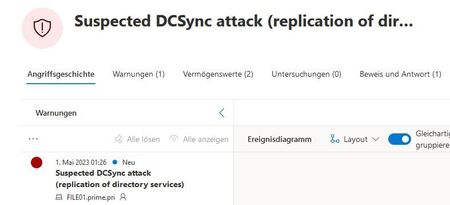
Dear Microsoft Cloud Friends, I think we all agree that cloud services are indispensable today. Whether it is cloud services from Microsoft, Amazon AWS, Google Cloud, etc., the integration of such services are widespread. As great and supportive as these cloud functionalities are, they also bring a big challenge. SECURITY! But this is exactly where the challenge starts. Where do protective measures need to be taken everywhere? Where is the first place to start? Where is it most important to set up protective mechanisms? Honestly, there is no standard solution that can be applied everywhere. This is extremely situational and depends on the cloud services used. This article is about giving you a jump start. The following information, measures, etc. are neither exhaustive nor complete. But they are intended to support you so that you can continue to develop. Identities are an incredibly important element in cloud services (I'm not just talking about user accounts, but also managed identities, service principals, App registration, etc.). This is exactly why we start with this first topic. What could support us, for example the MITRE ATT&CK framework and of course the Microsoft documentation. Identities: Cloud Matrix https://attack.mitre.org/matrices/enterprise/cloud/ Valid Accounts: Cloud Accounts https://attack.mitre.org/techniques/T1078/004/ Modify Authentication Process: Hybrid Identity https://attack.mitre.org/techniques/T1556/007/ Account Manipulation: Additional Cloud Credentials https://attack.mitre.org/techniques/T1098/001/ Azure AD Matrix https://attack.mitre.org/matrices/enterprise/cloud/azuread/ Tactics above represent the "why" of an ATT&CK technique or sub-technique. The following article describes several best practices on how to protect identities. Azure Identity Management and access control security best practices https://learn.microsoft.com/en-us/azure/security/fundamentals/identity-management-best-practices Best practices for Azure AD roles https://learn.microsoft.com/en-us/azure/active-directory/roles/best-practices Microsoft identity platform best practices and recommendations https://learn.microsoft.com/en-us/azure/active-directory/develop/identity-platform-integration-checklist Best practices for all isolation architectures https://learn.microsoft.com/en-us/azure/active-directory/fundamentals/secure-with-azure-ad-best-practices Securing identity with Zero Trust https://learn.microsoft.com/en-us/security/zero-trust/deploy/identity All of these safeguards are great, but logging should definitely not be forgotten. For example, if you have log collation set up for Azure Active Directory, you can use KQL (Kusto Query Language) to examine the logs. In the following example, you can investigate why a person was given the Global Administrator role. AuditLogs | where Category == "RoleManagement" | where Result == "success" | where OperationName == "Add member to role" | where (TargetResources has "Company" or TargetResources has "Tenant" or TargetResources has "Global") | project TargetUser = tostring(TargetResources.[0].["userPrincipalName"]) With Microsoft Defender for Identity there is a cloud service to monitor the Active Directory. Attacks like the following pictures show can be detected this way (sorry the screenshots are in German). Email and data information storage: Working with email services and storing data/information in the various cloud environments has become indispensable today. It is self-explanatory that this situation offers a large attack surface. Email Collection https://attack.mitre.org/techniques/T1114/ Compromise Accounts: Email Accounts https://attack.mitre.org/techniques/T1586/002/ Phishing https://attack.mitre.org/techniques/T1566/ Establish Accounts: Email Accounts https://attack.mitre.org/techniques/T1585/002/ Email Collection: Email Forwarding Rule https://attack.mitre.org/techniques/T1114/003/ Email Collection: Remote Email Collection https://attack.mitre.org/techniques/T1114/002/ Email Collection: Local Email Collection https://attack.mitre.org/techniques/T1114/001/ Data from Information Repositories: Sharepoint https://attack.mitre.org/techniques/T1213/002/ Office 365 Matrix https://attack.mitre.org/matrices/enterprise/cloud/office365/ Data from Information Repositories https://attack.mitre.org/techniques/T1213/ Let's take a look together at what Microsoft has to offer in terms of security features on these topics. Secure your data with Microsoft 365 for business https://learn.microsoft.com/en-us/microsoft-365/business-premium/secure-your-business-data Policy recommendations for securing email https://learn.microsoft.com/en-us/microsoft-365/security/office-365-security/secure-email-recommended-policies Recommended settings for EOP and Microsoft Defender for Office 365 security https://learn.microsoft.com/en-us/microsoft-365/security/office-365-security/recommended-settings-for-eop-and-office365 Managing SharePoint Online Security: A Team Effort https://learn.microsoft.com/en-us/microsoft-365/community/sharepoint-security-a-team-effort Policy recommendations for securing SharePoint sites and files https://learn.microsoft.com/en-us/microsoft-365/security/office-365-security/sharepoint-file-access-policies What is Microsoft 365 Defender? https://learn.microsoft.com/en-us/microsoft-365/security/defender/microsoft-365-defender Check last login to a mailbox https://github.com/tomwechsler/Threat_Hunting_with_PowerShell/blob/main/Hunting_Exchange_Online/Exchange_Mailbox_LastLogin.ps1 Check Sharepoint Online Library for specific file extensions https://github.com/tomwechsler/Threat_Hunting_with_PowerShell/blob/main/Hunting_SharePoint_Online/SharePoint_Online_specific_files.ps1 Virtual machines: Virtual machines are not only used in the on-premises infrastructure, but also in the cloud. In many cases, there are even hybrid infrastructures. Hide Artifacts: Run Virtual Instance https://attack.mitre.org/techniques/T1564/006/ Virtualization/Sandbox Evasion https://attack.mitre.org/techniques/T1497/ Virtualization/Sandbox Evasion: System Checks https://attack.mitre.org/techniques/T1497/001/ Compromise Infrastructure: Virtual Private Server https://attack.mitre.org/techniques/T1584/003/ Modify Cloud Compute Infrastructure: Create Cloud Instance https://attack.mitre.org/techniques/T1578/002/ Modify Cloud Compute Infrastructure: Delete Cloud Instance https://attack.mitre.org/techniques/T1578/003/ Acquire Infrastructure: Virtual Private Server https://attack.mitre.org/techniques/T1583/003/ Instance https://attack.mitre.org/datasources/DS0030/ Cloud Administration Command https://attack.mitre.org/techniques/T1651/ In such an infrastructure (IaaS Infrastructure-as-a-service) there are an incredible number of different threats, making them all visible is a real challenge. Azure Virtual Desktop Security best practices https://learn.microsoft.com/en-us/azure/virtual-desktop/security-guide Security best practices for IaaS workloads in Azure https://learn.microsoft.com/en-us/azure/security/fundamentals/iaas Best practices for defending Azure Virtual Machines https://www.microsoft.com/en-us/security/blog/2020/10/07/best-practices-for-defending-azure-virtual-machines/ Security recommendations for virtual machines in Azure https://learn.microsoft.com/en-us/azure/virtual-machines/security-recommendations Azure Virtual Machines security overview https://learn.microsoft.com/en-us/azure/security/fundamentals/virtual-machines-overview Security considerations for SQL Server on Azure Virtual Machines https://learn.microsoft.com/en-us/azure/azure-sql/virtual-machines/windows/security-considerations-best-practices Azure best practices for network security https://learn.microsoft.com/en-us/azure/security/fundamentals/network-best-practices Azure security baseline for Windows Virtual Machines https://learn.microsoft.com/en-us/security/benchmark/azure/baselines/virtual-machines-windows-security-baseline Plan your Defender for Servers deployment https://learn.microsoft.com/en-us/azure/defender-for-cloud/plan-defender-for-servers With Microsoft Defender for Servers, you can not only monitor systems in Azure, no, you also get support for Amazon AWS and Google Cloud. Networking: Systems but also cloud services want to communicate. Networks are therefore at high risk and require special attention. Network Service Discovery https://attack.mitre.org/techniques/T1046/ Network Segmentation https://attack.mitre.org/mitigations/M0930/ Network Sniffing https://attack.mitre.org/techniques/T1040/ Network Traffic https://attack.mitre.org/datasources/DS0029/ Network Allowlists https://attack.mitre.org/mitigations/M0807/ Data from Network Shared Drive https://attack.mitre.org/techniques/T1039/ Let's look together that we can make the networks more secure. Azure best practices for network security https://learn.microsoft.com/en-us/azure/security/fundamentals/network-best-practices Azure Virtual Network concepts and best practices https://learn.microsoft.com/en-us/azure/virtual-network/concepts-and-best-practices Azure security baseline for Virtual Network https://learn.microsoft.com/en-us/security/benchmark/azure/baselines/virtual-network-security-baseline Azure security best practices and patterns https://learn.microsoft.com/en-us/azure/security/fundamentals/best-practices-and-patterns Network security https://learn.microsoft.com/en-us/azure/well-architected/security/design-network Azure network security overview https://learn.microsoft.com/en-us/azure/security/fundamentals/network-overview Best practices to set up networking for workloads migrated to Azure https://learn.microsoft.com/en-us/azure/cloud-adoption-framework/migrate/azure-best-practices/migrate-best-practices-networking Security best practices for IaaS workloads in Azure https://learn.microsoft.com/en-us/azure/security/fundamentals/iaas Azure security best practices https://learn.microsoft.com/en-us/azure/cloud-adoption-framework/secure/security-top-10 What is Zero Trust? https://learn.microsoft.com/en-us/security/zero-trust/zero-trust-overview Advanced Hunting: These were a few examples and make directly visible how enormous the whole environment is. Installing protection mechanisms, setting up logging, monitoring the systems, examining log data is one thing, but how do you "master" this flood of information? One tool that can help us do this is Microsoft Sentinel. The Microsoft Sentinel is a is a cloud native security information and event management (SIEM) and security orchestration, automation, and response (SOAR) solution that runs in the Azure cloud. But not only can cloud environments be monitored, no, local infrastructures can also be integrated. In addition, other cloud providers and there are more than 100 connectors and third-party providers can be integrated. With Sentinel you get a tool with which you can search for threats in a targeted, fast and efficient way. Hunt for threats with Microsoft Sentinel https://learn.microsoft.com/en-us/azure/sentinel/hunting Use Hunts to conduct end-to-end proactive threat hunting in Microsoft Sentinel https://learn.microsoft.com/en-us/azure/sentinel/hunts Keep track of data during hunting with Microsoft Sentinel https://learn.microsoft.com/en-us/azure/sentinel/bookmarks If you have included the sources in Sentinel, you can create queries with KQL since only the sky is the limit (if at all). Here are a few examples: // Failed Signin reasons // The query list the main reasons for sign in failures. SigninLogs | where ResultType != 0 | summarize Count=count() by ResultDescription, ResultType | sort by Count desc nulls last // Failed MFA challenge // Highlights sign in failures caused by failed MFA challenge. SigninLogs | where ResultType == 50074 | project UserDisplayName, Identity,UserPrincipalName, ResultDescription, AppDisplayName, AppId, ResourceDisplayName | summarize FailureCount=count(), FailedResources=dcount(ResourceDisplayName), ResultDescription=any(ResultDescription) by UserDisplayName // All SiginLogs events // All Azure signin events. SigninLogs | project UserDisplayName, Identity,UserPrincipalName, AppDisplayName, AppId, ResourceDisplayName // Successful key enumaration // Lists users who performed key enumeration, and their location. AzureActivity | where OperationName == "List Storage Account Keys" | where ActivityStatus == "Succeeded" | project TimeGenerated, Caller, CallerIpAddress, OperationName let lookback = 2d; SecurityEvent | where TimeGenerated >= ago(lookback) | where EventID == 4688 and Process =~ "powershell.exe" | extend PwshParam = trim(@"[^/\\]*powershell(.exe)+" , CommandLine) | project TimeGenerated, Computer, SubjectUserName, PwshParam | summarize min(TimeGenerated), count() by Computer, SubjectUserName, PwshParam | order by count_ desc nulls last DeviceEvents | where ingestion_time() > ago(1d) | where ActionType == "AntivirusDetection" | summarize (Timestamp, ReportId)=arg_max(Timestamp, ReportId), count() by DeviceId | where count_ > 5 I hope that this information is helpful to you and that you have received a good "little" foundation. This is certainly not an exhaustive list. But I still hope that this information is helpful for you. Thank you for taking the time to read the article. Happy Hunting, Tom Wechsler P.S. All scripts (#PowerShell, Azure CLI, #Terraform, #ARM) that I use can be found on github! https://github.com/tomwechsler51KViews0likes0CommentsNinja Cat Giveaway: Episode 7 | Defender for Identity and Defender for Endpoint: Better to together
For this episode, your opportunity to win a plush ninja cat is the following - Tell us about an alert that started either from Defender for Endpoint or Defender for Identity and what additional information from the other product (Defender for Endpoint or Defender for Identity) helped you get more details about that alert? Or share your favorite KQL query with tables from both products. This offer is non-transferable and cannot be combined with any other offer. This offer ends on April 14 th , 2023, or until supplies are exhausted and is not redeemable for cash. Taxes, if there are any, are the sole responsibility of the recipient. Any gift returned as non-deliverable will not be re-sent. Please allow 6-8 weeks for shipment of your gift. Microsoft reserves the right to cancel, change, or suspend this offer at any time without notice. Offer void in Cuba, Iran, North Korea, Sudan, Syria, Region of Crimea, Russia, and where prohibited.50KViews1like12Comments
Boost your Security Posture with a New Password Spray Detection Alert in Microsoft 365 Defender
Microsoft Defender alert policies are crucial for organizations to monitor and detect suspicious activities that may lead to cyber-attacks and data loss. These prebuilt policies help forensic investigators, security teams, and IT admins to detect and respond to potential threats promptly in their organization. What’s new? Microsoft has introduced a new alert to detect ‘Password spray attack originating from single ISP’. This new alert is absolutely a game-changer in cybersecurity, providing an additional layer of security to defend against such attacks. By identifying possible indicators of password spray attacks, organizations can take proactive measures to prevent potential breaches. Check out the blog to know more about how to identify the possible indicators of password spray attacks and the remediation actions. https://blog.admindroid.com/password-spray-attack-detection-with-new-microsoft-365-defender-alert/48KViews0likes0CommentsNew blog post | Seeking Dead and Dying Servers with the MDEASM APIs
This post follows Seeking Dead and Dying Servers blog and introduces the Microsoft Defender for External Attack Surface Management (Defender EASM) APIs. You should start with the previous post if you haven't already done so or are brand new to Defender EASM. Defender EASM APIs provide much more capability than the UI (user interface) alone, enabling users to work with large numbers of assets in one action or piece of code. The pro of APIs is they provide an unencumbered interface between the application and the code or app interacting with it to enable exciting capabilities. However, leveraging an API usually involves significant coding work, even for experienced users. Luckily, I've written sample Jupyter Notebooks in Python and PowerShell you can download and use regardless of your experience level. Seeking Dead and Dying Servers with the MDEASM APIs - Microsoft Community Hub47KViews0likes0Comments
Query for file hashes in MDE portal
Hello! My organization is new to Microsoft Defender for Endpoints. I'd like to be able to threat hunt for IOC in the form of IPs, URL and naturally file hashes. Can someone direct me to the proper syntax for file hashes? For instance if I have a list of 30 MD5 hashes. Thank you. I've googled and see some mentions but nothing that gets me all the way there.Solved33KViews0likes4CommentsAdvance Hunting - SCID
Hi, Where can I find a reference sheet/document for the SCID's used in below query. I have searched pretty much everywhere but haven't been able find anything on this. It would be great if someone can please direct me towards any info or anywhere I can find it. Cheers! / Best practice endpoint configurations for Microsoft Defender for Endpoint deployment. DeviceTvmSecureConfigurationAssessment | where ConfigurationId in ("scid-91", "scid-2000", "scid-2001", "scid-2002", "scid-2003", "scid-2010", "scid-2011", "scid-2012", "scid-2013", "scid-2014", "scid-2016") | summarize arg_max(Timestamp, IsCompliant, IsApplicable) by DeviceName, ConfigurationId, OSPlatform | extend Test = case( ConfigurationId == "scid-2000", "SensorEnabled", ConfigurationId == "scid-2001", "SensorDataCollection", ConfigurationId == "scid-2002", "ImpairedCommunications", ConfigurationId == "scid-2003", "TamperProtection", ConfigurationId == "scid-2010", "AntivirusEnabled", ConfigurationId == "scid-2011", "AntivirusSignatureVersion", ConfigurationId == "scid-2012", "RealtimeProtection", ConfigurationId == "scid-91", "BehaviorMonitoring", ConfigurationId == "scid-2013", "PUAProtection", ConfigurationId == "scid-2014", "AntivirusReporting", ConfigurationId == "scid-2016", "CloudProtection", "N/A"), Result = case(IsApplicable == 0, "N/A", IsCompliant == 1, "GOOD", "BAD") | extend packed = pack(Test, Result) | summarize Tests = make_bag(packed) by DeviceName, OSPlatform | evaluate bag_unpack(Tests)19KViews1like2Comments
Running a KQL to find all devices with a software installed and the currently logged on users
Hi, I am seeking for some help with running a KQL query. Basically trying to find all the devices on the network with a particular software (like Wireshark) but the results to also include the users that are logged on to them I am very new to KQL and this is what I have tried to run but my "LoggedOnUsers" column is blank union DeviceTvmSoftwareInventory, DeviceInfo | where SoftwareName in ("wireshark") | project DevivceITS = trim_end(".", DeviceName), OSVersion, SoftwareName, SoftwareVersion, LoggedOnUsers | order by DevivceITS, SoftwareName, SoftwareVersion | sort by SoftwareVersion desc Cheers, KP17KViews1like0Comments