surface
73 TopicsReimagining Surface Tools for Business
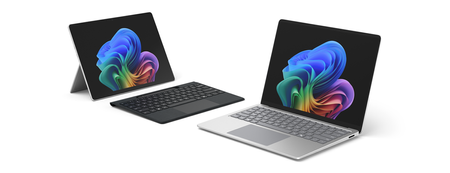
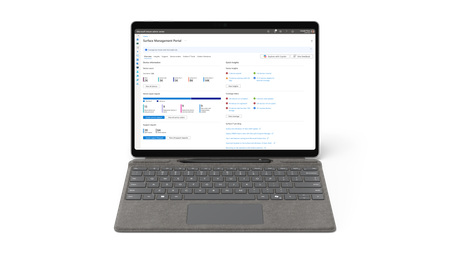
We recently announced new Surface Pro for Business and Surface Laptop for Business devices powered by Intel ® Core™ Ultra Series 3 processors and Snapdragon ® X2 processors. Across the lineup, these devices include Secured-core PC protections and on-device AI processing, with an optional integrated privacy screen on 13.8-inch models, and an advanced haptic experience. With 13-inch, 13.8-inch, and 15-inch options available, organizations can choose devices that align with different roles, performance needs, and workstyles. Hardware is only part of the story. Once devices enter an environment, IT teams need to identify, manage, protect, and recover them. That is where Surface Tools for Business come into focus. Recent updates to Surface Management Portal, Surface Support Portal, Surface IT Toolkit, and Surface Repair Tool add support for the latest Surface for Business devices powered by Intel and Snapdragon and enhance key management and support workflows. Scorecard and Protection Plans in Surface Management Portal Managing devices goes beyond deployment. IT teams also need visibility into fleet health and access to support resources that help keep devices protected throughout their lifecycle. In the United States, Surface Management Portal now includes Scorecard and Protection Plan capabilities designed to help admins monitor key fleet health indicators and review available protection plan options for eligible devices. Note: The Scorecard experience and Protection Plan purchasing capabilities in Surface Management Portal are currently available to customers in the United States only. The Scorecard: Fleet Health, Not Just Fleet Data Current insight dashboards present a wide range of metrics, including device counts, compliance percentages, and warranty status. While useful, those data points on their own don’t always make it easy to determine what needs attention or what the next steps are. The new Scorecard in Surface Management Portal is designed to organize fleet health information across four dimensions: security, coverage, reliability, and performance. Together, these categories provide another way to view fleet status within the portal. Rather than presenting only a static set of numbers, the Scorecard is intended to provide additional context alongside those metrics. From Insight to Action: Protection Plans in Surface Management Portal Knowing that a device may need attention is one step. Taking action is another. The Surface Scorecard can display devices that may be eligible for a protection plan purchase. IT admins can review the device, select an available plan, and submit a request within the portal. Resume and Pause BMR Downloads in Surface IT Toolkit Bare Metal Recovery images are large, and network interruptions can happen during download. Surface IT Toolkit now includes pause and resume functionality for BMR downloads. Admins can pause a download before disconnecting from the network and resume it later, so the download can continue from the previous point in supported scenarios. For IT teams working with large recovery files, pause and resume functionalities can make interrupted downloads easier to manage. Support repair workflows with Surface Repair Tool When hardware issues arise, IT teams and technicians need a clear path to diagnose, repair, and validate supported devices. Surface Repair Tool runs subsystem diagnostic tests and guides repair or replacement for supported components, including battery, motherboard, TDM, and touchpad. After a repair or replacement is completed, the same subsystem tests can be run again as a post-repair validation step to help confirm that the affected subsystem is operating as expected before the device returns to service. These capabilities support diagnostics, repair guidance, and post-repair checks within the Surface IT ecosystem. Everything Connected Surface Management Portal and Surface IT Toolkit include links to Surface Repair Tool, device support resources, and the Microsoft policy for integrated privacy screen settings on supported devices. These updates reflect ongoing work to make relevant tools, resources, and policies easier to access across the Surface management experience. What's next? If you're a Surface customer using Intune, check out the latest updates in Surface Management Portal and see how these new capabilities can help simplify device management. You can learn more in the resources below: Surface Management Portal overview Surface Scorecard in Surface Management Portal Surface IT Toolkit overview Purchase a Microsoft Protection Plan in Surface Management Portal905Views0likes0CommentsBringing Hybrid, Agent-based AI to Higher Education
Higher education institutions are actively exploring ways to expand access to student services while operating within practical constraints related to staffing, budgets, and infrastructure. Historically, student services have been delivered through a mix of websites and portals, printed reference materials, and appointment‑based advising or help desks. As student expectations increasingly reflect preferences for more immediate, conversational and self-service interactions, colleges and universities are evaluating alternative delivery methods to extend access at scale. As interest grows in agent‑based AI, institutions are increasingly exploring conversational interfaces as an entry point to digital services. These systems are designed to handle requests, surface information, and guide users through processes using natural language. Evaluating this approach at scale raises broader architectural considerations for IT teams, including how AI‑enabled services are delivered and where different classes of workloads should execute. The evolution of the delivery of student services in higher education. Considering Hybrid AI Architectures A growing pattern in agent‑based AI delivery is the use of hybrid architectures that blend local execution on modern AI-enabled PCs powered by small language models (SLMs), with cloud‑based AI services built on large language models. The ibl.ai agentic platform is one example, combining agent‑based design with the flexibility to run selected AI tasks locally on Windows Copilot+ PCs—such as Microsoft Surface devices with NPUs—while relying on cloud‑hosted services when broader institutional context is required. This design enables institutions to dynamically determine where inference occurs, shaping how performance, data locality, and operational cost exposure are managed. As discussed in Microsoft’s evaluation of small language models for retrieval‑augmented generation, SLMs can be appropriate for selected, well‑scoped tasks, particularly when model behavior and deployment context are tightly controlled. Examples include: Offline or local environments, including on‑device scenarios, where local inference may be required due to connectivity, policy, or architectural considerations. Latency‑sensitive interactions, where model placement and execution location are key design factors. Scenarios with constrained AI budgets or usage thresholds, where organizations choose to manage cloud‑based inference consumption by selectively running tasks locally. Resource‑constrained environments, where model size and deployment footprint are important considerations. Task‑specific workflows, where smaller models may be fine‑tuned to support narrowly defined use cases rather than relying on general‑purpose, out‑of‑the‑box models. Importantly, decisions about where and how AI workloads execute are shaped by institutional design choices, governance requirements, and technical constraints—not by the AI models alone. An Example of Hybrid Agent‑Based Design in Higher Education The ibl.ai agentic platform provides one example of how hybrid agent‑based AI can be applied in higher education. In collaboration with the Surface engineering team, ibl.ai enabled support for on‑device inference and developed the student experience pack—a collection of preconfigured, task‑specific AI agents, designed to run on Surface Copilot+ PCs with NPU. These agents support common student‑facing scenarios, including Study Hub, Campus Connect, Career Launchpad, and Surface device‑related services such as onboarding, support, and care. This collaboration exemplifies how services can be configured to operate either locally or in the cloud, based on how institutions dynamically determine where inference should occur. Under typical conditions, the agents may connect to cloud‑based services to access institutional systems, broader context, or cross‑service coordination. In other scenarios—such as offline use or institution‑defined usage thresholds—the same agents can be configured to run entirely on the device without requiring cloud connectivity. Designing for Flexibility and Choice As AI becomes more visible in student‑facing experiences, colleges and universities are balancing competing demands. Students increasingly expect conversational, always‑available support. Institutions want to meet those expectations responsibly, without sacrificing governance or sustainability. And IT teams need architectures that can flex across devices, networks, and deployment models. Students want conversational access to services; institutions need a smarter way to deliver it—one that scales by design, preserves control, and uses hybrid AI execution to create value without unnecessary tradeoffs.627Views4likes0Comments
Designed for Surface Accessories for Frontline Work
Frontline scenarios often involve Surface devices that are shared across shifts, used in physically demanding settings, or deployed across multiple locations. In these situations, accessories play a critical role in shaping how devices are configured for day‑to‑day use and how well they perform within the environments in which they are used. Designed for Surface (DfS) accessories are built to support these frontline needs, providing purpose‑built solutions for shared use, mobile workstyles, and access-controlled environments. Below are a few frontline deployment patterns that help illustrate how accessories can be used to adapt Surface devices for healthcare, manufacturing, and government use cases. Healthcare | Shared Devices and Fixed-Station Use In many healthcare scenarios, Surface devices are deployed both in fixed locations and on-the-go, often by multiple users throughout the day. Fixed stations typically benefit from a consistent physical setup that supports reliability and frequent interaction in busy environments, while shared mobile devices require added protection to withstand regular handling. Common in areas such as check-in desks or shared workspaces, enclosures such as The Joy Factory’s Elevate II kiosks allow Surface devices to stay protected in fixed locations across departments or facilities and come in a variety of mounting options. Shared devices in this environment are also frequently handled, so protective options such as the UAG Plasma Healthcare cases for Surface Pro, 13-inch and Surface Pro, 12-inch can be sanitized with disinfectants repeatedly without altering case integrity and are tested by an independent third-party to MIL‑STD‑810G standards 1 . The Surface Pro, 12-inch variant also features swappable rear camera rings for colorful differentiation and visually identifying devices across business departments. Manufacturing | Rugged Mobile Use Pictured, left to right: MobileDemand xCase with Scanner for Surface Pro, The Joy Factory aXtion Go MP for Surface Pro, 12-inch. In manufacturing settings, Surface devices are often on the move—being carried across a site, handled during active workflows, or used alongside task specific equipment and peripherals. Surface devices in demanding environments are benefited by accessories designed for mobile and rugged use. For example, The Joy Factory’s aXtion Go MP for Surface Pro, 12‑inch is IP68-rated for protection against dust and water ingress 1 , supporting usage in environments where devices can be handled in various contexts. Other protective solutions like the MobileDemand xCase with Scanner for Surface Pro can also be used for inventory tracking. These accessories illustrate how Surface devices can be paired with additional, industry-specific capabilities for task focused workflows. Government | Access‑Controlled and Physically Secured Use Pictured, left to right: UAG Scout Series Smart Card Reader Case, Kensington BlackBelt Rugged Case with Integrated Smart Card Reader & HDMI, Kensington Keyed Cable Lock. Some environments call for additional considerations around how Surface devices are accessed and secured during use. This pattern is often seen in government, where devices may be shared, deployed in the field, or used in sensitive environments that require additional security needs. In environments where security matters, these deployments are supported by accessories that integrate security features into their design. Surface devices can integrate with smart card-based authentication workflows when paired with cases like the UAG Scout Series Smart Card Reader Case, or the Kensington BlackBelt Rugged Case with Integrated Smart Card Reader (CAC) & HDMI, which have built-in, TAA-compliant card readers for access‑controlled use in shared or secured environments. These solutions can also be combined with physical security options such as locks, to physically secure devices both in and out of use. Non-invasive solutions, such as the Kensington Combination Lock and Keyed Cable Lock, provide an added layer of deterrence against unauthorized removal without requiring device modification. Applying These Patterns Frontline deployments need to scale across roles, sites, and environments, while still supporting the different ways people actually work. Looking at these deployments through common patterns offers a framework for choosing the right combinations of Surface devices and accessories to help meet a broad range of frontline needs. The Designed for Surface program offers an ecosystem of certified accessories from trusted manufacturers that support these patterns across industries, helping organizations leverage Surface across frontline use cases. Explore the full catalog of 200+ Designed for Surface accessories and see how they can support frontline work 2 by visiting DesignedforSurface.com. Footnotes 1 MIL‑STD‑810G and IP68-rating testing conducted by the accessory manufacturer. Testing is not a guarantee of future performance under all conditions. 2 Surface devices and Designed for Surface accessories are intended for general business use. Third‑party accessories may require additional validation to meet industry specific regulatory, safety, or procurement requirements.501Views2likes0Comments
Microsoft Protection Plans now deliver more coverage
Modern organizations rely on their Surface devices every day, across offices, job sites, classrooms, and hybrid work environments. Microsoft Protection Plans help reduce unexpected repair-related costs in accordance with the plan terms. While every Microsoft Surface device comes with a minimum of 1-year Microsoft's Limited Hardware Warranty 1 , you can protect your investment further with a Microsoft Protection Plan. Microsoft has recently updated its Protection Plans to provide broader coverage and reduce uncertainties in claim boundaries for customers. These enhancements are designed to better reflect how devices are used over time and to reduce uncertainty around repairs and long‑term ownership. 2026 Protection Plan Enhancements Unlimited Mechanical Breakdown Coverage Microsoft Protection Plans now include unlimited mechanical breakdown coverage 2 for the full duration of the plan. Previously, mechanical breakdowns and accidental damage claims were combined under a two‑claim limit. With this change, hardware failures caused by defects in materials or workmanship are no longer subject to a fixed claim count limit. Devices may be repaired or replaced as needed for mechanical issues throughout the coverage term. 3 Accidental Damage Claims Are Now Separate The existing two‑claim limit now applies only to Accidental Damage from Handling (ADH) 4 , such as drops, spills, or cracked screens. By separating accidental damage from mechanical breakdown coverage, customers can more clearly understand how claims are applied and avoid using accidental damage claims for issues related to normal hardware failure. New Battery Degradation Coverage Microsoft Protection Plans 5 now include battery degradation coverage. Customers can file one dedicated battery claim 6 if a device’s battery capacity drops below 70% of its original capacity during the plan term. This marks the first time Protection Plans address battery wear over time, not just battery failures caused by manufacturing defects. Battery eligibility can be validated using tools such as the Surface Diagnostic Toolkit. Battery degradation claims are separate from accidental damage claims, so ADH limits remain unaffected. Together, these updates help organizations extend device life, reduce unexpected repair costs, and plan more confidently for device ownership. Customers can add a Microsoft Protection Plan when purchasing a new device, or within the eligible post-purchase window. 7 To purchase, contact your authorized partner or reseller, or engage the Microsoft Store virtual assistant. [Consumer customers can purchase through the Surface app or your Microsoft account.] These updates apply only to Microsoft Complete and Extended Hardware Service plans purchased on or after the applicable effective date (April 01, 2026) and are not retroactively modified. Coverage, whether for new or existing customers, is determined solely by the relevant Terms & Conditions for the specific plan purchased. To learn more about Microsoft Protection Plans, visit Microsoft Surface Warranty & Protection Plans. To see Warranty and Protection Plan Terms & Conditions, visit Support.microsoft.com. Disclaimers Without prejudice to any legal (statutory) rights to which you may be entitled under your local law, Microsoft Limited Hardware Warranty covers your device for one year from the date of original purchase from Microsoft or an authorized reseller. Restrictions apply. Please refer to Microsoft Limited Hardware Warranty & Agreement. Additional extended coverage for mechanical breakdown and accidental damage from handling is available through the purchase of Microsoft protection plans. If the plan provides additional Mechanical Breakdown coverage, that coverage begins upon expiration of the manufacturer’s original warranty and continues for the remainder of the term shown on the Holder’s Proof of Purchase. Accidental damage from handling begins immediately upon purchase. Restrictions apply, for all Protection Plans, please reference the Terms and Conditions for the limit of liability and the applicable exclusions of the Protection Plan. Subject to plan terms, conditions, and limit of liability. Accidental damage from handling is included in the following plans: Commercial: Complete for Business, Complete for Business Plus, Accidental Damage Protection (EU), Accidental Damage Protection Plus (EU), and Consumer: Microsoft Complete. Extended Hardware Service (EHS) plans provide coverage for mechanical breakdown only and do not include Accidental Damage from Handling or battery degradation coverage. Battery degradation is included in the following plans: Commercial: Complete for Business, Complete for Business Plus, Accidental Damage Protection (EU), Accidental Damage Protection Plus (EU), and Consumer: Microsoft Complete. Extended Hardware Service (EHS) plans provide coverage for mechanical breakdown only and do not include Accidental Damage from Handling or battery degradation coverage. Customers with eligible plans are limited to one (1) battery degradation/replacement claim as set out in plan Terms and Conditions. Availability and timing vary by market and plan type.782Views3likes0CommentsMeeting Control, Now Within Reach: Surface Hub 3 + MAXHUB Universal Console
Modern meeting spaces require flexibility, simplicity, and consistency for IT teams managing collaboration environments. Announced at Microsoft Ignite 2024, center-of-table console support for Surface Hub 3 extends Microsoft Teams Rooms on Windows by enabling certified third-party touch consoles for in-room meeting control. Center-of-Table Console Support Surface Hub 3 now supports Teams Rooms Certified Universal Consoles, introducing an additional option to control meetings beyond the interactive display. This includes the MAXHUB TCP33T Universal Console, a certified hardware solution in this ecosystem. By connecting a touch console directly to Surface Hub 3, users can join meetings, manage controls, and share wired content from their PCs while seated at the table. Benefits of Certified Universal Consoles Teams Rooms Certified Universal Consoles can help provide IT admins with: Microsoft Teams Rooms integration through certified accessories Flexible room design options including front-of-room deployments Consistent user experience across meeting spaces Simplified meeting controls for table-based interaction MAXHUB TCP33T Universal Console Overview The MAXHUB TCP33T is a Teams Rooms Certified Universal Console designed to work with Windows-based touch board devices such as Surface Hub 3. It delivers touchscreen control for Microsoft Teams Rooms meetings and serves as a dedicated entry point for wired content sharing. Common Deployment Scenarios Large conference rooms requiring table-based control Standardized Teams Rooms deployments across buildings Collaborative meetings requiring easy content sharing Requirements Deployments require Surface Hub 3 running Microsoft Teams Rooms on Windows and a Teams Rooms Certified Universal Console such as the MAXHUB TCP33T. Looking Ahead This new Universal Console ecosystem reflects Microsoft's commitment to flexible, scalable collaboration experiences. By pairing Surface Hub 3 with certified accessories like the MAXHUB TCP33T, organizations can design meeting spaces that meet modern collaboration needs. Live Webinar Wednesday the 14th of January... Sign up now! Join us for an exclusive webinar with Microsoft and MAXHUB as we explore how the MAXHUB Universal Console enhances the Microsoft Surface Hub experience. Hear from industry experts and learn how to: ✔ Reduce friction in the room ✔ Streamline collaboration workflows ✔ Centralize meeting controls — without leaving your seat! Featured Speakers: • Frank Buchholz, Director, Product Marketing — Microsoft • Jean Barrett, Technology Solutions Professional — Microsoft • Alan Nicholls, Microsoft Teams Professional — MAXHUB Register for a session and secure your spot👇 January 14 @9AM PST session: Register here January 14 @5PM PST session: Register here Resources Center-of-table console support Teams Rooms app version needed Center-of-table console support announcement during Microsoft Ignite 2024850Views1like0CommentsClose the Year Strong with Surface for Business Deals
As organizations look to maximize their remaining budget and prepare for 2026, now is the moment to modernize device fleets with Surface for Business. These limited-time Surface promotions make it easier to accelerate refresh cycles, strengthen endpoint security, and equip employees with devices that are AI-ready from day one. Surface for Business devices combine productivity-forward design, leading AI capabilities, and Microsoft security at multiple layers. Whether refreshing a subset of users or upgrading entire departments, organizations can close the year with hardware that helps reduce risk, assists in lowering management overhead, and positions teams for the next wave of AI-driven productivity. Secure by Design Surface for Business devices deliver hardware-based protections aligned with Secured-core PC standards. Hardware-based security, advanced firmware protections, and a growing number of memory-safe drivers help reduce exposure across the stack, providing peace of mind that clears the way for AI innovation. AI-Ready With advanced processors including powerful AI chips on supported models, Surface for Business devices are ready to help employees maximize their skills using AI to drive business forward. From a dedicated Copilot key 1 to Foundry on Windows 2 for developing local agents, these devices provide the foundation for people to achieve their best. Learn more about unlocking AI innovation in our new eBook. Ready to Deploy Surface for Business devices support Windows Autopilot 3 , enabling IT teams to deploy devices directly to employees, preconfigured with corporate profiles and security baselines, without imaging or desk-side setup. Combined with centralized management through Microsoft Intune 4 , organizations can reduce deployment time and help keep endpoints consistent from day one. Make the Most of Year-End Purchasing Opportunities Maximize remaining 2025 budget by exploring end-of-year savings on select Surface for Business devices. Work with your preferred reseller to capitalize on year-end spend, or purchase directly through Microsoft Store in the US 5 to take advantage of available offers that make modernizing your device fleet easier as you prepare for 2026. Resellers can help organizations align device selection, deployment plans, and support needs while optimizing budget utilization. Businesses purchasing through Microsoft Store benefit from fast, free shipping and a 60-day return window on most physical products. 6 Across both channels, Surface for Business offers provide a cost-effective path to refresh devices now rather than deferring upgrades—helping IT leaders complete their roadmap, meet procurement targets, and deliver new value to end users before the new year. Find a reseller [https://www.microsoft.com/surface/business/where-to-buy-microsoft-surface Buy from Microsoft Store US [https://www.microsoft.com/en-us/store/collections/surface-deals-bundles] References Feature availability varies by device and market. See Key Support for details. Some capabilities may require additional subscriptions not included with Windows or Surface devices. Windows Autopilot device preparation depends on specific capabilities available in Windows client and Microsoft Entra ID. It also requires a mobile device management (MDM) service such as Microsoft Intune. These capabilities can be obtained through various editions and subscription programs. Additional licenses required, not included with Surface. Offers and promotions vary by market. Terms apply. Microsoft Store only ships to certain countries; see Shipping options, costs, and delivery times - Microsoft Support for details.721Views1like0CommentsImproved address management in service orders on Surface Portals
We’ve introduced an important usability improvement to the address selection experience in the service order workflow on both Surface Management Portal and Surface Support Portal. When raising a service order, users can add both the billing and shipping addresses and save them for future use. Previously, all saved addresses were stored together and appeared in both dropdown menus. This caused confusion and made it difficult for users to select the correct one. To improve this experience, we’ve separated saved addresses by type. Shipping addresses now appear only in the Shipping Address dropdown, and billing addresses appear only in the Billing Address dropdown. As part of this update, all previously saved addresses have been moved to the Shipping Address section. Users can now save billing addresses separately as they create new orders. This change makes the selection process simpler, clearer, and more intuitive, allowing users to easily select the right address. To learn more about the Surface Management Portal and Surface Support Portal, see the following Microsoft Learn articles: Surface portals overview Surface Support Portal overview Surface Management Portal overview Assign admin roles for Surface Portals459Views0likes2CommentsEndpoints and AI strategy: Lessons of the Microsoft Work Trend Index 2025
AI adoption is accelerating, and PCs are now key to delivering fast, secure, and seamless AI experiences. Surface Copilot+ PCs combine local AI processing, cloud connectivity, and enterprise-grade security—making endpoints central to every AI strategy.1.3KViews1like0CommentsHelping to enable secure, connected work: Surface with built-in 5G on the Verizon network
Surface for Business devices with built-in 5G, powered by Verizon, deliver secure, reliable connectivity and AI-optimized performance to enable seamless productivity anywhere without dependence on Wi-Fi.871Views0likes0Comments